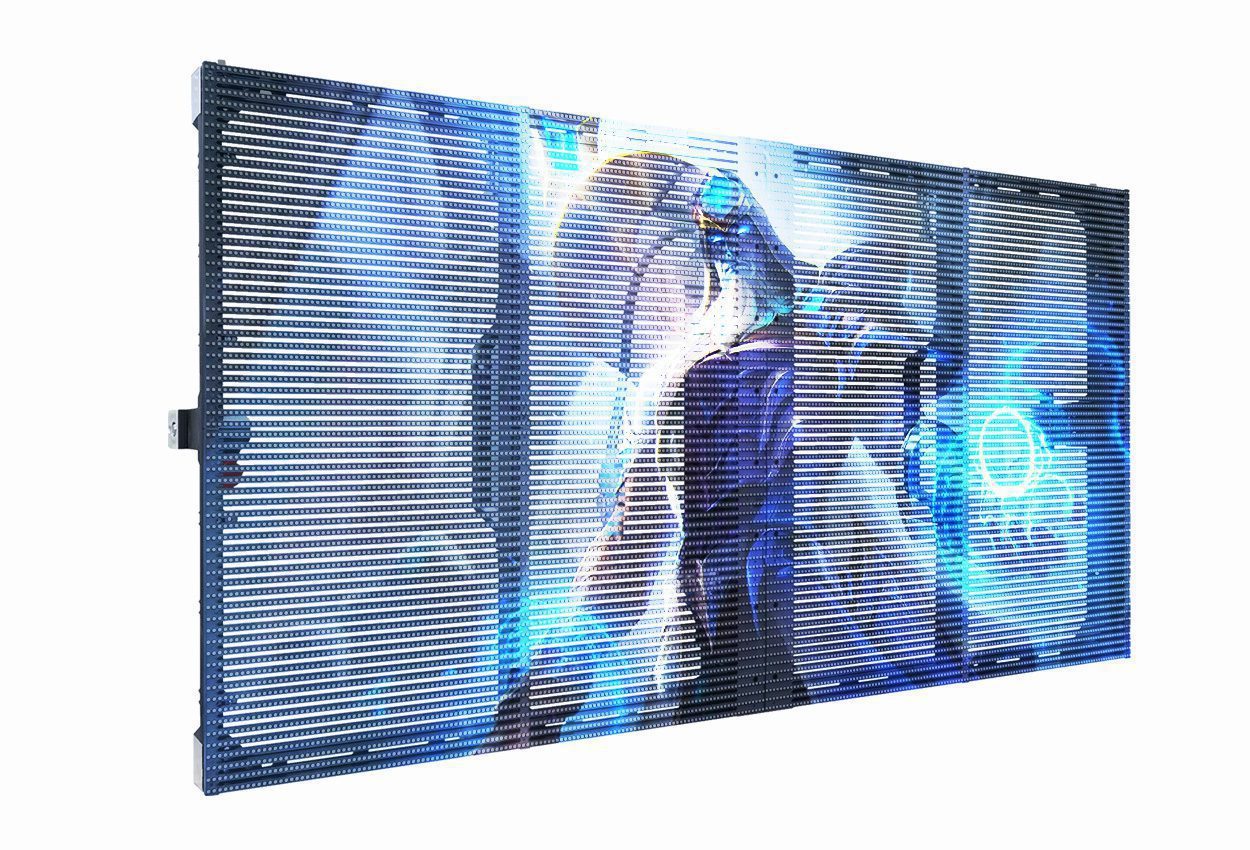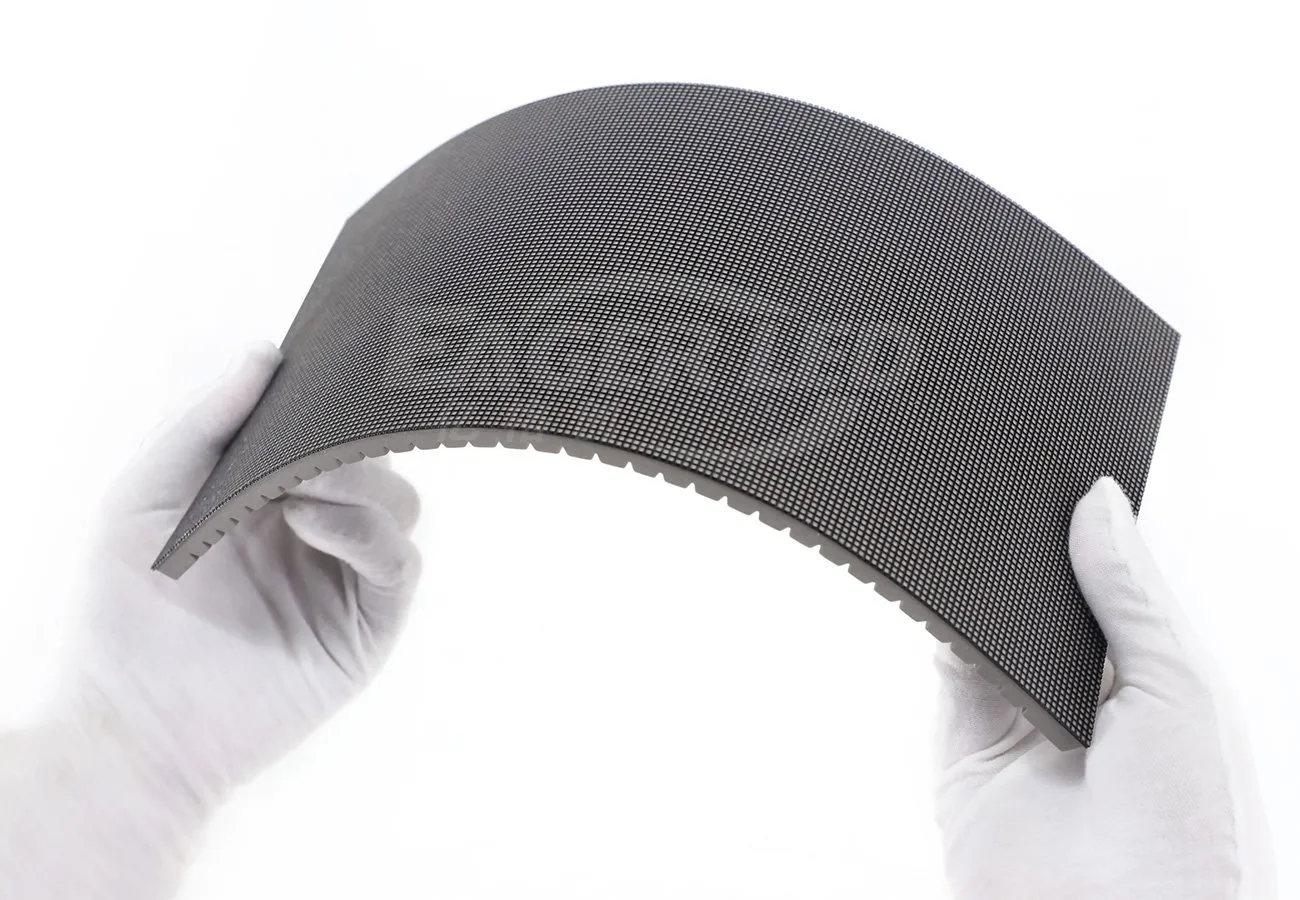

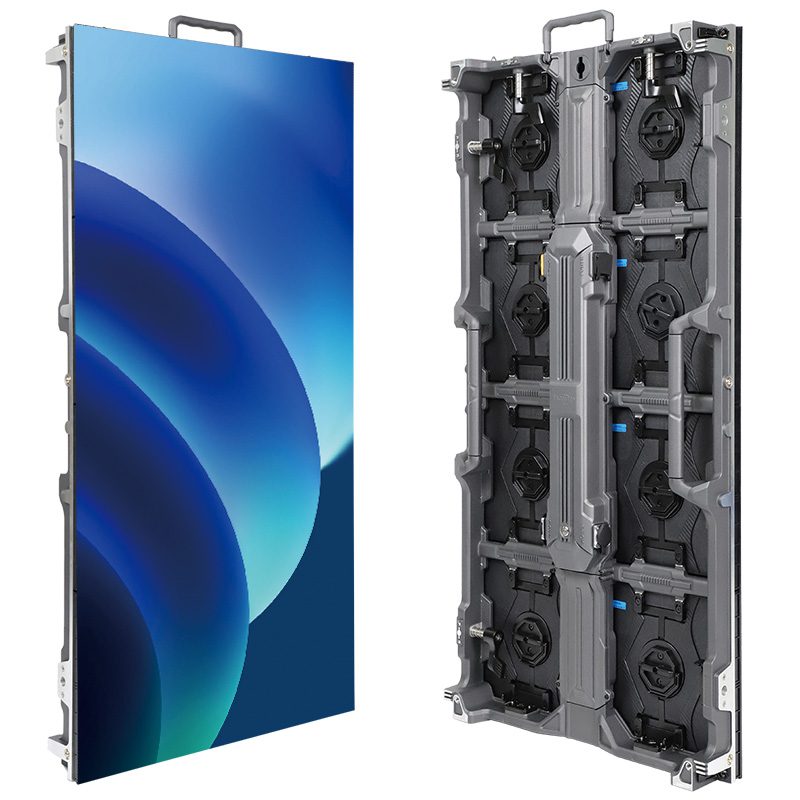
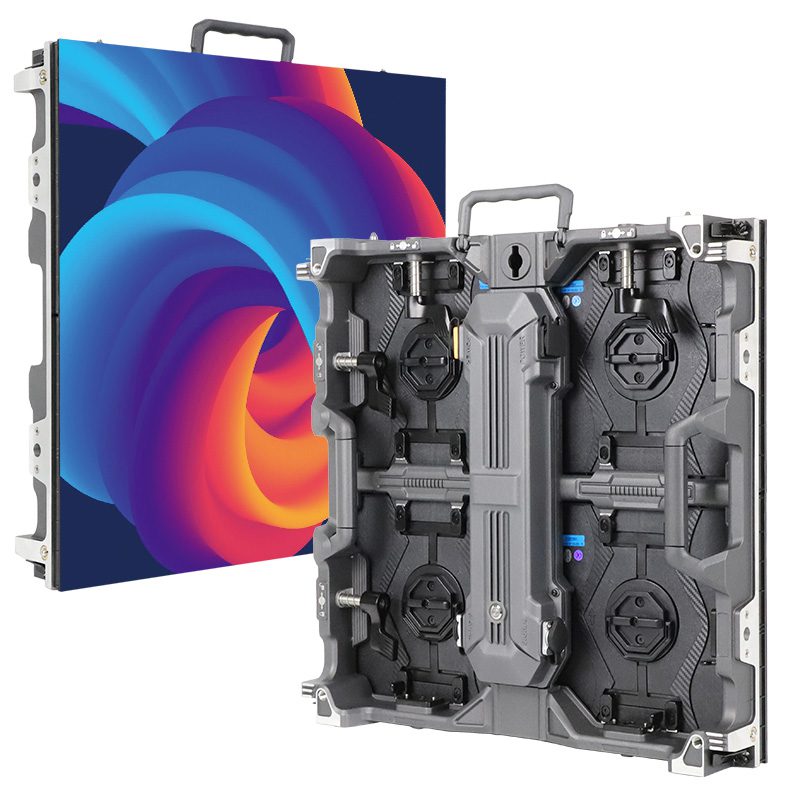
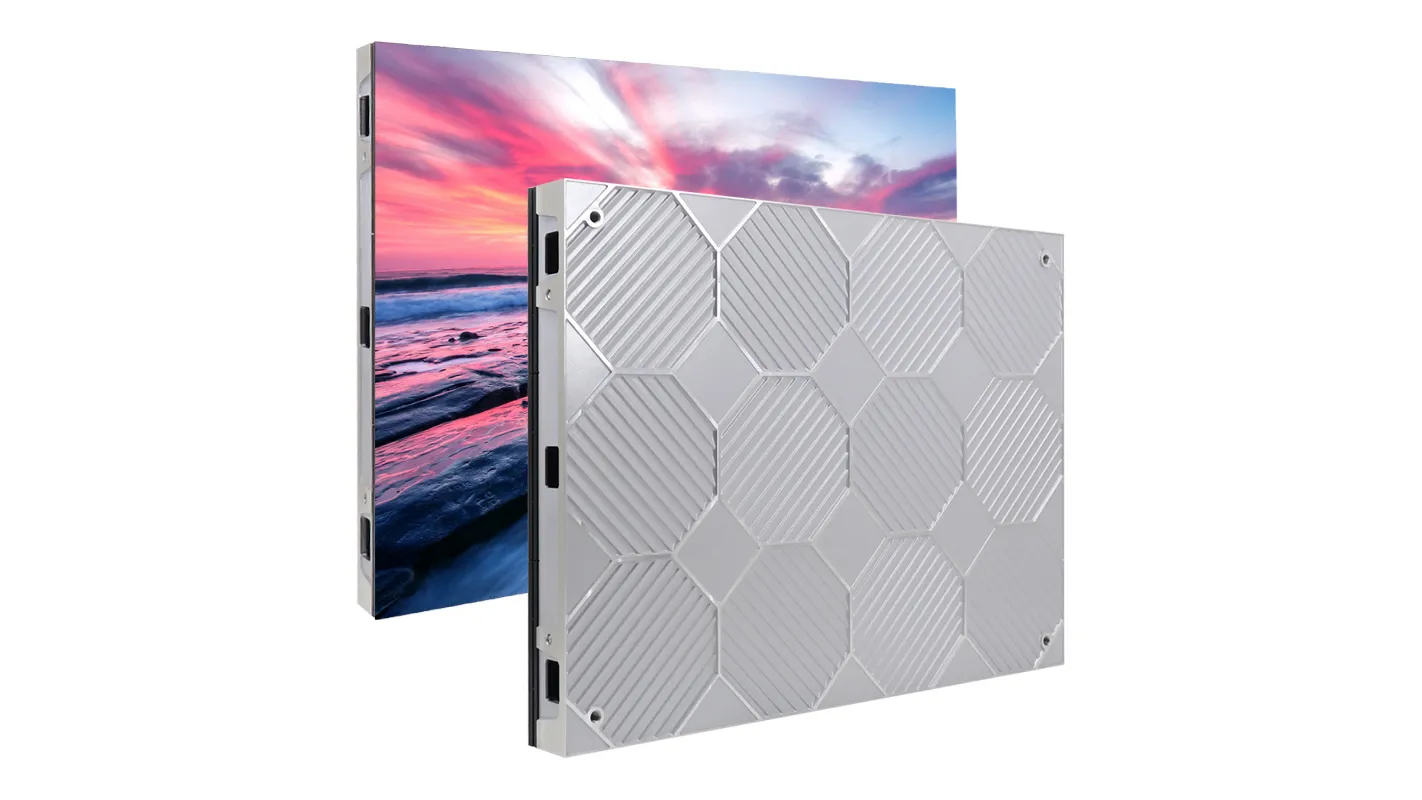
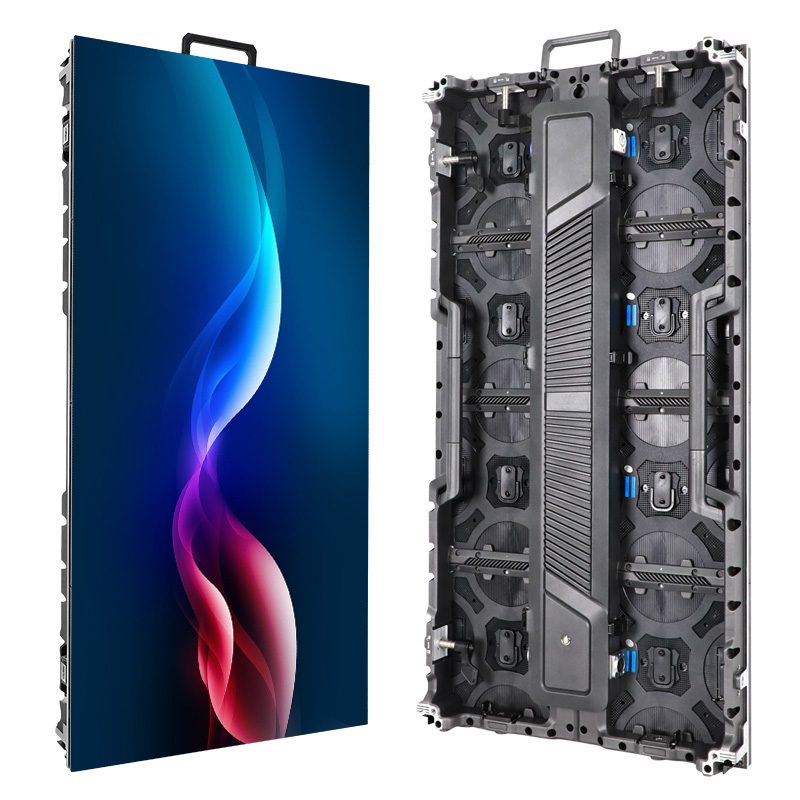
A 640 x 1920 LED poster fits the published Huidu B6L single-card pixel limit. It loads 1.3 million pixels, stores 16 GB, and provides the same core Wi-Fi, HDMI, USB, XiaoHui Cloud, and optional 4G functions as the larger models. Use the B8L or B8H when their additional storage or verified loading limits are required. Pixel arithmetic is only the first check: each poster needs a compatible controller configuration, and the HDMI LOOP layout, source format and firmware must also be confirmed.
This Huidu B6L vs B8L vs B8H comparison uses Huidu’s official HD-B8H/B8L/B6L specification, checked on October 20, 2026. The official page lists single-card and HDMI LOOP capacities separately. Our standard-poster counts are calculated from a 640 x 1920 screen, which contains 1,228,800 pixels.
Table of Contents
1. Huidu B6L, B8L, and B8H at a Glance
The Huidu B6L, Huidu B8L, and Huidu B8H are specialized controllers for an LED poster display. They can play stored media asynchronously, accept HDMI input, publish content through USB or Wi-Fi, and connect to XiaoHui Cloud. The selection is mainly a capacity decision, not a software-feature decision.
| Project requirement | Recommended model | Reason |
|---|---|---|
| One 640 x 1920 poster | Huidu B6L | 1.3M single-card capacity covers 1,228,800 pixels; lowest storage tier is adequate for compact playlists. |
| One to four standard posters | Huidu B8L | 64 GB memory and 5.24M-pixel HDMI LOOP capacity offer useful expansion headroom. |
| Five to seven standard posters | Huidu B8H | 8.8M-pixel HDMI LOOP load and 2.6M single-card load support larger systems. |
| Single display above 1.3M pixels | Huidu B8H | The B6L and Huidu B8L stop at 1.3M pixels per card; the Huidu B8H reaches 2.6M. |
If the current project is one standard poster and the playlist is modest, the B6L is the rational choice. If expansion is likely, the Huidu B8L avoids an early controller replacement. The Huidu B8H should be selected because the pixel math requires it, not simply because it is the highest model.
2. Official Specifications and Key Differences
Huidu’s official specification distinguishes single-card loading capacity from HDMI LOOP splicing capacity. That distinction explains why an HD-B6L can control one standard poster on one card and still combine two standard posters through HDMI LOOP.
| Specification | Huidu B6L (HD-B6L) | Huidu B8L (HD-B8L) | Huidu B8H (HD-B8H) |
|---|---|---|---|
| Single-card loading capacity | 1.3 million pixels | 1.3 million pixels | 2.6 million pixels |
| HDMI LOOP splicing load | Up to 2.6 million pixels | Up to 5.24 million pixels | Up to 8.8 million pixels |
| Maximum width | 16,384 pixels | 65,536 pixels | 65,536 pixels |
| Internal memory | 16 GB | 64 GB | 64 GB |
| Maximum splice channels | 10 channels | 14 channels | 14 channels |
| Standard 640 x 1920 posters by calculated pixel load | Up to 2 combined | Up to 4 combined | Up to 7 combined |
| Common inputs and management | HDMI, Wi-Fi, USB, cloud; optional 4G | HDMI, Wi-Fi, USB, cloud; optional 4G | HDMI, Wi-Fi, USB, cloud; optional 4G |
Method note: Huidu publishes the official pixel loads and maximum splice-channel counts. The 2-, 4-, and 7-poster figures above are our calculation using 1,228,800 pixels per 640 x 1920 poster. They describe typical full-resolution posters, not the absolute number of physical channels. Lower-resolution displays can use more channels without exceeding the official pixel ceiling.
01. Loading Capacity and Resolution
A Huidu B6L loads 1.3 million pixels on one card. A 640 x 1920 poster uses 1,228,800 pixels, leaving about 71,200 pixels of headroom. The Huidu B8L has the same 1.3M single-card limit, while the Huidu B8H doubles it to 2.6M pixels.
This is why both the HD-B6L and Huidu B8L can drive a common 640 x 1920 poster, but neither should be selected for a single custom screen above 1.3M pixels. Before choosing a controller, use our LED screen resolution guide to confirm the actual width, height, and pixel count.
02. HDMI LOOP Splicing Limits
HDMI LOOP allows multiple poster controllers to present one synchronized picture. Huidu lists 2.6M pixels for the B6L, 5.24M for the Huidu B8L, and 8.8M for the Huidu B8H. At 640 x 1920, those capacities translate to approximately 2, 4, and 7 full-resolution posters respectively.
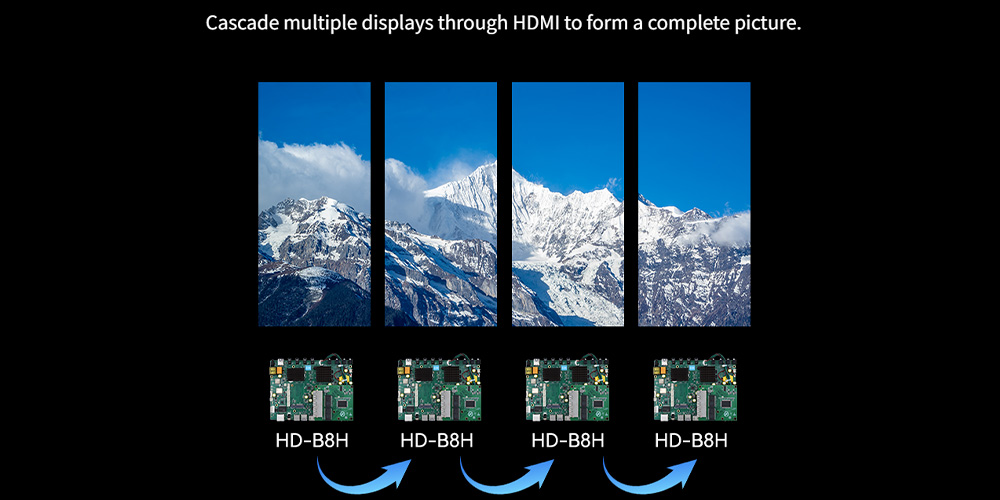
The official maximum is 10 splice channels for the B6L and 14 channels for the Huidu B8L and Huidu B8H. Channel count and pixel capacity must both pass. Ten very low-resolution panels may fit the B6L channel limit, but two standard 640 x 1920 posters already consume almost all of its 2.6M-pixel splicing load.
03. Memory, Width, and Video Decoding
The HD-B6L includes 16 GB of memory. The Huidu B8L and Huidu B8H include 64 GB. At a constant 20 Mbps video bitrate, 16 GB represents roughly 1.8 hours of theoretical video data and 64 GB roughly 7.1 hours before file-system overhead. Actual playback time depends on codec, bitrate, resolution, and reserved storage.
For image rotations and short clips, Huidu B6L storage is normally sufficient. For long-form video or many campaigns, the Huidu B8L is more practical. The B6L also has a 16,384-pixel maximum width, versus 65,536 pixels on the other two models. This rarely affects one vertical poster but matters in unusually wide cascades.
Huidu lists 2 x 4K, 6 x 1080P, 10 x 720P, or 20 x 360P decoding modes. When a Huidu B8H spliced load exceeds 8.29M pixels, the official table reduces that configuration to 1 x 4K, 3 x 1080P, 5 x 720P, or 10 x 360P. Those are decoding-stream limits, not the physical output resolution of a single B6L-controlled poster.
3. Which Huidu Controller Should You Choose?
Choose from the display specification first, then the content workflow, then the upgrade plan. This order prevents both under-sizing and unnecessary spending.
01. Choose Huidu B6L for a Single Standard Poster
Choose the HD-B6L when all of these are true:
- The display has no more than 1.3M pixels on one card.
- You plan to combine no more than two 640 x 1920 posters.
- A 16 GB local media library is enough.
- A 16,384-pixel maximum width does not restrict the layout.
- You still want Wi-Fi, USB, HDMI, XiaoHui Cloud, and optional 4G.
This model is not a feature-stripped controller. It is a lower-capacity controller. For one retail poster playing images and short videos, the Huidu B6L can deliver the same day-to-day publishing workflow as the Huidu B8L.
02. Choose Huidu B8L for Expansion and 64 GB Storage
Choose the Huidu B8L when the single screen still fits 1.3M pixels but the project needs 64 GB, a 65,536-pixel width ceiling, or up to 5.24M pixels across an HDMI LOOP system. For a buyer planning expansion, compare the B8L against the exact final array and content requirements. Two standard posters may also fit the B6L HDMI LOOP pixel ceiling; storage and other system limits still need checking.
The upgrade case matters. Replacing an HD-B6L later means reopening the cabinet, reconnecting the receiving-card chain, moving media, and revalidating the screen configuration. If expansion within 12 to 18 months is likely, the Huidu B8L can be cheaper over the project life even when the Huidu B6L has enough capacity today.
03. Choose Huidu B8H for High Pixel Loads
Choose the Huidu B8H when one controller card must load more than 1.3M pixels, the combined HDMI LOOP load exceeds 5.24M pixels, or the design calls for five to seven standard posters at full 640 x 1920 resolution. The Huidu B8H is also the correct option for custom high-resolution layouts that would exceed the HD-B6L or Huidu B8L ceiling.
If a poster-specific controller is not the right architecture, compare it with the broader options in our best LED display controller guide and the Huidu HD-A8 controller guide.
4. How to Calculate Controller Capacity
Do not choose the HD-B6L, Huidu B8L, or Huidu B8H from the cabinet size alone. Calculate the exact pixel load and check the full signal path.
01. Calculate the Pixel Count
- Find the display width in pixels.
- Find the display height in pixels.
- Multiply width by height.
- Compare the result with the controller’s single-card loading capacity.
Example: 640 x 1920 = 1,228,800 pixels. The result fits under 1.3M, so one Huidu B6L or Huidu B8L card can load it. A 960 x 1920 display contains 1,843,200 pixels, which exceeds both models and points to the Huidu B8H.
02. Separate Card Load from Splicing Load
For a multi-poster picture, multiply the pixel count of one poster by the number of posters. Four 640 x 1920 posters require 4,915,200 pixels. That total fits the Huidu B8L 5.24M HDMI LOOP load but does not fit the Huidu B6L 2.6M limit. Seven posters require 8,601,600 pixels, which fits the Huidu B8H 8.8M limit with only about 198,400 pixels remaining.
This narrow margin is important. If the real cabinet resolution is slightly higher than 640 x 1920, seven panels may no longer fit. Always use the as-built resolution rather than a product-category label.
03. Check the Complete System
The controller is only one part of the chain. Confirm receiving-card mapping, network ports, firmware, video codec, HDMI source behavior, and module scan settings. Our LED receiving card guide explains the downstream hardware that must match the Huidu B6L configuration.
Two posters: do you need B8L instead of B6L?
Not solely because there are two posters. Two 640 × 1920 canvases total 2,457,600 pixels. That is below the published B6L HDMI LOOP ceiling of 2.6 million pixels, while each poster also fits the 1.3-million single-card ceiling. This does not mean one B6L card can directly load the combined 2.46-million-pixel wall. The per-card and combined-loop checks describe different parts of the system.
| Illustrative array at 640 × 1920 each | Combined pixels | Pixel-limit check only |
|---|---|---|
| 2 posters | 2,457,600 | Within B6L loop total; confirm each card and the complete layout. |
| 4 posters | 4,915,200 | Exceeds B6L loop total; within B8L loop total. |
| 7 posters | 8,601,600 | Within B8H loop total; confirm its reduced decoding-stream mode above 8.29 million. |
The table is calculated from Huidu’s published limits, not a guarantee of a plug-and-play array. Ask for a topology drawing identifying every controller, each local receiving-card load, the combined source canvas, firmware versions and supported playback mode. Confirm maximum dimensions, decoding resources and synchronized content behaviour as well as the total pixels.
For a quote: send the exact per-poster pixel width/height, final poster count, one shared picture or independent content, source resolution, local storage needs and network arrangement. Request the configuration files and an acceptance demonstration on the proposed hardware.
Request a poster-controller configuration check
5. LED Poster Screen Applications
01. Retail Stores and Chain Locations
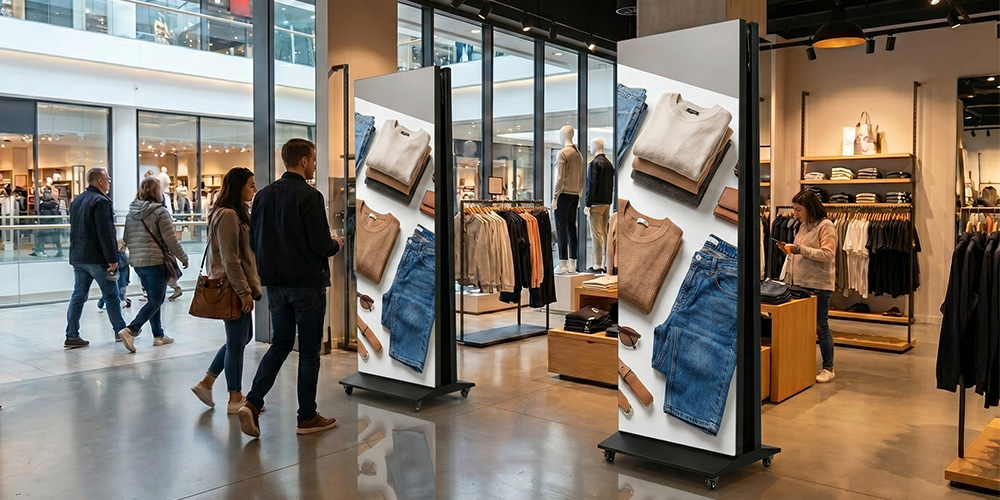
For one entrance poster or in-store promotion screen, the Huidu B6L provides enough capacity for the common 640 x 1920 format. A chain can still manage Huidu B6L units remotely through XiaoHui Cloud. The Huidu B8L becomes useful when each location stores larger video libraries or when flagship stores use multi-poster walls.
Retail teams planning menu boards, window displays, or campaign scheduling can also review our digital retail signage solutions.
02. Shopping Malls and Multi-Screen Video Walls
A two-poster installation can remain within the Huidu B6L 2.6M HDMI LOOP limit when each poster is 640 x 1920. A four-poster system points to the Huidu B8L. A five-, six-, or seven-poster wall points to the Huidu B8H, provided the total remains at or below 8.8M pixels.
03. Exhibitions and Temporary Events
A Huidu B6L is a practical controller for a single portable poster at a trade show. A rental company may prefer the Huidu B8L because its 64 GB memory and larger splicing load cover more layouts without changing hardware. The Huidu B8H belongs in the inventory when large synchronized poster arrays are a recurring requirement.
6. XiaoHui Cloud and Content Workflow
All three models support cloud management. Huidu describes XiaoHui Cloud as a free platform for Internet cluster management and says remote control can operate the screen without an on-site visit. For the Huidu B6L buyer, this means choosing the entry model does not remove centralized publishing.
01. Remote Publishing and Scheduling
XiaoHui Cloud can organize screens by store, region, or campaign; publish content; schedule playlists; and check online status. The Huidu B6L can therefore support a distributed single-poster network, while the Huidu B8L and Huidu B8H add hardware capacity for larger local layouts.
For local setup utilities and current packages, use our Huidu software download page. Keep firmware, controller software, and configuration files matched to the installed hardware revision.
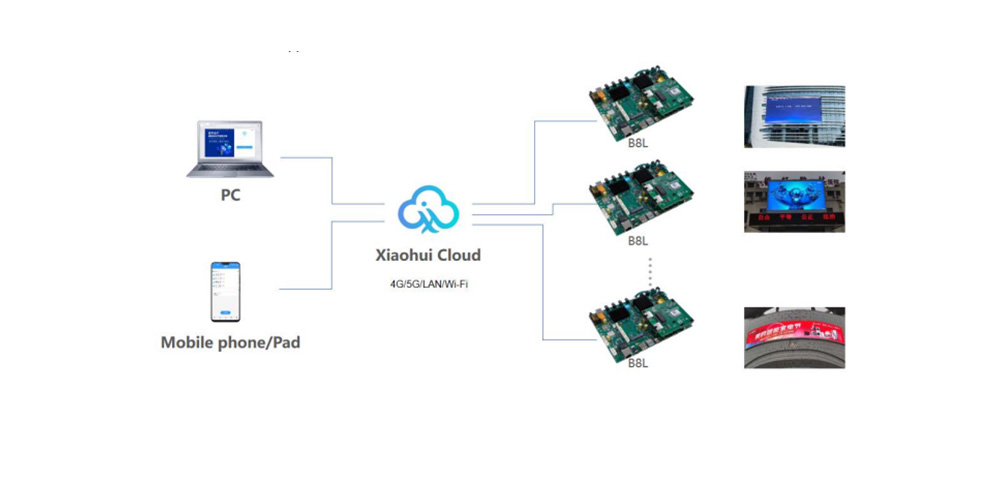
02. Wi-Fi, USB, HDMI, and Optional 4G
- Wi-Fi: convenient for local wireless publishing and setup.
- USB: useful for offline media updates and service workflows.
- HDMI: accepts a live source and supports adaptive scaling.
- Optional 4G: keeps a Huidu B6L, Huidu B8L, or Huidu B8H online where wired access or reliable Wi-Fi is unavailable.
The controller choice does not change the presence of these core connections. It changes pixel capacity, memory, width, and splicing headroom.
7. Frequently Asked Questions
01. Is the Huidu B6L enough for a 640 x 1920 LED poster?
Yes. A 640 x 1920 poster contains 1,228,800 pixels, below the Huidu B6L single-card limit of 1.3 million pixels. The Huidu B6L is enough when 16 GB storage and the planned screen count also meet the project requirements.
02. What is the main difference between Huidu B6L and Huidu B8L?
Both load 1.3 million pixels per card. The Huidu B6L has 16 GB memory, a 16,384-pixel maximum width, and a 2.6M HDMI LOOP load. The Huidu B8L has 64 GB memory, a 65,536-pixel maximum width, and a 5.24M HDMI LOOP load.
03. How many 640 x 1920 posters can Huidu B6L combine?
Two standard posters require 2,457,600 pixels, which fits the Huidu B6L HDMI LOOP limit of 2.6 million pixels. The official maximum is 10 splice channels, but total pixel capacity remains the binding limit for full-resolution 640 x 1920 posters.
04. When should I choose Huidu B8H instead of Huidu B6L?
Choose the Huidu B8H when one card must load more than 1.3M pixels or the combined HDMI LOOP system exceeds 2.6M pixels. The Huidu B8H supports 2.6M pixels per card and up to 8.8M pixels in an HDMI LOOP system.
05. Can Huidu B6L use XiaoHui Cloud and 4G?
Yes. The Huidu B6L supports XiaoHui Cloud, Wi-Fi, HDMI, and USB, and it can use an optional 4G module. Its lower price tier mainly reduces storage, maximum width, and splicing capacity rather than the core content-management workflow.
06. Can the Huidu B6L play 4K video?
Huidu’s official specification lists 2 x 4K decoding among the supported modes for this controller family. That decoding capability does not mean the LED poster has a 4K physical resolution; the Huidu B6L output still has to remain within its 1.3M single-card loading limit.
07. Is Huidu B6L compatible with every LED poster screen?
No controller should be treated as universally compatible. The Huidu B6L must match the total pixel load, maximum width, receiving-card map, scan settings, firmware, and interface requirements. Most standard 640 x 1920 posters fit its pixel limit, but the supplier should confirm the complete configuration.
8. Final Recommendation
Buy the Huidu B6L for one standard poster when 16 GB is enough. Buy the Huidu B8L when 64 GB and expansion to four standard posters justify the step up. Buy the Huidu B8H when the display exceeds the Huidu B6L and Huidu B8L pixel limits or the project needs a five- to seven-poster wall.
The best controller is the lowest model that passes the exact pixel, width, storage, and splicing checks with reasonable growth headroom. For a project-specific recommendation, send the screen width, height, number of posters, content format, and connectivity plan through our LED display project consultation page.
 LED Panels vs All-in-One LED Displays: 8 Key Differences
 Black Spots on LED Display: 5-Step Diagnosis and Fixes