

LED Screen Quality Control: 4-Stage Testing by EagerLED
LED display quality control checks the ordered components, assembly, image performance, stability and packing against an agreed specification. EagerLED’s process shown here covers pre-production, production, post-production and shipment review; ask for model- and batch-specific evidence before accepting your order.
- Approve the model, bill of materials and acceptance criteria before production.
- Review optical, mechanical, electrical and stability checks together.
- Match compliance documents to the exact model and destination.
- Use the signed specification and batch records for acceptance, not generic page targets.
On this page
Turn a quality target into acceptance evidence
| Review area | Evidence to request | Scope to confirm |
|---|---|---|
| Components / assembly | Approved BOM, cabinet drawing, model and inspection record | Component versions, substitutions and traceable batch |
| Optical performance | Pixel, brightness and uniformity results with test settings | Measurement method, brightness level and acceptance limit |
| Stability / power | Aging and full-load records, fault findings and retest results | Actual duration, conditions, model and sampled units |
| Protection / packing | Applicable test reports, cable-entry details and packing list | Rated face, installation conditions, accessories and case scope |
Agree the test method as well as the number. Brightness uniformity, flatness, refresh rate and protection claims are meaningful only when the measurement setup, selected model and acceptance criteria are defined.
The published process includes temperature-cycle aging and full-load operation. Request the actual sequence, conditions, dates and recorded findings for the ordered configuration rather than assuming a generic duration is a batch test result.
Before shipment, reconcile cabinet and spare-part quantities, model labels, control-system configuration, cables and packing dimensions/weights against the order. Confirm how an inspection failure is resolved and retested before release.
Purchase questions
Does a quality-control page replace an inspection report?
No. It explains the process. Obtain the agreed specification and evidence for the actual model and production batch, including any deviations, corrections and retest results.
What should I confirm about an outdoor protection rating?
Confirm which face and component are rated, the applicable report and the required cable sealing, drainage, ventilation and rear protection in the installation. A rating alone does not cover every site condition.
Which compliance files should an overseas buyer request?
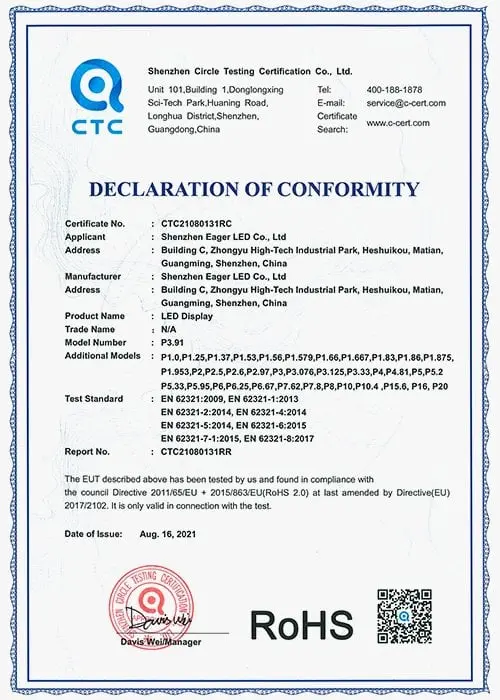
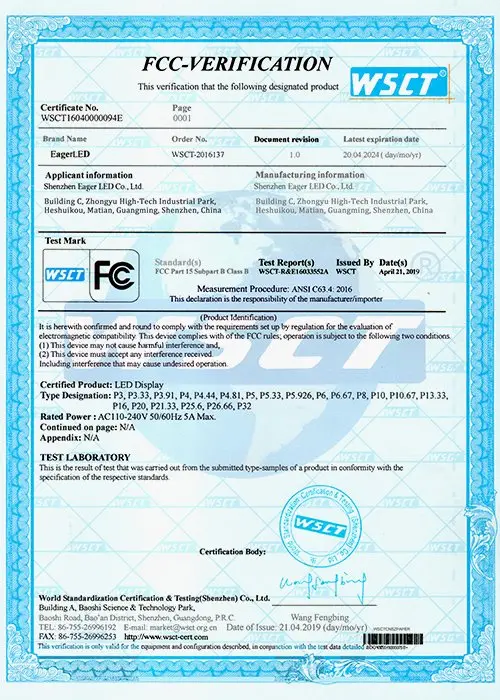
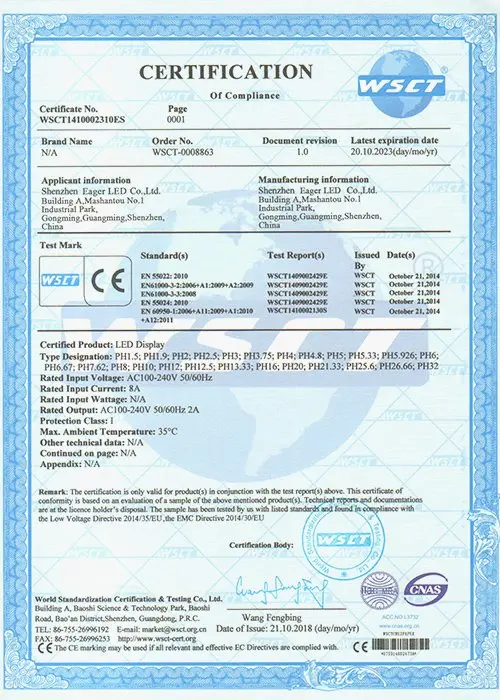
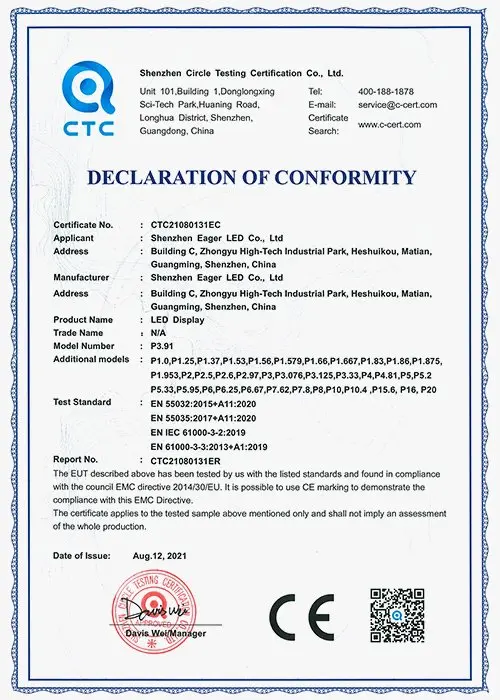
Provide the destination and project requirements. Check the model scope, report/certificate number, date, issuing body and referenced standard. Company management documentation and product compliance evidence are different.
Request model-specific inspection information
Compare the EagerLED manufacturing and component information for other formats.
- Project-Specific Acceptance Criteria
- Component and Assembly Inspection
- Documented Burn-In and Shipping Checks
LED Display Quality Standards We Check
Acceptance criteria are set for the selected LED display model, viewing distance, installation environment, and content requirements. Optical, mechanical, electrical, thermal, and protection checks are reviewed together so a screen is not approved on brightness alone. The figures below are current EagerLED quality targets for applicable configurations; the signed order specification remains the final acceptance reference.
Our 4-Stage LED Display Quality Control Process
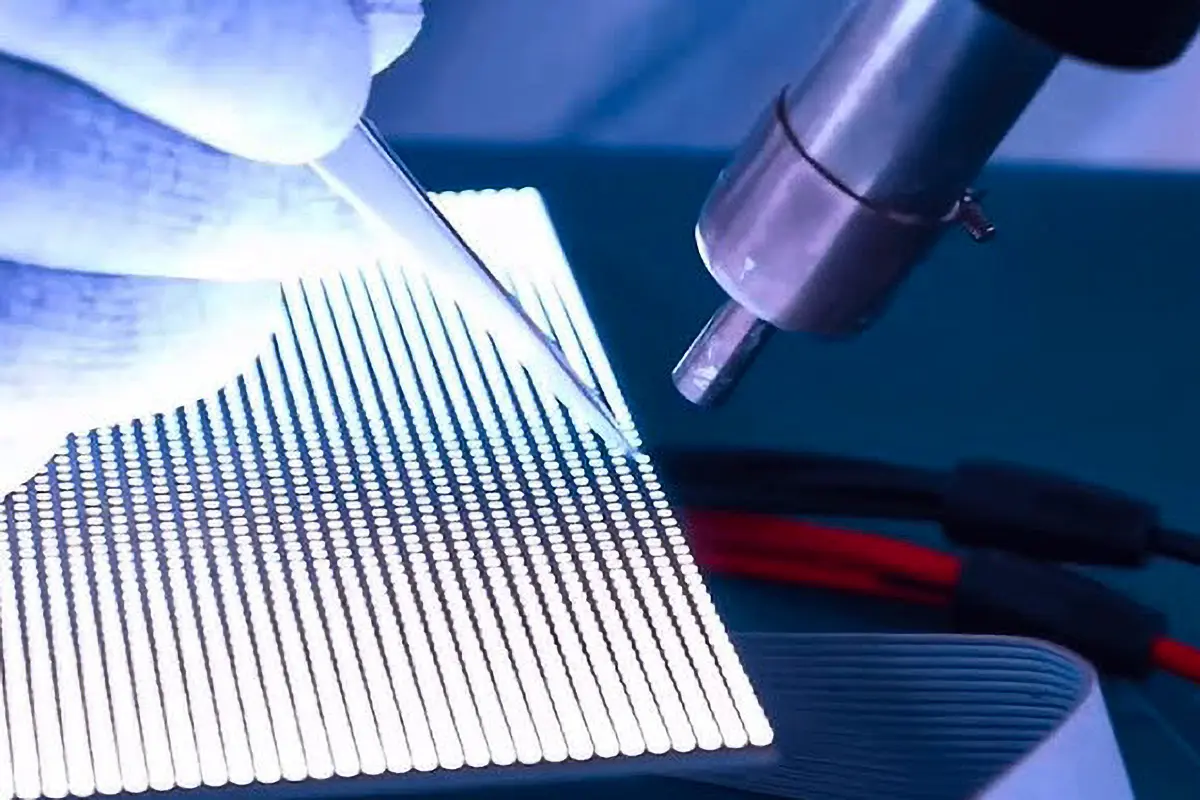
1. Pre-Production: Material and BOM Verification
- Material selection: Match LED chips, PCBs, driver ICs, power supplies, and structural parts to the approved project specification.
- Project planning: Confirm screen size, pixel pitch, resolution, brightness target, refresh rate, installation environment, and service access.
- Detail confirmation: Cross-check drawings, process requirements, and the bill of materials before production begins.
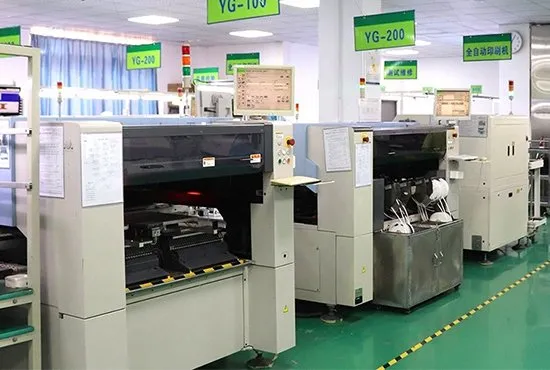
2. During Production: SMT, Module, and Cabinet Checks
- SMT placement: Automated assembly and optical inspection are used to identify placement offsets and soldering defects for rework.
- Module assembly: LED bin consistency is checked for color matching; sealing is applied where required by the model design.
- Full-screen assembly: Cabinet alignment is calibrated to a target flatness of ≤ 0.5 mm for applicable configurations.
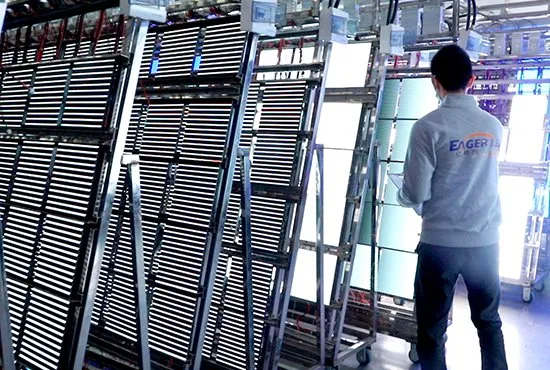
3. Post-Production: Optical and Stability Testing
- Optical inspection: Check pixels individually and review brightness and chromaticity uniformity across the assembled display.
- Temperature-cycle aging: Run a 72-hour cycle from -20°C to 50°C to expose thermal instability.
- Full-load operation: Operate the display continuously for 48 hours while checking dead pixels, power stability, and image performance.
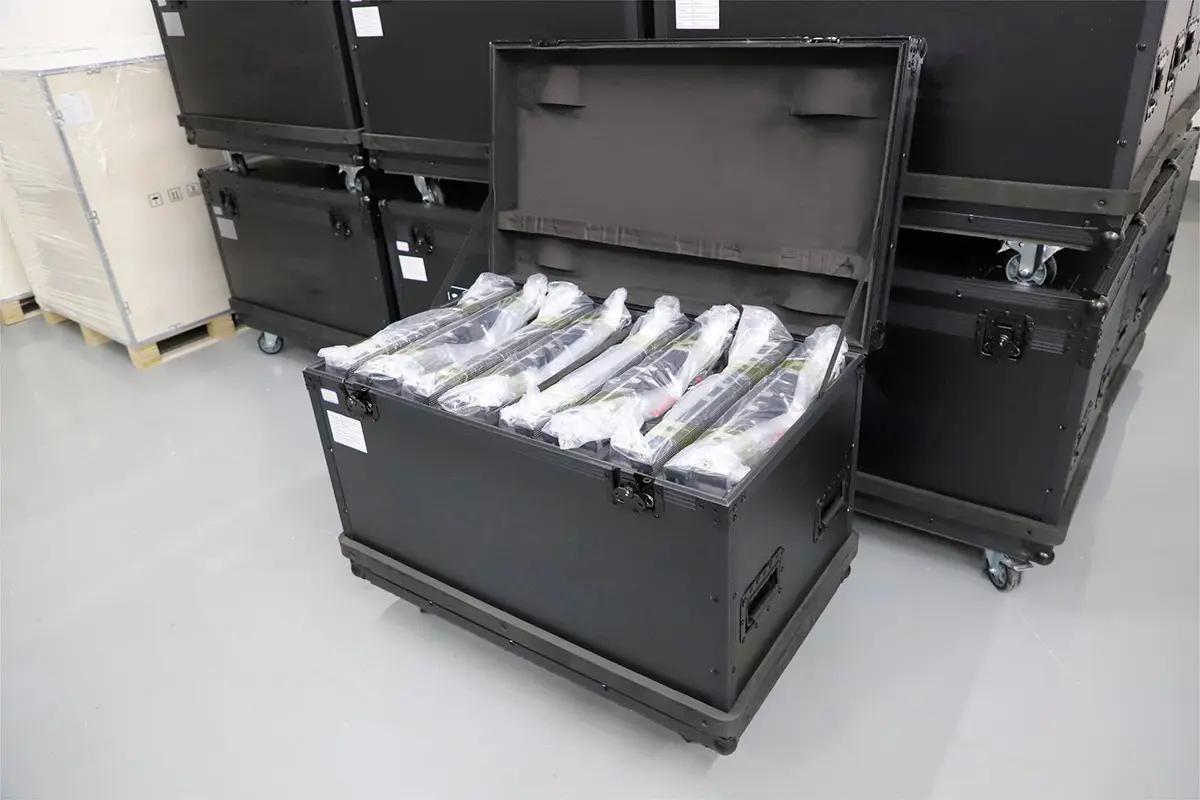
4. Packaging and Pre-Shipment Review
- Impact protection: Use fitted foam with a wooden crate or flight case to reduce shock and compression risk in transit.
- Moisture protection: Add moisture-barrier film and desiccant to reduce humidity and oxidation risk during storage and shipping.
- Document check: Match labels, accessories, packing list, and the applicable compliance files to the order before release.
Product Performance and Compliance Documentation
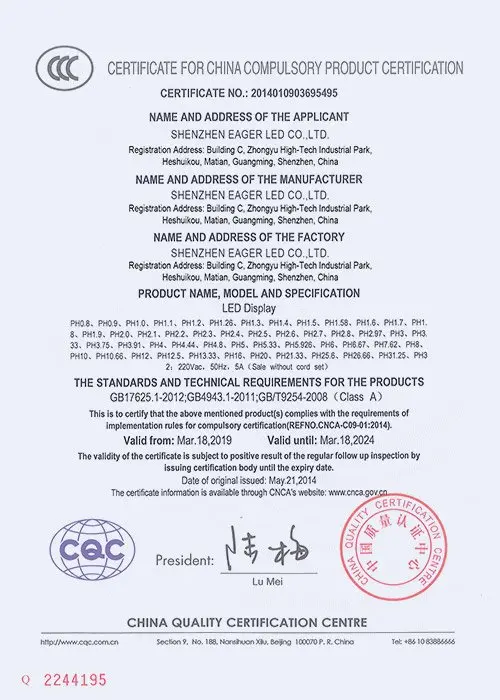
Compliance requirements depend on the destination market and product model. The certificate carousel below shows documentation covering RoHS, FCC, CE-LVD, CE-EMC, and CCC. Before ordering, ask EagerLED to match the report number, model scope, and applicable standard to the exact display configuration.
For context, the International Electrotechnical Commission explains that IEC 60529 grades enclosure resistance to dust and liquids. The European Commission states that RoHS currently restricts ten substances in electrical and electronic equipment, while 47 CFR Part 15 sets US requirements for radio-frequency devices. These official references explain the standards; they do not replace a model-specific test report.
LED Display Pre-Shipment Inspection Checklist
A useful LED display quality report should show what was checked, the acceptance limit, and the evidence recorded. EagerLED uses the following checkpoints for applicable configurations. See the LED screen specifications library for product documents and the LED display factory overview for production context.
| Checkpoint | Acceptance evidence | Why it matters |
|---|---|---|
| Components and BOM | Parts match the approved drawing and bill of materials | Prevents substitutions and configuration errors |
| SMT assembly | Automated optical inspection for placement and soldering | Finds defects before module assembly |
| Optical performance | Pixel inspection plus brightness and chromaticity review; brightness uniformity target ≥ 95% where specified | Supports consistent images across the screen |
| Mechanical and enclosure | Cabinet alignment target ≤ 0.5 mm; sealing and IP rating checked when specified | Improves fit, serviceability, and outdoor protection |
| Stability | 72-hour temperature cycle from -20°C to 50°C plus 48-hour full-load operation | Exposes thermal, power, and pixel faults before release |
| Packing | Fitted foam, wooden crate or flight case, moisture barrier, desiccant, labels, and packing list | Reduces transit and storage risk |
Scope note: Acceptance limits are project- and model-specific. Confirm the signed specification, test method, and report scope before production.
LED Screen Quality Control FAQ
What does LED display quality control include?
It covers incoming components, SMT placement and soldering, module consistency, cabinet alignment, optical performance, aging, full-load operation, packing, and order documentation. Each checkpoint should be tied to the approved specification for the selected screen.
How long does EagerLED test an LED display before shipment?
The current process shown on this page includes a 72-hour temperature-cycle aging test from -20°C to 50°C and a separate 48-hour continuous full-load operation check. Ask for the exact sequence and acceptance record for your model.
What does IP65 mean for an outdoor LED screen?
Under IEC 60529, the first IP digit describes protection against solids and the second describes protection against liquids. IP65 is an enclosure rating, not a blanket promise that every part of every display is waterproof, so confirm the rated face, cabinet design, and installation conditions.
Which compliance documents can buyers request?
The page displays RoHS, FCC, CE-LVD, CE-EMC, and CCC documentation. Availability and scope depend on the product model and destination market; verify the model number, report number, issuing laboratory, and referenced standard before ordering.
Can buyers request pre-shipment inspection evidence?
Ask the EagerLED team for the inspection checklist, relevant test report, product photos or video, packing list, and model-specific certificates needed for your project. Send the installation environment, screen size, brightness target, and delivery schedule through the contact page. Contact EagerLED for a project-specific review.
