Customized New LED Display Solutions for You
EA250WH5 Indoor LED Screen
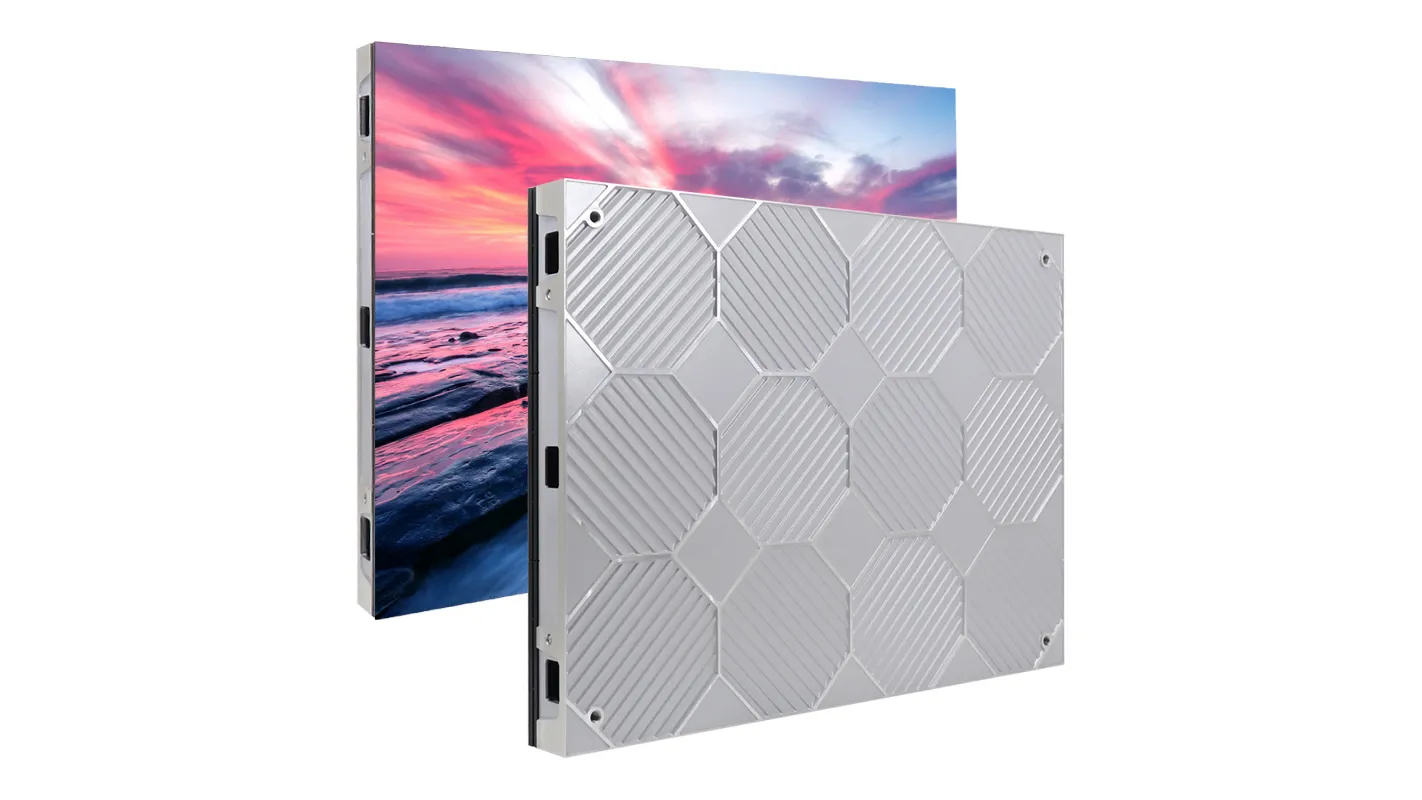
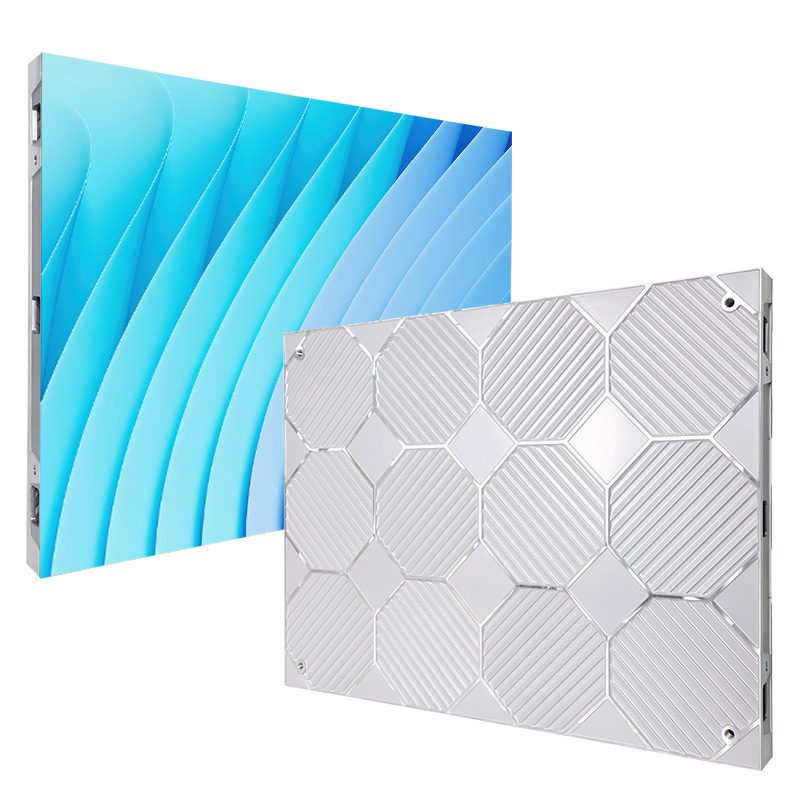
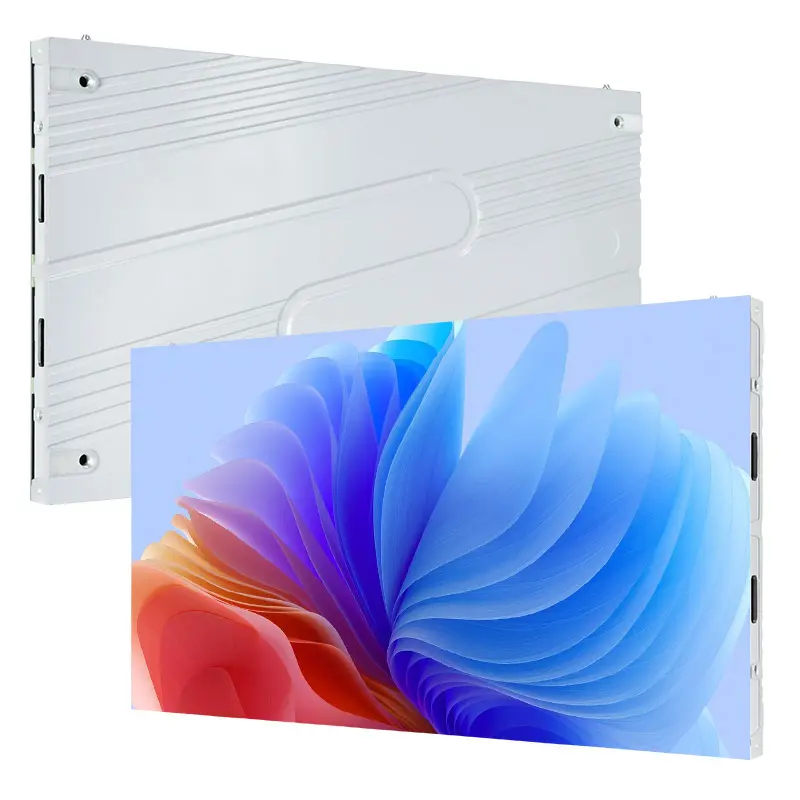
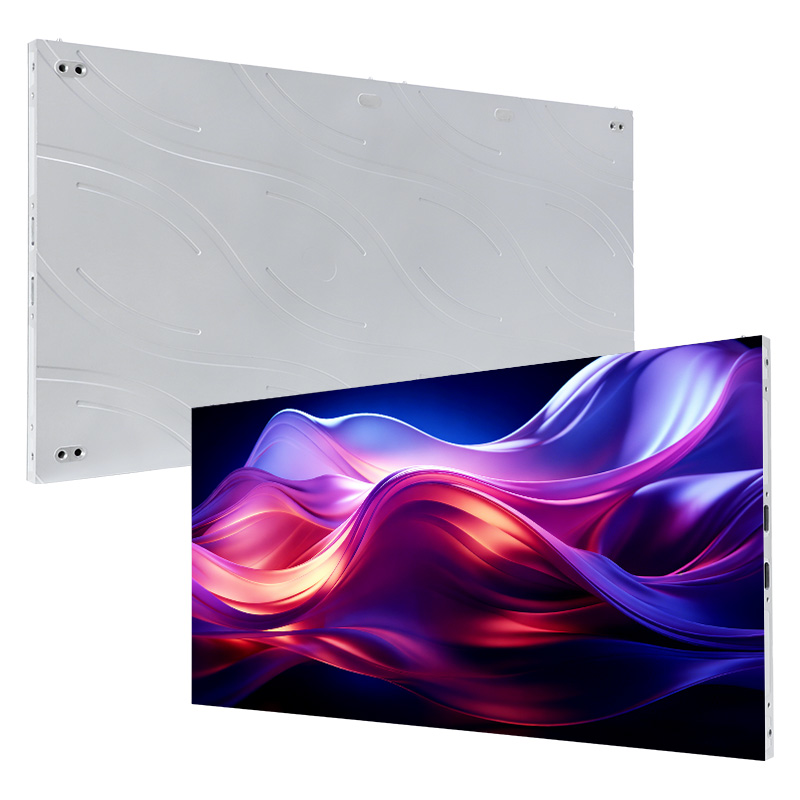
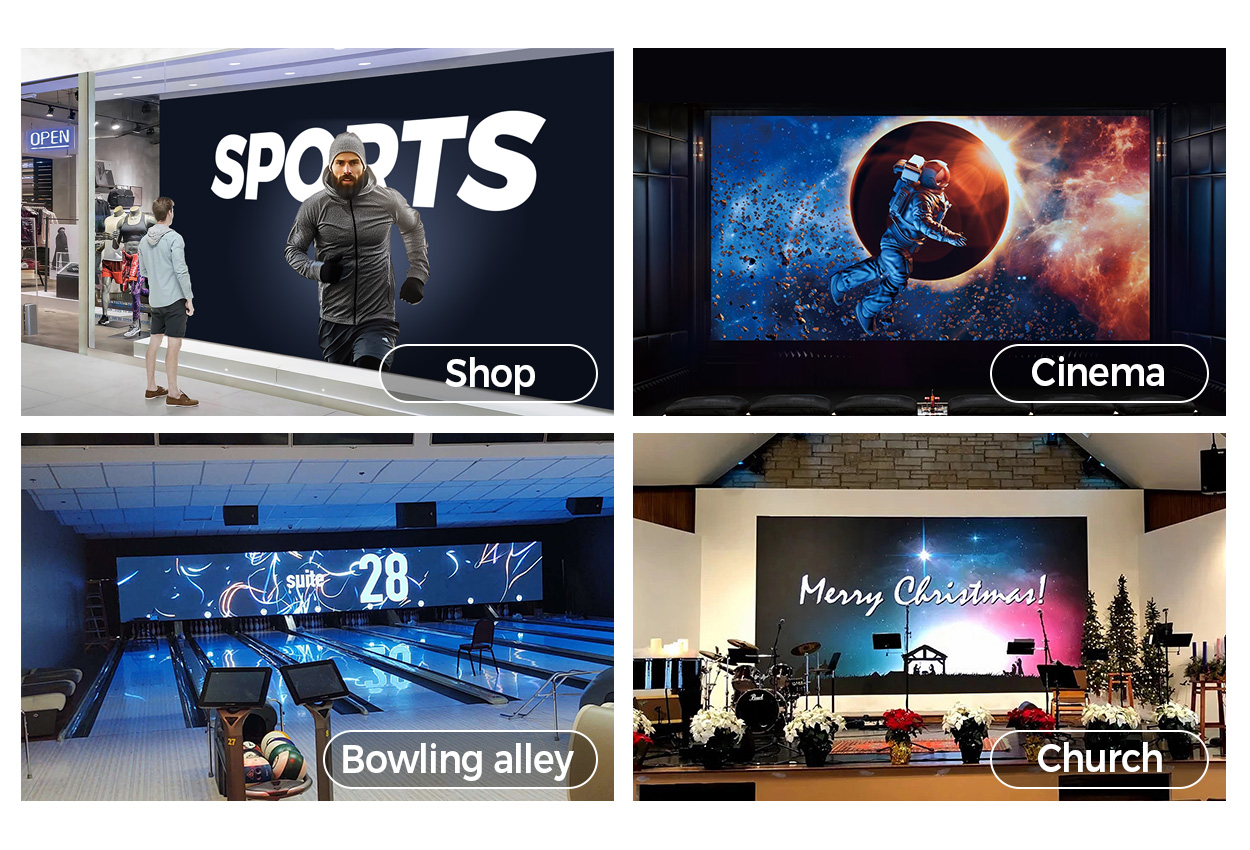
EA250WH5 is a fine-pitch indoor LED screen with a 30 mm cabinet, full front-service access, HUB-based internal connections, and six cabinet sizes. Pixel pitches from P1.25 to P2.97 support conference rooms, control rooms, retail spaces, exhibitions, and other close-viewing indoor LED wall applications.
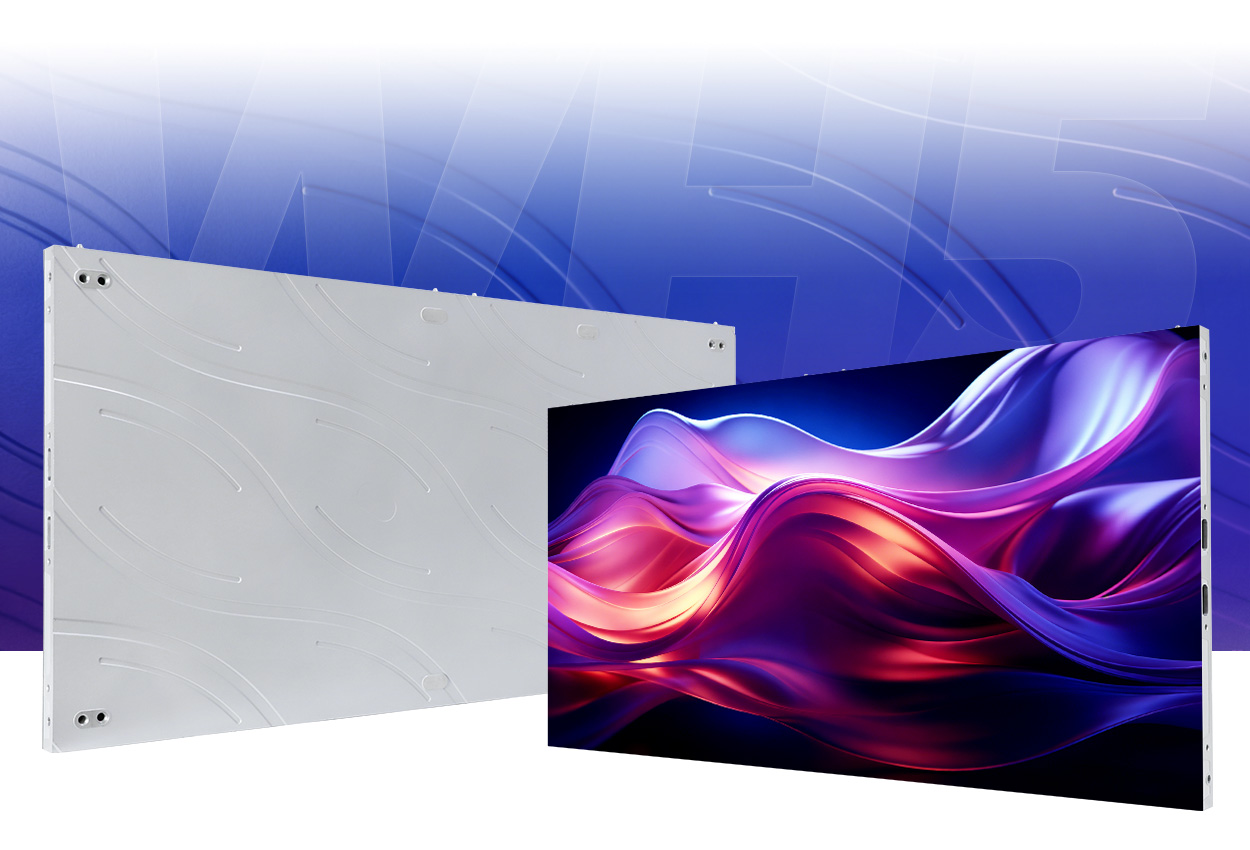
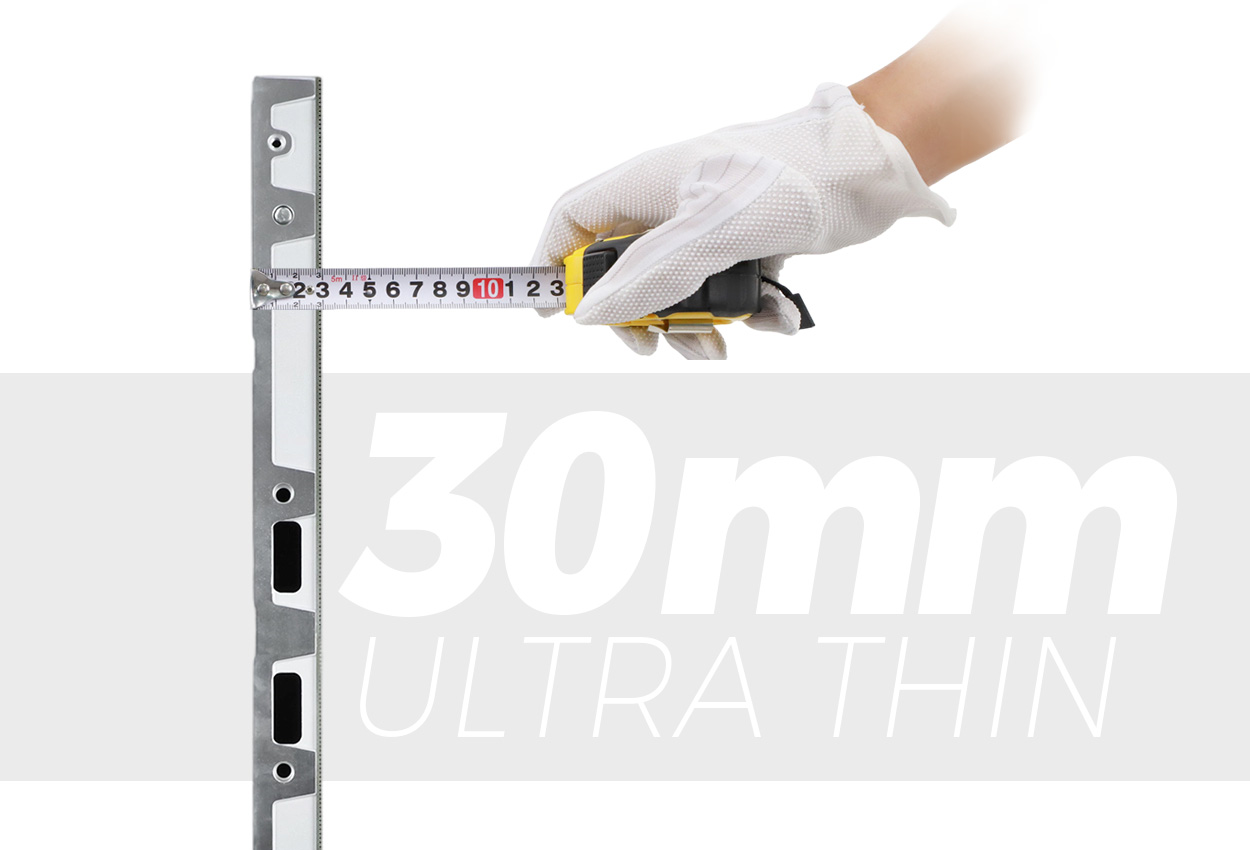
30 mm Slim, Lightweight Cabinet
The cabinet is 30 mm deep and weighs 3.0–10.5 kg depending on cabinet size, reducing wall depth and handling load for space-constrained indoor installations.
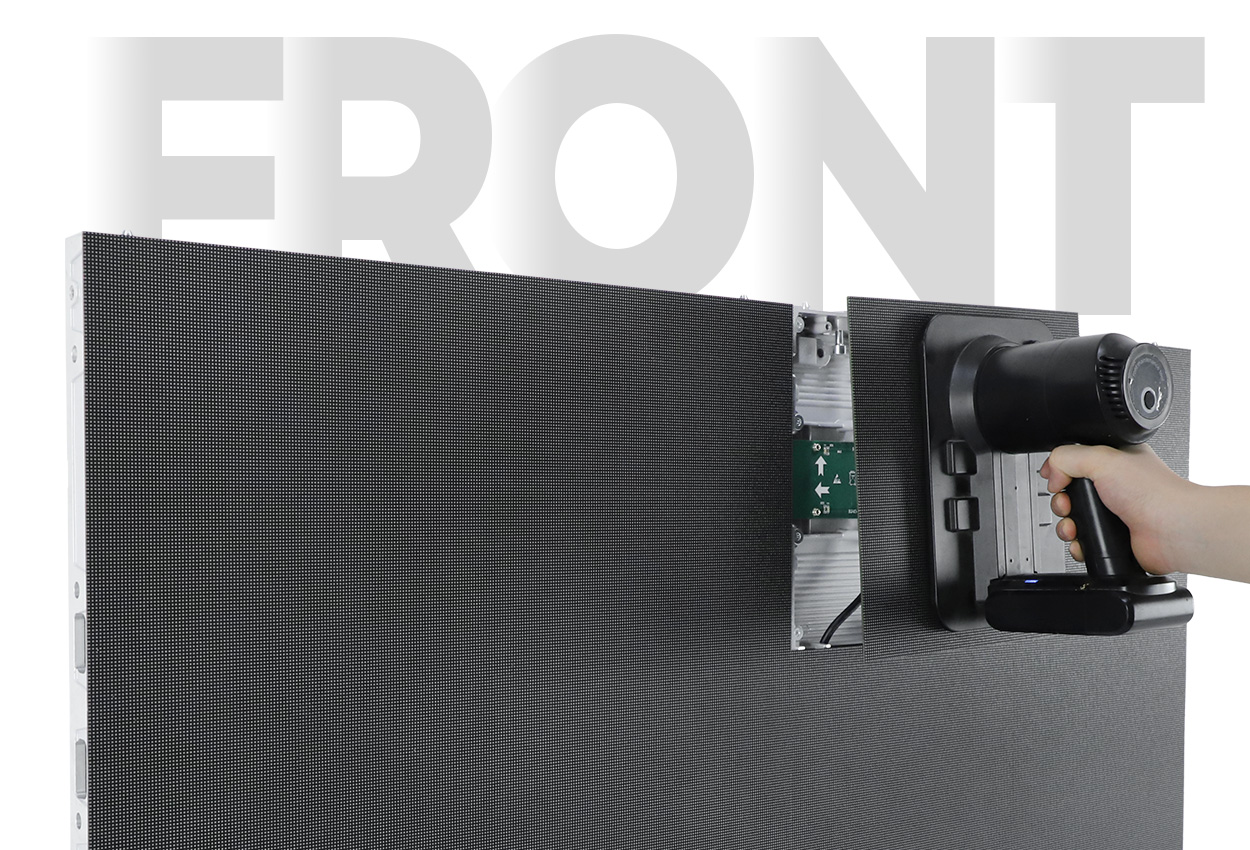
Full Front-Service Access
The full front-service design keeps routine component access on the viewing side, making the display suitable for wall-mounted installations with limited rear clearance.
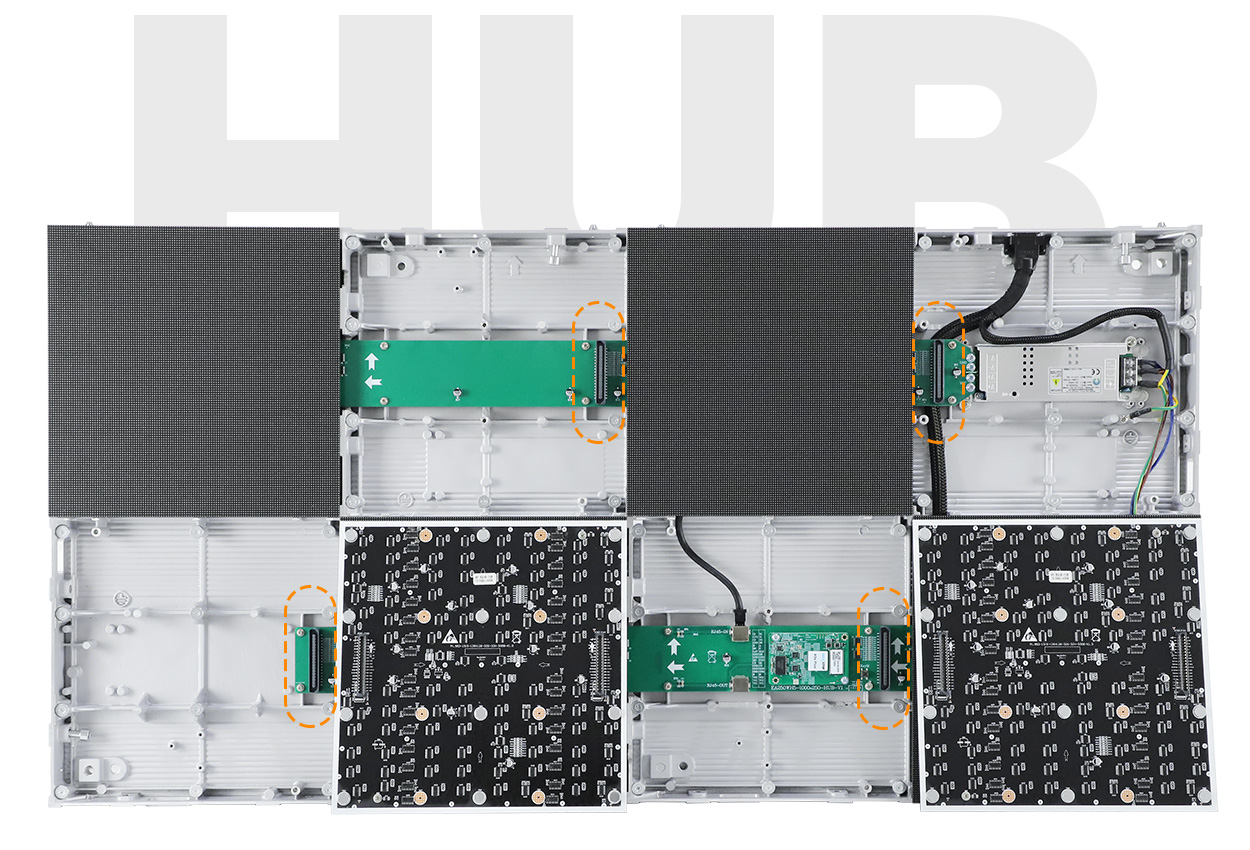
HUB-Based Internal Connection
The HUB-based internal connection organizes power and signal distribution with fewer point-to-point cables, simplifying assembly and routine servicing.
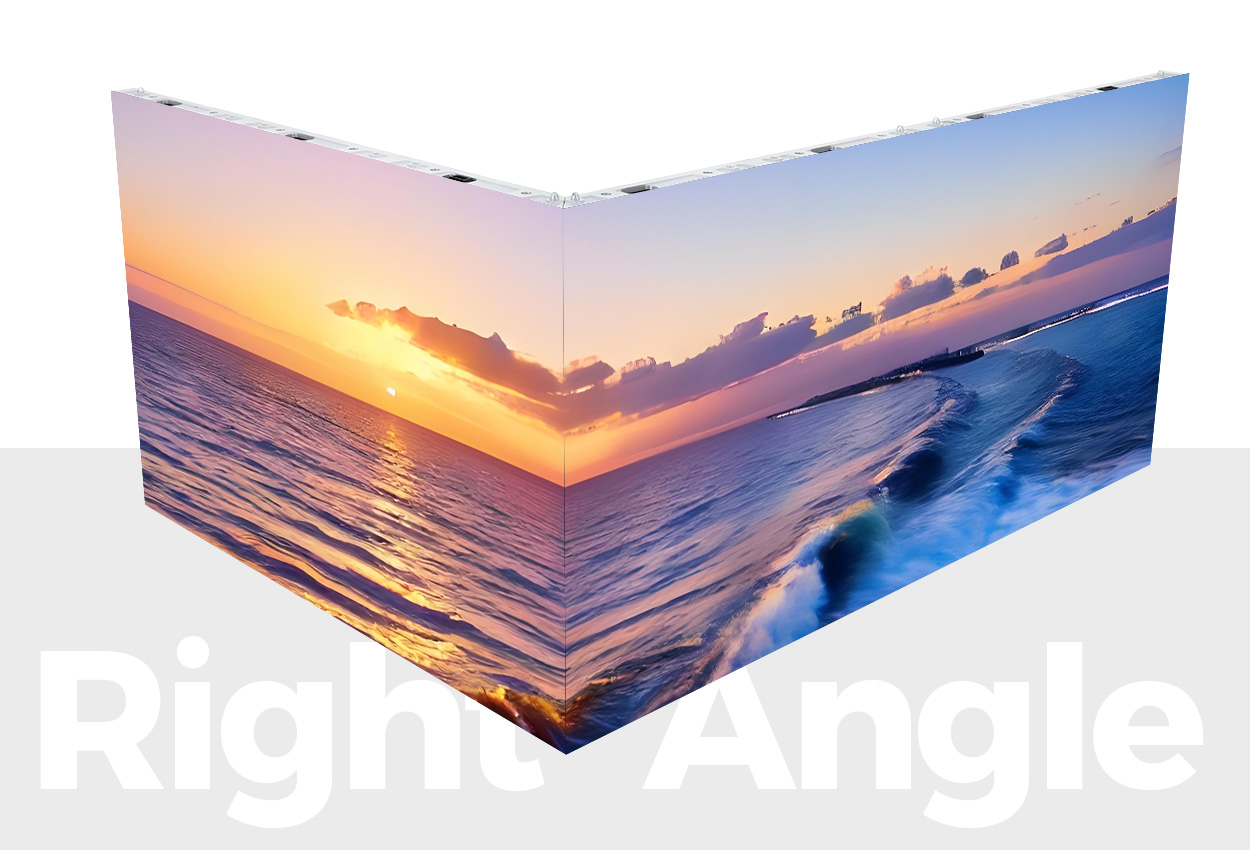
90° Creative Corner Splicing
Support for 90° right-angle splicing enables corner screens and other multi-surface indoor LED display layouts when matched to the project structure.
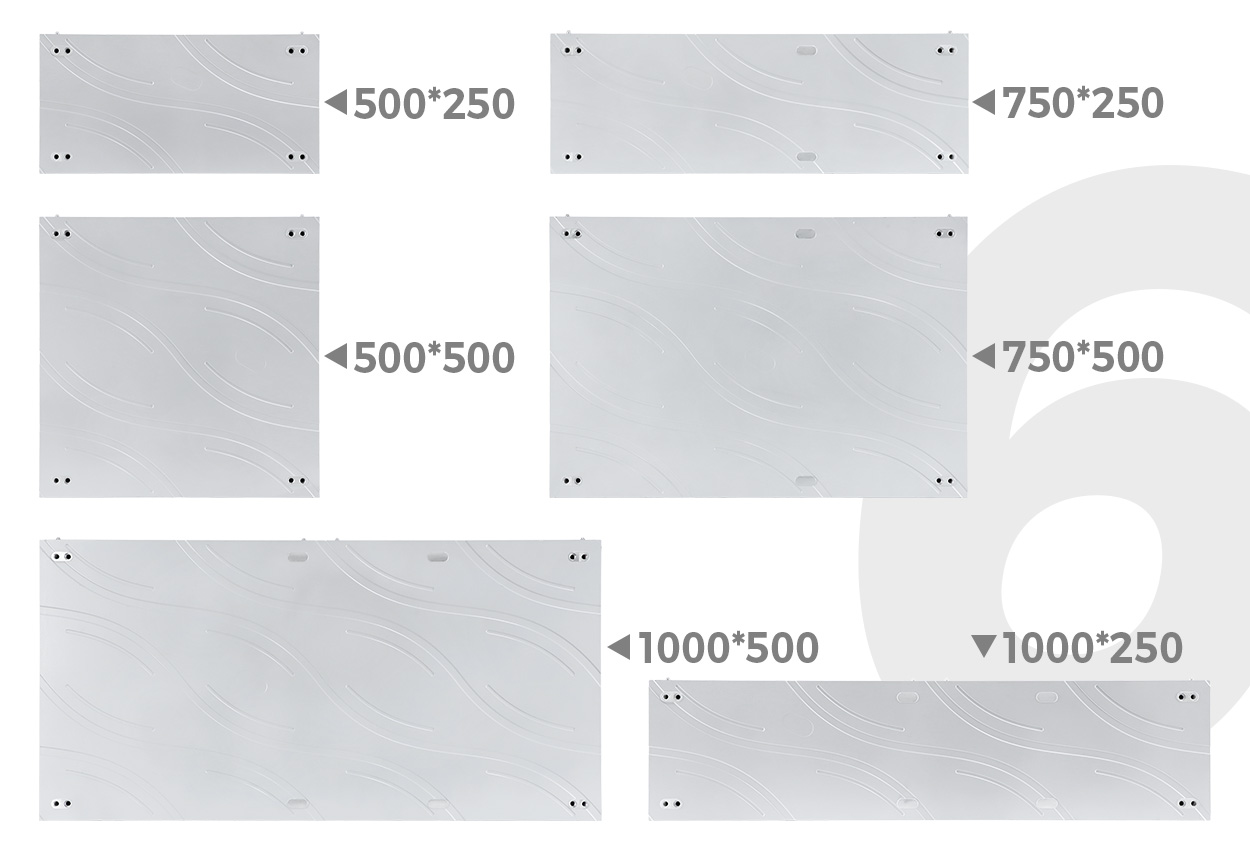
Six Cabinet Sizes
Based on 250 × 250 mm LED modules, the series offers 500 × 250, 750 × 250, 1000 × 250, 500 × 500, 750 × 500, and 1000 × 500 mm cabinets for efficient screen-size planning.
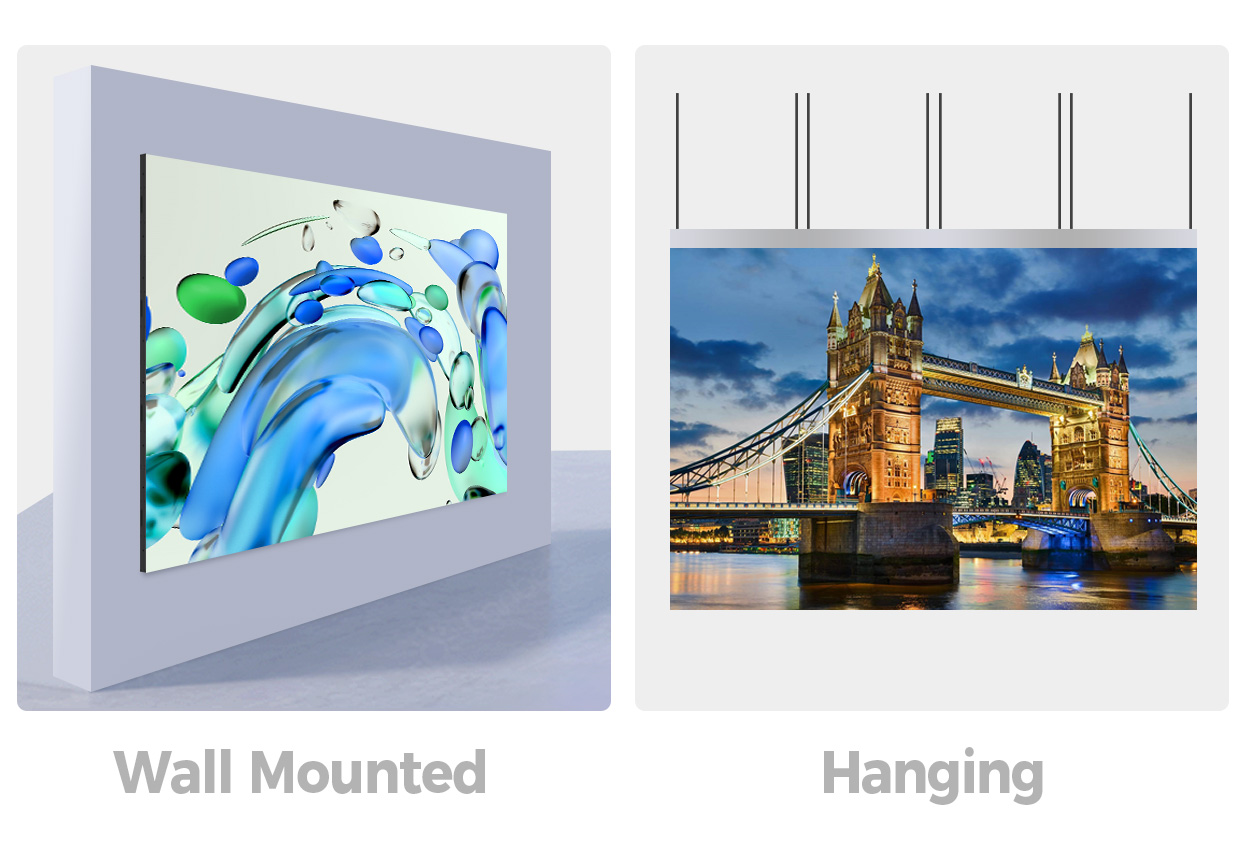
Flexible Installation Options
The cabinet supports hanging, wall-mounted, and pole-mounted configurations; the final mounting system should be engineered for the screen size, site structure, and service requirements.
Fine-Pitch Indoor Image Performance
Pixel pitches from P1.25 to P2.97, 600–750 cd/m² brightness, a 160° viewing angle, and a ≥3,840 Hz refresh rate provide detailed indoor visuals and camera-friendly playback across multiple viewing positions.
EA250WH5 Indoor LED Screen Specifications
| Pixel Pitch (mm) | P1.25 GOB | P1.56 GOB | P1.95 GOB | P2.5 | P2.6 | P2.97 | P3.91 |
|---|---|---|---|---|---|---|---|
| Model | EA250WH5-P1.25 | EA250WH5-P1.56 | EA250WH5-P1.95 | EA250WH5-P2.5 | EA250WH5-P2.6 | EA250WH5-P2.97 | EA250WH5-P3.91 |
| Pixel Configuration | SMD1010 | SMD1212 | SMD1515 | SMD1515 | SMD1515 | SMD1515 | SMD2020 |
| Density (Pixels/㎡) | 640,000 | 409,600 | 262,144 | 160,000 | 147,456 | 112,896 | 65,536 |
| Module Resolution (Pixel) | 200x200 | 160x160 | 128x128 | 100x100 | 96x96 | 84x84 | 64x64 |
| Module Size (mm) | 250x250 | 250x250 | 250x250 | 250x250 | 250x250 | 250x250 | 250x250 |
| Driving Mode (Duty) | 1/50 | 1/40 | 1/32 | 1/25 | 1/32 | 1/28 | 1/16 |
| Cabinet Size (mm) | 500/750/1000x250, 500/750/1000x500 | 500/750/1000x250, 500/750/1000x500 | 500/750/1000x250, 500/750/1000x500 | 500/750/1000x250, 500/750/1000x500 | 500/750/1000x250, 500/750/1000x500 | 500/750/1000x250, 500/750/1000x500 | 500/750/1000x250, 500/750/1000x500 |
| Cabinet Weight (KG) | 3.0/4.3/5.7, 5.3/8.0/10.5 | 3.0/4.3/5.7, 5.3/8.0/10.5 | 3.0/4.3/5.7, 5.3/8.0/10.5 | 3.0/4.3/5.7, 5.3/8.0/10.5 | 3.0/4.3/5.7, 5.3/8.0/10.5 | 3.0/4.3/5.7, 5.3/8.0/10.5 | 3.0/4.3/5.7, 5.3/8.0/10.5 |
| Brightness (CD/㎡) | 600 | 600 | 750 | 750 | 750 | 750 | 750 |
| Viewing Angle (°) | 160 | 160 | 160 | 160 | 160 | 160 | 160 |
| Gray Grade (Bits) | 14/16 Optional | 14/16 Optional | 14/16 Optional | 14/16 Optional | 14/16 Optional | 14/16 Optional | 14/16 Optional |
| Operation Power | AC90-264V,47-63Hz | AC90-264V,47-63Hz | AC90-264V,47-63Hz | AC90-264V,47-63Hz | AC90-264V,47-63Hz | AC90-264V,47-63Hz | AC90-264V,47-63Hz |
| Max. Power Consumption (W/㎡) | 300 | 280 | 320 | 280 | 300 | 300 | 300 |
| Avg. Power Consumption (W/㎡) | 100 | 95 | 110 | 95 | 100 | 100 | 100 |
| Frame Frequency (Hz) | 50/60 | 50/60 | 50/60 | 50/60 | 50/60 | 50/60 | 50/60 |
| Refresh Frequency (Hz) | ≥3840 | ≥3840 | ≥3840 | ≥3840 | ≥3840 | ≥3840 | ≥3840 |
| Working Temperature (ºC) | -20~+60 | -20~+60 | -20~+60 | -20~+60 | -20~+60 | -20~+60 | -20~+60 |
| Protection Grade | IP31 | IP31 | IP31 | IP31 | IP31 | IP31 | IP31 |
EA250WH5 Indoor LED Screen FAQ
What pixel pitches are available for the EA250WH5?
EA250WH5 is available in P1.25 GOB, P1.56 GOB, P1.95 GOB, P2.5, P2.6, and P2.97 configurations, allowing the pixel pitch to be matched to viewing distance and resolution requirements.
What cabinet sizes does the EA250WH5 support?
The 250 × 250 mm module platform supports six cabinet sizes: 500 × 250, 750 × 250, 1000 × 250, 500 × 500, 750 × 500, and 1000 × 500 mm.
Is the EA250WH5 a front-service LED display?
Yes. Its full front-service design keeps routine component access on the viewing side, which is useful for wall-mounted LED displays with restricted rear space.
What refresh rate and viewing angle does the EA250WH5 provide?
All listed configurations specify a refresh rate of at least 3,840 Hz and a 160° viewing angle, supporting smooth on-camera playback and visibility from wide seating positions.
Can the EA250WH5 create right-angle LED screens?
Yes. The cabinet supports 90° right-angle splicing for corner and multi-surface layouts, subject to the project’s structural and module-layout design.
Which installation methods are supported?
EA250WH5 cabinets can be configured for hanging, wall-mounted, or pole-mounted installation; mounting hardware and load calculations should be selected for the site conditions.
Is the EA250WH5 suitable for outdoor use?
No. The listed IP31 protection grade and 600–750 cd/m² brightness are intended for controlled indoor environments rather than rain-exposed outdoor installations.
How should I choose the right EA250WH5 pixel pitch?
Choose the pixel pitch by balancing minimum viewing distance, required screen resolution, physical screen size, content detail, and budget; share these project inputs for a model recommendation.