

An indoor LED display screen is a modular video wall designed for controlled interior spaces. EagerLED lists fixed indoor models for meeting rooms, control centers, studios and retail. Choose by room size, nearest viewer, content detail and how technicians will access the cabinets; confirm the exact model specifications before ordering.
- Set the wall dimensions and native pixel canvas around the actual content.
- Compare pixel pitch, SMD or COB configuration, cabinet format and service access by model.
- Ask for an itemized equipment quote that identifies control, cables, spares and local installation responsibilities.
On this page
Start with the indoor display format
| Product route | What to compare before quoting |
|---|---|
| EA640F2 fixed video wall | Cabinet grid, SMD or COB option, viewing distance and front-service plan. |
| EA640H1 front-service wall | Exact module and cabinet specification, available wall depth and technician access. |
| EA600COB3 COB display | Selected COB datasheet, repair scope, room lighting and content detail. |
The models are alternatives for different layouts. Request the current datasheet for the exact configuration; a feature listed for one model does not apply automatically to the others.
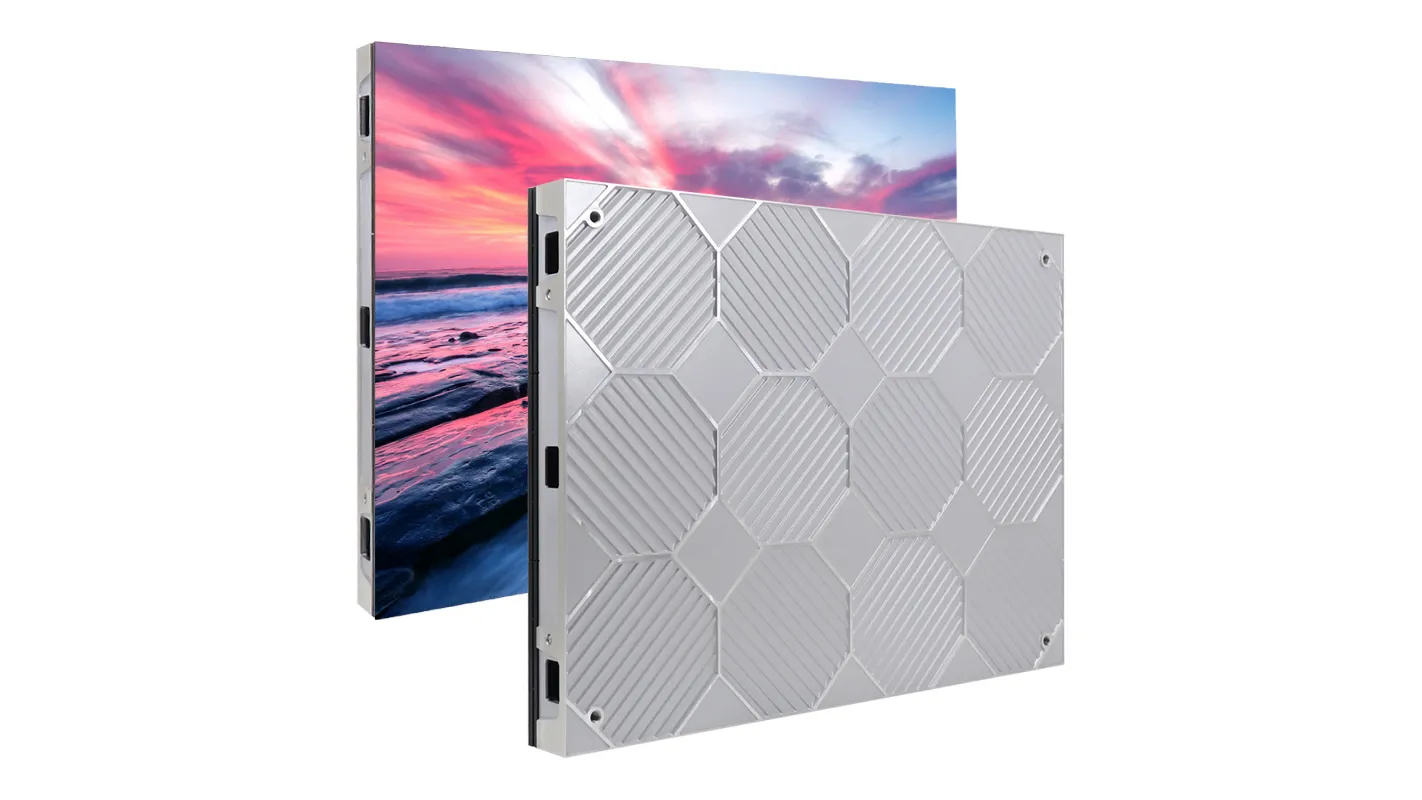
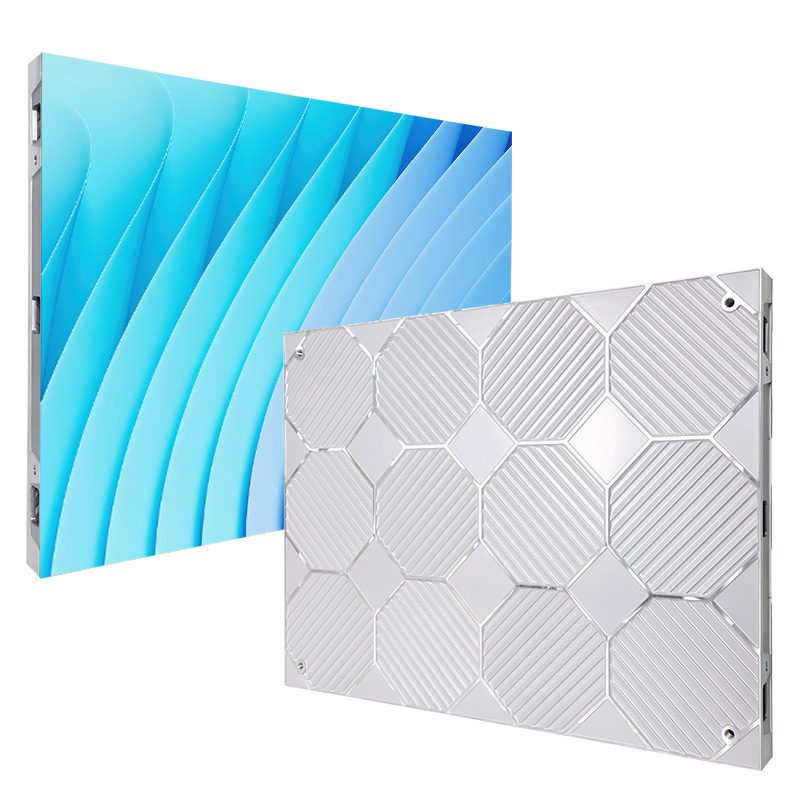
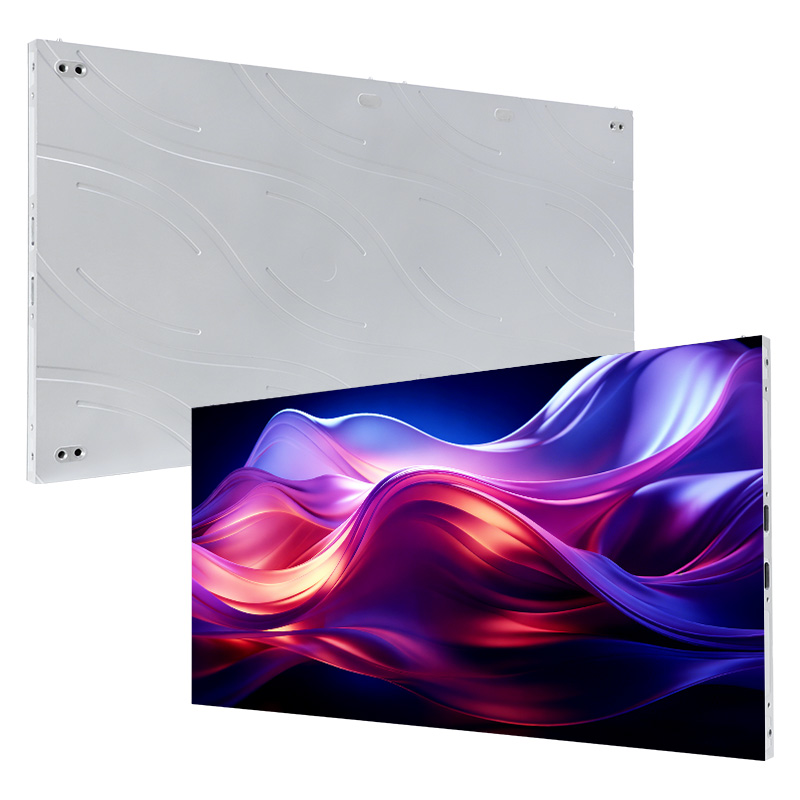
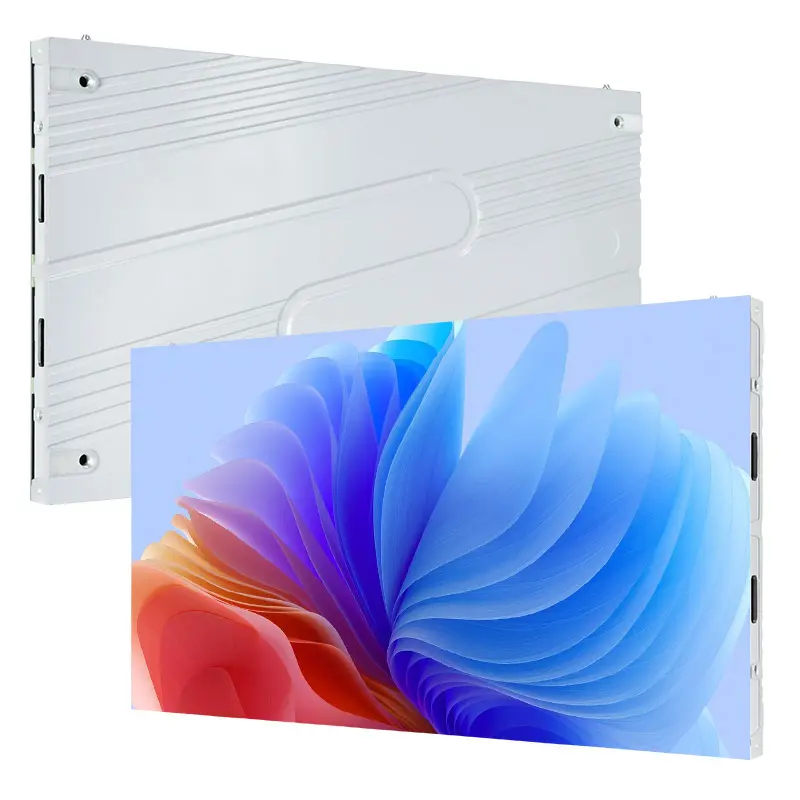
Categories
2026 New LED Screen Price for You
An indoor LED screen is a modular direct-view display built for controlled indoor environments. The right system is selected by matching pixel pitch, viewing distance, brightness, refresh rate, cabinet format and service access to the room. This guide explains those decisions without treating one specification as suitable for every project.
1. What Is an Indoor LED Screen?
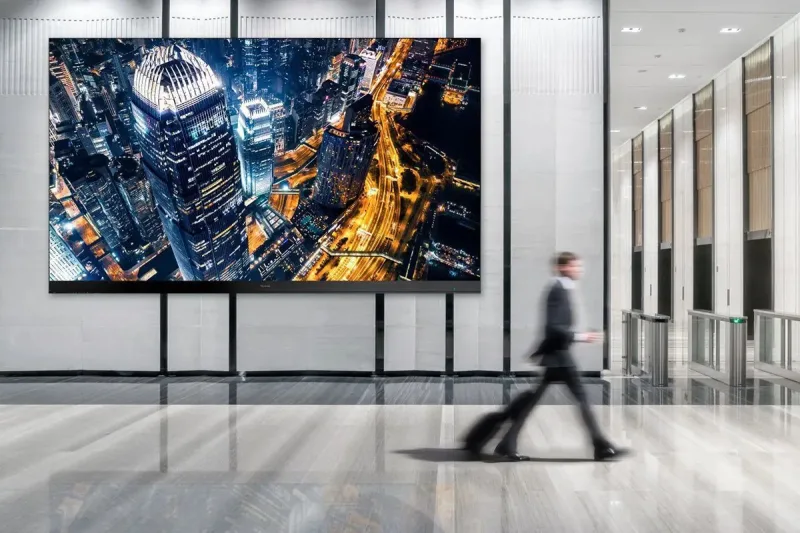
An indoor LED screen combines many LED modules into one continuous video wall. Unlike a projector, the display produces its own light, so there is no projection path to block and no fixed image size imposed by a lens. Cabinets can be arranged to match the required width, height and aspect ratio.
The most important design choice is not maximum brightness. It is the balance between the nearest viewer, the content resolution, the room lighting and the available installation depth. A boardroom, control room, retail store and broadcast studio can all use indoor LED, but they rarely need the same pixel pitch or cabinet design.
01 How the Modular Display Works
LED modules mount to cabinets that carry power supplies, receiving cards and signal connections. Multiple cabinets join mechanically and electronically to create a larger canvas. Precise cabinet alignment matters because even a small step between panels can remain visible on fine-pitch content.
02 Main Benefits
- Scalable size: build a wall around the room and content format instead of choosing a fixed television size.
- Seamless canvas: correctly aligned modules avoid the bezel grid of multi-panel LCD walls.
- Serviceable modules: compatible front-service designs allow technicians to replace modules and power components from the viewing side.
- Camera-ready options: selected models support high refresh rates for presentations, live production and broadcast workflows.
2. Indoor LED Screen Types and Technologies
Indoor LED screens are commonly grouped by pixel pitch, LED packaging and cabinet construction. The labels describe different parts of the system, so a complete specification should state all three rather than relying on a single term such as “fine pitch.”
01 Fine-Pitch SMD LED Displays
Surface-mounted device (SMD) modules place red, green and blue LED chips in a compact package. They remain a practical choice for meeting rooms, auditoriums, command centers and retail projects. Pitch options commonly span approximately P1.2 to P4 for indoor work, while the final choice depends on viewing distance and required pixel resolution.
02 COB and GOB Protection
Chip-on-board (COB) and glue-on-board (GOB) approaches add different levels of surface protection. They can improve resistance to impact, dust and moisture at the module face. Review the exact construction, repair method, color performance and warranty for the chosen series; the acronyms alone do not define the complete result. See the EA600COB3 indoor COB LED display for one current product format.
03 Front-Service Indoor LED Walls
Front-service cabinets are useful where the LED wall mounts directly against a solid wall. Modules and key components can be reached from the front, reducing the need for a rear maintenance corridor. Confirm how power supplies, receiving cards and cables are removed before the mounting structure is approved.
3. Indoor LED Screen Specifications to Compare
A useful quotation connects every specification to the room. Selected EagerLED fine-pitch configurations may offer pitches from approximately 0.9 mm, refresh rates of 3,840 Hz or higher and contrast ratios around 5,000:1. These are model-dependent values, not universal specifications for every indoor LED screen.
| Specification | Project question | Why it matters |
|---|---|---|
| Pixel pitch | How close is the nearest regular viewer? | Controls perceived detail, native resolution and total LED count. |
| Screen size | What width, height and aspect ratio fit the wall? | Determines cabinet layout and the content canvas. |
| Brightness | What is the measured ambient light at the screen? | Too little reduces legibility; too much can make close viewing uncomfortable. |
| Refresh rate | Will cameras record or broadcast the display? | A higher suitable refresh rate helps reduce scan lines and flicker on camera. |
| Contrast and grayscale | Does the content include dark scenes or fine gradients? | Affects shadow detail, color transitions and perceived depth. |
| Service access | Can technicians reach the front, rear or both? | Changes cabinet choice, wall depth and maintenance time. |
Pixel pitch should be calculated alongside physical size. For example, a smaller pitch can add detail, but a larger wall with the correct content resolution may be more useful than paying for pixels the audience cannot resolve. This pixel pitch selection guide explains the relationship in more detail.
4. Indoor vs Outdoor LED Screens
Indoor and outdoor LED screens may look similar in product photographs, but they are engineered for different conditions. Outdoor systems prioritize weather sealing, sunlight readability and thermal management. Indoor systems can prioritize shorter viewing distances, lower brightness, quieter operation and a slimmer installation.
| Selection point | Indoor LED screen | Outdoor LED screen |
|---|---|---|
| Environment | Dry, controlled interior spaces | Sun, rain, dust and changing temperatures |
| Viewing distance | Often shorter, favoring finer pitch | Often longer, allowing wider pitch |
| Brightness | Matched to controlled room lighting | Matched to daylight and direct-sun conditions |
| Protection | Commonly an indoor protection class such as IP30, depending on model | Commonly IP65-class protection or higher where exposure requires it |
| Installation | Wall mount, recessed frame, hanging or freestanding structure | Engineered steelwork with weather, wind and drainage planning |
Do not move an indoor cabinet outdoors simply because the event is temporary. For repeat installations that may be used in different venues, compare purpose-built rental LED screen systems and confirm the environmental rating of the exact model.
5. Indoor LED Screen Applications
01 Meeting Rooms, Studios and Control Rooms
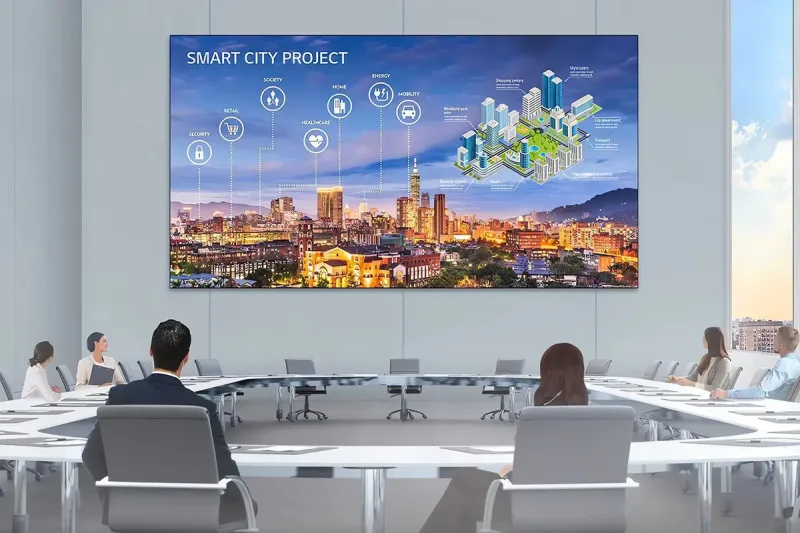
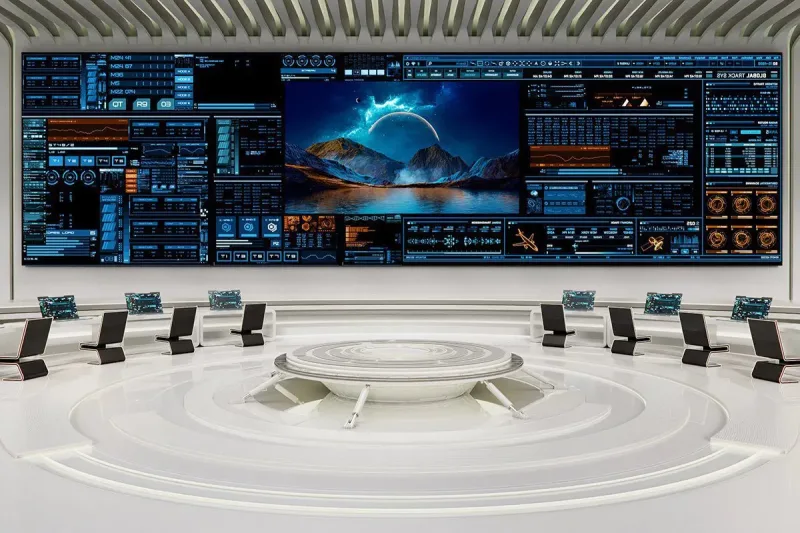
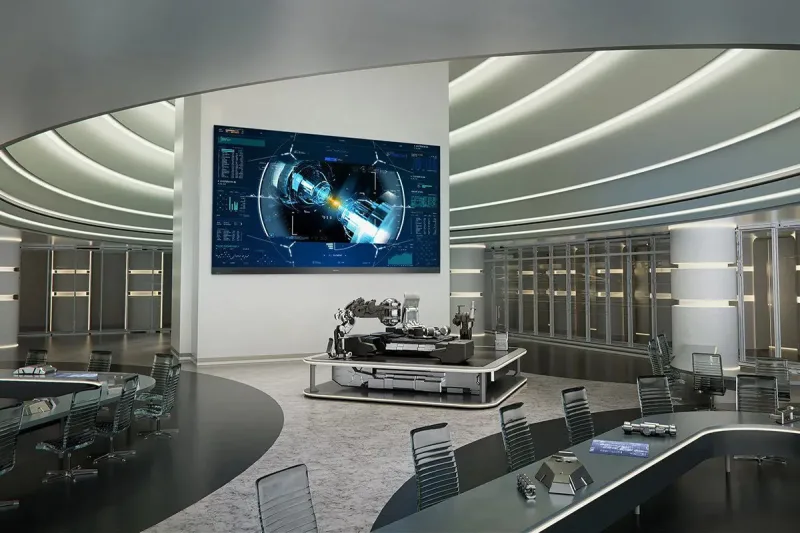
Corporate meeting rooms use LED walls for presentations, video conferences and shared dashboards. Studios and control rooms place greater emphasis on refresh rate, grayscale performance, redundancy and 24/7 operating plans. Camera distance and shutter settings should be tested with the proposed screen before final approval.
02 Retail, Showrooms and Hospitality
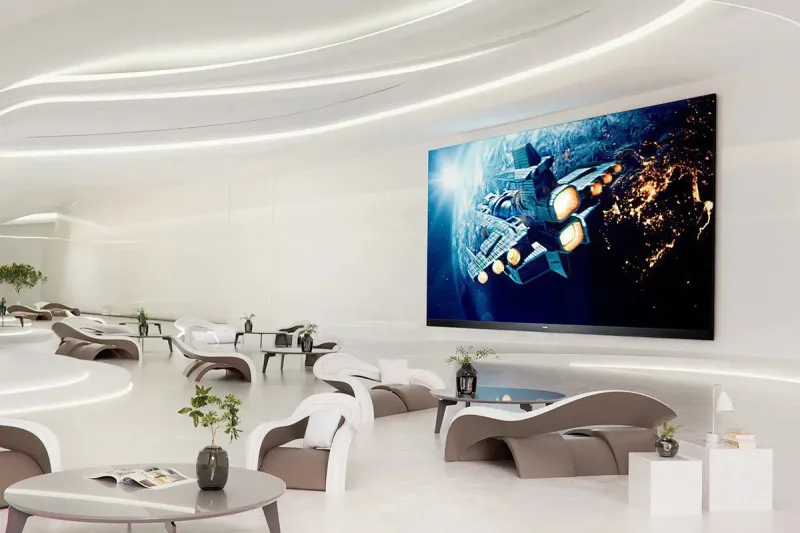
Retailers use indoor LED displays for campaigns, product launches and wayfinding. Hotels and showrooms often integrate the screen into reception architecture, so cabinet depth, acoustic behavior and access panels should be coordinated early. See practical layouts for an LED screen for shops.
03 Auditoriums, Education and Worship
Large rooms need readable text and balanced sightlines, not just a large diagonal measurement. Presentation fonts, camera framing, stage lighting and the nearest seats should all be included in the test content. A dedicated church LED screen plan should also consider live camera feeds and volunteer-friendly operation.
6. How to Choose an Indoor LED Screen
Start with the room and audience, then work toward the hardware. A useful supplier brief can be prepared in four steps.
01 Record the Viewing Conditions
Measure the nearest and farthest viewing positions, available wall area and ambient light. Note whether the screen will be viewed directly, filmed by cameras or both.
02 Define the Physical and Pixel Canvas
Choose a screen width and height that fit the architecture and content. Calculate the resulting native pixel resolution for each candidate pitch. Standard cabinet formats such as 500 x 500 mm or 640 x 480 mm can simplify layout, but model-specific dimensions must be confirmed.
03 Confirm the Complete System
Review cabinets, spare modules, video processor, sender and receiver cards, power distribution, signal cables, mounting structure and control inputs as one bill of materials. Clarify whether installation, commissioning and operator training are included.
04 Approve Service Access and Support
Confirm which components can be replaced from the front, how long common service operations take and which spare parts ship with the order. Ask for drawings and exact model data sheets before the mounting structure is fabricated.
7. Installation and Maintenance
01 Plan the Structure Before Production
The structure must support the complete display and preserve cabinet alignment. Allow space for ventilation, power distribution and cable routing. Structural and electrical work should follow the applicable local requirements and the selected manufacturer’s installation documentation.
02 Protect Power and Signal Paths
Separate power and signal planning, label cables and document the processor configuration. Projects that require continuous operation should discuss backup power, spare receiving cards and an alternate signal path rather than relying on a single component chain.
03 Build a Routine Care Schedule
- Inspect module alignment, connectors, cables and ventilation openings.
- Clean the display only with methods approved for the selected LED surface.
- Control room temperature, humidity and dust.
- Use appropriate brightness schedules and power-down procedures.
- Keep spare modules from the same production batch when color matching is critical.
Power demand varies with screen area, content, brightness and product design. Use the selected model’s average and maximum power data for circuit planning, and review these LED screen energy-efficiency practices before commissioning.
8. Why Choose EagerLED?
EagerLED manufactures modular indoor LED display systems for integrators, distributors and project owners. The current indoor range includes fine-pitch SMD, COB and front-service cabinet options for meeting rooms, control centers, retail, hospitality and other fixed installations.
01 Manufacturing and Project Experience
EagerLED reports more than 15 years of LED display manufacturing experience and deliveries to more than 90 countries and regions. These figures are first-party company information; buyers should still verify the exact model, certification and project scope required for their market.
02 Inspection Before Delivery
Complete screens are reported to undergo a 72-hour aging inspection before delivery, with checks for flatness, color consistency and visual performance. Request the inspection record, packing list and spare-parts list for the specific order.
03 Configuration Support
A complete proposal can cover cabinet layout, pixel resolution, control, power, accessories, packing and replacement parts. For a project-specific recommendation, contact EagerLED with the screen dimensions, viewing distance, room photos, content sources and delivery country.
9. Indoor LED Screen FAQs
01 What pixel pitch is best for an indoor LED screen?
Choose pixel pitch from the nearest regular viewing distance and the detail in the content. A smaller pitch supports closer viewing and a higher pixel count, but it also increases system cost. Compare at least two pitches at the intended viewing distance before ordering.
02 How bright should an indoor LED display be?
Brightness should match measured room lighting rather than a universal maximum. Meeting rooms and studios generally need less output than sunlit atriums. Specify sufficient adjustment range so operators can reduce brightness for comfortable close viewing.
03 Is an indoor LED screen better than a projector?
Indoor LED is useful when a project needs a seamless modular canvas, no projection path and consistent visibility in ambient light. A projector may remain suitable when the budget, room layout or occasional-use pattern does not justify a permanent LED wall.
04 Can an indoor LED screen run 24/7?
Selected systems can be configured for continuous operation, but the design should include thermal management, suitable power distribution, redundancy, monitoring and a maintenance plan. Confirm the duty cycle and warranty terms for the exact model.
05 How much does an indoor LED screen cost?
Cost depends on screen area, pixel pitch, LED package, cabinet design, control system, structure, spare parts, freight and installation. Ask for an itemized quotation based on the finished screen dimensions and delivery location instead of comparing panel prices alone.
06 What information is needed for an accurate quotation?
Provide the screen width and height, nearest viewing distance, room photos, ambient light, installation method, camera requirements, input sources, local voltage, delivery country and project schedule. This information allows the supplier to calculate a practical cabinet layout and bill of materials.
10. Conclusion
The best indoor LED screen is the one engineered for the actual room, audience and content. Start with viewing distance and physical size, then confirm pixel pitch, native resolution, brightness, refresh rate, cabinet access, power, control and structure as one system. An itemized proposal and model-specific drawings make quotations easier to compare and reduce installation changes later.
For a reliable recommendation, send EagerLED the venue dimensions, photos, viewing distance and delivery location. The project team can then match the application to a current indoor LED display series and prepare a complete configuration for review.
