

Church LED Screens: Specify a Worship Video Wall
A church LED screen is a modular direct-view video wall for lyrics, Scripture, sermon slides and live camera images. For a sanctuary installation, choose the screen size and pixel pitch together, then verify readability from the seating area and image quality with the actual worship cameras.
EagerLED supplies display equipment for church AV integrators, installers and worship production teams. Use this guide to prepare a specification and compare equipment quotations; confirm local structural work, electrical installation and commissioning separately.
- Send the screen dimensions, nearest and farthest viewing positions, venue photos and content samples.
- Choose fixed or rental cabinets around installation frequency and maintenance access.
- Test lyric readability, low-brightness image quality and camera compatibility together.
- Compare the controller, spares, freight and installation scope as well as the LED cabinets.
Explore this church LED screen guide
- Why Churches Choose LED Displays
- Church LED Screen Ideas for Worship Spaces
- Why Choose EagerLED as Your Church Screen Provider
- Church LED Screen Guide: Size, Price & Installation
- 1. What Is a Church LED Screen?
- 4. How to Choose a Church LED Screen
- 5. Church LED Screen Price Guide
- 6. Church LED Screen Installation Options
- 9. Church LED Screen FAQs
- 10. Request a Church LED Screen Proposal
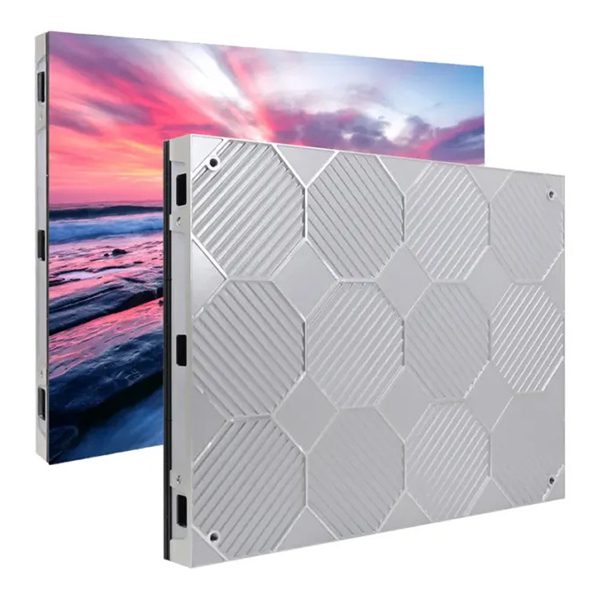
EA640F2 Indoor LED Display
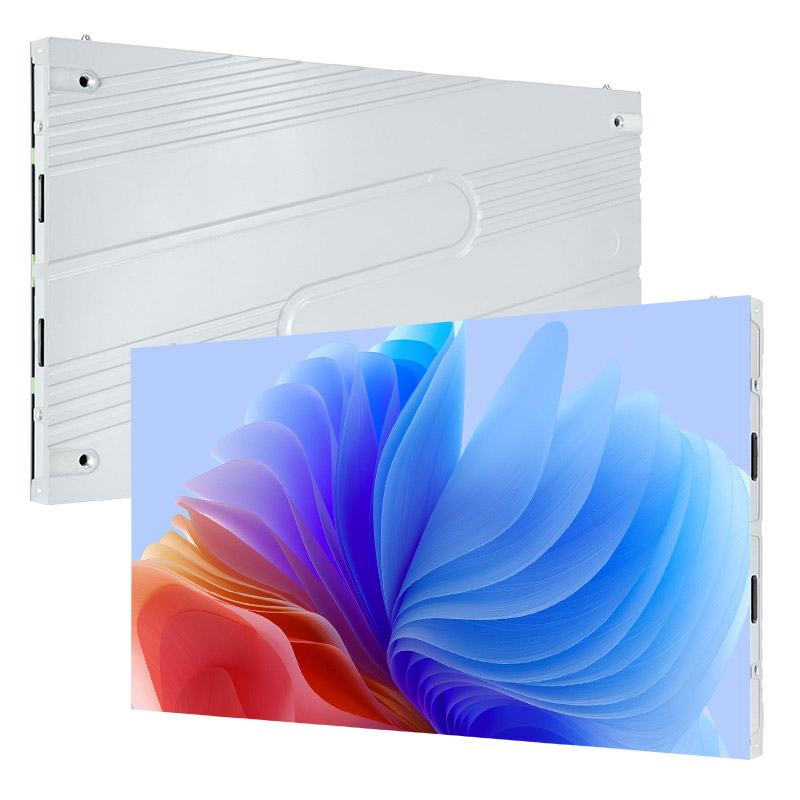
EA250WH5 LED Church Screen
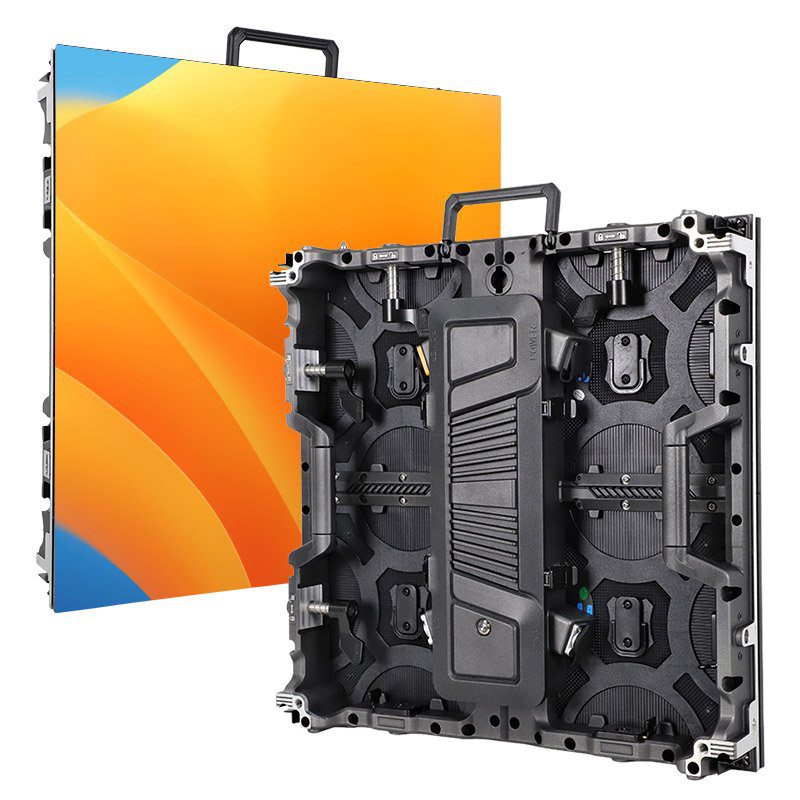
EA500C6 LED Church Screen
Why Churches Choose LED Displays
- Clear worship content: Display lyrics, Bible verses, sermon points and multilingual captions in real time.
- Consistent sightlines: Modular sizing helps people at the front, rear and side seating areas follow the service.
- Camera-ready services: A suitable refresh rate reduces visible banding during live streaming and recording.
- Flexible programs: Switch from weekly worship to weddings, holiday services, concerts and community events.
- Centralized communication: Reuse the system for schedules, wayfinding, announcements and emergency notices.
Church LED Screen Ideas for Worship Spaces
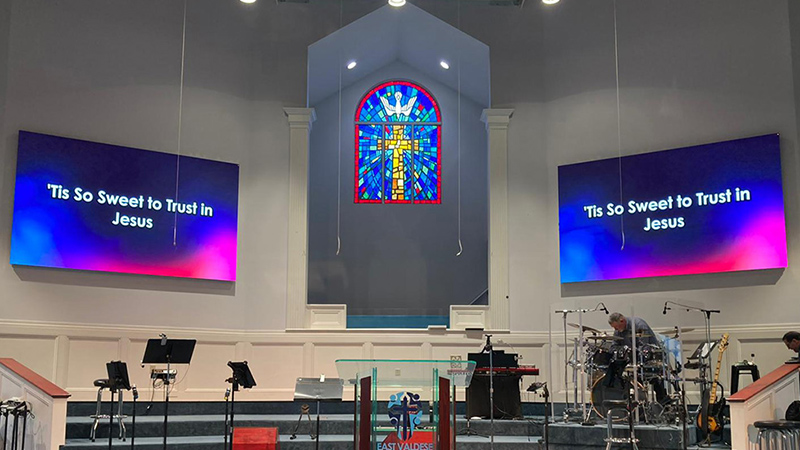
01. Church Screen Backgrounds
A church screen background can show song lyrics, Scripture, sermon slides or subtle motion graphics without changing the physical stage set.
Keep backgrounds high contrast and visually quiet so text remains readable from the rear seats and on the livestream.
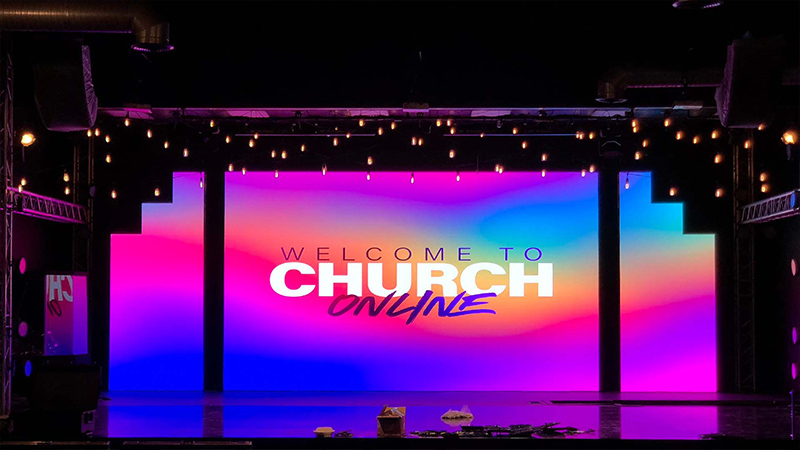
02. Church Stage Backdrops
A church stage backdrop places a large LED wall behind or beside the worship platform for services, choir performances and seasonal programs.
Modular cabinets can form a single 16:9 canvas, two side screens or a custom layout that follows the architecture.
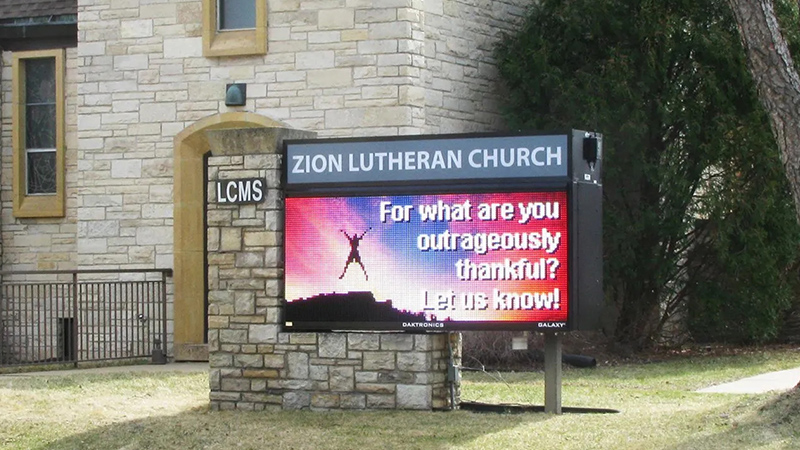
03. Digital Church Notice Boards
Digital church notice boards update service times, ministry schedules, wayfinding and announcements without reprinting posters.
Place them in entrances, corridors and fellowship areas where visitors naturally pause.
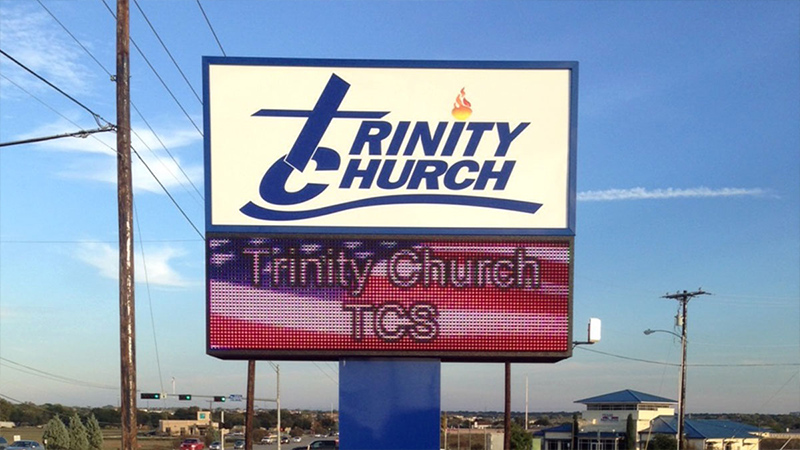
04. Indoor and Outdoor Church LED Signs
Indoor or outdoor church LED signs can show welcome messages, service times, Scripture and event notices.
Outdoor models require suitable brightness, weather protection and a structure engineered for local wind loads.
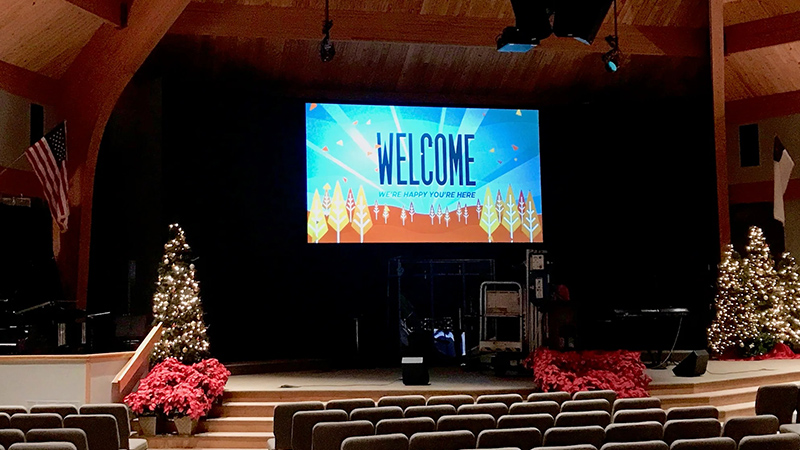
05. Church Wedding Screens
Church wedding screens can display names, photographs, video, readings and live camera feeds while preserving a coordinated stage design.
For temporary celebrations, compare fixed installations with a wedding LED screen rental plan before choosing cabinet type and rigging.
Why Choose EagerLED as Your Church Screen Provider
EagerLED has manufactured LED display systems since 2009. Church projects can include cabinet selection, screen-size calculations, control-system matching, technical drawings, factory testing and remote installation guidance.
The final specification is based on the sanctuary layout, nearest viewing distance, ambient light, camera workflow, service access and local electrical requirements.
01. What EagerLED Provides for Church Projects
- Documented quotation: Cabinet, module, control system, accessories and support scope are itemized before ordering.
- Application engineering: Pixel pitch, brightness, refresh rate and service access are matched to the venue.
- Factory testing: The assembled configuration is tested before shipment, with photos or video available for review.
- Installation support: Drawings and remote guidance complement a qualified local structural and electrical team. Review the LED display installation guide during planning.
02. Church LED Display Case Studies
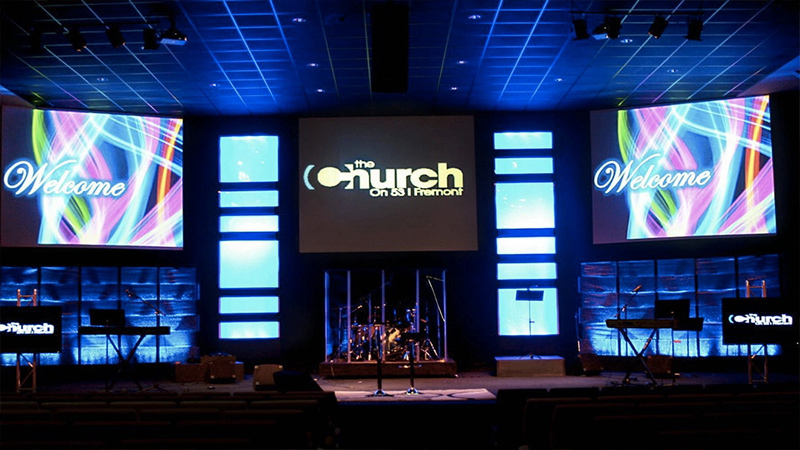
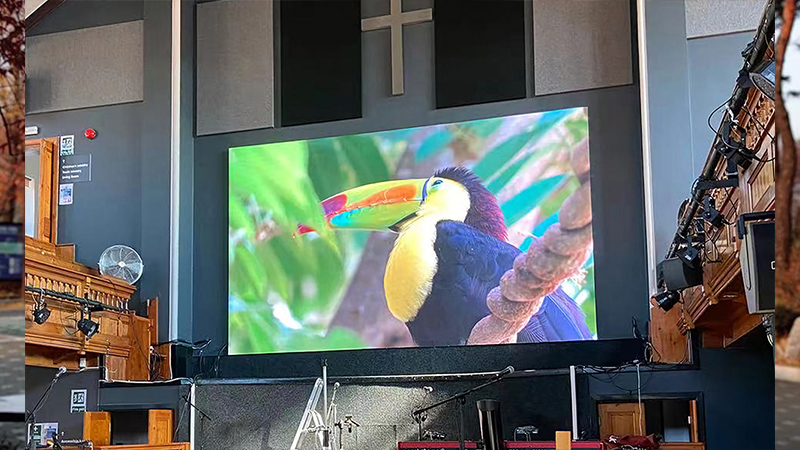
03. USA: EA640F2 LED Screen for Church
04. USA: P2.5 Indoor LED Screen for Church
05. Find the Right Church LED Display
Church LED Screen Guide: Size, Price & Installation
Choosing a church LED screen starts with viewing distance, ambient light, camera use and service access. LED worship screens for liturgy and sermons should make text easy to read, reproduce skin tones naturally and remain simple for volunteers to operate.
This guide explains screen locations, pixel pitch, brightness, refresh rate, quotation scope and installation options for sanctuaries, church stages and gospel events.
Start with the specification, then compare the quoted supply scope. The expandable guide at the top links directly to each decision section.
1. What Is a Church LED Screen?
A church LED screen is a modular direct-view display used for lyrics, Scripture, sermon notes, live video and announcements. Cabinets join into a custom-sized video wall for the sanctuary, stage, hall or outdoor event area.
Because every pixel emits light, an LED display can remain visible under brighter room and stage lighting than a typical projector. The correct specification still depends on viewing distance, content, cameras and the venue.
01. Core Features of a Church LED Display
- Modular size and shape: Build a 16:9 wall, side screens, columns or curved stage layout.
- Readable brightness: Set output for the room instead of running the screen at maximum brightness.
- Wide viewing coverage: Select cabinets and layout for side seating as well as the center aisle.
- Camera compatibility: Use an appropriate refresh rate and test with the church’s cameras before approval.
- Front or rear service: Match maintenance access to the wall, stage and ventilation plan.
02. Church LED Screen vs. Projector and LCD
| Display option | Best fit | Main limitation | Planning note |
|---|---|---|---|
| Direct-view LED wall | Large sanctuaries, bright stages, modular sizes | Higher initial investment | Choose pixel pitch from the nearest regular viewer |
| Projector and screen | Budget-conscious rooms with controlled light | Image contrast falls as ambient light rises | Allow for projector placement, shadows and lamp or laser service |
| LCD display | Lobbies, classrooms and small overflow rooms | Visible bezels and limited practical size | Useful where viewers are close and the screen is modest |
2. How Church LED Screens Support Worship
- Liturgy and worship: Keep prayers, responsive readings, lyrics and Scripture synchronized with the service.
- Sermons: Support teaching with key points, references, illustrations and live camera feeds.
- Gospel events: Give larger audiences a clear view of speakers, performers and translated captions.
- Announcements: Share schedules, volunteer needs, donations and community programs before and after worship.
- Accessibility: Increase text size and contrast for distant seating and provide multilingual content when needed.
01. Benefits for Worship and Gospel Events
Well-planned church display screens reduce the number of separate signs and presentation surfaces the media team must manage. They also give every service a repeatable visual format.
The benefit comes from legibility and reliable operation, not maximum brightness. Set content templates, train volunteers and keep a tested backup workflow for important services.
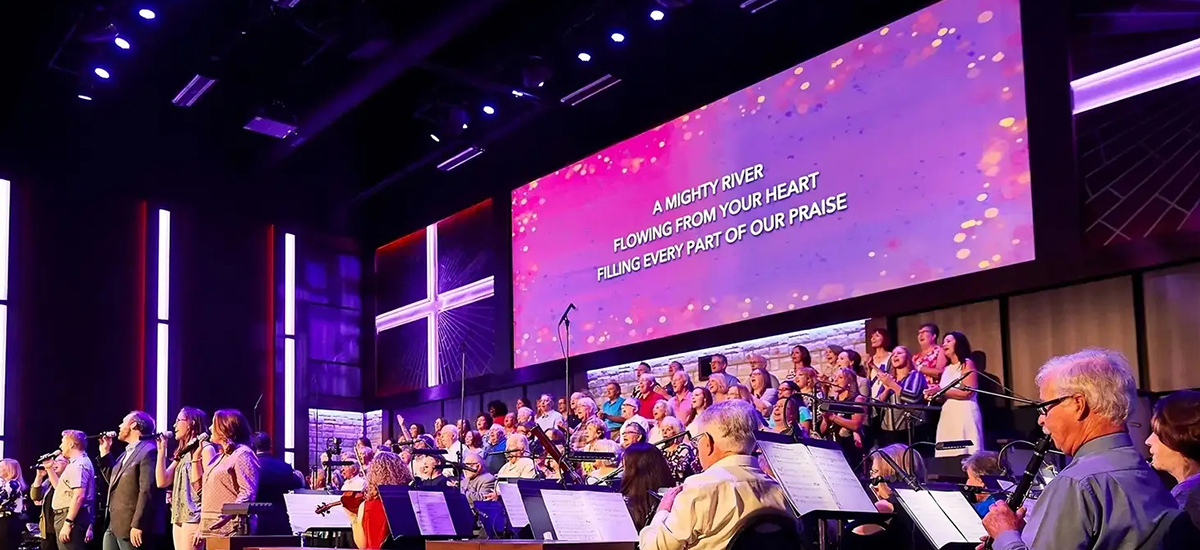
3. Best Locations for Church LED Video Walls
01. Where to Install Church LED Screens
- Main sanctuary: A central video wall or two side screens for lyrics, sermons and live camera feeds.
- Church stage: A backdrop screen sized around the platform, choir and camera framing.
- Entrance and halls: Smaller indoor LED displays for welcome messages and schedules.
- Outdoor gospel events: A weather-resistant or rental LED screen with appropriate brightness and certified rigging.
02. Common Church Screen Applications
- Weekly worship services and sermon series
- Choir performances, concerts and holiday productions
- Weddings, funerals and community ceremonies
- Livestream production and overflow-room feeds
- Outdoor outreach, gospel events and fundraising programs
- Lobby announcements, wayfinding and visitor information
4. How to Choose a Church LED Screen
01. Select by Pixel Pitch, Brightness and Refresh Rate
Use the nearest regular viewing position as the first filter, then confirm the choice with sample content. See the detailed LED display pixel pitch guide.
For lyrics and Scripture, test the intended font size and line spacing from the rear and side seats, then inspect the same content from the nearest regular seat. Pixel pitch alone does not establish legibility.
| Planning factor | Typical choice | What to verify onsite |
|---|---|---|
| Pixel pitch | P1.5-P2.5 for closer seating; P2.6-P4 for longer viewing | Nearest viewer, text size and camera distance |
| Indoor brightness | Enough output for stage lighting with room to dim | Windows, spotlights and desired black level |
| Outdoor brightness | Higher-output, weather-rated cabinets | Sun direction, operating hours and local climate |
| Refresh rate | 3840 Hz or higher for frequent camera use | Camera shutter, frame rate and scan performance |
| Service access | Front service or rear service | Wall depth, ventilation and technician access |
Brightness: Indoor worship spaces need controlled, dimmable output that stays readable without distracting the congregation. Outdoor church screens require substantially more brightness and appropriate ingress protection.
Use the LED display brightness guide to compare ambient-light conditions, then confirm the final value in the project specification.
Refresh rate: A screen used mainly for direct viewing can work at a lower refresh rate, but recorded and livestreamed services benefit from 3840 Hz or higher. Test the proposed cabinet with the actual camera shutter and frame-rate settings to check for bands or flicker.
A high refresh-rate figure alone does not guarantee clean camera images. Check the proposed cabinet, receiving card, processor, dimming level and camera settings as a complete chain, including slow pans and dark scenes.
02. Choose by Worship Use Case
- Permanent sanctuary: Choose fixed cabinets with service access that matches the wall construction.
- Touring ministry or changing stages: Choose rental cabinets with quick locks and protected edges.
- Curved or creative stage: Confirm cabinet angle options, signal mapping and camera moire before approval.
- Outdoor outreach: Specify weather protection, sunlight visibility and a locally engineered support structure.
Compare the tradeoffs in the fixed LED screen vs. rental LED screen guide.
03. Church LED Screen Buying Checklist
- Measure the wall, nearest and farthest viewing positions, and camera locations.
- Define the content: lyrics, sermon text, IMAG video, livestream, announcements or all five.
- Choose pixel pitch and physical size together; resolution alone does not determine readability.
- Confirm brightness, refresh rate, color calibration and front or rear maintenance.
- Plan structure, ventilation, power distribution, signal routing and safe technician access.
- Compare the complete delivered scope, not cabinet price alone. Review the LED display price guide before requesting quotes.
5. Church LED Screen Price Guide
Church LED screen pricing varies with pixel pitch, cabinet type, screen area, control hardware, mounting structure, spare parts, shipping and local installation. There is no reliable single price per square meter for every church project. Ask for a dated quotation for a defined configuration and delivery scope.
Always compare the same scope and ask whether power distribution, structure, controller, commissioning and freight are included.
01. Indoor LED Screens
| Quotation item | What to specify | Why it affects the comparison |
|---|---|---|
| LED cabinets | Screen width, height, pitch, native pixel resolution and service access | Two walls with the same area can differ in resolution and maintenance requirements. |
| Processing and inputs | Controller model, input formats, scaling and camera/presentation workflow | Cabinet-only pricing leaves the control system outside the comparison. |
| Spares and acceptance | Spare modules, power supplies, receiving cards and agreed factory tests | Record the supplied quantities and replacement procedure before ordering. |
| Delivery and local work | Freight, import charges, structure, power distribution and commissioning | Confirm who supplies each item and which costs are excluded. |
02. Outdoor LED Screens
| Outdoor decision | Information for the supplier | Local coordination |
|---|---|---|
| Visibility and enclosure | Viewing distance, sun direction, daily operating hours and weather exposure | Confirm the required cabinet protection and service clearance. |
| Supporting structure | Screen dimensions, cabinet load and mounting arrangement | Have qualified local professionals verify wind loads, foundations and permits. |
| Operating plan | Content updating, dimming schedule and technician access | Agree power, data routes and safe maintenance procedures. |
6. Church LED Screen Installation Options
Common church LED screen installation methods include wall-mounted, ceiling-suspended, pole-mounted and recessed systems. The final structure, anchors, power and rigging must be designed and approved by qualified local professionals.
Use the screen size, cabinet weight, service method and ventilation requirements to choose among the options below.
01. Wall-Mounted Installation
Best for: Sanctuaries with a suitable load-bearing wall and unobstructed sightlines. Select pixel pitch from the actual seating plan.
Installation:
- Secure a steel or aluminum frame to the approved wall structure.
- Use magnetic or quick-lock modules when front access is required.
Advantages: Saves floor space and suits small to medium fixed screens.
Planning note: A qualified local engineer must verify the wall material, anchors and required reinforcement.
02. Ceiling-Suspended Installation
Best for: High-ceiling sanctuaries, vaulted rooms and large halls that need unobstructed sightlines.
Installation:
- Hang the approved frame from engineered suspension points.
- Use rated hardware and secondary safety measures for single, curved or multi-screen layouts.
Advantages: Keeps the stage clear and can improve visibility across wide seating areas.
Planning note: The ceiling structure, rigging, sway control and inspection access require local professional approval.
03. Pole-Mounted Installation
Best for: Church entrances, courtyards, roadside signs and other locations without a suitable wall.
Installation:
- Mount the cabinet and service structure on an engineered steel or concrete support.
- Plan underground power, data, drainage and maintenance access before foundations are poured.
Advantages: Provides a standalone display without loading the existing building facade.
Planning note: Specify wind load, lightning protection, corrosion protection and local permit requirements.
04. Recessed Installation
Best for: New construction or renovation projects that need the screen flush with the architecture.
Installation:
- Coordinate the opening, structure, cable routes and power distribution before finishes are installed.
- Provide the ventilation and front or rear service clearance required by the selected cabinet.
Advantages: Produces a clean, integrated appearance with protected cable paths.
Planning note: Recess depth, cooling and replacement access must be resolved before construction drawings are approved.
7. Modern Church Display Planning
Modern church display planning often combines the sanctuary LED wall with livestream cameras, presentation software, audio, lighting and overflow-room feeds. Treat the screen as one part of the complete media system so switching, timing and color remain consistent.
For volunteers, repeatable presets and documented startup, shutdown and backup procedures are usually more valuable than complex effects.
Interactive features such as touch control, audience response and mobile content submission should be added only when they support a defined ministry workflow.
Before purchase, confirm who will operate the feature, how content is moderated, and whether the control network is separated from guest access.
8. EagerLED Church LED Screen Support
- Project consultation: Review venue measurements, content, cameras, mounting and service access before cabinet selection.
- Configuration documents: Receive a proposed bill of materials, system diagram and relevant installation information.
- Factory inspection: Review production and test records before shipment.
- Training and support: Use operation guidance for the church media team and remote technical support when needed.
- Warranty scope: Confirm the written coverage period, spare-parts plan and response process in the final quotation.
01. Church LED Display Project Examples
9. Church LED Screen FAQs
Does the quoted price include local church installation?
Confirm this in the written quotation. Ask for separate line items for display equipment, controller, spares, freight and any installation services. Local structural approval, electrical work, access equipment and commissioning responsibilities must be agreed with the project team.
Can one church LED wall serve both the congregation and livestream cameras?
Yes, provided the configuration passes both checks. Show actual lyrics from the seating area, then record skin tones, motion and dark scenes with the intended camera settings and screen brightness. Agree acceptance criteria before purchase.
10. Request a Church LED Screen Proposal
A successful church LED screen is readable from the intended seats, comfortable under worship lighting, compatible with the camera system and maintainable after installation.
Share your venue dimensions, viewing distances, photos, preferred installation date and content needs with EagerLED to receive a project-specific display proposal and quotation.
