
Outdoor advertising screens let one structure sell the same stretch of sky to six brands in an afternoon. An advertiser uploads a file, schedules it, and the message goes live in minutes instead of the weeks a vinyl change takes. That move from static print to networked display made outdoor advertising screens the default format for roadside, transit and retail advertising.
Buying them is where projects go wrong. A screen chosen on size and price alone can look washed out at noon, ghost on camera, fog internally after the first rainy season, or breach a night-time brightness rule the local authority enforces. This guide explains how outdoor advertising screens work, which specifications matter, and what configurations really cost to own.
What this guide covers:
- How outdoor advertising screens work, end to end
- LED, LCD, 3D and mobile formats compared on one table
- Pixel pitch, brightness, refresh rate and IP rating in plain numbers
- Indicative 2026 budget ranges and a payback formula for your own site
- Installation, commissioning, maintenance and troubleshooting checklists

1. What Are Outdoor Advertising Screens?
Outdoor advertising screens are electronic displays permanently installed in public or semi-public space to carry paid advertising. They are built around LED or LCD panels, driven by a media player or video controller, and managed through content management software that lets an operator schedule, update and monitor campaigns remotely.
You will find outdoor advertising screens in five environments: roadside billboards read by moving traffic, street furniture such as bus shelters and metro entrances, retail shopfronts and building façades, sports and venue perimeter displays, and mobile trailer units. Three traits separate them from indoor digital signage: they are sealed against weather, bright enough to fight direct sunlight, and built to run for years rather than office hours.
01. How Outdoor Advertising Screens Work
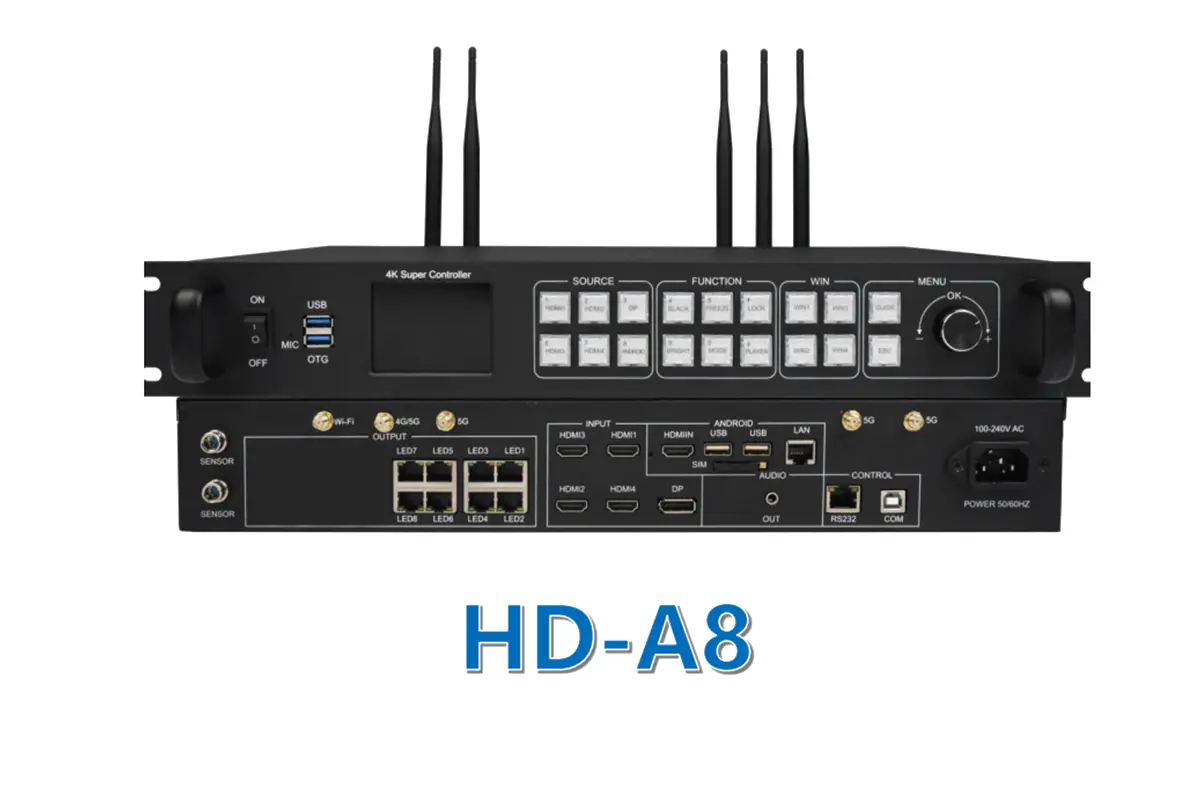
Every outdoor advertising screen is the same signal chain in a different cabinet. A media player or cloud CMS sends content to a sending card, which converts it into a data stream. That stream travels over Cat5e or Cat6 cable, or fibre for long runs, to receiving cards inside each cabinet, and those cards drive the LED driver ICs that switch each red, green and blue diode on and off.
Performance on the street is set by four values: pixel pitch, which decides how far away the image still looks sharp; brightness in nits, which decides whether it survives sunlight; refresh rate, which decides whether a phone camera records a clean image or black scan bands; and the cabinet IP rating, which decides whether the screen survives rain, dust and salt air. Behind the LEDs sit the parts buyers forget to budget for: power distribution, surge protection, cooling, the structure and the network connection.
02. Outdoor Advertising Screens versus Traditional Billboards
Digital does not win on every metric. Static vinyl is still cheaper for a single message that never changes, and printed posters remain effective for short, low-budget campaigns. The case for outdoor advertising screens is flexibility and revenue density, not the lowest first cost.
| Comparison factor | Static vinyl billboard | Printed poster panel | Outdoor advertising screen (LED) |
|---|---|---|---|
| Changing the message | Reprint and re-install, 1 to 3 weeks | Reprint and re-install, 3 to 7 days | Upload and schedule, minutes |
| Messages per site per month | 1 | 1 | 10 to 100 or more via playlist |
| Day and night visibility | Reflects light or needs floodlighting | Needs floodlighting | Self-illuminated, 4,000 to 10,000 nits |
| Audience targeting | One message for everyone | One message for everyone | Time, weekday and location targeting |
| First cost | Lowest | Low | Highest |
| Cost per message at high occupancy | High, because every reprint is a new cost | High, because every reprint is a new cost | Lowest, because one screen serves many advertisers |
If a site can sell more than roughly two or three advertising slots a month, digital outdoor advertising screens almost always out-earn static media in the same location, because one structure carries many messages instead of one.
2. Types of Outdoor Advertising Screens
Outdoor advertising screens is an umbrella term covering four technologies with different strengths. Choosing the wrong one is the most expensive mistake in this category, so compare brightness, viewing distance and weather resistance before comparing price.
01. LED Outdoor Advertising Screens
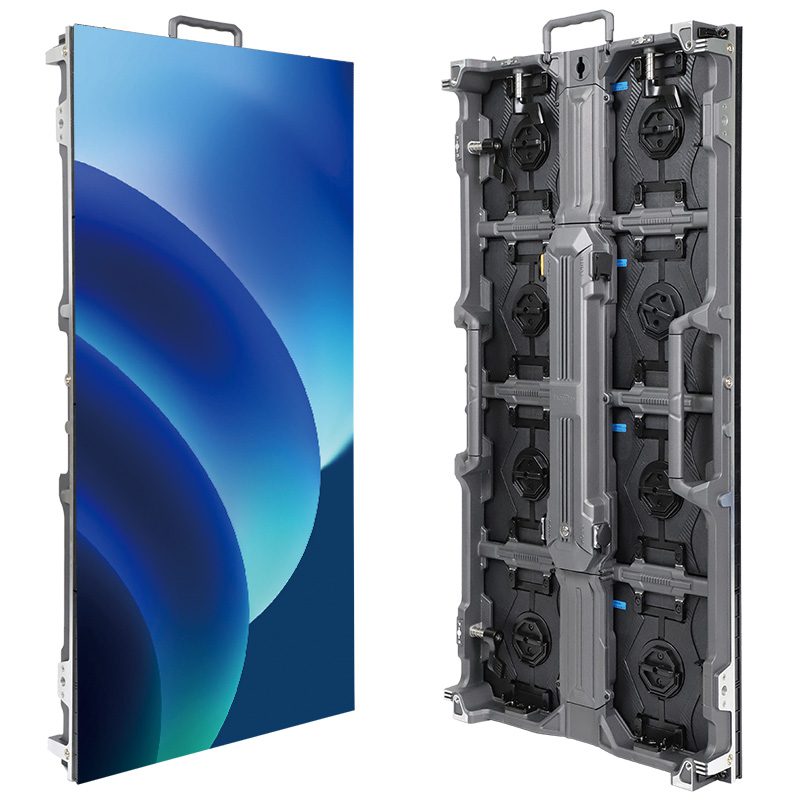
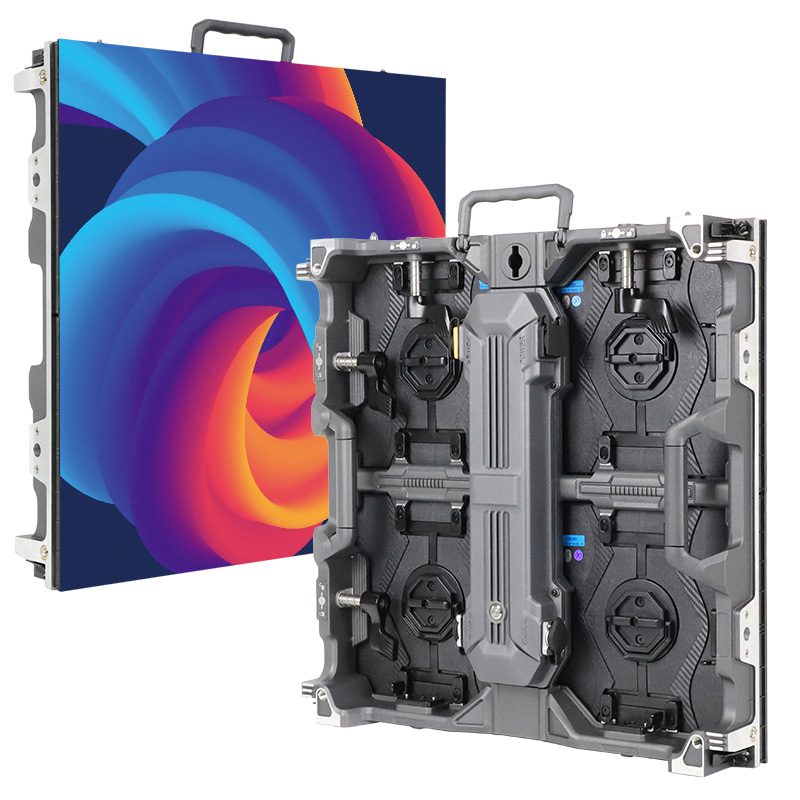
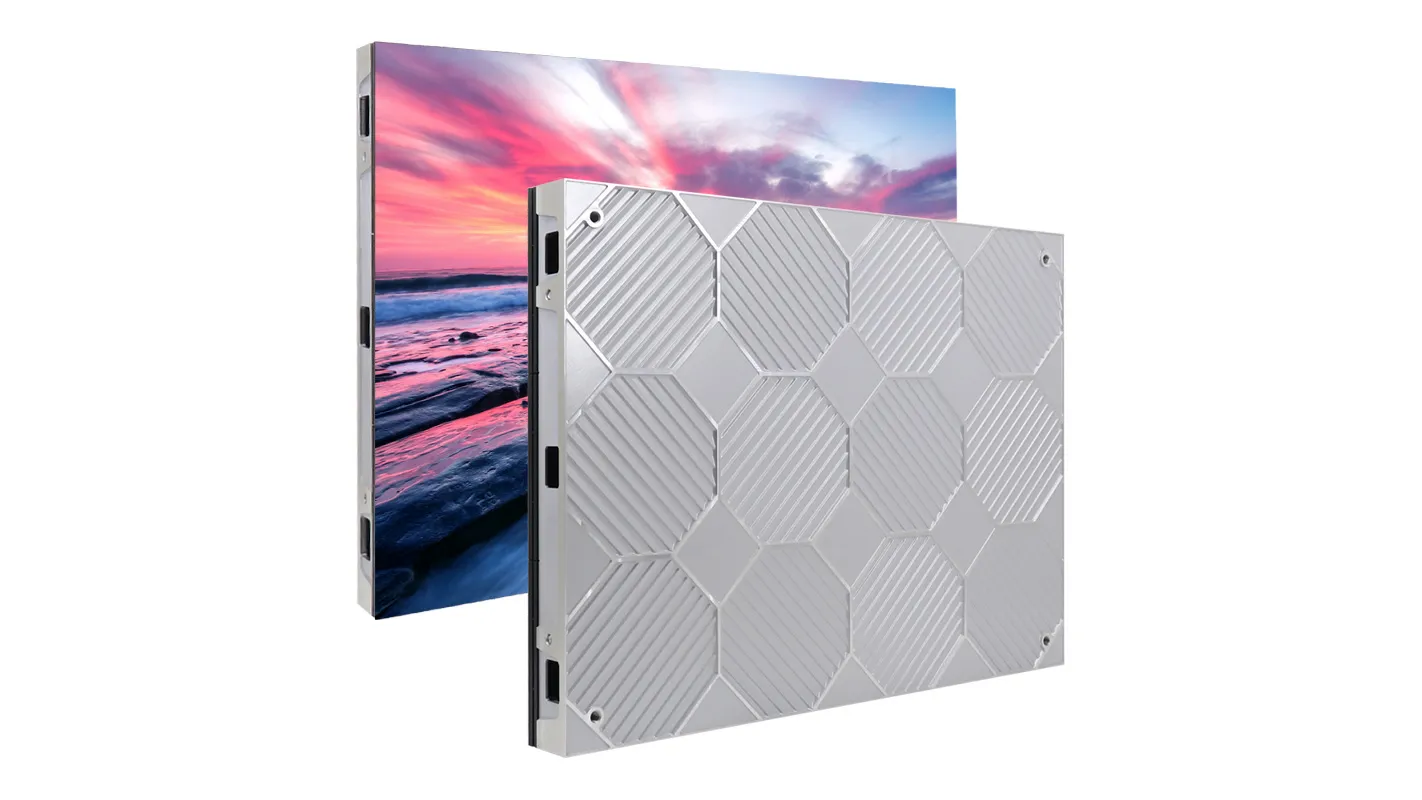
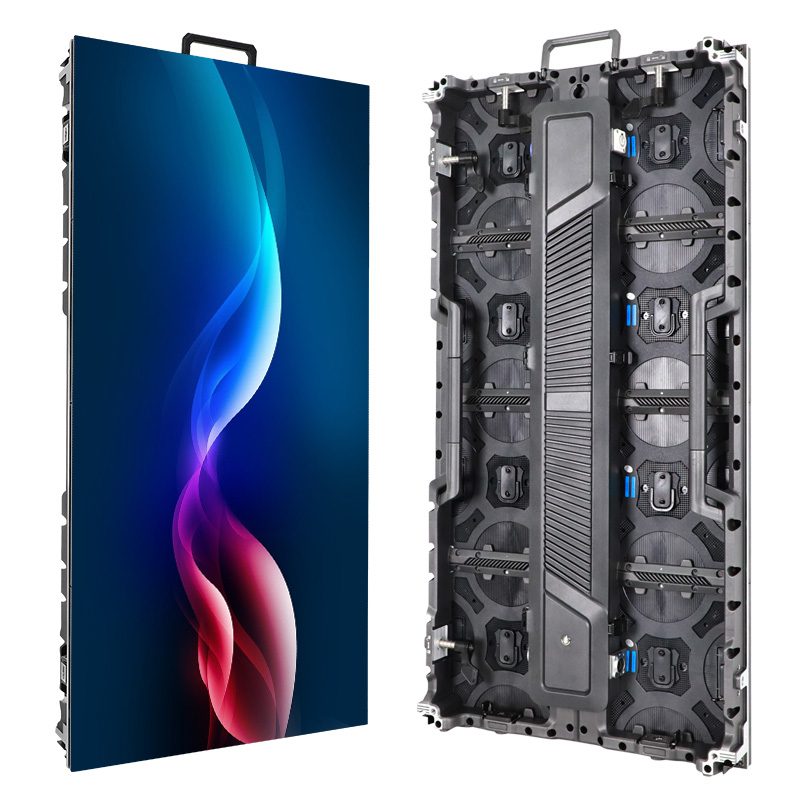
LED displays are the workhorse of this market. Individual LEDs form the pixels, so there is no glass panel to break and no practical size limit because cabinets tile into screens of any dimension. Typical outdoor advertising screens on LED use pixel pitches from P2.5 to P10, brightness from 5,000 to 10,000 nits, and IP65 or IP66 front protection.
Watch an outdoor LED advertising screen running a full-motion advertising playlist.
They suit roadside, highway, stadium and network-scale deployments, and are the only realistic option for 3D and anamorphic content. Cabinet and module options are set out on our outdoor LED video wall module page.
02. LCD and Digital Signage Displays
LCD outdoor advertising screens use a sealed commercial panel inside a weatherproof enclosure, which delivers higher pixel density than LED at short range and suits shop windows, transit shelters and any location where the audience stands one or two metres away. The trade-off is scale and brightness: outdoor LCD panels reach 2,500 to 4,000 nits, comfortable in shade but marginal in unshaded sun, and sizes top out between 55 and 98 inches. See our LED versus LCD digital signage guide.
03. 3D and Anamorphic Outdoor Displays
Naked-eye 3D made outdoor advertising screens a social media topic. Two approaches dominate: a corner-mounted screen where two faces meet at 90 degrees, using forced perspective to push objects out of the corner, and a flat screen with a pitched viewing zone that makes the illusion read from one direction. Both need a screen large enough for the effect, a defined viewing position and content built for that geometry. Our 3D billboard guide covers the requirements.

04. Which Type of Outdoor Advertising Screen Should You Choose?
| Type | Typical size range | Brightness | Weather protection | Best use | Relative cost |
|---|---|---|---|---|---|
| LED display | 1 to 150+ sq m, P2.5 to P10 | 4,000 to 10,000 nits | IP65 or IP66 front, IP54 or better rear | Roadsides, highways, stadiums, networks, 3D | Medium to high |
| LCD display in enclosure | 43 to 98 inch diagonal | 2,500 to 4,000 nits | IP54 to IP65 enclosure | Shop windows, transit shelters, kiosks, shaded sites | Medium |
| 3D anamorphic LED | 80 to 400+ sq m, P4 to P8 | 5,500 to 8,000 nits | IP65 or IP66 | Landmark corners and high-footfall plazas | High |
| Mobile and trailer LED | 6 to 30 sq m, P4 to P8 | 5,000 to 7,000 nits | IP54 to IP65 | Campaigns that follow the audience | Medium, plus vehicle cost |
3. Key Specifications of Outdoor Advertising Screens Compared
Specification sheets are where buyers lose money, because the numbers that look impressive are rarely the numbers that matter. Four values decide almost everything: pixel pitch, brightness, refresh rate and IP rating.
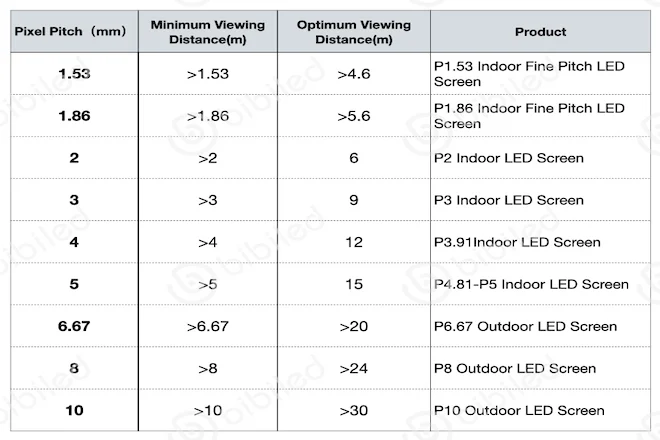
01. Pixel Pitch and Viewing Distance
Pixel pitch is the centre-to-centre distance between two pixels, in millimetres. Smaller pitch means more pixels per square metre, a sharper image and a higher price; larger pitch means a coarser image that is equally sharp from further away and costs much less.
The working rule for outdoor advertising screens is roughly one millimetre of pitch per metre of viewing distance. At 10 metres, P8 to P10 looks crisp; at 30 metres, P10 to P16 is indistinguishable from a finer pitch; at 3 metres, anything coarser than P4 shows visible pixel structure. Sanity-check a configuration with our pixel planning guide for advertising screens.
| Pixel pitch | Comfortable reading distance | Best viewing distance | Typical use | Suggested brightness |
|---|---|---|---|---|
| P2.5 to P3 | 2 to 4 m | 4 to 8 m | Storefronts and close-view façades | 4,000 to 5,500 nits |
| P4 | 4 to 6 m | 6 to 12 m | Street furniture and city centre sites | 5,000 to 6,500 nits |
| P6 | 6 to 9 m | 10 to 18 m | Urban roadside and plazas | 5,500 to 7,000 nits |
| P8 | 8 to 12 m | 15 to 30 m | Arterial roads and retail approach routes | 6,000 to 8,000 nits |
| P10 | 10 to 15 m | 20 to 40 m | Highways and large-format billboards | 6,500 to 8,000 nits |
| P16 | 16 to 24 m | 40 to 70 m and beyond | Motorway sight lines and very large formats | 7,000 to 10,000 nits |
02. Brightness and Contrast
Brightness is measured in nits, or candelas per square metre. It is the most important number for an outdoor advertising screen used in daylight, and the most common reason one disappoints. The practical ranges are:
- 2,000 to 3,000 nits: shaded faces and covered transit areas only
- 4,000 to 5,500 nits: general outdoor use where the screen does not face midday sun
- 5,500 to 8,000 nits: exposed roadside, highway and plaza locations in direct sun
- 8,000 to 10,000 nits: desert, high-altitude and extreme-glare sites
Brightness must be paired with automatic dimming. A screen running at 7,000 nits at two in the morning is both a complaint risk and wasted electricity, while an ambient-light sensor that steps brightness down after dark typically cuts energy use by 30 to 50 percent and extends LED life. Contrast matters too, because a poor black level makes an expensive screen look grey and flat. Our LED display brightness guide covers the detail.

03. Refresh Rate, Driver ICs and Scan Mode
Refresh rate is how many times per second the screen redraws. It is invisible to the eye above about 2,000 Hz, but it decides whether the screen can be filmed, and a low refresh rate produces dark horizontal bands on camera. For any site likely to appear in video or on social media, specify at least 3,840 Hz and prefer 4,800 Hz or higher for premium installations.
The driver IC matters as much as the headline figure: mainstream ICs such as MBI5153 or ICN2153 hold colour consistency better at low brightness than generic alternatives, which is why two screens with identical specifications can look very different at dusk. Scan mode describes how many rows are lit at once, as in 1/8 or 1/4 scan, and faster modes give higher refresh but need more driver ICs. Reputable suppliers state both on the specification sheet.
04. IP Rating, Cabinet Construction and Cooling
IP rating describes protection against solids and liquids. The two digits are independent: the first covers dust, the second covers water. For an outdoor advertising screen the minimum is IP65 at the front with IP54 or better at the rear, while coastal or splash-exposed sites should use IP66 front and IP65 rear.
Cabinet construction matters more than the rating alone. Die-cast aluminium resists corrosion far better than steel in coastal air, silicone gaskets seal better than foam, and anti-UV coatings stop the module face yellowing. Cooling is the other half: passive airflow suits temperate sites while forced-air fans or air conditioning are needed in hot climates. Ask for the operating temperature range in writing, because minus 20 to plus 60 degrees Celsius covers most markets. Our outdoor LED advertising board weatherproofing guide and the waterproof LED display checklist cover salt spray and humidity testing.
4. What Do Outdoor Advertising Screens Cost?
There is no single price for outdoor advertising screens, because four variables move the number more than the screen itself does. A figure quoted without a pitch, a brightness value and a country is not comparable.
01. What Drives the Price of Outdoor Advertising Screens
- Pixel pitch. The biggest lever. Halving the pitch roughly quadruples the pixel count per square metre, so P4 costs far more per square metre than P8 or P10.
- Brightness and driver quality. High-brightness diodes and premium driver ICs add cost, and are the first parts cheap screens remove.
02. Indicative Price Ranges for Outdoor Advertising Screens
The table below shows the ranges suppliers use in early planning conversations. Treat them as order-of-magnitude estimates for budgeting rather than quotations, because final pricing depends on pitch, brightness, quantity, cabinet design, currency, freight and installation scope.
| Configuration | Typical size | Indicative screen cost | Typical installed multiplier | Where it fits |
|---|---|---|---|---|
| P10 outdoor, 6,000 nits | 15 to 30 sq m | US$450 to 900 per sq m | 1.6 to 2.2 times screen cost | Highway billboards and long sight lines |
| P8 outdoor, 6,500 nits | 10 to 40 sq m | US$600 to 1,100 per sq m | 1.6 to 2.2 times screen cost | Standard roadside digital billboard |
| P6 outdoor, 7,000 nits | 6 to 25 sq m | US$850 to 1,500 per sq m | 1.7 to 2.5 times screen cost | Urban streets with mixed traffic and pedestrians |
| P4 outdoor, 5,500 nits | 3 to 15 sq m | US$1,500 to 2,500 per sq m | 1.7 to 2.5 times screen cost | Close-view façades and premium city sites |
| 3D anamorphic corner LED | 80 to 400+ sq m | Quoted per project | Quoted per project | Landmark corners, content production usually separate |
| Outdoor LCD in enclosure | 55 to 98 inch | US$2,500 to 12,000 per unit | Add enclosure, mount and power | Shaded or covered locations only |
Two rules keep budgets realistic. Price the whole system rather than the panels, because turnkey installed cost is usually 1.6 to 2.5 times the screen-only figure on a new structure. Then budget spares of 3 to 5 percent of screen value, since sourcing modules, power supplies and receiving cards later is slow and expensive. Our guide to affordable LED display pricing and the 2026 Jumbotron price breakdown show how these ranges scale.
03. Calculating Payback on an Outdoor Advertising Screen
The payback calculation for outdoor advertising screens is about revenue density, not screen cost. Divide total installed cost by monthly advertising revenue at the site to get months to break even.
Worked example: a 12 sq m P6 outdoor advertising screen installed for US$45,000, selling four slots at US$1,200 per slot per month, generates US$4,800 a month gross, so payback is 9.4 months before operating costs and around 11 months once electricity, connectivity and maintenance are added. The variables that break the model are local: an unlit approach road, a brightness curfew that removes late-night inventory, or a pixel pitch chosen badly for the distance.
5. How to Choose Outdoor Advertising Screens in 5 Steps
01. Survey the Site and Fix the Specification
Record the approach speed, the viewing distance, the number of vehicles or pedestrians passing, the screen height the site allows, and any obstruction from trees, poles, overpasses or competing signage. A screen seen for three seconds at 60 km per hour needs a very different specification from one viewed while people wait at a bus stop. Then fix the primary content type, because brand video, price-led text and live data each demand different brightness, refresh and control hardware.
02. Size, Pixel Pitch, Power and Control
Large-format roadside outdoor advertising screens are usually built between 20 and 100 sq m, while street furniture and totem formats sit between 1 and 6 sq m. Set the size first, then choose the coarsest pitch that still looks sharp at the viewing distance, because that is where the savings are; our LED screen size guide works through the geometry. Confirm the supply can carry peak load with 20 percent headroom, and plan a data route over fibre, 4G, 5G or a fixed line plus what happens when it fails. A controller with local storage and an offline fallback keeps advertising running through an outage, and our LED control system overview compares the architectures.
03. Permits, Suppliers and Warranty
Planning permission, structure consent, electrical certification and, in many jurisdictions, a digital advertising licence may all be required before the first pixel lights up, and several cities regulate brightness through luminance caps in nits plus night-time curfews, so build those constraints into the specification. When comparing suppliers, check the bill of materials, the warranty terms and exclusions, and the spare-parts plan. Ask for the actual LED diode brand rather than a claim of high-quality LEDs: a fair warranty on LED outdoor advertising screens is two to three years on modules and one to two years on electronics. Our advertising LED board range lists the configurations available.
6. Installing Outdoor Advertising Screens
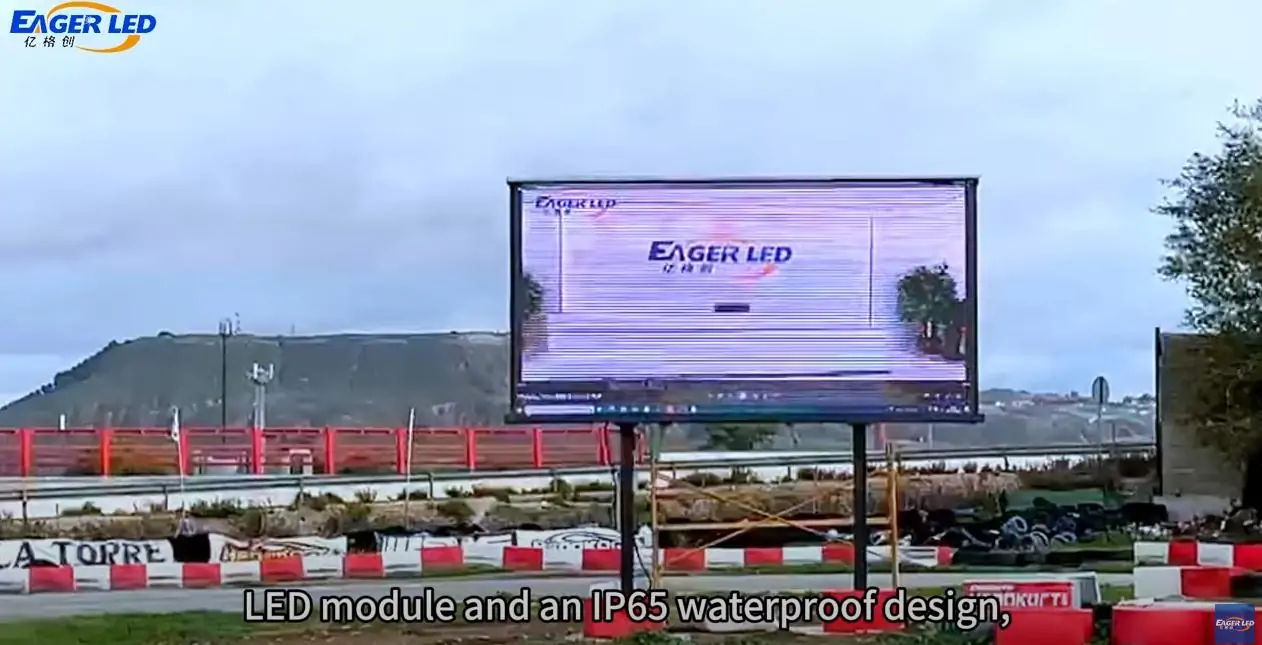
Installation quality decides whether an outdoor advertising screen reaches its rated life. The screen is the visible 20 percent of the project, while the structure, earthworks, electrical protection and drainage behind it decide how the installation behaves in a storm.
01. Mounting Structures and Wind Load
Every outdoor advertising screen is a sail, so the structure must be engineered for the local wind load rather than a generic figure. A roadside unipole in a cyclone zone and a wall-mounted screen in a sheltered street are entirely different engineering problems, so ask for the structural calculation, the foundation design and the maintenance access plan. If a module cannot be reached without a crane, every minor repair becomes a major cost.
02. Power, Surge Protection and Ventilation
Three failures account for most early-life faults on outdoor advertising screens: unstable voltage, lightning-induced surges and heat. Fit surge protection at the distribution board and again at the cabinet, earth the structure properly, and use a voltage stabiliser where the supply fluctuates. Ventilation follows the thermal load of the display area, so keep clearance behind the screen, keep intake and exhaust clear, and specify temperature sensors that alert or reduce brightness before thermal shutdown. An IP65 cabinet is not a substitute for drainage.
03. Commissioning Checklist for Outdoor Advertising Screens
Sign the project off against the checks below before the screen goes into revenue service. Each item is cheap to correct during commissioning and expensive to correct afterwards.
| Stage | What to check | Pass criteria |
|---|---|---|
| Structure | Wind load calculation and foundation design approved | Signed structural report matching the local wind zone |
| Structure | Maintenance access verified | Every module and power supply reachable safely without a crane |
| Electrical | Supply capacity confirmed | Measured load test at full brightness with 20 percent headroom |
| Electrical | Surge protection and earthing installed | Protection at distribution board and at the cabinet |
| Thermal | Airflow and cooling commissioned | Intake and exhaust clear, temperature alarms tested end to end |
| Display | Pixel and uniformity inspection | No dead pixels and brightness variation within supplier tolerance |
| Display | Auto-dimming calibrated | Brightness curve verified at midday, dusk and night |
7. Maintaining and Troubleshooting Outdoor Advertising Screens
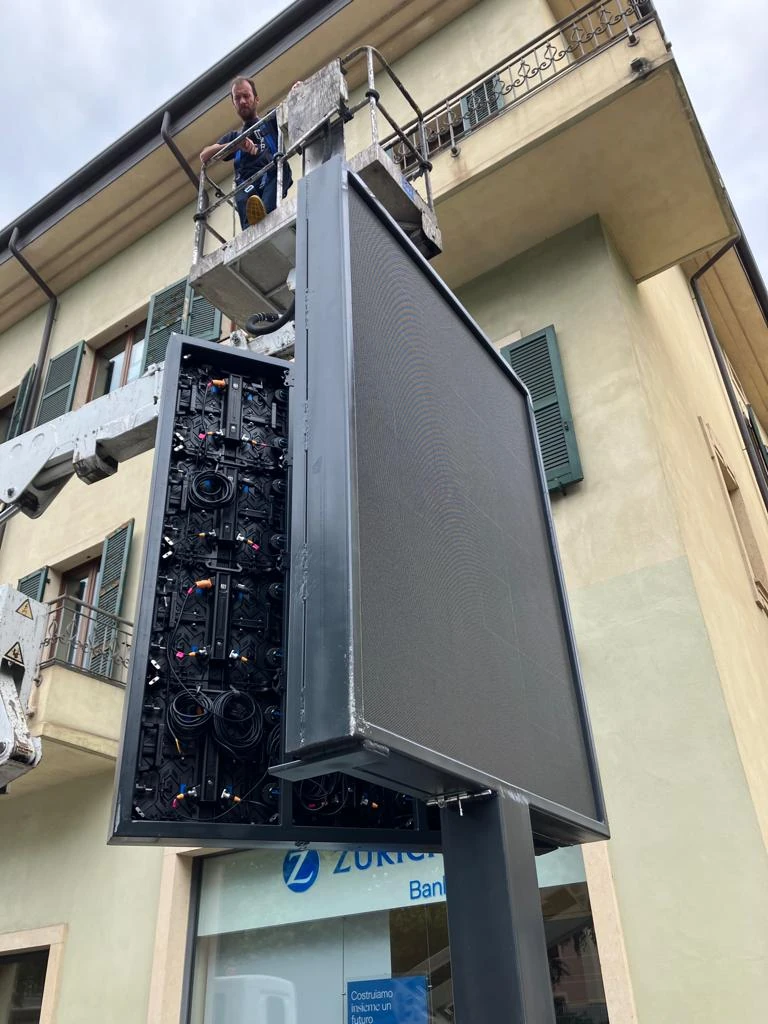
Outdoor advertising screens rarely fail suddenly, they degrade. A cleaning and inspection routine catches dust ingress, dying pixels, failing fans and water paths while they are still cheap to fix. Rear service access exists for exactly this reason, because modules and power supplies are replaced from behind so the screen is never dismantled.
01. Preventive Maintenance Schedule
| Interval | Task | Why it matters |
|---|---|---|
| Monthly | Inspect for dead or stuck pixels and colour blotches | Replacing a module is cheapest before corrosion starts |
| Quarterly | Clean module faces and air filters, clear vents | Dust reduces brightness and causes overheating |
| Quarterly | Verify auto-dimming and curfew settings | Keeps night brightness compliant and saves energy |
| Six monthly | Test surge protection and earth continuity | Lightning damage is normally a single-strike failure |
| Annually | Thermal imaging and power supply inspection | Detects failing power supplies before they fail in service |
| Annually | Review spare parts stock | Prevents long downtime waiting for components |
02. Common Faults and How to Fix Them
| Issue | Possible causes | Recommended solutions |
|---|---|---|
| 1. Screen not turning on | Power supply failure; loose power cable or connector; tripped breaker or blown fuse | Check main power input and cables; reset breaker or replace fuse; confirm stable voltage supply |
| 2. Flickering display | Loose data or video cable; inconsistent voltage or surge; failing LED panel | Reseat or replace cables; fit a voltage regulator or stabiliser; replace the flickering module |
| 3. Dead pixels | Burned-out LED module; physical screen damage; water or dust ingress | Replace the damaged pixel module; inspect the casing for leaks; avoid pressure when cleaning |
| 4. Content not updating | Offline CMS; internet connection lost; incorrect CMS credentials | Check connectivity; restart the CMS or screen controller; re-enter valid login details |
| 5. Screen overheating | Blocked air vents; faulty cooling fans; prolonged high brightness in hot weather | Clean air vents regularly; replace damaged fans; enable auto-brightness to reduce heat build-up |
Two of these faults deserve a note. Dead pixels almost always have a local cause, meaning a module, a connector or moisture, so replace the module rather than the cabinet. Content that will not update is far more often a network or credential problem than a hardware failure, so check connectivity and CMS login first. Our LED screen repair guide covers diagnosis in more detail.
8. Frequently Asked Questions About Outdoor Advertising Screens
These are the questions buyers ask most often before ordering outdoor advertising screens. Open each answer for the short version, or use it as a specification prompt with your supplier.
9. Conclusion
Outdoor advertising screens reward buyers who specify them properly. Decide the audience and viewing distance first, choose the coarsest pixel pitch that still looks sharp, insist on real brightness with automatic dimming, and confirm the IP rating, cabinet build and cooling match the climate. Then price the whole system rather than the panels alone.
Do that and outdoor advertising screens become what they are meant to be: a long-life asset that sells inventory every day, in any weather, without a printing bill. If you are planning a roadside, façade, stadium or mobile installation, browse our LED street billboard and outdoor LED screen ranges, or send us your dimensions, viewing distance and site photos for a specification review.
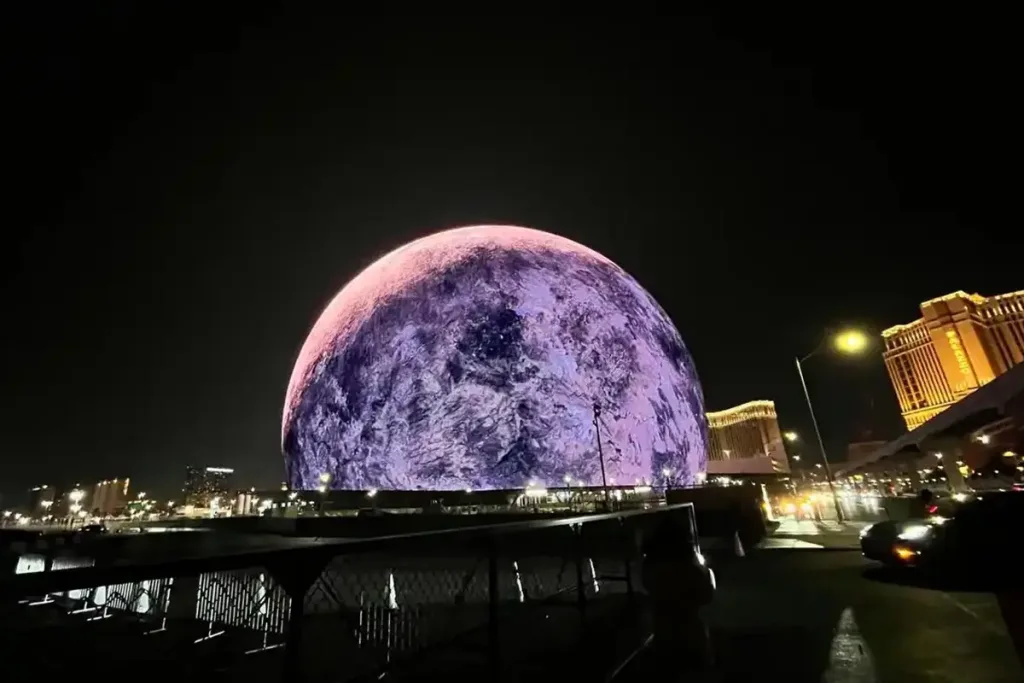 The Biggest LED Screen in the World: 12 Landmark LED Displays by Country
 Enhance Stage Performance With LED Background Screen In 2026