
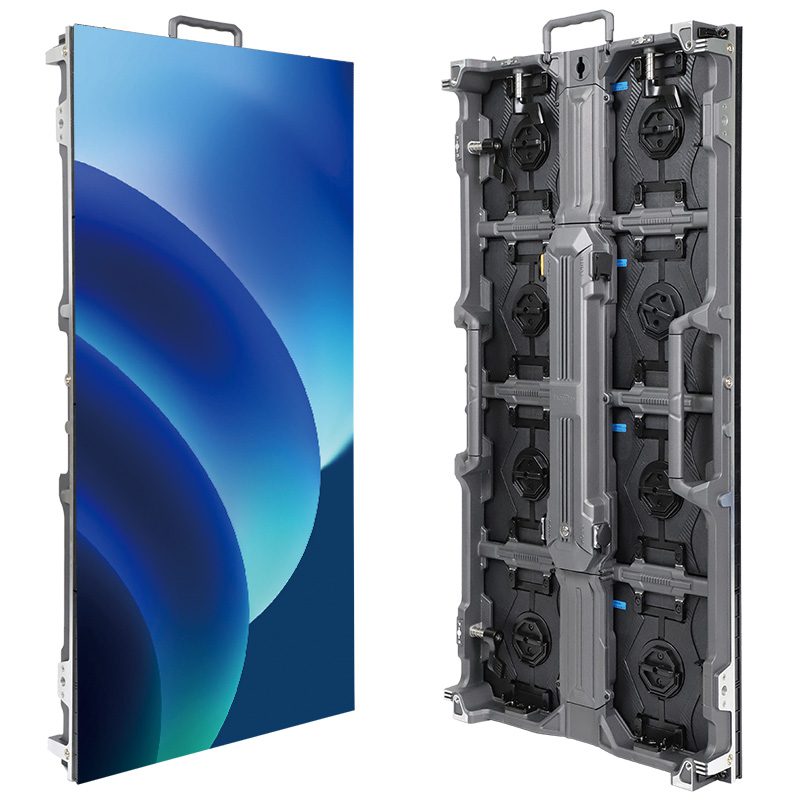
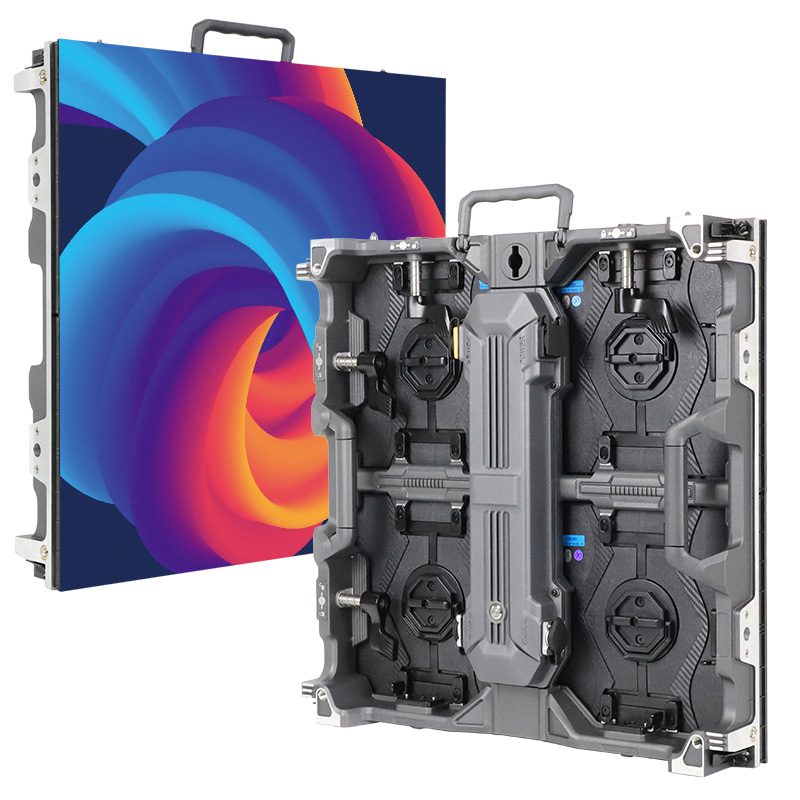
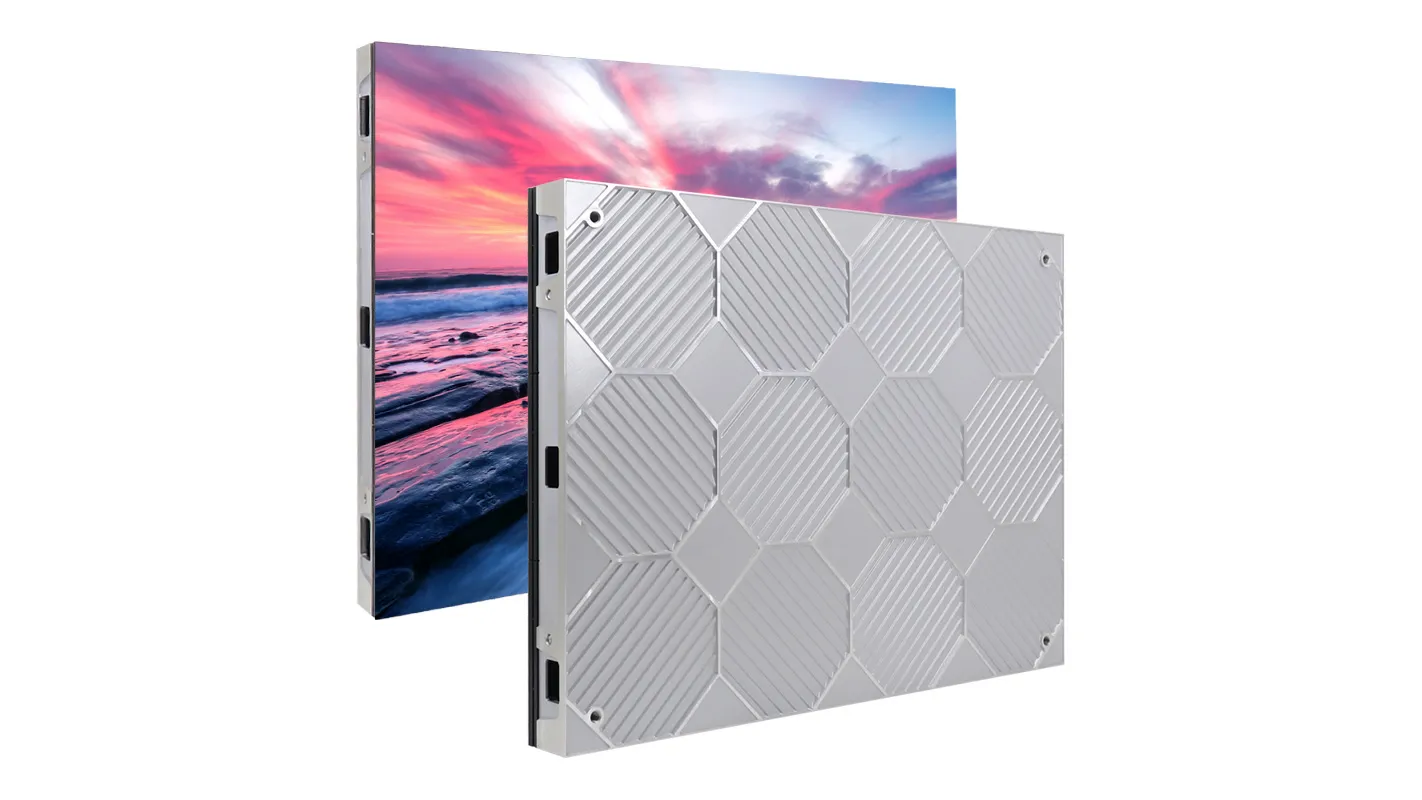
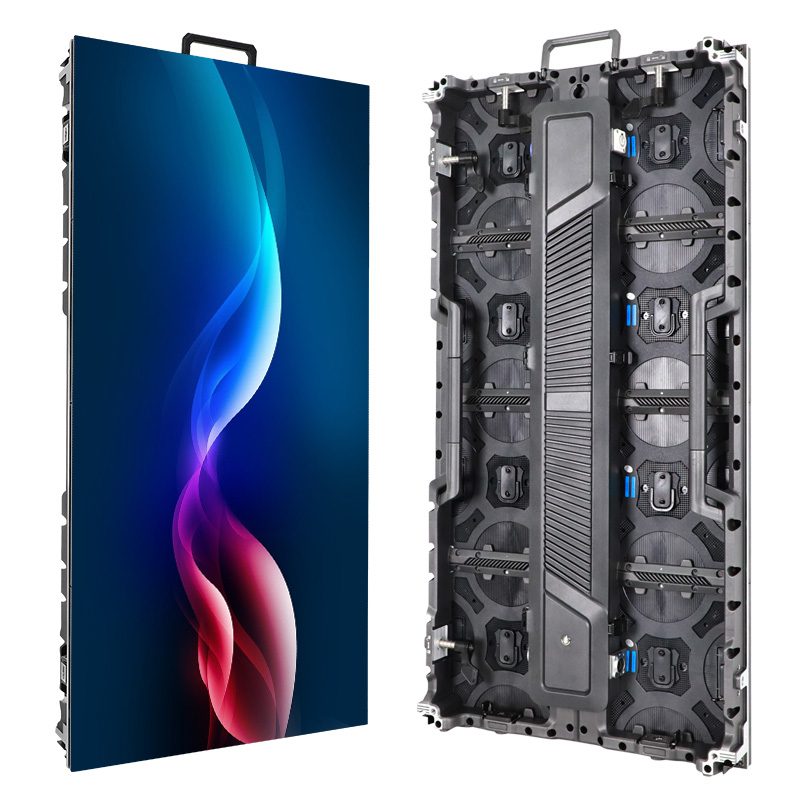
An outdoor LED screen is a modular, direct-view display designed to show video, graphics, and text in outdoor conditions. Choosing one starts with the audience: how close people stand, how quickly they pass, and what they need to read. Screen area alone does not tell you whether a display will be clear, durable, or economical.
If you are comparing an outdoor LED screen for sale, ask suppliers to quote the same resolution, brightness, weather protection, service access, and installation scope. A low panel price can exclude the controller, steelwork, electrical distribution, freight, commissioning, and spare parts. Those omissions can change the project budget substantially.
This guide explains how to specify an outdoor LED screen for advertising, retail, sports, events, or a creative 3D installation. It includes comparison tables, worked calculations, and a quotation checklist. Numerical examples are planning illustrations, not EagerLED price offers or promises of performance; the final design should use the selected model’s documented specifications and a site survey.

1. What is an outdoor LED screen?
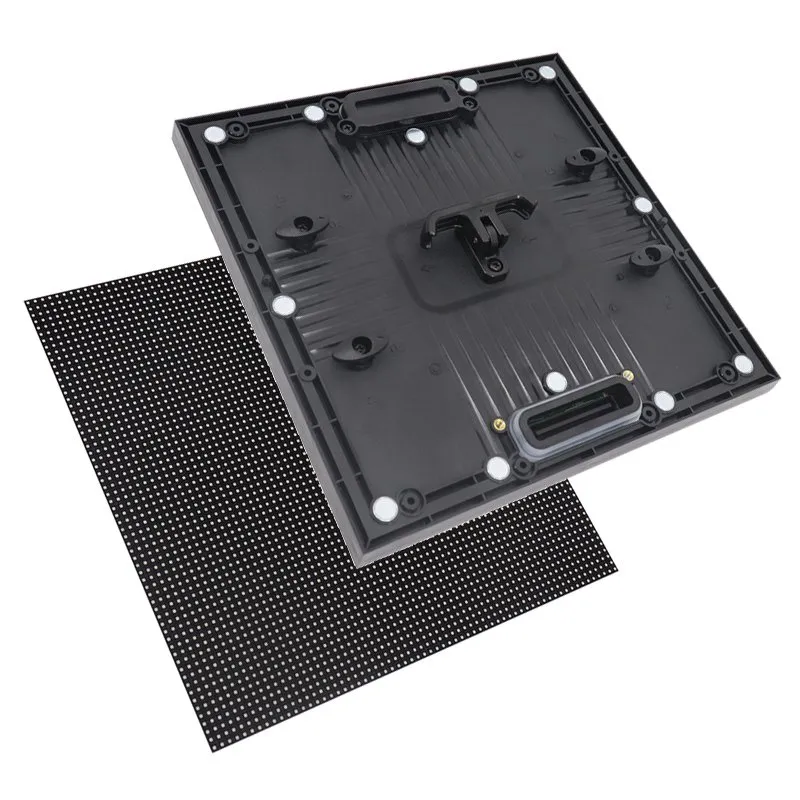
An outdoor LED screen combines LED modules, cabinets, power supplies, receiving cards, and a playback or video-processing system. Red, green, and blue emitters form pixels; the electronics vary their output to reproduce the image. Cabinets join together to create a display with a specific physical size and native pixel resolution.
Unlike a projector, the display produces light directly. Unlike a typical outdoor television, a modular LED wall can be assembled into large or unusual dimensions. Its weather resistance comes from the complete enclosure, seals, connectors, and installation details, not simply from using LEDs.
For a buyer, the useful specification is the complete outdoor LED screen system. Request the cabinet layout, finished dimensions, pixel matrix, controller capacity, maximum electrical demand, weight, and service method. A product described only as “HD,” “waterproof,” or “energy saving” leaves too many decisions unresolved.

2. Match the outdoor LED screen to its application
A fixed billboard and a touring video wall may look similar when operating, but their construction and ownership requirements differ. Choose the installation category before comparing individual outdoor LED screen panels.
| Application | Main requirement | What to confirm |
|---|---|---|
| Storefront or pedestrian plaza | Readable text and detail at short distances | Pixel pitch, minimum viewing distance, low-brightness image quality |
| Roadside advertising | Fast recognition from moving audiences | Large lettering, daylight contrast, permitted content and brightness |
| Stadium or sports venue | Visibility across seating and reliable live video | Viewing angles, camera performance, processing and service access |
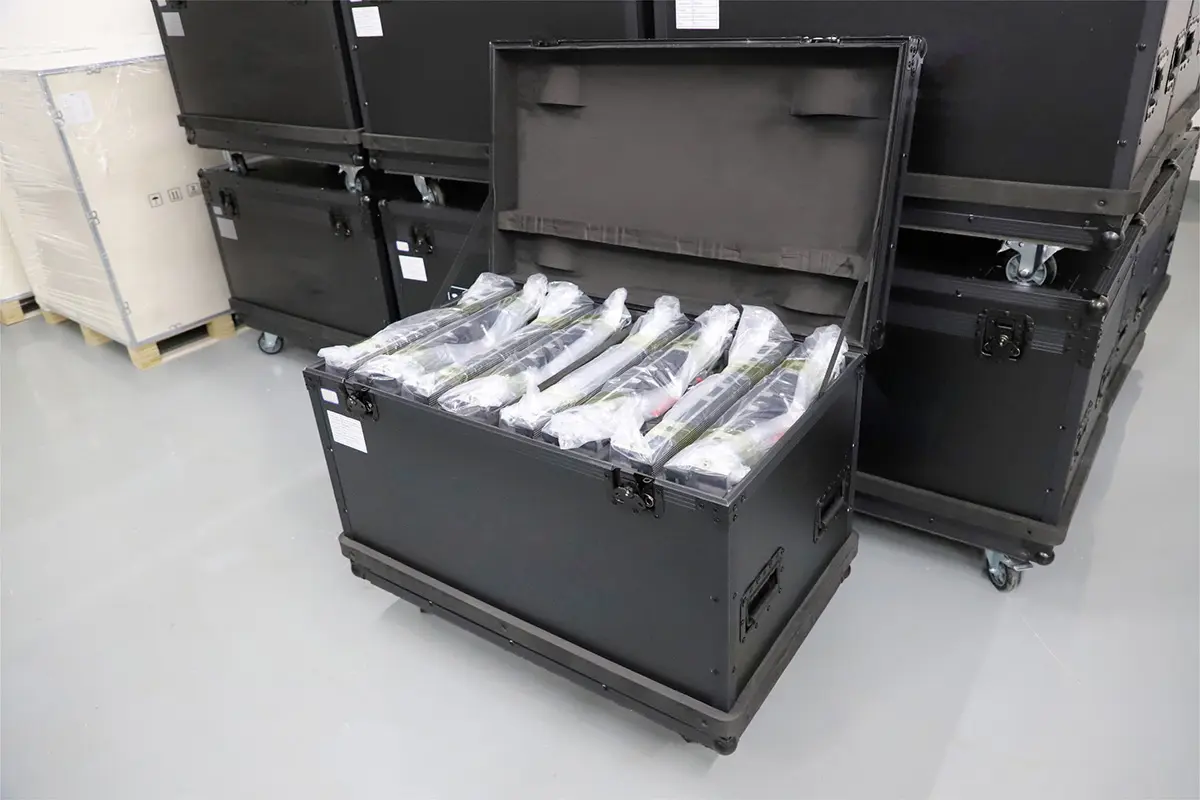
| Concerts and temporary events | Repeated assembly and transport | Rental locks, protective corners, cases and engineered rigging |
| Building-corner 3D advertising | Perspective illusion from a planned viewing zone | Corner geometry, content production and synchronized playback |
For permanent installations, compare the advertising LED board range. For equipment that travels between venues, review rental LED screen systems. A rental cabinet should not be assumed suitable for an unattended, year-round outdoor installation without confirmation from the manufacturer.
Also define success before ordering. A retail sign might need to make one offer legible from the pavement; a stadium screen might need to show a replay to the furthest seating block. These are different acceptance tests, even if both projects use the same display area.

3. Outdoor LED screen price: compare the complete budget
The outdoor LED screen price depends on pixel pitch, cabinet design, brightness, component selection, quantity, and project scope. A price per square metre is useful only when you know what it includes. Separate screen hardware from the delivered and installed system before deciding which quotation is cheaper.
01. Build a comparable quotation
| Cost item | Required detail | Common omission |
|---|---|---|
| Display hardware | Area, cabinet count, pitch, brightness and spare modules | Quotation covers modules rather than complete cabinets |
| Control system | Player, processor, sending equipment, network and licences | Insufficient output capacity or recurring software fees |
| Structure and installation | Engineering, frame, foundations, lifting and access equipment | Site-specific steelwork or building modifications |
| Electrical system | Distribution, protective devices, cabling and commissioning | Supply upgrade or long cable runs |
| Delivery and ownership | Packing, freight, import charges, training and maintenance | Repair shipping, labour and replacement stock |
Use this calculation: installed budget = display hardware + control equipment + structure + electrical work + installation + logistics + applicable charges. Ask each supplier to mark every item as included, excluded, optional, or supplied locally. Compare equivalent delivery terms and currencies.
02. Understand what a unit price means
For illustration, a 6 m × 3 m outdoor LED screen has an area of 18 m². If a hypothetical hardware quotation is $800/m², the screen line item is $14,400. This is an arithmetic example, not a market benchmark; it excludes every other item unless the quotation explicitly includes it.
A listing priced “per panel” can be especially misleading. A 500 × 500 mm cabinet covers 0.25 m², so four cabinets cover one square metre. Compare equivalent area and specifications before using a marketplace price to set your budget. Request a dated written offer and an itemized bill of materials.

4. Choose outdoor LED screen pixel pitch and resolution
Pixel pitch is the centre-to-centre distance between adjacent pixels, measured in millimetres. P4 means approximately 4 mm spacing. Smaller pitch puts more pixels into the same area, improving the potential detail while usually increasing hardware and processing requirements.
01. Start with the nearest important viewer
Choose pitch using the closest audience that must comfortably understand the content, then check the furthest audience for text size. A rough starting distance in metres similar to the pitch number in millimetres can help shortlist options, but it is not a guaranteed viewing limit. Content, eyesight, angle, and expectations all matter.
| Pitch | Calculated pixel matrix | Pixels per m² | Selection consideration |
|---|---|---|---|
| P3 | 2,000 × 1,000 | Approximately 111,111 | More detail for closer viewing |
| P4 | 1,500 × 750 | 62,500 | Balance detail with project cost |
| P5 | 1,200 × 600 | 40,000 | Evaluate text at the actual distance |
| P6 | 1,000 × 500 | Approximately 27,778 | Less fine detail in the same area |
| P10 | 600 × 300 | 10,000 | Simple content for more distant audiences |
These are mathematical examples, not available cabinet configurations. Real dimensions must follow module and cabinet increments. A marketed P6.67 product, for example, may use a more precise pitch internally; use the manufacturer’s cabinet pixel count for the final layout.
02. Calculate native resolution before producing content
Horizontal pixels = screen width in millimetres ÷ pixel pitch. Apply the same calculation to height. An outdoor LED screen does not become a native 4K display merely because its controller accepts a 4K input. Input video is mapped or scaled to the physical pixel matrix.
Check a sample of your actual advertisement, including the smallest essential text. The Daktronics viewing-distance guide also emphasizes content legibility and real-world checks. Ask for a demonstration at the intended viewing distance instead of judging a close-up photograph.

5. Check brightness, weather protection, and cabinet design
A usable outdoor LED screen needs enough brightness for its location and a reliable way to reduce output after dark. Brightness is measured in nits, equivalent to cd/m². Compare specified operating brightness at the agreed calibration setting, not only a peak value in an advertisement.
01. Specify daylight readability and night dimming
There is no single brightness figure that suits every outdoor LED screen. Direct sun, shade, surface reflections, orientation, and viewing angle influence visibility. Request a daylight demonstration or site-based recommendation, together with the permitted night setting and automatic brightness-control options.
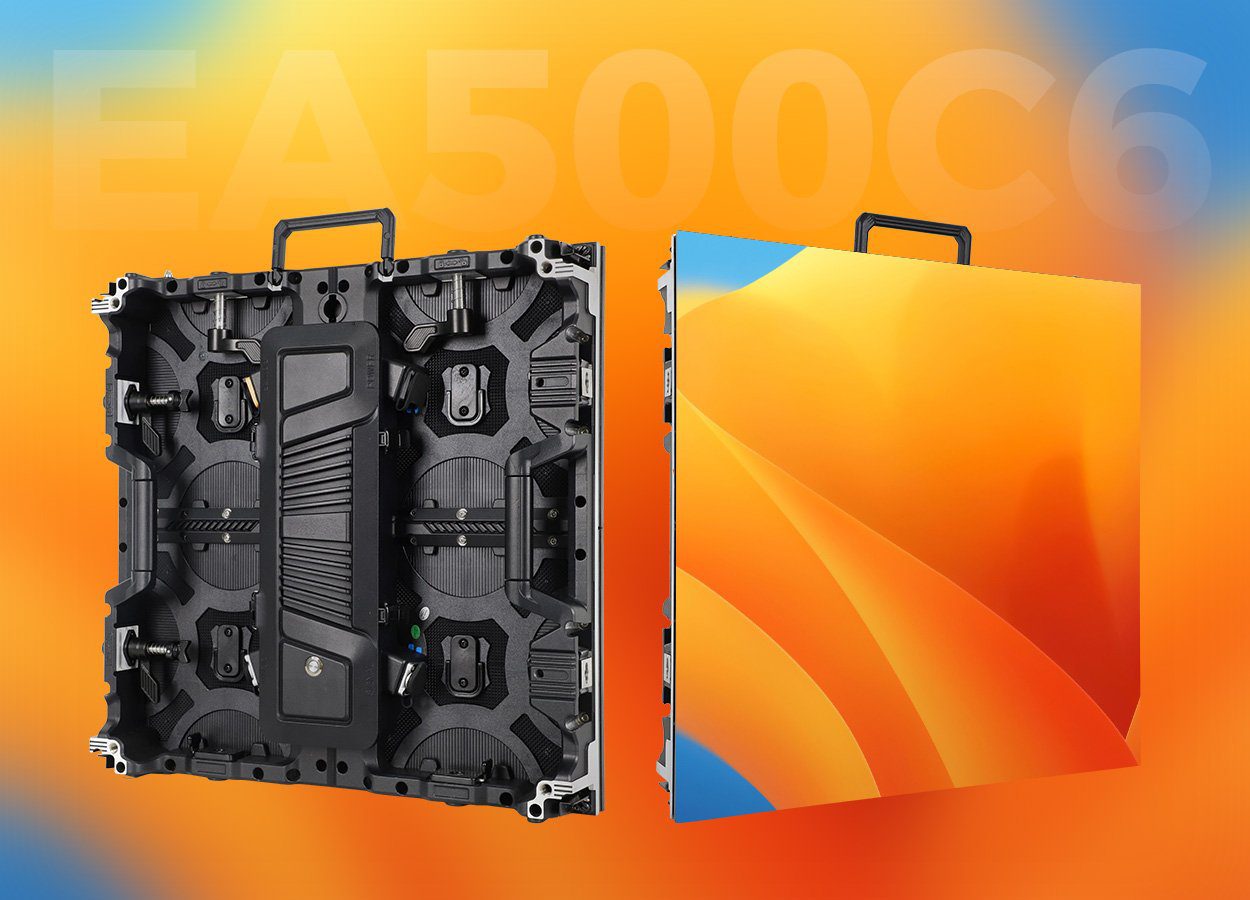
For a concrete product example, EagerLED lists outdoor EA500C6 variants at 4,000–6,000 cd/m². That range belongs to those configurations; it should not be generalized to every billboard. Verify how the proposed display preserves colour and grayscale when dimmed, and how it behaves if its light sensor fails.
02. Read front and rear IP ratings separately
IP65 describes dust-tight protection and protection against water jets under defined test conditions. It does not mean a display can be submerged, pressure washed without restriction, or exposed to every possible storm. The front and rear may have different ratings, and connectors must be assembled correctly to maintain their protection.
Ask for the applicable test documentation, installation orientation, drainage requirements, cable-entry details, and cleaning instructions. The IEC explanation of IP ratings provides the classification framework. Salt exposure, condensation, UV ageing, and corrosion resistance require additional evaluation beyond the IP code.
03. Plan heat removal and maintenance space
Confirm the operating temperature range and cooling arrangement for the completed installation. A sun-exposed enclosure can become hotter than the surrounding air. Front service can help where rear access is restricted, but technicians still need safe working space and access to power supplies, receiving cards, and connectors.

6. Estimate power consumption and choose the control system
Separate average energy consumption from maximum power demand. The average helps estimate running cost; the maximum informs electrical design. Both depend on the specific outdoor LED screen configuration, and neither should be copied from an unrelated product.
01. Calculate an energy budget with stated assumptions
Daily energy in kWh = area in m² × average W/m² × operating hours ÷ 1,000. Suppose an 18 m² outdoor LED screen averages 250 W/m² for 12 hours daily. The illustrative consumption is 54 kWh/day, or 1,620 kWh over 30 days. Multiply that figure by the applicable electricity rate.
The 250 W/m² input is an assumption, not a measured result. Replace it with a representative playback measurement at the agreed brightness. Add cooling, controllers, networking, and other loads. Request maximum demand separately; an electrician must size the supply and protection for the actual system.
Evaluate energy-saving claims under matching conditions: same image, area, brightness, calibration, temperature, and measurement method. A percentage without a defined comparison does not establish your likely saving. Scheduled dimming and sensible operating hours may also reduce unnecessary consumption.
02. Match playback to the job
Scheduled advertising can use a media player and content-management workflow; live events need suitable video inputs, processing, and latency. Confirm total pixel capacity, output-port limits, refresh settings, and the format accepted by the playback equipment. Wireless networking is optional, not an inherent difference between indoor and outdoor displays.
For a remotely managed outdoor LED screen, specify user permissions, a secure network arrangement, offline playback, and recovery after a power interruption. Keep configuration backups and define who receives fault alerts. Remote diagnostics can identify problems, but a failed module or power supply still requires physical service.

7. Plan outdoor LED screen installation and acceptance
Installation is part of the product decision. Before placing an order, record the mounting location, dimensions, audience positions, access route, power supply, network connection, weather exposure, and service arrangement. Share photographs and drawings so suppliers quote against the same brief.
01. Confirm structural and electrical responsibilities
The support structure must suit the display’s weight, wind exposure, mounting height, and building or foundation conditions. Assign structural design and electrical work to appropriately qualified local professionals. Confirm the applicable approval process with the relevant authority; requirements depend on the location and installation.
A cabinet’s IP rating is not evidence of structural wind resistance. Likewise, a product certificate does not automatically approve the completed outdoor LED screen installation. Clarify who supplies calculations, anchorage details, electrical drawings, access provisions, and final commissioning records.
02. Agree on a practical acceptance test
| Check | Evidence to request | Reason |
|---|---|---|
| Layout and pixel mapping | Cabinet drawing, resolution and test patterns | Detect missing rows, incorrect mapping and visible seams |
| Image quality | White, primary colours, grayscale and actual content | Check uniformity, failed pixels and low-brightness behaviour |
| Controls and recovery | Demonstrated schedules, dimming and restart procedure | Verify operation after network or power interruption |
| Service handover | Spare inventory, configuration files and training | Reduce avoidable downtime during repairs |
Set measurable acceptance criteria in writing before production. Record the test configuration, brightness, content, and any agreed defects. For camera-facing applications, test the intended camera frame rates and shutter settings; a high refresh-rate specification alone does not guarantee freedom from visible bands.

8. Compare maintenance, warranty, and used-screen risks
The best outdoor LED screen for a project is one your team can maintain. Ask how a technician replaces a module, power supply, and receiving card at the proposed location. A cheap cabinet can become expensive if each small repair requires a crane or extensive dismantling.
Request compatible spare modules from the production batch, plus recommended power supplies and receiving cards. Record firmware versions, configuration files, and calibration data. Replacement modules may need adjustment to match an older screen; identical dimensions do not establish electrical or colour compatibility.
Read the warranty as a service process. Confirm its duration, covered components, exclusions, diagnostic steps, response commitments, and responsibility for labour and shipping. Clarify whether damaged parts must return to the factory and how the display operates while a replacement is in transit.
For a used outdoor LED screen, inspect operating history, water damage, corrosion, cabinet alignment, connectors, and spare availability. Test uniform colours and low grayscale across the entire wall. A working video clip is not proof that every module is healthy. Compare the complete refurbishment and installation cost with a new system before buying.

9. What a 3D outdoor LED screen actually requires
A 3D outdoor LED screen usually creates a glasses-free perspective illusion using specially designed content. The effect depends on screen geometry, the intended viewing position, and the animation. A curved cabinet or a right-angle corner alone does not turn ordinary video into a convincing three-dimensional scene.
Start the creative brief alongside the hardware brief. Define where pedestrians will stand, the viewing height, the corner or curve, and the final pixel map. Content creators need accurate dimensions and playback requirements. The strongest illusion may occupy a limited viewing zone, while viewers elsewhere see a less pronounced effect.
Budget separately for animation, revisions, testing, and future campaigns. Consider how the same outdoor LED screen will display everyday advertisements when a special 3D sequence is not running. Large simple messages should remain readable across the useful audience area.
Explore 3D billboard planning and display options for this specialist use case. Treat attention, social sharing, and advertising revenue as outcomes to measure, not guaranteed benefits. Define an evaluation method appropriate to the campaign rather than assuming that visual impact alone produces sales.

10. Compare outdoor LED screens for sale and request a quote
Shortlist suppliers by their ability to document the proposed system. For an outdoor LED screen for sale, request a model-specific datasheet, cabinet layout, component list, test plan, and service terms. Ask for references relevant to your environment and installation type rather than relying only on a broad project gallery.
01. Distinguish fixed and rental product choices
EagerLED’s EA500C6 rental LED video wall uses 500 × 500 mm cabinets and offers outdoor P2.6, P2.97, and P3.91 variants. Its listed features include fast locks, corner guards, and optional arc locks. Confirm the exact front and rear protection ratings, supported curve, and intended exposure before specifying it.
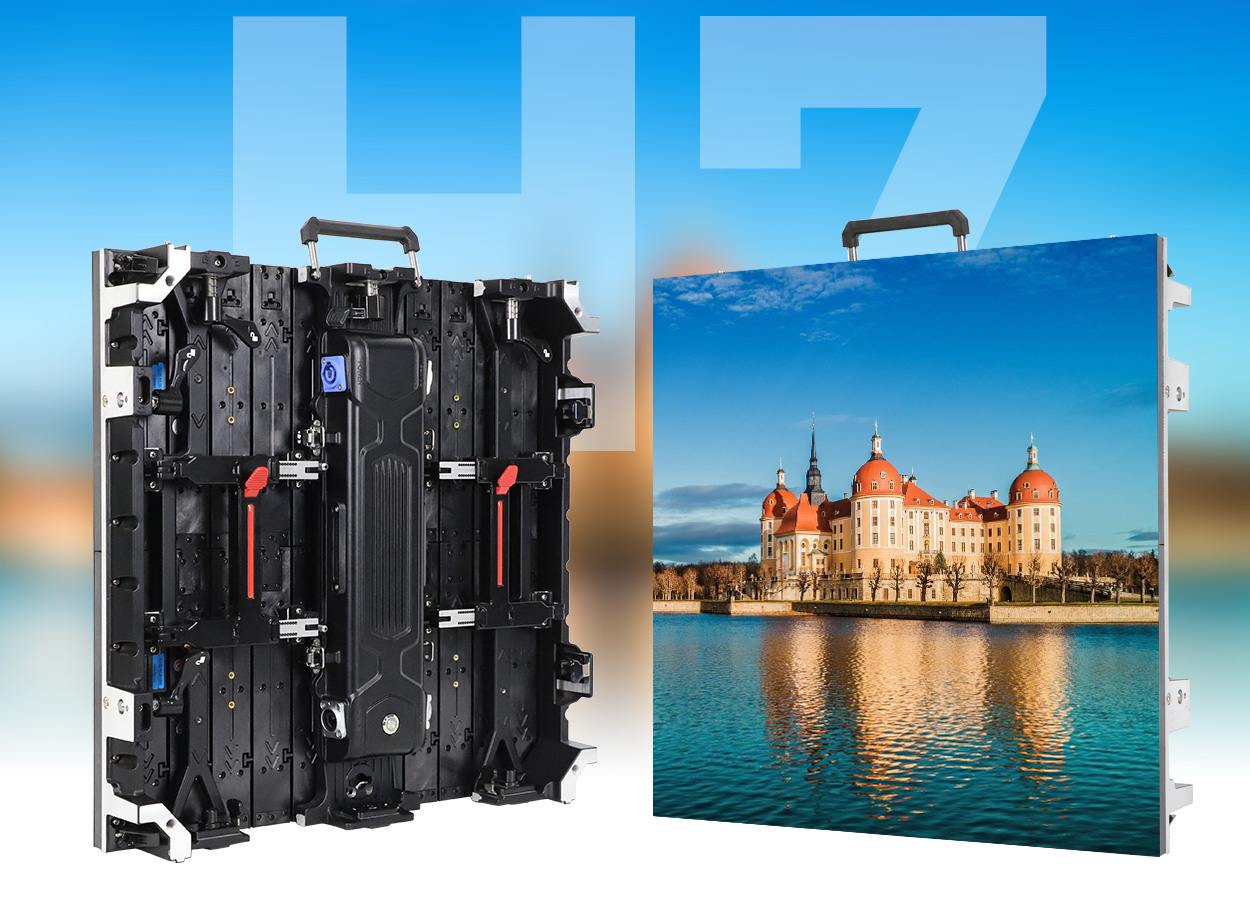
For a fixed outdoor LED screen, use the current advertising range to discuss service access, cabinet dimensions, and mounting conditions. Do not transfer rental-model specifications to a fixed billboard or assume an older demonstration video proves today’s configuration. The existing videos below illustrate products; the written quotation should identify the equipment actually supplied.
02. Send a complete project brief
Include the site location, screen width and height, closest and furthest viewers, mounting height, operating hours, sunlight exposure, content type, power availability, and preferred service access. State whether the outdoor LED screen needs live video, remote scheduling, camera compatibility, or 3D content.
Ask the supplier to return an itemized quotation with final resolution, model numbers, delivery terms, lead time, spare-parts list, warranty scope, and explicit exclusions. You can send the project requirements to EagerLED to request a configuration and current price. Resolve specification differences before comparing totals.
11. Outdoor LED screen FAQ
01. How much does an outdoor LED screen cost?
There is no universal price. Area, pitch, brightness, cabinet design, controls, and installation scope all affect the total. Compare itemized quotations for the same requirements and distinguish hardware price from the fully installed budget. A per-panel listing should be converted to a comparable area before evaluation.
02. What pixel pitch should I choose for an outdoor LED screen?
Use the closest important viewing distance, required text size, and total pixel resolution to shortlist pitches. Then test actual content at the site’s viewing distances. A smaller pitch provides more detail within the same area, but may add cost without a visible benefit for distant audiences.
03. Are outdoor LED screens waterproof?
They provide the protection specified for the selected model and installation. Check front and rear IP ratings separately. IP65 covers dust and water-jet protection under defined conditions; it does not establish resistance to submersion, salt corrosion, every cleaning method, or all environmental hazards.
04. Can an indoor screen be installed outside?
Only if the manufacturer approves the complete installation for those conditions. A roof does not eliminate moisture, heat, wind-driven rain, or sunlight. An outdoor LED screen typically needs a different combination of brightness, sealing, materials, and thermal design from an indoor model.
05. Should I buy or rent an outdoor LED screen?
Rental can suit occasional events when installation, operation, and removal are included. Ownership may suit permanent use or frequent deployments with trained staff. Compare your expected schedule, transport, storage, maintenance, and technical support costs before choosing; equipment price alone does not answer the question.
06. Does a 3,840 Hz refresh rate guarantee good camera footage?
No. Camera shutter settings, frame rate, scan behaviour, receiving-card configuration, brightness, and synchronization also influence the result. Request a demonstration using the intended cameras and operating settings. Refresh rate and video frame rate describe different aspects of the display system.
12. Conclusion: buy an outdoor LED screen around the site
A successful outdoor LED screen purchase starts with a clear audience and site brief. Establish the viewing distances, calculate native resolution, verify daytime and nighttime performance, and confirm weather protection for the whole assembly. Include installation and service access in the design from the beginning.
Use the comparison tables to request equivalent offers, document the power assumptions, and agree on acceptance tests before production. The right outdoor LED screen is the configuration that meets the project’s measurable requirements, with a complete budget and a workable maintenance plan. Keep the final datasheet, drawings, quotation, and handover records together so the system remains understandable throughout its working life.
 Novastar TB40 LED Display Player
 EagerLED Curved LED Screen Purchased By Saudi Arabian Customers