
Table Of Contents
1.Why Stadium Perimeter LED Displays Matter Now?
I spent a Saturday afternoon last season at a Championship ground that had just upgraded from static boards to digital perimeter LED. The difference was not subtle. Every time the camera panned across the midfield, the sideline was alive — not with one sponsor’s unchanging logo, but with a rotating feed of brands, match stats, and crowd prompts. The club’s commercial director told me they had already presold the next season’s perimeter slots at nearly triple the rate of the old static boards.
That is the short version of why this technology matters.
1.1 From Static Boards to Digital Systems
The old model was simple: print a vinyl banner, bolt it to the sideline, leave it for the season. One sponsor, one message, zero flexibility. The problem was not the quality of the vinyl. It was the economics. A 90-minute televised match delivers millions of viewer impressions, and a static board captures exactly one brand for the entire duration.
Digital perimeter LED changes the unit of sale from “one board for the season” to “rotating 30-second slots across the entire perimeter.” The same physical real estate now carries a dozen sponsors per match instead of one. That is not a minor improvement. It is a different business.
1.2 What Perimeter LED Actually Does in a Stadium
A perimeter display pulls triple duty. For the crowd in the stands, it is part of the atmosphere — sponsor messages, goal animations, the kind of visual energy that static advertising never produced. For the broadcast audience, which is often ten or twenty times larger than the live crowd, it is the rotating brand exposure that underwrites the production budget. For the venue operator, it is a revenue asset that, in a well-run stadium, covers its own cost within a few seasons.
I have seen clubs treat the perimeter system as an expense line. The smarter ones treat it as inventory — and price it accordingly.
1.3 The Commercial Side
The numbers that circulate among venue operators are not published in any report I can cite, but the direction is clear. A perimeter system running during a televised match generates far more sponsor-facing screen time than static boards ever could, and sponsors pay for it. The per-match value of a digital perimeter slot dwarfs what a static board commanded, and the gap is widening as broadcasters get better at measuring — and selling — perimeter impressions.
1.4 Where Stadiums Are Headed in 2026
The 2026 stadium is not a collection of independent screens. The perimeter LED, the main video display, the ribbon boards, and the seat-side screens all talk to each other. A goal triggers synchronized visuals across every surface. A substitution pulls up player data on the ribbon. The perimeter is one node in that system, and the venues that treat it as a standalone purchase rather than part of an integrated platform tend to regret the decision when they try to sync everything up later.
2.What Is Stadium Perimeter LED Display ?
2.1 The Basic Structure
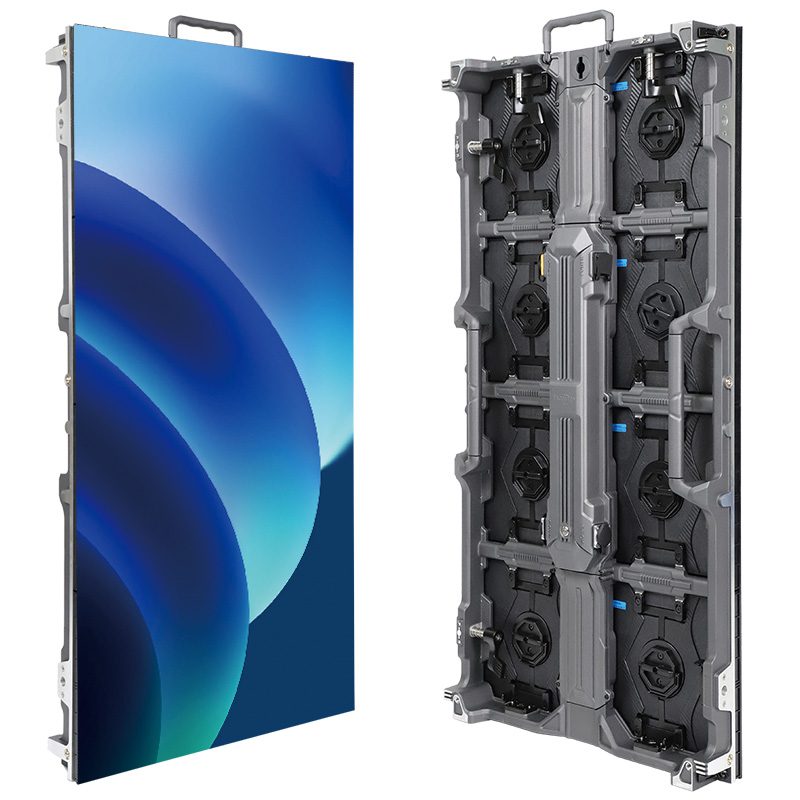
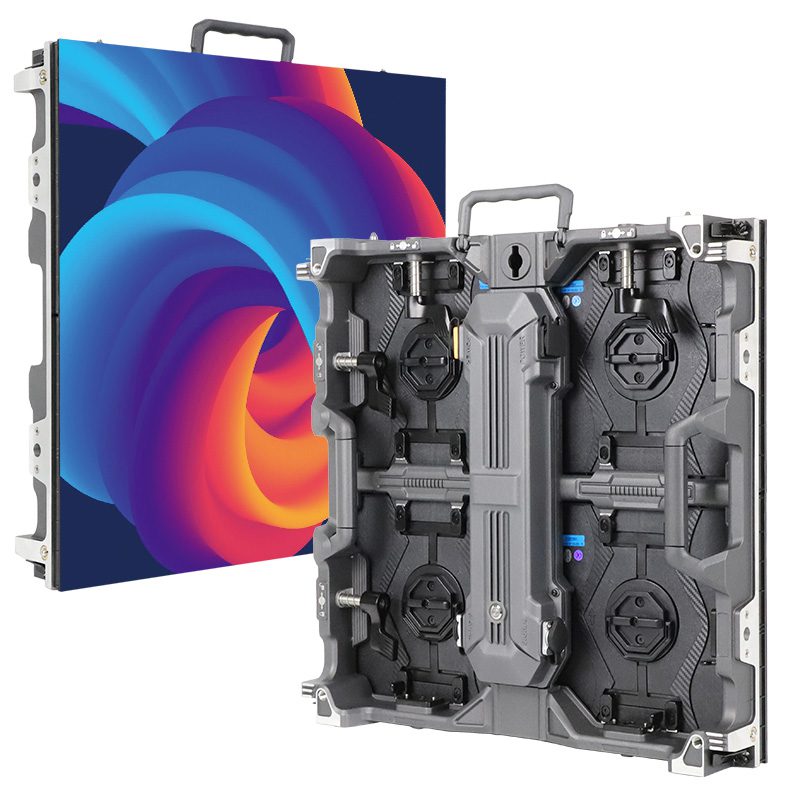
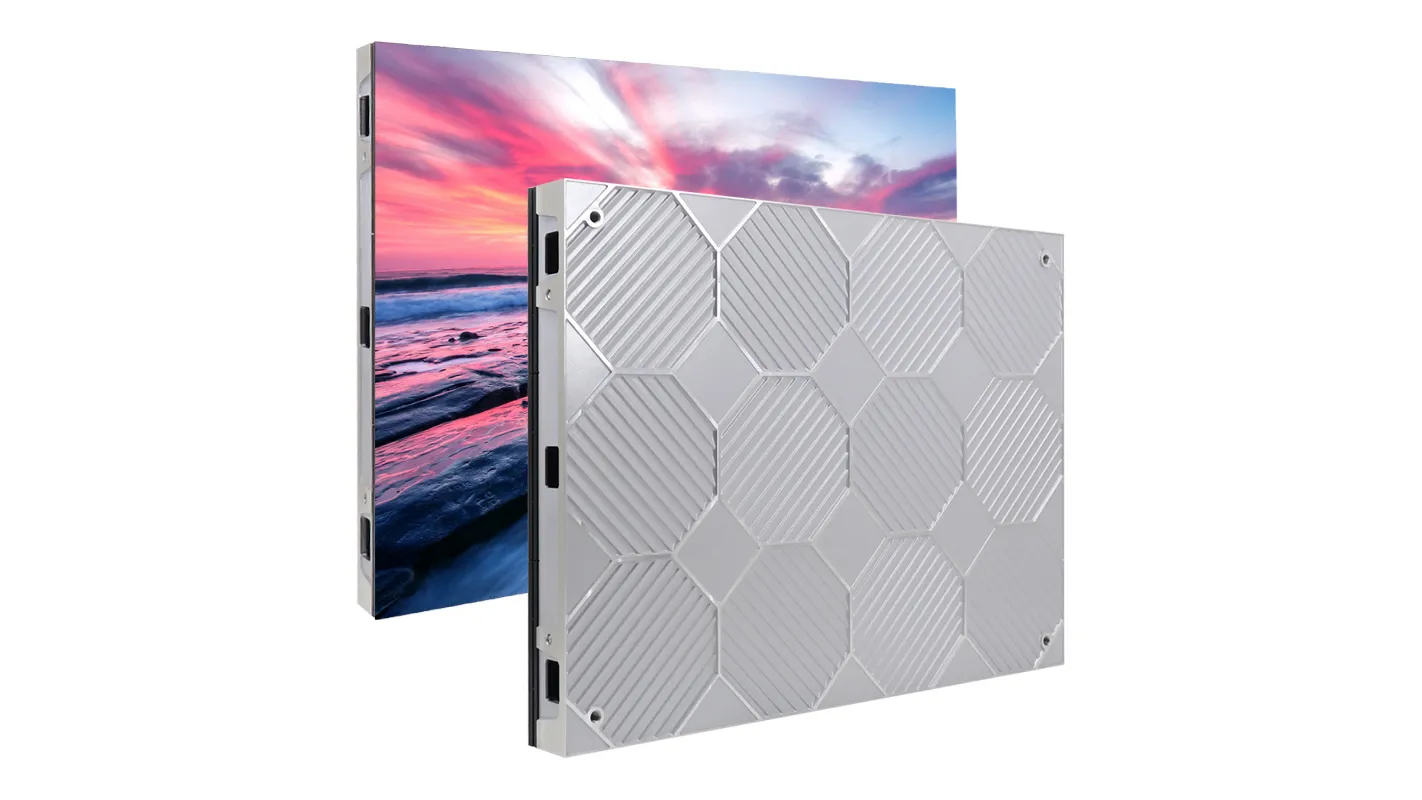
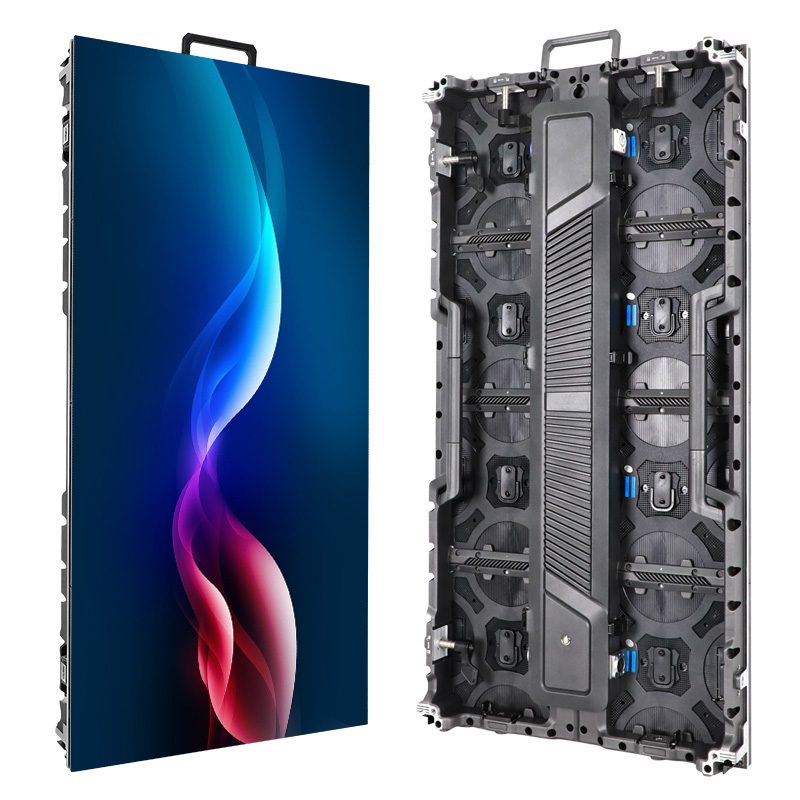
A stadium perimeter LED display is a continuous row of LED cabinets installed along the boundary of the playing field — at pitch level, between the action and the seats. Each cabinet houses LED modules on the front, with power supplies, receiving cards, and signal hardware sealed inside.
The thing to understand is that this is not a screen mounted safely out of reach. It sits exactly where players slide, where equipment hits, where a full-speed tackle ends. The engineering has to account for that, and not all manufacturers take it seriously enough.
2.2 How It Differs from the Main Screen
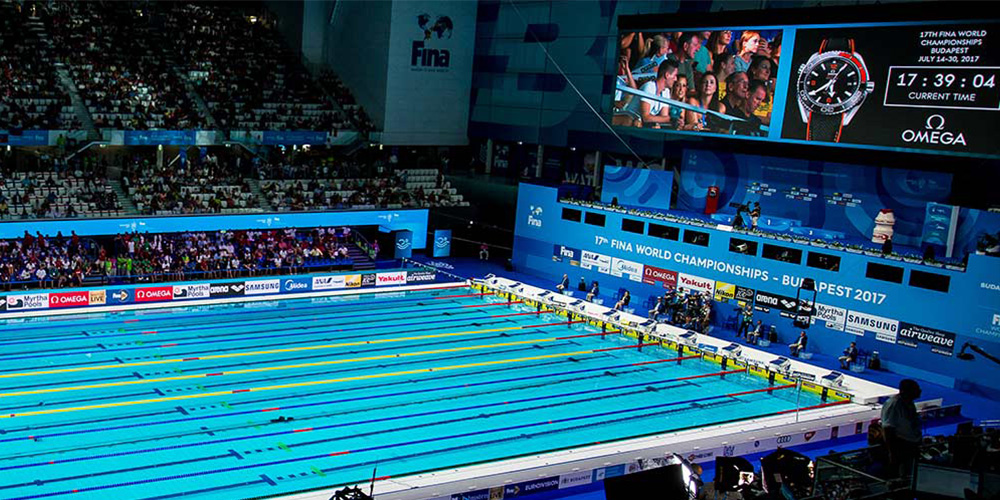
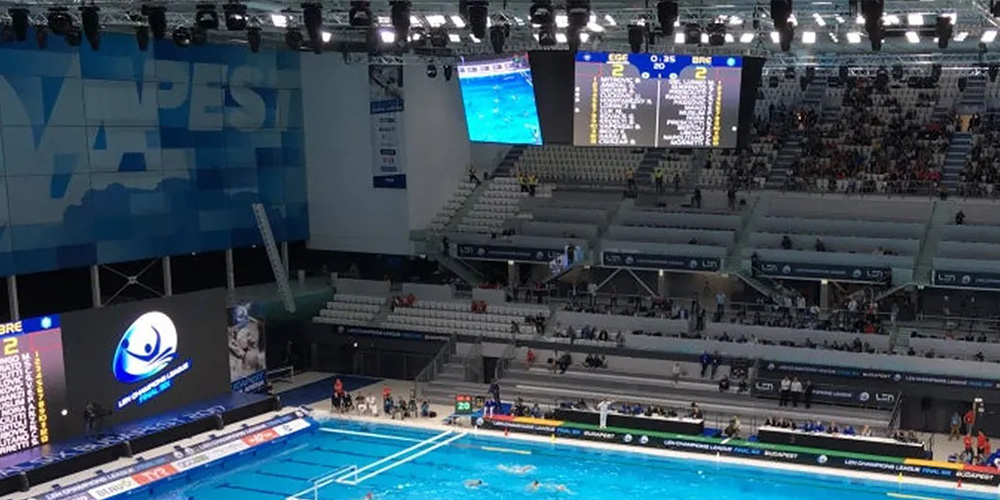
A main video screen hangs above the action, viewed from 50 or 100 meters away. It uses wider pixel pitches — P10 to P20 or more — and nobody is going to collide with it.
A perimeter display is different in ways that matter. It is viewed from a few meters by pitch-side cameras and front-row fans. That means tighter pixel pitches, usually P6 to P10. It has to survive physical impact, which drives cabinet engineering that a main screen never needs. And because television cameras capture it in the same frame as fast-moving players and the ball, refresh rate stops being a nice-to-have and becomes a pass/fail criterion. I have watched broadcast feeds where a substandard perimeter display flickered on every slow-motion replay, and the effect is not subtle — it makes the whole venue look amateur.
2.3 Where You See It
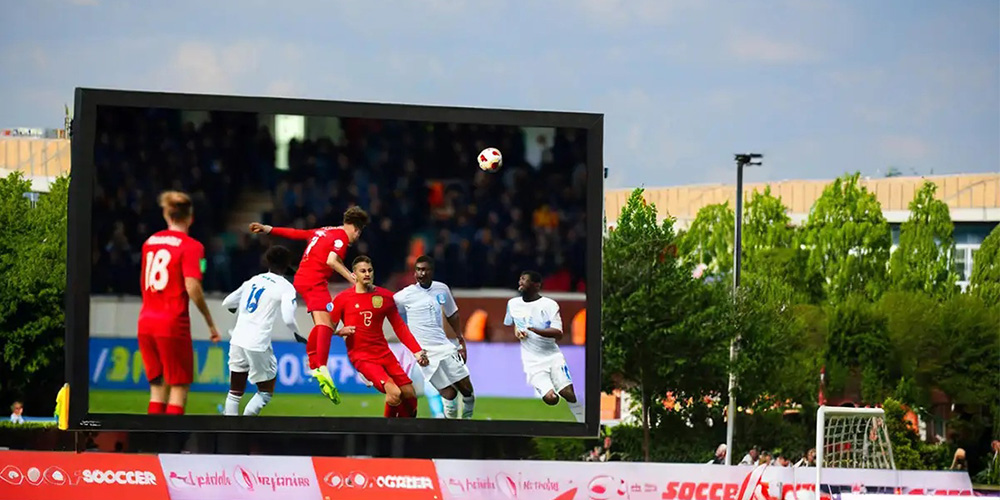
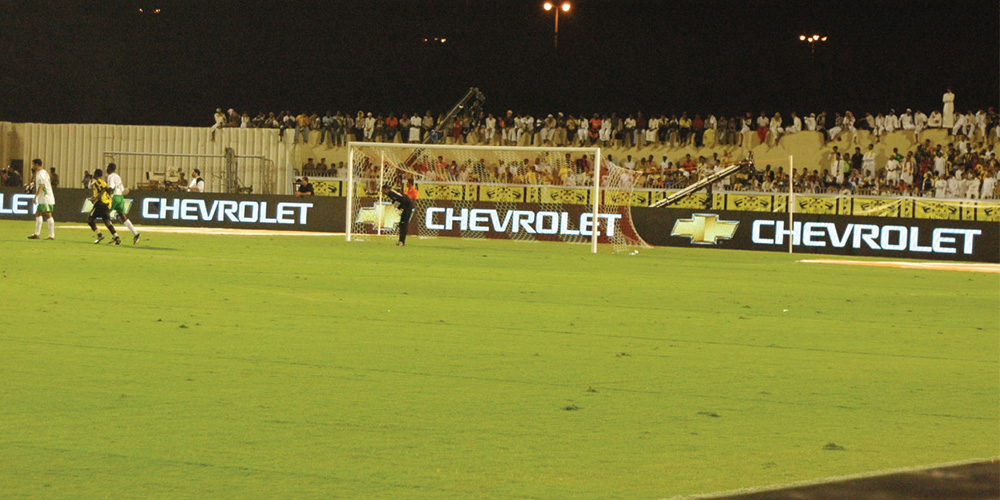
Football sideline advertising is the obvious one. Most of the perimeter LED sold globally ends up along football pitch boundaries, rotating sponsor brands through the broadcast feed.
International tournament broadcasting is a different beast. FIFA, UEFA, and Olympic broadcast standards impose refresh rate, color calibration, and flicker requirements that are stricter than what most domestic leagues require. A display that handles a Saturday league match without complaints might fail certification for a World Cup qualifier.
Brand sponsorship displays extend beyond match day. Clubs use perimeter systems for stadium tours, corporate events, and fan festivals — same hardware, different content, additional revenue.
2.4 Why Broadcast Visibility Is the Whole Point
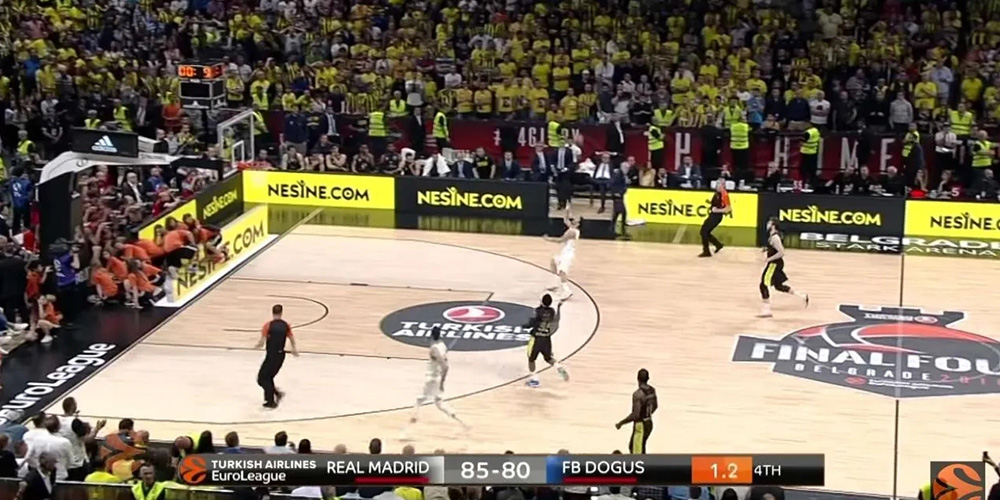
Here is the thing about perimeter LED that sponsors understand and some venue operators miss: the display is visible during live play. Unlike the main screen, which requires a dedicated camera cutaway, perimeter advertising appears organically in every sideline shot, every replay angle, every goal celebration. A goal at one end means the opposite-end perimeter is visible in the replay. That unavoidable, organic visibility is what makes the ad slots valuable — and what makes display quality a commercial issue, not just a technical one.
3.Types of Stadium Perimeter LED Displays
3.1 Fixed Installation
Fixed perimeter systems are built to stay in one place for years. The cabinets can be heavier. The mounting can be permanent. Service access can be rear-only, because there is always room behind a permanently installed display.
This is the right call for a Premier League club that owns its ground and plays 25-plus home matches a season. The display runs on a schedule, the venue is not going anywhere, and the cost amortizes cleanly over the system’s lifespan.
3.2 Rental Systems
Rental perimeter LED is built for mobility. Lighter cabinets, quick-lock mechanisms instead of bolted connections, reinforced corners because transport damage kills more rental inventory than LED degradation ever will.
Rental makes sense for tournament organizers — a two-week international competition at a neutral venue, where permanent installation would be absurd. It also works for multi-purpose venues that need to reconfigure between football, concerts, and corporate events.
The trade-off is real. Rental panels cost more per unit because the engineering for portability and cycle life adds expense. But that cost spreads across multiple events and venues. A rental system that runs 40 events a year at different locations has a different ROI equation than a fixed installation serving one stadium.
3.3 Front-Service vs Rear-Service
Front-service cabinets let a technician swap a failed module from the front — pop it out, click in the replacement, done. No need to access the rear of the cabinet. This saves clearance space and means repairs do not require clearing the area behind the display. In tight sideline configurations, that matters.
Rear-service cabinets are simpler and more traditional. Modules screw in from behind. It works fine for fixed installations where rear access is permanently available and nobody is in a hurry. The downside is that any repair means getting someone behind the wall, which can be impractical when the perimeter is mounted against barriers or hoardings.
4.What to Look at Before You Buy ?
4.1 Pixel Pitch and Who Is Watching
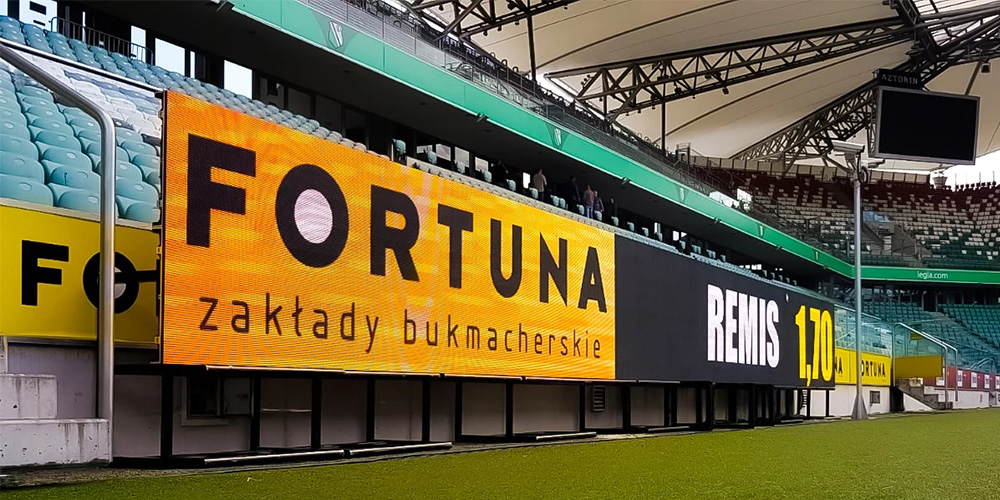
Pixel pitch is the distance between LED centers, measured in millimeters. The common options for stadium perimeters are P6, P8, and P10.
The basic rule: tighter pitch for closer viewing. A P6 display looks clean from the front row and on tight camera zooms. A P10 display reads fine from the upper deck and on wide broadcast shots, but up close the pixel structure becomes visible.
The complication is that a perimeter display has two audiences at different distances — fans in the stadium (anywhere from 2 meters to 80 meters away) and broadcast viewers (whose effective distance depends on camera zoom). There is no single right answer. Most professional venues land at P8 because it threads the needle: sharp enough for HD broadcast, not so tight that the cost per square meter becomes punishing across 300-plus linear meters of display.
If your venue hosts broadcasters who do a lot of tight sideline camera work, lean toward P6. If the primary audience is in-stadium and the broadcast is secondary, P10 might be the smarter budget call.
4.2 Brightness That Works in Sunlight
Perimeter LED has to compete with direct sun during day matches and floodlights at night. Both conditions demand high brightness, but for different reasons. Sunlight washes out a dim display. Floodlights create glare that flattens low-contrast images.
The range that works for outdoor stadium applications is 5,000 to 7,000 nits. Below 5,000, daytime visibility drops noticeably — logos lose punch, colors look washed out on camera. Above 7,000, you are paying for brightness that human eyes and broadcast cameras cannot meaningfully use.
One feature worth specifying: automatic brightness adjustment. A light sensor that adjusts output based on ambient conditions saves power during evening matches and prevents the display from looking harsh when cloud cover moves in. Without it, the system either runs too bright at night or too dim during the day, and both states cost you — one in electricity, the other in advertising quality.
4.3 Refresh Rate and Why Cutting Corners Here Is Expensive
A stadium perimeter LED display needs at least 3,840Hz refresh rate. I am not going to soften that. I have seen what happens when venues try to save money with lower-spec panels, and the result shows up on television as horizontal bands crawling across the sponsor logos during slow-motion replays.
The technical reason: TV cameras capture at 50 or 60 frames per second, and those frame rates interact with the LED refresh cycle. If the display refreshes too slowly, the camera captures partial frames, producing flicker artifacts. Slow-motion replays make the problem worse because the shutter speed increases, making the artifacts more visible — and slow-motion replays are exactly when sponsor logos get the most screen time.
Broadcasters notice. Some will flag non-compliant displays and restrict their visibility during televised fixtures. If your commercial model depends on broadcast exposure, a display that flickers on camera is not a technical problem. It is a revenue problem.
4.4 Cabinet Design and What Happens When a Player Hits It
This is where perimeter LED engineering diverges from every other kind of LED display. The cabinets are at field level, at impact height for athletes moving at speed. A player sliding into the boards at full stretch cannot meet a rigid metal edge.
The solution that has become standard is impact-absorbing padding integrated into the cabinet front — high-density foam or rubber composite bumpers wrapping the leading edges and corners. The cabinet structure itself is typically aluminum alloy, rigid enough to keep alignment across long runs, but the surfaces that athletes contact are cushioned.
Viewing angle matters too. Perimeter displays get viewed from above by seated spectators and from a shallow angle by pitch-side cameras. A slight upward tilt — 5 to 10 degrees — on the cabinet face directs the brightest output toward the cameras and stands rather than straight across the pitch. It is a small detail that makes a visible difference.
4.5 Weather and IP Rating
These displays live outdoors, year-round. Rain, dust, UV exposure, temperature swings from freezing to scorching — all of it.
IP65 is the minimum to specify. The first digit (6) is complete dust protection. The second digit (5) is protection against water jets from any direction, enough for heavy rain and pitch-side sprinklers. Venues in coastal or extreme-weather locations sometimes go to IP66.
The IP number is not the whole story. What matters over time is whether the silicone gaskets between modules and cabinets stay flexible after years of UV exposure, whether the connector housings resist corrosion, and whether the cabinet finish still looks decent in year four. Build quality determines whether the spec sheet numbers still mean anything after a few seasons outdoors.
5.Fixed vs Rental: The Decision That Depends on Your Business Model
5.1 The Comparison
A club that owns its stadium and plays 25 home matches a season should buy fixed installation. The economics are straightforward: install once, amortize over years, maintain on a predictable schedule.
A tournament organizer running a two-week international competition at a neutral venue should rent. There is no universe where permanent installation makes sense for hardware that gets dismantled after the final whistle.
The hard calls are the venues in between. I talked to an operator last year who runs a multi-purpose arena — football, concerts, trade shows, corporate events. They went with a hybrid setup: fixed perimeter LED for the main pitch boundaries, rental inventory for temporary configurations during non-sporting events. It adds complexity to inventory management, but it is cheaper than buying enough fixed display to cover every possible layout and more flexible than being locked into one configuration.
5.2 Long-Term Operation vs Event-Based Use
Fixed installation rewards venues with a permanent tenant and a predictable schedule. The per-unit cost is lower. The long-term stability is higher. The trade-off is flexibility — you are locked into whatever configuration you install.
Rental rewards operators who need to reconfigure, relocate, or scale. The per-unit cost is higher because the engineering for portability adds expense. But that cost spreads across multiple events and venues. A rental inventory that runs 40 events a year at different locations has a different ROI model than a fixed display serving one stadium.
5.3 Cost and Flexibility Trade-offs
Some operators try to split the difference by buying rental-grade panels for a fixed installation, reasoning that the extra durability is worth the premium. The approach has merit if the venue configuration changes seasonally. But if the display will genuinely never move, you are paying for durability you will never use. Fixed-install panels in a never-changed configuration are the better value.
| Dimension | Fixed Installation | Rental System |
|---|---|---|
| Cabinet build | Heavier, stability-first | Lighter, die-cast aluminum |
| Assembly method | Bolted, one-time setup | Quick-lock, tool-free, under 60 min |
| Service access | Rear-service typical | Front + rear service |
| Durability focus | Weathering, UV, long-term exposure | Transport cycles, corner impact, handling |
| Corner protection | Minimal (handled once) | Integrated bumpers, reinforced edges |
| Per-unit cost | Lower | Higher (portability engineering adds ~20–30%) |
| Best for | Single-tenant venues, 25+ home matches/season | Multi-venue operators, tournaments, reconfigurable venues |
| Typical lifespan | 6–8 years in fixed location | 6–8 years across multiple venues |
If your venue has a permanent tenant and a predictable schedule, fixed installation is the better financial decision — lower per-unit cost, simpler maintenance, and you are not paying for portability you will never use. If you run events across venues or need to reconfigure regularly, rental’s higher upfront cost pays for itself in utilization across multiple events.
6.What a Perimeter LED Display Actually Costs ?
6.1 Pixel Pitch Drives the Price
Pixel pitch is the biggest variable in per-square-meter cost. Moving from P10 to P6 roughly doubles the number of LED packages per unit area — more diodes, more driver ICs, tighter manufacturing tolerances. The cost curve steepens as pitch tightens.
For a venue running 300 linear meters of perimeter at a 1-meter cabinet height, the difference between P10 and P6 can be enough to fund an entirely separate display system elsewhere in the stadium. The question is whether your broadcast partners and sponsors require P6, or whether P8 or P10 meets the practical requirements given your camera positions and seating distances.
6.2 Screen Area and Budget
Perimeter LED cost scales with total surface area: pitch circumference times cabinet height. A typical football pitch perimeter runs 300 to 400 linear meters. At a cabinet height of 0.9 to 1.2 meters, you are looking at 270 to 480 square meters of display.
More area means more cabinets, more modules, more receiving cards, more cabling, more labor. But there are fixed costs that do not scale — the video processor, control system, and software licensing cost roughly the same whether you have 200 square meters or 400. Larger installations spread those fixed costs across more revenue-generating display area.
6.3 Installation and Everything After
The panels are not the full cost. Budget for structural mounting — steel framework, concrete anchoring, cable management. Budget for electrical — power distribution, backup power, surge protection at every segment. Budget for initial calibration — getting color and brightness uniform across every cabinet, which is labor-intensive and directly affects how the display looks on broadcast from day one.
Ongoing costs include module replacements (individual LED modules fail over time — keep spares), power supply replacements (the interval varies by manufacturer and climate, but figure on replacements within the system’s service life), and periodic recalibration. How much to budget annually depends on climate and usage intensity. Operators in harsh environments should plan for the higher end of whatever range their manufacturer provides.
7.A Practical Buying Approach for 2026
7.1 Match the Spec to the Competition Level
Spec for the highest level of competition you host, not the average. If your venue occasionally hosts internationally broadcast matches, the system needs to meet international broadcast standards even during routine domestic fixtures. Retrofitting later always costs more than specifying correctly from the start.
A venue that hosts mostly community and regional events can prioritize durability and ease of maintenance over maximum resolution. A professional league venue needs to invest more in broadcast-critical specs — refresh rate, brightness uniformity, color accuracy. A venue on the international tournament circuit needs the full package, plus broadcast-grade calibration, front-service access, and a deep spare parts inventory.
The lines between these tiers are not sharp, and most venues sit somewhere in the messy middle. The point is to know which end of the spectrum you are closer to and spend accordingly.
Most professional league venues should target the middle column. Community venues can save by prioritizing durability over maximum resolution. International tournament hosts need the full broadcast-grade package — cutting corners here gets flagged by broadcast inspectors.
| Competition Level | Pixel Pitch | Brightness | Refresh Rate | IP Rating | Key Priority |
|---|---|---|---|---|---|
| Community / Regional | P10 | 5,000 nits | ≥3,840Hz | IP65 | Durability, ease of maintenance |
| Professional League | P8 | 5,500+ nits | ≥3,840Hz | IP65 | Broadcast quality, brightness uniformity |
| International Tournament | P6–P8 | 6,000+ nits | ≥3,840Hz | IP65 / IP66 | Broadcast compliance, color calibration, front service |
P8 at 5,500+ nits is the sweet spot for most serious venues — it meets broadcast standards without the cost premium of P6 across 300-plus linear meters. Reserve P6 for venues where tight sideline camera work is a regular part of the broadcast, or where FIFA/UEFA certification is non-negotiable.
7.2 Broadcast Quality Affects What Sponsors Pay
When trade-offs come up — and they always do — protect the factors that affect how the display looks on television. Refresh rate, brightness uniformity, and color accuracy are what determine whether your perimeter LED looks professional or amateur on the broadcast feed.
The connection to revenue is direct. A display that looks clean on camera supports premium sponsorship pricing. A display that flickers or looks washed out gives sponsors a reason to negotiate lower rates. The technical specification is a commercial decision disguised as an engineering one.
7.3 Buy Something You Can Maintain
Before committing to a manufacturer, verify that they commit to module availability for the expected lifespan of the system. Six to eight years is a reasonable expectation. A display becomes unmaintainable — and effectively worthless — if replacement modules are no longer manufactured three years after purchase.
Also check whether the control platform supports mixed pixel pitch. Some venues start with P10 for the main perimeter and later add P6 sections for high-visibility camera positions. A unified control system that handles mixed configurations avoids running separate processors for different sections, which gets expensive and messy.
7.4 Working with Manufacturers
The manufacturer relationship matters as much as the hardware. A perimeter LED system is a multi-year asset. You need a supplier who provides installation support, on-site calibration, training for your technical staff, and responsive after-sales service.
When evaluating manufacturers, ask for references from venues of similar scale. Visit an installed system if you can — look at color uniformity after a couple of years of operation, ask about failure rates, and find out whether the manufacturer resolved issues promptly. A factory tour showing organized production and quality control is a positive signal. A manufacturer who cannot provide recent reference installations is a risk you probably do not need to take.
8.FAQs
8.1 What pixel pitch should I choose?
Most professional venues settle on P8. It is sharp enough for HD broadcast and does not carry the cost penalty of P6 across hundreds of linear meters. P6 makes sense if your broadcast partners do a lot of tight sideline camera work. P10 works for community venues where the in-stadium audience matters more than the broadcast feed.
8.2 Are these displays safe when players collide with them?
Modern perimeter systems are designed around player safety — soft-edge bumpers, rounded structural corners, impact-absorbing front surfaces. No sideline barrier in contact sports is completely risk-free, but a properly specified perimeter display should not create additional hazard beyond what a traditional static board would present. I would still ask the manufacturer for impact test documentation rather than taking a sales brochure at face value.
8.3 Do they work in bad weather?
IP65-rated displays are designed for continuous outdoor operation — rain, dust, direct sun. The LED modules themselves are solid-state and inherently weather-tolerant. The weak points are the connectors, gaskets, and power supplies. Build quality determines whether the weatherproofing holds up after multiple seasons. Silicone seals that harden in UV exposure or connectors that corrode in humidity will compromise a display long before the LEDs degrade.
8.4 How long do they last?
A well-maintained perimeter LED system typically delivers six to eight years of reliable service. The LED modules can last longer — 100,000 hours to half-brightness is standard — but power supplies, connectors, and cabinet structures age faster outdoors. Coastal venues with salt spray should expect shorter service intervals than dry inland locations.
8.5 Fixed or rental?
Fixed installation suits venues with a permanent tenant and a predictable schedule. Rental suits multi-venue operators, tournament structures, and venues that need to reconfigure. The choice is not about which technology is better — it is about which model matches how you operate.
9.Conclusion
Choosing the best stadium perimeter LED display comes down to four key factors: safety, display quality, broadcast performance, and cost. A reliable system should provide player protection, high brightness, excellent image quality, and a refresh rate that meets live broadcast standards.
As sports venues become more digital and connected, stadium perimeter LED displays are evolving into smart advertising platforms with centralized control and dynamic content management. By investing in a scalable, high-quality solution, venue operators can improve fan engagement, maximize sponsorship revenue, and achieve long-term value from their LED display system.
 Novastar VX1000 Pro VS VX1000: Everything You Need to Know Before Buying