
LED display price is best compared per square meter, but your buying decision should use the complete installed cost. Pixel pitch, indoor or outdoor use, cabinet design, control equipment and service requirements all change the final quotation. A low panel price can become an expensive project when mounting, power distribution, freight or replacement parts are missing.
This guide explains how to compare an affordable LED display price with the performance your application actually needs. You will find reference price bands, a worked budget, resolution calculations and a supplier checklist. All monetary examples use US dollars unless stated otherwise. Reference prices are third-party planning figures, not an EagerLED price list or a binding offer.
For an accurate EagerLED LED display price, send the screen dimensions, installation location, nearest viewing distance, content type and delivery destination. Those details let the supplier specify a complete system instead of quoting an unsuitable panel.
1. LED display price per square meter: what should you budget?
LED display price per square meter describes the cost of a defined area of screen. Always ask what that area includes: bare modules, assembled cabinets or a complete display package. Two suppliers can use the same unit while supplying substantially different equipment. A rental cabinet purchase is also different from hiring a screen for one event.
| Screen category | Example pitch | Published reference band | Main buying question |
|---|---|---|---|
| Entry indoor | P2.5–P4 | $600–$1,200/m² | Can viewers read the smallest required text? |
| Finer indoor | P1.5–P2.5 | $1,200–$2,500/m² | Does the extra resolution improve the intended content? |
| Outdoor billboard | P8–P10 | $350–$950/m² | Are brightness, structure and weather exposure specified? |
| Outdoor commercial | P5–P6 | $500–$1,300/m² | Is the pitch suitable for nearby pedestrians? |
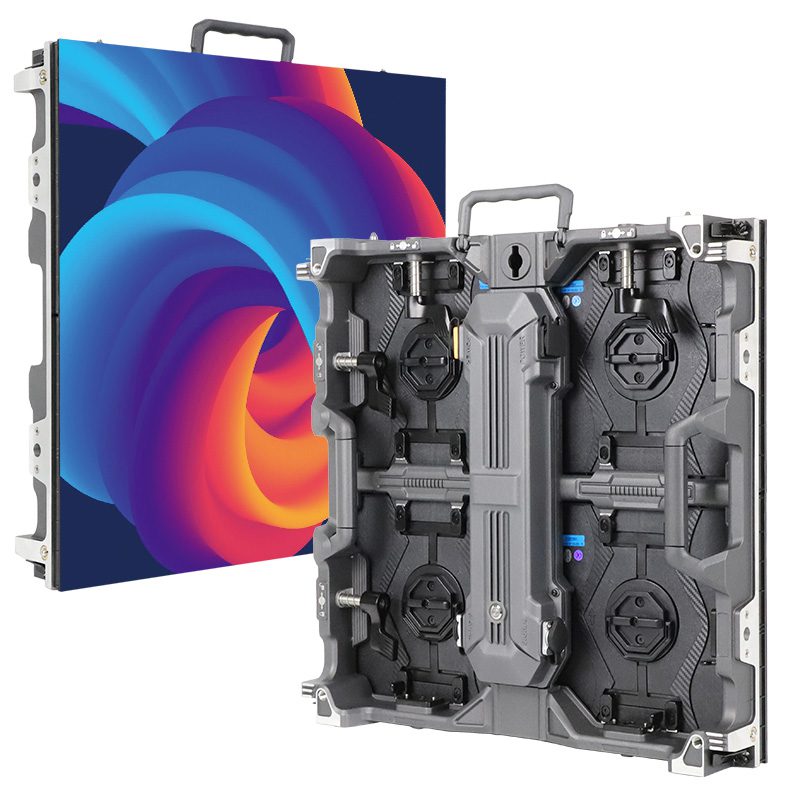
| Event cabinet purchase | P2.6–P3.9 | $800–$1,800/m² | Are cases, rigging accessories and spares included? |
Source: ONE DISPLAY’s published 2026 price guide, reviewed September 21, 2026. These selected supplier reference bands are not independent market averages; inclusions and specifications must be checked. Fine-pitch COB, unusual shapes and specialist applications can fall outside these categories.
Use the table to choose a quotation category, not to promise a delivered price. For example, an indoor LED display price cannot be compared fairly with a waterproof outdoor cabinet simply because both have the same pixel pitch. Likewise, a local installed package may include engineering and service that an export hardware quotation excludes.
01. Convert the LED display price into a screen budget
Screen area = width × height. Screen hardware allowance = area × quoted price per m². A 4 m × 2.5 m wall has an area of 10 m². At an assumed $1,000/m², its screen hardware allowance is $10,000. This is arithmetic using an example rate, not an offer for a particular model.
Check the final cabinet layout before ordering. A requested width may need to round up or down to whole cabinets. Ask for the actual display dimensions, cabinet count and active image area. This prevents a seemingly lower LED display price from hiding a smaller usable screen.
2. Indoor, outdoor and rental LED display price differences
01. Indoor screens: pay for readable content
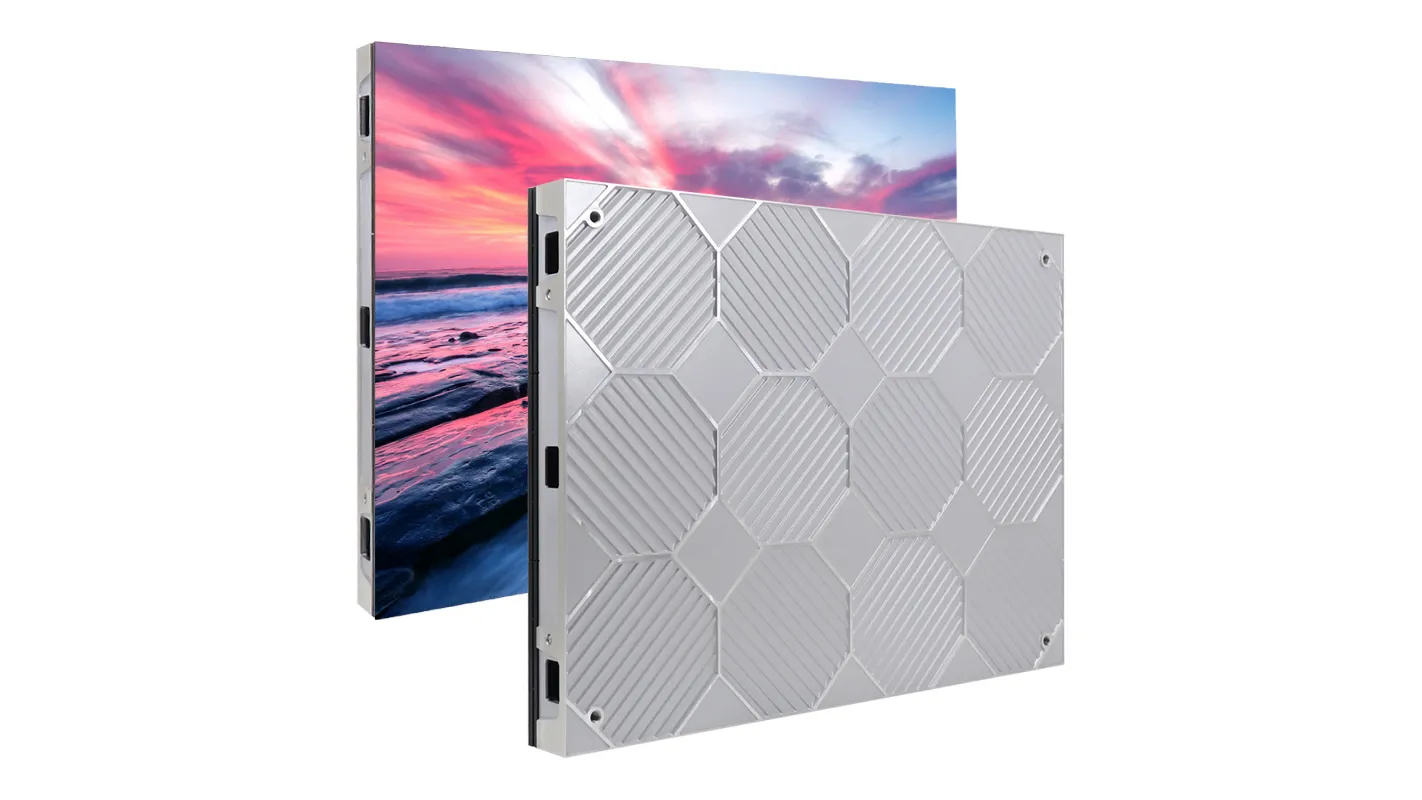
An indoor LED display price is usually driven by viewing distance, required resolution, low-brightness image quality and maintenance access. A reception wall showing large brand visuals has different requirements from a meeting room displaying spreadsheets. Specify the smallest text, seating positions and ambient light before selecting the pitch.
For a wall close to viewers, examine dark gradients, skin tones and uniform gray images at the brightness you will actually use. Maximum brightness alone does not describe indoor image quality. Review EagerLED indoor LED screen options against your room layout rather than treating the finest pitch as an automatic requirement.
02. Outdoor screens: include the environment
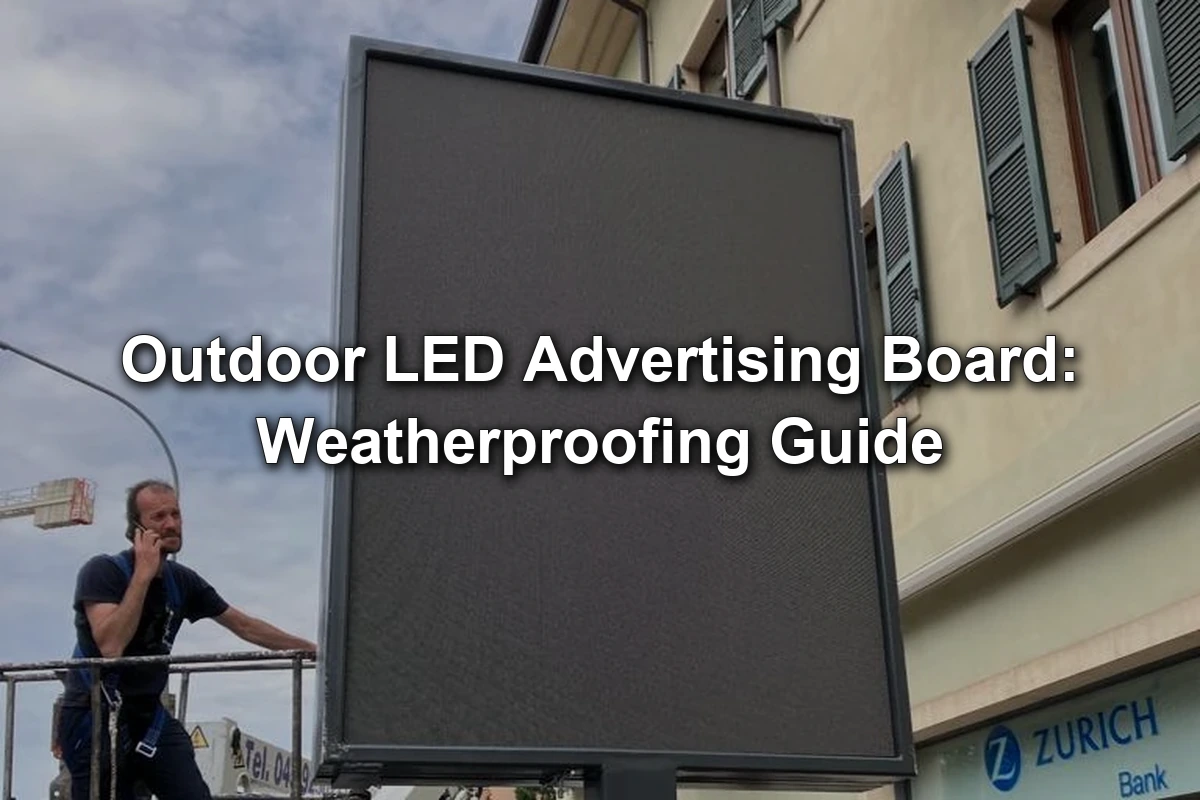
Outdoor LED display price comparisons should account for direct sunlight, rain exposure, ambient temperature and access for repairs. Confirm the front and rear protection ratings separately. An IP rating describes specified enclosure protection; it does not by itself establish resistance to salt corrosion, every weather condition or inadequate drainage.
A south-facing facade, sheltered entrance and coastal billboard require different engineering decisions. Ask how brightness is controlled after dark and how heat leaves the cabinet. The outdoor advertising LED board range provides a starting point for discussing these application requirements.
03. Rental systems: distinguish buying from hiring
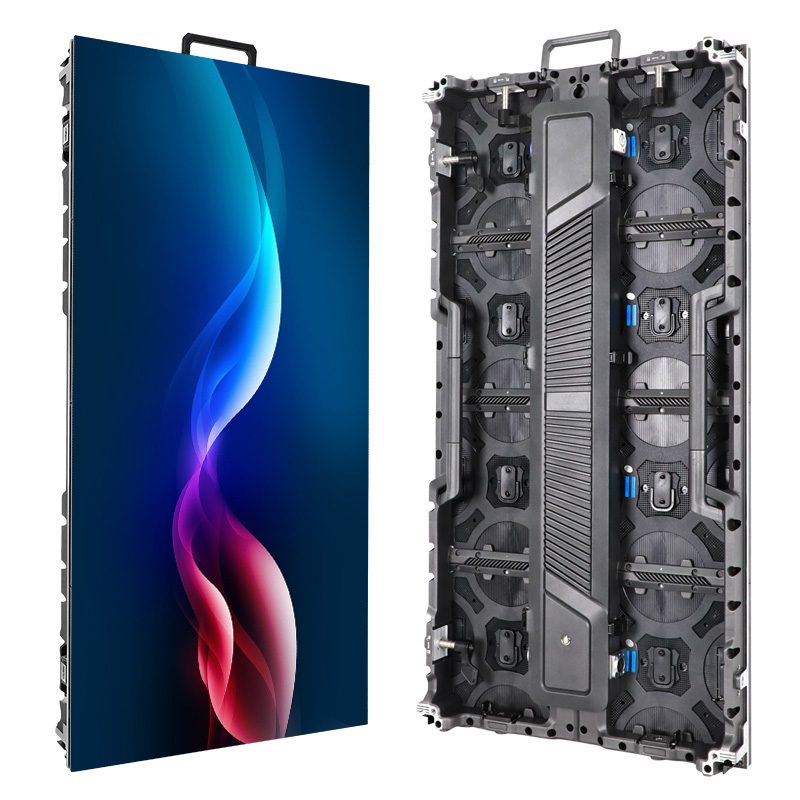
A rental LED display price can mean the purchase cost of reusable event cabinets or an event hire charge. Purchase comparisons should include locks, corner protection, flight cases and compatible hanging or stacking hardware. Hire comparisons should specify screen size, operating days, transport, crew, setup, dismantling and technical support.
Frequent assembly makes cabinet handling and repair access important to lifetime cost. For occasional events, compare a complete hire proposal with ownership, storage and maintenance over the expected number of uses. Rental LED screen systems should be assessed as working event packages.
3. Balance LED display price with pixel pitch and resolution
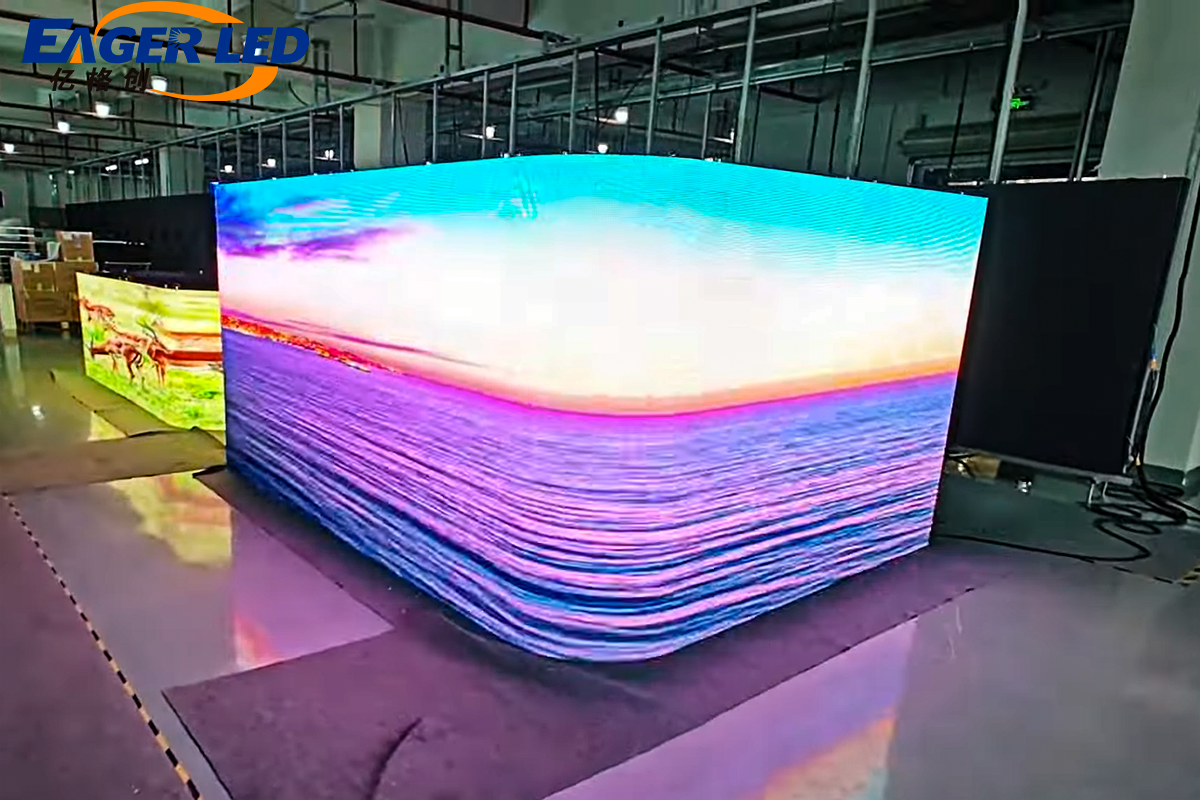
Pixel pitch is the center-to-center spacing between neighboring pixels, measured in millimeters. Reducing pitch increases the number of pixels within a fixed area. That can improve detail, but it also changes component count, processing requirements and LED display price. Match the native resolution to the content before deciding whether the upgrade is valuable.
01. Calculate the pixels your content will use
Approximate horizontal pixels = screen width in millimeters ÷ pitch in millimeters. Apply the same calculation to height. For a theoretical 4,000 × 2,500 mm active display, the following comparisons show why two equal-size walls may perform differently. Actual products must use their specified module and cabinet pixel matrices.
| Pitch | Approximate native resolution | Total pixels | Budget implication |
|---|---|---|---|
| P2 | 2,000 × 1,250 | 2,500,000 | More detail; check processor loading capacity |
| P2.5 | 1,600 × 1,000 | 1,600,000 | Intermediate pixel count for the same area |
| P4 | 1,000 × 625 | 625,000 | Less detail for small text and diagrams |
| P5 | 800 × 500 | 400,000 | Evaluate large-format content from the intended distance |
A processor accepting a 4K input does not make an 800 × 500 wall a native 4K screen. Scaling fits the source into the available pixels. To compare LED display price honestly, request both input compatibility and the completed wall’s native resolution. Include frame rate, bit depth and output limits in the controller specification.
02. Test the nearest viewing position
Viewing-distance rules based on pitch are rough starting points, not guarantees that individual pixels disappear. Visual acuity, contrast, text size and content all affect the result. Planar’s pixel-pitch explanation relates pitch to viewing requirements. Test the proposed pitch with your actual slides, logos or video from the nearest and farthest seats. Avoid buying extra resolution that the audience will never use.
Halving pitch approximately quadruples pixel density for the same area, because both horizontal and vertical counts increase. It does not imply a fixed fourfold LED display price increase: packaging, manufacturing, cabinet construction and purchasing volume also matter. Request alternative specifications and compare the visible improvement with the additional cost.
4. Check brightness, refresh rate and serviceability
A useful LED display price comparison goes beyond pitch. Ask suppliers to demonstrate the exact configuration at the operating settings you expect. This is particularly important when the display will appear on camera or run at low brightness for long periods.
01. Brightness and image quality
Choose luminance for the installation’s ambient light and confirm whether quoted brightness is measured before or after calibration. Indoor rooms generally need much less output than sunlit outdoor locations. Excess output can make viewing uncomfortable and increases energy use. The LED display brightness guide explains the application factors to discuss.
Compare uniformity, dark-detail reproduction and color consistency at the intended setting. An attractive LED display price is less useful if the wall looks uneven during ordinary operation. Request test images and identify the acceptance conditions in the quotation, including whether replacement modules will be calibrated to the installed screen.
02. Refresh rate and camera performance
LED refresh rate describes repeated light-output cycles; it is different from the video frame rate. A high advertised refresh figure alone does not guarantee clean camera footage. Scan behavior, driver settings, brightness, camera shutter and synchronization can influence banding or other artifacts. Test the actual camera setup when filming is part of the application; Brompton’s ShutterSync documentation explains the relationship between camera shutter and LED refresh.
Do not choose a low-refresh configuration solely because content is static. Ask for demonstrated performance under the intended viewing and recording conditions. If one LED display price includes a higher-grade control package, identify the practical benefit rather than comparing isolated specification numbers.
03. Front service, spare parts and cabinet construction
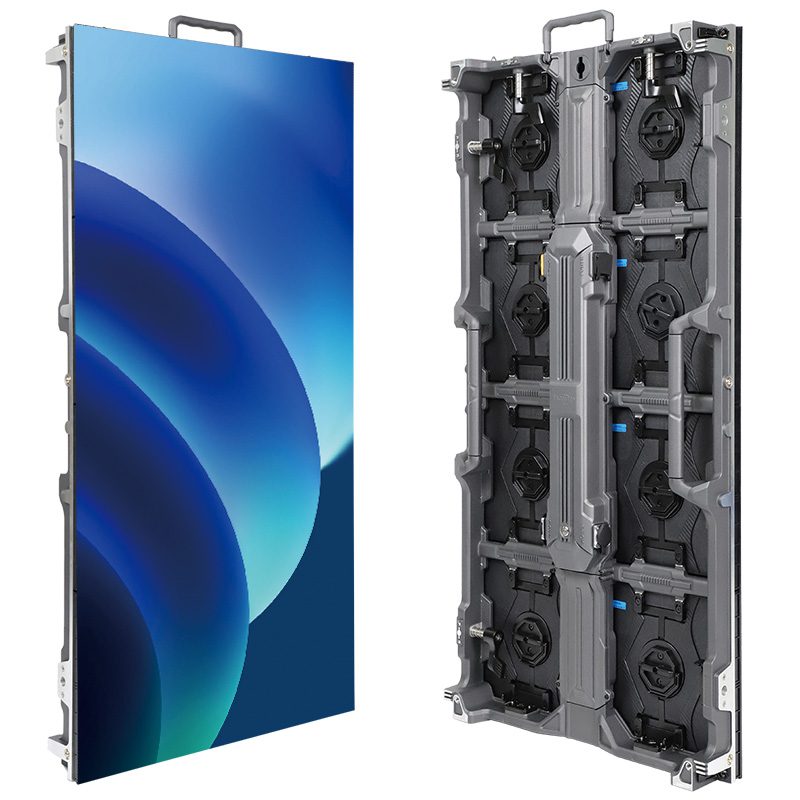
Front-access modules can simplify maintenance where there is no rear service corridor. Confirm whether power supplies and receiving cards are also accessible from the planned service side. A front-removable module does not automatically make every component front-serviceable. Check replacement access before approving a wall recess or decorative surround.
Specify spare modules, power supplies and receiving cards by part number and quantity. Same-batch spare modules help with appearance matching, but calibration may still be necessary. A slightly higher LED display price can be justified if it reduces access equipment, labor and downtime during repairs.
5. Build the complete installed LED display price
Separate screen hardware from the costs required to make it operational. The following example uses assumed allowances for a 10 m² indoor project. It demonstrates budget structure only; it is not an EagerLED quotation, regional average or promise that installation will cost this amount.
| Budget item | Example allowance | Confirm before ordering |
|---|---|---|
| Screen cabinets | $10,000 | 10 m² × assumed $1,000/m²; exact included components |
| Controller and processing | $1,200 | Inputs, pixel capacity and required licenses |
| Mounting structure | $1,500 | Design, attachment points and finishing |
| Electrical and signal installation | $800 | Distribution, cable routes and protection |
| Installation and commissioning | $1,500 | Labor, access equipment, testing and training |
| Freight and delivery | $700 | Destination, unloading and delivery terms |
| Initial spare parts | $500 | Agreed quantities and compatibility |
| Subtotal | $16,200 | Before taxes, duties and unlisted site work |
| Illustrative contingency: 10% | $1,620 | Planning assumption; adjust to project uncertainty |
| Planning total | $17,820 | Not a delivered quotation |
In this example, the $10,000 screen allowance is only part of a $17,820 planning total. The difference is not a universal markup: each allowance must be replaced with a project-specific quotation. Your installed LED display price may change substantially after a site survey, particularly for elevated outdoor structures or difficult access.
Request an explicit delivery term and named destination. Ask who arranges freight, insurance, clearance and unloading, and have the relevant service provider confirm any applicable charges. Treat tax and duty allowances as destination-specific items rather than copying a percentage from an unrelated project.
Also identify who supplies the media player, content-management access and recurring software licenses. Define the handover: configuration backups, wiring drawings, administrator access, operating instructions and user training. These items make the LED display price comparable and help the owner operate the installation after commissioning.
6. Compare energy use and lifetime ownership costs
The lowest initial LED display price may not produce the lowest ownership cost. Compare energy consumption, access for maintenance, software charges and parts availability over your intended service period. Treat projected savings as calculations with stated assumptions rather than guaranteed percentages.
Annual electricity use (kWh) = screen area (m²) × average power (W/m²) ÷ 1,000 × operating hours per day × operating days. Multiply the result by your electricity tariff to estimate cost. Ask the supplier how average power was measured, including content, calibrated brightness and operating mode.
For an illustrative 10 m² screen averaging 200 W/m² for 12 hours daily, annual consumption is 8,760 kWh at 365 operating days. At an assumed $0.15/kWh, that is $1,314 per year. At 150 W/m² under equivalent conditions, the figure becomes 6,570 kWh or $985.50: an illustrative saving of $328.50 annually.
If the more efficient configuration adds $1,000 to the LED display price, simple energy-only payback is approximately 3.0 years under those assumptions. This excludes financing, maintenance and tariff changes. Maximum rated power remains important for electrical design, but it should not be presented as typical consumption without evidence.
Ask about replacement-part availability and repair turnaround as well. A component warranty is different from an on-site service agreement. Clarify who pays for shipping, labor and access equipment, what failures are excluded, and how support is delivered. These commitments belong beside the LED display price in your comparison.
7. Compare supplier quotes and request an EagerLED LED display price
A useful request for quotation gives every supplier the same brief. Describe the desired outcome first: audience, viewing positions, content, operating schedule and installation conditions. Then compare technical proposals and exclusions line by line. This makes an affordable LED display price a measurable decision.
| Comparison item | Evidence to request | Why it matters |
|---|---|---|
| Dimensions and resolution | Cabinet layout, active size and native pixel matrix | Prevents comparing different screen areas |
| Component specification | Module, LED package, driver, receiver and power-supply models | Makes proposed substitutions visible |
| Image performance | Calibrated brightness, test content and camera demonstration if needed | Checks quality under actual operating conditions |
| Environment and structure | Protection ratings, cooling approach and mounting requirements | Identifies site engineering responsibilities |
| Included equipment | Controller, cables, mounting accessories, cases and spares | Reveals missing project costs |
| Commercial scope | Currency, validity, delivery term, lead time and exclusions | Makes the LED display price comparable |
| Acceptance and support | Inspection criteria, warranty scope, training and repair process | Defines what happens before and after handover |
01. Verify the product and acceptance criteria
Review the supplier’s quality-control process and request evidence relevant to the proposed configuration. Agree on visual inspection patterns, uniformity checks, defect handling and functional tests. Confirm that approval samples and production units use the agreed components; a generic factory video cannot establish every shipment’s performance.
For a large wall, ask for cabinet identification, connection diagrams and configuration backups. Define how damaged deliveries or failed acceptance tests will be handled. The value behind an LED display price becomes clearer when product scope, testing and after-sales responsibilities are written down.
02. Send a complete quotation brief
To request an EagerLED LED display price, provide width and height, indoor or outdoor location, nearest viewing distance, photographs or drawings of the site, content examples and operating hours. Add the delivery country, installation deadline, service-access limitations and whether cameras will film the screen.
Use the EagerLED contact page to request an itemized proposal and, where appropriate, a lower-cost alternative. Ask what changes between the options. Do not assume that travel, on-site engineering or installation is free; those services should be confirmed explicitly in the project scope.
8. LED display price FAQ
01. How much does an LED display cost?
LED display price depends on pitch, application and what the quotation includes. The reference categories above range from hundreds to low thousands of dollars per square meter for selected screen types, while specialist systems can cost more. Multiply a confirmed rate by the actual cabinet area, then add the remaining project costs.
02. What is the LED display price for a 10 × 10 ft wall?
A theoretical 10 × 10 ft wall is approximately 3.048 × 3.048 m, or 9.29 m². At an assumed $1,000/m², screen hardware alone would be about $9,290. This is a calculation, not a quotation. Final cabinet dimensions, pitch, processing and installation determine the actual LED display price.
03. Is a smaller pixel pitch always worth the extra cost?
No. Smaller pitch adds resolution within the same area, but its value depends on viewing distance and content. Small text and close seating may justify it; large graphics viewed from farther away may not. Compare demonstrations at the intended distance before accepting a higher LED display price.
04. Why is outdoor LED display price different from indoor pricing?
Outdoor systems must be specified for ambient light, weather exposure, cooling and their mounting environment. These requirements change construction and installation costs. Compare equivalent dimensions and performance rather than assuming that all outdoor screens are more expensive than every indoor fine-pitch model.
05. Does the quoted LED display price include installation?
Only if the written quotation says so. Check structure, labor, electrical work, processing, freight, taxes, commissioning and training separately. A price labeled per square meter may cover modules or cabinets only. Request a list of included items and exclusions before comparing the final totals.
06. Where can I get an accurate EagerLED LED display price?
Request a configuration-specific quotation from EagerLED with the site details and screen requirements listed above. A useful proposal identifies the model, cabinet count, native resolution, accessories, delivery scope and warranty terms. Ask for quote validity and lead time because a general guide cannot establish current availability or final pricing.
9. Conclusion: choose LED display price by complete project value
The right LED display price buys the resolution, visibility and serviceability your application requires within a clearly defined project scope. Start with audience and content, confirm the cabinet layout, test image performance and compare itemized installed budgets. Include energy, spare parts and support before deciding which offer is affordable.
Use the tables as a quotation checklist, replace every assumed figure with a supplier or installer allowance, and compare options on the same basis. A well-specified LED display price is easier to approve, easier to install and easier to manage throughout the screen’s working life.
 COB LED Display Manufacturing: Process, QA Risks & Buyer's Guide