
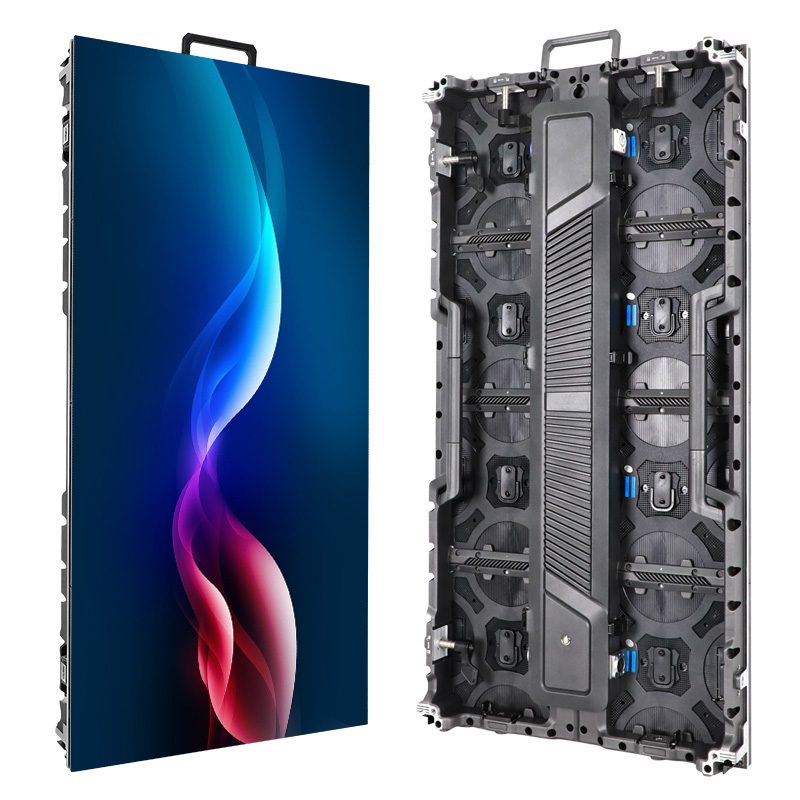
Mini LED vs micro LED comes down to one structural difference: a mini LED is a 50-200 micron chip used either as an ultra-dense backlight behind an LCD panel or as the pixel itself in a fine-pitch direct-view module, while a micro LED is a sub-50 micron chip that emits its own red, green and blue light with no LCD layer at all. That single difference drives everything buyers care about – brightness, contrast, pixel pitch, lifespan and price per square meter.
This guide compares mini LED vs micro LED for both consumer screens and commercial LED displays. You will find specification ranges, indicative pricing per square meter, an application fit matrix, a buyer decision checklist and answers to the questions suppliers hear every week. If you are specifying a screen for a conference room, studio, retail store, arena or control room, the practical answer is usually clearer than the marketing suggests.
catalogue
1. Mini LED vs Micro LED: The Short Answer
If you only read one paragraph, read this one: mini LED is the practical choice for most LED display projects today because it runs on a mature, high-volume supply chain, and micro LED is the premium choice for applications that need the finest pixel pitch, true black and the longest service life. In the mini LED vs micro LED decision, mini LED gives you more screen per dollar while micro LED gives you the smallest pixels, the highest contrast and the lowest long-term maintenance burden.
The table below is the short version of the mini LED vs micro LED comparison. The rest of this article explains where each number comes from and how to apply it to a real project.
| Question | Mini LED | Micro LED |
|---|---|---|
| What it is | Ultra-dense LED backlight, or a 50-200 micron chip used as a direct-view pixel | Sub-50 micron self-emissive RGB chip with its own driver |
| How light is created | LEDs illuminate an LCD panel, or are packaged into the module surface | Every sub-pixel emits its own light; no backlight, no colour filter |
| Typical pixel pitch (commercial) | P0.4 to P2.5 | P0.3 and finer |
| Black level | Near-black; mild blooming around bright objects on dark backgrounds | True black; an off pixel emits nothing |
| Peak brightness | About 1,000-2,000 nits (LCD form), 1,500-6,000 nits (commercial modules) | 2,000-5,000 nits and above |
| Indicative cost | Lower entry cost; fine-pitch wall from roughly USD 800-6,000 per square meter depending on pitch | Several times higher at equal pitch; roughly USD 6,000-20,000+ per square meter |
| Availability and lead time | Wide availability, typically 2-4 weeks | Limited capacity, typically 6-16 weeks |
| Choose it when | Budget, delivery time, screen area and maintainability matter most | Pixel pitch, contrast ratio and service life matter more than price |
One vocabulary warning for the mini LED vs micro LED comparison. In consumer electronics, mini LED almost always means a backlit LCD television or monitor. In commercial LED displays – the market this page is written for – mini LED also describes direct-view modules built from 100-200 micron chips in COB or 4-in-1 IMD packages, and micro LED means sub-50 micron chips assembled with mass transfer.
2. What Is Mini LED?
01 What a mini LED actually is
A mini LED is a standard LED die shrunk to roughly 50-200 microns (0.05-0.2 mm), about one fifth the size of the LEDs in a conventional SMD display module. Because the chip is small, thousands fit behind a panel or into a module, and that density is what makes fine dimming and fine pixel pitch possible.
In a mini LED LCD screen the chips form the backlight behind the liquid-crystal layer. In a mini LED direct-view display the chips are packaged into modules and become the pixels themselves. Both are called mini LED, but only the second behaves like a conventional LED video wall.
02 How mini LED backlighting and local dimming work
Local dimming divides the backlight into zones that can be brightened or dimmed independently. Entry-level designs use a few hundred zones; the best use 5,000 to 20,000 or more. More zones mean tighter control of bright objects against dark backgrounds, which produces convincing HDR and deep black in dark scenes.
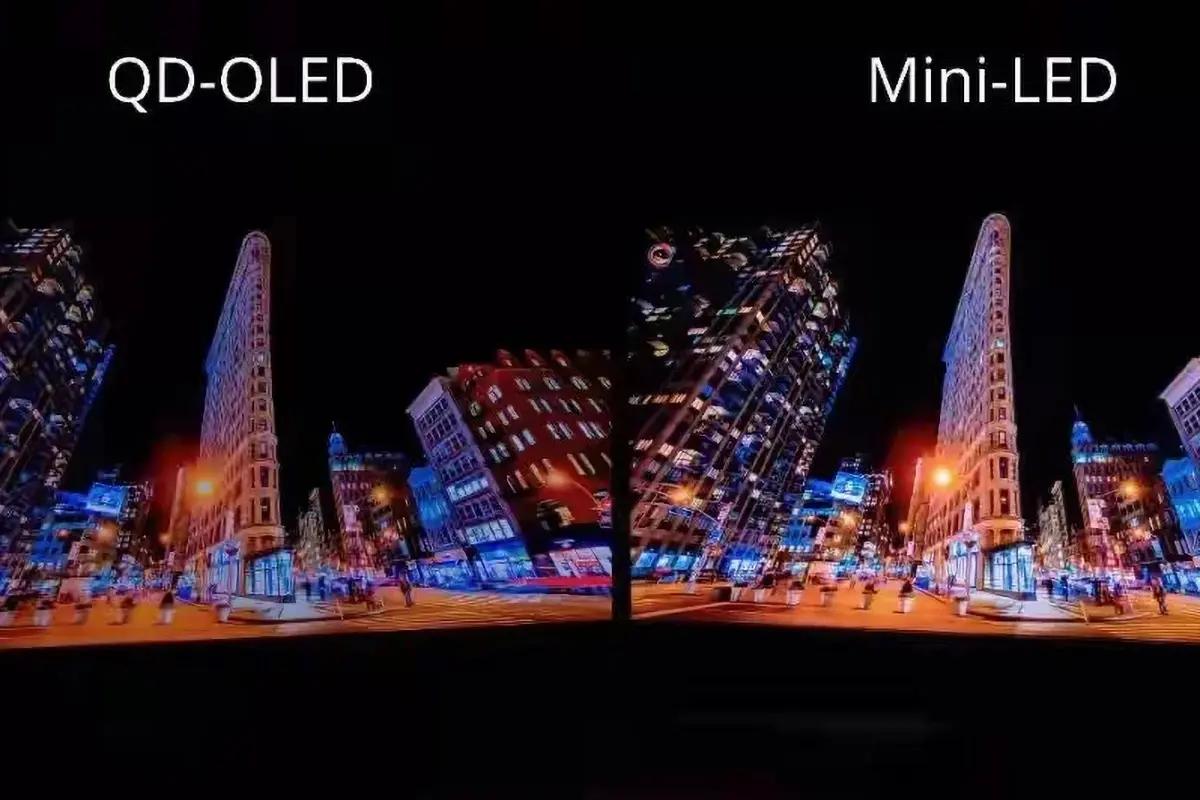
The limitation is optical. Because light from one zone spreads through the diffuser, a very bright object on a black background produces a soft halo – the effect the industry calls blooming. Mini LED reduces blooming; only a self-emissive technology removes it entirely.
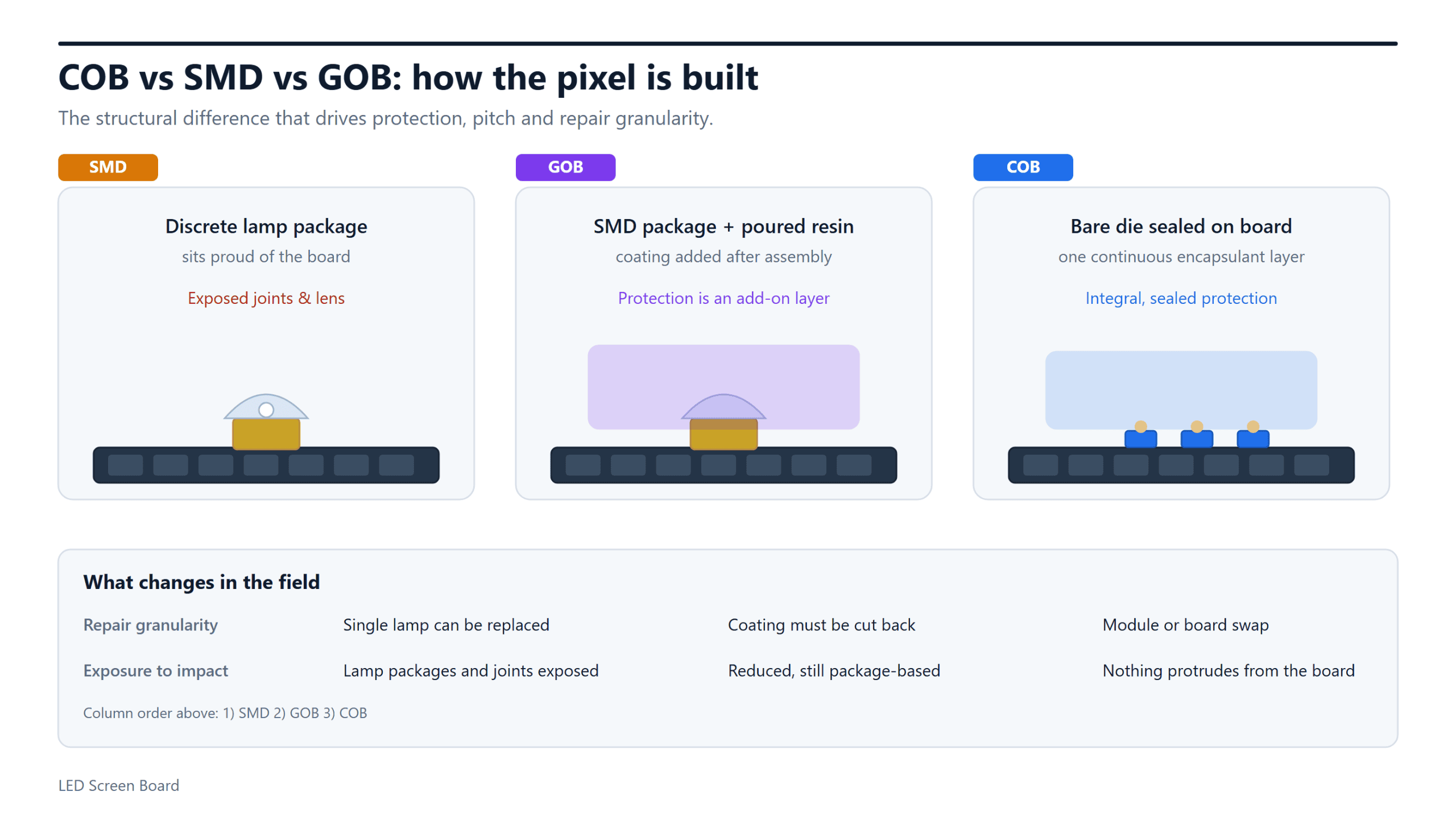
On the direct-view side, mini LED modules are usually built as COB (chip on board) or IMD / 4-in-1 packages. Both protect the chip, cut reflections and survive handling far better than SMD modules. For the full comparison, see our guide to SMD LED modules versus COB LED modules walks through the trade-offs.
03 Mini LED strengths and limits
Strengths. In the mini LED vs micro LED trade-off, mini LED brings high brightness at moderate power, a mature high-volume supply chain, short lead times, far better contrast than standard LCD, strong price per square meter, and widely available spare modules, driver ICs and receiving cards.
Limits. In LCD form a mini LED display still depends on a backlight, so black is never truly black and the LCD layer can lose uniformity over years of use. Power consumption at equal brightness is also higher than micro LED, because much of the backlight is absorbed by the LCD stack.
3. What Is Micro LED?
01 What a micro LED actually is
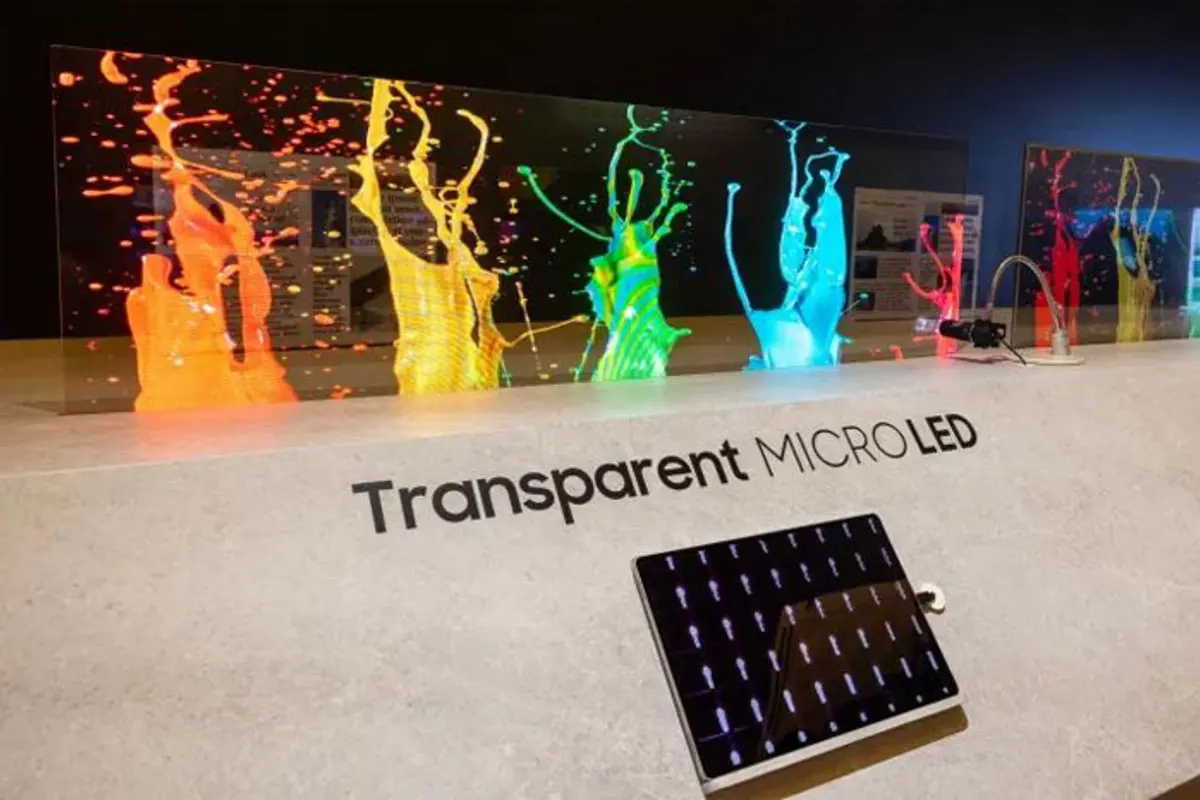
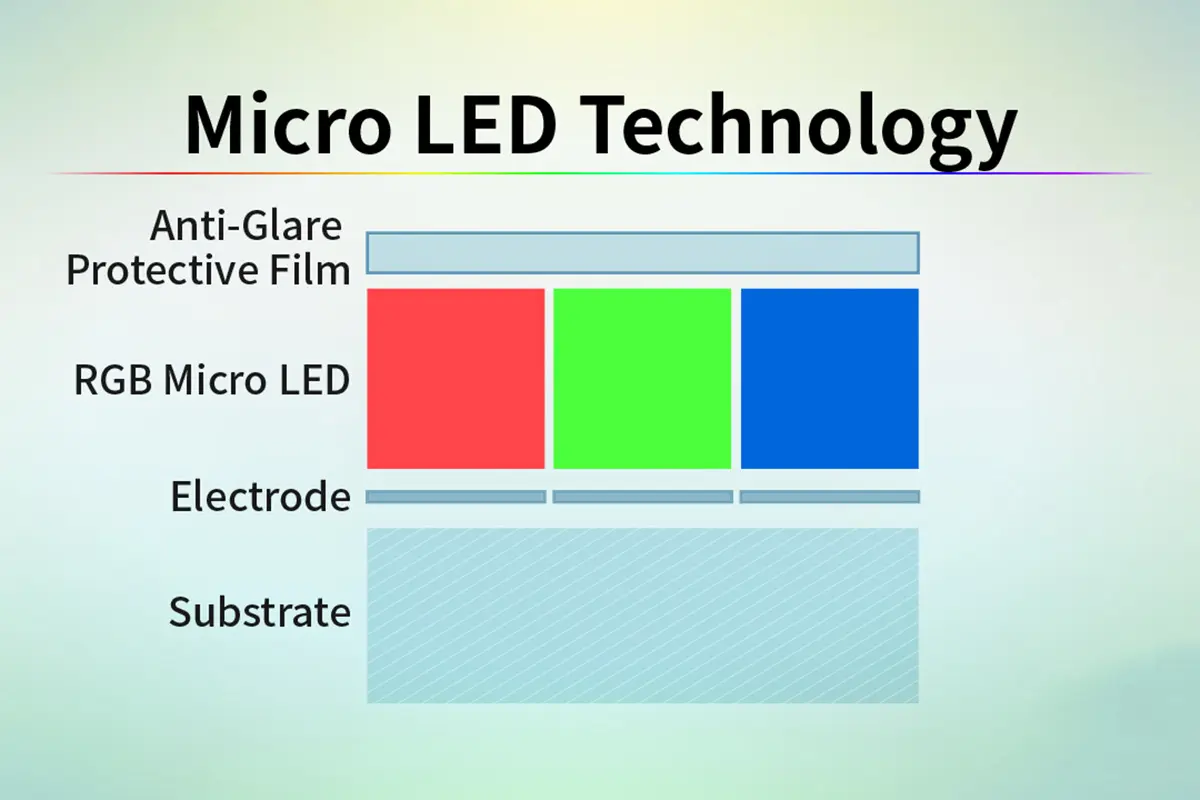
A micro LED is an inorganic LED chip smaller than 50 microns – in leading commercial designs, 10 to 30 microns. Each red, green and blue chip is a complete sub-pixel with its own driver, so the display needs no backlight, no colour filter and no liquid-crystal layer. The emitters are built from gallium nitride (GaN) and related inorganic materials, not organic compounds.
Micro LED chips are grown on wafers and then transferred to a backplane in very large numbers. That transfer step, usually called mass transfer, is the hardest and most expensive part of the process, and it is the main reason a micro LED display still costs several times more than a mini LED display at the same pixel pitch.
02 How micro LED creates an image without a backlight
Each sub-pixel switches on and off independently. When a pixel is off it is genuinely off, so black level approaches zero and the contrast ratio is limited only by ambient light reflecting off the screen surface – which is exactly why black mask, ink-black substrate and anti-reflective treatments matter so much in micro LED video walls.
Because there is no polariser and no liquid-crystal layer, a micro LED display also holds brightness and colour at wide viewing angles and responds in microseconds, so fast camera pans and sports content stay clean with no visible motion blur.
03 Micro LED strengths and limits
Strengths. True black and effectively infinite contrast, the finest pixel pitch available, very high brightness with low power per nit, a lifespan above 100,000 hours with no burn-in, excellent colour volume, and long-term stability because the emitters are inorganic.
Limits. High cost and long lead times, limited manufacturing capacity, demanding installation and calibration, and a smaller supplier base – which makes spares planning, remote diagnostics and service agreements more important than they are for mini LED.
4. Mini LED vs Micro LED: Head-to-Head Comparison
01 Emission type: backlit versus self-emissive
This is the root of the mini LED vs micro LED debate. Mini LED in LCD form is transmissive: the liquid-crystal layer decides which pixels open, and the mini LEDs decide how much light sits behind them. Micro LED is emissive: the pixel is the light source. Every other advantage micro LED holds – black level, contrast, viewing angle and efficiency – follows from that single difference.
02 Brightness and contrast
In the mini LED vs micro LED comparison, brightness is close but contrast is not. Mini LED LCD screens reach roughly 1,000-2,000 nits peak, and commercial mini LED modules are commonly specified at 1,500-6,000 nits depending on pitch. Micro LED comfortably exceeds 2,000-5,000 nits.
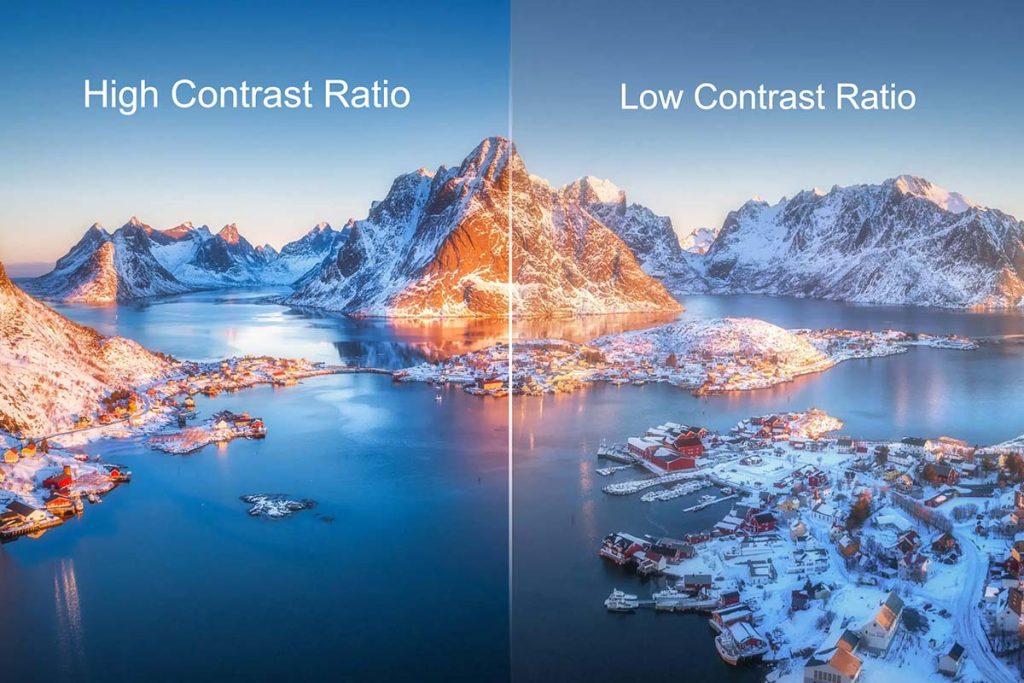
Contrast is where micro LED wins outright. Mini LED backlit designs are quoted at 5,000:1 to 1,000,000:1 depending on zone count and dimming algorithm, while micro LED reaches 1,000,000:1 and beyond because black pixels emit nothing. If your content is dark with small bright details, that difference is visible. Our explainer on screen contrast ratio covers how those figures are measured.
03 Pixel pitch, resolution and viewing distance
For the mini LED vs micro LED buyer, pixel pitch decides how close an audience can stand before the image breaks into visible dots. Mini LED direct-view modules cover roughly P0.4 to P2.5; micro LED reaches P0.3 and finer.
A practical rule: minimum comfortable viewing distance in meters is about one to three times the pixel pitch in millimetres. A P1.2 screen works from roughly 1.2-3.5 m, a P0.6 screen from 0.6-1.8 m. If the audience sits closer than the pitch allows, resolution, not brightness, becomes the limiting factor. See our LED screen resolution guide.
04 Colour accuracy, viewing angle and HDR
Colour is where the mini LED vs micro LED gap narrows. Mini LED panels deliver excellent colour, usually with a quantum-dot film, but the LCD layer and polariser compress saturation at extreme angles. Micro LED reproduces pure red, green and blue directly, so colour volume – brightness and gamut combined, which is what HDR content actually uses – is higher and holds at wide angles.
05 Lifespan, durability and burn-in risk
On lifespan the mini LED vs micro LED gap is real. A mini LED display is rated for roughly 50,000-100,000 hours, and the LCD panel, its polariser and the backlight electronics are the parts likely to need attention first – not the LEDs.
A micro LED display is rated above 100,000 hours with no burn-in mechanism, because the emitters are inorganic and each pixel is driven independently. In 24/7 environments that durability is a genuine cost advantage.
06 Power consumption and heat
Power is the quietest part of the mini LED vs micro LED comparison, and micro LED wins it. Light is generated only at the pixels that need it, and nothing is absorbed passing through an LCD stack, polariser and colour filter – in a mini LED LCD screen much of the backlight energy is lost inside the panel. At equal brightness a micro LED wall therefore draws less power and produces less heat per nit.
5. Mini LED vs Micro LED Specifications at a Glance
The mini LED vs micro LED pattern is simple: micro LED wins on every optical metric, mini LED wins on cost, lead time and serviceability. Ranges below move with pixel pitch, cabinet design and whether the product is a consumer screen or a commercial module. Packaging matters too: our explainer on MIP technology for LED displays covers how newer package formats change micro LED economics.
| Specification | Mini LED | Micro LED |
|---|---|---|
| Chip size | 50-200 microns | Under 50 microns (10-30 microns in current designs) |
| Emission type | Backlit when used with LCD; direct-view module in commercial form | Self-emissive |
| Backlight required | Yes in LCD form; no in direct-view form | No |
| Contrast ratio | 5,000:1 to 1,000,000:1 depending on dimming zones | 1,000,000:1 and above, effectively infinite |
| Peak brightness | About 1,000-2,000 nits (LCD); 1,500-6,000 nits (module) | 2,000-5,000 nits and above |
| Black level | Near-black with mild blooming | True black |
| Pixel pitch | P0.4 to P2.5 in direct-view products | P0.3 and finer |
| Viewing angle | Wide, with slight colour shift at extreme angles | Very wide, stable colour and brightness |
| Colour performance | High gamut, often boosted by quantum-dot film | Very high; pure RGB from the emitter |
| Typical lifespan | 50,000-100,000 hours | 100,000+ hours |
| Burn-in risk | Low, though image retention is possible | None |
| Power efficiency | Good; light is lost in the LCD stack | Very high; light only where needed |
| Module packaging | SMD, IMD 4-in-1 and COB | COB, MIP and wafer-level transfer |
| Scalability | Good, but LCD uniformity limits very large surfaces | Excellent; seamless modular scaling |
| Manufacturing maturity | High volume, short lead times | Limited capacity, longer lead times |
| Relative cost | Baseline | Several times higher at equal pitch |
6. Mini LED vs Micro LED Cost and Price per Square Meter
01 Why micro LED costs more to build
Micro LED is expensive for structural reasons, not branding. Growing consistent red, green and blue microchips on wafers is slow, transferring millions of chips to a backplane without misalignment is harder, and one defective chip can force a module to be repaired before it ships. Yield loss is priced into every panel, and limited capacity keeps prices high even as demand grows.
Mini LED uses chips that ordinary pick-and-place equipment can handle, on backplanes and packaging lines that already exist in volume. That is why a fine-pitch mini LED video wall ships in weeks while a comparable micro LED wall often takes months.
02 Indicative price per square meter
In the mini LED vs micro LED cost comparison, the figures below are indicative planning bands for complete indoor video wall systems in 2026, not quotations. Pixel pitch, brightness, cabinet finish, control system, structure and region all move the final number, so treat them as a starting point for budget talks.
| Cost band | Mini LED video wall | Micro LED video wall |
|---|---|---|
| Coarse pitch (P1.5-P2.5) | Roughly USD 800-1,800 per square meter | Rarely offered; micro LED is aimed at finer pitch |
| Fine pitch (P0.9-P1.2) | Roughly USD 1,800-3,500 per square meter | Roughly USD 6,000-12,000 per square meter |
| Ultra-fine pitch (P0.4-P0.7) | Roughly USD 3,500-6,000 per square meter | Roughly USD 10,000-20,000+ per square meter |
| Consumer screen equivalent | Mini LED televisions start in the low hundreds of USD | Micro LED televisions typically start in the tens of thousands of USD |
| Typical lead time | 2-4 weeks | 6-16 weeks |
| Spare parts and repair | Modules and receiving cards widely available | Limited supply; budget for a spares kit upfront |
| Price trend | Slowly declining as capacity grows | Declining faster, but from a much higher base |
03 Total cost of ownership over five years
Purchase price is only the first line of the budget; add power, cooling, control hardware, structure, calibration and spares. On a 30 square meter indoor wall the electricity gap is measurable but smaller than the purchase gap, and the larger saving comes from fewer module replacements.
Micro LED closes the gap fastest in 24/7 environments, where lower power per nit, longer rated life and no burn-in justify the premium across the service period.
7. Mini LED vs Micro LED vs OLED
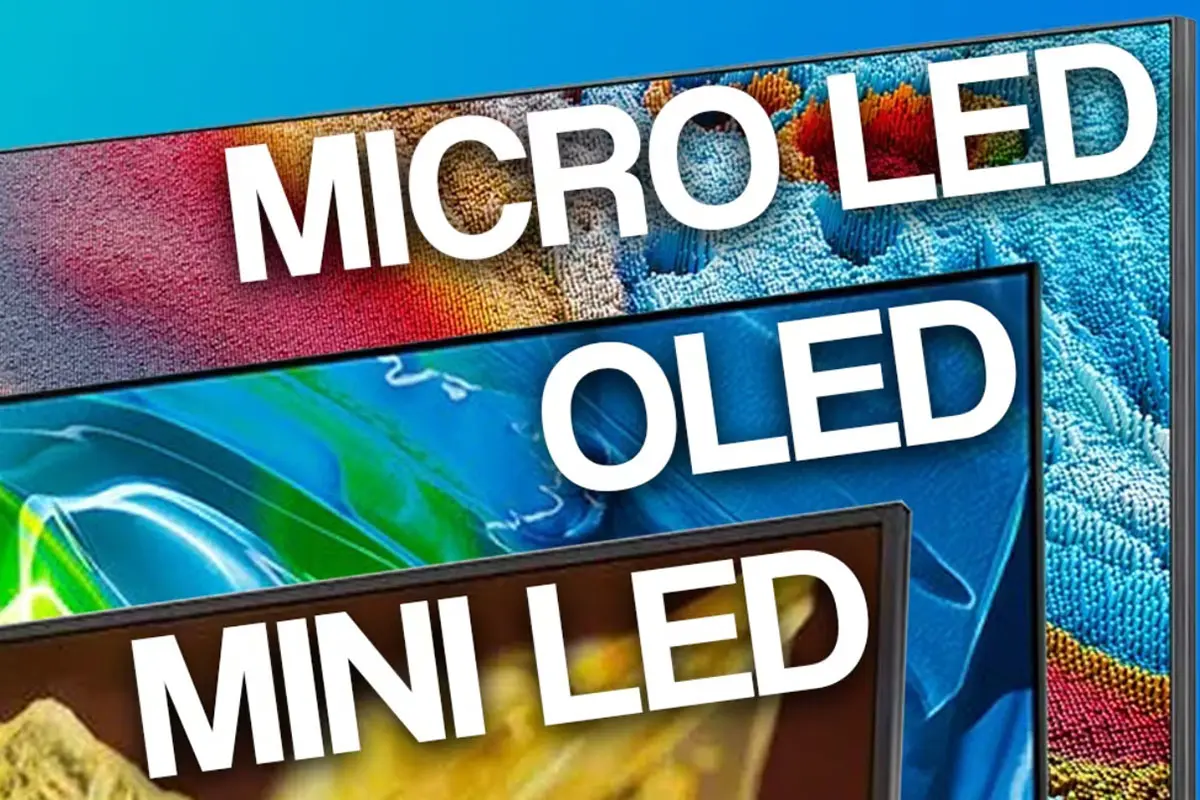
In any mini LED vs micro LED discussion, OLED is the third technology buyers ask about. OLED uses organic compounds that emit light when current passes through them, giving true black and excellent contrast, but organic emitters degrade faster than inorganic LEDs and large-format OLED stays difficult to scale.
| Specification | Mini LED | Micro LED | OLED |
|---|---|---|---|
| Light generation | LED backlight behind LCD | Self-emissive inorganic LED | Self-emissive organic compound |
| Contrast ratio | 5,000:1 to 1,000,000:1 | 1,000,000:1+ | 1,000,000:1+ |
| Peak brightness | High (1,000-6,000 nits) | Very high (2,000-5,000+ nits) | Moderate; high brightness shortens life |
| Burn-in risk | Low | None | Real risk with static logos and dashboards |
| Typical lifespan | 50,000-100,000 hours | 100,000+ hours | Lower; blue emitter degrades first |
| Large-format scaling | Excellent | Excellent; the only seamless ultra-fine option | Difficult and costly above television sizes |
| Best fit | Corporate, retail, education, most signage | Control rooms, cinema, luxury, virtual production | Consumer televisions, phones, premium monitors |
For commercial LED display projects the mini LED vs micro LED question decides the budget; OLED is usually ruled out by lifespan, brightness and scalability.
8. Which Technology Fits Which Application?
01 Indoor corporate and conference rooms
Meeting rooms need even brightness, low glare and comfortable viewing from two to six meters. A fine-pitch mini LED wall in the P1.2-P1.8 range, usually with COB or IMD modules, delivers that at a sensible budget.
02 Retail, showrooms and brand environments
Retail needs punch: high brightness against store lighting, saturated colour and often unusual shapes. Mini LED covers most of these projects, and transparent or flexible modules handle curved walls and glass fronts.
03 Broadcast studios and virtual production
Studio work is unforgiving: cameras expose colour drift and refresh issues the eye forgives, and walls stay lit for hours. Mini LED handles general studio backdrops; micro LED is used where in-camera pixel structure must disappear at close range. Our guide to virtual production LED walls covers camera settings and colour matching.
04 Control rooms and mission-critical operations
Control rooms run continuously, display static dashboards and cannot tolerate failure or image retention. This is micro LED territory: no burn-in, 100,000+ hours of rated life and true black so operators can read fine detail against dark backgrounds.
05 Cinema, premium home theatre and luxury residential
In dark screening rooms, contrast and colour volume decide. Direct-view LED cinema screens hold brightness evenly across the image, unlike projection, and micro LED is the highest-performance option. Mini LED is the practical middle ground when the room is smaller – see our comparison of the best cinema screen options.
06 Stadiums, arenas and outdoor advertising
Outdoors, sunlight and viewing distance change the priorities: brightness and robustness matter more than the last micron of pitch. Typical outdoor advertising screens run P4 to P10 with 5,000-8,000 nits and IP65 sealing. Micro LED is rarely justified outdoors today: the audience is too far away to see the pitch advantage. Our outdoor LED advertising board weatherproofing guide explains what to specify.
The mini LED vs micro LED answer changes with the application. Use the matrix below to shortlist a technology before you talk to suppliers.
| Application | Recommended technology | Typical pixel pitch | Why |
|---|---|---|---|
| Conference and meeting rooms | Mini LED | P1.2-P1.8 | Even brightness, low glare and a sensible budget |
| Retail and showrooms | Mini LED, with micro LED for flagships | P0.9-P2.5 | High brightness, saturated colour, flexible shapes |
| Broadcast and virtual production | Both | P0.9-P1.8 | Colour accuracy and refresh rate decide the choice |
| Control rooms (24/7) | Micro LED | P0.6-P1.2 | No burn-in, true black, minimal maintenance |
| Cinema and luxury home theatre | Micro LED | P0.5-P0.9 | Contrast, colour volume and dark-room performance |
| Stadiums and arenas | Mini LED and high-brightness modules | P4-P10 | Brightness, ruggedness and viewing distance |
| Outdoor advertising | Mini LED and outdoor modules | P4-P10 | Weather protection and cost per square meter |
9. How to Choose Between Mini LED and Micro LED
The mini LED vs micro LED decision becomes straightforward once you work through four variables in order: viewing distance, budget, environment and serviceability.
01 Start with viewing distance and required pitch
Measure the closest seat, not the average seat. Multiply that distance in meters by roughly 1 to 3 to find the maximum acceptable pixel pitch. If the answer is P1.5 or coarser, mini LED is the better commercial decision; if it is P0.6 or finer across a large surface, micro LED is the only option that will look correct.
02 Set the budget band and screen area
Area multiplies every per-square-meter decision: a 12 square meter conference wall and a 60 square meter lobby wall at the same pitch are very different budgets. Fix viewing distance first, then spend what remains on brightness, processing and mechanical quality.
03 Match the technology to the installation environment
Indoor controlled-light spaces suit both technologies. Bright retail and daytime outdoor locations need brightness only LED-based screens deliver. Outdoor installations also need IP-rated cabinets and thermal design, which keeps mini LED and conventional outdoor modules the practical choice.
04 Plan for serviceability, spares and support
Ask three questions before signing: what the module warranty covers, how fast replacement modules ship, and what happens when the product line is discontinued. Mini LED has a deep spare-parts market; micro LED does not yet, so budget for a spares kit with the original order. For the mini LED vs micro LED purchase itself, our guide to choosing an LED display module supplier lists the checks that separate a manufacturer from a reseller.
The checklist below turns those four variables into a side-by-side decision.
| Your requirement | Choose mini LED when | Choose micro LED when |
|---|---|---|
| Viewing distance | Closest viewer is 1.5 m or further away | Closest viewer is under 1 m, or pixel structure must be invisible on camera |
| Budget per square meter | Under roughly USD 3,500 per square meter | Above roughly USD 6,000 per square meter, where long-term cost matters more than purchase price |
| Operating hours | Up to about 12 hours a day | Continuous 24/7 operation with static content |
| Content type | Video, presentations, advertising, live sport | Dashboards, cinema, colour-critical grading, control room data |
| Environment | Indoor controlled light, or outdoor with high ambient light | Indoor controlled light with a premium finish requirement |
| Service expectations | Fast module swaps from widely available stock | Accepting longer lead times in exchange for no burn-in and longer life |
| Project horizon | Three to seven years | Eight years or more, where lifespan offsets the premium |
10. Mini LED vs Micro LED FAQs
11. Conclusion
The mini LED vs micro LED choice is a budget and application decision, not a contest with a single winner. Mini LED wins on price per square meter, delivery time, spare-parts availability and proven reliability across corporate, retail, education and outdoor work. Micro LED wins on pixel pitch, contrast, colour volume, efficiency and service life, and it is the only sensible option for 24/7 control rooms, cinema-grade rooms and ultra-fine-pitch installations.
Start with viewing distance, set the budget band, match technology to environment, and confirm that spares will exist for the life of the screen. For a site-specific mini LED vs micro LED recommendation, If you would like help matching a specific pitch, brightness and budget to a cabinet design, our team at LED Screen Board can prepare a specification and indicative pricing for your project.
 LED Display Screen User Guide: How to Choose
 Screen Contrast Ratio: The Complete Guide for LED Display Buyers