
Choosing LED cabinet materials affects much more than the weight of a video wall. The cabinet determines how modules fit together, how technicians access components, and how loads transfer into the supporting structure. For distributors, AV integrators, and project contractors, these decisions influence installation costs, service requirements, and the suitability of a display for its intended location.
Aluminum, steel, and magnesium alloy each offer useful advantages. Aluminum cabinets combine relatively low weight with flexible manufacturing options. Steel cabinets deserve consideration for fixed installations where fabrication flexibility and purchase cost matter. Magnesium alloy cabinets offer opportunities to reduce frame weight when handling or structural loading is a priority.
However, the material name alone cannot establish which cabinet performs best. Alloy grade, wall thickness, reinforcement, machining, protective finishes, and connection hardware all contribute to the finished product. A lightweight frame with unsuitable locking hardware can be a poorer investment than a heavier cabinet designed correctly for the application.
This guide compares LED cabinet materials from a procurement perspective: what each option offers, which limitations require attention, and what evidence to request before placing an order.
1. What Is an LED Display Cabinet?
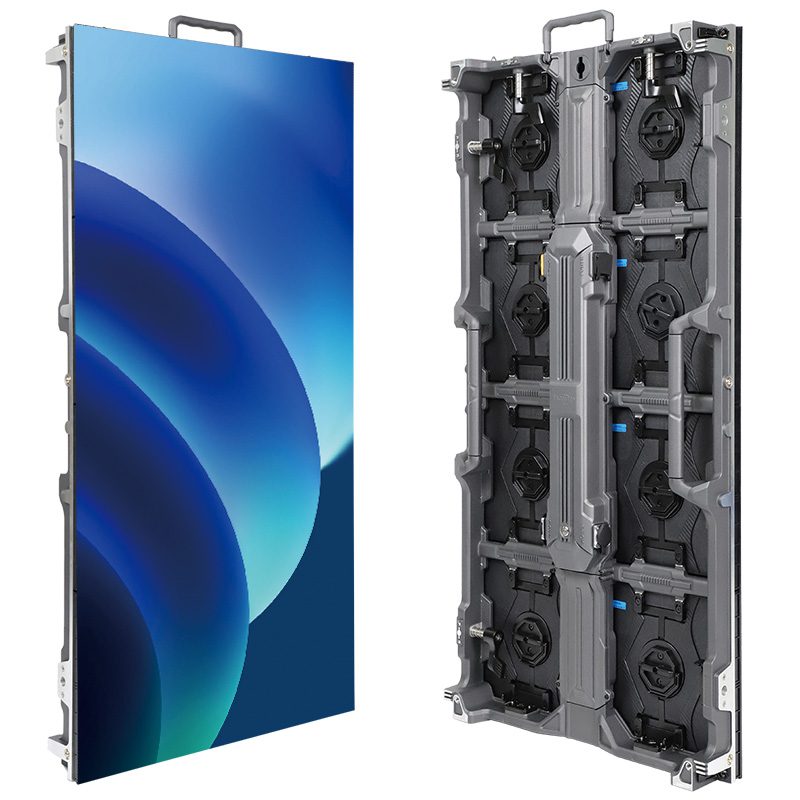
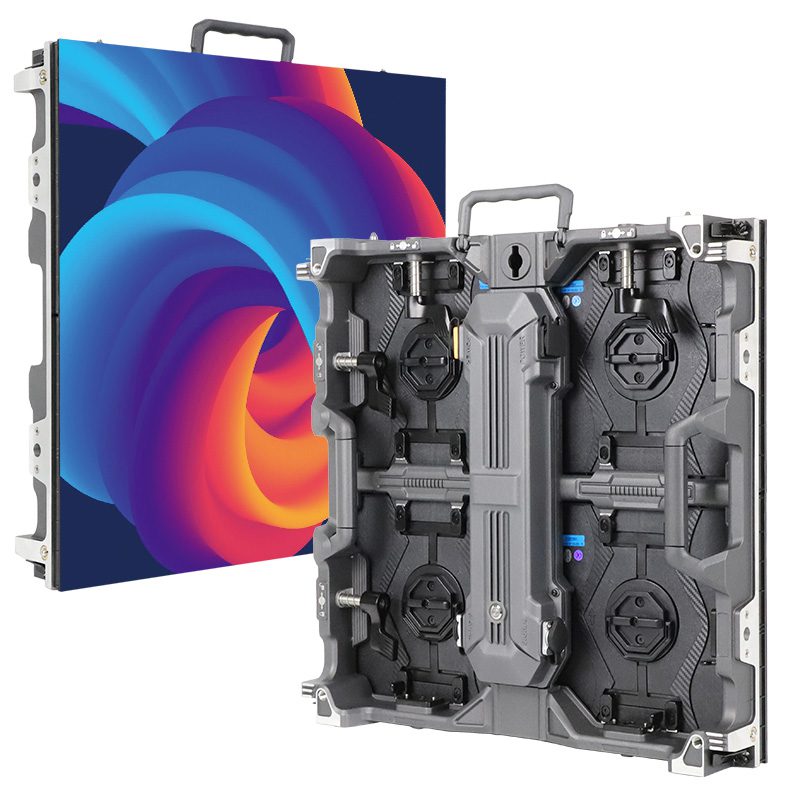
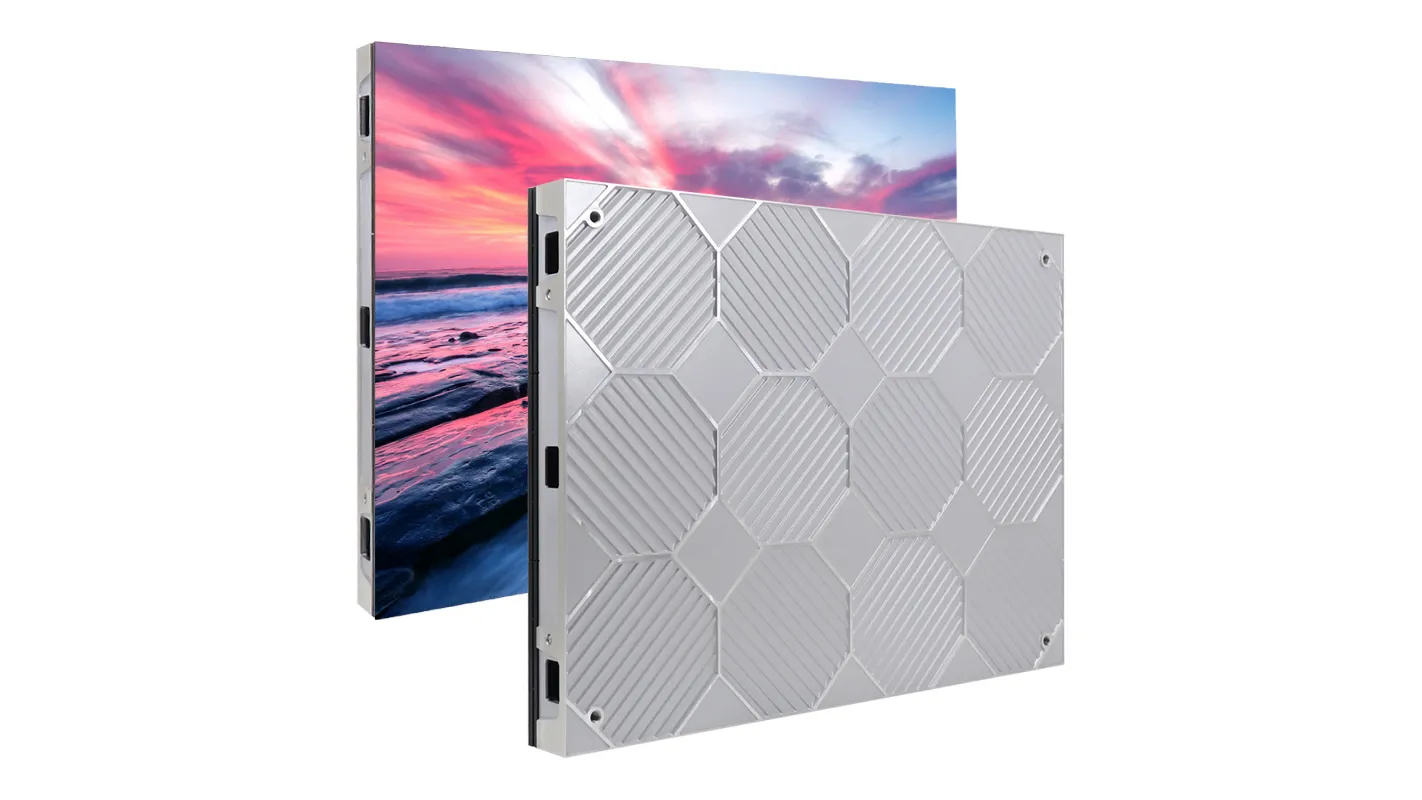
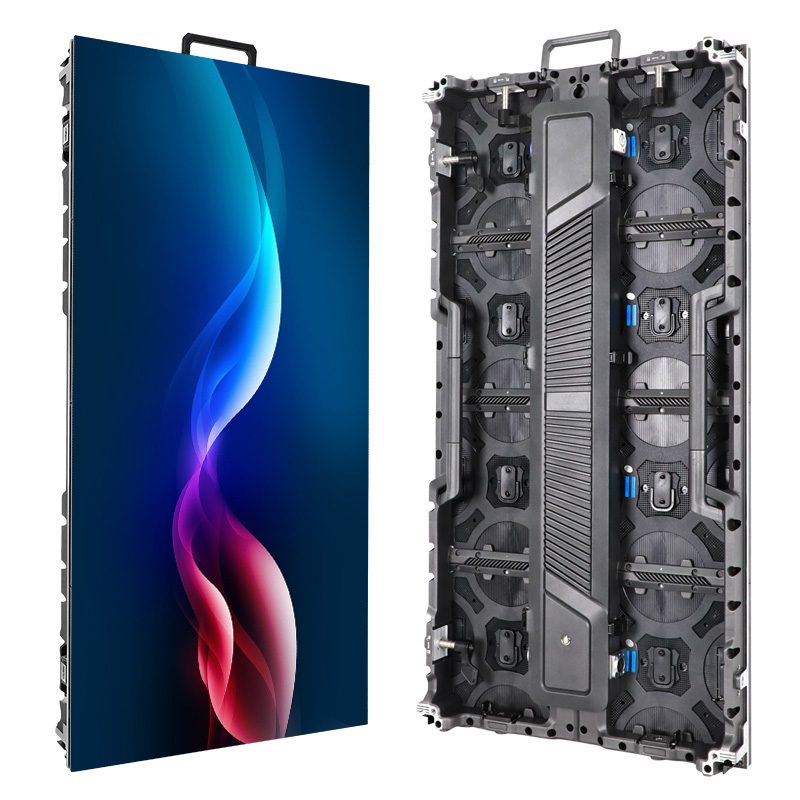
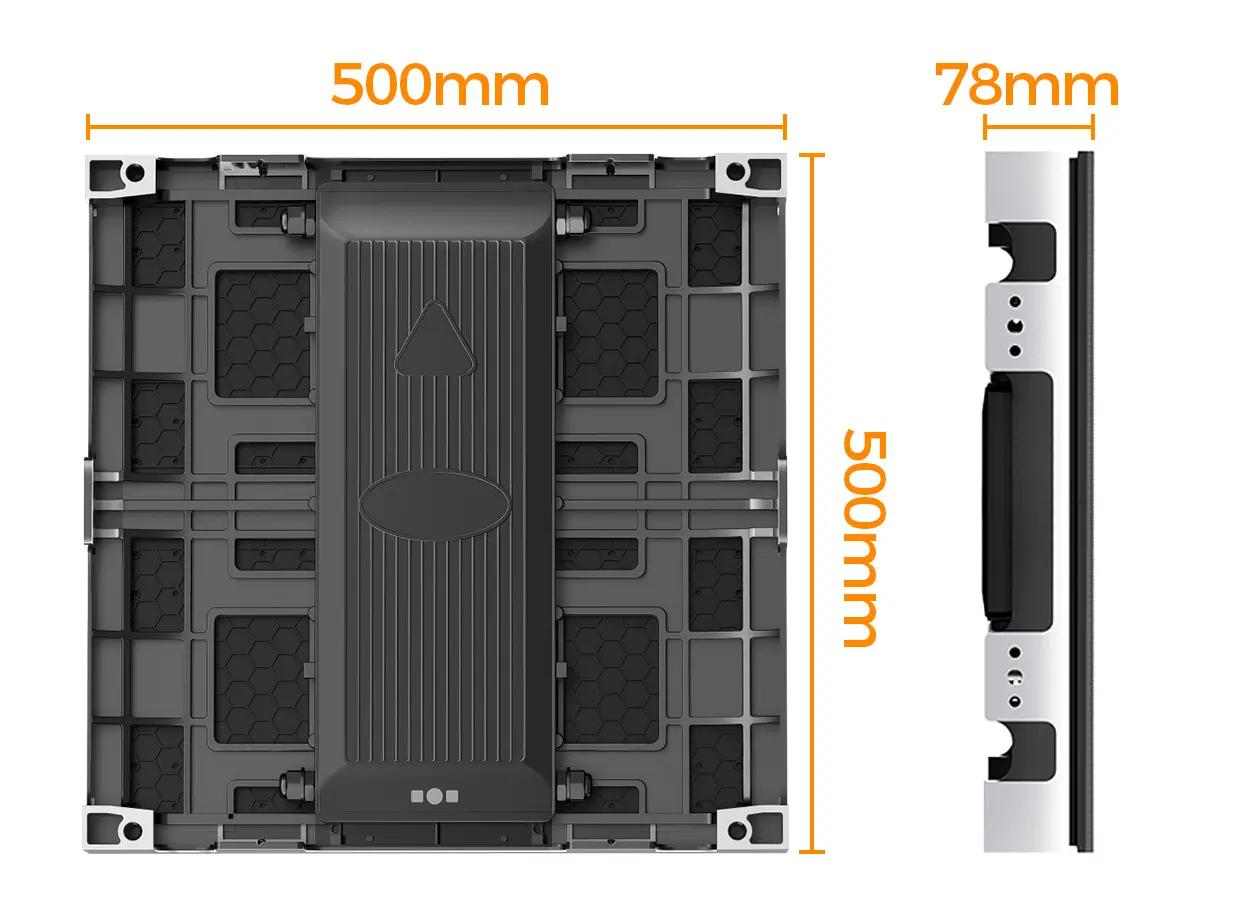
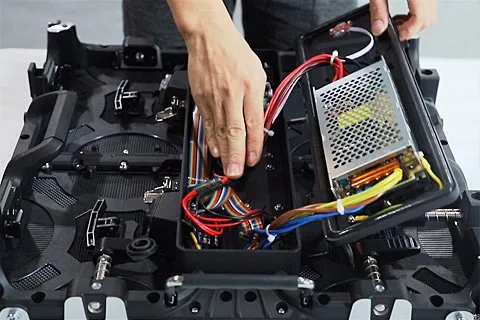
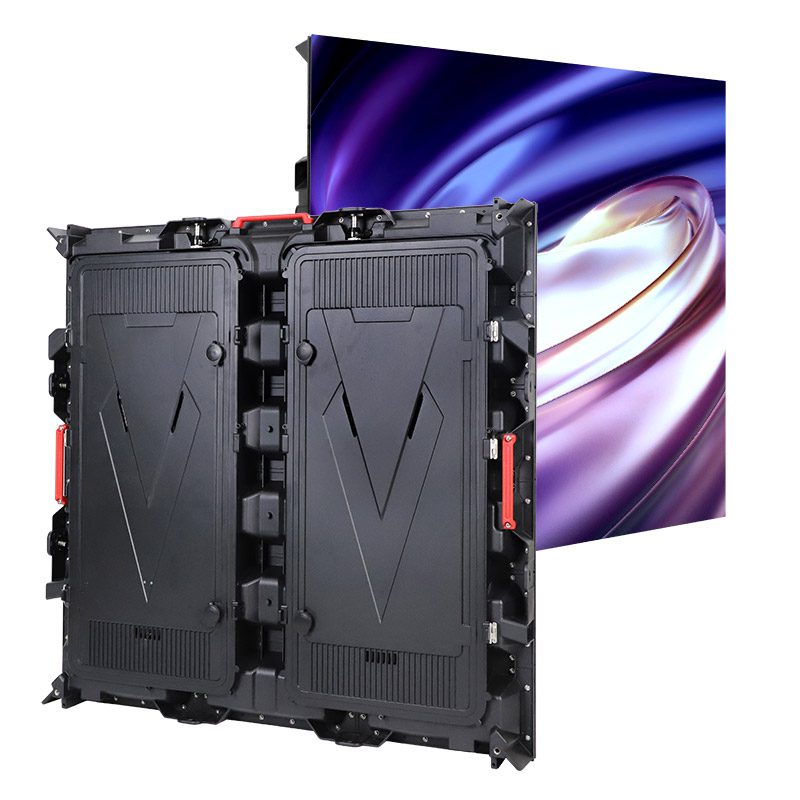
An LED display cabinet is the mechanical assembly that supports LED modules and accommodates associated components. Depending on the product, these include power supplies, receiving cards, connection boards, cables, and service covers. Multiple cabinets join to create the complete display.
The cabinet also establishes the mounting reference for the modules. If adjacent frames twist or their mounting surfaces do not align, visible steps or gaps can interrupt the image across cabinet boundaries.
EagerLED’s LED display cabinet guide identifies aluminum, steel, and magnesium alloy among the available material options. For procurement, buyers should examine the complete assembly rather than treating the metal specification as a performance rating.
01. Distinguish the frame from the complete cabinet
A quotation describing an “aluminum cabinet” may refer primarily to its structural frame. Rear covers, handles, brackets, inserts, and power boxes may use other materials.
Likewise, a bare-frame weight excludes much of what will actually be installed. LED modules, electronics, connectors, and protective hardware remain part of the operating load.
Request a clear bill of materials and distinguish among:
- Bare-frame weight.
- Fully assembled cabinet weight.
- Display weight per square meter.
- Shipping weight, including packaging.
- Installed system weight, including mounting accessories.
These figures answer different questions. Freight planning needs packaged weight and dimensions; structural planning needs the complete installed configuration.
2. Aluminum LED Cabinets: Die-Cast vs. Fabricated
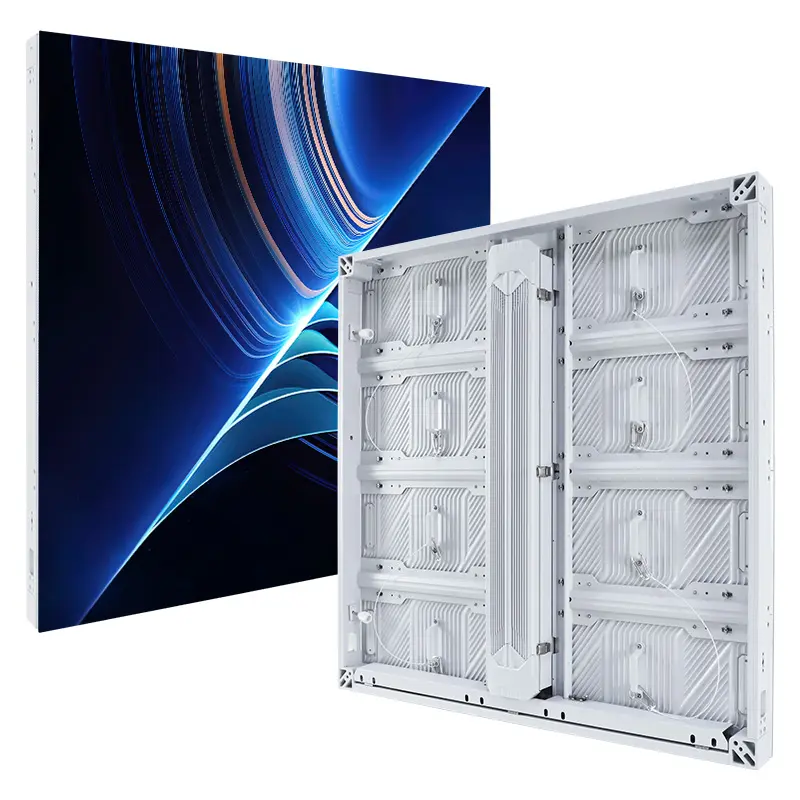
Aluminum LED cabinets can be cast, fabricated from sheet, assembled from extrusions, or built using combinations of these processes. The manufacturing method helps explain differences between products carrying the same material label.
01. Die-cast aluminum cabinets
Die casting produces a frame in a dedicated mold. Ribs, mounting bosses, and other features can be incorporated into the casting, while important contact surfaces may receive additional machining.
For an LED video wall, the potential benefit is repeatable geometry across production quantities. However, repeatability depends on tooling condition, casting control, machining, and inspection. “Die-cast” does not itself guarantee an invisible cabinet joint.
When reviewing a die-cast aluminum LED cabinet, inspect module mounting surfaces, locating pins, lock adjustment, and the fit between neighboring cabinets. A sample assembled with several cabinets reveals more than an isolated frame.
02. Fabricated aluminum cabinets
Fabricated designs use processes such as cutting, bending, welding, and fastening. They can provide flexibility when a project requires unusual dimensions, specific service openings, or a customized mounting interface.
Their suitability depends on how the manufacturer controls distortion and establishes the final mounting geometry. Welded joints, reinforcement placement, and finishing operations deserve attention.
| Aluminum construction | Potential purchasing advantage | Main point to verify |
|---|---|---|
| Die-cast frame | Repeated geometry across a product platform | Machining, inspection, and replacement compatibility |
| Sheet-fabricated cabinet | Adaptable enclosure dimensions and openings | Flatness, joint quality, and reinforcement |
| Extruded frame | Flexible profile-based construction | Corner joints and module mounting references |
| Hybrid construction | Different processes used for different functions | Interfaces between frame, covers, and hardware |
Aluminum LED cabinets are attractive where manageable weight and dimensional control matter. Their limitations can include tooling commitments, product-specific replacement frames, and repair restrictions after significant mechanical damage.
Material suppliers such as Dynacast describe aluminum casting alloys as useful for lightweight components and heat transfer. Whether those advantages improve a particular LED display depends on the complete cabinet design.
3. Steel LED Cabinets: Advantages and Limitations
Steel LED cabinets are worth evaluating for permanent installations, especially where repeated handling is unnecessary and the supporting structure can accommodate the specified load.
In supplier terminology, an “iron cabinet” often refers to a fabricated steel enclosure. Buyers should still request the actual material specification. Carbon steel, galvanized steel sheet, and stainless steel are different purchasing options with different fabrication and corrosion considerations.
01. Where steel can be practical
Steel provides useful stiffness and supports familiar sheet-metal fabrication methods. A manufacturer can adapt doors, brackets, stiffeners, and cable openings to suit a fixed-installation layout.
For a large outdoor advertising display, this flexibility may simplify the relationship between the cabinet and the supporting framework. However, the cabinet must still be evaluated against the project’s dimensional, environmental, and maintenance requirements.
Steel LED cabinets may offer an attractive initial quotation, but there is no reliable universal price ranking. Thickness, finishing, order volume, custom fabrication, and hardware can change the result.
02. Where the limitations appear
Weight is an important consideration. A heavier cabinet can increase handling demands and the load carried by brackets, anchors, or the building structure.
Corrosion protection also requires attention, especially around welds, door edges, mounting holes, and damaged finishes. “Painted steel” is too vague a specification for an exposed installation.
Steel should not automatically be described as inaccurate or unsuitable for close-viewing displays. A well-manufactured steel cabinet can meet demanding dimensional requirements. Buyers should compare measured tolerances and assembled-wall results rather than assume that one material guarantees better alignment.
4. Magnesium Alloy LED Cabinets: Advantages and Limitations
Magnesium alloy LED cabinets are relevant when reducing structural frame weight could improve handling or help meet an installation weight limit.
Commercial cabinet frames use magnesium alloys rather than pure magnesium. Their behavior depends on the alloy, manufacturing process, geometry, coating, and attachment details.
01. Evaluate the complete weight saving
Magnesium alloys generally have lower density than aluminum alloys. However, a frame designed in magnesium may use different wall thicknesses or reinforcement. The display also contains components whose weight does not change with the frame material.
Consequently, a claimed reduction in frame weight should not be presented as an equal reduction in complete display weight.
For a meaningful comparison, ask for assembled cabinet weights with equivalent dimensions, modules, power supplies, and accessories. Then calculate the effect across the full screen and its transport arrangement.
02. Examine connection and service details
A magnesium alloy cabinet deserves close inspection around threaded connections, lifting interfaces, replaceable hardware, and points exposed to repeated assembly.
Request the manufacturer’s tightening instructions and approved repair procedures. An insert or coating damaged during maintenance can create problems that were absent when the cabinet left the factory.
Corrosion control is another important selection factor. Research on magnesium alloy corrosion prevention identifies dissimilar-metal contact as a concern in corrosive environments and discusses the role of design, coatings, and insulation.
Magnesium alloy LED cabinets can therefore be valuable, but their weight advantage should be assessed alongside environmental suitability, spare-part availability, and repair support.
5. Aluminum vs. Steel vs. Magnesium: Performance Comparison
The most useful comparison of LED cabinet materials separates general material tendencies from performance that must be demonstrated on the finished product.
The following table is a screening tool, not a specification for any individual cabinet.
| Selection factor | Aluminum cabinets | Steel cabinets | Magnesium alloy cabinets |
|---|---|---|---|
| Weight tendency | Lower-density option than steel | Higher-density option | Lower-density option than aluminum |
| Structural performance | Depends on alloy, geometry, and joints | Depends on grade, thickness, and joints | Depends on alloy, geometry, and joints |
| Dimensional accuracy | Casting, machining, and assembly control matter | Fabrication and finishing control matter | Casting, machining, and assembly control matter |
| Thermal behavior | Can provide a useful heat-spreading path | Requires evaluation of the complete cooling design | Alloy and thermal-path design are important |
| Corrosion considerations | Environment, finish, and metal contacts matter | Steel type and protective system matter | Protective system and metal contacts deserve close attention |
| Customization | Process-dependent | Fabricated designs can accommodate changes | Existing tooling may constrain changes |
| Repair planning | Confirm frame and hardware replacement methods | Confirm approved repair and recoating methods | Confirm specialist repair or replacement requirements |
01. Weight and structural capacity are separate specifications
A light cabinet is not necessarily weak, and a heavy cabinet is not necessarily suitable for hanging.
Strength concerns resistance to failure. Stiffness concerns deformation under load. Both matter when a display must remain aligned while transferring forces through locks, brackets, and mounting points.
For suspended displays, request the permitted configuration and load information for the exact cabinet, hanging bars, and connection hardware. Cabinet material alone cannot establish an allowable hanging height.
02. Compare heat paths, not marketing labels
A metal frame can help spread heat only when heat reaches it through a useful thermal path. A power supply mounted with limited thermal contact may rely mainly on airflow, even inside an aluminum cabinet.
Temperature performance also depends on module power, brightness settings, ventilation, sunlight, ambient temperature, and enclosure arrangement.
Ask for thermal results under conditions relevant to the project. A low-temperature indoor demonstration does not establish performance inside a sun-exposed outdoor installation.
Avoid assuming that magnesium always cools better than aluminum. Published die-casting alloy comparisons show that thermal conductivity varies with the specific alloy.
03. Precision must survive assembly
Cabinet flatness is only one part of screen alignment. Module tolerances, locating features, mounting structure accuracy, and lock adjustment contribute to the finished surface.
A useful acceptance inspection includes several joined cabinets and the intended modules. For rental equipment, repeat the assembly to check whether alignment remains consistent after disconnection and handling.
6. Durability: Corrosion, Coatings, and Maintenance
Outdoor LED cabinet materials should be selected against the actual exposure conditions. Rain, salt contamination, industrial pollutants, trapped moisture, and cleaning practices can create different deterioration mechanisms.
01. A finish is part of a protective system
Coating performance depends on surface preparation, coverage, adhesion, and the treatment of vulnerable details. A smooth exterior finish does not reveal how well internal edges, holes, or interfaces are protected.
For steel LED cabinets, establish the substrate and protective treatment. For aluminum and magnesium alloy cabinets, ask how the finish and fastener arrangement address the intended environment.
Dissimilar-metal interfaces need particular care where moisture can remain. Any isolation measures must also be coordinated with the product’s electrical bonding design; maintenance teams should not improvise changes.
02. IP ratings do not establish corrosion resistance
The IEC 60529 standard classifies enclosure ingress protection. An IP claim should therefore be checked against the exact enclosure and tested configuration.
It does not, by itself, establish resistance to salt exposure or coating deterioration. NEMA’s enclosure guidance distinguishes IP protection from additional characteristics considered in NEMA enclosure classifications, including corrosion.
Buyers should request separate evidence for ingress protection and the required corrosion performance.
| Exposure or condition | Procurement question | Relevant evidence |
|---|---|---|
| Direct rain and dust | Which cabinet faces and interfaces are covered? | Applicable ingress test report and installation instructions |
| Coastal atmosphere | How are exposed surfaces and metal interfaces protected? | Coating specification and relevant corrosion assessment |
| Repeated transport | What happens when the finish is scratched? | Inspection and approved repair procedure |
| Condensation risk | How does the assembly manage internal moisture? | Environmental design information and operating limits |
| Frequent servicing | Which seals and fasteners require replacement? | Maintenance instructions and spare-parts list |
Salt-spray exposure hours should not be converted directly into a promised number of outdoor service years. Test methods, acceptance criteria, and real exposure conditions must be considered together.
7. LED Cabinet Costs: Purchase Through Operation
The lowest cabinet quotation is not necessarily the lowest project cost. LED cabinet materials influence several expenses, but those effects must be calculated for the actual installation.
A useful comparison is:
Total project cost = equipment + transport + installation + support structure + planned service + expected replacements.
Keep assumptions visible. A transport saving based on frequent touring has little relevance to a screen that ships once and remains installed.
| Cost category | What to compare | Why it matters |
|---|---|---|
| Equipment | Equivalent modules, electronics, hardware, and finishes | Prevents unrelated specification differences from distorting the comparison |
| Freight | Gross weight, packed volume, and case quantity | Lower cabinet weight may not reduce a volume-based charge |
| Installation | Crew handling, lifting equipment, and assembly time | Cabinet ergonomics can influence labor requirements |
| Supporting structure | Complete loads and mounting arrangement | Lower screen weight may create opportunities for redesign |
| Maintenance | Access time, removable assemblies, and consumables | Service design can outweigh small purchase-price differences |
| Replacement stock | Frames, locks, seals, and electronic compatibility | Product-specific parts affect long-term support |
For a rental fleet, compare costs over the expected deployment schedule. Repeated lifting, trucking, and assembly can make a modest weight difference commercially relevant.
For a fixed billboard, the emphasis may shift toward initial installation, weather protection, and service access.
Distributors should also examine inventory exposure. A cabinet platform with clearly managed revisions and available replacement hardware may be easier to support than one with a lower purchase price but uncertain compatibility.
Avoid assigning automatic structural savings to lighter LED cabinets. Any change to the supporting structure requires a project-specific engineering assessment.
8. Choosing Materials for Different Display Applications
Application requirements should narrow the selection before price negotiations begin. Aluminum, steel, and magnesium alloy cabinets can overlap in use; suitability depends on the finished product.
| Application | Material options worth evaluating | Main decision factors |
|---|---|---|
| Touring and rental displays | Die-cast aluminum; suitable magnesium alloy platforms | Handling, locks, alignment, protection, and approved rigging |
| Fine-pitch indoor video walls | Precision aluminum or other qualified cabinet systems | Module positioning, adjustment, and front service |
| Permanent outdoor advertising | Protected steel or aluminum; qualified magnesium designs | Environmental protection, structural interface, and access |
| Installations with weight limits | Aluminum or magnesium alloy | Verified assembled weight and mounting loads |
| Custom architectural displays | Fabricated aluminum or steel; suitable modular systems | Dimensions, attachment geometry, and service clearance |
01. Rental LED screens
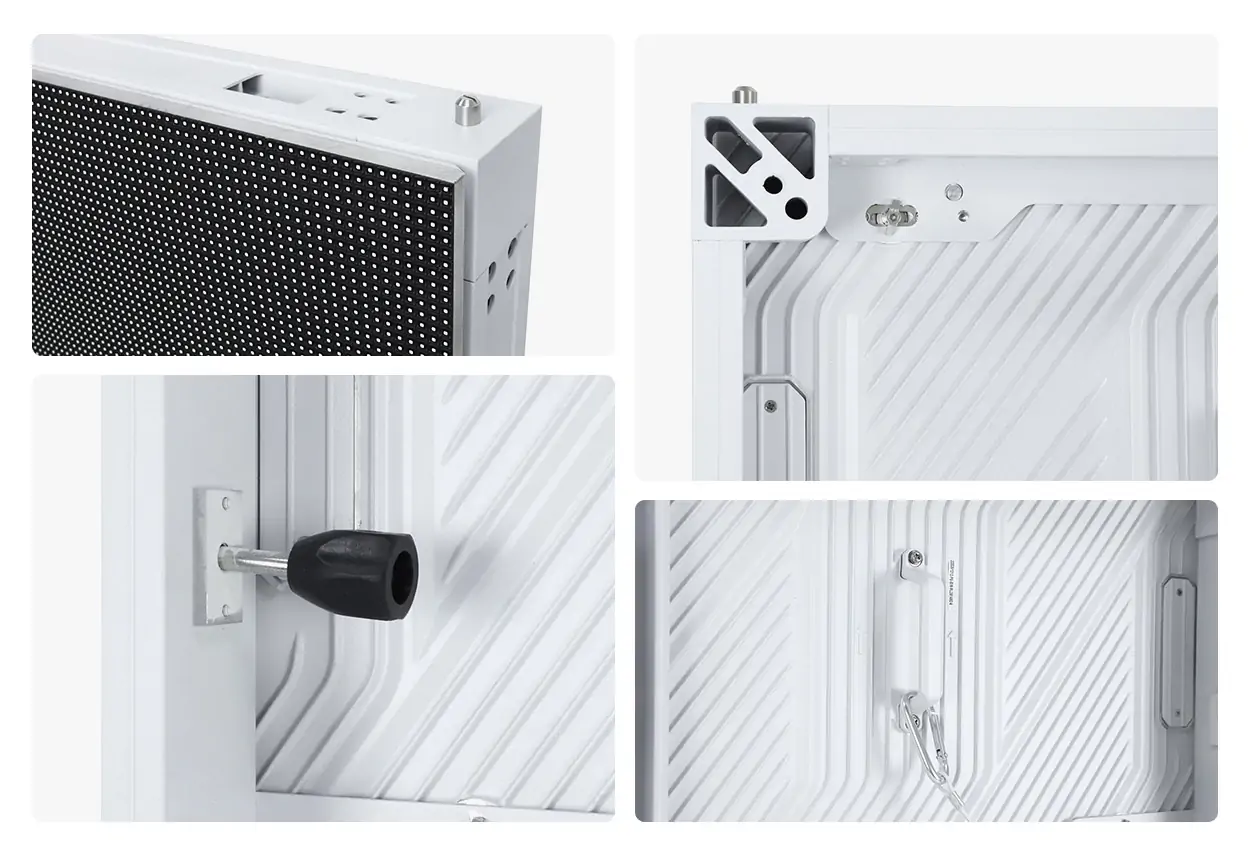
For rental operators, inspect how technicians grip, carry, lock, and release the cabinet. Handle placement and corner protection can matter as much as nominal weight.
Check the approved stacking and hanging arrangements. Also examine what must be replaced if a lock, corner, or locating pin is damaged during transport.
02. Indoor fine-pitch displays
For close-viewing environments, prioritize repeatable module positioning and adjustment. The cabinet should work with the mounting structure to achieve the required surface alignment.
Front service is useful only if technicians can remove the relevant components within the available clearance. Ask for a demonstration involving power supplies and receiving electronics, not just LED module removal.
03. Outdoor fixed displays
For outdoor LED cabinets, coordinate material selection with wind exposure, mounting design, drainage, cable entry, and service access.
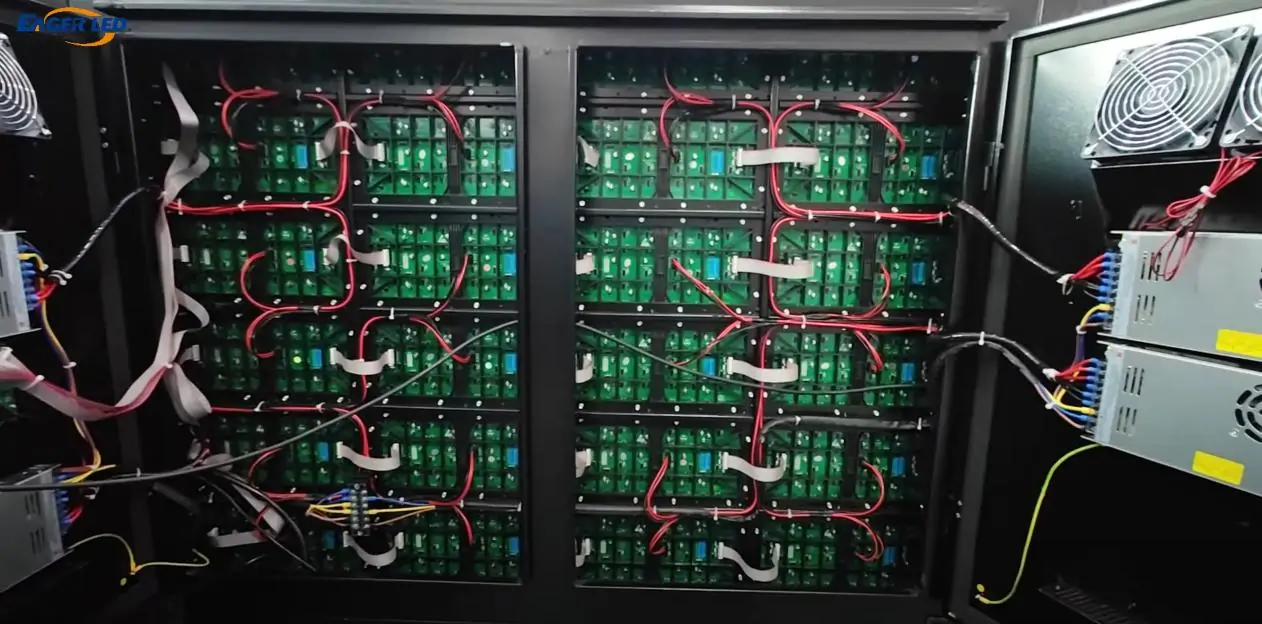
A rear-service cabinet requires usable space behind the display. A front-service arrangement still needs a practical method for reaching and replacing internal components.
04. Installations with restricted loading
Request the complete installed load rather than choosing the lightest bare frame. Include brackets, cables, trim, and other accessories in the comparison.
A lightweight cabinet is useful only if the overall system remains within the approved mounting and structural requirements.
9. LED Cabinet Procurement Checklist
A clear request for quotation makes competing proposals easier to evaluate. Give EagerLED or another supplier the screen dimensions, pixel pitch, environment, service direction, mounting method, operating schedule, and delivery requirements.
Then request comparable evidence for each proposed cabinet platform.
| Item to confirm | Evidence to request |
|---|---|
| Material identity | Alloy or steel designation and construction description |
| Complete weight | Assembled cabinet weight with inclusions stated |
| Dimensions and alignment | Drawings, tolerances, and inspection criteria |
| Mounting and rigging | Instructions and permitted configurations |
| Environmental suitability | Applicable reports tied to the proposed model |
| Cooling performance | Test conditions, operating limits, and required ventilation |
| Serviceability | Demonstration of component removal and replacement |
| Product compatibility | Module, power supply, receiving card, and firmware requirements |
| Long-term support | Spare-part policy, revision control, and warranty terms |
01. Require a representative sample
The sample should use the intended modules, electronics, connectors, and protective finish. A demonstration cabinet with different internals cannot fully validate the proposed production configuration.
Where practical, assemble a multi-cabinet section. Check joins, cable access, service clearances, and component replacement. Record the acceptance criteria before production approval.
02. Control changes after approval
For distributors and contractors, an unnoticed product revision can create problems months later. Changes to frame depth, mounting positions, seals, or connectors may affect replacement compatibility.
Ask the supplier to identify controlled components and explain how substitutions are approved. Retain drawings, configuration records, and the agreed spare-parts list with the purchase documentation.
When requesting an EagerLED quotation, specify performance priorities rather than asking only for “the best cabinet material.” A requirement such as front service with a defined installed-weight limit gives the supplier a more useful basis for selecting a product.
10. FAQ
01. Are aluminum-magnesium cabinets the same as magnesium cabinets?
Not necessarily. “Aluminum-magnesium” can be an imprecise commercial description. Aluminum alloys may contain magnesium, while magnesium alloys may contain aluminum. Ask for the alloy designation and identification of the actual frame material instead of relying on the product name.
02. Can aluminum, steel, and magnesium cabinets share one LED wall?
Only if the manufacturer confirms compatibility for the exact models. Matching outer dimensions is insufficient: module positions, cabinet depth, locks, mounting points, electrical interfaces, and calibration requirements must also match. Mixed materials do not automatically prevent compatibility, but they do not establish it either.
03. Can I change cabinet material and reuse my LED modules?
Possibly, but the replacement cabinet must accommodate the modules’ dimensions, fixing points, connectors, and service method. Power distribution and receiving-card arrangements must also remain suitable. Obtain written compatibility confirmation before purchasing replacement frames.
04. Do magnesium alloy LED cabinets create a fire hazard?
A finished magnesium alloy frame should not be assessed as though it were loose machining dust or chips. Nevertheless, its material name cannot establish the fire performance of the complete display. Request the product safety documentation applicable to the installation, and follow approved repair procedures rather than machining damaged frames on site.
05. Can magnetic LED modules attach to aluminum cabinets?
Yes, when the cabinet incorporates suitable ferromagnetic attachment points. The aluminum frame itself does not provide the magnetic attraction used by conventional magnetic mounting systems. Confirm the intended module-retention design, especially when replacing modules or adapting an existing cabinet.
06. Does cabinet material change LED display power consumption?
It does not directly determine LED electrical demand. Modules, drive settings, brightness, content, and power-supply efficiency are major factors. Cabinet design can affect cooling requirements, but buyers should compare measured complete-system consumption under equivalent conditions rather than infer savings from the metal.
07. Can damaged LED cabinet frames be straightened and reused?
That depends on the damage and the manufacturer’s repair criteria. A frame that appears straight may still have compromised mounting geometry or damaged load-bearing interfaces. Remove suspect cabinets from service and obtain an assessment, particularly when locks or suspension points are involved.
08. Is a metal LED cabinet automatically protected against EMI?
No. Electromagnetic shielding depends on the complete enclosure, including joints, openings, cable routing, and electrical connections. A conductive frame alone does not establish electromagnetic compatibility. Request applicable EMC evidence for the finished display configuration.
09. Are aluminum, steel, and magnesium cabinets recyclable?
The metals are recyclable, but recovery depends on local facilities and separation from electronics, plastics, coatings, and mixed hardware. For a disposal or refurbishment program, request material information and disassembly instructions. Recyclability should be distinguished from verified recycled content.
11. Conclusion
The right LED cabinet materials depend on the project’s operating conditions and installation requirements. Aluminum LED cabinets are useful where weight, manufacturing precision, and product flexibility matter. Steel LED cabinets deserve consideration for fixed installations with suitable structural capacity and corrosion protection. Magnesium alloy LED cabinets can reduce frame weight when the complete design supports the required handling, durability, and maintenance needs.
A sound purchasing decision compares finished cabinets using verified weights, dimensional requirements, environmental evidence, approved mounting arrangements, and service procedures. The metal is one input; the delivered cabinet system is what the buyer must evaluate.
For an EagerLED project inquiry, provide the display dimensions, pixel pitch, environment, mounting method, maintenance access, and weight constraints. Those details make it possible to compare suitable cabinet options and select a display that fits both the installation and the long-term support plan.
 10 Notable Digital Billboards: Examples, Costs & Buying Guide