
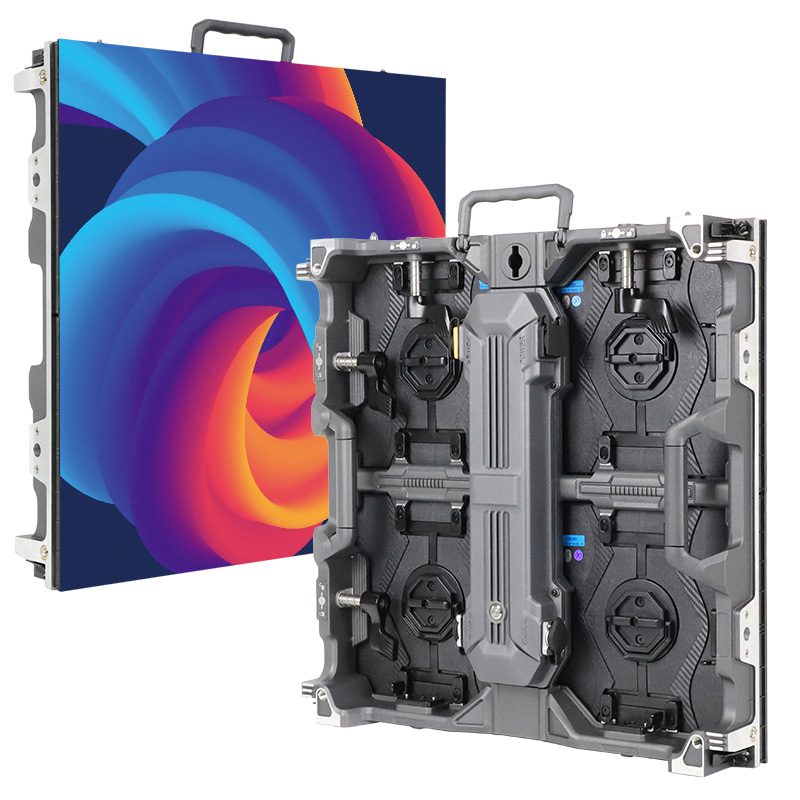
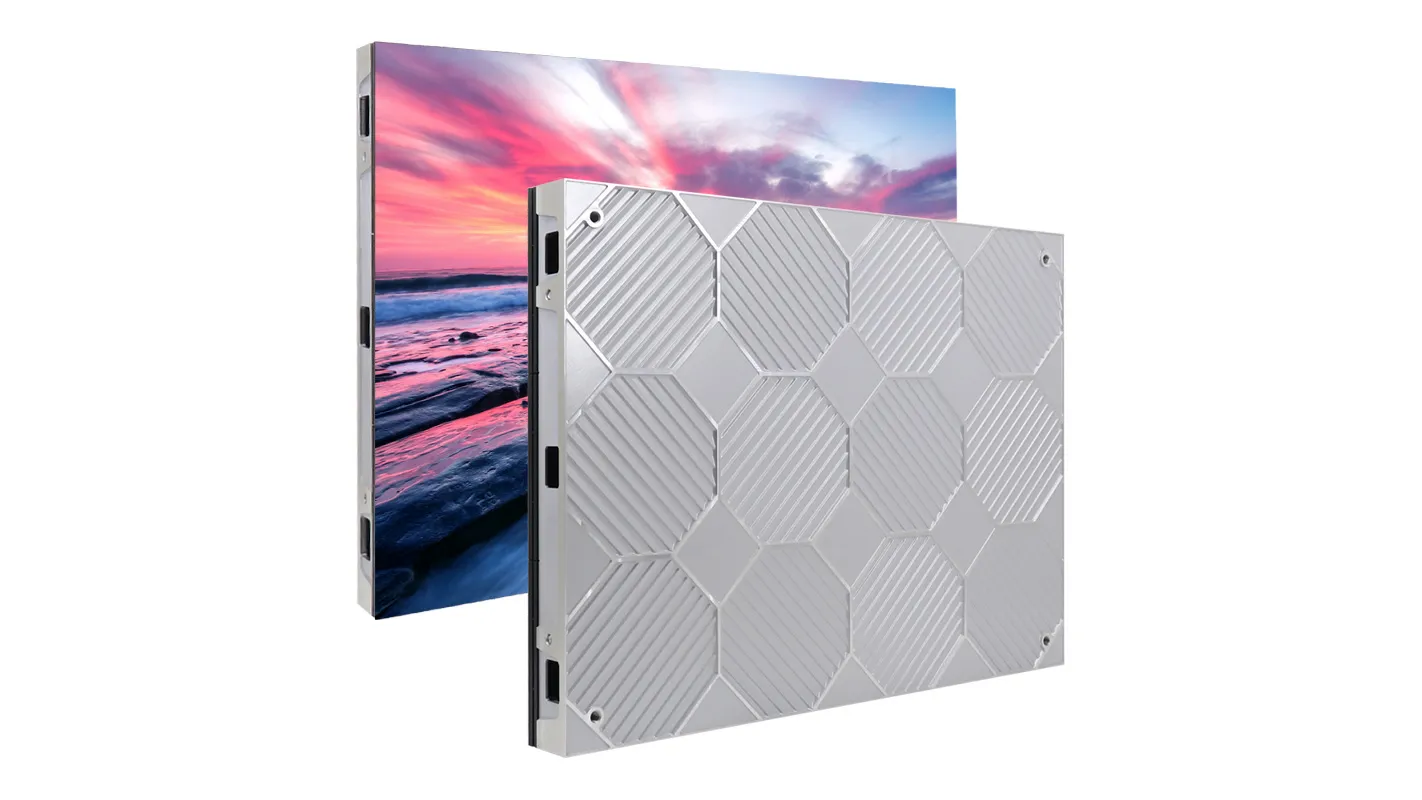
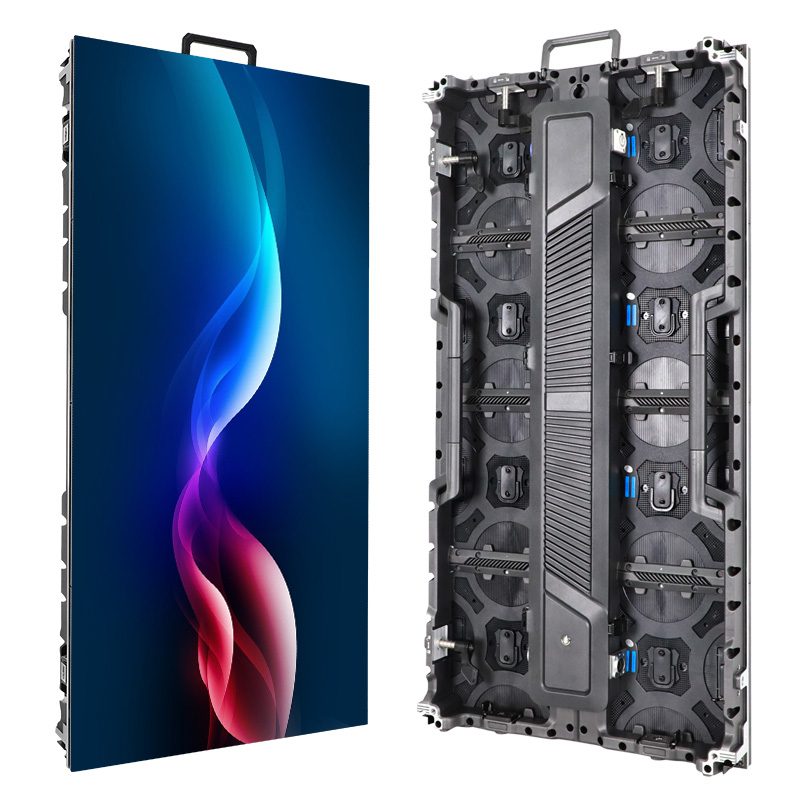
An LED floor is a walkable digital display assembled from purpose-built LED panels. It shows video, graphics, and animations beneath a protective surface designed for specified floor loads. An interactive version also detects activity and uses software to change the imagery in response. Its suitability depends on the complete installation, including the cabinets, support structure, surface, controls, and operating environment.
For an AV integrator specifying a project, the central question is whether the system can deliver the intended visual experience while remaining practical to install, operate, and maintain. A retail entrance, touring stage, and museum game area place different demands on the same basic technology.
This guide explains how an LED floor works, where it adds value, and which technical details deserve attention before purchase. Buyers, distributors, and contractors can also use the comparison tables and project checks to prepare a clearer quotation request.
1. What Is an LED Floor?
01. LED Floor Displays vs. Basic Illuminated Floor Tiles
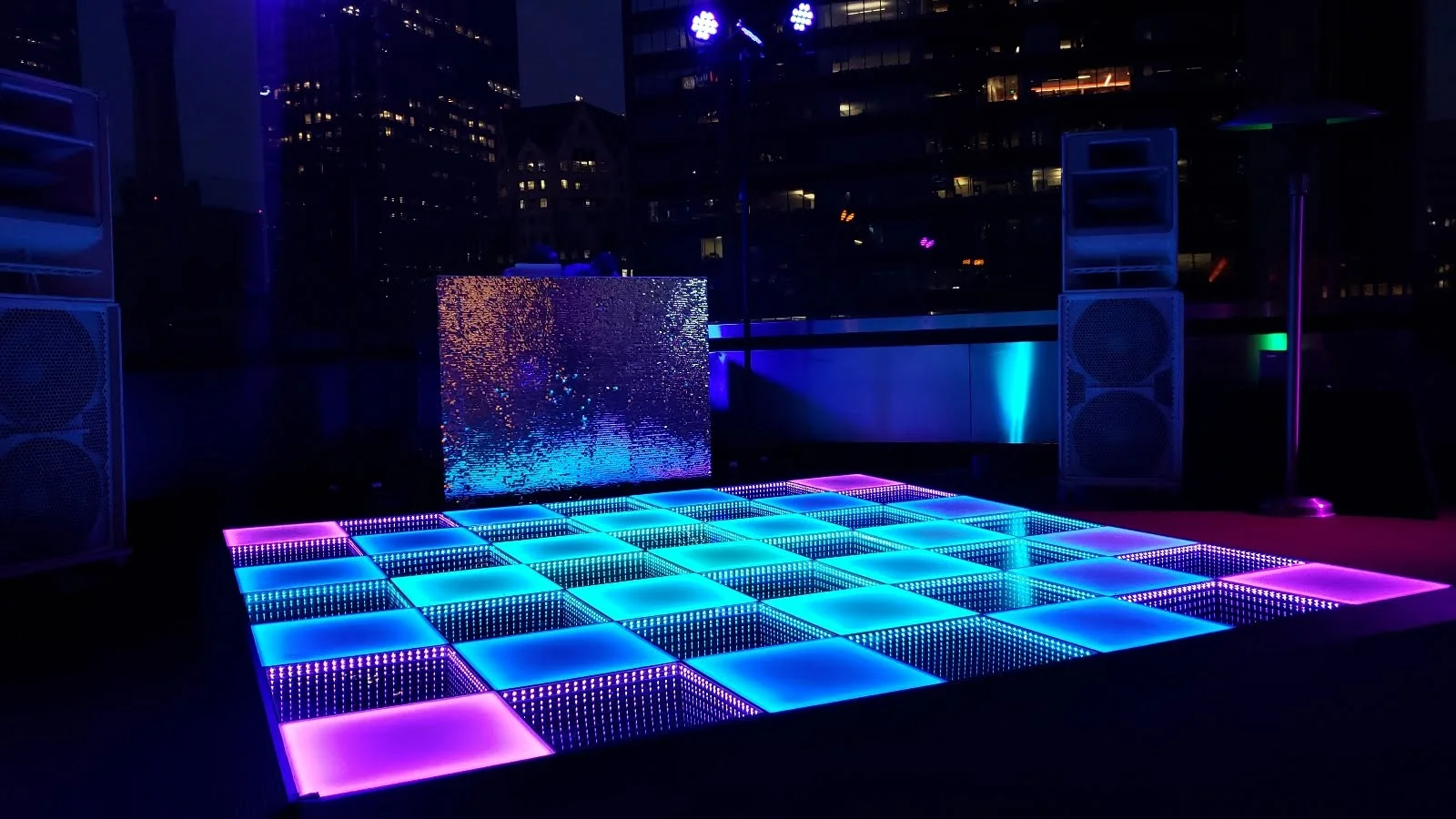
The term covers products with different visual capabilities. Some illuminated dance floors produce colors, patterns, or decorative points of light. An LED floor display uses an addressable pixel array to reproduce mapped digital content, subject to its resolution and control system.
The distinction matters when a customer requests logos, readable text, or detailed animation. A product described as an “LED dance floor” may be suitable for decorative lighting without offering the image detail the project requires. Ask to see the intended content on the proposed configuration.
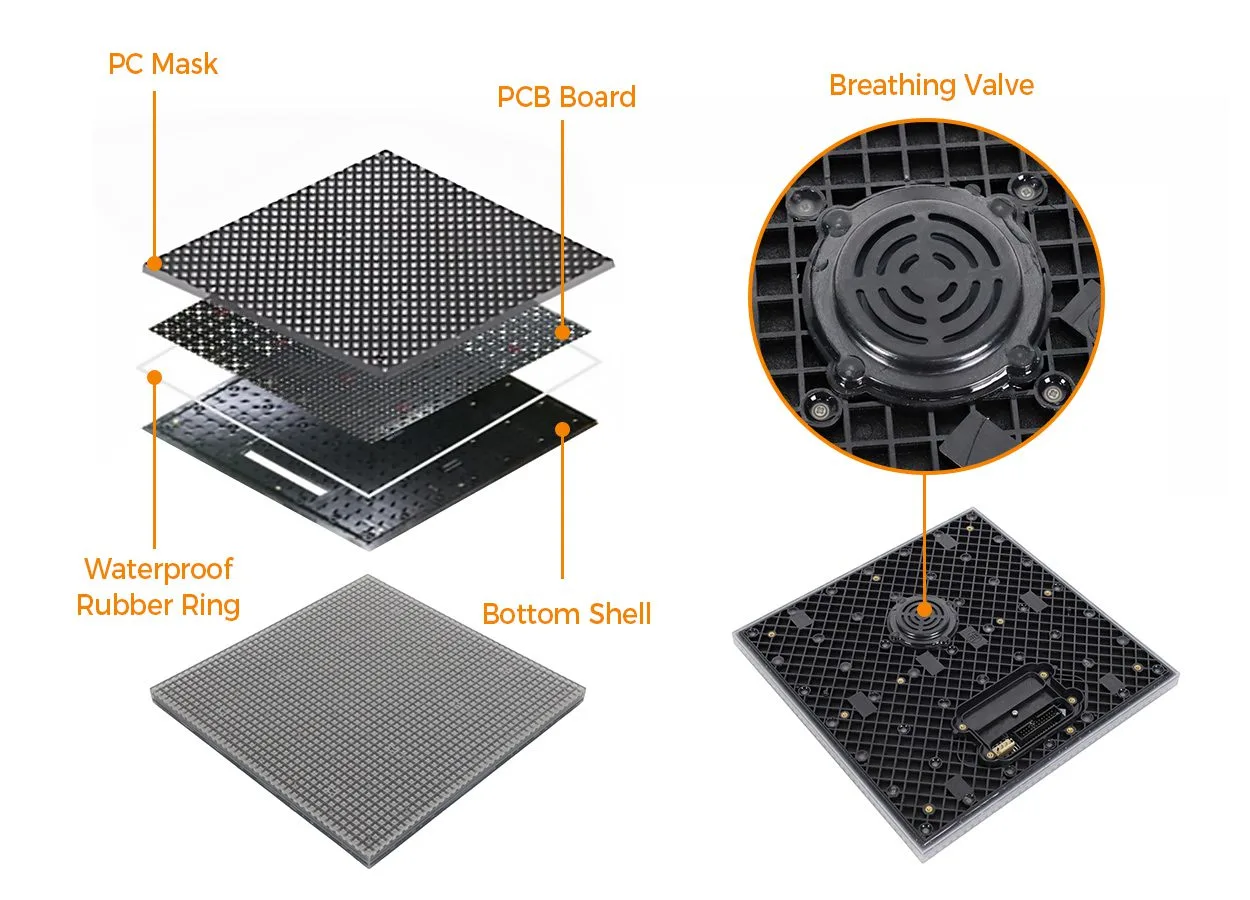
Also clarify the supplier’s terminology. A module usually contains the LEDs and associated electronics; a cabinet holds modules and other components. “Tile” and “panel” may refer to different assemblies across suppliers. Purchase documents should identify exactly what each quoted unit includes.
02. How Floor Screens Differ From LED Video Walls
A conventional video wall is designed around a vertical installation. A walkable display must additionally manage loads through its surface, cabinet, and supporting structure.
Turning a wall panel face upward does not establish that it can support pedestrians. An LED floor needs documented suitability for the proposed use, including surface protection, panel alignment, and load conditions. The underlying building floor must also support the complete assembly and its users.
2. How Does an LED Floor Work?
01. LED Panels, Video Controllers, and Content Playback
A typical video signal path runs from a media player or production computer through a video processor or sending controller to receiving cards and LED modules. Some systems combine several of these functions in one device.
The LED floor controller maps the source image across the cabinets. Correct mapping makes separate panels act as a coordinated canvas. The LED floor still needs content prepared for its actual pixel dimensions and orientation; a large physical surface does not automatically provide high resolution.
For example, assume a hypothetical active area of 4 × 3 m, approximately 13.1 × 9.8 ft, with an exact 4 mm pixel pitch. Dividing each dimension by the pitch gives 1,000 × 750 pixels. Actual designs must use available cabinet resolutions and dimensions, which may alter the finished size.
02. How Interactive LED Floors Detect Movement
An interactive LED floor adds a detection system and software that converts detected activity into visual responses. Depending on the design, sensing may be integrated into the panels or supplied by external tracking equipment. Do not assume every product uses pressure sensors.
The response depends on the entire chain: sensing, communication, software processing, rendering, and display output. A sensor specification alone cannot establish the delay users will experience. Test the proposed system with multiple participants and the actual content, especially where individual footsteps must trigger separate effects.
3. What Types of LED Floors Are Available?
01. Standard Video Floors and Interactive LED Floors
A standard video floor plays scheduled or live content without reacting to participants. It suits applications where visuals follow a show timeline or repeat a branded sequence.
Choose an interactive LED floor when audience behavior has a defined role in the experience. A museum activity might reveal information beneath a visitor’s position, while a promotional installation might trigger a graphic when someone enters a marked area. These are application concepts, rather than claims about a particular installed project.
02. Indoor and Outdoor LED Floor Displays
Outdoor suitability involves more than a bright image and a water-resistance claim. Exposure affects connectors, drainage, support materials, temperature management, and maintenance procedures.
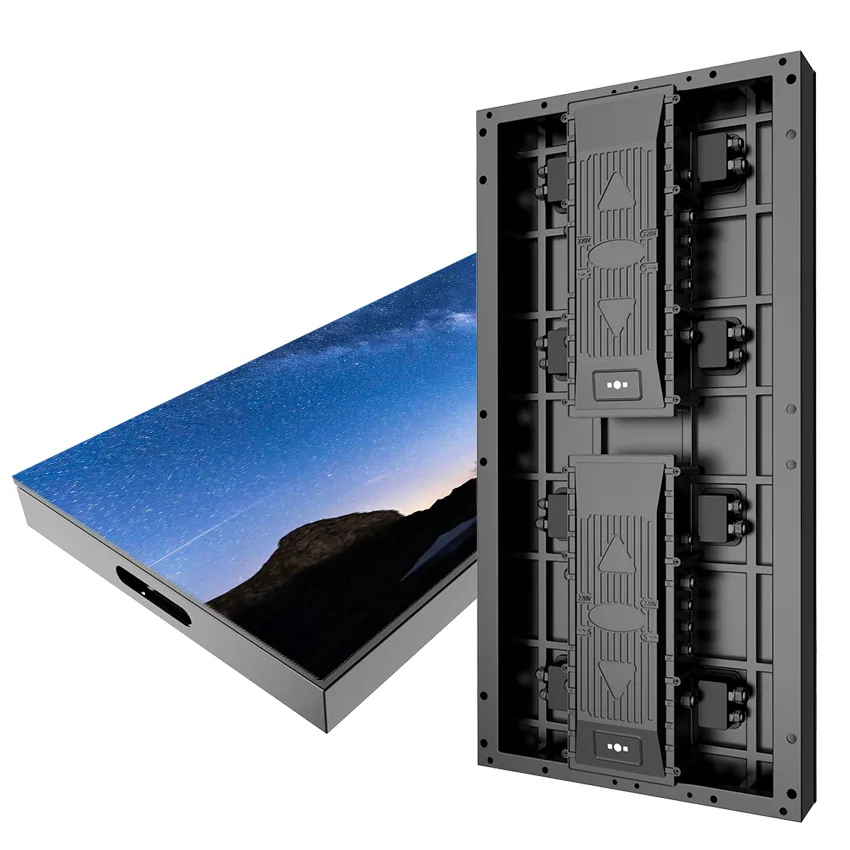
EagerLED lists its EA-OFloor outdoor model with front-and-rear IP67 protection and optional interaction. Those published features provide a starting point for evaluation; the quotation and applicable documentation should confirm the exact configuration and installation conditions.
03. Rental Systems and Permanent Installations
| Deployment | Operational priority | What to confirm before ordering |
|---|---|---|
| Touring or event rental | Repeated handling and predictable setup | Packing method, connector durability, assembly procedure |
| Permanent indoor installation | Daily operation and accessible repairs | Service clearances, building interfaces, replacement access |
| Outdoor installation | Weather exposure and drainage | Complete environmental design, including connections |
| Interactive attraction | Reliable participant detection | Software scope, tracking coverage, calibration procedure |
These categories overlap. An interactive installation can be permanent or temporary, and a rental product may be intended only for indoor use. EagerLED’s EA500RF rental system is one example of an indoor product positioned around installation, dismantling, and front service.
4. Key Features of an LED Floor Display
01. Pixel Pitch, Resolution, and Brightness
Pixel pitch is the distance between neighboring pixel centers, normally expressed in millimeters. At the same active dimensions, a smaller pitch provides more pixels. Whether that detail is useful depends on viewing distance, content, and the angle from which people see the floor.
Avoid selecting an LED floor from pitch alone. Small lettering may remain difficult to read when viewed at a shallow angle, and audience members can obscure the image. Evaluate representative content from realistic standing positions.
LED floor brightness should match the environment and operating schedule. Excessive output can be uncomfortable indoors, while daylight can reduce perceived contrast outdoors. Ask how the image looks when dimmed, including dark gradients and low-brightness content.
02. Load Capacity, Surface Protection, and Slip Resistance
A published area-load value does not answer every structural question. Concentrated loads from narrow furniture feet, rolling equipment, or certain footwear can act differently from a distributed load. Request the relevant test conditions and have qualified project personnel assess the proposed loading.
For an LED floor, scratch resistance and slip resistance are separate properties. A surface can resist abrasion without providing adequate traction under the project’s wet or contaminated conditions. Ask for applicable surface test evidence and approved cleaning methods.
03. Modular Panels and Maintenance Access
Modular LED floor construction can allow individual components to be replaced, but access varies. “Front service” may describe LED module removal while other parts still require different access.
EagerLED’s EA500RF2 GOB product page identifies front-serviceable modules and different front and rear protection ratings. This illustrates why buyers should review each component and cabinet face separately rather than treating one headline feature as a complete system description.
| Specification | Useful question | Evidence to request |
|---|---|---|
| Pixel pitch | Will our content remain clear from actual viewpoints? | Sample playback at proposed resolution |
| Load capacity | Does the design cover our point and rolling loads? | Test conditions and structural review |
| Surface finish | How does traction change with expected contamination? | Relevant surface testing and care instructions |
| Protection rating | Which faces and connections are covered? | Applicable report and installation requirements |
| Service access | Which parts can technicians replace in place? | Demonstrated procedure and access drawing |
5. LED Floor Benefits, Limitations, and Alternatives
01. Dynamic Visuals, Custom Content, and Audience Interaction
The main benefit is a floor surface whose imagery can change without replacing printed graphics or physical scenery. The same installation can support different show cues, exhibition themes, or promotional content when its software and content workflow allow it.
An LED floor emits light directly, so its image does not depend on an unobstructed projection beam. People standing on it still hide the pixels beneath them, but they do not interrupt a projector beam serving another part of the image.
Interaction creates another opportunity: movement can become an input to the content. That capability needs a useful purpose. Adding sensors to a simple decorative loop introduces extra commissioning and support work without necessarily improving the experience.
02. Cost, Power, and Operational Limitations
An LED floor requires electricity, control equipment, maintenance, and content management. It also introduces a walking surface with specific operating restrictions. Brightness, heat, surface wear, and the practical consequences of a failed panel all belong in the design discussion.
Do not assume engagement, sales, or rental income will improve by a fixed percentage. Define a measurable project objective, such as participation or successful show operation, and evaluate it under real conditions.
03. LED Floors vs. Projection and Traditional Dance Floors
| Technology | Useful when | Main tradeoff |
|---|---|---|
| LED video floor | The floor needs mapped video or graphics | Requires purpose-built structure and display maintenance |
| Floor projection | Suitable projection positions and light control are available | People and objects can interrupt the beam |
| Decorative illuminated dance floor | Lighting patterns satisfy the creative brief | Detailed video capability varies significantly |
| Conventional flooring | The surface does not need changing imagery | Changing the visual design requires physical work |
Select the simplest technology that satisfies the intended experience. A floor used mainly beneath furniture may offer little visible display area, even when its technical specification is impressive.
6. Where Are LED Floors Used?
01. Concerts, Stages, Weddings, and Live Events
An LED floor can extend a stage image beneath performers or provide coordinated visuals for entrances and dance areas. Content designers should account for performers, equipment, and scenery that cover parts of the canvas.
For live productions, agree on LED floor cue control, operator responsibilities, and fallback imagery. Rehearsal should include the complete production sequence rather than a standalone display demonstration.
02. Retail Stores, Trade Shows, and Brand Activations
In a branded environment, the floor can carry product visuals, directional effects, or an interactive invitation. Plan where visitors approach, stop, and leave. A design that encourages people to pause may conflict with an entrance that must remain clear.
Keep essential information available elsewhere when visitors could stand over it. Product names and instructions placed only beneath a crowd may be unreadable at the moment they matter most.
03. Museums, Exhibitions, and Interactive Attractions
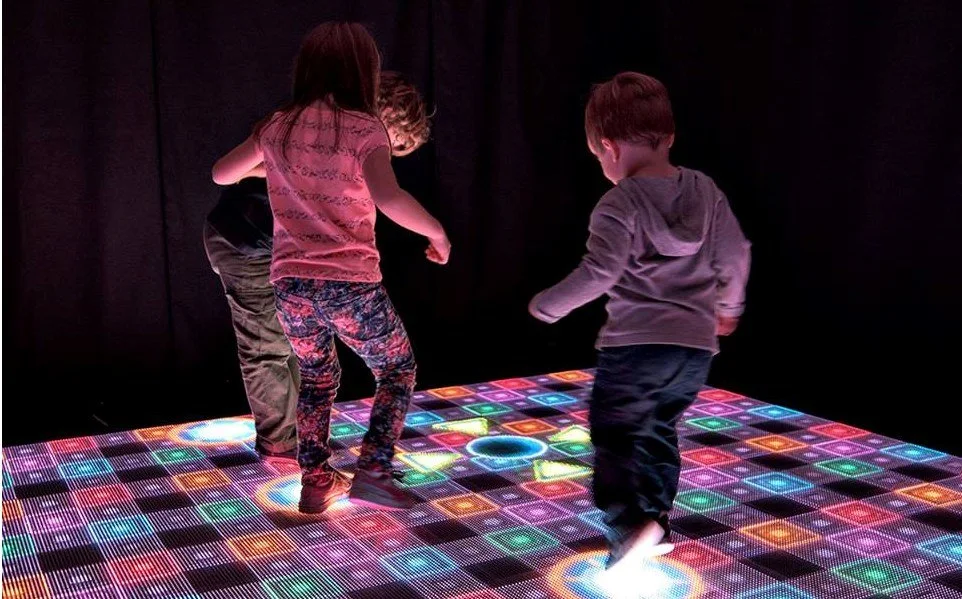
An interactive LED floor can support exploration, collaborative games, or visual responses to movement. The operating plan should include staff controls, content resets, and a usable experience for visitors who cannot participate in the same way.
Motion intensity also deserves review. Fast movement and abrupt brightness changes should serve a deliberate purpose. Test content with the intended audience and provide an appropriate alternative route or experience where the venue requires one.
7. How to Choose the Right LED Floor
01. Match Display Specifications to Your Viewing Conditions
Start with a written LED floor brief: finished dimensions, audience positions, ambient light, content examples, daily schedule, and temporary or permanent use. Include nearby screens if the imagery must coordinate across surfaces.
Evaluate a sample using the actual logo sizes, text, gradients, and movement expected in operation. A colorful demonstration can conceal weaknesses that appear with dark content or fine details.
For distributors, the repeatable configuration also matters. Document which modules, receiving cards, power supplies, protective parts, and software versions belong to the quoted system. This makes later orders and support conversations more precise.
02. Check Load Requirements and Environmental Suitability
Send the supplier a loading schedule rather than a general request for “heavy duty.” Include pedestrian traffic, furniture contact points, wheeled equipment, and any temporary equipment that may cross the surface.
The LED floor assembly and the building structure require separate consideration. Cabinet capacity does not establish the capacity of the supporting slab, platform, or access floor. Qualified structural and electrical personnel should confirm the installation design for the site.
For outdoor projects, address water pathways, connector locations, condensation, and service access. An IP classification describes specified enclosure testing; it does not independently approve every outdoor arrangement or cleaning method.
03. Evaluate Controls, Content Compatibility, and Support
Confirm processor capacity against the complete pixel map, including output-port limits and the chosen operating settings. Identify supported inputs, content formats, software licenses, and any required network services.
Before selecting an LED floor supplier, request an acceptance plan. It should define what will be demonstrated, which documents accompany delivery, who handles commissioning, and how faults are reported. Agree on spare-part availability and warranty terms in writing rather than assuming they follow from a product category.
Separate mandatory requirements from preferences in the LED floor tender. For example, a documented service-access method may be mandatory, while a particular cabinet size may be flexible if the alternative fits the space. This prevents an attractive but unsuitable option from winning on a single specification. Record agreed exceptions, because a changed processor or sensing package can affect content delivery even when the visible panels remain the same.
8. How Much Does an LED Floor Cost?
01. Factors That Affect LED Floor Pricing
There is no dependable universal price without a defined configuration and scope. Pixel pitch, cabinet construction, protective surface, interaction, control equipment, quantity, and installation conditions all affect the quotation.
An LED floor price per square meter is useful only when buyers know what that area price includes. One proposal may cover panels alone; another may include a processor, structure, and commissioning. Compare equivalent scopes before comparing totals.
| Budget item | Scope to clarify | Possible omission |
|---|---|---|
| Display hardware | Cabinets, modules, surface parts, inter-panel cables | Required spare components |
| Support and finishing | Subframe, leveling, perimeter, ramps | Transition to surrounding flooring |
| Control system | Processor, player, distribution, configuration | Additional output capacity |
| Interactive package | Sensors, software, content, calibration | License renewals or custom development |
| Delivery and installation | Freight terms, handling, assembly, testing | Local taxes, lifting, or site labor |
| Ongoing operation | Power, cleaning, servicing, content updates | Storage and return transport for rentals |
02. Rental vs. Purchase: Which Fits Your Project?
LED floor rental can suit a limited event schedule when the provider supplies the required configuration and support. Purchase may suit frequent deployment or a permanent installation, provided the owner can manage storage, maintenance, and operation.
Compare the total cost over your own usage schedule. For rental businesses, include preparation time, repairs, utilization, transport, and periods when inventory is unavailable. A calculation based only on rental revenue and panel purchase price will miss important costs.
03. Budgeting for Operation and Replacement
Separate maximum electrical demand from expected operating consumption. Circuit design must address the specified maximum demand and applicable installation requirements. Energy estimates should use a documented operating profile, including brightness, content, and hours.
Ask what happens when a surface part, module, or controller needs replacement after the initial order. A lower LED floor purchase price may be less attractive if service access is difficult or compatible replacements are uncertain.
For a fair LED floor quotation comparison, ask each bidder to identify exclusions explicitly. State the required delivery terms and distinguish factory configuration from on-site commissioning. Where software is included, clarify who owns custom content and whether another operator can maintain it later. These commercial details determine what the buyer actually receives; they should appear alongside the equipment list before the order is approved.
9. LED Floor Installation and Maintenance Essentials
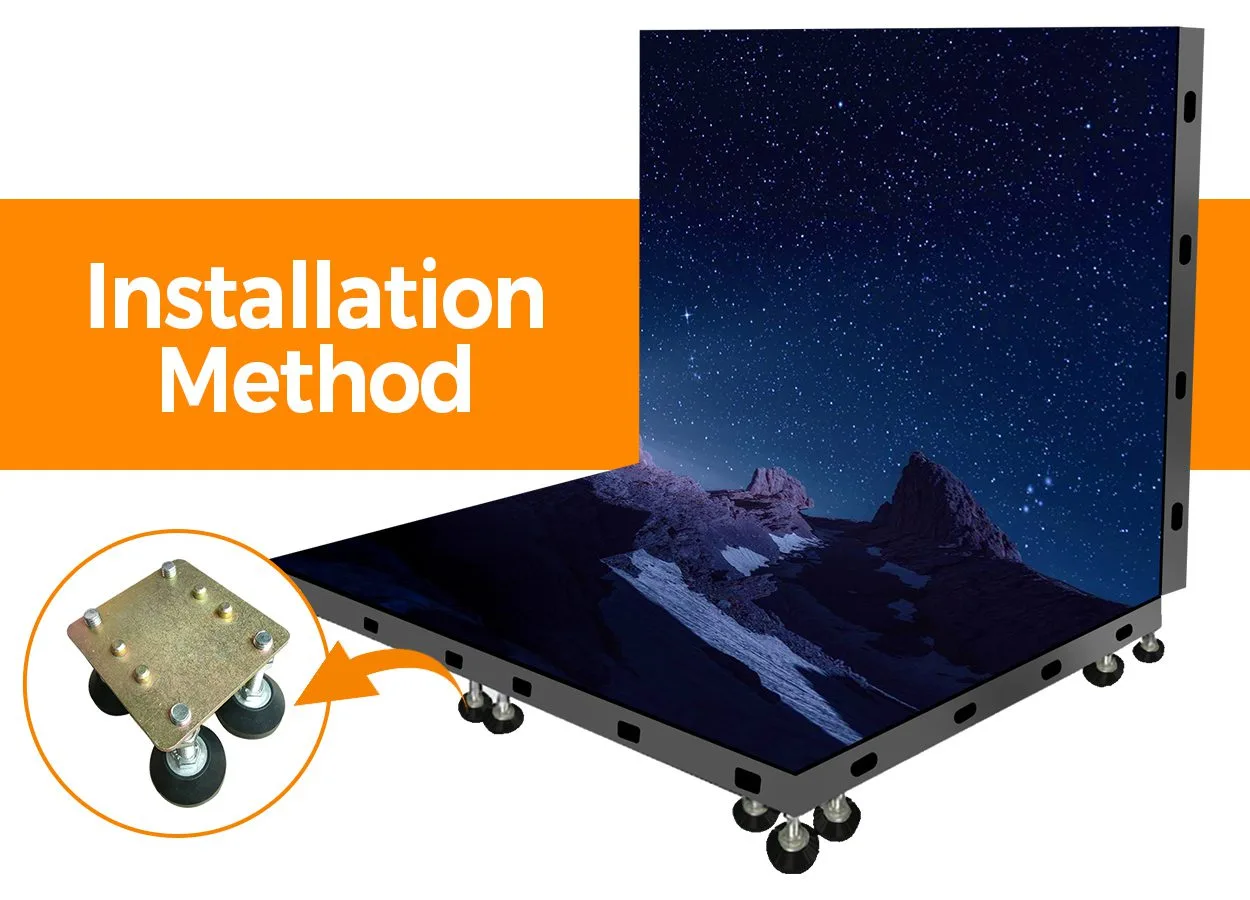
01. Site Preparation, Floor Support, and Cable Planning
Inspect the supporting surface before equipment arrives. Verify available height, leveling arrangements, access routes, and the transition around the display perimeter. Plan power and data paths so installation work does not create inaccessible connections.
The support arrangement must match the manufacturer’s requirements and the project design. Improvised shimming or uneven bearing can change how loads pass through an LED floor. Outdoor installations also need coordinated drainage and protected electrical distribution.
02. Panel Assembly, Calibration, and System Testing
Assemble cabinets using the approved sequence and connection method. Confirm panel alignment before opening the area to users. Map the image, load the correct configuration files, and check consistent color and brightness across the canvas.
| Check | Practical verification | Handover record |
|---|---|---|
| Physical assembly | Review seams, perimeter, supports, and approved access | Installation inspection record |
| Image mapping | Display orientation and cabinet-identification patterns | Final map and configuration backup |
| Playback | Run actual content and scheduled transitions | Approved content and settings |
| Interaction | Test coverage, multiple participants, and reset behavior | Calibration procedure and software version |
| Service procedure | Demonstrate access to agreed replaceable parts | Maintenance instructions and parts list |
Acceptance should include agreed operating conditions and representative content. A successful test pattern does not establish that the finished interactive experience or production workflow works correctly.
03. Cleaning, Inspection, and Panel Replacement
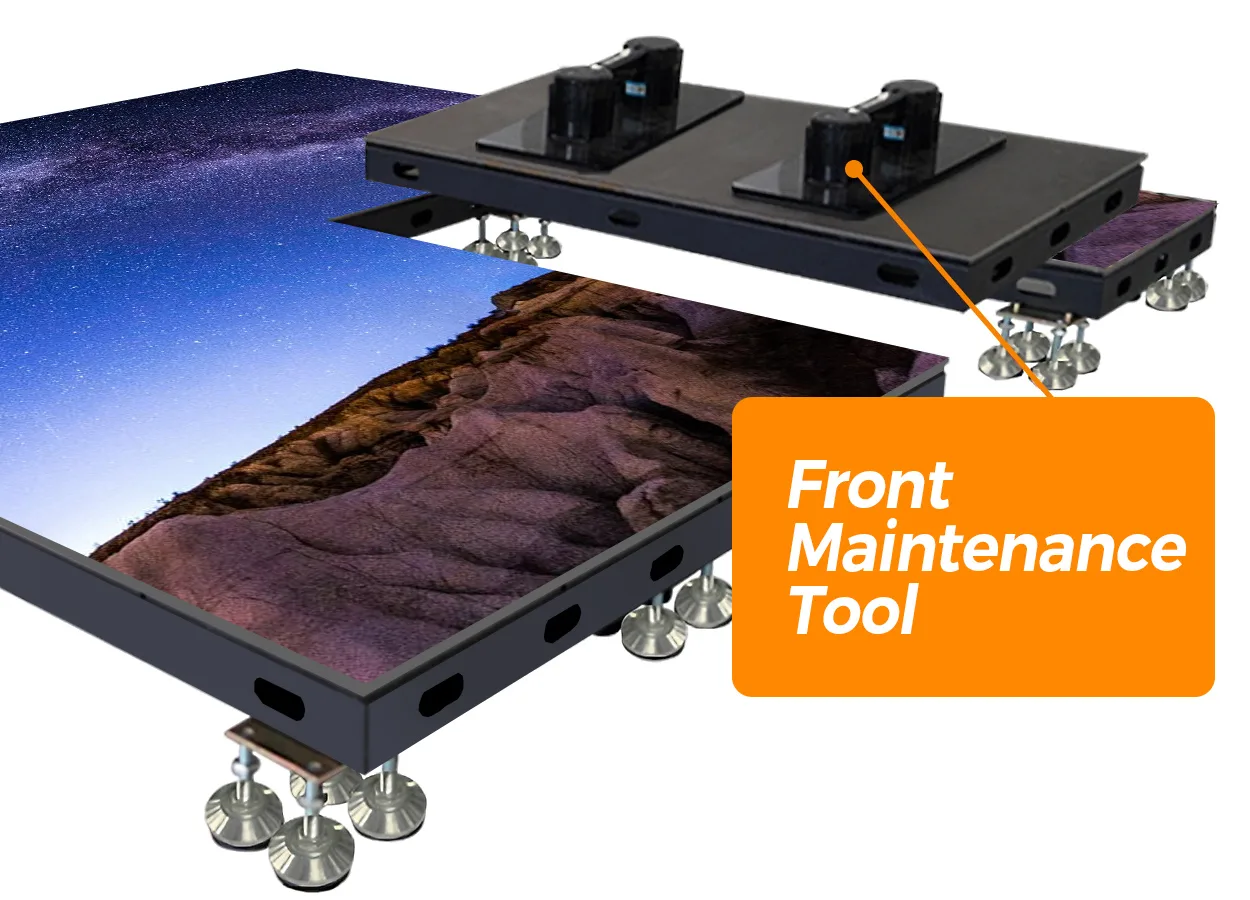
Use manufacturer-approved cleaning products and methods. Inspect for loose parts, damaged surface protection, contamination, and changes in alignment. Do not infer that an enclosure rating permits pressure washing.
Restrict access to a damaged area and isolate power before hands-on electrical service. EagerLED’s front-service maintenance guidance emphasizes diagnosing the fault before removing modules and testing after reassembly. Apply the instructions for the exact floor model, including its approved removal tools.
Keep service records, configuration backups, and labeled spare parts. They help technicians distinguish a recurring installation problem from an isolated component failure.
Set LED floor inspection intervals according to traffic, exposure, and manufacturer instructions rather than adopting one schedule for every venue. Event inventory should be checked after return and before dispatch, so damage is found while repair time is available. For permanent installations, assign responsibility for reporting surface damage, image faults, or unusual behavior. The handover should also identify who can close the area, isolate the equipment, and authorize reopening after service.
FAQ
01. Can an LED floor show synchronized video with a video wall?
Yes, with a compatible playback and control design. Coordinate the content canvas, processing delay, frame timing, and cue system across both surfaces. For image sequences that must meet precisely at an edge, test synchronization using the proposed equipment rather than assuming identical input signals produce identical timing.
02. Will a high refresh rate eliminate camera flicker?
Not by itself. Camera exposure, frame rate, LED scan behavior, brightness settings, and synchronization also influence recorded results. Test the LED floor with the intended cameras, lenses, positions, and shutter settings. Agree on acceptable results before purchase when broadcast or filmed content is central to the project.
03. Can floor panels also be installed as a wall?
Only where the manufacturer approves that configuration and provides suitable mounting or rigging instructions. A cabinet’s ability to support a walking load does not establish its suspended-load capability. Verify permitted orientation, fixing points, hardware, and structural requirements for the exact model.
04. Can replacement modules differ in color from existing panels?
Yes. Differences in components, production batches, calibration, and accumulated use can affect appearance. Ask about matched spares, calibration data, and future replacement compatibility. After a repair, evaluate the replacement with representative content and viewing conditions, rather than checking only whether it illuminates.
05. Can an LED floor be built in a custom shape?
Some layouts can use standard cabinets arranged into stepped or irregular outlines. A genuinely curved edge or unusual dimension may require different hardware and additional finishing. Request a dimensioned layout showing active pixels, unused areas, perimeter treatment, and how content maps to the finished shape.
06. Do interactive floor systems require an internet connection?
That depends on the selected software and licensing model. Local playback may work offline, while activation, remote management, updates, or cloud features may require connectivity. Ask the supplier to demonstrate the required LED floor functions with the internet disconnected and document any limitations.
07. What happens when power returns after an outage?
Recovery depends on the player, controller, software, and startup configuration. Specify whether the system should resume automatically, wait for an operator, or display approved fallback content. Test this sequence during commissioning, including interaction software and any connected show-control equipment.
08. Can existing control equipment run a new LED floor?
Possibly, but matching connector types is insufficient. Check receiving-card compatibility, configuration support, output capacity, port limits, and required timing features. Interactive operation may need additional hardware or software. Ask for written compatibility confirmation and a system test using the actual equipment.
Conclusion
An LED floor combines a digital canvas with a working floor surface. A successful project needs both sides of that description to be resolved: suitable imagery and controls, plus documented loading, environmental protection, accessible servicing, and a coordinated installation.
Before requesting a quotation, prepare the finished dimensions, site photographs, content examples, viewing positions, loading requirements, operating schedule, and installation deadline. Add interaction and camera requirements where relevant. These details let suppliers propose a configuration that can be evaluated against the same brief.
To discuss an EagerLED LED floor project, send your requirements to the EagerLED team and request an itemized proposal with the applicable specifications, drawings, support scope, and acceptance criteria.
 LED Screen Rental Orlando: Booth and Service Quotes