
Table Of Contents
1.Why Rental LED Display Screens Matter in 2026
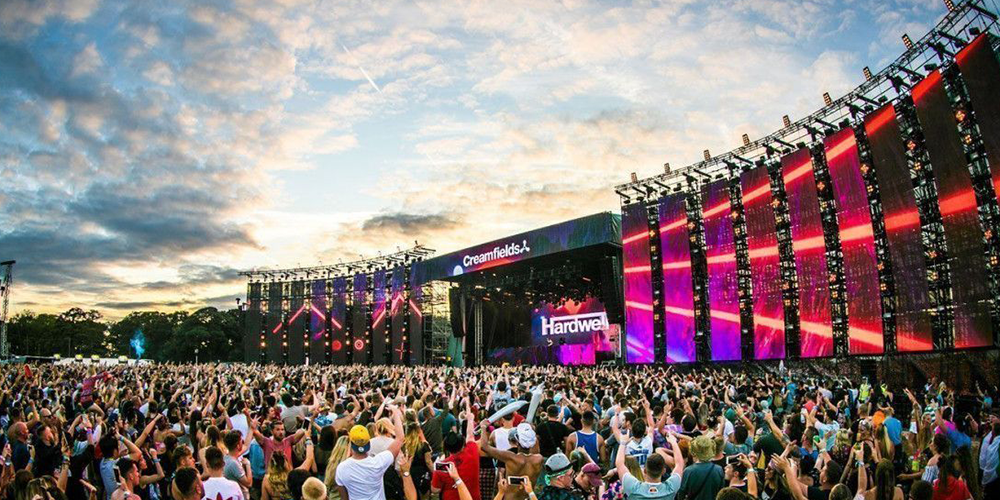
Live events have changed. Audiences expect large-scale visuals that fill their field of view. Not a projection screen that washes out under stage lights. Not an LCD wall with visible bezel lines cutting through the image. The technology that delivers on that expectation, event after event, is the rental LED display screen.
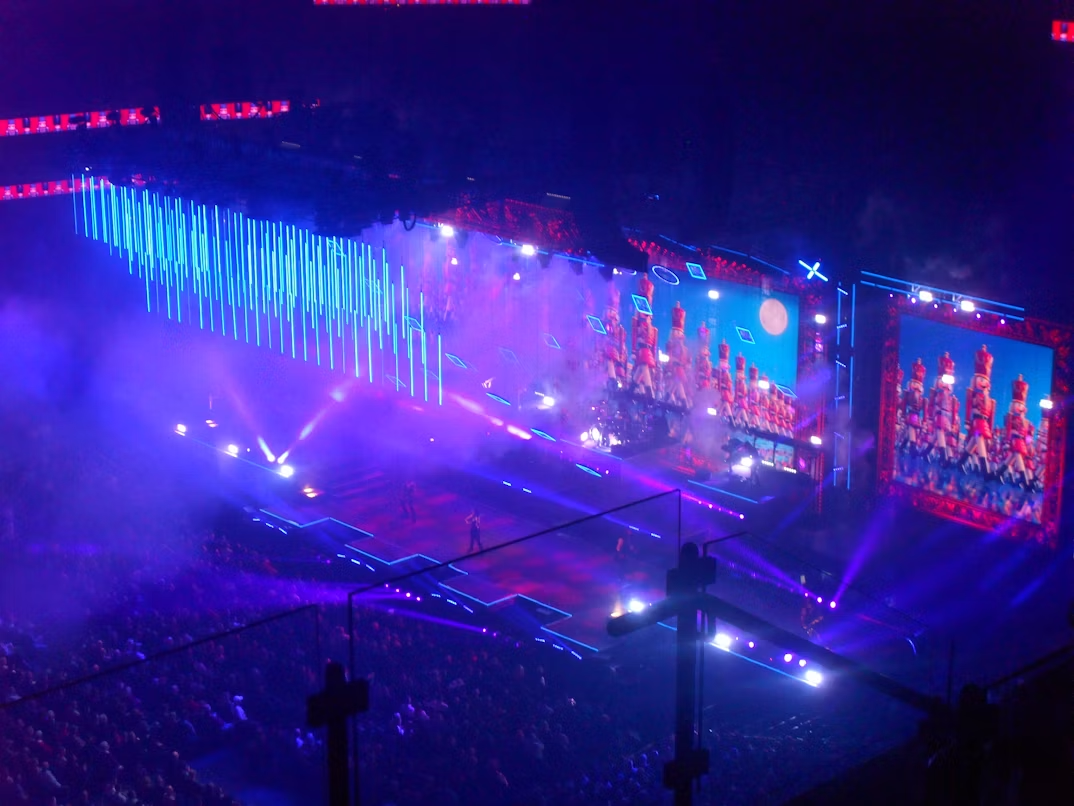
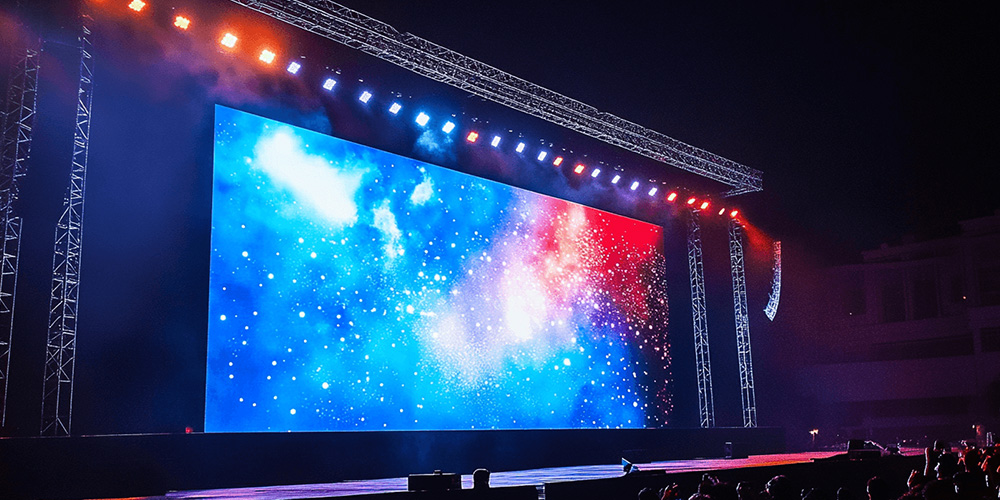
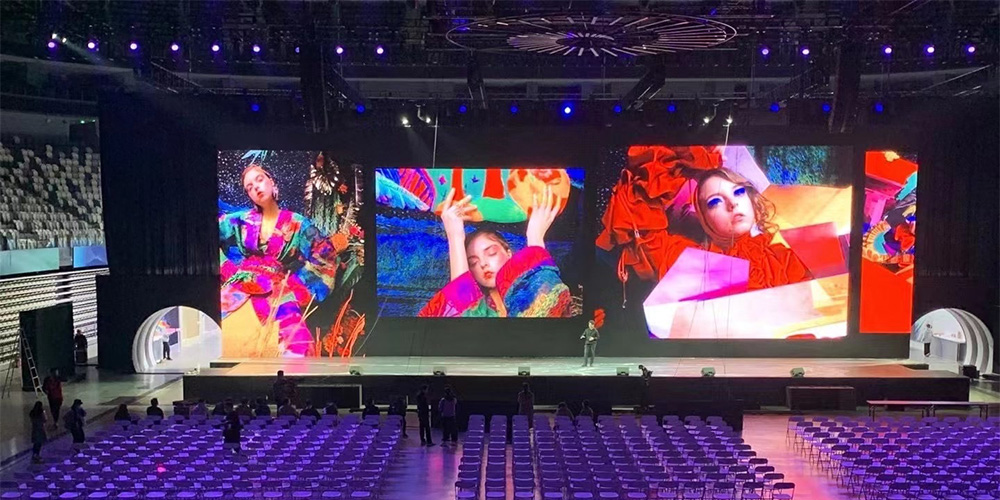
From music festivals and product launches to corporate keynotes and trade show booths, the rental LED display screen has become the default visual backbone for professional event production. It’s not really about picture quality anymore — every technology claims that. It’s about flexibility. Build a 20-meter-wide curved backdrop on Tuesday, strike it in under an hour, and reconfigure the same panels into a 3-meter portrait display for a retail activation on Wednesday. That’s what a rental LED display screen gives you.
This guide is written for AV rental companies building inventory, event producers specifying gear for tours, and integrators evaluating which rental LED display screen platform to standardize on. We’ll cover what a rental LED display screen actually is, how it stacks up against every other display technology you might consider, the technical parameters that drive real-world performance, and the cost factors that determine whether your investment pays off.
2.What Is a Rental LED Display Screen?
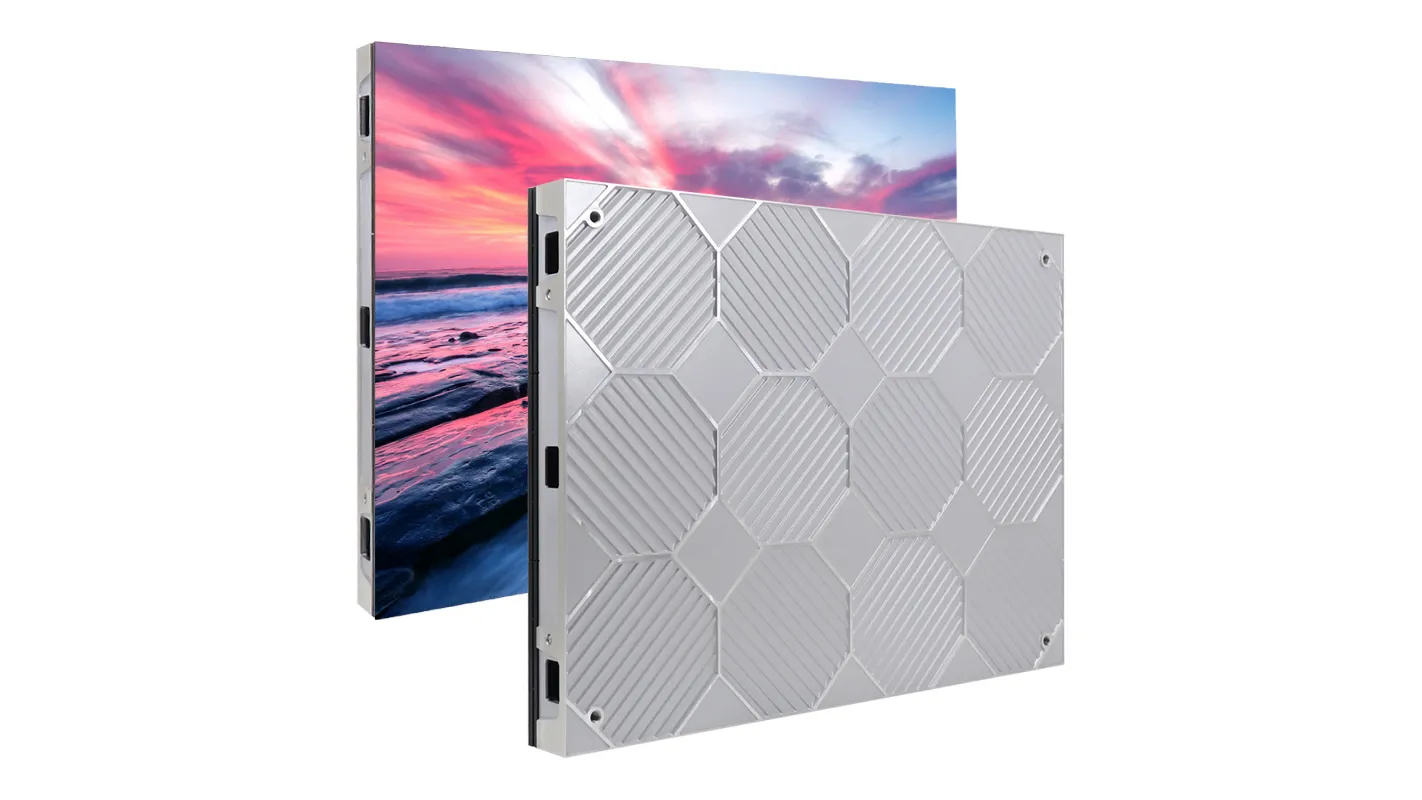
A rental LED display screen is a modular, cabinet-based LED video wall system designed specifically for repeated assembly, disassembly, and transport. Unlike a fixed-installation LED wall, which gets mounted once and stays in place for years, a rental LED display screen is engineered for the road.
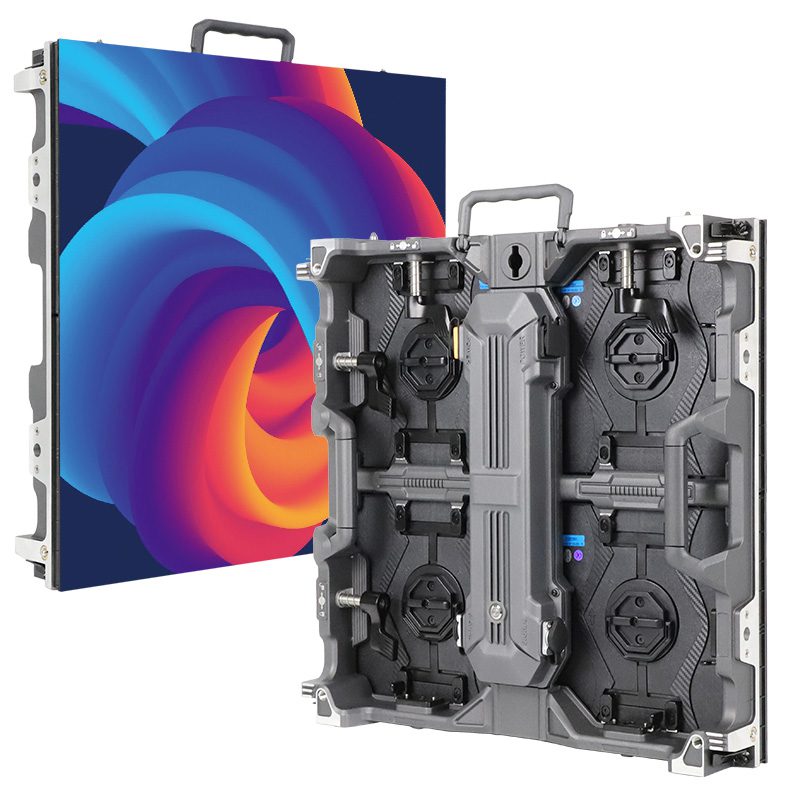
The core unit of a rental LED display screen is the cabinet: a rigid frame, typically 500×500mm or 500×1000mm, that houses LED modules on the front face and power supplies, receiving cards, and connectors inside. Cabinets lock together mechanically via quick-lock systems on two adjacent sides. The locks pull panels into alignment in seconds without tools. That single design choice determines how fast a crew can build a wall and how flat the seams turn out.
A rental LED display screen differs from fixed-installation panels in three ways that actually matter on the road.
The cabinet material comes first. Rental-grade panels use die-cast aluminum to hold dimensional tolerances over hundreds of build cycles. Fixed-install panels can use lighter or cheaper materials since they’re handled once and then left alone.
Service access is the second piece. A rental LED display screen typically supports front and rear maintenance so a technician can swap a failed module without disassembling the wall.
Then there’s protection. Corner guards, stainless steel hardware, and reinforced quick-lock receivers are standard on a rental LED display screen. Why? Because transport damage is the leading cause of failure, not LED degradation.
3.Rental LED Display Screen vs Other Displays
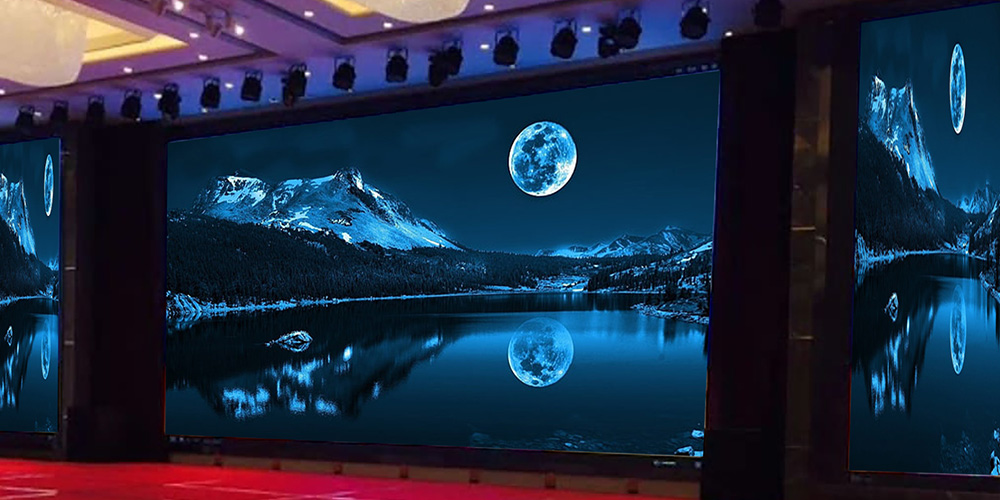
If you are investing in visual technology for live events, the real question isn’t “should I buy an LED screen or nothing?” It’s “should I buy a rental LED display screen, stick with the LCD wall I already own, or keep renting projectors?” Each option has a place, but they are not interchangeable. Let’s walk through how a rental LED display screen compares across the alternatives you’re most likely evaluating.
3.1 Fixed LED Is Built to Stay. Rental LED Is Built to Move.
Fixed LED is built to stay put. Bolted to a building facade, mounted in a lobby, integrated into a broadcast set — it’s not going anywhere. The cabinets can be heavier, service access can be rear-only, and the structure doesn’t need to survive being packed into flight cases and trucked across the country every week. A rental LED display screen is lighter, faster to assemble, and armored against handling damage. The two categories share LED technology but diverge entirely in mechanical engineering. If your display moves between venues, fixed-install panels will fail prematurely. If your display never moves, you’re paying for durability you don’t need.
3.2 Why LCD Bezels Kill the Stage Experience
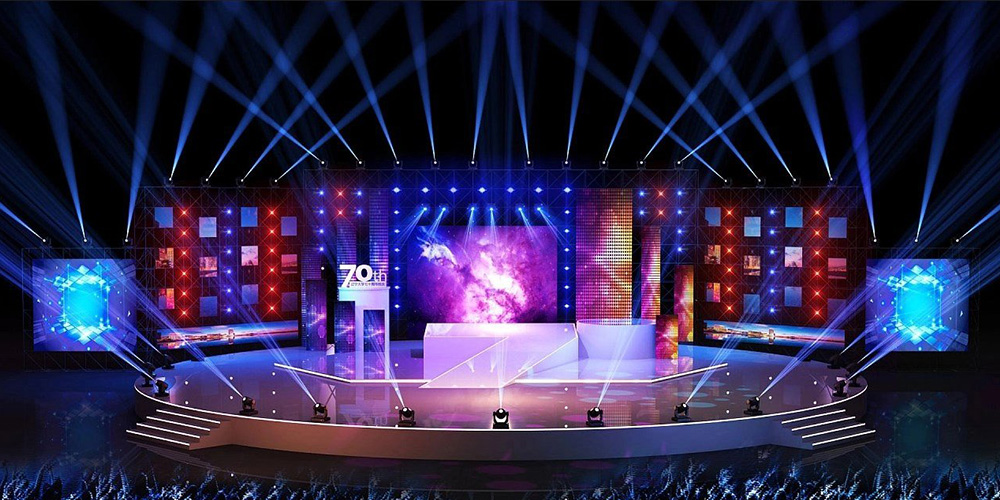
LCD video walls use flat-panel displays tiled together. They’re affordable for small-scale indoor installations like control rooms and retail displays. The problem for live events is the bezel. That thin black border around each LCD panel leaves visible grid lines across the image, even on ultra-narrow-bezel models. Under stage lighting, those lines catch glare. From the back of a ballroom, they’re distracting. A rental LED display screen is completely seamless. No bezels, no grid, no visual interruption. The entire wall reads as one continuous canvas. LED also pushes far higher brightness: 1,000 to 1,500 nits indoors versus 500 to 700 nits for typical LCDs. That matters when stage lights hit the screen.
3.3 Projectors: The Old Default and Where It Falls Short
Projectors have been the default event display for decades. They’re familiar, and on a per-lumen basis, they’re cheap. The limitations are environmental. A projector needs darkness. Ambient light from windows, stage fixtures, or an outdoor sun kills contrast. Bulbs dim over time and cost hundreds of dollars to replace. Rear-projection setups consume meters of depth behind the screen that many venues cannot spare. A rental LED display screen emits its own light. It works under direct sunlight outdoors and under full stage lighting indoors. You skip the bulb replacements, the depth clearance headaches, and the washed-out slides when someone cracks the curtains.
3.4 LED Poster Screens: Great for the Entrance, Not the Main Stage
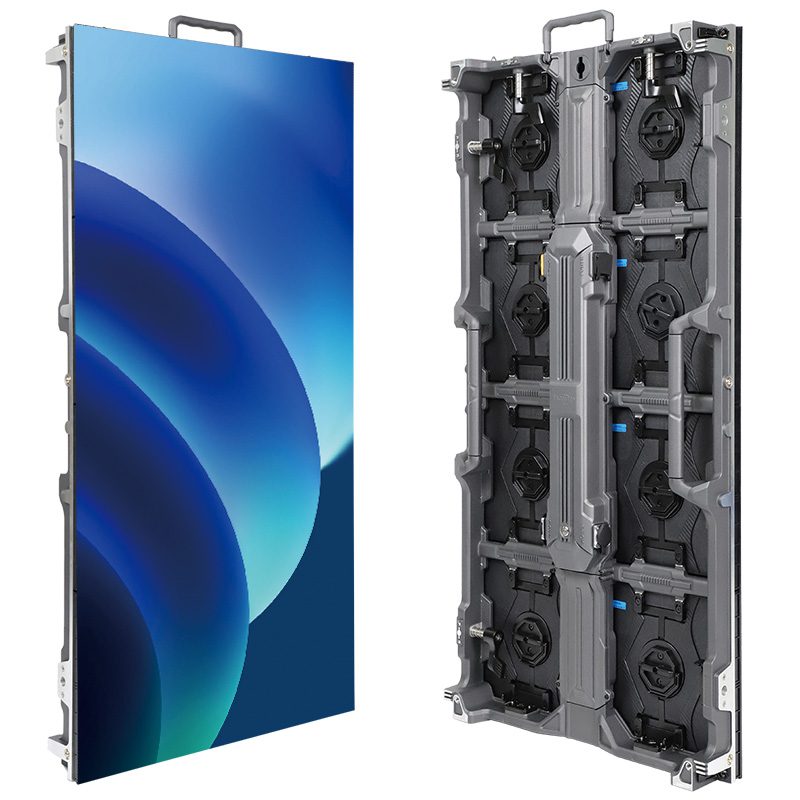
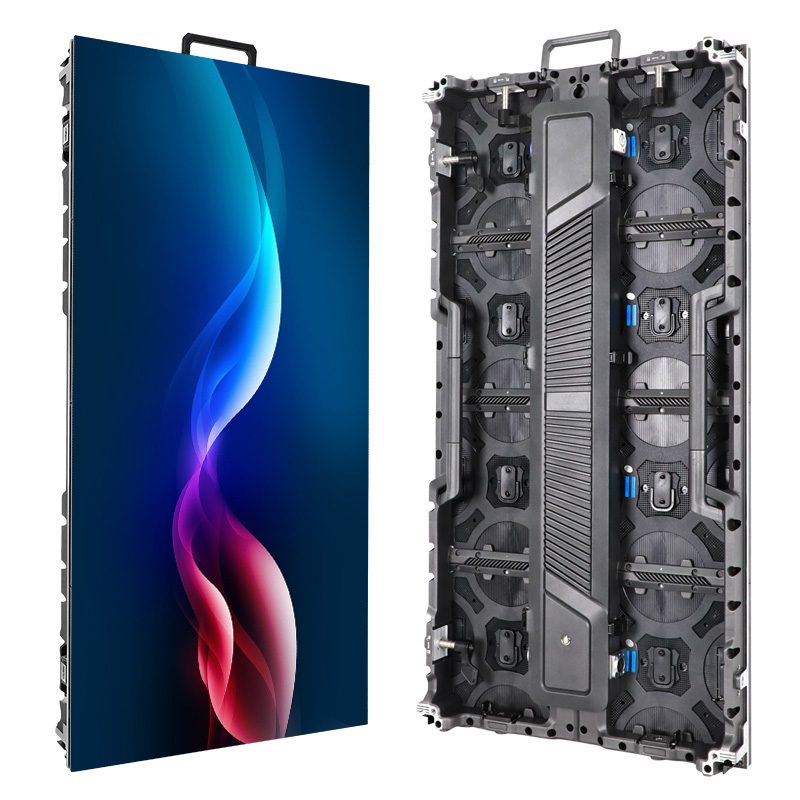
LED poster screens are self-contained, slim-profile displays (typically 640×1920mm on a rolling stand) designed for retail, lobby, and trade show use where a single screen gets moved between locations. They’re quick to deploy: one person wheels it into position and plugs it in. But they’re limited in scale. A poster screen is a solo display. A rental LED display screen system builds walls. Three meters wide, 20 meters wide, curved, stacked, flown — whatever the gig demands. For a trade show booth, a poster screen handles the entrance. For the stage backdrop, only a modular rental LED display screen delivers the scale.
3.5 Transparent LED: A Different Tool for a Different Job
Transparent LED displays maintain see-through visibility. They’re ideal for glass facades, retail windows, and architectural integrations where you want content without blocking the view behind the screen. The trade-off is brightness and pixel density: transparent panels cannot compete with a solid rental LED display screen on raw visual impact. For stage backdrops and event visuals where the screen is the focal point, a solid rental LED display screen is the right tool. Transparent LED has its place (building wraps, atriums, storefronts), but it’s a different job.
3.6 LED Floor Displays: Underfoot vs Eye-Level Visuals
LED floor displays are load-bearing panels designed to be walked on. Interactive dance floors, runway stages, immersive experience centers — that’s their territory. They solve a specific problem: putting visuals underfoot. A rental LED display screen solves the opposite problem: putting visuals at eye level and above, where the audience’s attention naturally goes. The two are complementary. A full stage design might pair a rental LED display screen backdrop with an LED floor for an immersive environment.
3.7 Why a Rental LED Display Screen Wins
Across these comparisons, one pattern holds. A rental LED display screen is not always the cheapest option upfront, but it is the most adaptable. It scales from a 3-meter breakout-room display to a 20-meter concert backdrop using the same inventory. It handles curves and creative layouts. It works indoors and outdoors. It assembles fast. No other display technology — not projection, not LCD, not fixed LED — offers the combination of scale, brightness, portability, and creative flexibility that a rental LED display screen delivers in a single platform.
The four most common event display technologies stack up like this:
| Feature | Rental LED Display | Fixed LED Display | LCD Video Wall | Projector System |
|---|---|---|---|---|
| Seamless Display | Yes — no bezels | Yes — no bezels | No — visible grid lines | Yes — single image |
| Max Brightness | 1,000-5,000+ nits | 1,000-6,000+ nits | 500-700 nits | 5,000-30,000 lumens (screen-dependent) |
| Outdoor Capable | Yes (IP65 front) | Yes (weather-rated) | No | No (ambient light kills contrast) |
| Setup Speed | 30-60 min (quick-lock) | Days to weeks (permanent) | Hours (mounting + calibration) | 15-30 min (projector + screen) |
| Creative Layouts | Curves, steps, mixed sizes | Limited (fixed structure) | Flat grid only | Flat screen only |
| Portability | Built for daily transport | Fixed in place | Fragile — occasional moves only | Portable but fragile |
| Relative Cost | Mid to high | Mid to high | Low to mid | Low (hardware) / high (dark room required) |
For events where visuals are the focal point (concerts, keynotes, product launches), a rental LED display screen is the only option that delivers seamless scale, outdoor brightness, and creative flexibility. LCD and projection still work for budget-constrained indoor scenarios where bezels and ambient light are manageable.
4.Key Specs To Consider Before Buying
Beyond the comparison against other technologies, there are specifications within the rental LED display screen category that determine whether a particular panel fits your event profile.
4.1 Pixel Pitch and Viewing Distance
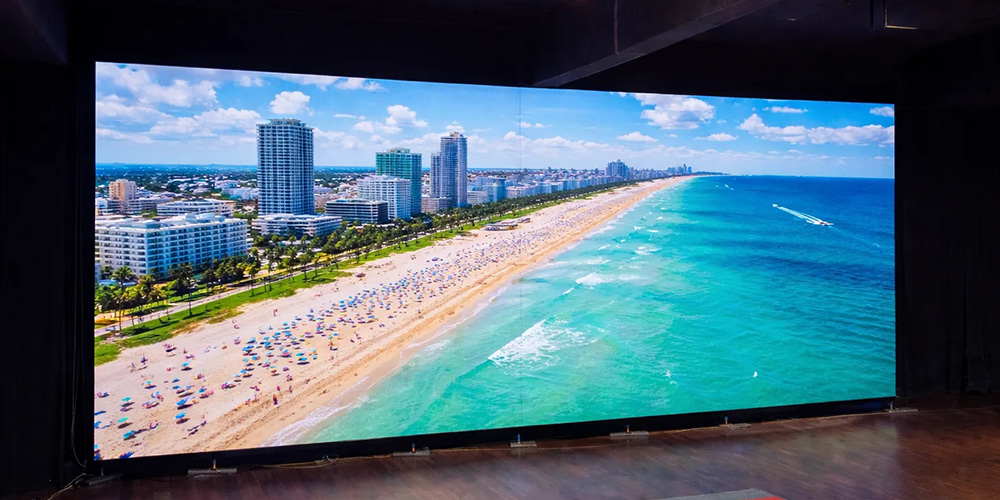
Pixel pitch — the distance between LED pixel centers in millimeters — controls minimum viewing distance. For every 1mm of pitch, expect roughly 1 meter of comfortable viewing distance. A 2.6mm panel looks smooth at 2.5 to 3 meters, ideal for trade show booths and smaller ballrooms. A 3.91mm panel needs about 4 meters, the standard for mid-size general sessions. Concerts and festivals where the nearest audience member is 15-plus meters away can use 5.9mm or coarser pitches at dramatically lower cost per square meter.
The table below maps common rental LED pixel pitches to their ideal event applications:
| Pixel Pitch | Minimum Viewing Distance | Best Event Type | Relative Cost per sqm |
|---|---|---|---|
| P1.9mm | 1.5-2m | VIP lounges, broadcast studios, close-range retail | Highest |
| P2.6mm | 2.5-3m | Trade show booths, small ballrooms, corporate lobbies | High |
| P2.97mm | 3-4m | Mid-size conference rooms, wedding stages | Mid-High |
| P3.91mm | 4-5m | General session keynotes, mid-size concert stages | Mid (Industry Standard) |
| P4.81mm | 5-6m | Large concert stages, festival main stages | Mid-Low |
| P5.9mm+ | 6m+ | Stadium events, outdoor festivals | Lowest |
For most rental LED display screen operations, P3.91mm is the workhorse pitch — it covers the broadest range of paying events. Add P2.6mm inventory for corporate and trade show work where clients stand closer. Avoid over-buying P1.9mm unless broadcast or luxury retail is a significant part of your revenue.
4.2 Brightness: Indoor vs Outdoor
Brightness is environment-dependent. Indoor events need 1,000 to 1,500 nits. That’s enough to stay visible under stage lighting without hurting audience eyes. Outdoor events in direct sunlight demand 4,500 nits minimum. I’ve watched a rental crew set up an indoor-rated rental LED display screen at an afternoon outdoor event, and by 2 PM the client’s logo was barely visible. Panels with adjustable brightness across a wide range let you use the same rental LED display screen inventory for both environments. No guesswork, no risk.
4.3 Refresh Rate and the Camera Test
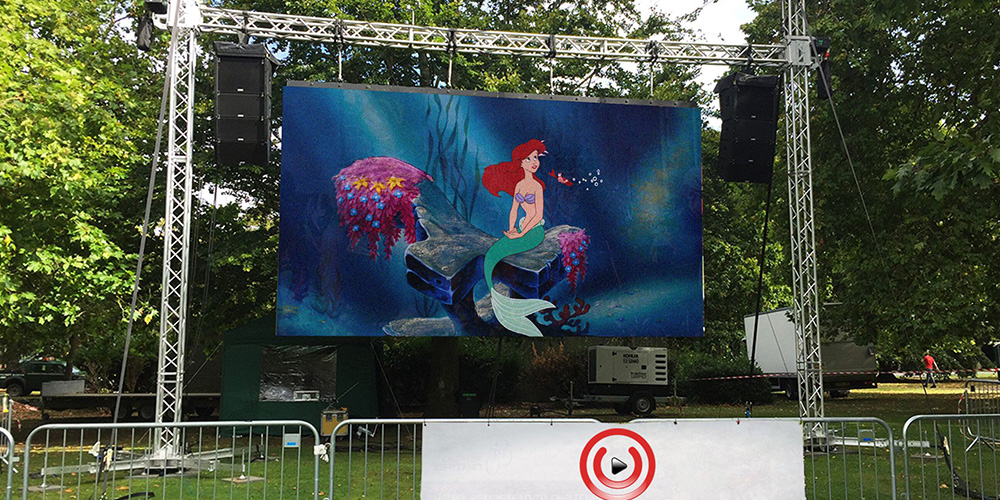
Refresh rate determines whether cameras capture your rental LED display screen cleanly. Below 3,840Hz, phone cameras and broadcast cameras pick up dark horizontal scan lines across the LED wall. That’s an embarrassing artifact when half the audience is filming. 3,840Hz is the practical minimum for any rental LED display screen at an event that will be photographed or streamed.
4.4 Cabinet Size and Weight
Cabinet size affects build speed and creative flexibility. 500×1000mm panels cover area faster; 500×500mm panels offer finer control for curved sections and custom layouts. Some platforms support mixing both sizes in the same wall.
Weight matters for crew fatigue, rigging requirements, and truck capacity. A 500×500mm rental LED display screen cabinet should weigh no more than 8 kilograms, with thickness around 85mm.
4.5 Maintenance Design: Front Service vs Rear Service
Maintenance design (front service, rear service, or both) determines how fast a technician can fix a rental LED display screen mid-event. Magnetic module attachment with front-service access enables a one-minute module swap without disassembling the wall.
5.Rental LED Display System Components
A rental LED display screen is not a standalone device. It’s a system. The cabinets and LED modules form the visible surface, but they depend on supporting components that should be factored into any purchase or rental evaluation.
5.1 Power Supply
The power supply in a rental LED display screen converts AC mains to the DC voltage the LEDs require. Quality power supplies from established manufacturers like Meanwell run cooler, last longer, and fail less often than generic alternatives. A detachable power box design (where the supply unit can be swapped without opening the main cabinet) turns a power failure from a disassembly project into a two-minute fix.
5.2 Receiving Cards
Receiving cards — typically from NovaStar, Colorlight, or Linsn — sit inside each rental LED display screen cabinet and translate the video signal into per-pixel instructions. They are the bridge between the processor and the display surface.
5.3 Video Processor
The video processor scales and routes content to the wall. Processor selection depends on your maximum panel count, desired input types (HDMI, SDI, NDI), and whether you need features like picture-in-picture or multi-window layouts. A processor sized for 10 panels will not drive 40.
5.4 Flight Cases and Rigging Hardware
Flight cases protect rental LED display screen panels during transport. Custom-cut foam cradles each cabinet. Budget for roughly one case per four to six panels. Rigging hardware (bars, clamps, safety cables for flown walls, or stacking frames for ground-stacked configurations) rounds out the physical infrastructure.
6.How to Choose the Right Rental LED Display Screen
Selecting the right rental LED display screen starts with your event profile, not a spec sheet. Three factors narrow the field.
6.1 Match to Event Type
Concerts and festivals prioritize brightness, coarse pitch, and fast assembly. Corporate keynotes need finer pitch for text legibility and high refresh for camera capture. Trade shows demand close-viewing pitch and compact footprint. Exhibitions and product launches benefit from curved and creative installation capability.
6.2 Match to Viewing Distance
If your closest audience member is 2 meters from the screen, budget for 2.6mm or finer. At 5 meters, 3.91mm is sufficient and significantly cheaper. At 15-plus meters, coarser pitches work and the savings are substantial.
6.3 Match to Environment
Indoor-only rental LED display screen operations can optimize for lower brightness and don’t need IP65 weather sealing. Outdoor and mixed-use operations should prioritize panels with indoor/outdoor variants sharing the same cabinet platform. One locking system to learn, one set of accessories to maintain.
6.4 Common Purchasing Mistakes
Over-buying pixel pitch — paying for resolution your audience cannot perceive. Under-budgeting for flight cases and spare modules. Choosing a rental LED display screen based on LED specs while ignoring cabinet build quality and quick-lock design. All three are avoidable with a checklist approach.
7. Rental LED Display Cost Factors in 2026
Pixel pitch is the primary cost driver for a rental LED display screen. A 1.9mm panel can cost substantially more per square meter than a 3.91mm panel from the same series, because finer pitch requires more LEDs per unit area and tighter manufacturing tolerances. For most rental LED display screen operations, 2.6mm to 3.91mm is the value sweet spot.
Beyond the panels, complete your budget with flight cases (roughly one per 4-6 panels), spare LED modules (5-10% of your total module count), a video processor sized to your maximum wall configuration, cabling, and rigging hardware. The panels themselves typically account for about 60 percent of the total first-purchase investment.
Here is a realistic breakdown for a starter inventory of 40 rental LED panels at 500×500mm:
| Cost Component | Estimated Share | What to Expect |
|---|---|---|
| LED Cabinets & Modules (40 pcs) | ~60% | Die-cast aluminum with stainless hardware recommended |
| Flight Cases (7-10 cases) | ~12% | Custom-cut foam; one case per 4-6 panels |
| Spare LED Modules (5-10%) | ~5% | 16-32 spare modules; rotate into use periodically |
| Video Processor | ~10% | Sized to full wall; NovaStar H-series or equivalent |
| Cabling (Power + Data) | ~5% | Primary cables plus backups for each run |
| Rigging Hardware | ~8% | Bars, clamps, safety cables (flown) or stacking frames (ground) |
First-time buyers consistently underestimate the bottom three rows. A 40-panel order where the panels are quoted at $X per unit will realistically cost roughly 1.6 to 1.7 times the panel subtotal by the time everything is in flight cases and ready for the first event. Budget with that ratio, not the per-panel price.
For rental businesses, the ROI timeline on a rental LED display screen investment depends on event volume. Companies renting LED walls from third-party suppliers more than 10 to 12 times per year generally reach break-even on ownership within 18 to 30 months. The added margin from offering in-house rental LED display screen services, plus the elimination of availability conflicts during peak season, accelerates the payback.
8. Advantages of Rental LED Display Screens
The operational advantages that make a rental LED display screen the default choice for professional events come down to a few factors that compound each other.
8.1 Speed and Efficiency
A well-designed quick-lock system on a rental LED display screen lets a two-person crew build a 5-by-3-meter wall in roughly an hour. Tool-based systems take twice that. Tool-free connections keep the build rhythm uninterrupted, and magnetic module attachment means a dead pixel gets fixed in under a minute without disassembling the wall.
8.2 Creative Flexibility
The same inventory builds flat walls, curved walls, stepped layouts, and portrait or landscape configurations. Mixed cabinet sizes within a compatible platform let you optimize for speed on large flat sections and precision on creative sections. This flexibility is what lets a rental house quote a curved stage wrap on Monday and a corporate keynote wall on Wednesday using the same panels.
8.3 Reusability and ROI
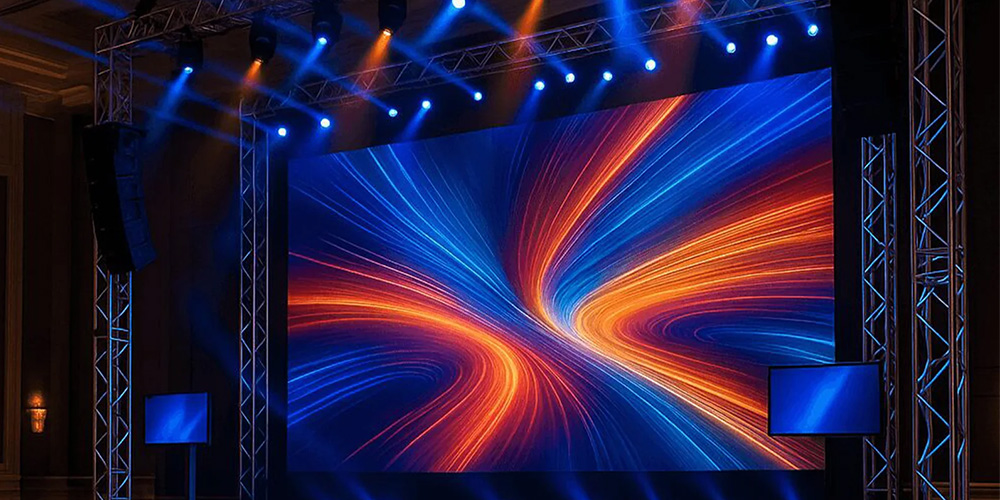
A rental LED display screen is a capital asset that earns across hundreds of events. Unlike a custom-built set piece that serves one production, LED panels reconfigure for every show on the calendar. Companies renting LED walls from third-party suppliers more than 10 to 12 times per year reach break-even on ownership within 18 to 30 months. After that, every event is margin.
9. Future of Rental LED Display Screens
Two technologies are most likely to reshape the rental LED display screen industry over the next three years: COB and MIP.
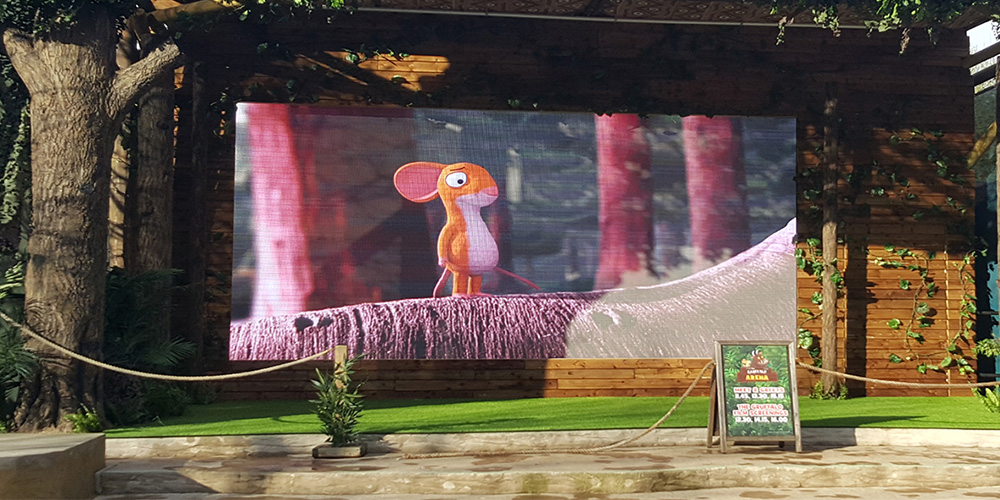
9.1 COB and MIP Technology
COB (Chip on Board) and MIP (Micro LED in Package) technologies are making their way from fine-pitch fixed-install applications into rental LED display screen panels, promising better contrast and durability at closer viewing distances. Refresh rates are climbing past 7,680Hz for broadcast-critical applications where slow-motion replay cameras need to see zero artifacts on the rental LED display screen.
9.2 Lightweight Cabinet Development
Lightweight carbon fiber cabinet prototypes are in development, targeting weight reductions that would let crews handle larger rental LED display screen panels without additional labor. AI-powered content mapping tools are beginning to automate the alignment between stage design software and physical LED wall configuration, reducing the gap between the render and the build.
9.3 XR and Virtual Production
XR (extended reality) and virtual production, where LED walls replace green screens as in-camera backgrounds, represent the fastest-growing premium segment for the rental LED display screen market. These applications demand higher specifications across the board: tighter pixel pitch, better color accuracy, and near-perfect uniformity. Panels that meet virtual production standards today define what mid-range rental panels will offer in two to three years.
10. FAQ: Common Questions About Rental LED Display Screens
10.1 What Is the Lifespan of Rental LED Displays?
A well-built rental LED display screen used at 100-plus events per year should deliver three to five years of reliable service before LED degradation becomes noticeable. Individual modules fail sooner. That’s what the 5-10 percent spare module inventory covers. The cabinet frame and quick-lock mechanism, if properly engineered in die-cast aluminum with stainless steel hardware, should outlast the LEDs.
10.2 Which Pixel Pitch for My Event?
Match pitch to your closest audience distance. 2.6mm for 2.5 to 3 meters (trade show booths, small ballrooms). 3.91mm for 4-plus meters (general session keynotes, mid-size stages). 5.9mm or coarser for 15-plus meters (concert and festival stages).
10.3 Can Rental LED Screens Be Used Outdoors?
Yes, a rental LED display screen can go outdoors if it’s rated IP65 on the front face and specified for outdoor brightness (4,500 nits minimum). Indoor-only panels lack the weather sealing and brightness for outdoor use. Panels with indoor/outdoor variants sharing the same cabinet platform offer the most operational flexibility.
10.4 How Fast Can Rental LED Screens Be Installed?
A two-person crew with a quality quick-lock system assembles a 3-by-2-meter wall in 30 to 35 minutes and a 5-by-3-meter wall in roughly an hour. Tool-based assembly on older designs takes roughly twice as long.
10.5 What’s in a Rental LED Display Screen Package?
Cabinets with LED modules, power supplies, receiving cards, a video processor, power and data cabling, flight cases, and rigging hardware. Spare modules (typically 2 percent from the manufacturer, with additional spares purchased separately) and calibration tools complete the package.
10.6 Is Rental LED Better Than Projector or LCD Video Wall?
For live events where seamless large-format visuals, high brightness, and fast setup matter, a rental LED display screen outperforms both. Projectors struggle with ambient light and consume backstage depth. LCD walls have visible bezels and lower brightness. Each technology has its place. But for the main visual surface at a professional event, a rental LED display screen is the standard for a reason.
11. Conclusion: Making the Right Investment Decision
The right rental LED display screen is the one that matches your actual event requirements—not simply the one with the highest specifications. Pixel pitch should be selected based on viewing distance, while cabinet quality, maintenance accessibility, and installation efficiency will have a greater impact on long-term performance and operating costs.
If you’re evaluating suppliers, it’s worth looking for manufacturers with proven rental experience, reliable components, and products designed specifically for frequent assembly and transport.
EagerLED, with more than 16 years of experience in the LED display industry and exports to over 90 countries, offers a range of rental LED display solutions for concerts, exhibitions, conferences, and live events. Its C-Series and H-Series rental LED screens feature lightweight die-cast aluminum cabinets, quick-lock systems, front maintenance design, and high refresh rates to meet the demands of professional rental applications.
In addition to LED displays, EagerLED provides professional LED control solutions through its LED Controller Card Store, where customers can source NovaStar video processors, controllers, receiving cards, and other essential LED display accessories.
By combining the right specifications with a dependable rental LED platform, you can maximize reliability, reduce maintenance costs, and achieve a better return on investment over the long term.
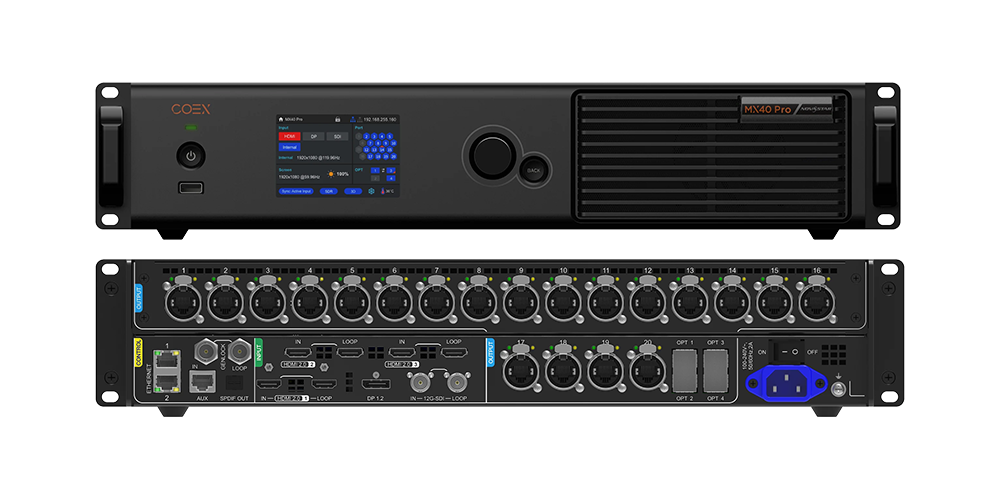 A Closer Look at the NovaStar MX40 Pro All-in-One LED Display Controller
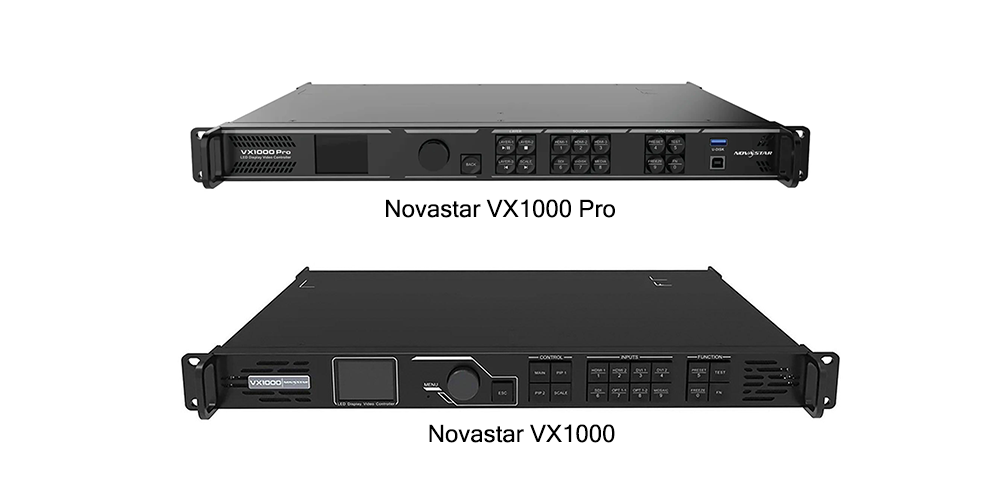 Novastar VX1000 Pro VS VX1000: Everything You Need to Know Before Buying