
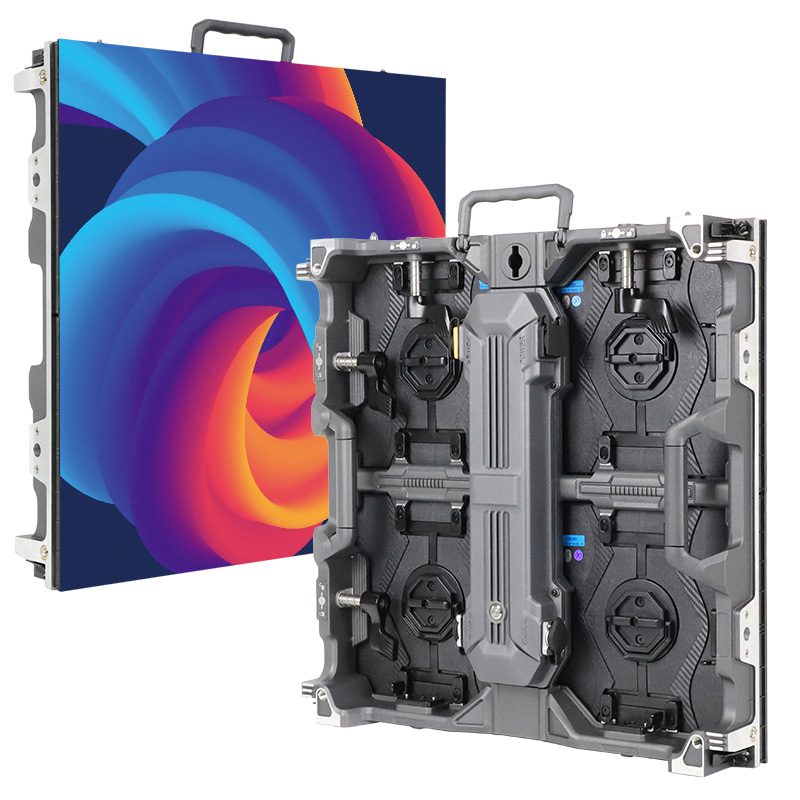
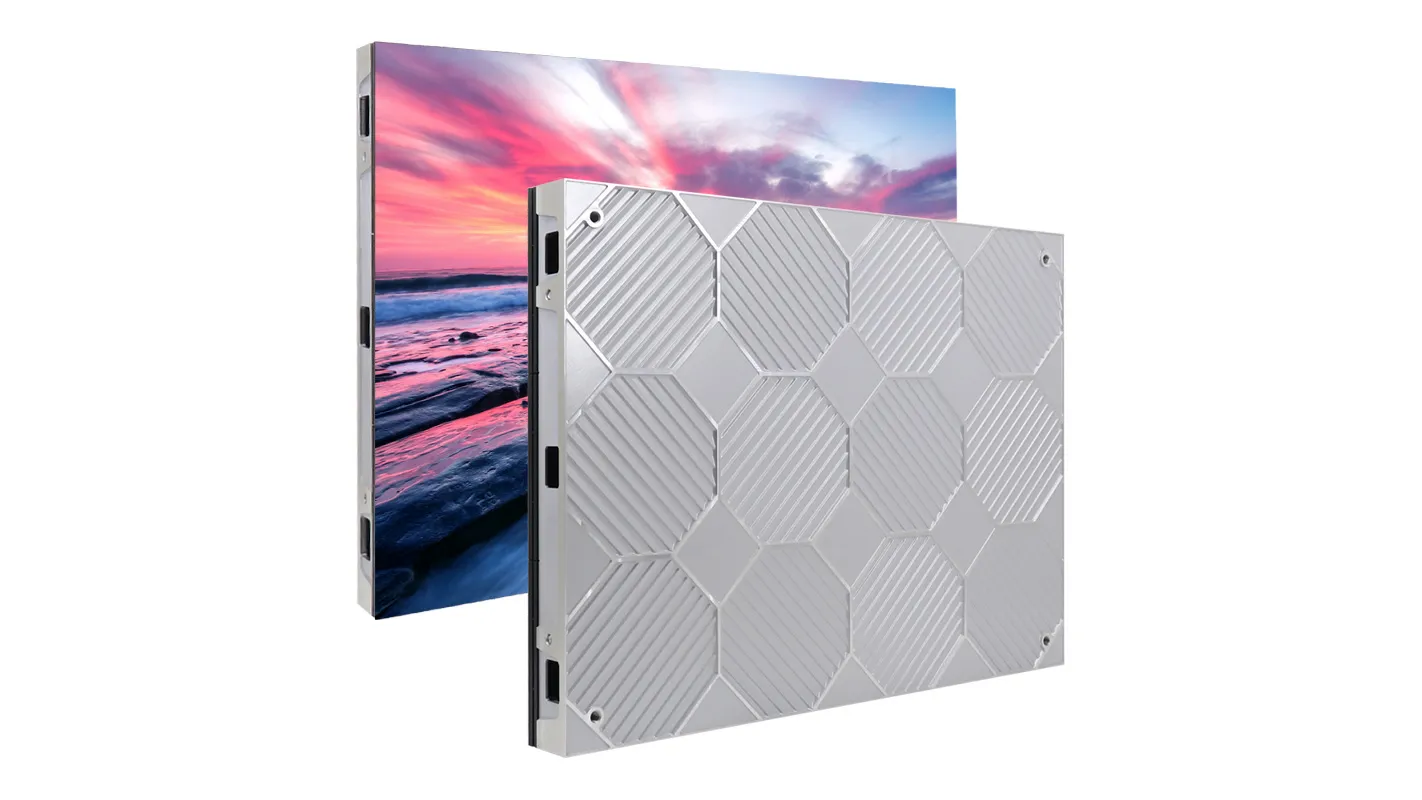
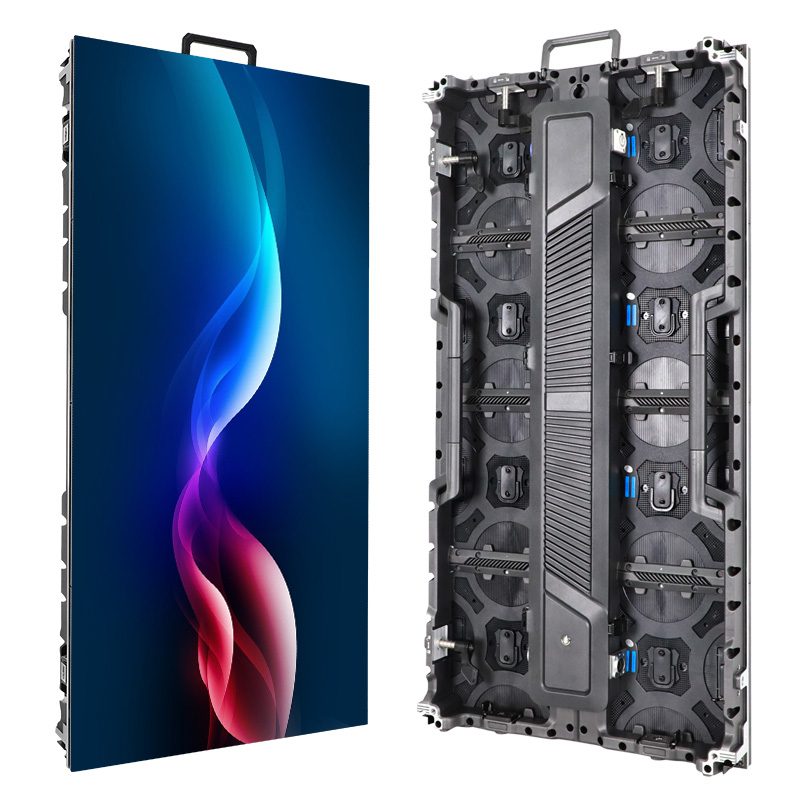
Compare LED screen suppliers in Japan by what you need to buy: a complete installed display, a rental production service, cabinets for your own rental fleet, or LED components. These are different purchases. Confirm the product manufacturer, contracting supplier and party responsible for installation and after-sales support before comparing quotations.
This guide helps commercial buyers shortlist 15 companies by application and supply-chain role. A market overview does not establish local inventory, current product availability or a service commitment. Request written confirmation for your exact screen configuration and project location.
- Start with the application: permanent signage, rental, XR, broadcast, control room, or component sourcing.
- Compare a complete system, including controller, structure, power, calibration, installation, training, spares, and warranty.
- For outdoor projects, request an ingress-protection rating, brightness target, structural plan, and local maintenance response time.
- For camera-facing screens, prioritize refresh rate, scan method, grayscale performance, color calibration, and on-camera testing.
- The most suitable LED screen suppliers in Japan are the companies that can document performance for your exact venue and operating conditions.
On this page
Scope of this shortlist: company-published offerings are a starting point for buyer checks, not an independently audited ranking or endorsement. Component suppliers and display integrators are identified separately because an LED package is not a finished video wall. Verify current models, delivery scope and local support directly.
Table 1. Quick comparison of LED screen suppliers in Japan
| Supplier | Base / presence | Best fit | Buyer checkpoint |
|---|---|---|---|
| Sony Corporation | Tokyo / nationwide | Crystal LED, premium studios, corporate visualization | Confirm system design, processor, calibration, and service package. |
| Leyard Japan | Tokyo | Fine-pitch LED, MicroLED, control rooms | Ask for pixel-pitch options and local reference projects. |
| Sharp Japan | Tokyo / nationwide | Public spaces, transport, commercial signage | Confirm environmental design and maintenance access. |
| Nichia Corporation | Tokushima | LED packages, chips, light-source engineering | Determine whether you need components or a turnkey screen. |
| Hibino Corporation | Tokyo | Pro AV, arenas, live events, immersive systems | Request an integrated signal-flow and operations plan. |
| Innolux Japan | Kawasaki | Mini-LED, display modules, advanced panel technology | Clarify product availability and integrator responsibility. |
| Telmic Corporation | Tokyo | Concerts, television, exhibitions, stage engineering | Check crew, rigging, rehearsal, and show-day coverage. |
| Network Japan | Osaka | Indoor, transparent, and commercial signage | Compare installation, CMS, and maintenance in one quote. |
| LED TOKYO | Tokyo | XR, virtual production, events, rental | Require a camera test with the intended frame rate. |
| digiLED Japan | Tokyo | Custom premium installations and fine pitch | Ask for comparable Japanese case studies. |
| LED Center | Tokyo / Saitama support | Rental, studios, repair, calibration | Confirm inventory, spare modules, and response time. |
| Lightlink Japan | Tokyo | Rental cabinets, events, creative stages | Check cabinet compatibility and local spare stock. |
| AVIX Inc. | Yokohama | Digital signage networks, media, content delivery | Separate hardware, software, media, and support costs. |
| LEDUS Vision | Sapporo | Retail, clinics, windows, creative signage | Ask who manufactures the modules and holds the warranty. |
| PDC Digital Signage | Tokyo | Custom indoor/outdoor signage and CMS integration | Define content workflow and long-term service ownership. |
The table is a starting point, not a substitute for technical due diligence. Even experienced LED screen suppliers in Japan may use different cabinet platforms, control systems, service partners, and warranty terms from project to project.
Table 2. Best-fit matrix by project type
| Project type | Suppliers to shortlist | Why | Critical proof |
|---|---|---|---|
| Virtual production / XR | Sony, LED TOKYO, Hibino | Camera-facing workflows and visual engineering | On-camera test, genlock, refresh rate, color report |
| Control room / boardroom | Leyard Japan, Sony, Sharp | Fine pitch and high-resolution visualization | Viewing-distance demo, redundancy plan, service SLA |
| Concert / event rental | Hibino, Telmic, LED Center, Lightlink | Rental inventory and show operations | Rigging plan, backup processor, spare cabinets, crew scope |
| Retail / indoor signage | Network Japan, AVIX, LEDUS Vision, PDC | Installation plus content-management options | CMS demo, heat/noise plan, maintenance access |
| Outdoor advertising | Sharp, AVIX, LEDUS Vision, PDC | Installed signage and public-facing networks | Brightness, IP rating, structure, permits, power estimate |
| LED components | Nichia | LED packages and light-source expertise | Part number, binning, traceability, lifetime data |
| Mini-LED development | Innolux Japan | Advanced display and AM Mini-LED technology | Sample availability, interface, integrator, production status |
Use this matrix to narrow the field to three to five LED screen suppliers in Japan, then issue the same written specification to every shortlisted company so the quotations are comparable.
1. Sony Corporation: Premium Crystal LED Systems
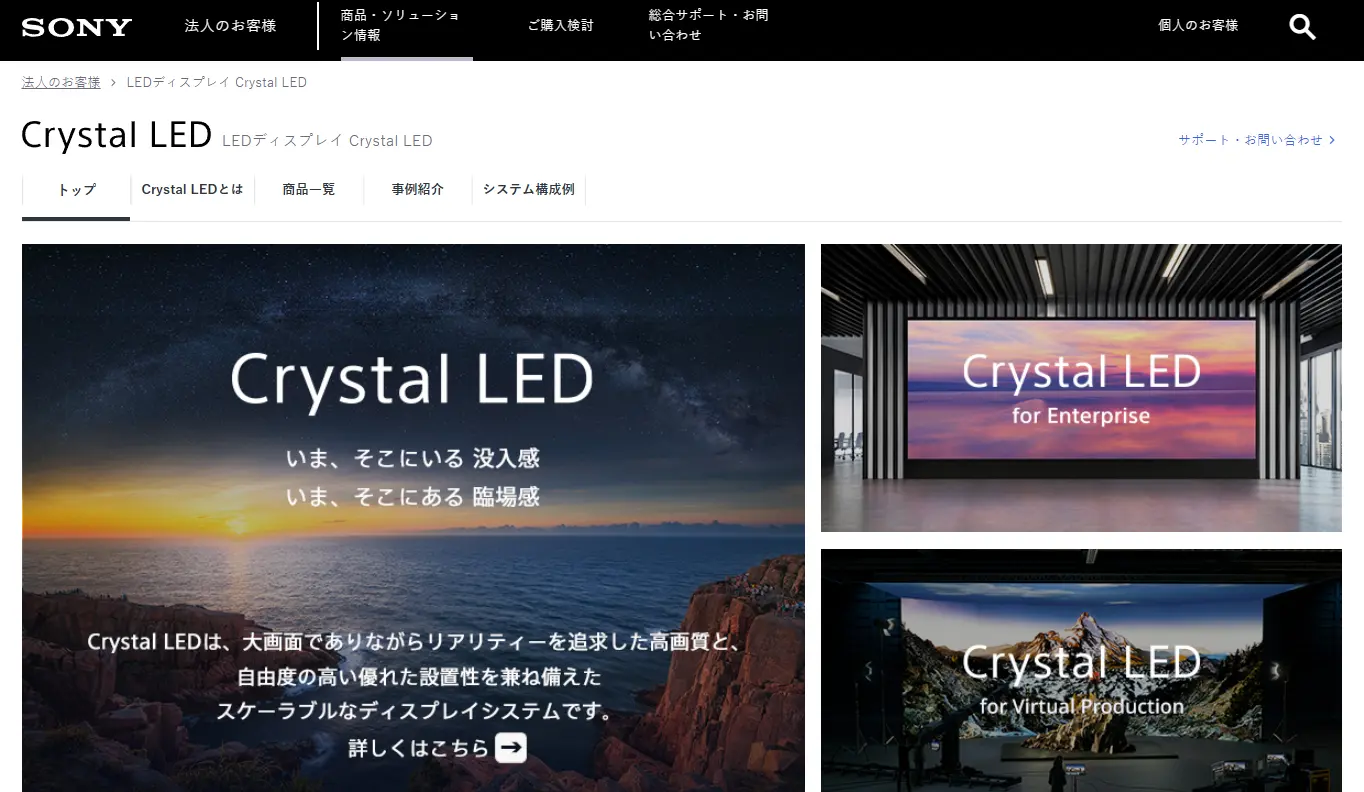
Among LED screen suppliers in Japan, Sony stands out for its Crystal LED platform and its connection to professional cinema, broadcast, and imaging workflows. It is a logical shortlist choice when image quality, color consistency, black level, and an integrated premium system matter more than achieving the lowest hardware price.
- Main products: Crystal LED video walls, studio displays, and large-format visualization systems.
- Buyer check: request the exact series, pixel pitch, processor, calibration process, power load, service coverage, and a demonstration using your own content.
Buyers comparing Sony with conventional virtual production LED walls should compare the complete workflow, not only the panel. Official source: Sony Crystal LED. Phone: +81-3-6748-2111.
2. Leyard Japan: Fine-Pitch and MicroLED Video Walls
Leyard Japan is one of the LED screen suppliers in Japan most closely associated with fine-pitch direct-view LED and large visualization systems. Its portfolio is relevant when buyers need a seamless canvas, close viewing distance, detailed content, or a display that must operate for long daily hours.
- Main products: fine-pitch LED video walls, MicroLED systems, control-room displays, and creative installations.
- Buyer check: compare pixel pitch, cabinet service direction, redundancy, front access, controller architecture, and measured uniformity after installation.
Official source: Leyard Japan. Phone: +81-3-3527-8660.
Sharp is a familiar Japanese technology brand and a practical candidate in this shortlist for buyers who value local project coordination and experience with commercial display environments. Its business display operation covers more than stand-alone panels, making it relevant to integrated visual communication projects.
- Main products: LED displays, large-format commercial displays, signage systems, and system integration.
- Buyer check: ask which display technology is proposed, who supplies the LED modules, how brightness is controlled, and how maintenance can be performed without disrupting the venue.
For weather-exposed installations, use the same requirements described in our outdoor LED advertising screen guide. Official source: Sharp business displays. Phone: +81-3-5446-8311.
4. Nichia Corporation: LED Components and Light Sources
Nichia is different from most LED screen suppliers in Japan: it is primarily an LED technology and component company, not a conventional turnkey video-wall installer. It belongs on this list because LED packages, binning, efficiency, color consistency, and traceability directly influence the performance and lifetime of an LED display.
- Main products: LED packages, SMD LEDs, phosphors, laser diodes, ultraviolet LEDs, and specialty light sources.
- Buyer check: specify part number, wavelength or color coordinates, binning tolerance, drive conditions, thermal design, traceability, and documented lifetime.
Our SMD vs COB LED module comparison explains how packaging affects a finished display. Official source: Nichia Corporation. Phone: +81-88-633-1113.
5. Hibino Corporation: Pro AV and Live-Event Integration
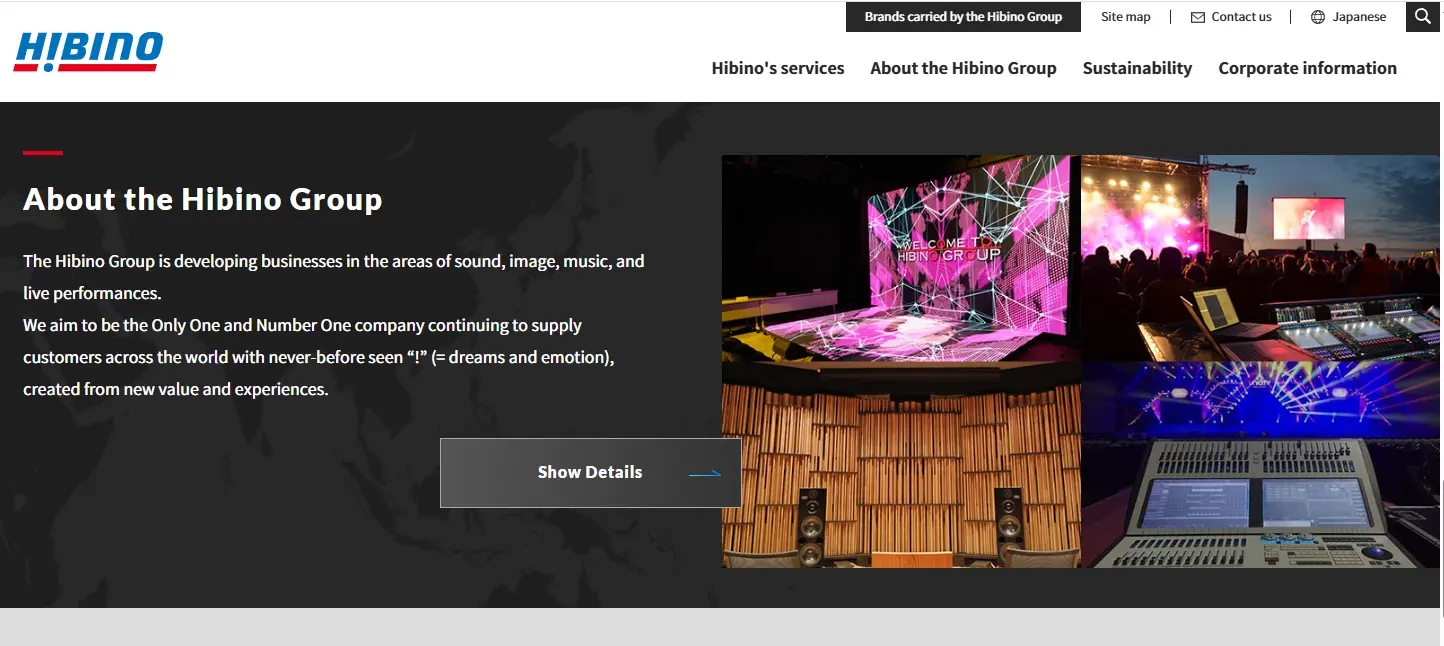
Hibino is one of the most experienced production-oriented LED screen suppliers in Japan. Its value is the ability to combine an LED canvas with video processing, signal distribution, show operation, audio, and venue engineering rather than treating the screen as an isolated product.
- Main products and services: LED displays, video systems, event visuals, system design, and operation.
- Buyer check: request a signal-flow diagram, redundancy plan, content-resolution map, crew responsibility matrix, commissioning procedure, and post-event or post-installation support.
Processor choice can materially affect HDR, color, and scaling; see our LED video controller review. Official source: Hibino Corporation. Phone: +81-3-3740-4391.
6. Innolux Japan: Mini-LED and Display Technology
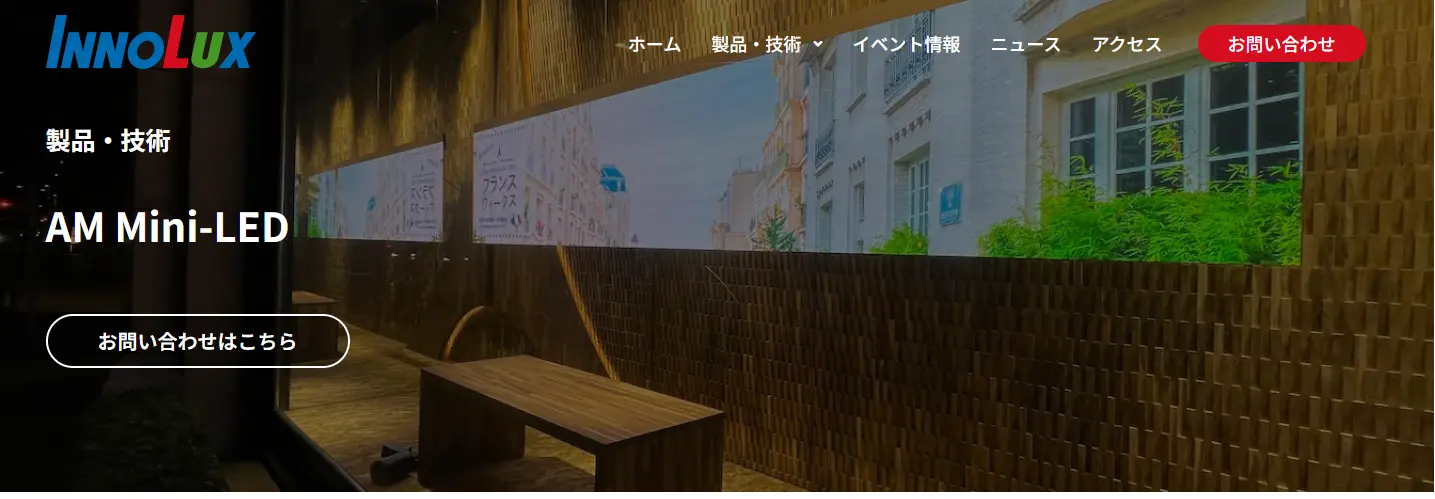
Innolux Japan is another specialist entry in this comparison of LED screen suppliers in Japan. Its relevance comes from Mini-LED, MicroLED, TFT active-matrix control, and display-module development rather than from a broad catalogue of turnkey outdoor billboards or event-rental cabinets.
- Main products: Mini-LED displays, advanced display modules, commercial panels, and next-generation display technologies.
- Buyer check: confirm whether the product is a sample, development platform, or volume-production item; define interface, mechanical integration, environmental testing, and the party responsible for final certification.
Official source: Innolux Japan. Phone: +81-44-542-7761.
7. Telmic Corporation: Event and Stage Visualization
Telmic is positioned in this shortlist as a technical-production partner. It is most relevant when the display must work with scenery, automation, cameras, lighting, and a tightly timed show rather than operate as a static digital sign.
- Main products and services: LED vision systems, stage visuals, television production displays, event engineering, and custom mechanisms.
- Buyer check: define load limits, rigging points, safe access, rehearsal schedule, content handoff, backup signal path, spare inventory, and who has authority to stop the system if conditions become unsafe.
Official source: Telmic Corporation. Phone: +81-3-5812-1611.
8. Network Japan: Commercial LED and Digital Signage
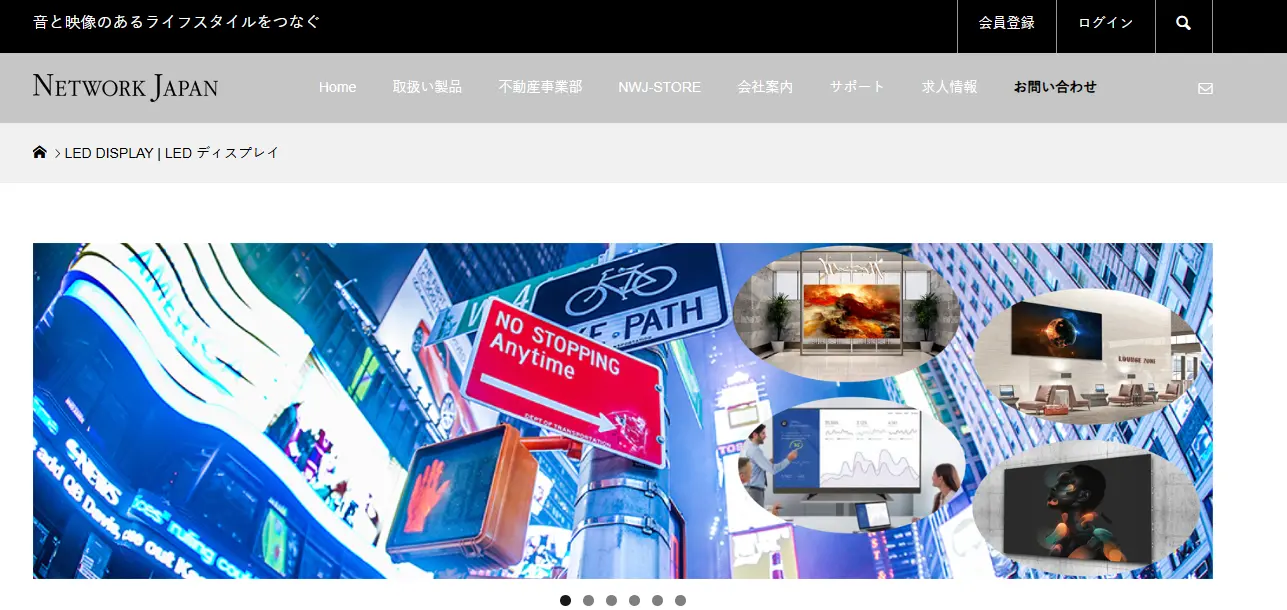
Network Japan is an Osaka-based option in this shortlist, focused on bringing display products into commercial environments and supporting installation, operation, and maintenance. It can suit buyers who need a practical signage solution rather than a highly specialized broadcast or stadium system.
- Main products: indoor LED displays, transparent LED, TV-style LED displays, and digital signage.
- Buyer check: identify the module and controller brands, service access, expected brightness, heat and noise conditions, CMS responsibility, warranty holder, and stock of replacement parts.
Official source: Network Japan LED display. Phone: +81-6-6105-0707.
9. LED TOKYO: XR and Virtual Production LED Walls
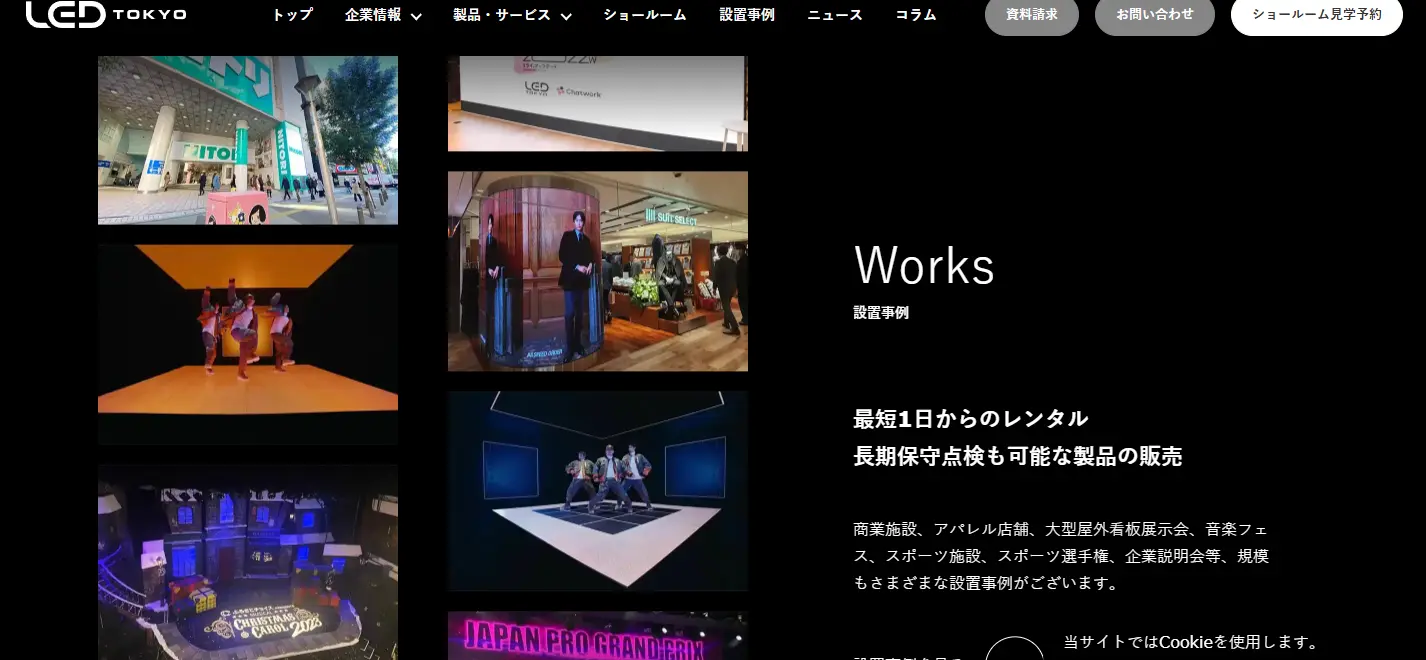
LED TOKYO is one of the application-focused LED screen suppliers in Japan serving immersive production and event work. Buyers should consider it when the brief combines high-resolution LED walls, camera synchronization, content playback, and local setup or operation.
- Main products and services: indoor and outdoor LED, XR walls, virtual production systems, rental displays, and digital signage.
- Buyer check: arrange an on-camera test using the actual camera, shutter angle, frame rate, lens, and processor settings; check moire, scan lines, color shift, and reflections before approving the system.
Official source: LED TOKYO. Phone: +81-3-6427-9518.
10. digiLED Japan: Custom Premium LED Installations
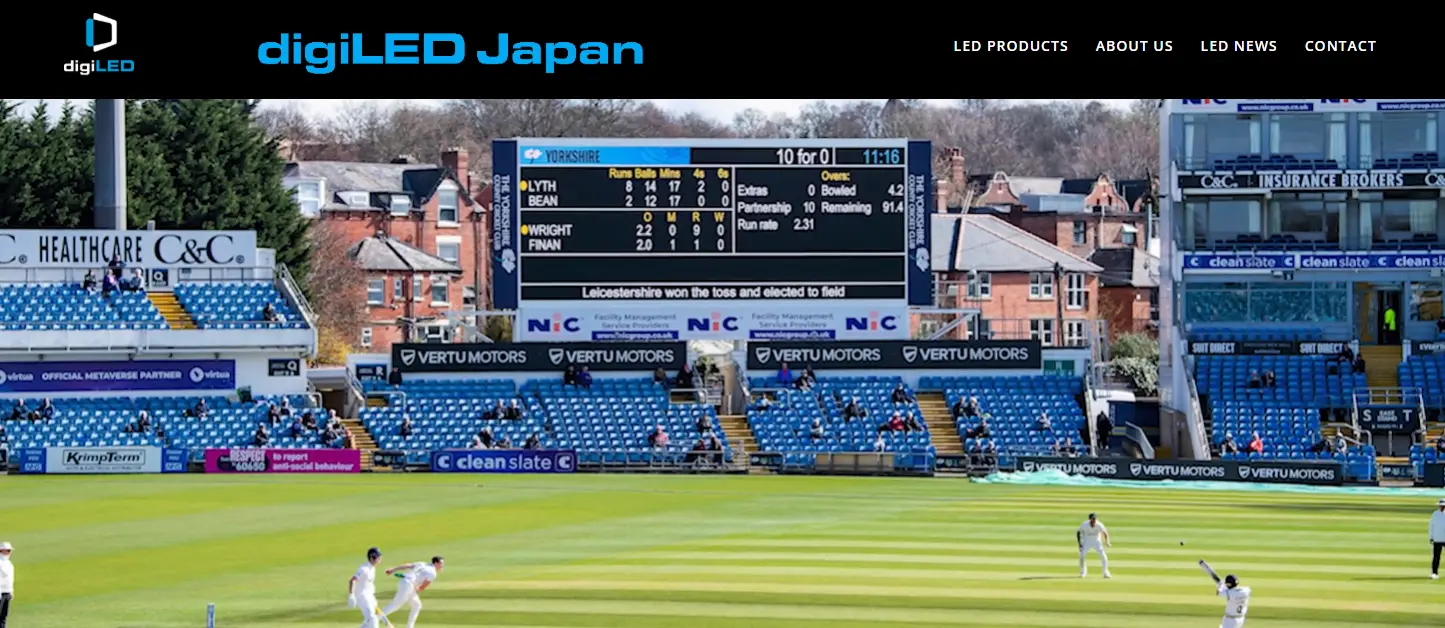
digiLED Japan represents an international LED specialist in this shortlist. Its Tokyo presence is useful for projects that need custom cabinet geometry, fine pitch, creative layouts, or coordination between a global product platform and a Japanese installation.
- Main products: indoor and outdoor LED, fine-pitch video walls, digital signage, and custom LED systems.
- Market fit in this shortlist: design-led projects where standard rectangles or commodity specifications are not enough.
- Buyer check: request drawings, weight, service clearances, structural interface, maximum and typical power, calibrated brightness, module replacement method, and Japanese references with a similar duty cycle.
Official source: digiLED Japan. Phone: +81-3-5846-8842.
11. LED Center: Rental, Studio and Technical Support
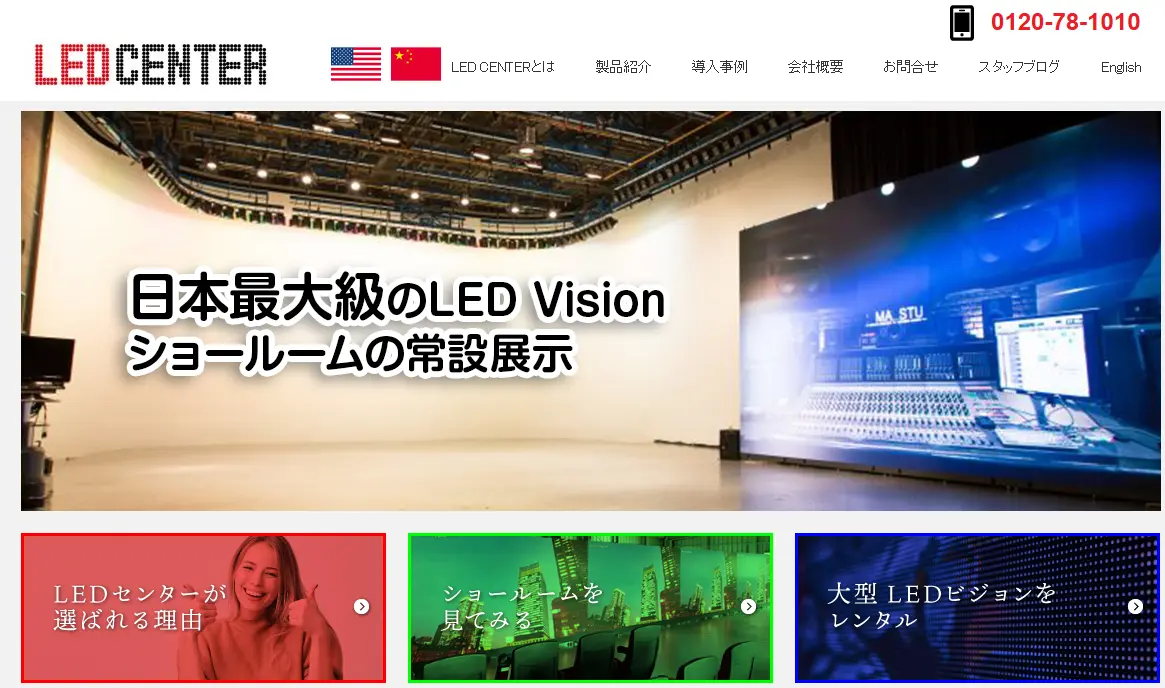
LED Center, operated by PANDASTUDIO.TV, is a service-oriented choice in this shortlist. Its rental and production background can be valuable when buyers need equipment availability, setup, operation, repairs, and practical problem solving rather than only a shipment of cabinets.
- Main products and services: indoor and outdoor rental LED, studio walls, installation, calibration, repair, and technical support.
- Market fit in this shortlist: short-term projects and production environments where downtime is costly.
- Buyer check: confirm available inventory, cabinet age and condition, controller model, included spares, technician hours, transport, overtime rules, damage terms, backup equipment, and response time.
Official source: LED Center. Phone: 0120-78-1010.
12. Lightlink Japan: Rental and Event LED Systems
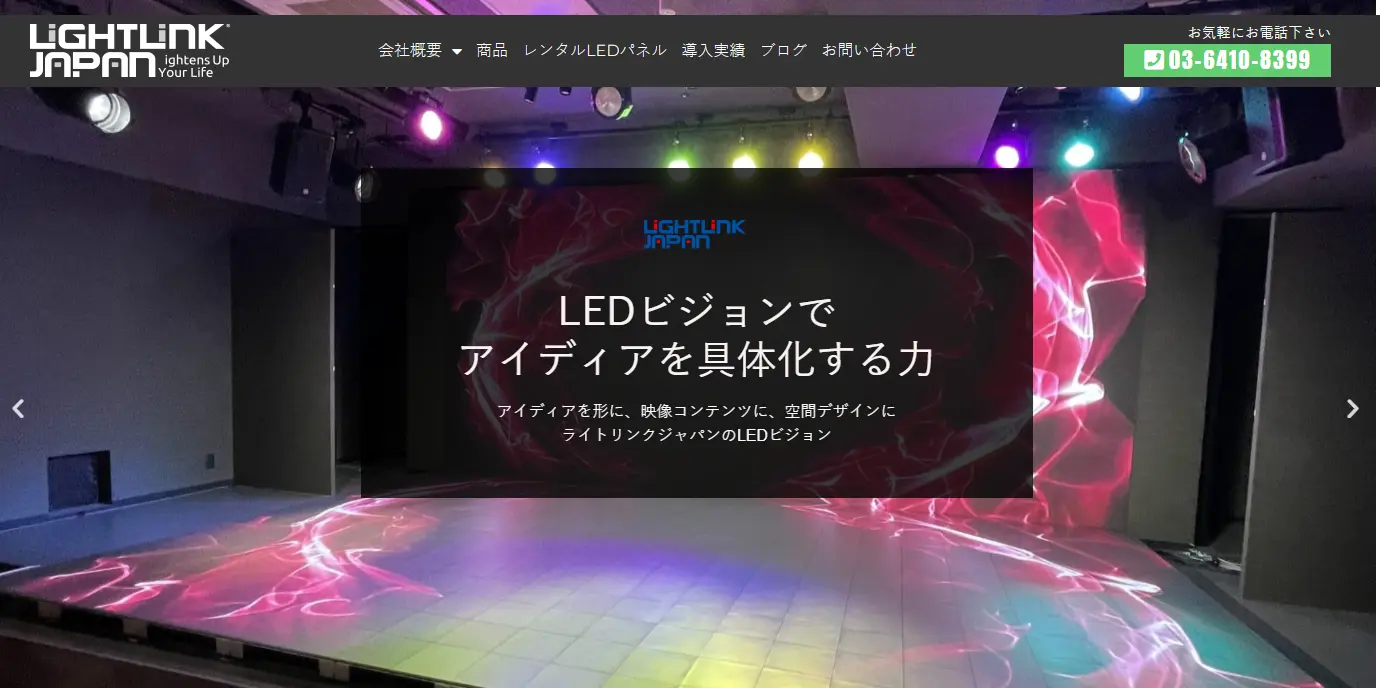
Lightlink Japan brings an overseas manufacturing platform into the market served by LED screen suppliers in Japan. It can be relevant when a buyer wants lightweight rental cabinets, quick locks, curved or creative configurations, and a local commercial contact for event-oriented products.
- Main products: rental LED, indoor and outdoor displays, transparent screens, and creative stage systems.
- Market fit in this shortlist: buyers balancing rental features, flexible configurations, and equipment cost.
- Buyer check: verify the exact factory, cabinet generation, module interchangeability, corner protection, rigging certification, receiving-card compatibility, local spare stock, warranty route, and technician availability.
Official source: Lightlink Japan. Phone: +81-3-6410-8399.
13. AVIX Inc.: Digital Signage Networks and Media
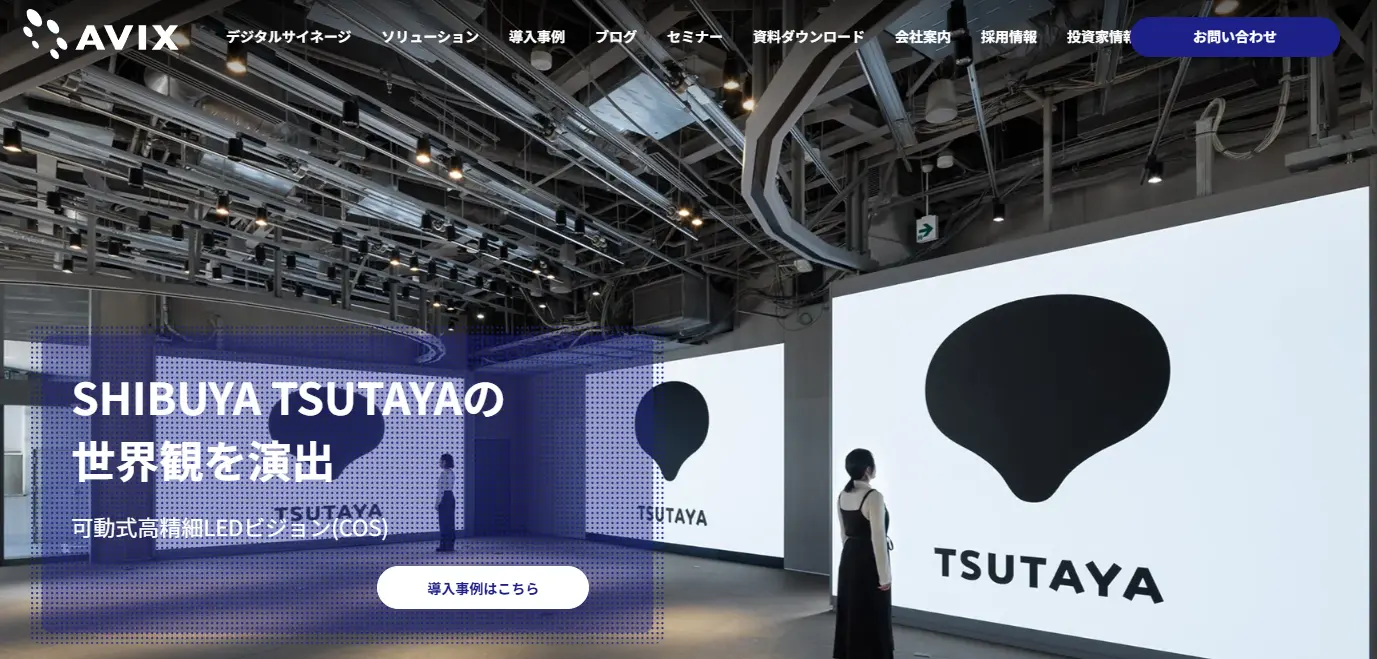
AVIX is a Yokohama-based integrator and media operator in this shortlist. Its value proposition extends beyond display hardware to content delivery and managed signage, which can simplify ownership for organizations running multiple screens or advertising locations.
- Main products and services: indoor and outdoor LED, transparent displays, signage networks, cloud content distribution, and media operation.
- Market fit in this shortlist: multi-site or revenue-generating signage where software, scheduling, monitoring, and content operations matter.
- Buyer check: separate the one-time hardware and installation price from CMS licenses, connectivity, monitoring, content production, media sales, maintenance, and renewal costs.
For window applications, compare transparency, brightness, viewing distance, and installation access; see our transparent LED display example. Official source: AVIX Inc.. Phone: +81-45-670-7711.
14. LEDUS Vision: Cost-Conscious Signage Projects
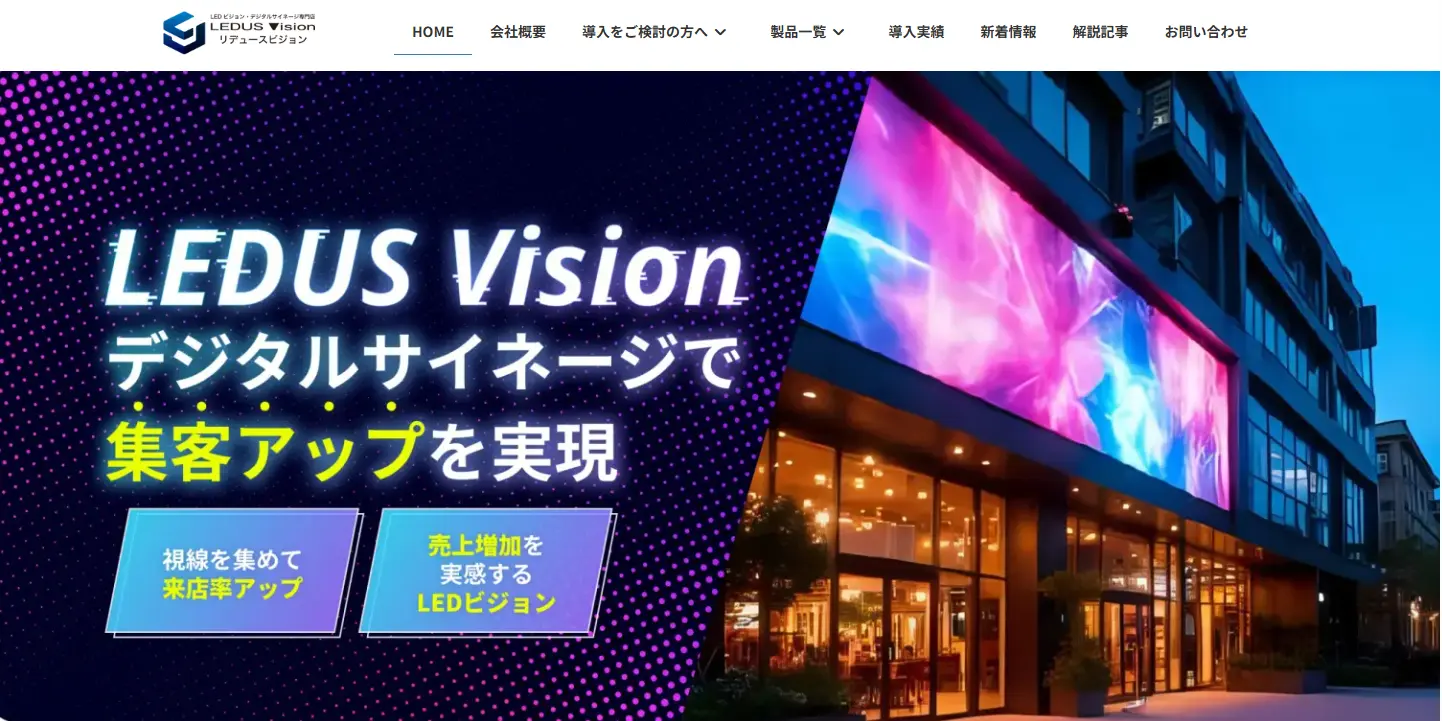
LEDUS Vision is a Sapporo-based option within LED screen suppliers in Japan and is operated by Village Alliance Co., Ltd. Its range includes conventional signage as well as cube, window, and poster formats, making it relevant to smaller commercial projects and creative display concepts.
- Main products: indoor and outdoor LED, cube displays, transparent window screens, poster displays, and digital signage.
- Market fit in this shortlist: cost-conscious commercial buyers who still need local installation and maintenance coordination.
- Buyer check: ask who manufactures each product, which party provides the warranty, whether replacement modules are held in Japan, how color matching is handled after repair, and whether content production is included.
Official source: LEDUS Vision. Phone: +81-11-590-1788.
15. PDC Digital Signage: Custom Signage Integration
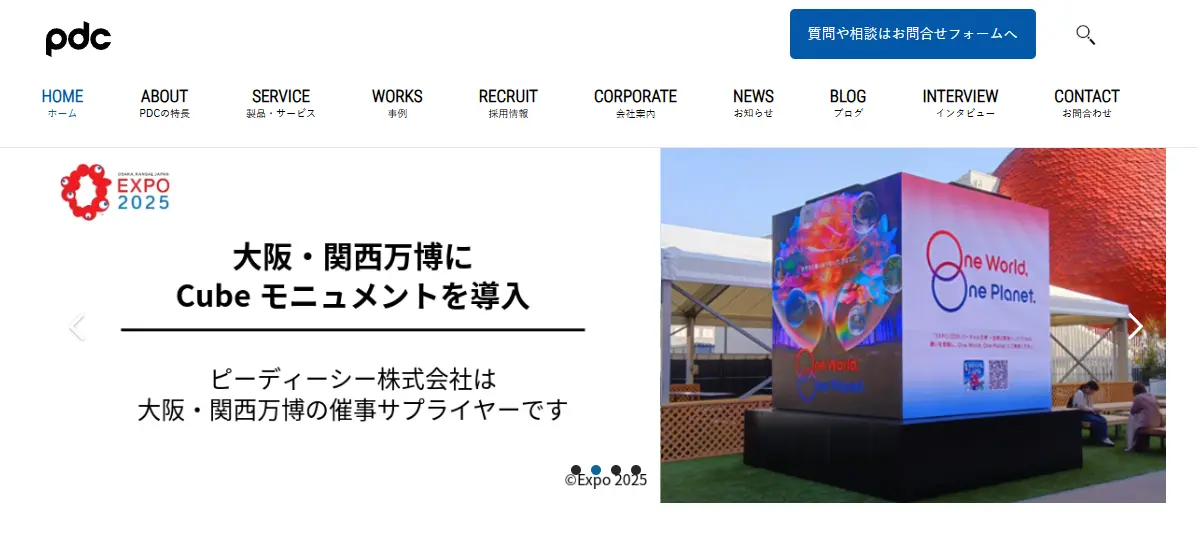
PDC Digital Signage is a Tokyo-based integration option in this shortlist. It is most relevant when the project combines indoor or outdoor LED hardware with content management, network delivery, installation, and long-term operating support.
- Main products and services: indoor and outdoor LED signage, content-management systems, custom displays, installation, and support.
- Market fit in this shortlist: organizations that want a single partner to coordinate screen, software, content workflow, and service.
- Buyer check: document user roles, approval workflow, update frequency, network security, remote monitoring, emergency messaging, service windows, spare strategy, and ownership of content and data.
Outdoor buyers can also review our outdoor LED screen buying guide. Official source: PDC Digital Signage.
16. How to Evaluate LED Screen Suppliers in Japan
Do not select LED screen suppliers in Japan from a brand list alone. The same supplier may propose different cabinet generations, LED packages, controllers, service terms, and subcontractors. A comparable written specification is the fastest way to expose those differences.
01. Match pixel pitch to real viewing distance
Pixel pitch is the center-to-center distance between pixels. Choose a pitch by testing your actual content at the nearest and typical viewing distances. Record the active screen dimensions and resulting native resolution. A camera-facing wall also needs testing with the intended camera, lens, shutter and frame rate.
02. Specify brightness for the environment
Specify operating brightness for the actual ambient light and viewing conditions. Ask for maximum and calibrated brightness, dimming range, typical power at the agreed setting and a demonstration of low-brightness grayscale. For sun-exposed signage, include orientation, operating hours and the automatic dimming plan.
03. Test the complete signal chain
A refresh-rate label alone does not guarantee a camera-ready image. Test the proposed processor, receiving cards, driver configuration and modules together. Record shutter settings, scan method, synchronization, scaling and visible low-gray behavior as acceptance criteria.
Table 3. Technical specification checklist
| Item | What to request | Why it matters | Acceptance evidence |
|---|---|---|---|
| Pixel pitch and resolution | Pitch, active dimensions, native pixel map | Controls detail and viewing suitability | Layout drawing plus native-resolution test |
| Brightness | Calibrated and maximum nits | Affects visibility, comfort, and power | Meter reading at agreed settings |
| Refresh and scan | Refresh rate, scan ratio, driver IC | Important for cameras and low-gray behavior | On-camera test using project settings |
| Color performance | Calibration method, white point, grayscale, bit depth | Determines consistency across cabinets | Calibration report and visual test patterns |
| Outdoor protection | Front/rear IP rating and corrosion treatment | Reduces water and dust risk | Test report; interpret IP codes using the IEC IP rating guidance |
| Power and heat | Maximum/typical watts, circuits, heat load | Impacts electrical and HVAC design | Power schedule and thermal plan |
| Serviceability | Front/rear access, swap time, spare quantity | Determines downtime and access needs | Demonstrated module and PSU replacement |
| Control system | Processor, sending/receiving cards, backup path | Defines inputs, capacity, and recovery | Signal diagram and restored-backup test |
Buying rental-fleet equipment or hiring an event service?
A rental operator purchasing cabinets needs cabinet compatibility, repeated assembly protection, transport cases, spare modules and controller configuration records. A customer hiring a temporary event screen needs delivery, rigging, operating crew, rehearsal, backup equipment and removal. Specify which purchase you mean so proposals cover the same responsibilities.
17. RFQ Checklist for LED Screen Suppliers in Japan
Send the same request for quotation to every shortlisted company. This lets buyers compare LED screen suppliers in Japan on total project value rather than an incomplete price per square meter.
Table 4. Commercial and support comparison
| RFQ field | Minimum detail to request | Common omission | Decision rule |
|---|---|---|---|
| Scope | Design, screen, controller, structure, power, installation, commissioning | Structure or electrical work excluded | Reject ambiguous responsibility boundaries |
| Price | Itemized hardware, labor, freight, tax, software, training | Low headline price with later extras | Compare total installed cost |
| Schedule | Drawing approval, production, shipping, installation, testing | No allowance for permits or site readiness | Require dependencies and milestones |
| Warranty | Term, parts, labor, travel, exclusions, claim route | Parts-only warranty presented as full support | Value the enforceable local remedy |
| Spares | Project-matched modules, receiving cards, power supplies and cables; quantity based on installed population and service plan | No same-bin modules for later repairs | Buy project-matched spares with the screen |
| Service | Support hours, response target, remote and on-site coverage | “Technical support” without a time commitment | Put service levels in the contract |
| Acceptance | Uniformity, dead pixels, brightness, camera test, burn-in, documentation | Payment due before objective testing | Tie final acceptance to written criteria |
| Lifecycle | Parts availability, software access, configuration backup, end-of-life notice | Dependence on one technician or laptop | Require owner-accessible records and backups |
For permanent installations, compare written warranty coverage, matched spares and service response commitments for the actual project. For rental, define operating hours, setup and strike windows, backup equipment, overtime, and damage responsibility. This makes proposals from LED screen suppliers in Japan comparable.
18. Frequently Asked Questions
01. Who are the best LED screen suppliers in Japan?
There is no single best company for every application. Sony and Leyard suit premium fine-pitch work; Hibino, Telmic, LED TOKYO, and LED Center suit production or rental; Sharp, Network Japan, AVIX, LEDUS Vision, and PDC suit installed signage. The best LED screen suppliers in Japan are those that can prove performance for your venue and provide an enforceable local support plan.
02. Are Japanese LED manufacturers the same as LED screen integrators?
No. Nichia supplies LED technology and components, Innolux develops display technology, while many other LED screen suppliers in Japan integrate cabinets, control systems, structures, software, installation, and service. Ask who manufactures the modules and who is contractually responsible for the finished system.
03. Which supplier should I choose for a rental or XR LED wall?
First decide whether you are buying reusable LED cabinets or hiring a staffed production service. Confirm available equipment and the exact crew, engineering and backup scope against your event brief. Camera testing, rigging, backup processing, technicians, spares, and delivery windows are often more important than a small difference in cabinet price when comparing LED screen suppliers in Japan.
04. How much does an LED screen cost in Japan?
A responsible quotation needs screen area, pixel pitch, brightness, indoor or outdoor rating, cabinet type, controller, structure, installation conditions, content system, and service scope. Compare total installed cost from several LED screen suppliers in Japan; a price per square meter alone does not reveal engineering, software, freight, spares, or warranty coverage.
05. What should I ask before placing an order?
Ask for the legal supplier name, product model, module and controller details, drawings, power plan, test reports, project schedule, acceptance criteria, warranty, spare-parts list, and support response time. Require written answers from LED screen suppliers in Japan and attach the final specification to the purchase contract.
19. Final Recommendation
Use this list to create a shortlist, then compare demonstrations and written proposals. For most projects, invite three to five LED screen suppliers in Japan: one premium technology provider, one application specialist, and one value-focused integrator. Give each company the same content samples, site constraints, operating schedule, and acceptance tests.
The winning proposal should identify who designs the structure, configures the controller, calibrates the image, trains operators, stocks spares, and responds after handover. When LED screen suppliers in Japan answer the same checklist, buyers can decide on fit, lifecycle cost, and service risk instead of unsupported claims.
Planning a factory-supplied LED screen? Send your screen dimensions, application, viewing distance, project country and installation responsibilities so we can discuss a suitable configuration and quotation scope.
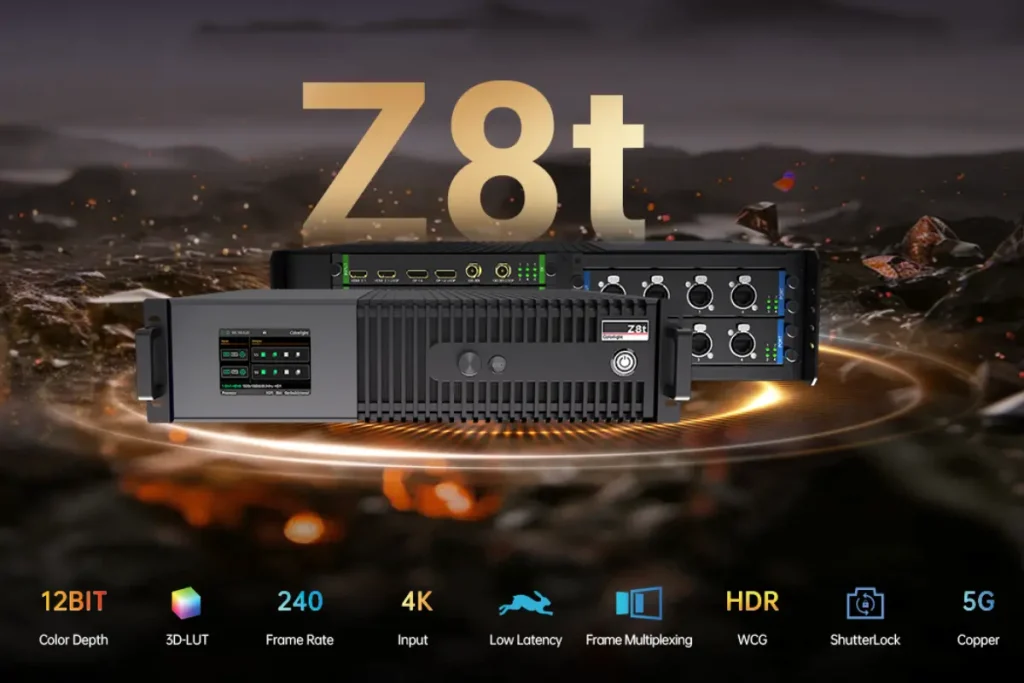 Colorlight Z8t Review: 23.59M-Pixel Buyer's Guide
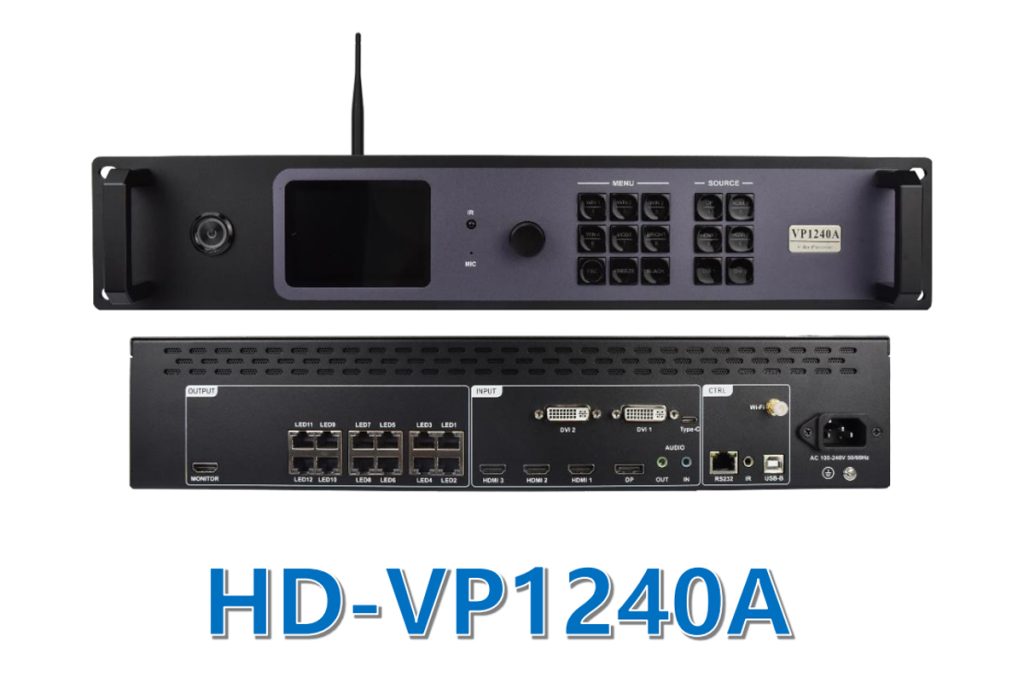 HD-VP1240A Setup Guide: HDSet, Wiring & No-Signal Fixes