
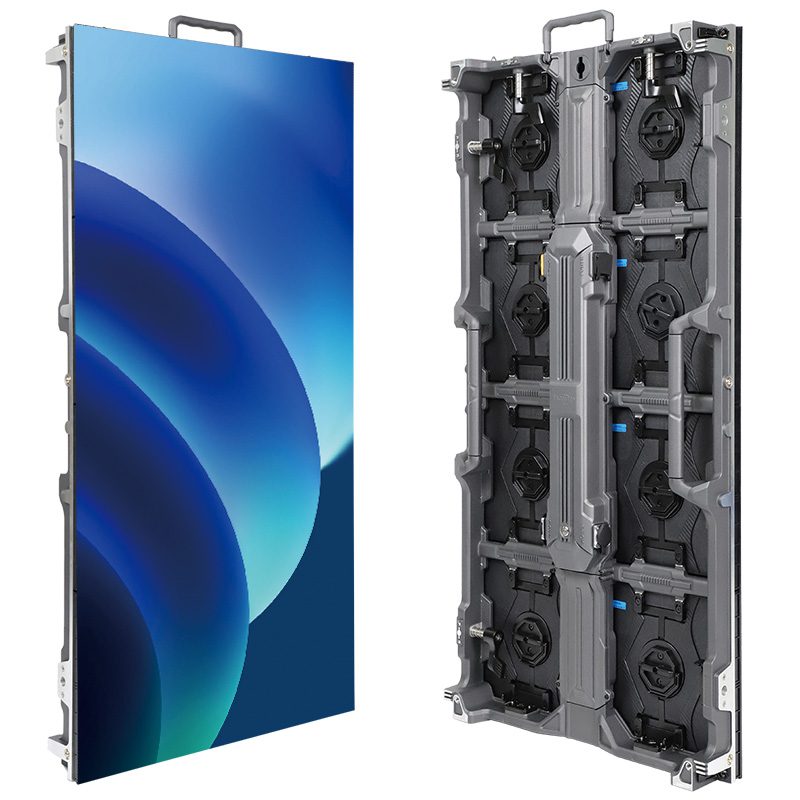
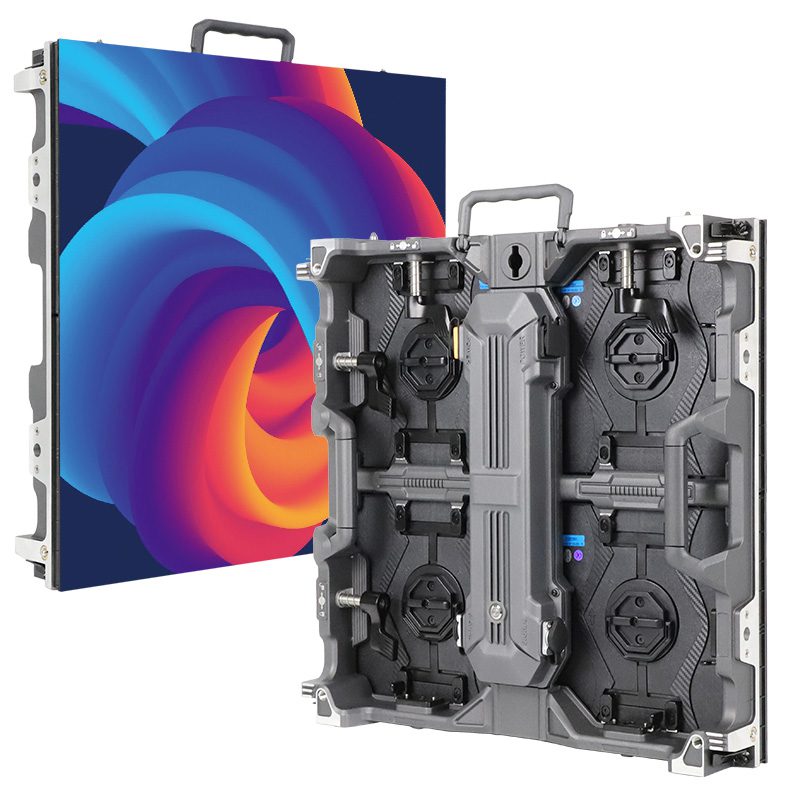
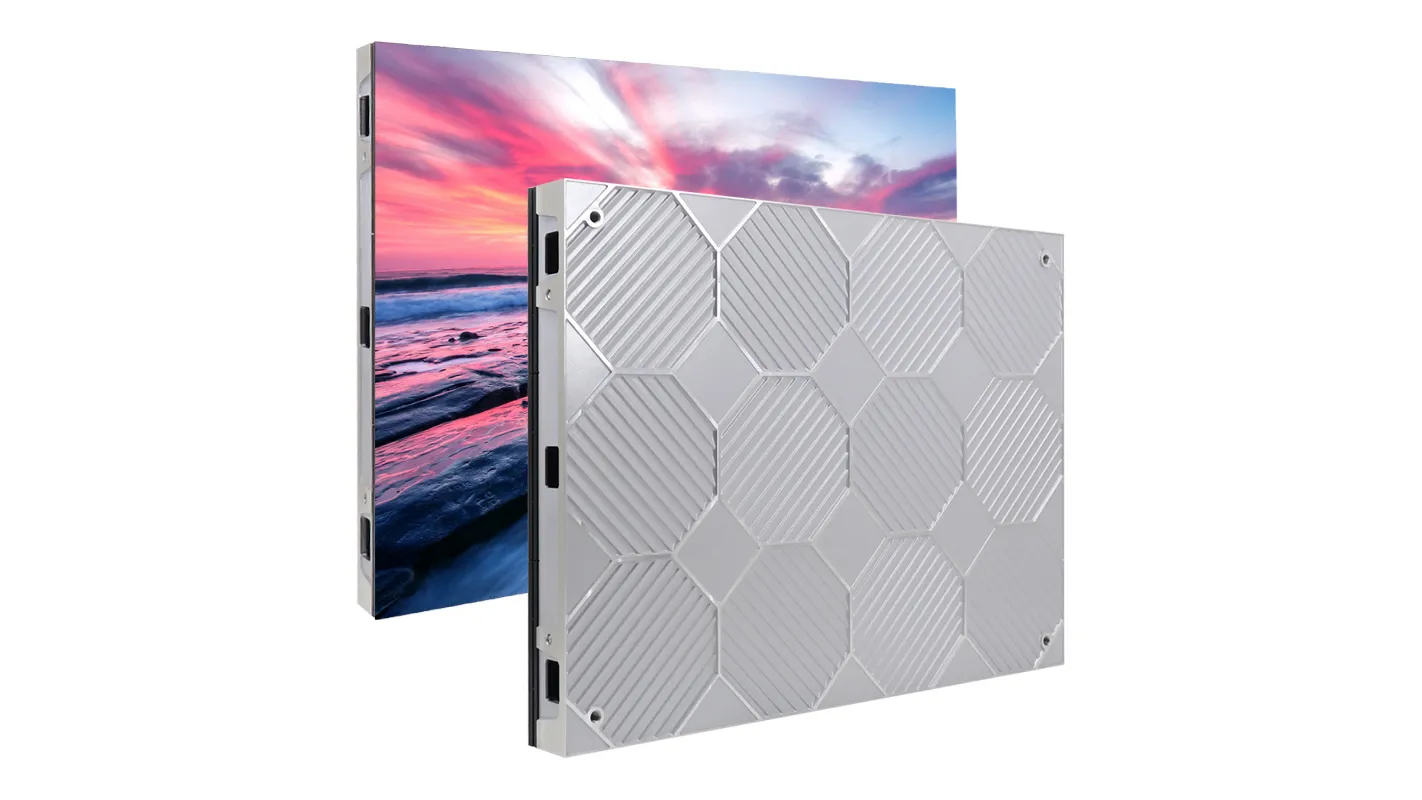
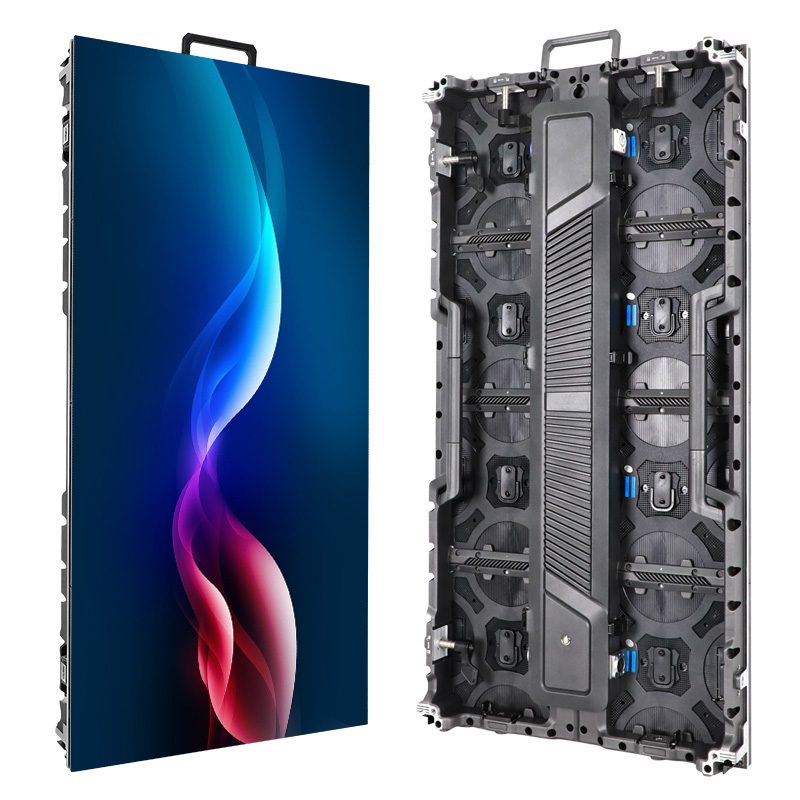
The two rental LED cabinet sizes compared here are 500 × 500 mm and 500 × 1000 mm. A 6 × 3 m LED wall needs 72 small cabinets or 36 large cabinets. For a 6 × 2.5 m wall, use 60 small cabinets or a compatible mix of 24 large and 12 small cabinets. Choose square cabinets for 0.5 m height increments, large cabinets for fewer pieces in full-metre heights, or compatible mixed stock for both layouts.
This buying guide compares 500×500 vs 500×1000 cabinets using EagerLED C6 products. The examples are planning calculations, not customer-project results, installation-time tests or structural approvals.
Contents · jump to a section
- Start with the Cabinet Grid
- Rental LED Cabinet Sizes for a 6 × 3 m Wall
- A 6 × 2.5 m Wall Shows Why Mixed Stock Matters
- Keep Pixel Resolution Separate from Cabinet Size
- Compare a Complete Fleet Quotation
- Confirm Compatibility Before Mixing Rental LED Cabinet Sizes
- Send EagerLED a Fleet Quotation Brief
- Frequently Asked Questions
1. Start with the Cabinet Grid
The EA500C6 measures 500 × 500 mm, covering 0.25 m² per cabinet. The EA1000C6 measures 500 × 1000 mm, covering 0.5 m². Both formats are 500 mm wide; the difference is vertical coverage.
Divide the target width by 0.5 m to find the number of columns. Then build the height from complete 0.5 m or 1 m cabinet increments. For a 6 m width, both formats use 12 columns. A 3 m height accepts three large cabinets per column, while a 2.5 m height needs a smaller cabinet somewhere in each column if you choose a mixed build.
A cabinet cannot be cut to fill a remaining gap. If an exact venue opening does not fit the cabinet grid, agree on the actual display dimensions before purchasing, and reserve space for the support structure and access.
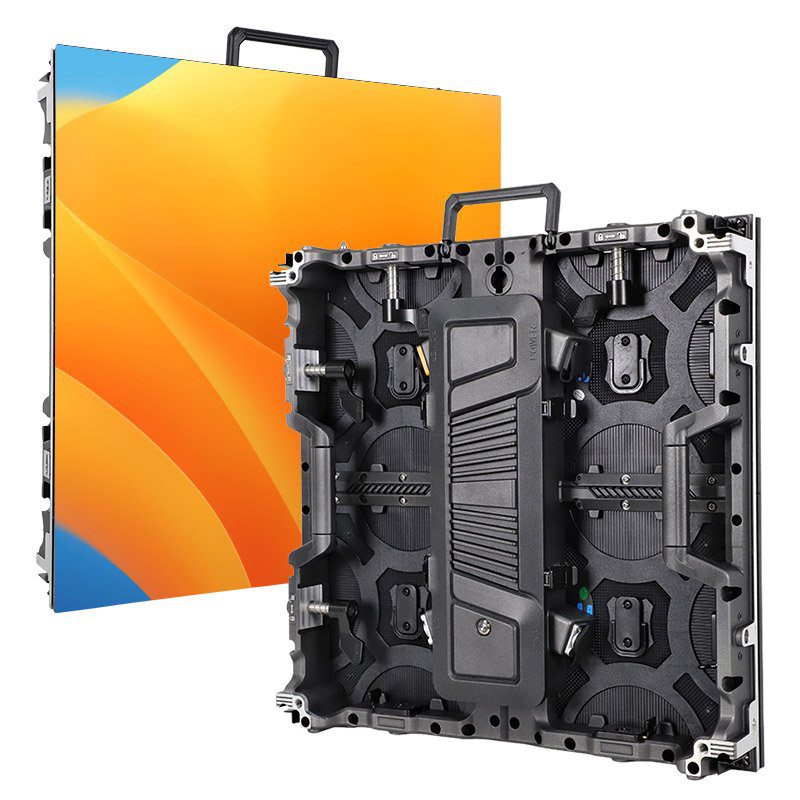
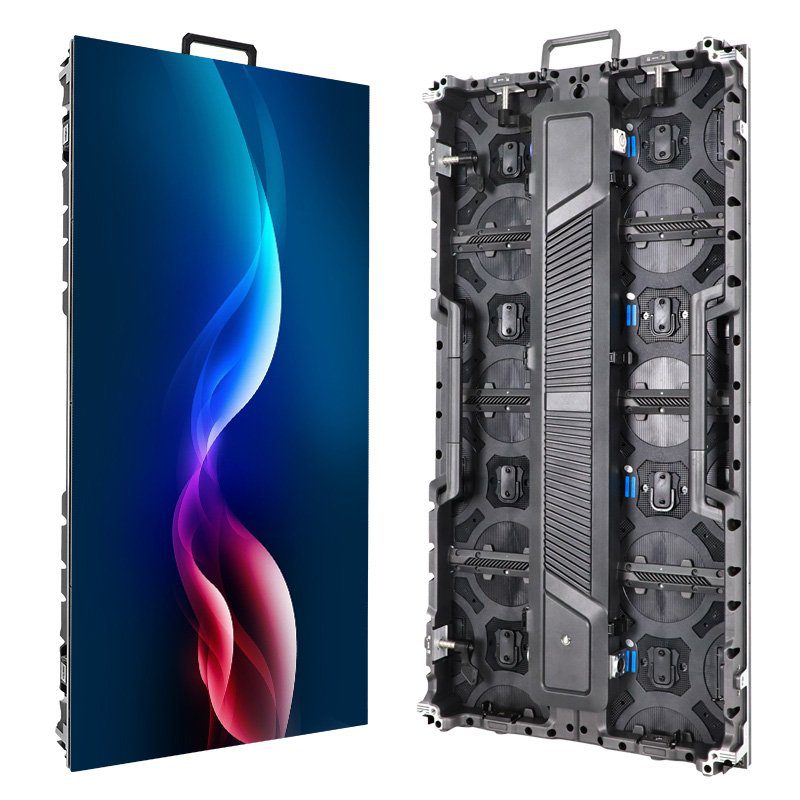
2. Rental LED Cabinet Sizes for a 6 × 3 m Wall
| Planning item | 500 × 500 mm | 500 × 1000 mm |
|---|---|---|
| Grid | 12 columns × 6 rows | 12 columns × 3 rows |
| Cabinets | 72 EA500C6 | 36 EA1000C6 |
| Published indoor cabinet weight | 6.5 kg each (EA500C6) | 11 kg each (EA1000C6) |
| Calculated cabinet-only total | 468 kg | 396 kg |
The large format halves the cabinet count for this particular rectangle. It also changes how the crew handles, packs and aligns each piece. It does not establish that the build takes half the time, uses half the electrical power or needs half the signal ports. Those outcomes depend on the selected electronics, distribution plan, support system and working method.
3. A 6 × 2.5 m Wall Shows Why Mixed Stock Matters
If your conference work often needs a 2.5 m-high wall, buying only 1 m-high cabinets limits your options. Two full large-cabinet rows give 2 m; three give 3 m. A compatible half-height row bridges the gap.
| Layout | Inventory used | Cabinet-only weight |
|---|---|---|
| All small cabinets | 12 × 5 = 60 EA500C6 | 60 × 6.5 = 390 kg |
| Compatible mixed layout | 24 EA1000C6 + 12 EA500C6 | (24 × 11) + (12 × 6.5) = 342 kg |
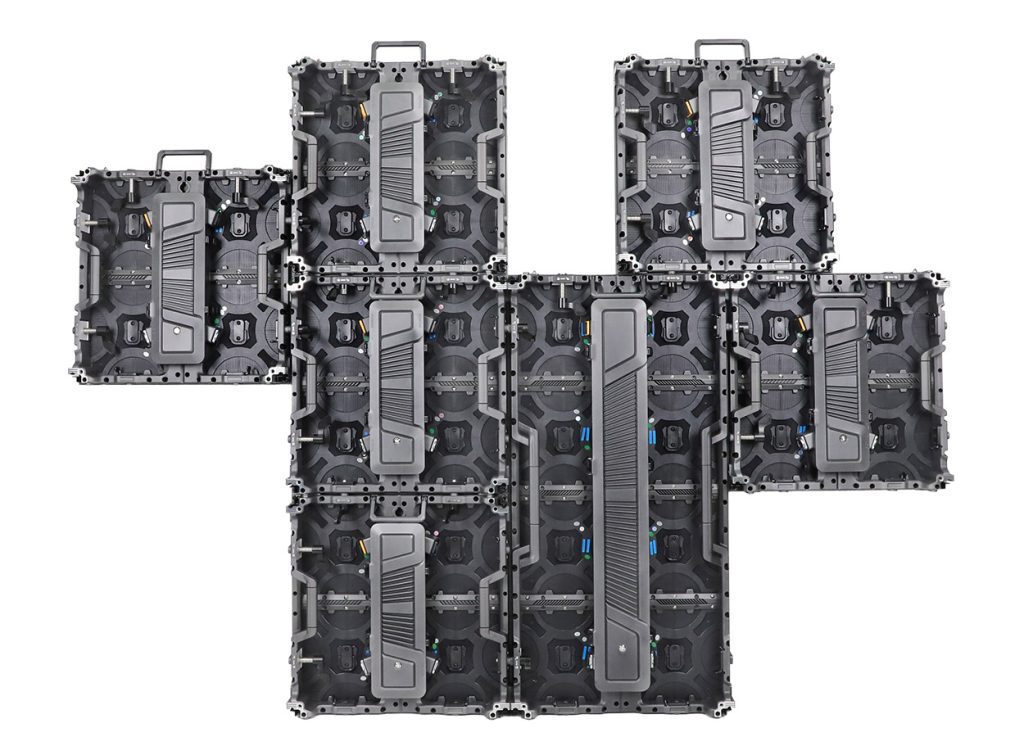
For a buyer covering both illustrated wall sizes, a starting inventory of 36 large and 12 small cabinets can supply either layout separately. It cannot supply both walls simultaneously: the large cabinets are shared between the two plans. To run both illustrated large-cabinet layouts simultaneously, plan for 60 EA1000C6 plus 12 EA500C6, before spares. Keep the rental fleet service reserve separate from usable screen inventory.
These examples explain the geometry, not the permitted position of the small row. Have the supplier approve the mixed layout and supporting hardware before ordering. Curved walls, corners and hanging arrangements require their own drawings.
4. Keep Pixel Resolution Separate from Cabinet Size
Physical dimensions determine the cabinet grid. Pixel pitch and the actual module matrix determine the image canvas. At the same compatible pitch and native pixel density, changing cabinet height does not increase the resolution of a wall with the same overall dimensions.
Ask for a pixel map showing every cabinet’s native resolution and controller output assignment. The nominal pitch name alone is not sufficient for exact content production. These walls have physical aspect ratios of 2:1 (6 × 3 m) and 2.4:1 (6 × 2.5 m), rather than 16:9. Agree on letterboxing, cropping or custom content before production.
Camera use is another separate check. Brompton Technology explains how LED refresh timing and camera shutter settings affect visible artefacts. Test the supplied wall at the intended brightness, including camera pans and tilts; a refresh-rate figure alone cannot promise a clean recording. Use the LED screen resolution guide for the broader resolution decision.
5. Compare a Complete Fleet Quotation
Request the two layouts as itemized systems rather than comparing a cabinet price with an unqualified price per square metre. Include these items in each quotation:
- Exact cabinet models, pitch, indoor or outdoor variant and quantities.
- Approved support accessories and any mixed-size connection hardware.
- Processor, receiving-card specification and confirmed pixel capacity.
- Power and signal cable quantities based on the actual layout.
- Flight-case capacity, packed dimensions and packed weights.
- Compatible spare cabinets, modules and electronic components.
- Configuration files, training, warranty scope and delivery terms.
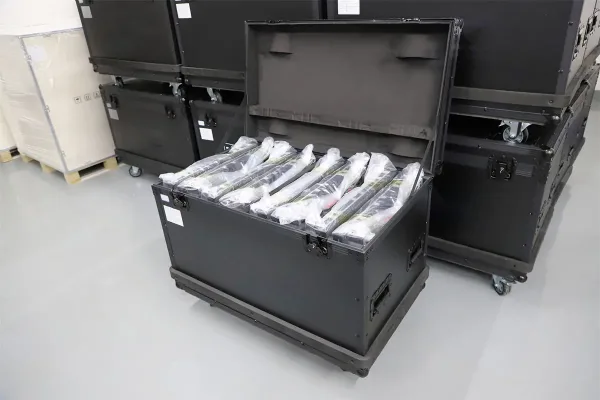
More small cabinets can increase handling and case slots; larger cabinets can require a different handling routine and case arrangement. Ask for a practical demonstration with the intended crew rather than accepting a general speed claim. Delivered cost also changes with destination and freight terms, so compare quotations on the same basis.
6. Confirm Compatibility Before Mixing Rental LED Cabinet Sizes
The EA500C6 manufacturer product page states support for mixed vertical splicing with EA1000C6. That is a useful product-family feature, but cabinet dimensions alone do not prove compatibility between any two screens.
Obtain written confirmation covering the ordered pitch and variant, lock positions, alignment, module revision, receiving-card configuration and image matching. If you already own stock, identify its production batch and configuration before purchasing an expansion. A visually similar cabinet can still introduce service or calibration differences.
Ask the supplier to demonstrate the proposed mixed wall, including a replacement from reserve stock. Check seams, uniform colour and brightness, signal mapping and access for repairs before accepting the system.
8. Frequently Asked Questions
01. Does a 500 × 1000 mm cabinet always cost less per square metre?
No universal cost advantage follows from the dimensions. Compare exact models, accessories, spare stock, cases and delivery on the same specification.
02. Can a wall made only from 500 × 1000 mm cabinets be 2.5 m high?
Not as a full rectangle using upright 1 m-high cabinets alone. The illustrated solution adds a compatible 500 mm-high row; alternative designs require supplier approval.
03. Can I mix different brands or generations if their cabinets are the same size?
Matching outer dimensions do not establish mechanical, electrical or image compatibility. Obtain explicit confirmation for the exact products.
04. Are the weight calculations rigging ratings?
No. They are cabinet-only planning totals. Complete system loads and permitted installation arrangements need project-specific assessment.
Planning basis: published EA500C6 and EA1000C6 product information checked on 12 October 2026. Calculations are illustrative; confirm current specifications for the ordered configuration.
 MIP LED Packaging: Module Design and Repairability
 Rental LED Screen Spare Parts: A Fleet Checklist