
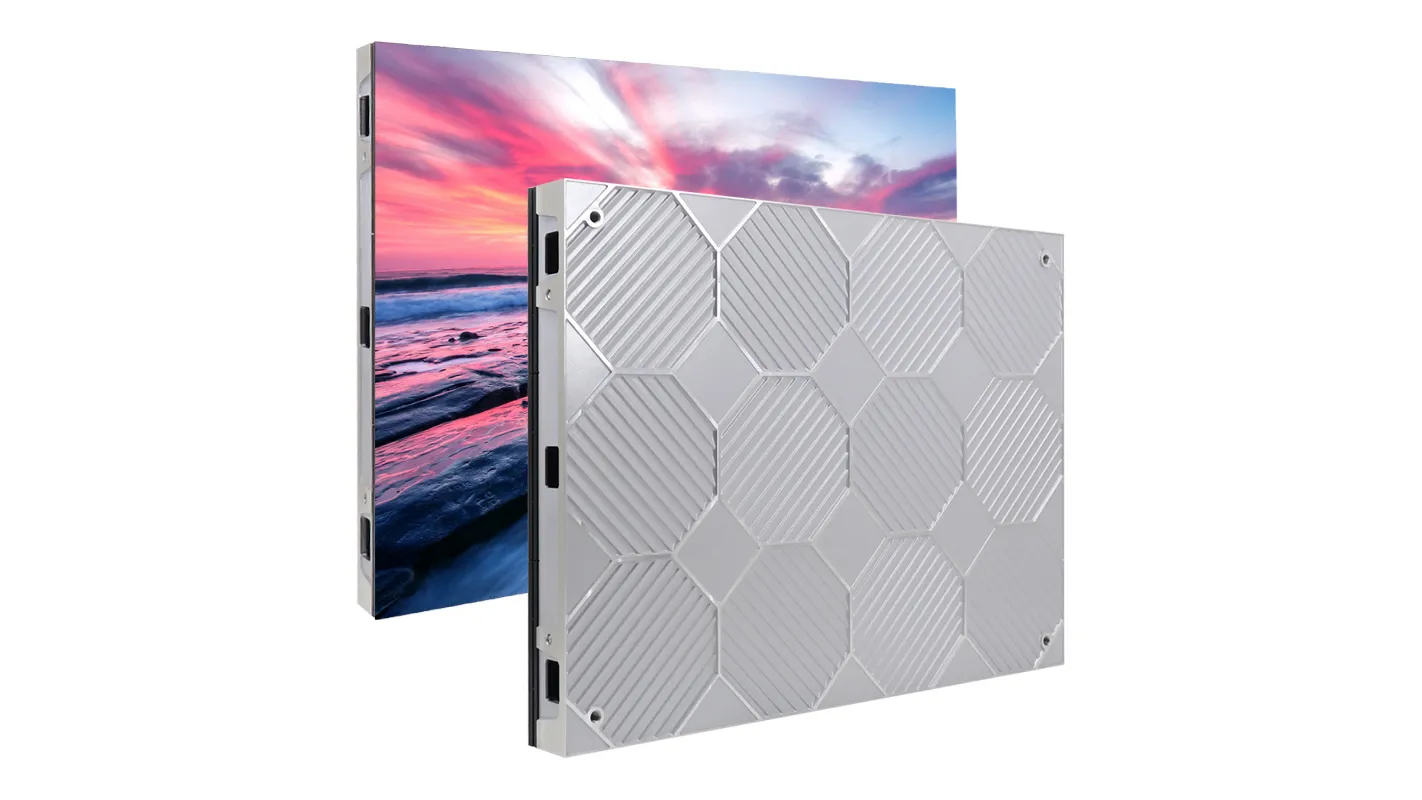
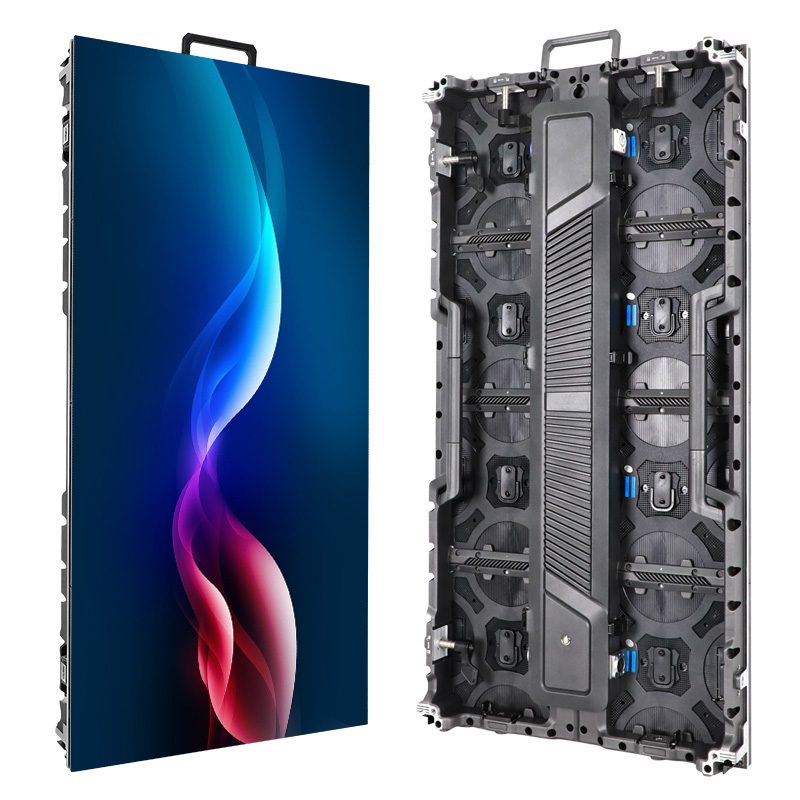
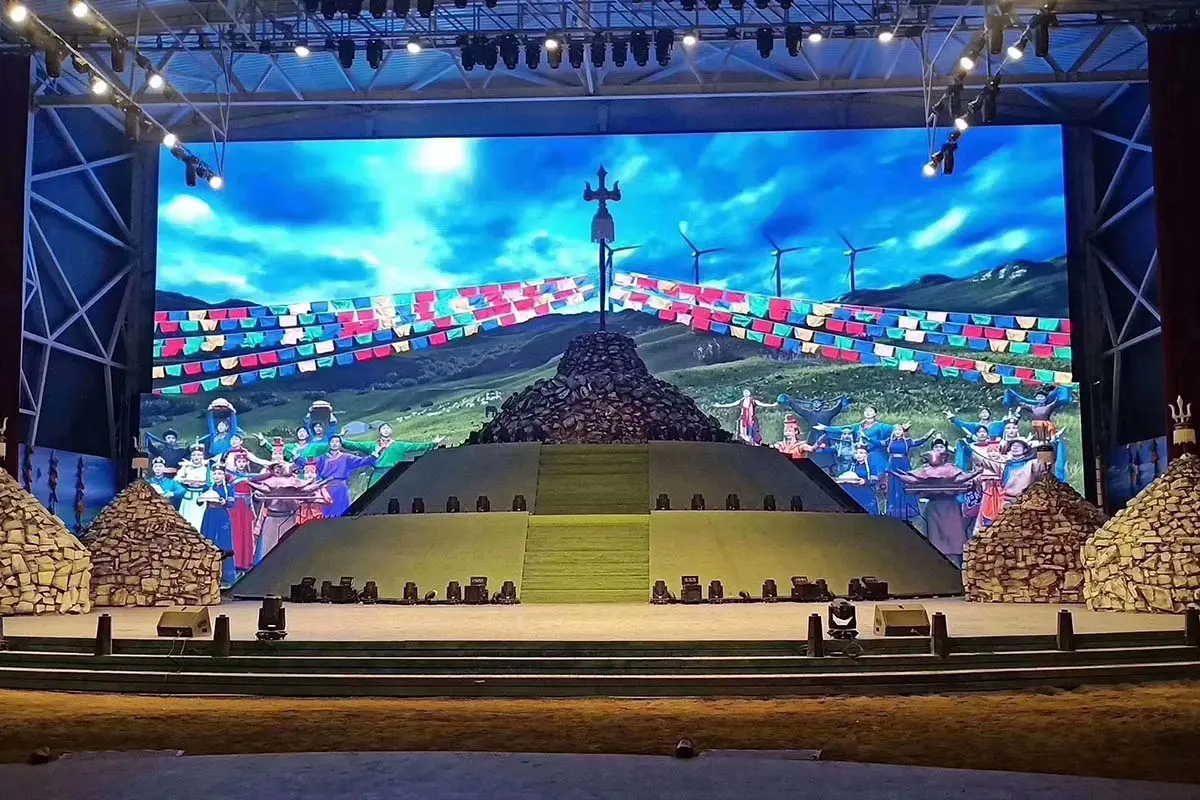
The LED background screen has become the most visible piece of technology on a modern stage. Painted scenery, printed drops and projector-and-dark-room setups have been replaced by a modular wall that stays bright under full stage lighting and can change an entire set in under a second.
For event planners, production managers, AV rental companies and venue owners, choosing an LED background screen is a commercial decision as much as a creative one. Pixel pitch, brightness, cabinet weight, rigging options, refresh rate and daily rental price decide whether the finished set looks like a premium concert backdrop or a washed-out wall of dots.
This guide explains how the screen works, which specifications genuinely matter, what an LED background screen costs to buy or rent in 2026, and how to plan content, installation and maintenance.
catalogue
1. What Is an LED Background Screen?
An LED background screen is a large-format display built from modular LED panels that create their own light. Because every pixel is a light source rather than a reflection of projected light, the wall keeps its contrast and colour saturation even when moving heads, front light or camera lighting are aimed straight at it.
01. How an LED Background Screen Is Built
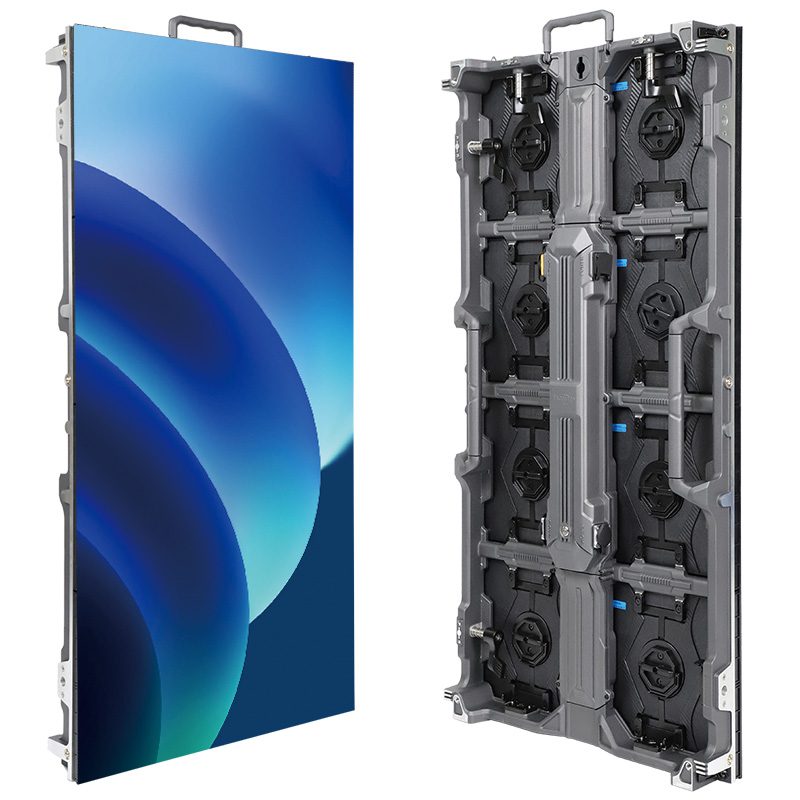
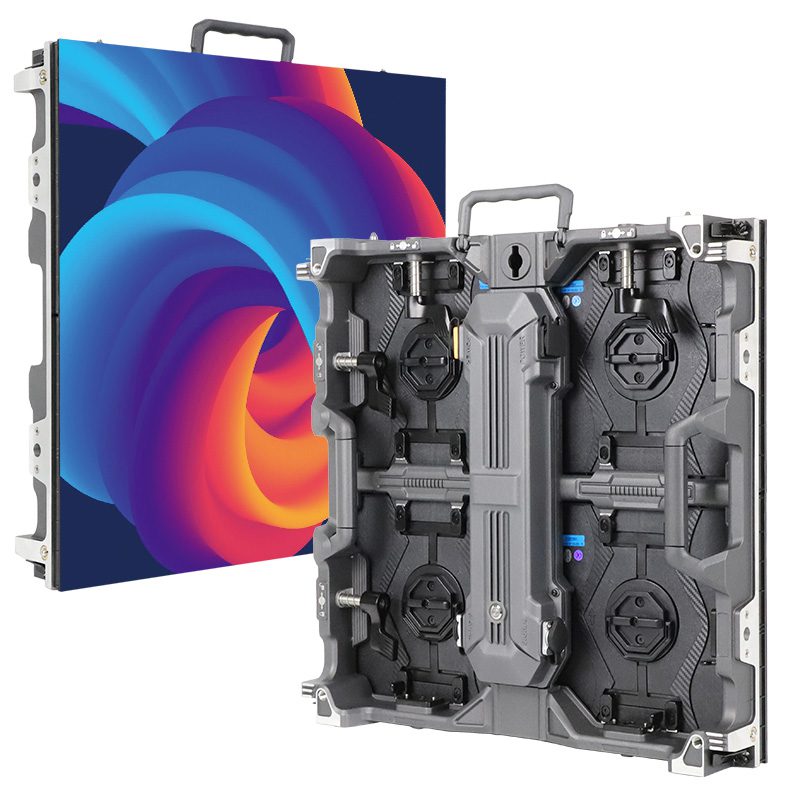
Every wall is assembled from the same core parts: LED modules carrying the pixel LEDs, a cabinet or frame holding those modules, a receiving card that turns data into pixels, a power supply, and a sending system that feeds video from the media server or controller. Cabinets lock together with quick-release latches, so a 6 m by 3.5 m backdrop that travels in flight cases can be built on site in a couple of hours. Panel sizes run from 250 x 250 mm to 500 x 1000 mm.
02. LED Background Screen Versus Projector, LED Curtain and Fabric Backdrop
A projector cannot compete in a lit room: throw distance, shadows cast by performers and the need for a dark stage all limit it. LED curtain products, the string-light backdrops sold for parties, are cheap and light, but their pixels sit tens of millimetres apart, so they read as decoration rather than video. SEG backlit fabric gives a clean, flat graphic, yet the image is fixed. A modular LED background screen is the only option that combines live video, camera feeds and unlimited scene changes at full brightness.
Table 1. LED background screen compared with other stage backdrop technologies
| Backdrop technology | Brightness in a lit room | Live video | Scene changes | Relative cost | Best suited to |
|---|---|---|---|---|---|
| Modular LED wall | Full brightness, 800 to 6,000 nits | Yes | Instant, unlimited | Higher purchase, moderate rental | Concerts, corporate, broadcast, touring |
| Projector and projection screen | Low, needs a dark room | Yes | Instant | Low | Theatre, screenings, low-light talks |
| LED curtain or string-light backdrop | Medium, decorative only | No | Limited | Low | Parties, photo backdrops, decoration |
| SEG backlit fabric backdrop | Medium | No | Fixed graphic | Low to moderate | Trade shows, branded sets, fast changeovers |
2. Types of LED Background Screen Used on Stage
Not every production needs the same hardware. The right wall depends on whether the show is indoors or outdoors, whether the audience stands 2 m or 40 m away, and whether the panels have to travel between venues.
01. Indoor LED Background Screens
Indoor panels use fine pixel pitches, commonly P1.5 to P3.9, because the audience sits close and a camera may zoom in. A brightness of 800 to 1,500 nits is normally enough, and lighter cabinets of 7 to 9 kg per 500 x 500 mm panel hang easily from a truss or ground-support system. For an indoor wall that will be filmed, refresh rate matters more than raw brightness.
02. Outdoor and Weatherproof LED Backdrop Screens
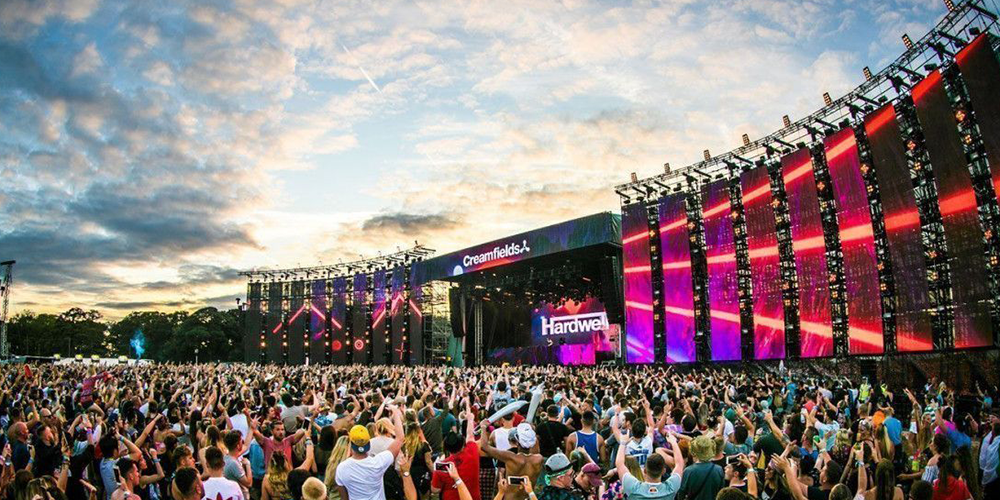
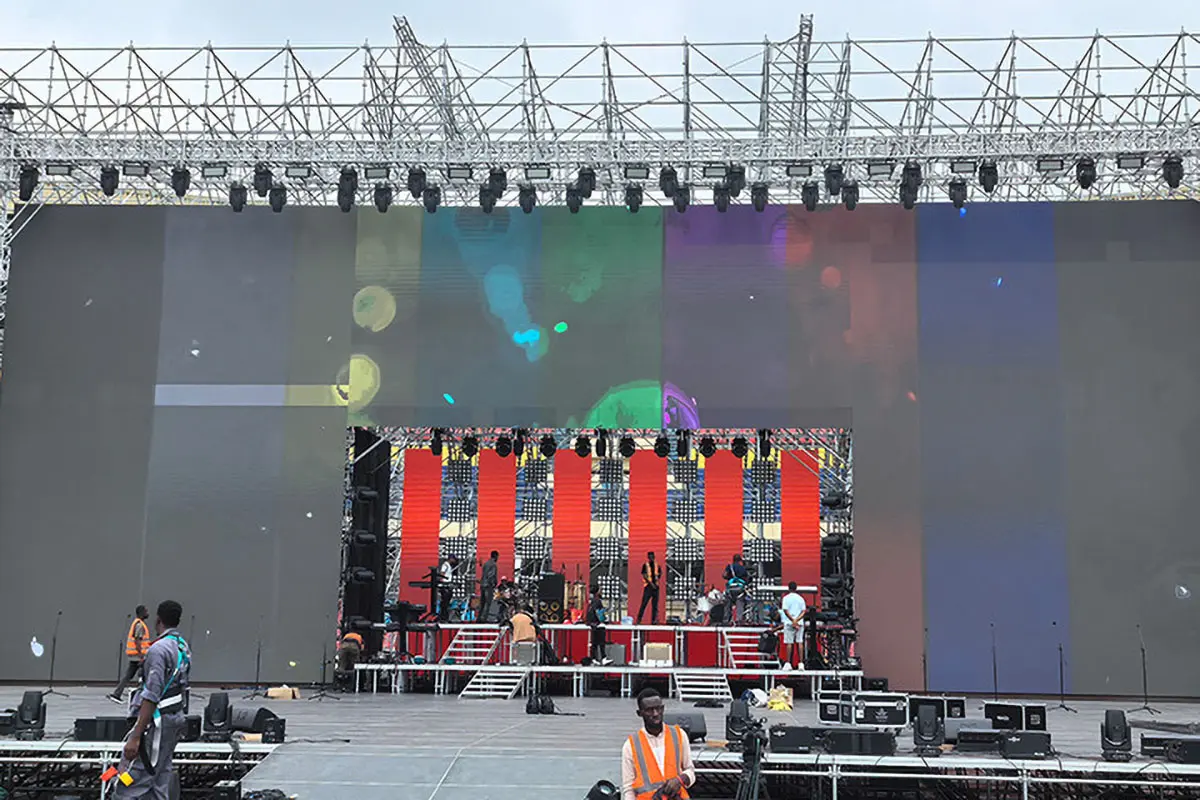
Outdoor LED background screens are sealed to IP65 or higher at the front and IP54 or better at the rear, and run at 4,500 to 6,000 nits so the image survives direct sunlight. Pitches are usually P3.9 to P6.9 because viewing distances are longer. Wind loading, ballast calculations and structural certification become part of the specification, and the wall must be rigged or ground-stacked by a qualified crew.
03. Curved, Flexible and Transparent LED Background Screens
Curved cabinets let the display wrap around a stage or form a cylinder, which increases the sense of depth on camera. Flexible modules bend to tighter radii for sculptural shapes. Transparent versions use a mesh-like structure so the audience can see through the screen, which suits fashion shows and retail stages.
Table 2. LED background screen types compared
| Screen type | Typical pixel pitch | Brightness | IP rating | Cabinet weight (500 x 500 mm) | Typical use |
|---|---|---|---|---|---|
| Indoor LED wall | P1.5 to P3.9 | 800 to 1,500 nits | IP40 to IP54 | 7 to 9 kg | Conferences, theatre, studios, weddings |
| Outdoor rental LED backdrop screen | P2.6 to P4.8 | 4,500 to 6,000 nits | IP65 front, IP54 rear | 8 to 10 kg | Festivals, touring, sports, outdoor launches |
| Curved LED background screen | P2.6 to P3.9 | 1,000 to 5,000 nits | IP40 to IP65 | 8 to 10 kg | Immersive sets, cylinders, wrap-around stages |
| Flexible LED wall | P2.5 to P4 | 1,000 to 3,500 nits | IP40 to IP65 | 6 to 9 kg | Sculptural shapes, tight radii, creative builds |
| Transparent LED backdrop screen | P3.9 to P10 | 3,000 to 5,500 nits | IP40 to IP65 | 6 to 8 kg | Fashion, retail, glass facades, layered depth |
3. Specifications That Decide How Good an LED Background Screen Looks
Most disappointing walls are not faulty; they are simply specified for the wrong viewing distance or the wrong light level. A handful of numbers explain almost every result.
01. Pixel Pitch and Viewing Distance
Pixel pitch is the distance between the centres of two adjacent pixels. The rule of thumb that still works in 2026 is that comfortable viewing distance in metres is roughly one to one and a half times the pitch in millimetres. A P2.6 screen therefore looks clean from about 3 m, while a P6.9 outdoor model is designed for 8 m and beyond. Buying a finer pitch than the audience can perceive raises cost without changing what anyone sees. Our guide to the best pixel pitch and why it matters explains the calculation in more detail.
02. Brightness, Contrast and Refresh Rate
Brightness is measured in nits, and contrast is the ratio between the brightest white and the darkest black the panel can produce. An LED background screen in a dark theatre may need only 800 nits, while the same wall in a bright exhibition hall needs 5,000. Refresh rate decides whether a camera sees a smooth image or flickering bands, so for broadcast and streaming work choose 3,840 Hz or higher together with a high grey-scale depth.
03. Cabinet Size, Weight and Rigging
Cabinet choice affects build time, weight and maximum hanging height. A 500 x 500 mm cabinet is a good compromise for touring because it packs densely and stays light enough for one technician to handle. Larger cabinets reduce the number of seams and speed up installation but demand more lifting equipment. Confirm rigging points, trim height and power draw per cabinet before the design is signed off.
Table 3. Pixel pitch, viewing distance and the applications each LED background screen suits
| Pixel pitch | Comfortable viewing distance | Camera-safe | Typical screen size | Application |
|---|---|---|---|---|
| P1.2 to P1.5 | 1.5 to 2.5 m | Yes, tight shots | Up to 6 m wide | Studio, boardroom, fine-detail corporate work |
| P1.9 to P2.6 | 3 to 4 m | Yes | 6 to 12 m wide | Corporate stages, weddings, theatre |
| P2.9 to P3.9 | 4 to 6 m | Yes, medium shots | 8 to 18 m wide | Concerts, touring, worship venues |
| P4.8 to P6.9 | 7 to 12 m | Limited | 12 to 30 m wide | Outdoor festivals, sports, large venues |
| P8 to P10 | 12 m and beyond | No | 20 m and wider | Facades, distant audiences, decorative backdrops |
4. Why an LED Background Screen Outperforms Traditional Stage Backdrops
The commercial argument for the technology is not only about looks. It changes how a production is planned, how quickly it can change, and how much physical scenery has to be built, stored and transported.
01. Audience Engagement and Perceived Production Value
A large, bright wall changes how an audience reads a performance. Instead of a static surface, the display becomes an active part of the show: full-screen graphics, lyric displays and live camera feeds all share the same canvas. Even a modest stage feels like a larger production, which is why the format is now standard at product launches as well as concerts.
02. Real-Time Content and Audience Interaction
Because the wall is a video display, anything that can be rendered can be shown: live polls, social walls, translated captions, replay footage and speaker names. For hybrid events the same surface can carry a remote presenter at full scale, so the room and the online audience see identical content.
03. Faster Scene Changes and Stronger Storytelling
Scenery no longer has to be struck and rebuilt between scenes. A single cue can turn a forest into a city skyline or a stage set into an abstract graphic, which means more creative changes per show and fewer physical set pieces. The wall effectively becomes the set, and the crew role shifts from carpentry to playback. Modular panels also let the same inventory build very different shapes, as our LED module guide explains.
04. Energy Use, Lifespan and Total Cost
Modern LED background screens use efficient driver chips and lightweight cabinets, so power draw per square metre has fallen steadily. A quality wall is typically rated for around 100,000 hours to half brightness, and maintenance is modular: a failed panel is swapped in minutes rather than rebuilding the whole surface. Across a five-year rental inventory life, that reliability is often the single largest saving.
5. Where an LED Background Screen Is Used
The same hardware appears in very different productions. What changes is the pitch, the physical size of the LED background screen and the way content is produced.
01. Concerts, Festivals and Touring Productions
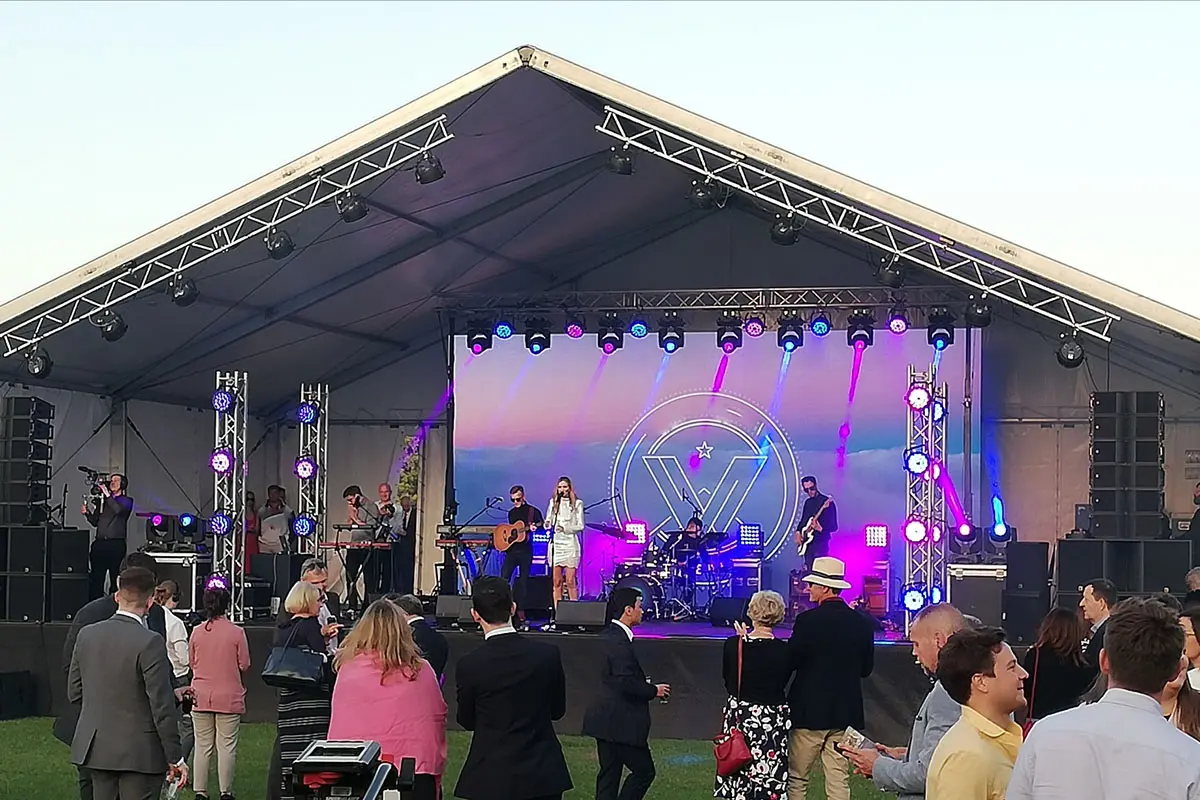
Touring is the most demanding use case: fast builds, constant transport and heavy camera exposure. Rental-grade cabinets with quick locks, curved options and a pitch of P2.6 to P3.9 are typical, and the wall usually works alongside IMAG screens so the audience can watch both the performance and the graphics.
02. Corporate Events, Product Launches and Conferences
Corporate work usually needs a wide rather than tall format, matching an ultrawide canvas behind the speaker. Fine pitch matters because the front rows sit close, and the wall often doubles as the stage set with branding, lower thirds and live captions. See our LED screens for events overview for typical layouts.
03. Theatre, Worship and Broadcast Studios
Studios use LED walls for virtual sets, where the screen replaces a green screen and lit backgrounds render correctly on camera. In worship venues a large backdrop carries lyrics, sermon graphics and live IMAG for a congregation that may sit far from the platform. Broadcast facilities also cross-check refresh rates against our LED control system options to keep processing consistent.
04. Weddings, Private Celebrations, Sports and Esports
Private events use softer content, custom monograms and photo-friendly colour grading; a modest fine-pitch wall behind the head table lifts the room without overwhelming it. In arenas the same hardware supports replays, score graphics, sponsor rotations and fan walls.
6. How Much Does an LED Background Screen Cost?
Cost is the first question most buyers ask, and the honest answer depends on pitch, brightness and whether the wall is bought or rented. The ranges below are indicative 2026 market figures and vary with region, quantity and project scope.
01. Purchase Price of an LED Background Screen
An indoor rental-grade wall costs roughly 800 to 1,600 US dollars per square metre depending on pitch and cabinet quality, while outdoor IP65 versions run from about 1,000 to 2,000 US dollars per square metre. Fine-pitch P1.2 to P1.5 panels for studio and corporate use sit at the top of that range. A turnkey LED background screen price also covers the controller, media server, rigging hardware, flight cases and installation, which can add 20 to 40 percent to the panel cost.
02. Rental Cost and When Buying Pays Back
Daily rental typically falls between 30 and 150 US dollars per square metre per day depending on type, pitch, size and location, with crew, transport and rigging quoted separately. A one-day event is almost always better served by renting, while productions that use the same wall more than roughly fifteen to twenty times a year usually save money by buying. Four variables move the number most: pixel pitch, ingress protection, cabinet material and refresh rate.
Table 4. Indicative LED background screen purchase and rental ranges for 2026
| Screen type | Purchase price | Daily rental | Best value when |
|---|---|---|---|
| Indoor LED wall (P2.6 to P3.9) | 800 to 1,200 USD per m2 | 30 to 60 USD per m2 per day | Fewer than 15 uses per year |
| Outdoor rental panel (P3.9 to P4.8) | 1,000 to 1,500 USD per m2 | 40 to 80 USD per m2 per day | Touring productions with 20 or more dates |
| Curved or flexible cabinet | 1,500 to 2,500 USD per m2 | 60 to 120 USD per m2 per day | Creative sets reused across productions |
| Transparent LED backdrop screen | 2,000 to 3,000 USD per m2 | 80 to 150 USD per m2 per day | Retail, facade and window projects |
| Fine-pitch studio panel (P1.2 to P1.9) | 2,200 to 4,000 USD per m2 | 90 to 180 USD per m2 per day | Fixed studio and permanent installs |
7. How to Choose the Right LED Background Screen
Choosing a wall is a sequence of decisions. Work through them in order and the specification writes itself.
01. Match Pixel Pitch to the Closest Viewer
Measure the shortest distance between the screen and the nearest seat, then apply the one to one and a half times pitch rule. If the show will be filmed, choose one step finer than the audience alone would require, because a camera resolves detail that eyes do not.
02. Decide Indoor or Outdoor and Confirm the IP Rating
If the screen will ever be used outdoors, specify IP65 or better and plan for wind loading and ballast. Taking an indoor LED background screen outside for a single event usually costs more in risk than renting a properly rated outdoor model costs outright.
03. Size the Screen to the Venue, Content and Rigging Plan
Stage width, trim height and camera framing decide the aspect ratio. Content is often produced in 16:9 or ultrawide, so if the wall is 4 m tall and 12 m wide, content should be built at that ratio rather than scaled, otherwise letterboxing or cropping appears on show day. Our guide to choosing the right LED screen size walks through the same calculation. Confirm truss capacity, motor positions, cable runs and total power draw at the same time, and decide early whether the wall will be ground-stacked or flown.
Table 5. Recommended LED background screen configuration by event type
| Event type | Recommended pitch | Typical screen size | Brightness | What matters most |
|---|---|---|---|---|
| Wedding or private party, indoor | P2.6 to P3.9 | 4 to 8 m wide | 1,000 to 1,500 nits | Photo-friendly colour, quiet operation |
| Corporate conference, indoor | P1.9 to P2.6 | 6 to 12 m wide, ultrawide | 800 to 1,200 nits | Text sharpness, comfortable brightness |
| Concert or touring production, indoor | P2.6 to P3.9 | 10 to 20 m wide | 1,500 to 3,000 nits | Fast build, curved options, camera refresh |
| Outdoor festival | P3.9 to P6.9 | 12 to 30 m wide | 5,000 to 6,000 nits | IP65 sealing, wind loading, sunlight contrast |
| Broadcast or virtual studio | P1.2 to P2.6 | 4 to 10 m wide | 1,000 to 2,500 nits | Refresh rate, colour accuracy, moire control |
| Sports arena or esports stage | P2.9 to P6.9 | 15 to 40 m wide | 4,000 to 6,000 nits | Replay speed, viewing angles, rigging height |
8. Content and Design for an LED Background Screen
Content produced for a desktop monitor rarely performs on a large wall. The screen is a light source, the audience sits close, and camera exposure adds a second set of constraints.
01. Build Content at the Screen’s Real Resolution
Ask the supplier for the exact pixel dimensions of the assembled screen and design at that size. Keep titles inside a safe area, avoid holding pure white on pure black for long periods, and remember that very thin lines and small fonts break up on a coarse-pitch display. Previewing on the actual wall is the only reliable test.
02. Match the Content Style to the Event
Corporate work suits restrained palettes, clean typography and slow transitions; music festivals suit high-energy motion and saturated colour; weddings suit soft gradients, monograms and skin-tone-friendly lighting. The best content looks intentional rather than busy, and leaves room for the performer.
03. Test, Back Up and Rehearse
Run the full show on the real screen rather than a laptop, and confirm colour, brightness and refresh with the camera that will film it. Keep a duplicate playback machine, hold an offline copy of every file, and rehearse cues with the lighting desk so audio, light and video change together instead of drifting apart.
9. Installing, Operating and Maintaining an LED Background Screen
Most problems on show day are procedural rather than technical, and nearly all of them can be removed with a short checklist.
01. Setup and Testing Checklist
- Confirm power distribution, circuit balance and total load before the first cabinet is flown.
- Test the full data chain, including the backup processor, and label every cable at both ends.
- Check cabinet alignment and seams, then run a solid-colour test across the whole LED background screen.
- Run a dead-pixel test and photograph the result so warranty claims are easy later.
- Keep spare cabinets, receiving cards and power supplies on site, not in the warehouse.
02. Lighting, Camera Balance and Maintenance
Treat the wall as a light source when designing the lighting rig. Keep front light off the screen where possible, set brightness so that skin tones match the stage, and lower output during dramatic moments rather than pushing stage lights higher. For camera work, lock shutter angle and refresh rate together so the wall does not band on recording. Clean LED background screen panels with a dry, soft cloth and never with solvents, store cabinets in flight cases with desiccant, and log any module that fails a pixel test so it is repaired before the next build. A GOB-coated LED module is worth considering where panels are handled hard or used in damp conditions.
10. Common Mistakes to Avoid With an LED Background Screen
- Choosing pixel pitch by price instead of by viewing distance.
- Ordering panels without checking rigging capacity, trim height or available power.
- Designing content on a monitor and scaling it to the wall instead of building at native resolution.
- Arriving without spare cabinets, receiving cards or a backup processor.
- Ignoring refresh rate on a screen that will appear on camera.
- Mixing cabinet batches with different colour calibration on one LED background screen.
- Booking an indoor product for an outdoor event without IP-rated panels and wind planning.
- Treating the wall as scenery and forgetting that it also lights the performers.
11. LED Background Screen Trends to Watch in 2026
Hardware and content workflows are moving quickly. Three shifts matter most for anyone planning a production this year.
01. AI-Assisted Content and Real-Time Rendering
Production teams increasingly generate backgrounds, transitions and reactive visuals with AI tools and render them live on the same wall. This shortens the content pipeline and makes per-show customisation practical rather than a luxury, although it also raises the value of a reliable playback system.
02. Virtual Production and Augmented Reality
More stages pair an LED background screen with tracking cameras so that in-camera visual effects, AR graphics and physical performers share one frame. The wall becomes a lighting source as well as a background, which improves realism for broadcast and streamed content alike.
03. Finer Pitch, Higher Refresh and Lighter Cabinets
Fine-pitch panels continue to fall in price, refresh rates above 7,680 Hz now appear on premium models, and magnesium-alloy cabinets reduce weight per square metre. Lighter cabinets mean faster builds and lower transport costs for touring inventory.
12. LED Background Screen FAQs
13. Conclusion
The LED background screen has moved from a touring luxury to the default stage surface, and the reason is simple: it is the only backdrop that stays bright under any lighting rig, changes instantly, and works equally well for the audience in the room and for a camera at the back. Get the fundamentals right, with pitch matched to viewing distance, brightness matched to the room and cabinets matched to the rig, and the wall will outperform every traditional alternative for years.
Start by defining the viewing distance and the content ratio, then choose the screen type that satisfies both. Budget for spares, a backup processor and a rehearsal on the real wall. Explore our stage LED screens and rental LED screen ranges, or send us your stage dimensions and viewing distance and we will recommend the exact LED background screen configuration for your next production.
 Outdoor Advertising Screens: The Complete 2026 Buying Guide
 LED Display Screen User Guide: How to Choose