
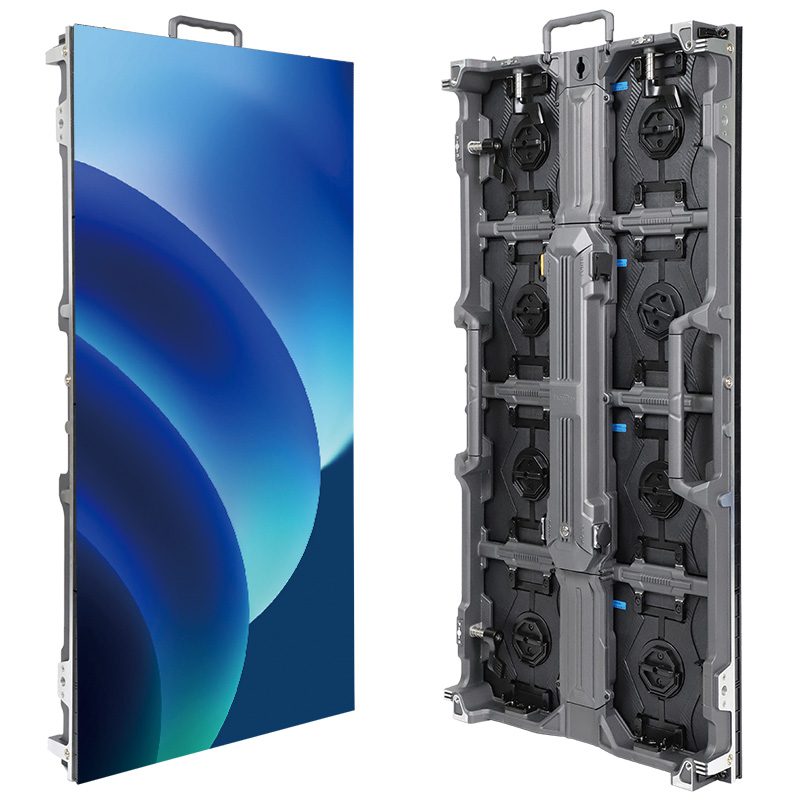
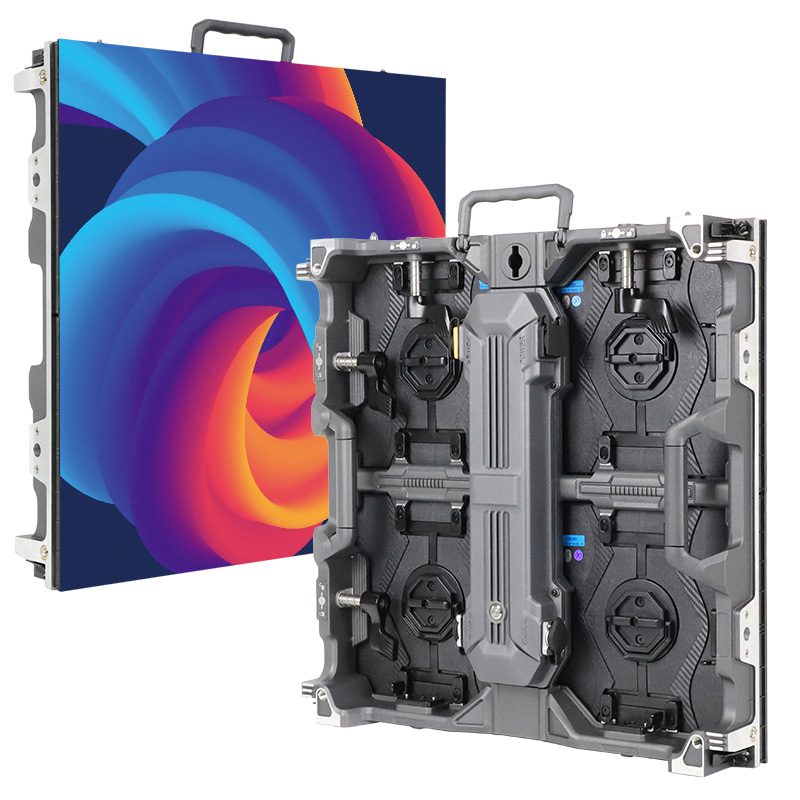
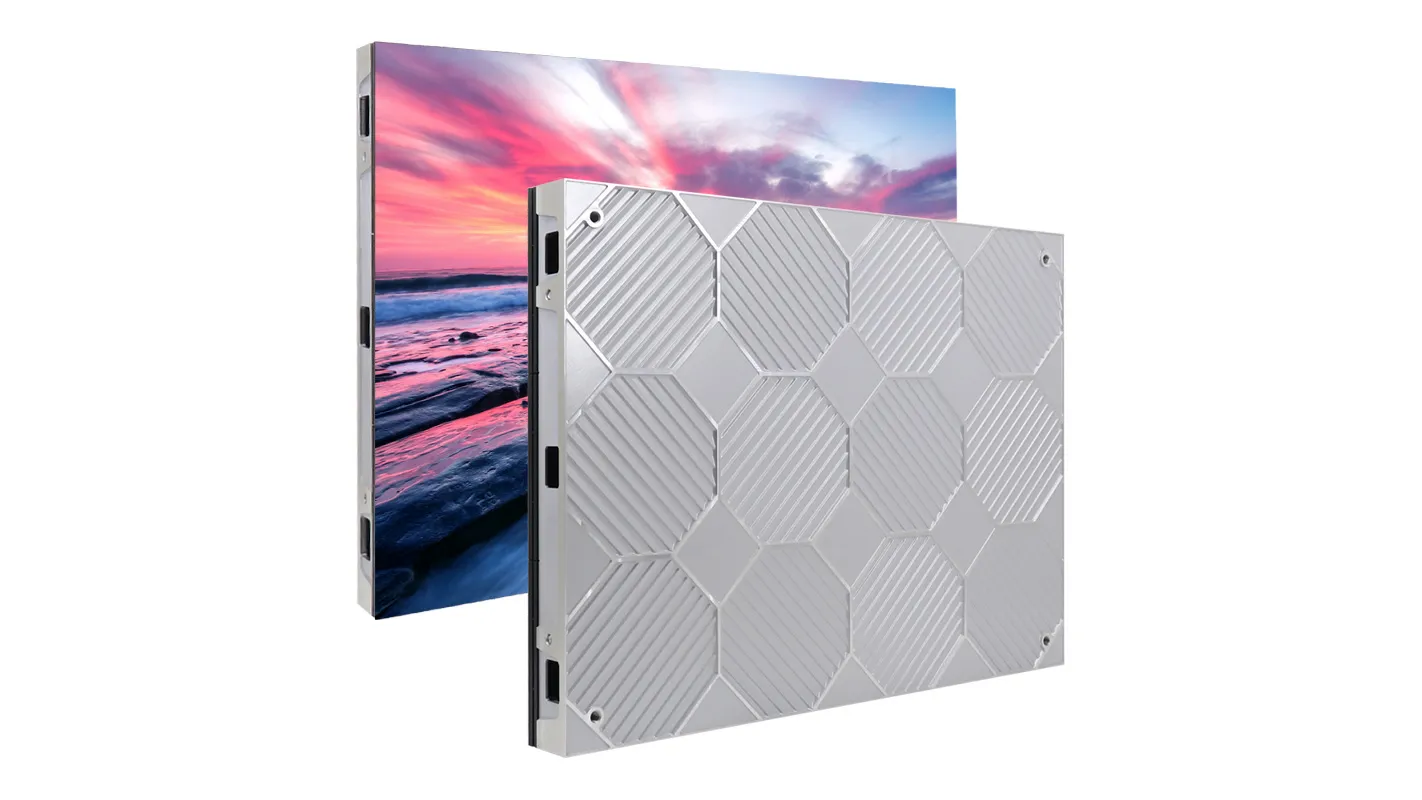
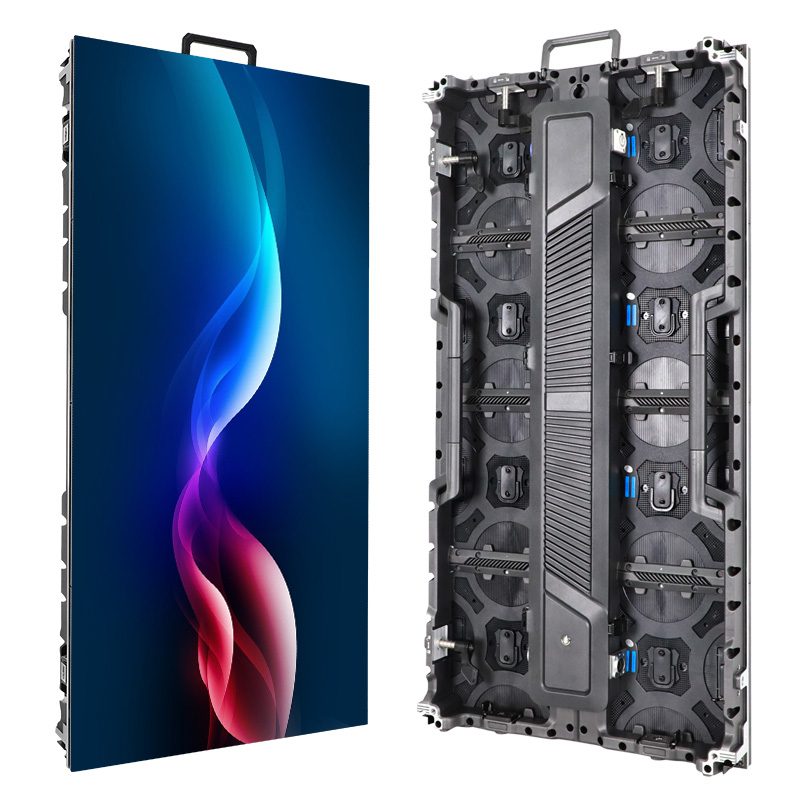
A kinetic LED wall is a video display whose LED modules move. Each cabinet or pixel block travels forward, backward or sideways on a motorised rail while it plays video, so the screen physically changes shape as the content runs. That combination of motion and light is what turns a passive advertising surface into a kinetic LED display people stop, film and share.
This guide explains how a kinetic LED wall works, what it costs, which specifications matter, where kinetic LED displays are proven, and how to de-risk a project before you sign.
What this guide covers
1. What Is a Kinetic LED Wall and Why Brands Use One
01. Kinetic LED wall definition: motion as a second display layer
A kinetic LED wall is an LED display in which the physical position of the modules becomes part of the picture. Each LED module rides on a motorised carriage, and software drives those carriages in step with the video signal. The result is a kinetic LED display that can ripple like water, rise into a wave, or break an image apart and reassemble it in three dimensions.
The depth is real, not rendered. A module that travels 400 mm towards the viewer genuinely sits 400 mm closer, which is why a kinetic LED screen looks impossible in a photograph. That physical depth is also why these walls hold attention: they break the pattern of static signage, they give creative teams a new dimension to write in, and they still signal investment in technology because a kinetic LED wall remains uncommon.
02. Kinetic LED wall vs 3D LED video wall vs standard LED display
Buyers often compare a kinetic LED wall with a naked-eye 3D LED video wall, because both promise depth. They solve it in opposite ways: the 3D wall creates depth optically through perspective content and angled cabinets, the kinetic wall creates it mechanically.
| Factor | Kinetic LED wall | 3D LED video wall | Standard LED display |
|---|---|---|---|
| Source of depth | Real module travel on rails | Perspective content, angled cabinets | None; one flat plane |
| Motion hardware | Motors, rails, controller | Not required | Not required |
| Content workflow | Video plus a motion script | Video for one sweet spot | Standard playback |
| Viewing angle | Wide | Narrow | Wide |
| Capital cost | Highest | Moderate to high | Baseline |
| Maintenance | Electronics plus wear items | Electronics only | Electronics only |
Projects that need a static screen instead are usually served by an outdoor LED advertising screen, a rental LED video wall, an interactive LED floor screen or a double-sided maintenance LED display.
If a project needs depth but cannot tolerate moving parts, a 3D billboard is the safer answer. If the goal is to make people stop camera-first, a kinetic LED wall has no direct substitute.

2. How a Kinetic LED Wall Works: Modules, Motors and Control
01. The mechanical layer: motors, rails and motion profiles
Three drive architectures dominate kinetic LED wall design. Belt drives are cheapest and suit short travel; rack-and-pinion or lead-screw drives carry heavier loads, which matters when an outdoor cabinet must move against wind load. Closed-loop servo drives are the premium choice: the controller compares commanded position with encoder feedback, so a module that meets an obstruction reports the deviation instead of grinding against it.
Four motion parameters decide how the wall feels and how long it lasts. Travel depth sets the maximum apparent depth. Cycle time sets the pace: a wave completed in three seconds reads as fluid, while the same movement in half a second reads as violent and stresses the mechanics harder. Duty cycle, the share of time the system may move, drives the maintenance calendar, so a kinetic LED wall rated for continuous movement costs more than one rated for show use.

02. The display layer: pixel pitch, GOB protection and calibration
The LED side of a kinetic LED wall follows the rules of any high-end indoor display, with one extra constraint: the modules move. Pixel pitch comes first, because viewers stand close to a kinetic LED display and photograph it. These walls are commonly built between roughly P1.5 and P3.9, with P1.9 to P2.6 the sweet spot indoors. Choose a coarser pitch and the moving gaps read as visible seams; our pixel pitch guide shows how to match pitch to viewing distance.
Surface protection comes second. Glue-on-board (GOB) encapsulation fills the space around each LED chip with protective resin, so the pixel surface resists impact, moisture and dust without a fragile lens in front of it. On a static screen GOB is optional; on a kinetic LED wall it is close to essential, because every movement cycle works the module and its connectors. COB modules solve the same problem at panel level, so compare both before fixing a price; see our notes on GOB LED display modules.
Calibration comes third: because the surface constantly re-forms, brightness and colour must stay uniform across hundreds of moving modules, so ask for per-module calibration data and a low-brightness grey-scale test.
03. The control layer: synchronising video, motion and timecode
A kinetic LED wall needs two signals in step: the video that lights the pixels and the motion commands that position them. If they drift apart by even a few frames, the effect reads as a glitch. In a professional system the media server plays the video and simultaneously broadcasts timecode or DMX over Art-Net or sACN. The motion controller converts those values into position targets, then confirms each module reached its target before the next cue fires. Tools such as Notch or TouchDesigner author video and motion data in one project, removing a whole category of sync error, and a dedicated LED video processor handles scaling and output. A system that matches durations by eye will not survive a live show.

| Parameter | Why it decides the outcome | Typical expectation | Question for the supplier |
|---|---|---|---|
| Pixel pitch | Sets viewing distance and whether moving gaps show | P1.5 to P3.9; P1.9 to P2.6 indoors | Closest calibrated viewing distance? |
| Travel depth | Determines the maximum depth of the effect | Roughly 100 mm to 600 mm | Depth per module, and is it repeatable? |
| Drive type | Controls accuracy, noise and service life | Closed-loop stepper or servo in public venues | Position feedback per module? |
| Module surface | Protects LEDs from vibration, touch and dust | GOB or COB rather than bare SMD | What impact and ingress testing was passed? |
| Brightness and refresh | Suits ambient light and prevents camera flicker | 800 to 1,500 nits indoors; 3,840 Hz or higher | Is grey scale clean at 20 percent brightness? |
| Noise | Decides whether it can live in a quiet interior | Quiet-conversation level at one metre | Measured sound pressure per cycle? |
| Ingress and payload | Chooses the outdoor build and sizes the mounting steel | IP54 indoors, IP65 or better outdoors | Load per square metre with the motion frame? |
3. Kinetic LED Wall Applications and Proven Installations
01. Retail, showrooms and branded environments
Retail is where a kinetic LED wall earns its budget fastest, because the metric is dwell time rather than impressions. A static display competes with every other sign in a mall; a kinetic LED wall competes with nothing, and the strongest cases share one trait: the movement tells the product story rather than decorating it. Keep the cycle slow enough that people can read the video while it moves, and keep the audio signature low, because a showroom with a humming wall is a showroom with an unhappy landlord.

02. Stage, concert and broadcast use
Live production adopted the kinetic LED wall first and remains the most demanding market. On stage a kinetic LED screen is not scenery; it is a performer that must hit cues with a live band, appear on camera without flicker and reset between shows. The wall can open during a chorus to reveal a band and close into a solid backdrop for a ballad, and because lighting and video are already timecode-driven, motion becomes an extra channel rather than a new discipline. The risks are equally real: fast, constant movement reads as a gimmick by the third song, and any collision is visible to thousands of people at once, so treat motion as choreography with fewer, larger gestures and a safe position for changeovers. It is why rental demand for kinetic LED walls keeps growing alongside conventional stage LED display inventory.

03. Landmark kinetic LED wall projects
Coca-Cola, Times Square. The kinetic LED wall on the Coca-Cola sign debuted on 8 August 2017 in one of the busiest advertising locations in the world. It uses 1,760 independently moving modules and is credited as the first large-scale robotic billboard of its kind, recognised with a Guinness World Record. What made it work was the content: the modules revealed a curved bottle form no flat screen could produce, so the motion served the product rather than itself.
Spring Festival Gala, China. Recent stagings of the televised gala have used large arrays of movable LED modules as the primary set, rearranging in real time into scenes such as floating pavilions and suspended mountains. The lesson is that a kinetic LED wall can replace physical scenery, which changes the whole production budget conversation.
Dongdaemun, Seoul. Completed in 2022, the wave-shaped kinetic LED screen in Seoul is among the largest moving screens ever built. The reported engineering is the instructive part: it was designed for a humid, salt-bearing climate with anti-corrosion plating and protective coating on the electronics, and the drive system was tuned for low noise because the installation sits beside offices. Any outdoor kinetic LED wall specification should read the same way.

| Project | Location and year | What it demonstrated | Lesson for your project |
|---|---|---|---|
| Coca-Cola robotic sign | Times Square, 2017 | 1,760 moving modules recreating a curved bottle in physical space | Budget content creation, not just hardware |
| Spring Festival Gala stage | China, televised | Movable LED arrays replacing physical scenery mid-broadcast | Compare against the whole set budget |
| Dongdaemun wave screen | Seoul, 2022 | Very large wave surface engineered for salt air and low noise | Outdoor builds need corrosion protection and a storm position |
| Interactive retail installations | Global brand stores | Sensor-triggered movement creating dwell time and sharing | Only add sensing if it triggers almost by accident |
4. Kinetic LED Wall Cost: Purchase, Rental and Ownership
01. What drives the purchase price
Kinetic LED wall cost is not a single number, and any supplier who quotes one without asking about travel depth, quantity and content workflow is guessing. Four variables set the price.
Module price and quantity. The moving module is the largest hardware line. Publicly listed prices for kinetic LED modules have sat around US$600 to US$900 per panel, with fine-pitch versions at the top of that band, a very different cost base from a static module of the same pitch.
Travel depth and geometry. A shallow 100 mm ripple is cheaper than a 600 mm throw, because depth drives motor torque, rail length, frame thickness and structural load.
Content production. A kinetic LED wall needs video and a motion script authored together, so a fifteen-second choreographed sequence is a design project measured in weeks. Suppliers who provide a reusable motion template library cut that significantly, and it is the line item clients most often forget.
02. Rental rates and when renting wins
Rental is the fastest route to a kinetic LED wall and the right answer for most product launches, trade stands and filming days. A rental package is normally priced per square metre per day or per week, and the rate moves with pitch, quantity, duration, distance and technical support.
A rental quotation should state what is inside it: modules and motion frames, motion controller, media server, setup and show technician, spare modules, and either a motion template library or a content support fee. It should also state what is excluded, because rigging, power, freight, insurance and crew travel are usually separate. Renting also de-risks a first project: if your venue and content team have never worked with a moving wall, a two-week rental produces real data on dwell time, noise tolerance and content performance for a fraction of a purchase price.
03. Total cost of ownership over five years
Purchase price is roughly half the story; the rest is energy, maintenance, spares, content refresh and downtime. A moving wall draws more than a static screen of the same area because the drive system is always doing mechanical work, so ask for measured power per square metre in both states and price it at your own tariff. If the site runs around the clock, schedule motion instead of running it continuously.
Maintenance is the second variable: motors, rails and bearings are what separate a kinetic LED wall from an ordinary display, so a preventive plan matters more than a repair response. Expect at least two inspection visits a year indoors and a pre-winter check for exposed facades. The third is content refresh, because a wall showing the same three movements for two years stops being a landmark, so treat new sequences as an operating expense.
| Cost element | Indicative basis | Depends on | Planning advice |
|---|---|---|---|
| Kinetic LED modules | Publicly listed prices around US$600 to US$900 per panel | Pixel pitch, module size, drive type, quantity | Compare with a static module of the same pitch |
| Motion frame and drives | Quoted per module or per square metre | Travel depth, load, indoor or outdoor build | Confirm frames, rails and motors are included |
| Controller and media server | Scaled to the number of axes | Sync method and redundancy requirement | Insist on timecode or DMX sync |
| Content production | A design project priced in weeks | Sequence length, complexity, template reuse | Ask for a motion template library |
| Structure, power and data | Site-specific, often the largest surprise | Facade strength, cable runs, circuits | Commission a structural check first |
| Annual maintenance | Recurring contract; outdoor higher than indoor | Module count, environment, duty cycle | Budget from year one, not year three |
| Rental | Per square metre per day or per week | Pitch, quantity, duration, distance | Ask if controller, server and spares are included |
| Scenario | Better model | Why |
|---|---|---|
| One-off launch, trade show or filming day | Rent | No capital outlay, technician included, no storage burden |
| Flagship store or permanent showroom | Buy | Content can be tuned to one venue and becomes brand identity |
| First project for an unfamiliar team | Rent first, then buy | A short rental generates the data needed to justify capital |
| Hard deadline, limited budget | Consider a 3D billboard | Depth without moving parts removes the mechanical burden |
5. Site Requirements, Installation and Reliability
01. Structural payload, mounting and access
A kinetic LED wall is heavier and more demanding than a static screen of the same area, and that is where most projects lose time. The motion frame adds mass, and because modules travel forward the load centre moves away from the wall, increasing the bending moment the mounting steel must resist. Ask for the load per square metre including the motion frame, then have an engineer confirm the facade or truss before ordering.
Access is the second constraint: every module needs a service position and must be reachable without dismantling the wall. Insist on front or rear service access that matches the space you have, and ask how one failed module is released without decoupling its neighbours.
02. Power, cooling and cable management
Motion hardware changes the electrical design. Motors draw surge current when they accelerate, so the drive system usually needs its own circuit rather than sharing a feed with the LED power supplies. Splitting the two also makes fault-finding easier: if the screen goes dark you know whether the problem is in the display or the motion system.
Cooling matters more than in a static installation, because motors and drives generate heat inside an enclosure that also holds electronics, so specify adequate airflow and confirm the rated temperature range. Cable management matters too: every module moves, so every cable flexes. Use continuous-flex cable, service loops and strain relief, then recheck the routing after the first thousand cycles.
03. Commissioning, maintenance and safety
Commissioning is where a kinetic LED wall is proved or exposed, so write the acceptance test into the contract. Every module must complete its full travel in both directions, repeatability must be verified against a reference mark, sync must hold across a long sequence without drift, and the wall must park reliably. Run the test with your own content, not a supplier demo.
Quarterly rail inspection and cleaning, half-yearly checks of motor mounts, drive tension and connector seating, annual recalibration, and replacement of wear parts on the rated cycle will cover most sites. Keep one spare module and one spare drive per twenty modules on site, because a dark patch on a moving wall is far more conspicuous than on a static screen.
Safety is non-negotiable wherever the public can stand close. Moving modules create pinch points, so require infrared or contact-based emergency stop that cuts drive power when an obstacle is detected, passive-safe mechanics that will not crush a hand during a power failure, and a defined reaction to wind and rain outdoors. Ask for the full documentation pack: risk assessment, electrical certification and a maintenance log template.
6. How to Choose a Kinetic LED Wall Supplier
01. What a credible quotation contains
A serious kinetic LED wall quotation reads like a small engineering document, not a product listing. It should name the pixel pitch, module size, travel depth and drive type, list the load per square metre, give a measured noise figure and an IP rating for the moving joint, and describe how video and motion stay in sync. It should also state who writes the content and which parts are wear items.
Manufacturers who build both static and kinetic LED displays are useful partners here, because they can tell you when a moving wall is the wrong answer and a standard advertising LED board would do the job for far less.
02. Warning signs in a proposal
Four answers should make you slow down. If nobody mentions duty cycle, the mechanics have not been matched to how hard the wall will work. If noise is called acceptable without a number, it has not been measured. If synchronisation means matching video length to movement by hand, the system will drift in a live show. And if there is no spare-parts list or maintenance plan, you are buying a prototype.
Finally, check references that match your environment, because an indoor store and an exposed coastal facade test a kinetic LED wall in very different ways. Ask what failed first.
7. FAQs
01. What is a kinetic LED wall?
A kinetic LED wall is an LED display whose modules move. Each module or cabinet block sits on a motorised carriage, and a motion controller drives those carriages in step with the video signal, so the surface physically changes shape while it plays content. The depth is real rather than an optical illusion, which is what separates it from a flat screen showing a three-dimensional video effect.
02. How much does a kinetic LED wall cost?
Budget depends on pixel pitch, travel depth, module quantity and content production. Publicly listed market prices for kinetic LED modules have sat around US$600 to US$900 per panel, with the motion frame, controller, media server, structural work and content design on top. Because engineering and content are largely fixed costs, price per square metre falls as the wall gets larger, so ask for a line-item proposal rather than a single figure.
03. How much does it cost to rent a kinetic LED wall?
Rental is normally quoted per square metre per day or per week, and the rate moves with pitch, quantity, duration, distance and the support included. A complete package covers modules, motion frames, controller, media server, a setup and show technician, spares and a motion template library. Rigging, power, freight, insurance and crew travel are usually separate, so compare on inclusions rather than the headline rate.
04. What does kinetic LED wall installation involve?
Four stages: a structural check against the load per square metre including the motion frame, fixing and alignment of the frames, power and data connection on separate circuits, then commissioning. Commissioning covers a full travel test in both directions, repeatability checks, a long sync test and a safe-park test. Allow time for the structural review, because the building interface delays more projects than the display does.
05. Can a kinetic LED wall be installed outdoors?
Yes, and several landmark kinetic LED walls are outdoor installations. An outdoor build needs a higher ingress rating on the moving joint rather than just the cabinet, anti-corrosion treatment for humid or salt-bearing air, wind-load engineering on the drive system, and a safe position that parks every module before a storm. Noise control matters too near offices, so large outdoor kinetic LED displays often use low-noise drives.
06. How much maintenance does a kinetic LED wall need?
More than a static screen, because motors, rails and bearings are wear items. A practical schedule is quarterly rail inspection and cleaning, half-yearly checks of motor mounts, drive tension and connector seating, annual recalibration, and wear-part replacement on the rated cycle. Keep one spare module and one spare drive per twenty modules on site.
07. What content does a kinetic LED wall need?
Two things authored together: video for the pixels and a motion script for the mechanics. Because the two are choreographed as one sequence, production takes longer than a standard video of the same length. Start from reusable motion templates such as wave, stagger, fold and bloom, then replace the graphics and tune the timing for each campaign, so the expensive engineering work is paid for once.
08. Is a kinetic LED wall better than a 3D LED video wall?
They answer different questions. A 3D LED video wall creates depth optically with no moving parts, so it is cheaper to own and simpler to maintain, but the effect only reads from a narrow position. A kinetic LED wall creates depth mechanically and reads from a wide angle, which is stronger for retail, showrooms and stage work at the cost of a motion system to maintain.
8. Conclusion
A kinetic LED wall is the only display format that changes the shape of the screen as it plays, which is why it keeps winning the two seconds that matter in advertising. It is also a project with moving parts, so the specification matters more than the demo. Confirm pixel pitch, travel depth, drive type, noise, ingress rating and sync architecture; budget content, structure and maintenance alongside the hardware; and if the format is new to you, rent before you buy.
EagerLED manufactures kinetic LED walls and the static, rental and outdoor advertising LED screens that sit alongside them, so we can advise honestly on whether motion is worth the mechanical cost for your venue. Send us your wall size, viewing distance, location and operating hours for a line-item proposal.
 COB LED Screen: The Evolution of LED Display Technology
 EagerLED Celebrates The 2025 Qingming Festival