
3D billboard advertising uses an LED screen and carefully rendered animation to make objects appear to extend beyond the display. Most street installations use anamorphic perspective: the image looks dimensional from a planned viewing area, even though the light comes from a physical screen. Viewers do not need glasses, and the objects do not actually float above the street.
For advertisers, the useful question is whether that visual effect helps people understand and remember a product. For screen owners, the challenge is coordinating site geometry, LED hardware, creative production, and reliable playback. A convincing demonstration needs all four; purchasing a display alone does not deliver a finished campaign.
This guide explains how 3D billboards work, what real examples teach, how they compare with conventional advertising, and what to check before investing. It also separates media rental from installation costs, provides practical specification tables, and explains how to judge results without assuming that a popular video guarantees sales.
1. What Is a 3D Billboard, and Are 3D Billboards Real?
A 3D billboard is an advertising display that creates either actual physical depth or an illusion of depth. In contemporary digital advertising, the term usually means a naked-eye 3D LED billboard playing anamorphic animation. The screen is real; the apparently protruding shoe, animal, or spacecraft is a rendered image.
There are several technologies behind the broader term. Anamorphic displays use perspective, shading, scale, and occlusion. Robotic signs physically move their display modules. Sculptural billboards attach three-dimensional objects to a structure. Holographic and optical glasses-free displays are separate technologies, so their specifications should not be assumed to apply to a conventional LED installation.
When evaluating a video, look for the screen boundary and surrounding building. Footage filmed from the intended viewpoint can represent a real installation accurately. Other advertising clips add computer-generated objects to street footage without displaying them at that location; these are commonly called fake out-of-home, or FOOH. Request unedited site footage from several positions before treating an online clip as proof of a working display.
That distinction matters commercially. A brand commissioning 3D billboard advertising should specify whether it is buying an on-site media placement, a social video, or both. Confirm the actual venue, playback dates, content approval process, and proof-of-play report. A realistic animation shown in a sales presentation establishes creative potential, but does not establish installation performance or audience reach.
2. How Do 3D Billboards Work?
01. Anamorphic perspective creates the illusion
The artist first models the screen and its surroundings, then places a virtual camera where the main audience will stand. The scene is rendered and mapped onto the physical display so that its distorted flat image resolves into convincing depth from that location. JCDecaux describes anamorphic DOOH as an optical illusion based on a particular vantage point.
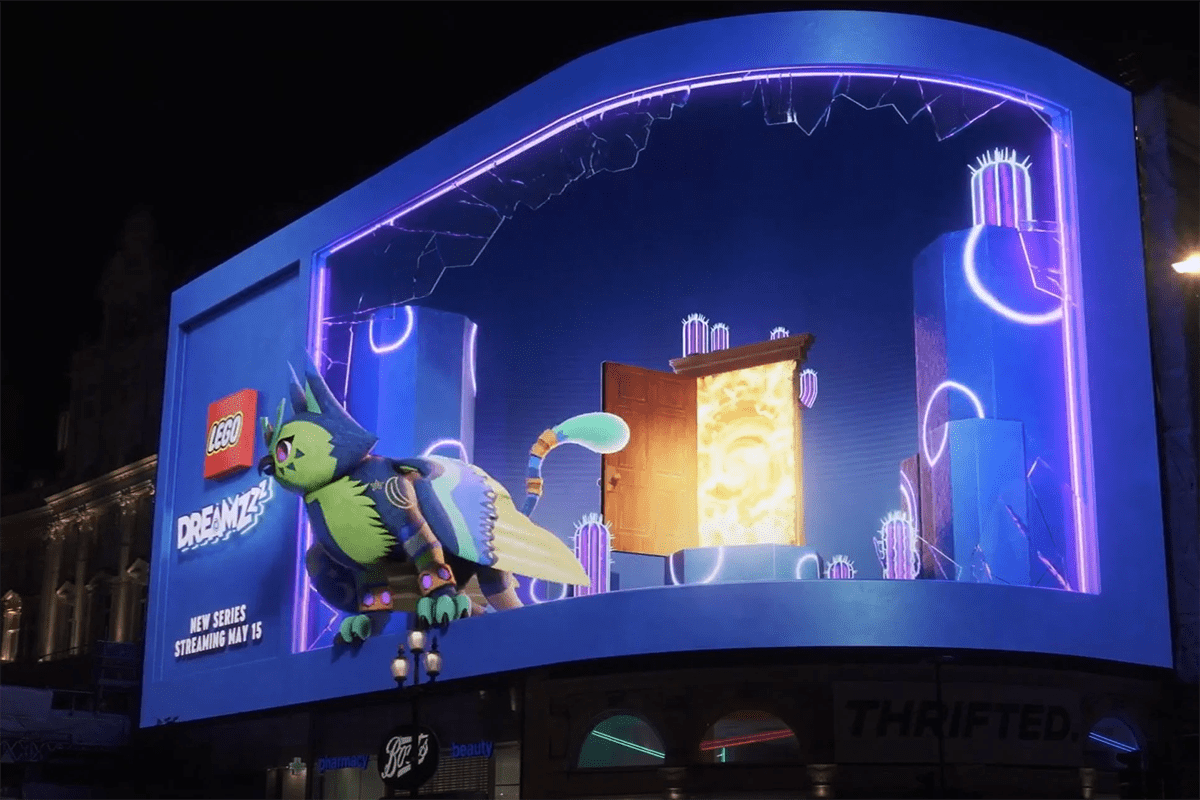
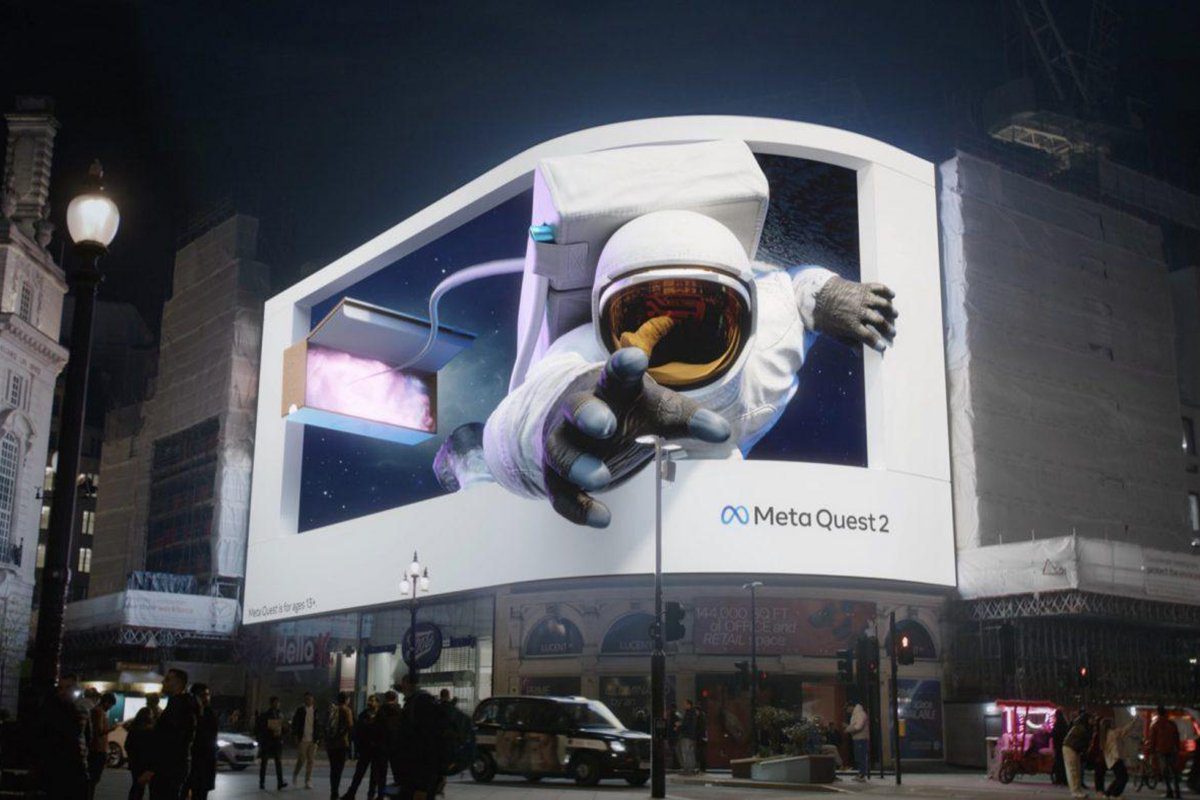
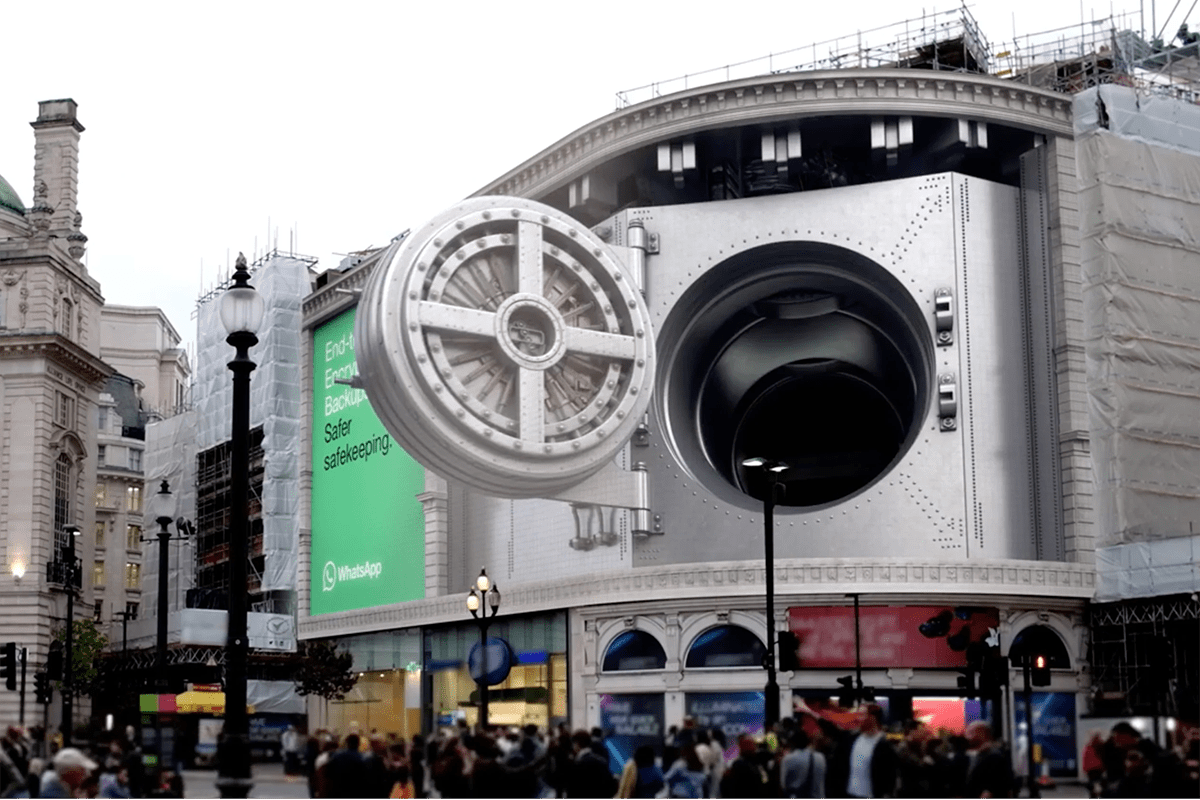
A virtual box is a common creative device. Its back wall appears recessed, while a foreground object crosses a simulated frame. Shadows and overlapping surfaces tell the viewer which object is nearer. The effect can remain visible in an ordinary phone recording because these are pictorial depth cues, rather than separate images delivered to each eye.
02. Screen geometry and the viewing zone must agree
A corner or curved 3D LED billboard can provide a useful canvas for this virtual space, but a corner is not mandatory for every anamorphic effect. Flat screens can also support perspective-based creative. What matters is whether the animation is designed for the actual surface, dimensions, and viewing position.
The LED panel’s viewing-angle specification describes where its brightness and color remain usable. It does not define the area where the 3D illusion looks correct. Test both. People standing far to one side may see a bright image with distorted perspective. Design the brand name and essential message to remain readable even when the strongest depth effect is lost.
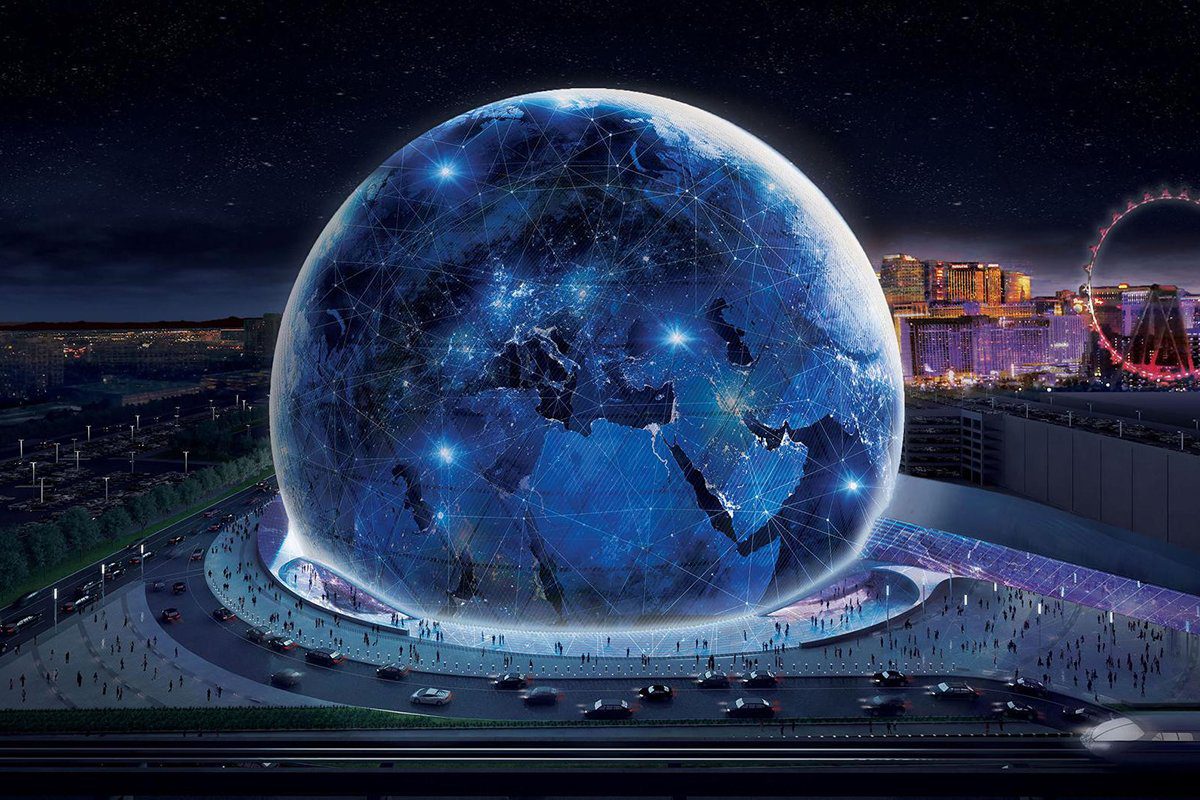
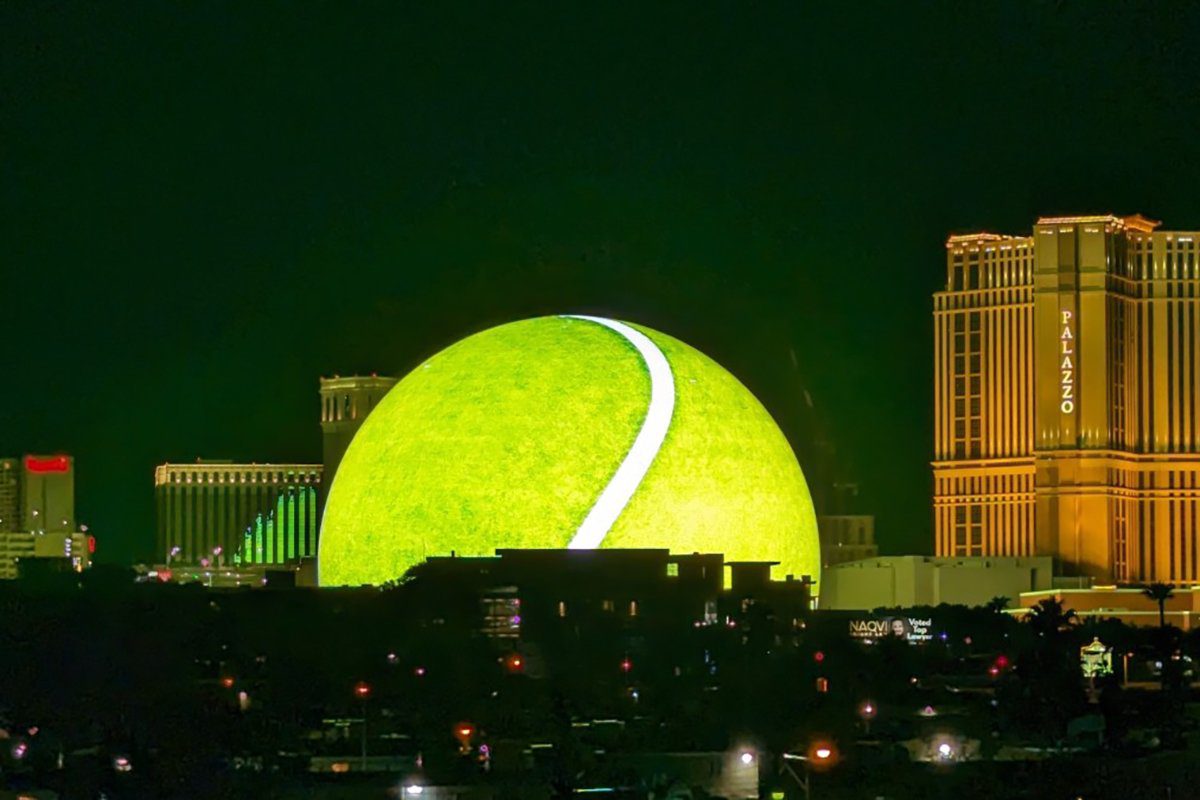
A spherical display is another geometry requiring its own content treatment. The Sphere image above illustrates why creative built for a conventional corner screen cannot simply be stretched onto a curved landmark. Screen shape, scene scale, and the intended observer position must be developed together.
3. Real 3D Billboard Examples and Their Creative Lessons
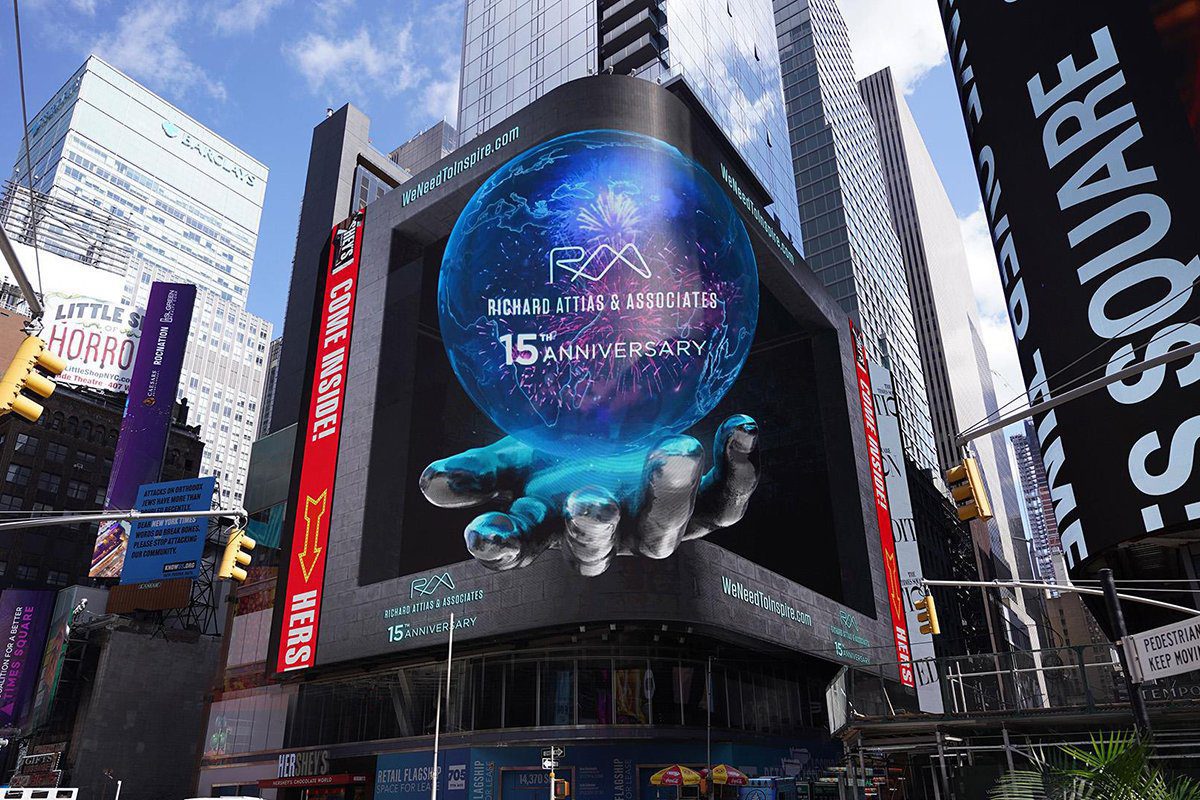
Useful 3D billboard examples explain a repeatable creative principle. They should also identify the underlying technology accurately. The following installations illustrate different approaches; their visibility alone does not establish a measurable increase in sales.
01. Coca-Cola in Times Square: physical movement
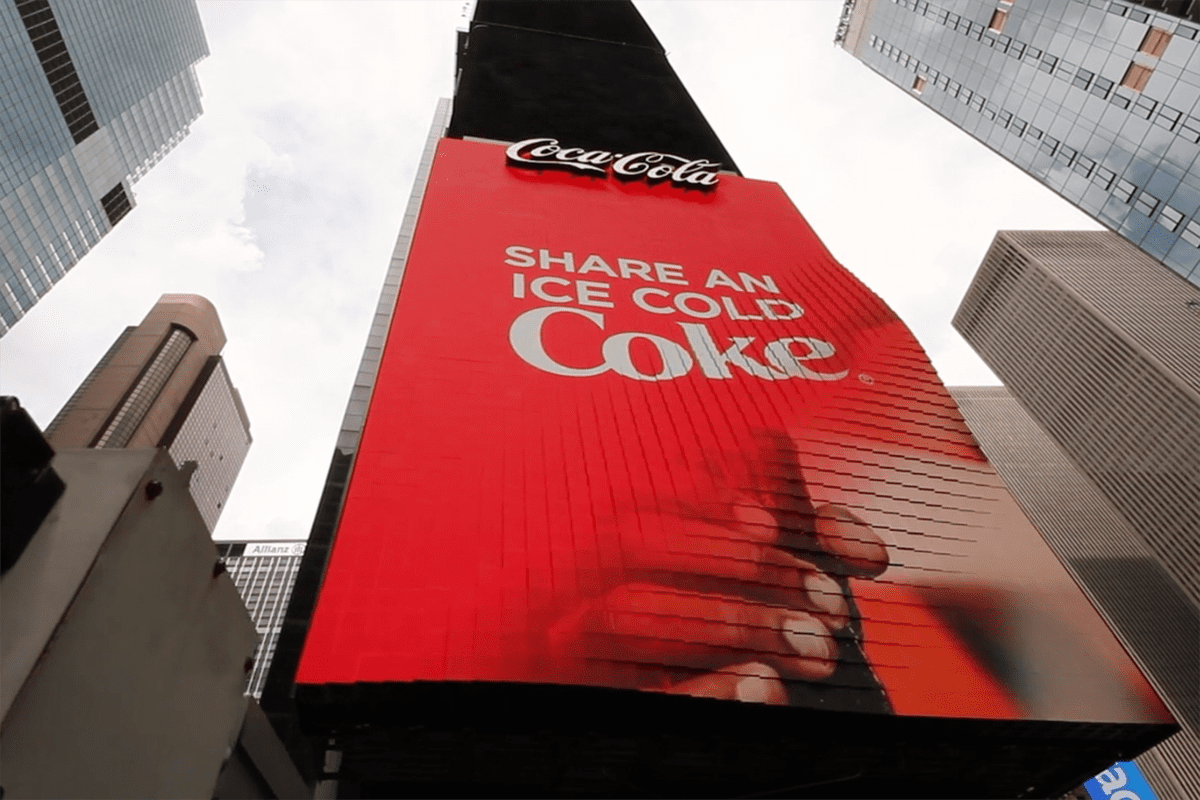
Coca-Cola’s 2017 Times Square sign used 1,760 independently moving LED screens, according to Coca-Cola UNITED’s launch report. This is a robotic display: the moving surface supplies actual depth. Its lesson is to coordinate motion and imagery. It should not be presented as evidence that every anamorphic 3D billboard needs moving cabinets.
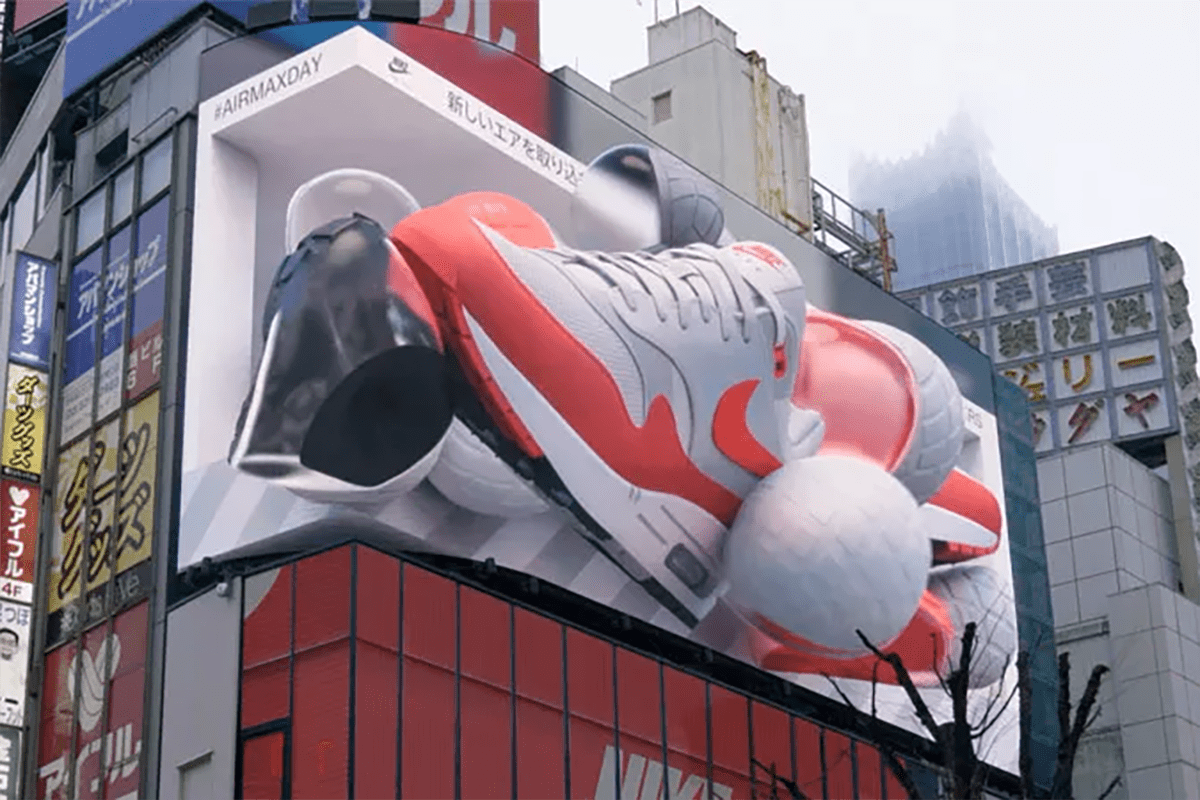
02. Nike in Shinjuku: make the product the focal point
The Nike example shows footwear presented as the central three-dimensional object. The practical lesson is product recognition: the audience should remember the shoe and brand, not only the illusion. Keep the silhouette clear, avoid competing objects, and give the product enough screen time to be understood during a short pedestrian encounter.
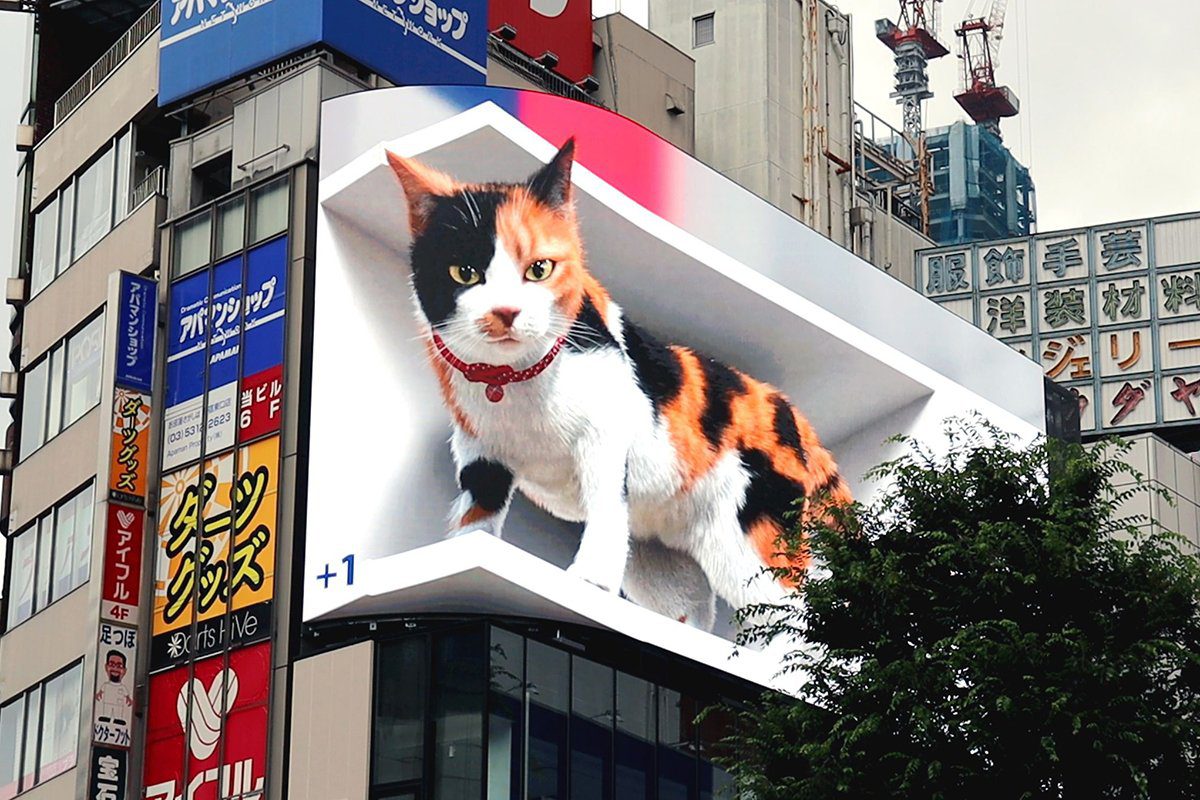
03. The Shinjuku cat: give the scene a believable home
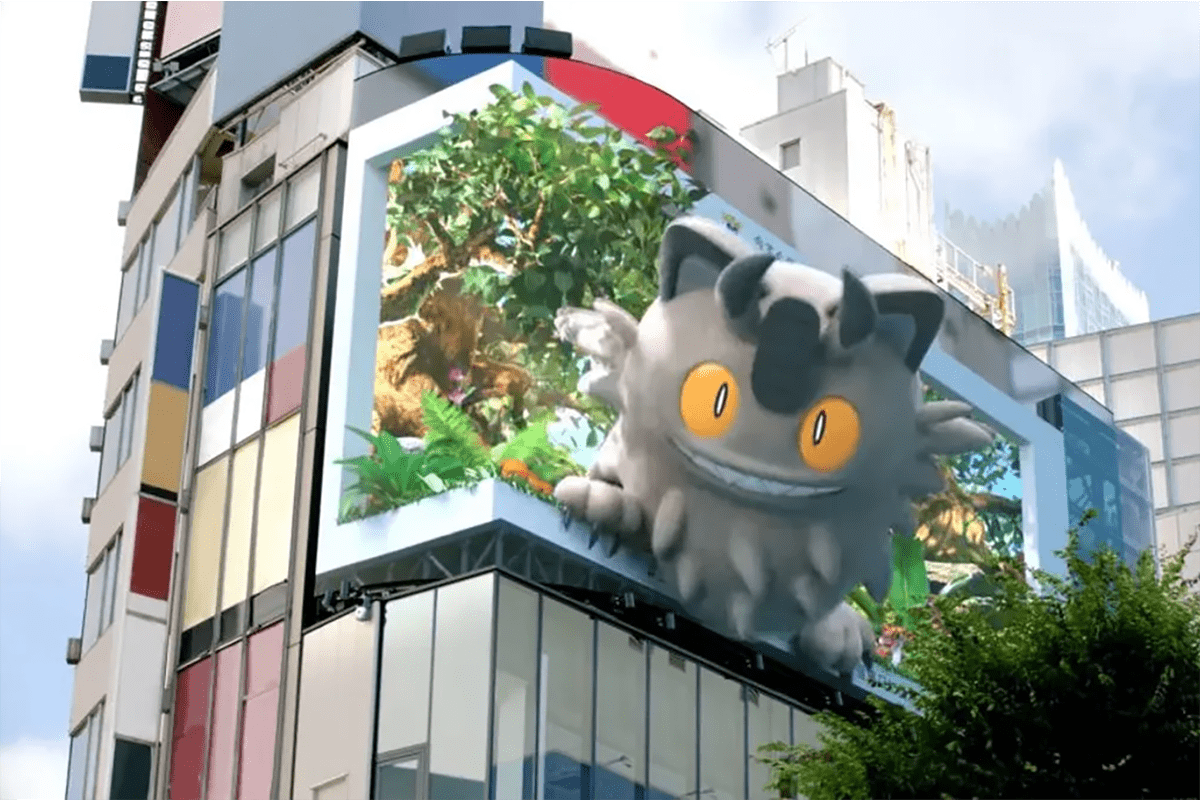
The Cross Shinjuku Vision operator dates the giant cat’s appearance to July 2021. A character occupying an apparent architectural recess creates a simple spatial story. For 3D billboard advertising, a recognizable setting can make small movements effective; every moment does not need an explosive transition.
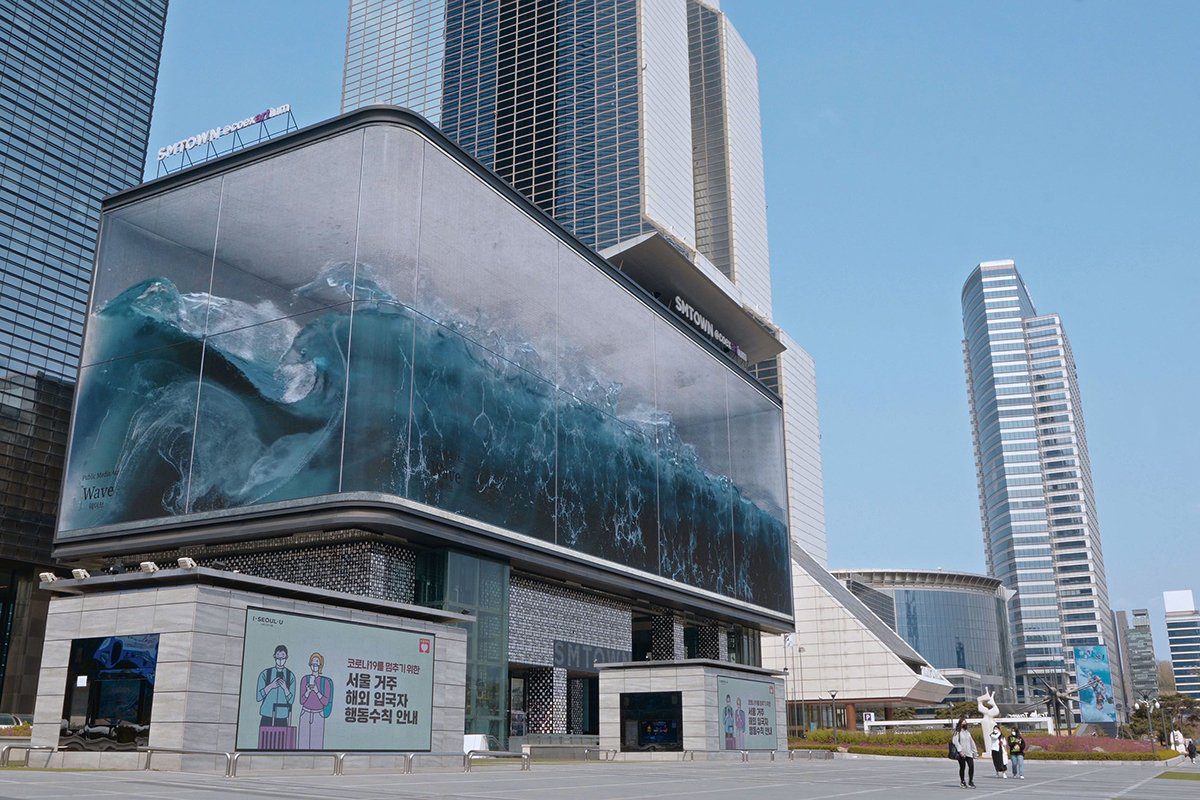
04. Seoul’s WAVE: use a stable frame
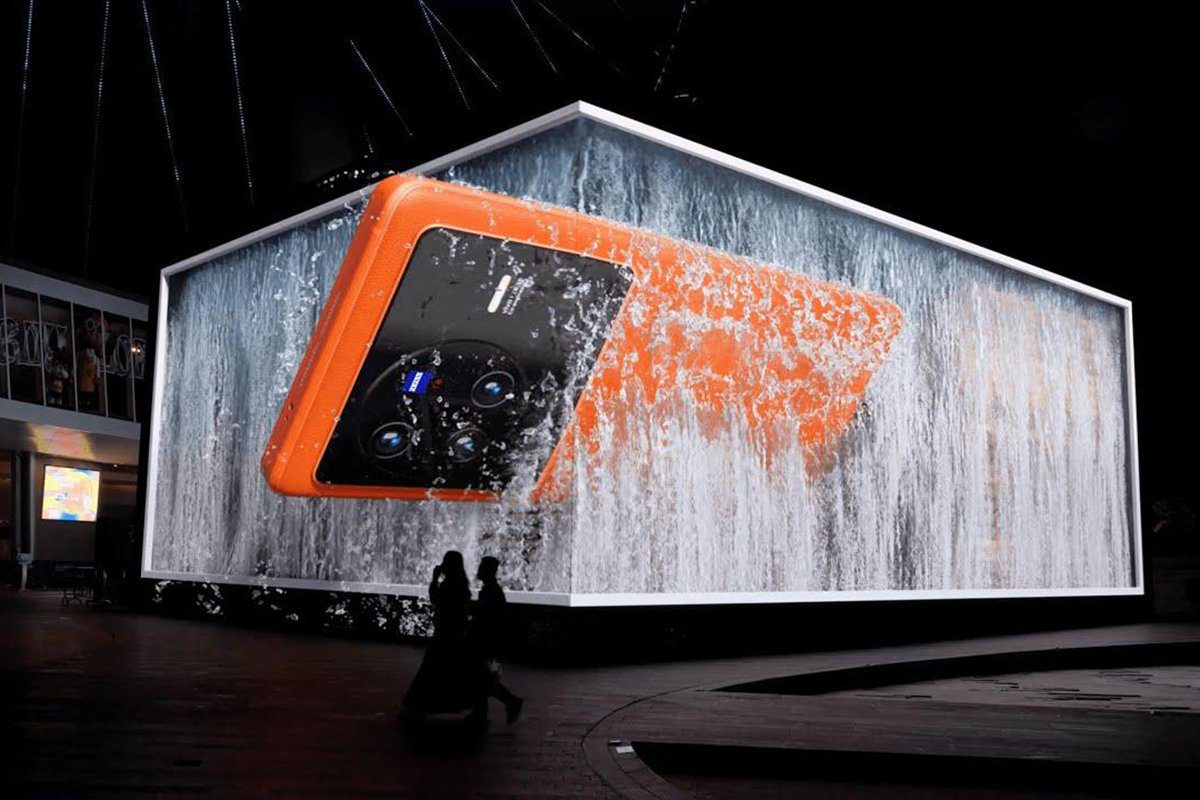
d’strict identifies WAVE as anamorphic content first licensed at COEX K-POP Square in Seoul in 2020. The apparent enclosure makes the water’s movement easy to interpret. A stable frame and consistent depth cues can be more persuasive than filling the whole canvas with unrelated visual effects.
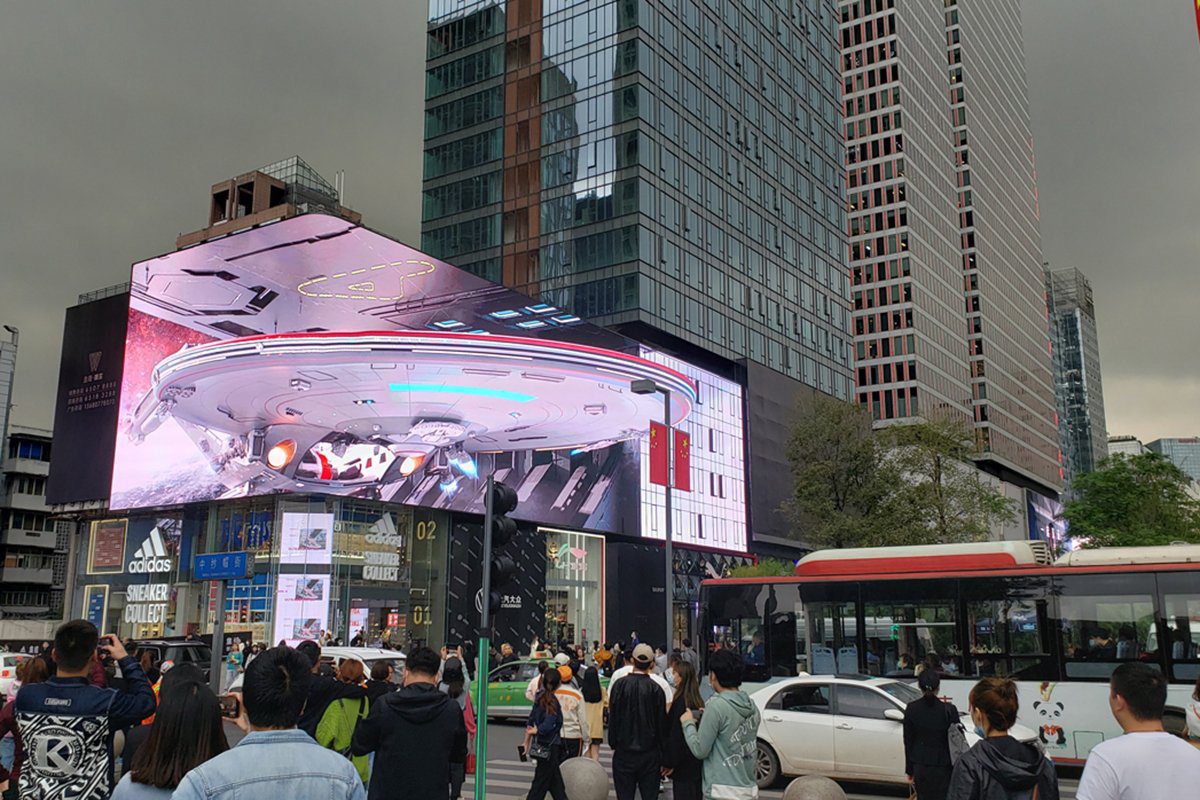
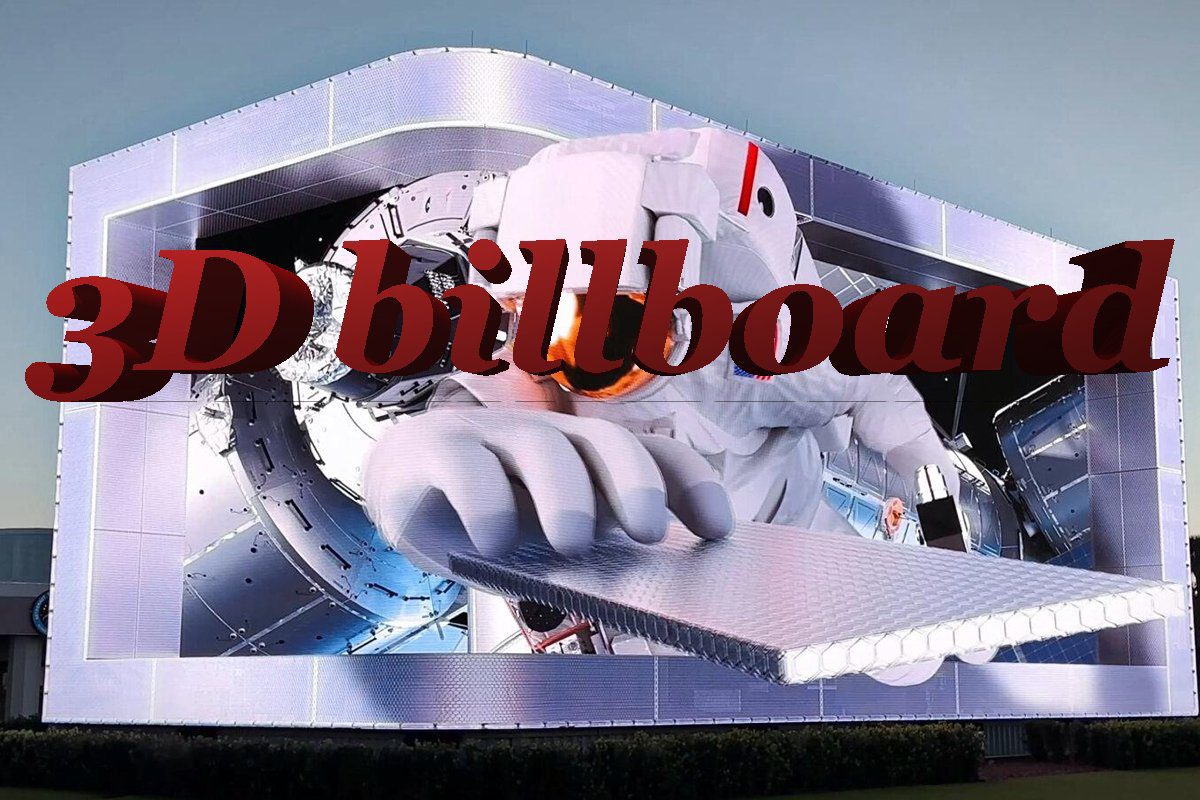
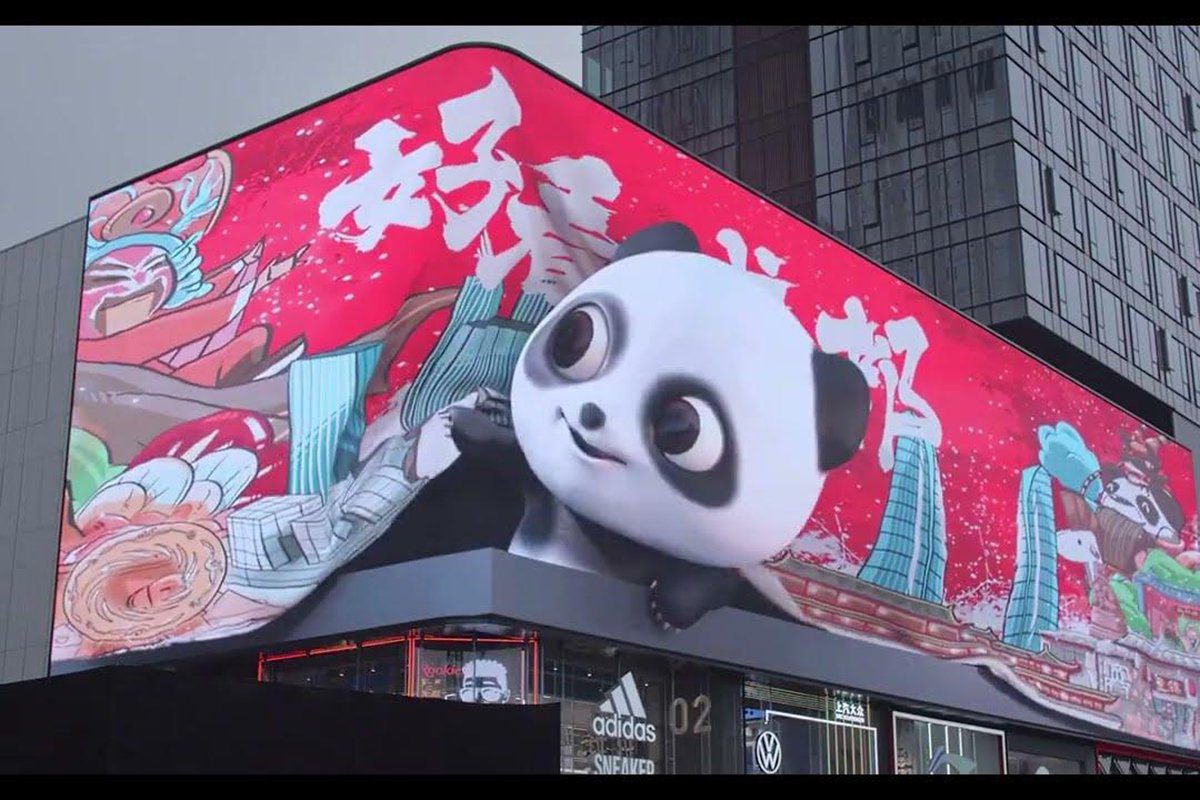
The Chengdu spacecraft image offers another visual reference for a framed scene. When briefing a studio, explain which principle you want to reproduce, such as an apparent docking bay or controlled emergence. Do not assume that reusing another location’s video will reproduce its perspective, or that any of these pictured installations was supplied by EagerLED.
4. When Is 3D Billboard Advertising Effective?
3D billboard advertising is most useful when a product reveal, character, or spatial transformation supports one clear brand message. It can encourage attention and sharing, but the result depends on audience fit, sightlines, timing, and creative quality. Conventional advertising remains useful for broad viewing angles, frequent price changes, and fast comprehension.
| Decision | Conventional digital billboard | Anamorphic 3D billboard |
|---|---|---|
| Main strength | Clear messages across varied viewpoints | A distinctive product or spatial reveal |
| Creative preparation | Artwork adapted to the screen format | Scene mapped to geometry and viewpoint |
| Suitable message | Directions, offers, availability, reminders | Launches, product form, memorable characters |
| Content changes | Often simpler for frequent updates | Changes may require additional rendering |
| Main risk | Weak differentiation in a crowded setting | Strong spectacle with poor brand recall |
| Evaluation | Reach, frequency, recognition, response | The same outcomes plus viewpoint and creative tests |
Match the story to dwell time. A pedestrian plaza may support a short sequence, whereas a passing audience may only see one moment. Introduce the brand early and retain a readable end frame. Essential meaning should not depend on hearing audio, watching the entire loop, or standing exactly where a promotional camera was positioned.
Interactivity is optional. Sensors, live data, or phone experiences require additional systems and a reason to participate. They are not inherent features of a 3D billboard. Start with a simple, understandable animation; add interaction only when it improves the experience and can be supported during operation.
5. LED Screen Specifications That Support a Convincing 3D Billboard
The display must reproduce the creative accurately at the intended site. Specify native resolution, brightness behavior, cabinet alignment, processing, protection, and service access together. A headline such as “4K” or “3D-ready” is insufficient without a complete screen drawing and operating conditions.
01. Calculate the real pixel canvas
Pixel pitch is the center-to-center distance between adjacent pixels, measured in millimeters. P10 means approximately 10 mm pitch; it does not mean ten millimeters per square meter. Smaller pitch provides more pixels within the same physical area. Daktronics’ LED Learning Center explains how pixel count, display dimensions, and viewing conditions relate to image detail.
For an illustrative 8 m by 4 m face at exactly 4 mm pitch, the theoretical matrix is 2,000 by 1,000 pixels: divide each dimension in millimeters by pitch. A real order must use the manufacturer’s cabinet and module matrix, which may change the final dimensions. For a corner display, obtain the matrix and orientation of each face plus a combined content map.
| Specification | Why it matters | What to verify |
|---|---|---|
| Pixel pitch and matrix | Determine available image detail | Native pixels per face and readable text at the site |
| Corner construction | Visible gaps interrupt the apparent space | Edge geometry, module alignment, and a corner sample |
| Brightness and dimming | Daylight contrast and comfortable night viewing differ | Calibrated output and an agreed dimming schedule |
| Refresh and grayscale | Influence camera capture and dark gradients | Actual content filmed at intended settings |
| Controller capacity | Must handle the complete canvas | Pixel loading at the chosen frame rate and bit depth |
| Environmental protection | Exposure affects long-term reliability | Front and rear ratings, connectors, drainage, and heat design |
| Maintenance access | Determines repair time and access cost | Module removal path, spare parts, and service procedure |
02. Test the image under operating conditions
Brightness should suit measured ambient light and the permitted operating conditions. Maximum brightness alone does not describe contrast, color consistency, or night performance. Inspect shadow detail, neutral grays, saturated colors, and a slow gradient at the dimmed setting as well as daytime output.
LED refresh rate and video frame rate are different specifications. A high refresh figure does not mean the animation contains that many unique frames each second. Camera banding also depends on exposure, scan behavior, and synchronization. Record a sample using the phones or cameras expected for campaign capture before accepting a “flicker-free” claim.
03. Engineer for exposure and maintenance
Ask which parts of the installed assembly carry the stated ingress-protection rating. Cabinet protection does not automatically cover cable entries, site wiring, ventilation openings, or a badly sealed joint. Wind loads, anchoring, electrical distribution, and access equipment need project-specific engineering. Follow the local approval process rather than treating a catalog specification as installation approval.
For related planning, use our advertising display pixel-planning guide and outdoor LED weatherproofing guide. Judge LED packages by documented performance, repairability, and application suitability. Bond-wire material alone does not establish better color, and an SMD or COB label alone does not establish outdoor suitability.
6. What Does 3D Billboard Advertising Cost?
There is no single reliable price for a 3D billboard because buying media time and building a display are different purchases. An advertiser usually pays for placement and creative production. A screen owner also pays for equipment, site works, operation, and maintenance. Compare quotations only after making those boundaries explicit.
| Budget item | What changes the price | Question for the quotation |
|---|---|---|
| Media placement | Venue, dates, dayparts, loop length, share of voice | How many plays are contracted, and on which screen? |
| Creative production | Models, animation, simulations, revisions, versions | Are mapping, test playback, and usage rights included? |
| LED equipment | Area, pitch, cabinet geometry, control system | Does the price include processors and spare modules? |
| Site installation | Structure, access, power, transport, local requirements | Which work is excluded from the equipment quote? |
| Operation | Hours, brightness, content, cooling, connectivity | What assumptions support estimated energy use? |
| Maintenance | Access equipment, labor, parts, response coverage | Who pays for removal, shipping, and reinstallation? |
01. Compare media schedules consistently
A 15-second slot in a 120-second loop represents 12.5% of the loop duration. If that loop runs continuously for 12 hours, it provides 360 scheduled plays per day. This is an illustrative calculation, not a venue offer. Interruptions, operating restrictions, and scheduling changes can affect delivery. Neither slot duration nor play count tells you how many people actually saw the advertisement.
Ask for make-good arrangements if contracted plays are missed. Confirm whether a quotation includes exclusivity, filming access, adaptations for additional screens, and post-campaign reporting. These details can explain large differences between seemingly similar 3D billboard advertising offers.
02. Estimate operating costs transparently
Daily display energy in kWh equals area in square meters multiplied by average operating watts per square meter, multiplied by operating hours, divided by 1,000. For example, a hypothetical 100 m² screen averaging 200 W/m² for 12 hours uses 240 kWh per day. These are calculation inputs, not a measured EagerLED specification.
Add cooling, processors, and other equipment where applicable, then apply the actual electricity tariff. Use maximum demand for electrical design and measured representative consumption for operating budgets. For a full procurement discussion, see our 3D billboard cost and buying guide.
7. How to Create Content for a 3D Billboard
A production brief should connect the campaign objective with the screen’s exact geometry. Agree on the site and principal viewpoint before commissioning detailed animation. Changing either after rendering may require substantial rework, even if the screen’s total area remains the same.
01. Supply a usable technical brief
Provide dimensioned drawings, cabinet maps, screen elevation, corner radius or angle, photographs, and the agreed observer position. Include pixel resolution, orientation, permitted duration, frame rate, codec, file-size limits, and delivery deadline. Ask the operator to identify any black borders, gaps, masks, or areas reserved for other information.
The creative brief should name the product, audience, intended response, mandatory branding, and asset rights. Explain whether the film must also work as a conventional social video. A screen-mapped master may look stretched when viewed directly on a laptop, so a separate presentation version can be useful.
02. Approve a simple spatial test first
Before detailed textures or fluid simulations, review a basic scene with a grid, virtual frame, and simple object. This reveals mapping mistakes quickly. Check it from the intended viewpoint and nearby positions. If the box looks wrong, adding expensive effects will not repair its perspective.
Then review pacing, product scale, shadows, and the brand end frame. Keep important content away from problematic seams. Build revision allowances into the schedule and agree who can approve the creative, screen mapping, and final playback independently.
03. Test on the installed display
Play the final 3D billboard content on the actual system before the campaign begins. Look for face-to-face timing differences, clipped highlights, crushed shadows, scaling errors, and unexpected cropping. Film the result from the agreed observer position. Keep a tested fallback file available if the main content cannot run.
The handover should include approved masters, playback instructions, version names, rights documentation, and the final content map. Agree who owns the source project files and how future adaptations will be priced. A clear handover prevents a working campaign from becoming difficult to maintain.
8. Measure Results and Select a 3D Billboard Partner
Define success before buying the campaign. Product awareness, store visits, qualified inquiries, and social engagement are different objectives. Select a primary outcome and supporting measures, then separate delivery evidence from evidence of audience response. A 3D billboard can deliver every scheduled play without achieving the intended commercial result.
| Question | Useful evidence | Limit to acknowledge |
|---|---|---|
| Did the ad run? | Timestamped proof-of-play and uptime records | Playback does not prove human attention |
| Was the brand remembered? | Consistent recognition surveys | Sample and comparison-group quality matter |
| Did people respond? | Campaign landing-page sessions and qualified leads | Other marketing channels may contribute |
| Was the content shared? | Relevant posts, views, and engagement quality | Online views differ from physical audience reach |
| Did business improve? | Comparable location or period analysis | Seasonality and concurrent promotions can confound results |
Use a memorable campaign address or a tagged link where people can engage safely. If a QR code is appropriate for a pedestrian location, verify that it scans at the actual distance and remains visible long enough. Do not make a passing driver scan a code to understand the offer.
For supplier selection, ask for completed work with similar geometry and exposure conditions, a sample demonstration, an itemized scope, and an acceptance plan. Compare service access, spare-part availability, calibration records, and warranty responsibilities. A strong 3D billboard partner should explain limitations clearly as well as show attractive footage.
EagerLED’s 3D billboard solutions provide a starting point for discussing screen configurations. Send site dimensions, viewing distances, photographs, location, operating hours, and the proposed content concept through our project inquiry page. Request written confirmation of the exact model, corner design, controller, environmental ratings, and installation responsibilities before making a purchase decision.
9. Frequently Asked Questions About 3D Billboards
01. Are 3D billboards real or edited videos?
Both exist. Real 3D billboards display perspective-based animation on physical screens. Some online advertisements add CGI to street footage and are never shown on that building. Ask for the venue, playback evidence, and unedited footage from more than one position to distinguish an installation from a concept film.
02. Do 3D billboards work without glasses?
Yes. Anamorphic 3D billboards use perspective and other visual cues that can be seen without glasses. The most convincing effect is designed for a particular viewing zone. This differs from stereoscopic systems that deliver different images to each eye.
03. Can an existing LED screen show 3D billboard content?
Potentially, if its location, image quality, control system, and geometry support the proposed effect. A studio must adapt the content to that screen. Test a simple mapped scene before paying for the final animation; an ordinary video does not become anamorphic merely by playing on a corner display.
04. What pixel pitch is best for a 3D billboard?
There is no universal best pitch. Choose it from the nearest important viewing distance, physical dimensions, required detail, and budget. Verify the native pixel canvas and demonstrate actual content. A pitch suitable for a distant facade may look coarse at a pedestrian viewing point.
05. Does 3D billboard advertising always outperform 2D?
No. It can be effective for memorable reveals, but a clear conventional ad may better serve a simple offer or broad viewing area. Compare campaigns against the same business objective and account for media spend, audience differences, and creative production costs.
06. What is included in a 3D billboard quote?
Ask explicitly. Media placement, animation, hardware, structural work, installation, electricity, and maintenance are separate cost categories. A screen quotation may exclude content and site work; a media quotation may exclude animation. Require an itemized scope and clear delivery responsibilities.
10. Conclusion: Build the 3D Billboard Around the Audience
A successful 3D billboard starts with a useful message and a realistic viewing plan. Match the animation to the screen geometry, specify the LED system around actual conditions, and approve on-site playback before launch. Preserve brand clarity wherever the audience stands, including outside the strongest illusion zone.
For advertisers, separate placement, production, and measurement. For owners, add installation, service access, and ongoing operation to the decision. These steps turn 3D billboard advertising from an impressive demonstration into a project that can be evaluated, maintained, and improved with evidence.
 LED Display Manufacturer - EagerLED LED Screen Made In China
 Feedback from American Clients on EA1000C6 and EA1000TOR LED Screens