
For LED screen rental Las Vegas exhibition projects, confirm the event-specific access rules, delivery handovers, power and structure readiness, content rehearsal and fault-response responsibilities before booking equipment. Request enough protected access to assemble, test, rehearse and correct the complete system. There is no single rehearsal duration or venue rule that applies to every Las Vegas show.
This guide is for exhibition contractors preparing an indoor booth installation. It treats the rental provider, organizer, venue service contractors and content team as separate parties whose work must connect. The objective is an accepted display before opening, with a practical recovery arrangement during the show.
EagerLED manufactures reusable rental display equipment. This planning guide does not advertise a Las Vegas hire depot, local inventory or an on-site crew. Confirm local hire and event services with your appointed provider; use EagerLED for the rental LED equipment specification when purchasing or evaluating the underlying system.
1. Start LED Screen Rental Las Vegas Planning with the Exact Event
An LED screen rental Las Vegas brief should name the event, dates, hall, booth number, organizer and principal contractor. Add the current exhibitor manual revision and the person who will approve changes. A city name does not identify the receiving point, permitted working hours or service responsibilities.
Official CES exhibitor resources illustrate the need for event-specific planning: separate venue manuals and target freight floorplans are provided for different locations and halls. Those resources are evidence that teams should use the relevant manual, not a schedule to copy into another show. Check the current organizer documents for your actual booking.
Define what the display must do. List audience approach directions, nearest viewing position, small text, product demonstrations, camera recording and any audio dependency. Provide the physical image area and booth drawing. Keep the support footprint and service access on that drawing so the visible screen does not occupy space already assigned to another trade.
For the LED screen rental Las Vegas scope, distinguish equipment hire from design, booth construction, rigging, electrical work, freight handling, content and operation. One provider may cover several packages, but each should still have an owner. Ask who can approve a site substitution if the proposed cabinet or processor becomes unavailable.
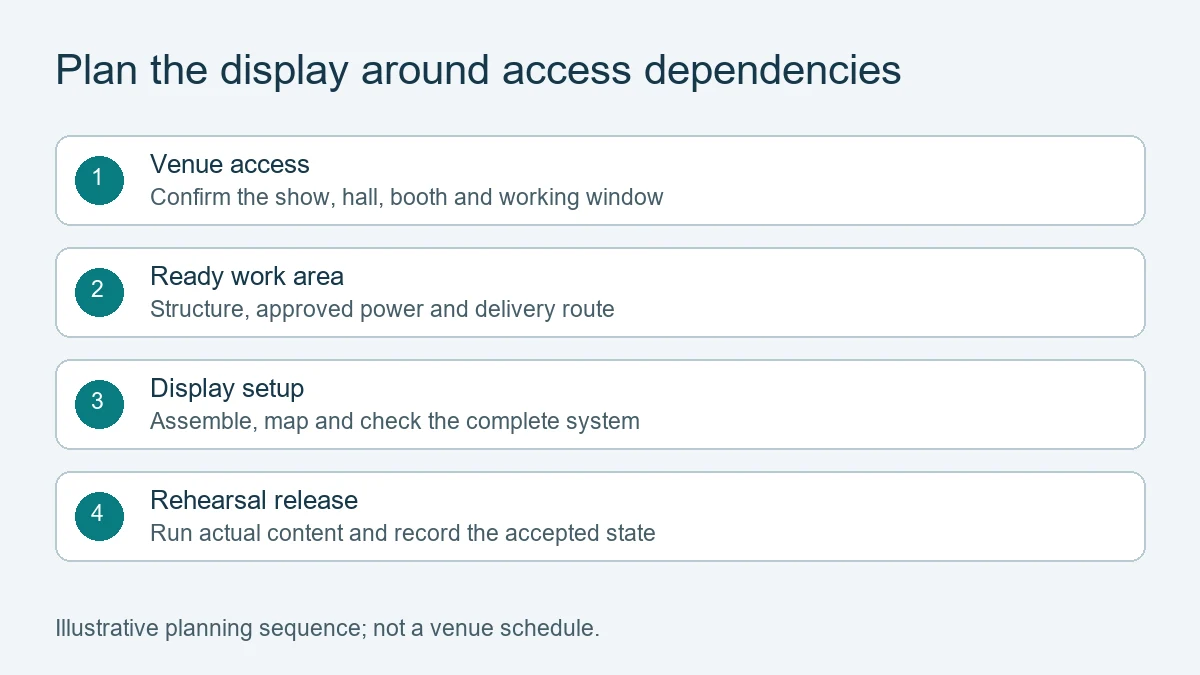
Record the consequences of a missed handover. If power arrives after the booked technician leaves, the display may be assembled but untested. Rather than accepting a vague setup date, identify the dependency and the decision-maker who can obtain a revised working window. Keep that issue visible until the parties agree a workable sequence.
2. Verify Access, Freight and Working Windows
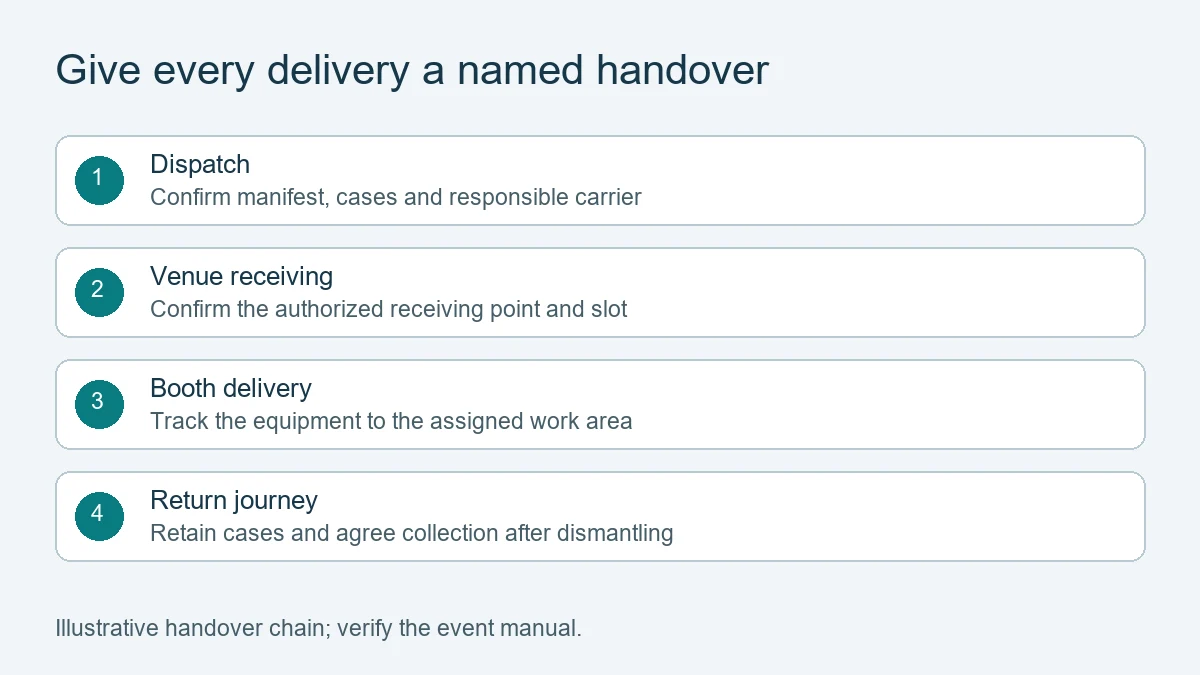
Before dispatching an LED screen rental Las Vegas package, confirm the authorized receiving address, dock or warehouse arrangement, target delivery window, labeling requirements and contact. Ask how delivery reaches the booth after the carrier hands it over. Arrival in the city and arrival at the installation position are different milestones.
Check the exhibitor and contractor access process with the organizer. Confirm required registration, badges, delivery permissions and any applicable contractor documentation. Requirements differ by event and service role; use the current manual rather than a previous show’s paperwork. Do not assume that an equipment driver can also perform installation work inside the hall.
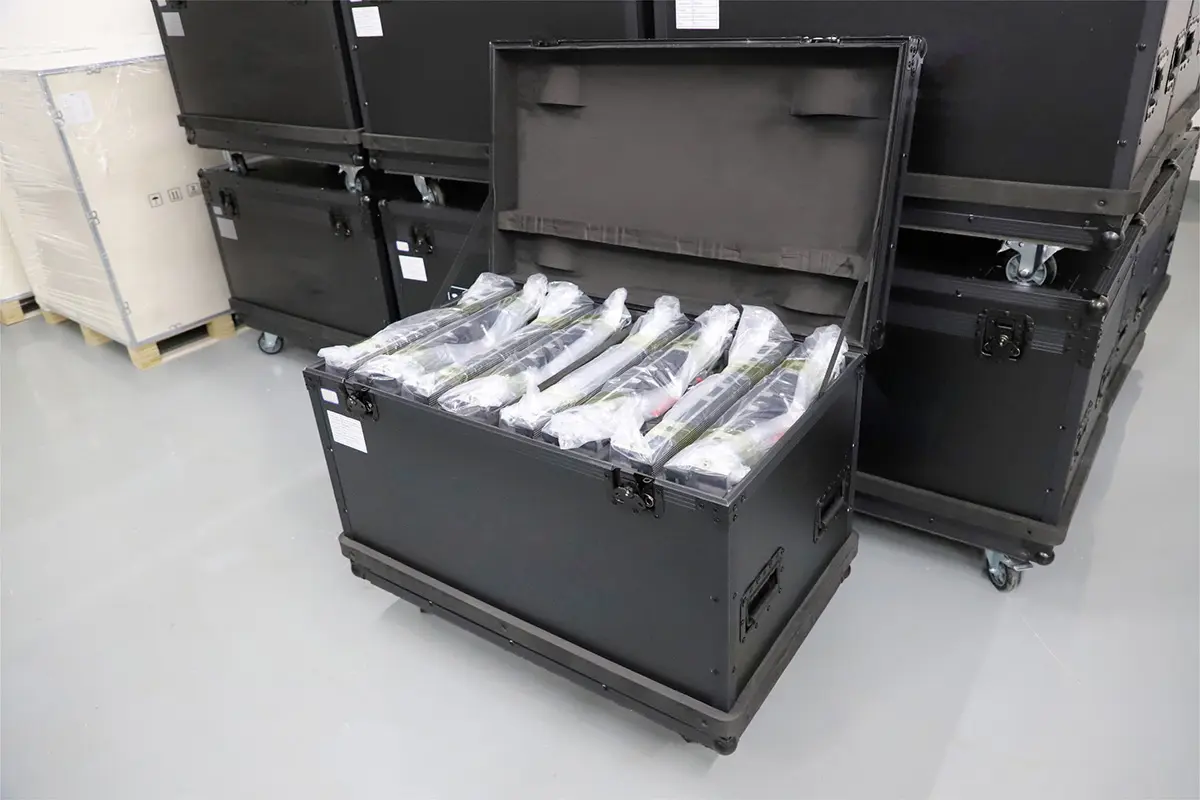
Ask the handling provider how cases will be moved, where empty cases may be stored and when they will be returned for dismantling. Record restrictions on temporary storage around the booth. Display faces, connectors and labeled accessories need suitable protection until the installation team is ready to receive them.
| Handover | Required information | Evidence that closes it |
|---|---|---|
| Carrier to receiving team | Address, slot, manifest and case labels | Receiving confirmation and exceptions |
| Receiving team to booth | Booth location, handling method and site contact | Case count at the assigned work area |
| Equipment to installer | Model list, accessories and condition record | Installer acknowledges a usable package |
| Installer to operator | Accepted layout, settings and test content | Operator completes the agreed startup |
| Operator to return team | Release time, case plan and collection contact | Signed return inventory and damage notes |
Make the LED screen rental Las Vegas schedule readable as a chain. Include the last acceptable arrival, time needed for the agreed assembly and a protected test opportunity. If the carrier misses a slot, identify who will coordinate the next permitted delivery. A promised equipment arrival time alone cannot reserve venue labor or reopen a closed work area.
Keep change notices with the dispatch record. A new booth number, hall assignment or delivery contact can invalidate labels already on the cases. Assign one person to distribute the revision to the carrier, receiving team, installer and rental provider, then obtain acknowledgment from the parties whose work has changed.
3. Confirm Structure, Power and Service Space Before Assembly
A ready booth needs more than a cleared floor. The approved support arrangement, equipment position, electrical handover and safe working area must be available. Ask the responsible structural and electrical professionals to confirm the actual design. This guide provides coordination questions, not rigging capacities or electrical installation instructions.
For ground-supported walls, show the complete support footprint, bracing and service position on the booth plan. For suspended displays, obtain the agreed configuration and approval route through the relevant professionals and venue service team. Screen cabinet weight by itself does not establish the allowable installed assembly.
Have the electrical provider review the equipment load schedule and connection requirements. Identify supply location, distribution, protective arrangements and who is authorized to connect the system. Do not assume the available outlet matches an overseas equipment cable. Use the exact configuration rather than a generic average power figure.
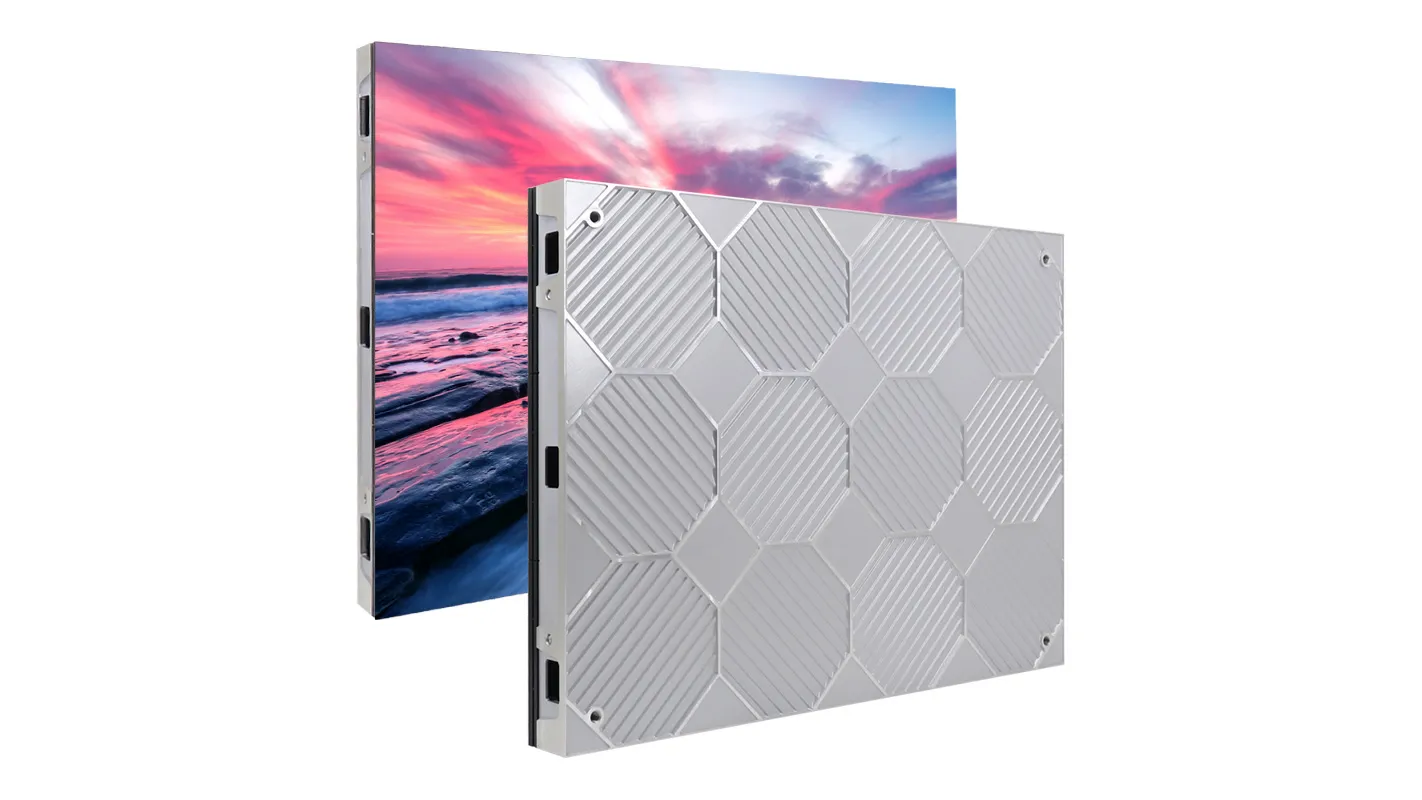
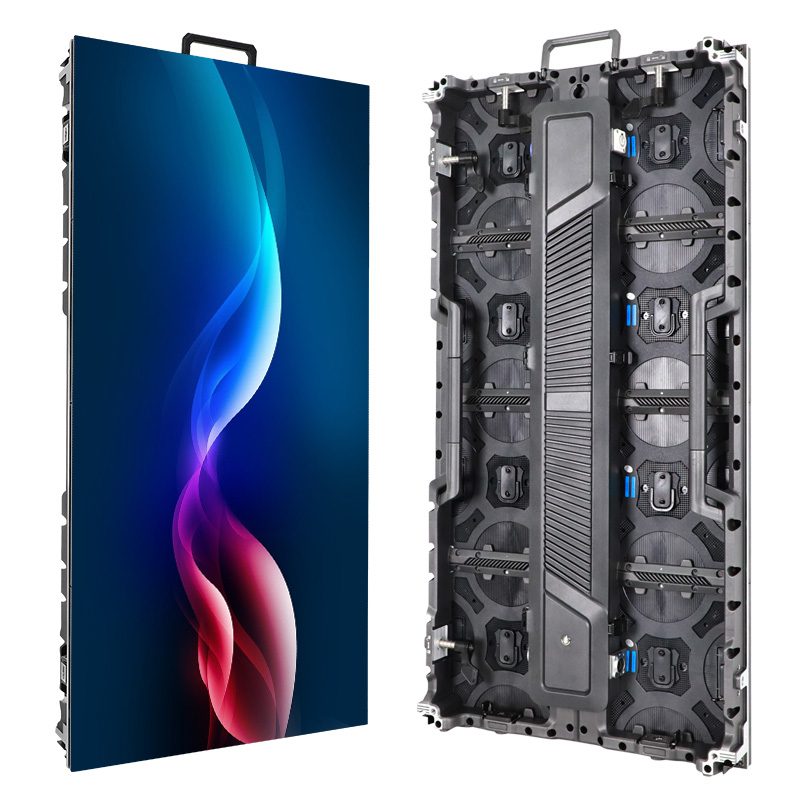
The LED screen rental Las Vegas equipment list should identify cabinet model, pitch, quantities, processor, power and signal accessories, support interfaces and matched spares. Similar cabinet dimensions do not guarantee compatible locks or controls. Approve substitutions through the same technical review as the original proposal.
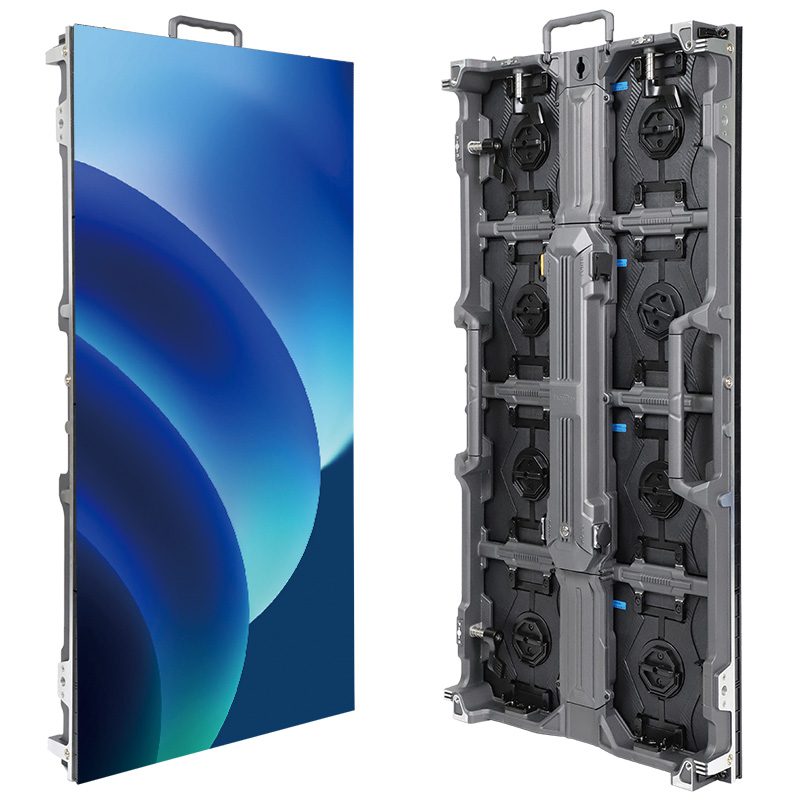
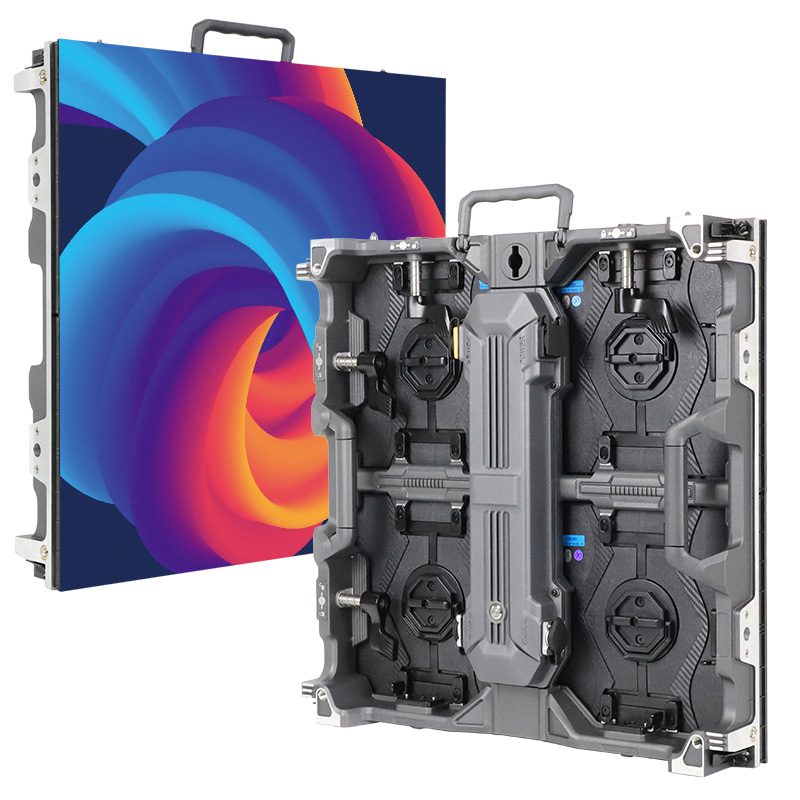
For example, EagerLED’s EA500C6 rental cabinet page lists a 500 × 500 mm (19.7 × 19.7 in) format and an openable rear cover for service. That product reference helps identify the access question; it does not approve your booth structure or guarantee the model will be supplied by a local rental company.
Protect access after decorative work finishes. Ask whether a technician can reach the relevant connection and service positions with the booth fully dressed. A workable temporary gap during construction is not an operating maintenance plan. Resolve removable finish panels and authorized access before the client signs off the completed booth.
4. Reserve a Window for Testing, Correction and Retesting
The rehearsal allowance for LED screen rental Las Vegas should be based on tasks, not an assumed universal number of hours. Ask the provider to estimate assembly, mapping, source integration, content rehearsal and likely correction work for the actual design. Then secure a working window that also permits a repeat of the affected tests.
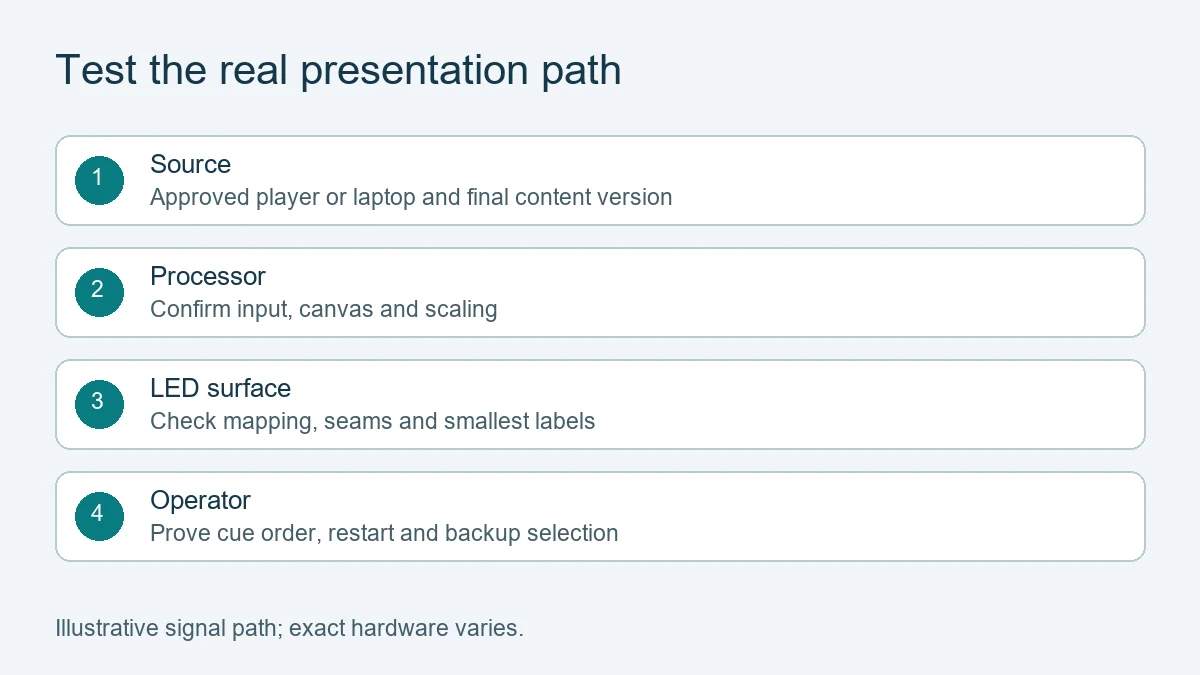
Schedule the full rehearsal after stable power, the complete display and the intended source are available. A laptop test in a workshop is useful preparation, but it cannot establish that the booth’s final signal path and artwork are correct. Make the content owner available to approve changes while the technician can still implement them.
Confirm the native canvas and the processor’s treatment of incoming content. Test a grid, edge labels and small text before running promotional video. Check the beginning and end of loops, letterboxing, cropping and transitions between sources. An image that fills the screen can still have stretched geometry or unreadable interface labels.
Use the real presentation package for LED screen rental Las Vegas acceptance. Include embedded video, custom fonts, offline assets and any interactive demonstration. Record the source resolution and final content version. Where a live network service is required, define an approved fallback so an internet interruption does not leave the operator without a usable display.
If cameras will record the booth, test the intended camera settings and working display brightness together. Do not treat a listed refresh specification as a guarantee against every camera artifact. Record the conditions under which the client accepts the picture and identify any changes that require another check.
A practical rehearsal ends with an operational restart and a backup selection. Have the assigned operator perform the agreed sequence rather than watching the technician do it. Record unresolved exceptions with an owner and a retest time. If the schedule leaves no correction opportunity, raise that constraint before accepting the installation plan.
5. Match Backup Equipment to a Named Failure
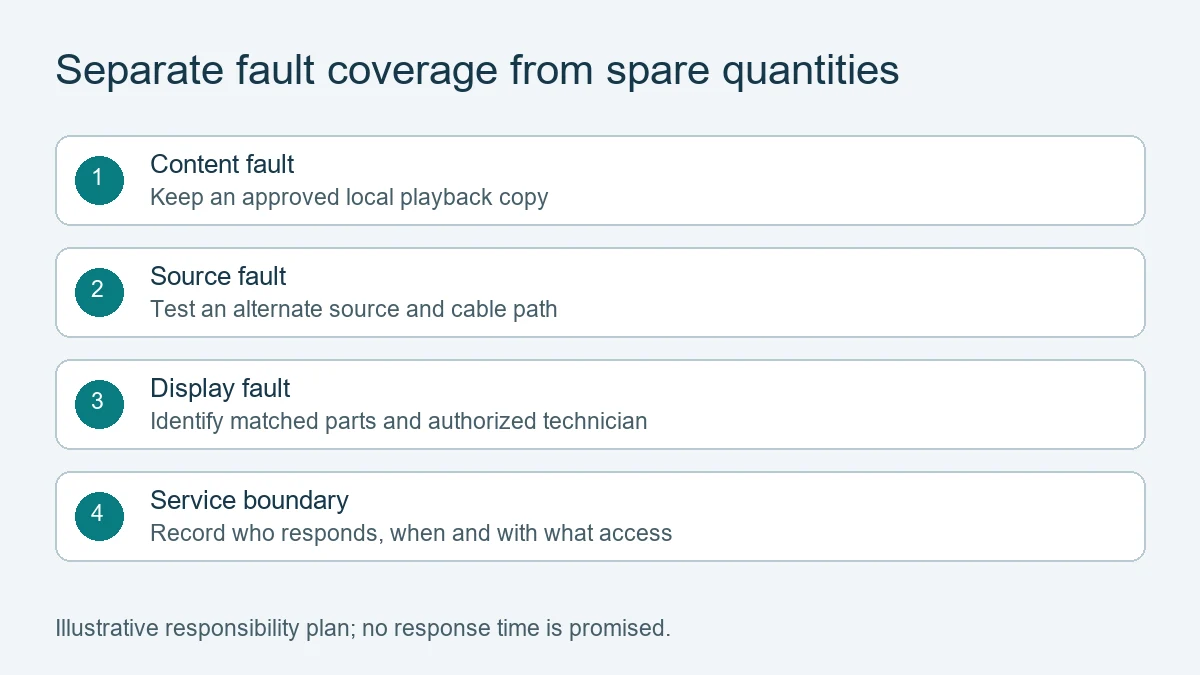
A useful LED screen rental Las Vegas recovery arrangement identifies the failure being covered, the available replacement and the person authorized to act. A spare count alone is insufficient. Distinguish a bad content file from a failed source, cable, processor path or display component so the response can target the actual interruption.
For source coverage, ask for an approved local content copy and an alternate playback device where the show requires it. Verify connector compatibility, power and the switching method. Keep the final files synchronized between sources. A spare laptop with an outdated presentation can restore a picture while showing the wrong information.
For display coverage, identify matched modules and relevant control or power parts for the supplied configuration. Confirm where they will be kept and which trained technician will use them. Follow the manufacturer’s approved service procedure. The contract should not imply that booth sales staff will perform electrical repairs.
| Interruption | Agreed coverage | Rehearsal or document check |
|---|---|---|
| Content unavailable | Approved offline file set and version owner | Run without the normal download source |
| Playback source fails | Compatible alternate source and switching method | Demonstrate the agreed source change |
| Signal cable problem | Identified replacement route and suitable cable | Confirm route, length and access |
| Display component fault | Matched parts and authorized service technician | Review service method and access |
| Provider cannot be reached | Primary and escalation contacts with coverage hours | Acknowledge the contact and attendance terms |
Write response arrangements precisely. Identify staffed hours, whether the technician remains at the venue, where parts are located and how a call is escalated. Separate acknowledgment, diagnosis, attendance and restoration; these are different events. No universal response time is established by the term local support.
Ask which failures remain outside the LED screen rental Las Vegas provider’s scope, such as venue power or a client-managed network service. Identify the contact who owns each boundary. When several providers share an incident, one coordinator should track the current status and make sure a responsibility dispute does not replace practical troubleshooting.
6. Release the Display with an Observable Acceptance Record
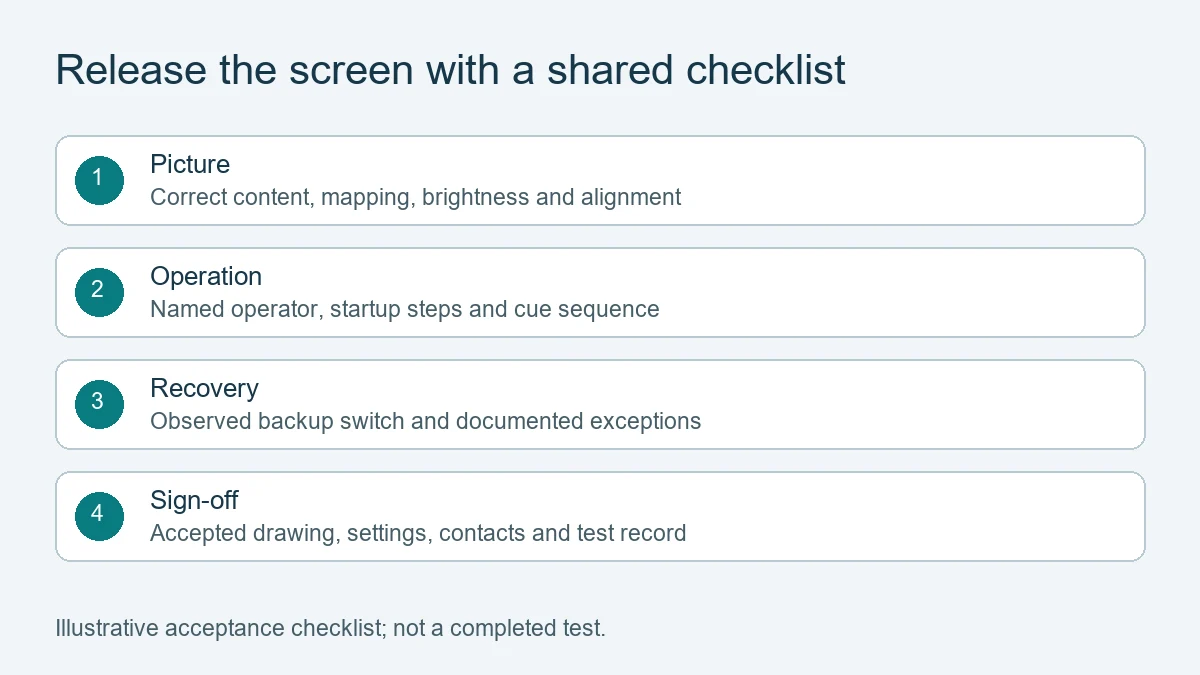
Opening acceptance for LED screen rental Las Vegas should confirm the agreed picture and operating state at the actual booth. Inspect cabinet alignment, color consistency, image boundaries and readability from the expected visitor positions. View the display with the booth lighting and decorative finishes in place.
Keep a short acceptance record that identifies the layout, equipment list, content version, processor settings, operating brightness and test time. Record the named operator and available support contact. If the display has an approved exception, describe it specifically and identify who accepted it. Avoid a general all working statement that hides a known missing input.
Have the operator demonstrate normal startup, content selection, cue changes and the agreed fallback. Confirm who can change settings during show hours and where a current backup is stored. Restrict informal last-minute changes through an agreed production process so the accepted state remains reproducible.
Use the same acceptance conditions if equipment is substituted. A different processor or cabinet batch may require revised mapping or image checks even when the physical wall is unchanged. Keep the replacement record with the original acceptance sheet and repeat the relevant tests before treating the change as complete.
For each show day, agree a brief pre-opening check and a fault-reporting route. Confirm content version, image coverage and the known operating settings before visitors arrive. A daily check is an operating task to assign to the team, not a claim that the installation will be fault-free throughout the event.
The LED screen rental Las Vegas handover is complete when the operator can use the accepted system and the responsible parties understand the remaining exceptions. Keep commercial approval separate from technical release if the client requires both. A payment milestone should not silently become evidence that every test passed.
7. Plan Dismantling and the Return Handover
Agree when the display may be shut down and which party authorizes dismantling. Show closing time, operator release, availability of empty cases and carrier collection are separate events. Ask the organizer and handling provider for the actual permitted sequence before promising a return collection slot.
Return the LED screen rental Las Vegas equipment against an itemized inventory. Identify cabinets, spares, processors, cables, tools and support accessories. Record condition and exceptions at the agreed handover point. Keep photographs and written notes tied to the relevant case or component so later queries can be resolved without relying on memory.
Assign packing to personnel familiar with the equipment and its protection method. Keep protective corners, internal separators and accessory compartments available during the show. A display face can be damaged after a successful event if empty cases arrive incomplete or the crew packs components in an unsuitable order.
Confirm who pays for waiting time, delayed collection or missing accessories under the actual agreement. The purpose is to make the commercial boundary visible before the event. This guide does not assign liability or provide a standard damage charge. Ask the contracting parties to resolve those terms in the rental documentation.
Frequently Asked Questions
Is there one exhibitor manual for all Las Vegas venues?
No. Start with your organizer’s current resources for the event and venue. CES, for example, publishes separate manuals and target freight resources. Do not transfer another event’s access schedule or contractor rules into your booking.
Can the presentation change after rehearsal?
Use a controlled replacement process. Identify the changed file, test the affected scenes on the final system and retain a rollback copy. A revised video may change aspect ratio, audio behavior or readability even when its filename looks similar.
Does a smaller pixel pitch remove the need for a content test?
No. Pixel pitch affects the available detail, while font size, native canvas, scaling and viewing position also affect readability. Test the actual small text at the intended visitor distance before accepting the display.
What if the screen is assembled but venue power is late?
Keep the installation status explicit: assembled is not fully tested. Ask the coordinator to obtain a new powered test window with the required technician and content owner. Record the dependency instead of signing an unperformed functional test.
Can EagerLED confirm local rental inventory for my show?
This guide establishes no local inventory or crew commitment. Confirm event hire with your appointed service provider. For equipment purchasing, ask EagerLED to review the cabinet configuration, control package, spares and packing requirements.
Coordinate the Display Package Before Dispatch
For LED screen rental Las Vegas planning, send the event and venue details, booth drawing, display size, viewing positions, source list and required test window to the appointed providers. Resolve access and response owners before dispatch. If you are purchasing the display equipment, ask EagerLED to review the equipment package with the layout, service access and spare requirements attached.
 Flexible LED Display Screen Price: Curved Booth Budget