
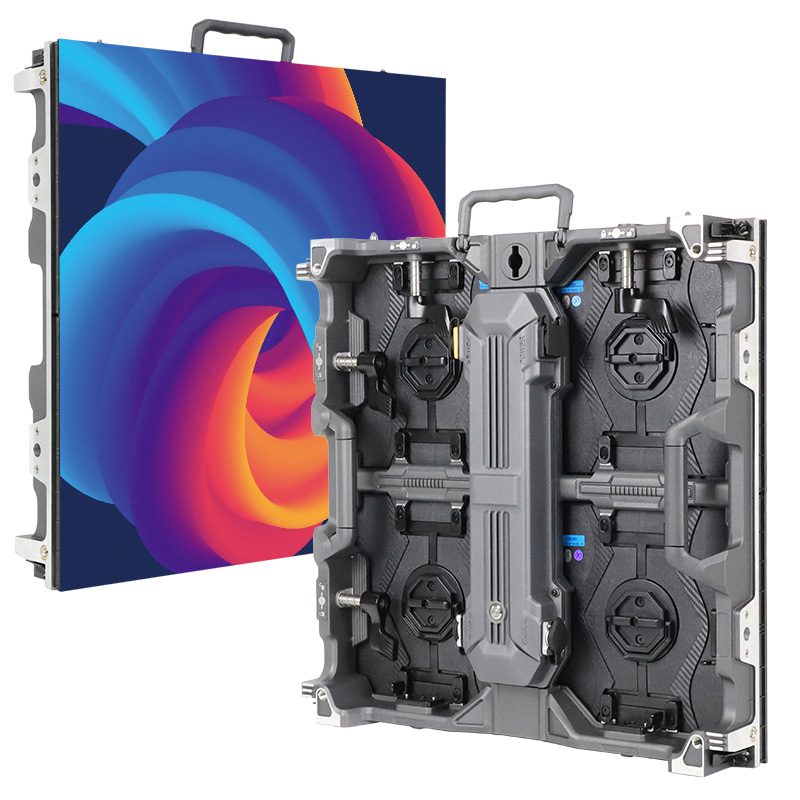
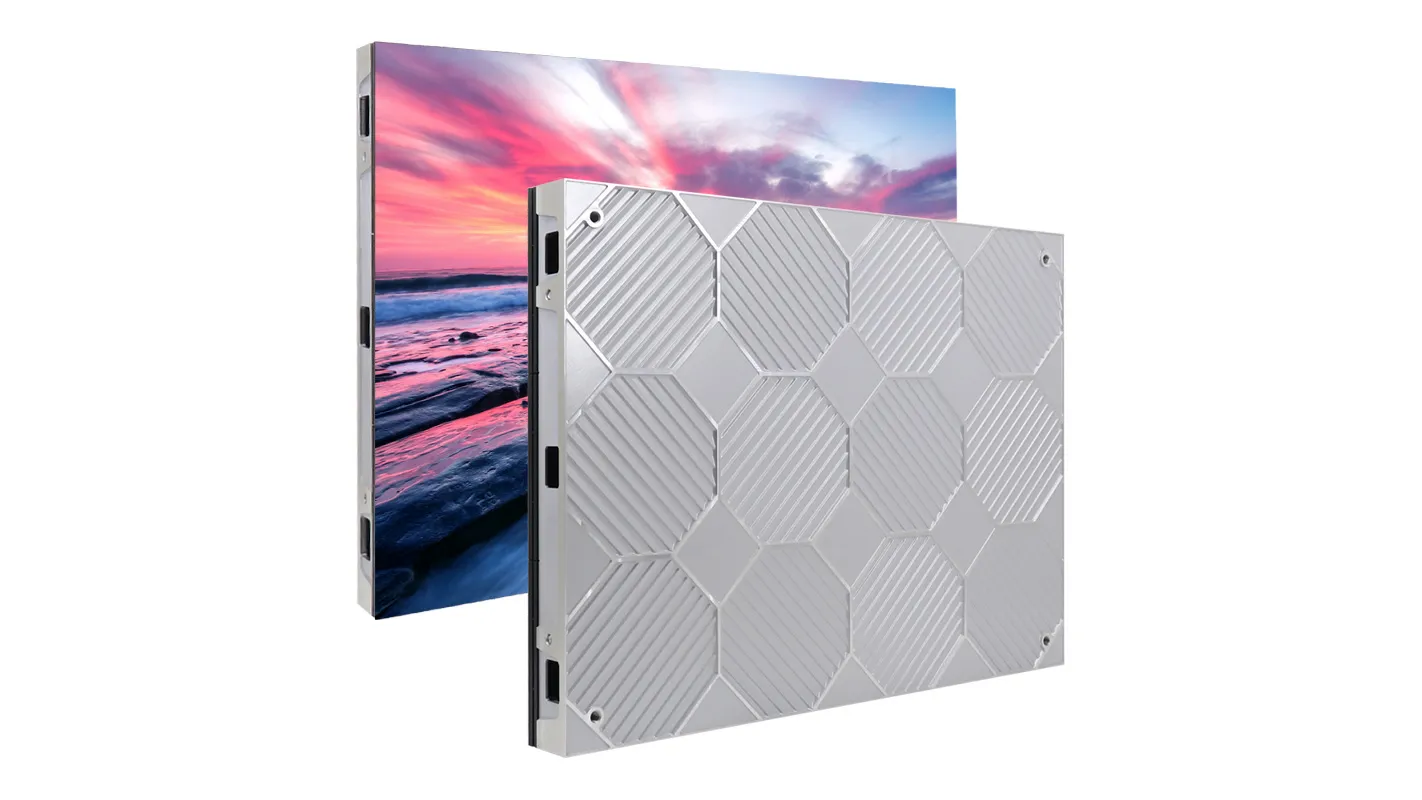
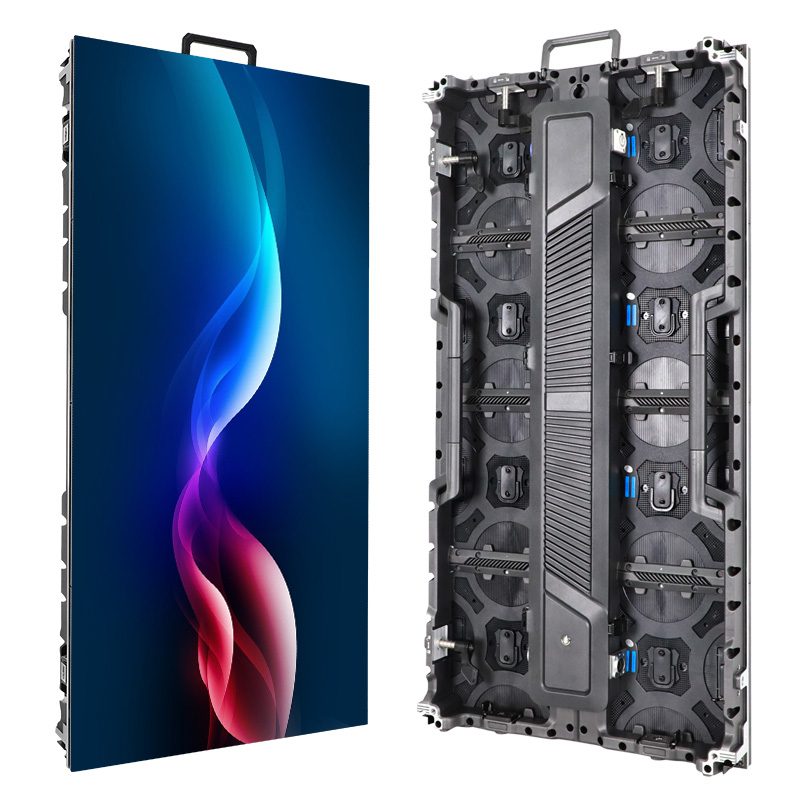
An outdoor LED advertising board survives bad weather because three things work together: a sealed, correctly rated cabinet; a structure that manages water, heat and electricity; and an inspection routine that catches small failures before they become water damage. For most permanent roadside, street and building-face boards, that means an IP65 display cabinet, an IP66 power and control compartment, drainage and pressure equalisation, and surge plus lightning protection sized to the site.
Quick answer: weatherproofing is a system, not a coating. A conformal-coated module helps, but the cabinet seal, the connectors, the drainage path, the internal microclimate and the maintenance schedule decide whether a board is still dry after five years.
This guide is written for the people who live with the result — advertisers, integrators, municipal buyers and facility teams. It explains how to read an IP rating, where water actually gets in, what to test before shipping, and what to check every year. EagerLED’s own waterproof test area and outdoor cabinet designs are used as worked examples throughout.
Table of Contents
1. What Weatherproofing an Outdoor LED Advertising Board Really Means
An outdoor LED advertising board is an electrical enclosure that happens to be a display. Inside it sit LEDs, driver ICs, receiving cards and power supplies that were never designed to sit in water. The display face is a large opening in that enclosure, and it has to stay breathable enough to shed heat while remaining tight enough to keep rain out. Weatherproofing is the engineering that resolves those two competing demands at the same time.
1.1. Five Ways Weather Damages an Outdoor Board
- Water ingress. Wind-driven rain enters through a compressed gasket, an undersized cable gland, a badly seated connector or a service door that does not close evenly. Failure is rarely instant; it is slow corrosion of the PCB, the connector pins and the power-supply terminals.
- Condensation. A perfectly sealed cabinet can still fill with moisture. Warm daytime air holds water vapour; when the cabinet cools at night, that vapour condenses on the coldest surfaces — usually the metal back panel and the power-supply casing.
- Heat and humidity combined. High temperature alone shortens LED life. High humidity plus heat accelerates corrosion and can create leakage currents on driver boards. Ventilation has to move air without admitting rain or dust.
- Electrical surges and lightning. A tall board with a long power and data run is an attractive path for induced surges. The U.S. National Weather Service records roughly 25 million lightning strikes a year across the United States alone.
- Mechanical and environmental load. Wind, snow, ice, ultraviolet radiation and salt air act on the structure, the mask, the fasteners and the coating long after the electronics are installed.
1.2. The Protection Layers, and What Each One Actually Fixes
No single layer makes a board weatherproof. Each one closes a specific gap and leaves another one open:
| Protection layer | What it protects | What it does not fix | ||||||||
|---|---|---|---|---|---|---|---|---|---|---|
| GOB or conformal coating | LED and driver PCB against moisture films and light condensation | Gasket leaks, standing water, connector corrosion Cabinet gasket and sealed service door |
The enclosure volume and the electronics inside it | Internal condensation, leaks at cable entries Waterproof connectors and glands |
Power and data entry points | Cable damage, water tracking along a cable into the cabinet Ventilation and pressure equalisation |
The internal microclimate — heat, humidity and pressure cycling | Direct water ingress through an open path Structure, drainage and lightning protection |
The installation as a whole | A cabinet that was never sealed properly |
This is why a board specified as “IP65 modules” and nothing else is not weatherproof. The specification has to describe the enclosure, the entries, the microclimate and the maintenance plan together.
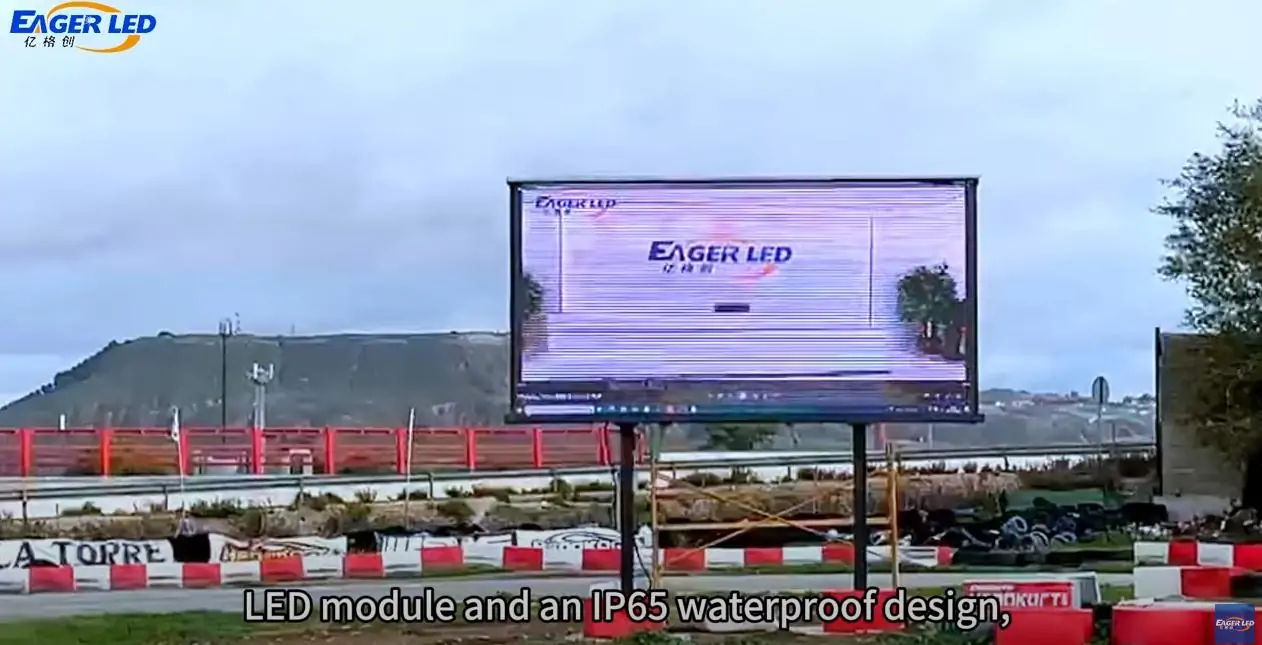
2. IP Ratings for Outdoor LED Advertising Boards, Decoded
Nearly every outdoor LED advertising board quotation includes an IP number, and almost none of them explain its scope. The IP code is defined by IEC 60529, and the International Electrotechnical Commission describes IP ratings as a grading of an enclosure’s resistance to dust and liquids. It is a test result, not a description of the product.
2.1. How to Read an IP Code
The two digits answer two different questions. The first digit grades protection against solid objects, from 0 (no protection) to 6 (dust tight). The second grades protection against liquids, from 0 to 8, with the letter K used for one additional high-pressure jet test.
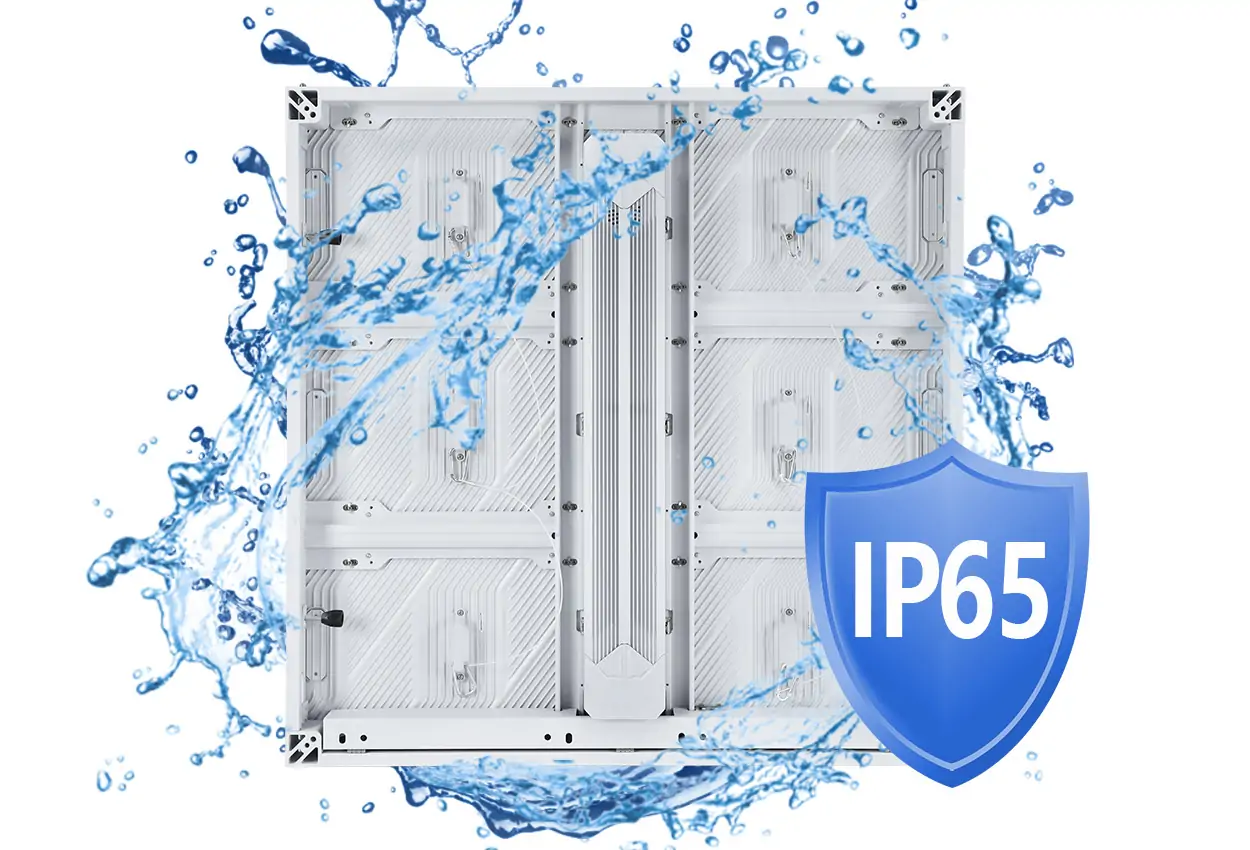
That means IP65 is dust tight (6) and protected against water jets (5). IP66 keeps the dust-tight rating but steps up to powerful water jets (6). IP67 replaces jets with temporary immersion — one metre of water for 30 minutes. None of those digits says anything about how long the seal will last, how it behaves under ultraviolet light, or whether it was tested with the cable entries fitted.
2.2. Which Rating an Outdoor Advertising Board Actually Needs
Match the rating to the exposure, not to the brochure:
| IP rating | What it is tested against | Where it fits an advertising board | Watch-out | ||||||||||||
|---|---|---|---|---|---|---|---|---|---|---|---|---|---|---|---|
| IP54 | Splashing water | Covered walkways, atria, sheltered shopfront fascias | Not sufficient for exposed street or roadside boards IP65 |
Water jets from a 6.3 mm nozzle | Dust-tight baseline for exposed street, roadside and building-face boards | The most commonly quoted rating; confirm the tested scope IP66 |
Powerful water jets from a 12.5 mm nozzle | Coastal sites, monsoon climates, boards washed down with a hose | The module face is rarely the weak point; check the power compartment IP67 |
Temporary immersion, 1 m for 30 minutes | Flood-prone underpasses, low-level or ground-mounted boards | Immersion does not mean the connectors were tested wet IP68 |
Continuous immersion, supplier-defined depth | Special applications only | Ask for the exact depth and duration the supplier tested |
One practical rule: ask which assembly carries the rating. A supplier may quote IP65 for the display modules and a much lower figure for the power and control box — and the power box is where water does the most expensive damage.
2.3. What an IP Rating Does Not Promise
- It is not a lifetime guarantee. A gasket that passed a test on day one can harden, take a compression set or crack under UV within a few years.
- It does not reproduce a storm. The jet tests are directed at defined angles. They do not model wind-driven rain hitting every seam and upward-facing surface for hours.
- It does not cover corrosion. Salt fog, acid rain and galvanic corrosion sit outside the IP scope, which is why coastal projects need different materials, not just a different digit.
- It does not cover the installation. An IP65 cabinet with an upward-facing cable entry, an untightened gland or a cracked connector boot is no longer an IP65 assembly.
- It is not automatically a warranty. Ask what the warranty says about water ingress specifically, and how the boundary of responsibility is defined.
3. Cabinet and Enclosure Design: The First Line of Defence
Everything that keeps water out of an outdoor LED advertising board lives in the cabinet: the frame, the gasket, the service doors, the cable entries, the ventilation path and the drainage. Two boards can share the same modules, the same pixel pitch and the same IP claim and still behave completely differently after a year outdoors, because the cabinet design decides where water collects.
3.1. Gaskets, Seals and Frame Construction
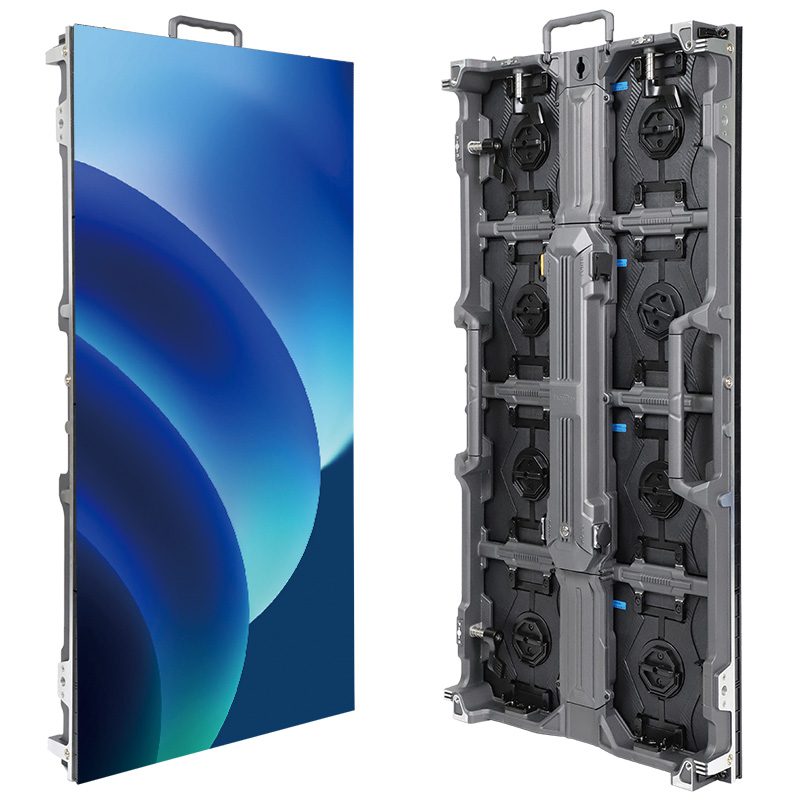
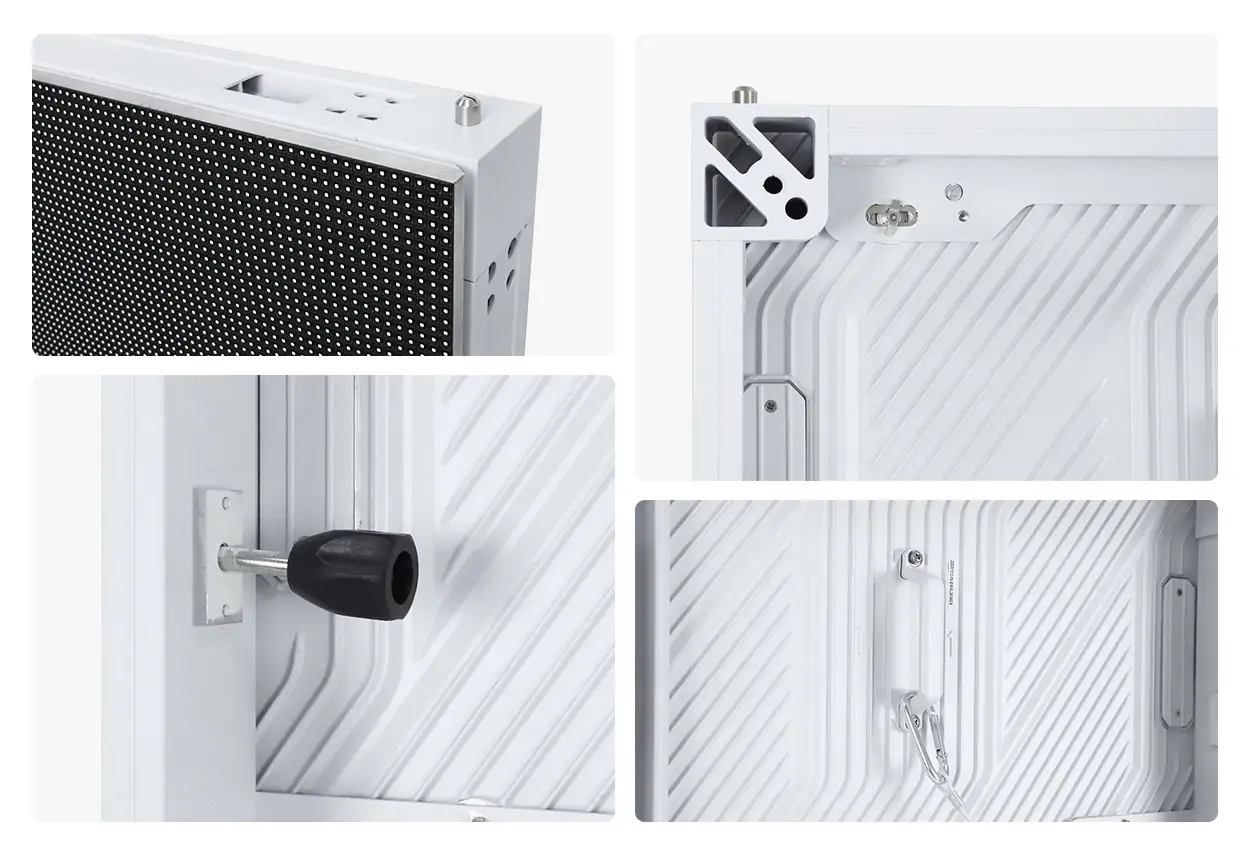
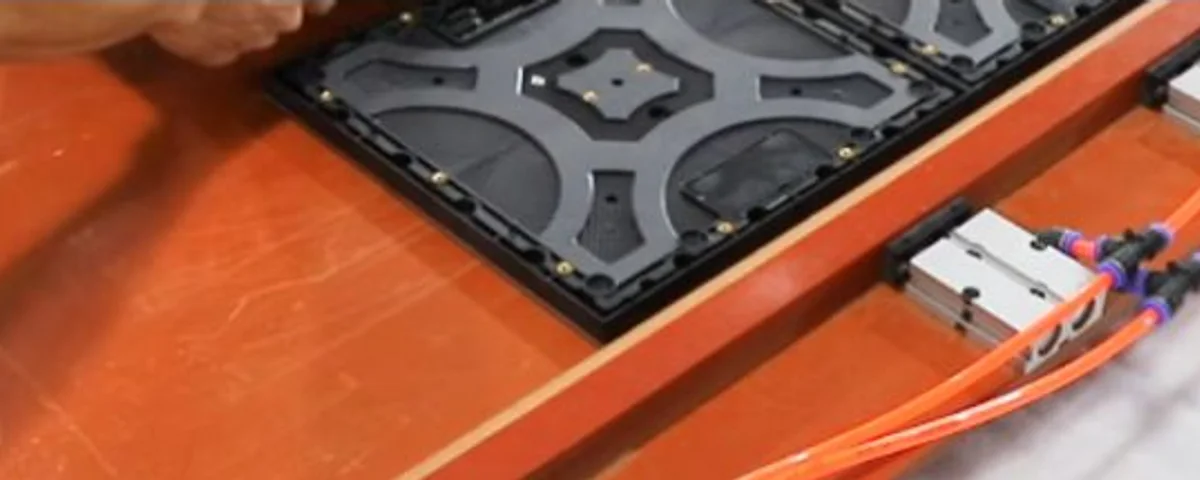
EagerLED wraps the cabinet frame of its outdoor screens with a thin waterproof rubber ring to raise the dust and water protection level of the enclosure. That is a useful illustration of the principle: the seal has to be continuous around the whole frame, including the corners.
- Compression, not thickness. A gasket works because it is compressed by a controlled amount. Over-compressed seals take a permanent set and stop recovering; under-compressed seals leave a gap.
- Material matters outdoors. Silicone holds its properties across a wider temperature range and resists UV better than many cheaper elastomers, which is why it is preferred for boards in strong sun.
- Corners are where leaks start. A service door sealed with four separate strips leaks at the joints. Specify a bonded, continuous gasket.
- Replace, do not re-tighten. Once a seal has hardened, adding torque distorts the door and makes the leak worse.
3.2. Waterproof Connectors and Cable Entries
The cable entries are the most common real-world failure point on an otherwise well-sealed board. Water rarely defeats a gasket; it runs down a cable and into the cabinet through a gland that was never tightened to specification.
- Use sealed circular connectors with their own gaskets, and IP68-rated glands sized to the actual cable diameter — not to the nearest available size.
- Bring every entry in from the bottom or the side. An entry on the top face is a funnel. Form a drip loop so water runs off the cable instead of into the gland.
- Blank every unused port. An open connector on a spare output is an open hole in an IP65 enclosure.
- Torque glands and connector shells to the manufacturer’s figure, and record it. Hand-tight is not a specification.
3.3. Pressure Equalisation, Vents and Condensation
A sealed box is not a dry box. As the cabinet heats and cools, the air inside expands and contracts, and that pressure difference pushes moist air through the weakest path — often a seal that would otherwise have held. A pressure-equalising breather element resolves this by passing air and water vapour while blocking liquid water.
In humid climates, add active control: an anti-condensation heater, or a managed warm-up cycle that keeps the internal surfaces above the dew point when the board starts work each morning. Desiccant sachets are a commissioning aid, not a design solution — they saturate and stop working, usually without anyone noticing.
4. Thermal, Drainage and Electrical Protection
Water is only one of the loads acting on an outdoor LED advertising board. The cabinet also has to move heat out, shed water away from the display face, and survive electrical events that arrive through the power and data cables.
4.1. Heat and Humidity Inside the Cabinet
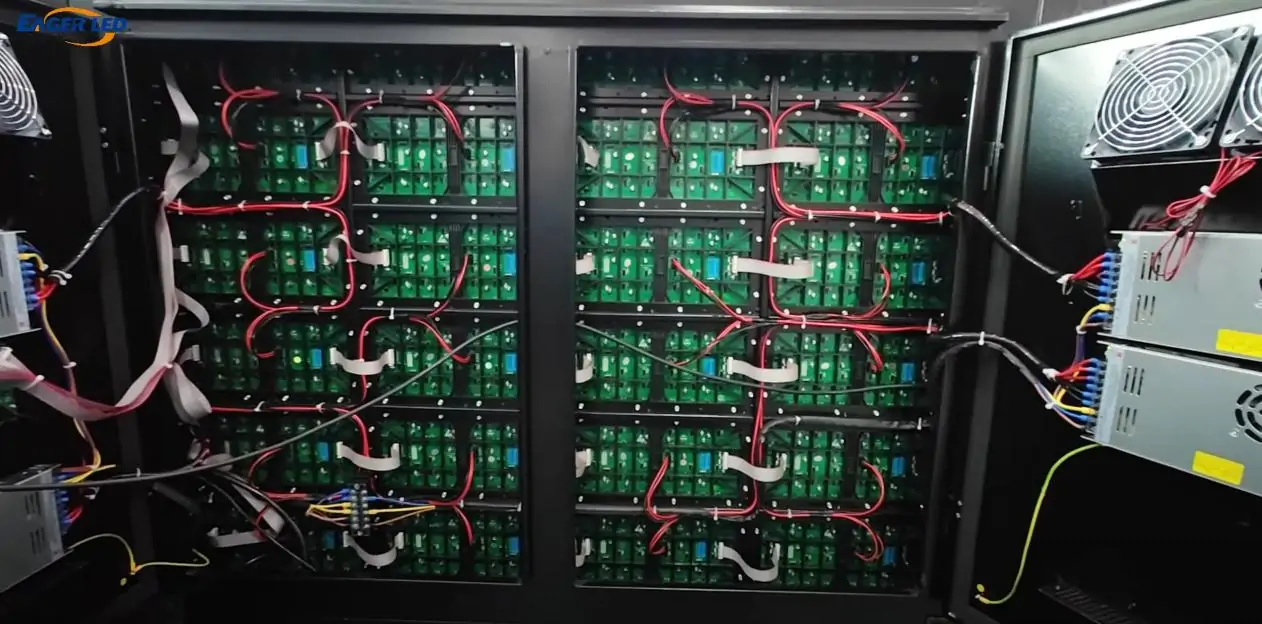
Power supplies and driver electronics lose several percent of their input as heat, and that heat sits inside a sealed box in direct sun. EagerLED fits four air-foil fans inside its outdoor cabinets so the power compartment dissipates heat quickly and the screen keeps operating stably over the long term. Whether your design uses fans, passive convection or a sealed heat-exchanger arrangement, three rules hold:
- Filter or baffle the air path. Air that cools the electronics also carries dust and moisture. Use a labyrinth path or a filter that can be cleaned.
- Keep the power supplies off the floor of the cabinet. The lowest point of an enclosure is where water and condensation collect. Mount power components above the bottom rail.
- Specify the operating temperature range and stick to it. Most outdoor advertising boards are rated for roughly −30 °C to +60 °C ambient. Running a board above its rated ambient shortens LED life and stresses every seal.
4.2. Drainage, Weep Holes and Mounting Angle
If water reaches the cabinet, it has to have somewhere to go. Weep holes at the lowest point of each cabinet section let it drain instead of pooling around the power supplies. They are also the first thing that clogs — with dust, pollen, insect nests and moss — so they belong on the inspection schedule, not just the design drawing.
- Keep the mounting angle within the manufacturer’s range. Excessive backward tilt lets water stand on the module face; forward tilt beyond specification changes the viewing angle and can expose the top seals.
- Add a drip edge above the board and a deflector below it so rainwater is not directed onto the cabinet or the lower cabinets in a multi-row installation.
- Never mount a board directly beneath a roof drain, sprinkler head or air-conditioning condensate outlet.
4.3. Surge Protection, Earthing and Lightning
A tall metal structure with a long power feed and a long data run is an efficient collector of induced surges. The U.S. National Weather Service records roughly 25 million lightning strikes a year across the United States, and a correctly bonded advertising board is the safe design choice regardless of local storm frequency.
- Install a surge protective device on the AC feed at the point of entry, and a data-line protector on the signal run into the controller.
- Bond the structure, the cabinets and the display earth to a single reference. Multiple earth points at different potentials create circulating currents.
- For the structure itself, follow the requirements of NFPA 780, the standard for the installation of lightning protection systems.
- Use stainless fasteners that are compatible with the structure. Dissimilar metals in a wet, salty environment corrode quickly.
5. Corrosion, UV, Wind and Snow Load
The IP rating tells you nothing about the second half of weatherproofing: how the materials themselves behave after years of sun, salt and load. That is where an outdoor LED advertising board either ages gracefully or starts to look tired while the electronics are still perfect.
5.1. Coastal Salt Air and Material Selection
Salt accelerates corrosion on every exposed metal surface, and coastal buyers should specify materials rather than hope. ASTM B117, the standard practice for operating salt spray apparatus, is the usual way suppliers demonstrate corrosion performance, so it is a reasonable thing to ask for in a test report.
- Specify 316-grade stainless fasteners for coastal installations, and hot-dip galvanised or properly powder-coated structural steel.
- Isolate dissimilar metals. Where aluminium meets stainless steel, use isolating washers or a barrier so the joint does not become a galvanic cell.
- Check the coating specification, not just the colour. A coastal-grade powder coat is a different product from a standard architectural finish.
5.2. UV Exposure and Colour Stability
Ultraviolet radiation attacks two things on an outdoor board: the plastics and the coatings. Mask materials, connector boots and cable sheaths can yellow, harden and crack, and paint can fade or chalk. A hardened connector boot stops sealing even though the connector underneath is still rated IP68.
Ask for UV-stabilised materials in the specification and treat any visible change in the mask or boots as a maintenance trigger, not a cosmetic issue.
5.3. Wind, Snow and Ice Load
Structural load is the part of weatherproofing that fails catastrophically rather than gradually. A large board on a pole or a building face presents a significant sail area, and the design wind speed has to come from a local structural calculation — in the United States, ASCE 7 is the reference standard for wind load.
- Put the design wind speed, exposure category and snow load in the RFQ so every supplier prices the same structure.
- Confirm how snow and ice are expected to clear. Ice bridging across the face can trap moisture against the modules.
- Check that the mounting frame drains and does not create a ledge where snow sits against the bottom row of cabinets.
6. Factory Testing: How to Verify Weatherproofing Before Shipping
An IP claim is worth exactly as much as the evidence behind it. Before a board leaves the factory, three families of tests separate a genuine weatherproof design from a marketing number: water-rating tests, environmental stress tests, and the documentation that ties the two to the units you actually receive.
6.1. Water-Rating Tests and the Evidence to Request
EagerLED operates a dedicated waterproof test area with water spouts built into the ceiling, so cabinets can be sprayed in different patterns, at different angles and for different durations — the same logic the IPX1 to IPX8 test sequence uses. Testers then inspect the cabinet for water ingress, corrosion and cosmetic change, verify that power and control functions still work, and record the test type, duration and pressure.
When you evaluate a supplier, ask for four things: the IP level tested, the exact assembly that was tested, the duration and conditions, and the result with photographs. A datasheet number with no scope is not evidence.
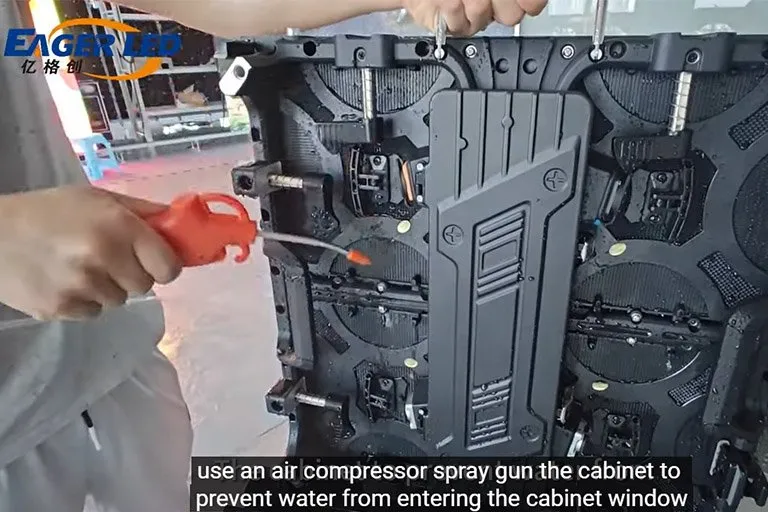
6.2. Aging, Thermal Cycling and Salt Spray
Water testing alone does not predict five-year reliability. EagerLED runs assembled outdoor screens through a 72-hour test before shipping, which is the point at which assembly faults, weak solder joints and fan or power-supply problems usually surface.
Ask a supplier what happens during aging: how many hours, at what brightness, at what ambient temperature, and what the pass criteria are. Then add the tests that match your site — thermal cycling for desert or continental climates, and salt spray for coastal installations.
6.3. Documentation, Traceability and Spares
The final question is what travels with the shipment. Request the approved bill of materials, the water-test record, the aging record and the batch identification for the LED modules and power supplies. Then order spare modules, gaskets, fans and power supplies from the same production batch.
Matching spares matter more in a weatherproof board than in an indoor one, because a replacement module that arrives with a different gasket or connector boot can compromise the seal. Our guide to choosing an LED display module supplier covers the traceability question in more detail, and you can also review EagerLED’s quality control process.
7. Installation and Commissioning Details That Keep Water Out
A board that passed every factory test can be compromised in an afternoon by the installation. Most water-ingress problems we see reported in the field trace back to the structure and the commissioning, not to the cabinet.
7.1. Structure, Orientation and Service Access
Plan the structure so the display is easy to reach and hard to soak. Leave enough service clearance to open the cabinet doors fully, because a door that cannot open fully is a door that gets forced shut against a gasket. Front-service and rear-service designs have different access implications, and the choice should follow the site rather than the price list.
- Keep the cabinet base clear of standing water and splash from the road surface.
- Check the direction of prevailing wind and driving rain against the sealing design of the top and side faces.
- Confirm the mounting method suits the structure: freestanding street furniture and building-face installations behave differently in street billboard use than in a stadium perimeter.
- Photograph completed installations as a record. Looking at real installation cases before you start helps avoid the obvious mistakes.
7.2. A Post-Installation Water Check
Commission the board with water, not after it. Before sign-off, inspect every gland and connector, confirm each is torqued, and record the interior of a sample cabinet with photographs. Then re-inspect after the first significant rain. That first inspection is the cheapest warranty claim you will ever avoid, because it catches a badly seated service door while the installer is still on site.
8. Maintenance: The Schedule That Extends Board Life
Weatherproofing is a maintenance commitment as much as a specification. Every seal, gasket and connector has a service life, and the failure is gradual enough that it is invisible until water is already inside. A simple schedule is enough to catch it early:
A practical inspection schedule for an outdoor LED advertising board:
| What to inspect | Interval | What you are looking for | ||||||||||||||
|---|---|---|---|---|---|---|---|---|---|---|---|---|---|---|---|---|
| Exterior face and content | Monthly | Dead pixels, mask cracks or yellowing, water marks behind the mask, visible gasket extrusion Interior of a sample cabinet |
Quarterly in year one, then annually | Water staining, condensation, corrosion on terminals, gasket compression set Service doors and gaskets |
Annually | Hardening, UV cracking, distortion; replace rather than re-torque Cable entries, glands and connector boots |
Annually | Loose glands, cracked boots, corrosion on pins, drip loops intact Weep holes and drainage |
Every 6 months | Blockage by dust, pollen, insect nests or moss Fasteners and structure |
Annually | Rust streaks, loose bolts, galvanic corrosion at dissimilar-metal joints Surge protection and earthing |
Annually | Indicator status on the SPD, earth continuity, bonding intact Fans and filters |
Every 6 months | Dust build-up, bearing noise, reduced airflow |
8.1. Cleaning Without Breaking the Seal
Cleaning is where good boards are damaged. Never use a high-pressure washer at close range on a display face: the jet can lift a mask, force water past a service-door gasket and drive moisture into the connector boots. Use low pressure, keep the nozzle at a distance, never spray upward at the bottom rail where the cable entries are, and never open a cabinet during rain or when rain is forecast within the next few hours.
9. Weatherproofing Specification Checklist
Use this list as the weatherproofing section of your RFQ. Every line is something a supplier can either document or not, which is what makes it useful:
- IP rating with scope. The level, plus exactly which assembly was tested — display face, cabinet, power compartment and controller.
- Gasket specification. Material, compression design and expected service life, with a continuous bonded seal at the corners.
- Connectors and glands. Sealed connector type, IP68 gland sizing, blanking of unused ports and a specified torque.
- Internal climate control. Pressure equalisation, fan count, filtration and whether anti-condensation heating is included.
- Drainage. Weep-hole provision, permitted mounting angle and any required drip edge or deflector.
- Thermal specification. Operating ambient range, brightness at maximum ambient and derating behaviour.
- Electrical protection. AC surge device type, data-line protection, bonding and earthing points.
- Structural and corrosion class. Design wind speed, snow load, coating specification and fastener grade.
- Test evidence. Water test record, aging record and, where relevant, salt-spray testing. See the outdoor LED module range for how these are documented per product family.
- Spares and warranty. Spare modules, gaskets, fans and power supplies from the same batch, plus warranty wording that states specifically what happens if water enters.
10. FAQs
11. Conclusion
Weatherproofing an outdoor LED advertising board is not a single purchase decision. It is a chain: a cabinet that seals, entries that stay sealed, an internal climate that does not condense, a structure that manages water and load, and an inspection routine that replaces seals before they fail. Break any link and the board gets wet, no matter what the datasheet says.
Specify the exposure first, then the rating — IP65 as the practical baseline for exposed permanent boards, IP66 where salt, monsoon rain or washdown are part of normal operation. Verify it with water tests, aging records and documentation rather than an IP number. Then protect it at installation and maintain it on a schedule.
EagerLED designs and tests outdoor LED advertising boards as sealed systems, from the cabinet gasket and connector specification to the factory waterproof test area and the spare-parts list that ships with the order. If you are specifying a board for a coastal, high-rainfall or high-wind site, start with the outdoor advertising LED board range and compare the enclosure specification against the checklist above before you compare price. Our team is available through EagerLED contact for site-specific advice.
About this guide: Published for EagerLED, an LED display manufacturer and supplier. The protection layers, inspection schedule and specification checklist are practical engineering recommendations, not a certification of any specific installation or a substitute for a local structural, electrical or lightning-protection design. First-party details describe EagerLED factory practice; standards references point to the bodies that publish them. Technical sources reviewed September 11, 2026.
 How to Choose an LED Display Module Supplier
 LED Display Board for Advertising: Pixel Planning