
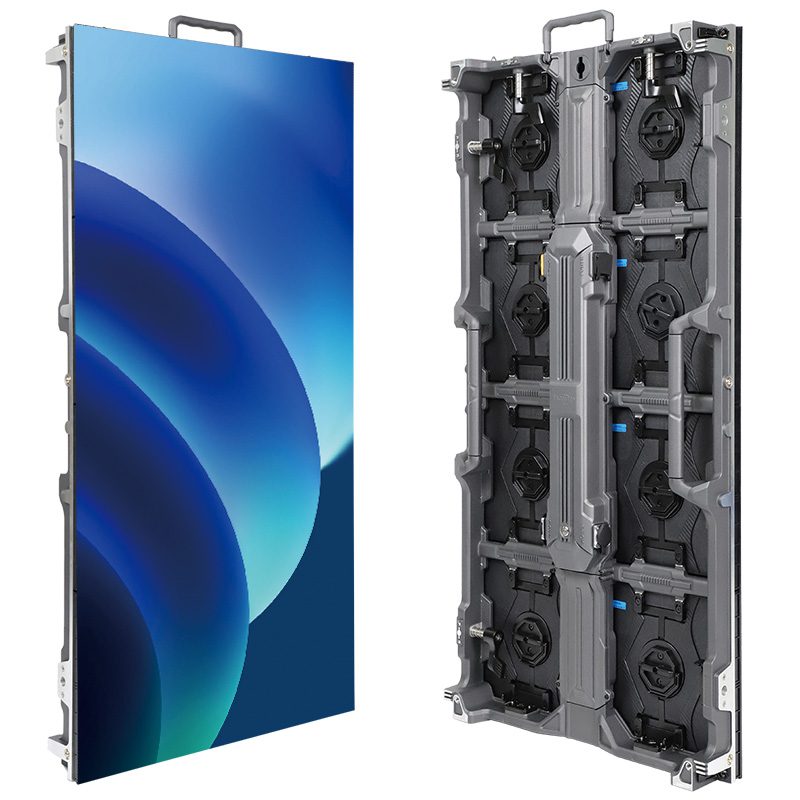
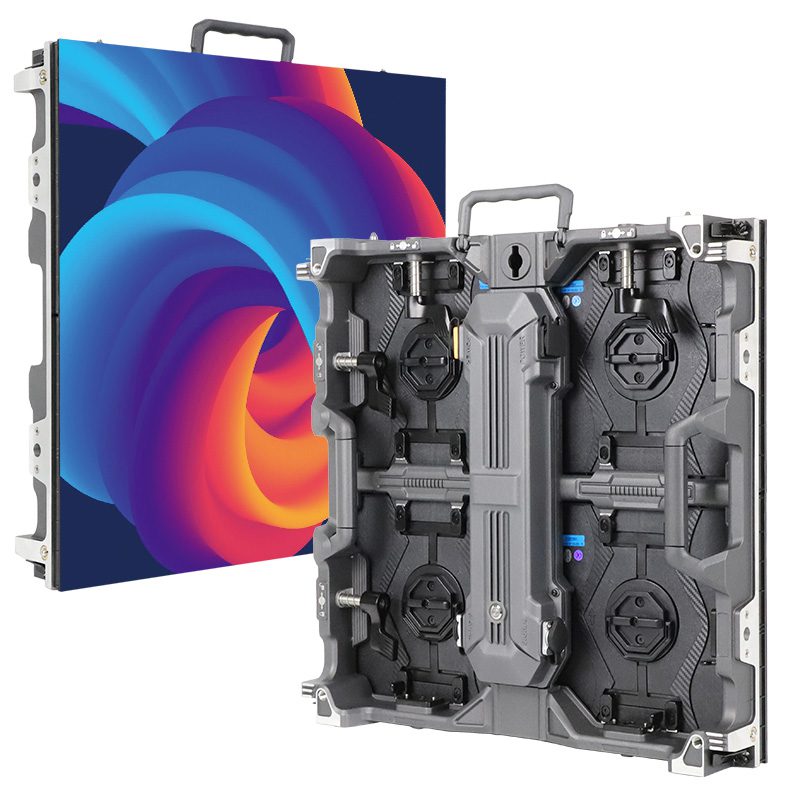
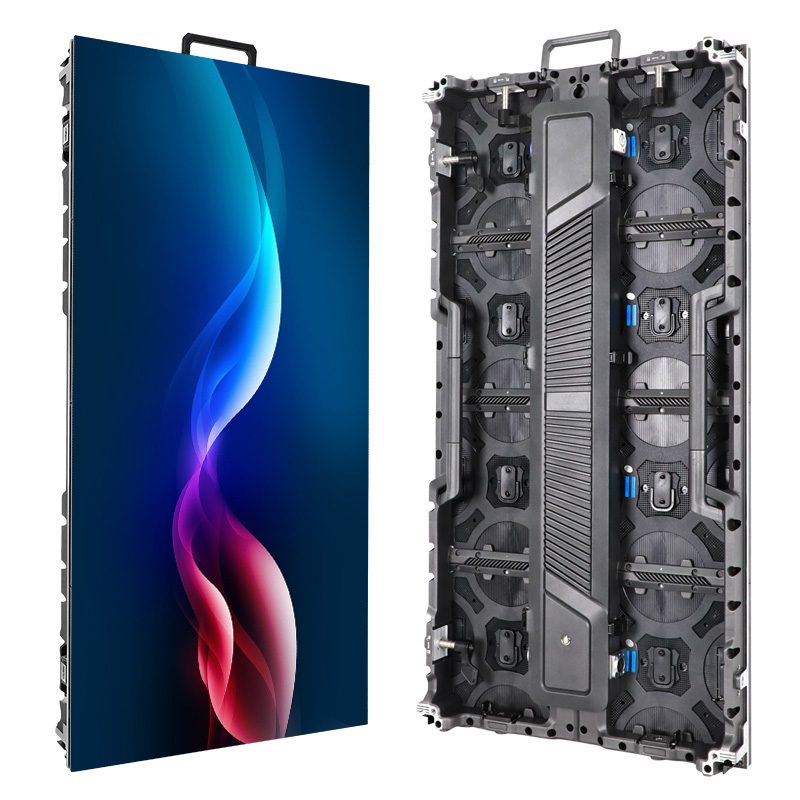
Truck billboard advertising puts a brand message on a vehicle that travels through selected streets or stops at an approved location. Options include printed truck-side panels, full wraps, and programmable LED screens. For advertisers, the decision starts with audience, route, operating hours, and total campaign cost. For LED buyers, it also depends on whether the display and vehicle can operate reliably together.
Advertising on a truck can support store openings, exhibitions, product launches, recruitment, and event campaigns where people gather at predictable times. A digital mobile billboard can change messages by schedule, but useful exposure depends on readable creative and the right location. Neither a bright screen nor high traffic automatically produces attention or sales.
This guide explains truck billboard advertising formats, quote comparisons, LED specifications, power and vehicle integration, and measurement. It helps advertisers compare rental proposals and helps operators evaluate an LED billboard truck for sale. Worked examples are illustrative calculations, not supplier quotations or promised campaign results.
Table of Contents
- 1. What Is Truck Billboard Advertising?
- 2. Truck and Display Formats Compared
- 3. Route and Campaign Planning
- 4. LED Billboard Truck Specifications Buyers Must Verify
- 5. Vehicle Integration, Power, and Reliability
- 6. Truck Billboard Advertising Cost and Quote Comparison
- 7. Creative and Content Scheduling
- 8. Legal, Permit, and Safety Checks
- 9. How to Measure Truck Billboard Advertising
- 10. Billboard Truck Rental vs Buying
- 11. LED Display Buyer Acceptance Checklist
- 12. Frequently Asked Questions
- 13. Conclusion
1. What Is Truck Billboard Advertising?
Truck billboard advertising is out-of-home advertising displayed on a vehicle that follows a planned route or occupies an approved location. Static versions use printed posters, vinyl panels, or full wraps. Digital versions use LED modules, a video processor, a media player, power equipment, and a control system to display scheduled content.
01. Where Truck Billboard Advertising Fits
Truck billboard advertising is most useful when the audience is concentrated by geography and time. Typical use cases include a trade show opening, a store launch, a sports event, recruitment around a campus, a film release, or a public-information campaign within selected districts. It is less suitable when the audience is widely dispersed or when the message requires detailed reading.
Truck-side advertising on a delivery fleet follows the fleet’s existing work. Dedicated truck advertising reserves a vehicle for a planned campaign route. A shared LED loop sells part of the screen’s playback time. Specify which service is included: these products deliver different control over location, timing, and message exposure.
02. What Broader DOOH Evidence Can Prove
A 2024 OAAA study conducted by The Harris Poll surveyed 1,023 U.S. adults aged 18–64. It reported that 73% viewed DOOH favorably and 76% of recent DOOH viewers said they had taken an action. These results support the broader medium; they do not establish the performance of every truck billboard advertising campaign. Route relevance, creative quality, exposure conditions, and measurement design still determine the result.
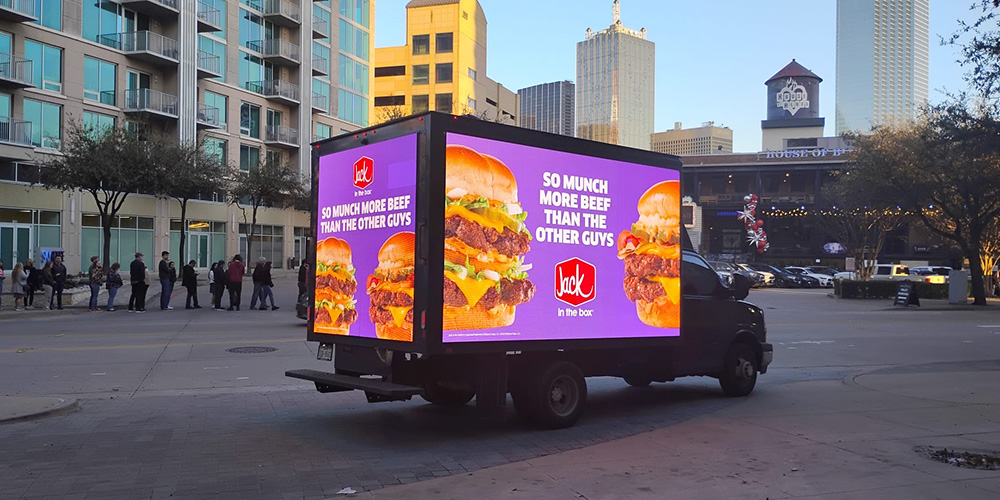
2. Truck and Display Formats Compared
The right format depends on how often the message changes, how close viewers are, whether the vehicle will move or dwell, and who will operate the equipment. A printed unit is mechanically simple. An LED unit makes truck billboard advertising more adaptable but adds electrical, thermal, structural, and content-management requirements.
| Format | Best fit | Content flexibility | Buyer’s main concern |
|---|---|---|---|
| Printed panel truck | One message for a fixed campaign | Low | Printing lead time, installation, and weather durability |
| Full vehicle wrap | Long-running brand visibility | Low | Vehicle downtime for installation and removal |
| LED billboard truck | Timed, localized, or multi-advertiser content | High | Power, brightness control, cooling, weight, and support |
| LED trailer | Events and locations where dwell matters | High | Towing, stabilization, parking, permits, and setup |
| Pickup truck billboard or truck bed billboard | Compact local routes and smaller activations | Depends on printed or LED construction | Payload, mounting, wind loading, and limited image area |
| Small vehicle-top display | Distributed urban coverage | Medium to high | Small image area and short viewing time |
Choose a static format when truck billboard advertising needs one durable message and fast roadside recognition. Choose an LED billboard truck when the campaign benefits from scheduled creative, language changes, live inventory, countdowns, or different messages in different route cells. Choose a trailer when the screen will stay near an event and the audience has time to watch.
Buyers comparing mobile LED screen solutions, LED screens for vehicles, and fixed advertising LED boards should keep these use cases separate. The mounting environment and operating duty are different even when the LED image specifications appear similar.
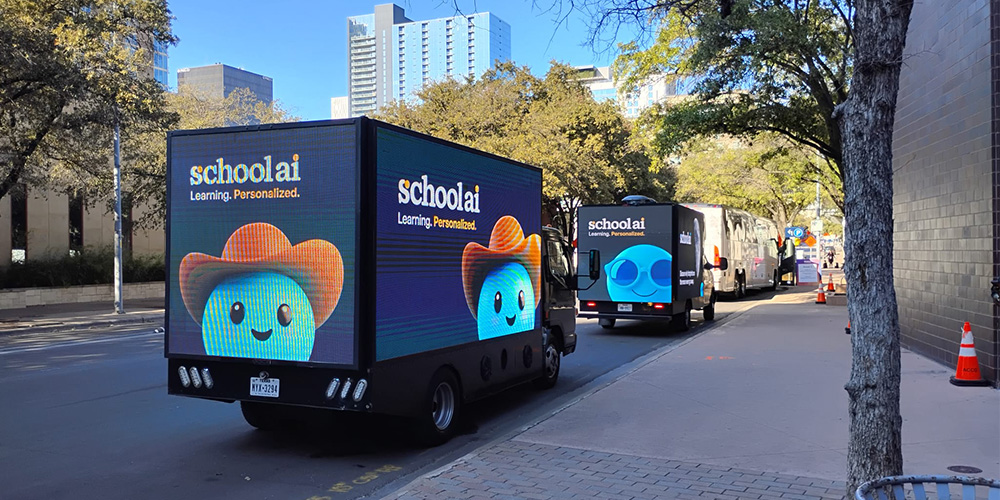
3. Route and Campaign Planning
A route is a media plan, not a driving log. Start truck billboard advertising with one objective: reach event arrivals, support visits to a retail trade area, generate branded searches, recruit in defined districts, or deliver a time-sensitive message. Map where that audience is likely to be and when it is present before choosing streets.
01. Build Route Cells Around Audience Behavior
Divide the operating day into route cells such as commuter corridors, lunch districts, retail zones, campus approaches, and venue exits. Give every cell a time window, legal stopping points, expected speed, alternate streets, and an appropriate creative version. Repeated exposure in three relevant cells can be more useful than one pass through ten unrelated neighborhoods.
A practical truck billboard advertising route sheet should record vehicle dimensions, clearances, weight restrictions, construction, closures, driver breaks, deadhead mileage, approved dwell positions, and a weather alternative. A route that looks efficient on a map may fail when the vehicle cannot use a planned underpass or legally stop near the audience.
02. Match Playback to Vehicle Movement
Match playback to movement. A moving audience may see only part of a loop, so make each truck billboard advertising frame understandable alone. Store content locally so a temporary network failure does not leave the screen blank.
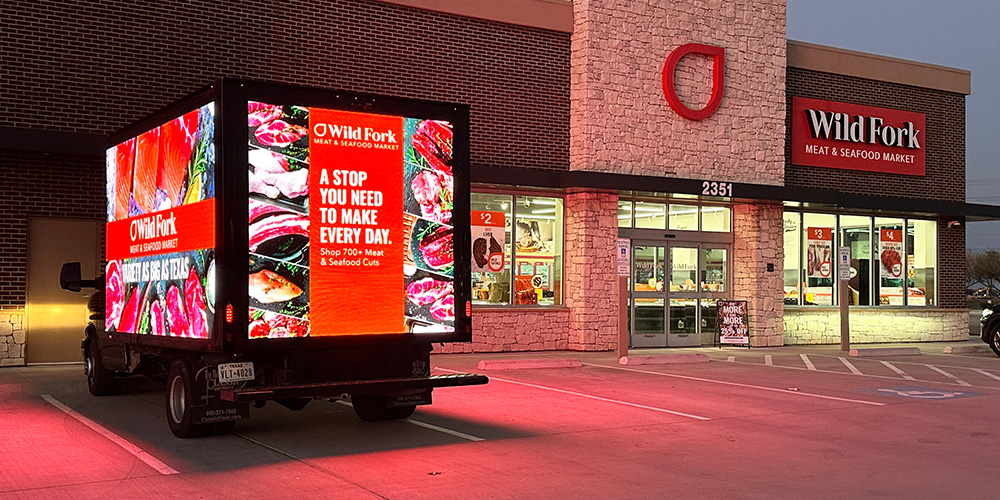
4. LED Billboard Truck Specifications Buyers Must Verify
In digital truck billboard advertising, no single LED specification proves suitability. Pixel pitch, screen dimensions, native resolution, brightness, dimming, refresh rate, ingress protection, power, cabinet weight, heat removal, and service access form one system. Ask for model-specific datasheets and test records rather than accepting descriptions such as “high brightness” or “outdoor grade.”
| Specification | What the buyer should request | Why it matters on a truck |
|---|---|---|
| Pixel pitch and resolution | Exact pitch, active dimensions, and calculated native pixel matrix | Determines readable detail at the intended viewing distance |
| Brightness and dimming | Rated brightness by model plus automatic and manual dimming controls | Supports daylight legibility without excessive nighttime output |
| Refresh rate | Operating refresh rate in the delivered configuration | Helps video playback and camera capture remain stable |
| Weather protection | IP rating, cabinet orientation, connector protection, and sealing details | Road spray, rain, dust, and cleaning expose the display differently from a sheltered sign |
| Power | Maximum and typical draw, input requirements, branch layout, and startup behavior | Sizes the generator or battery system, distribution, cabling, and cooling |
| Weight and service | Cabinet, frame, processor, cable, and power-system weights; access method | Affects axle loads, center of gravity, maintenance time, and structural design |
01. Read a Model-Specific Datasheet
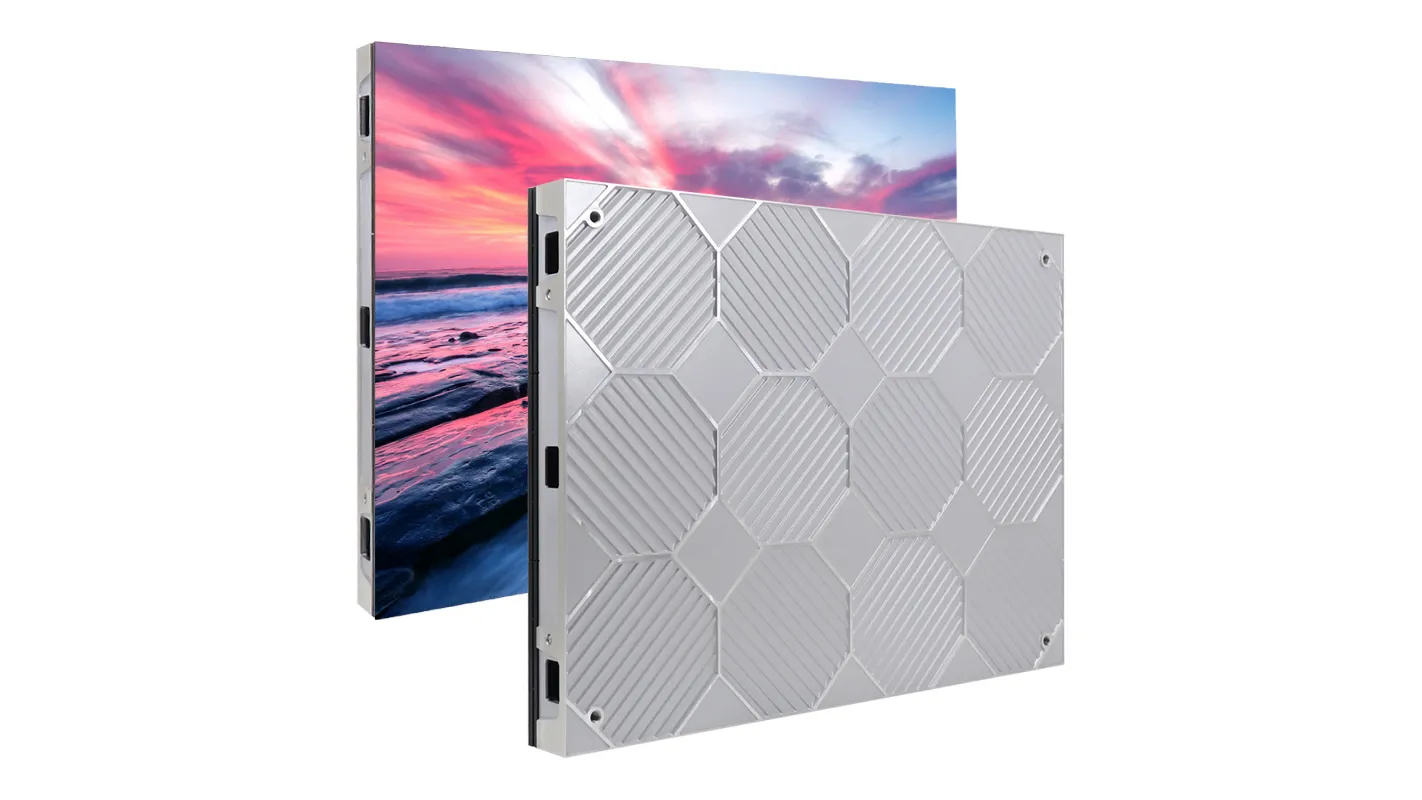
The published EagerLED EA960R4 advertising LED display illustrates why buyers must read the exact model row. The 960 × 960 mm family lists outdoor pixel-pitch options from P2.5 to P10, outdoor brightness from 4,500 to 8,000 cd/m² depending on model, a refresh rate of at least 3,840 Hz, IP65 outdoor protection, and a 140° viewing angle. Those values are useful reference fields, but the product is described for fixed installation. They are not proof that a cabinet can be mounted on a moving vehicle without additional engineering.
02. Calculate Native Resolution Before Creative Production
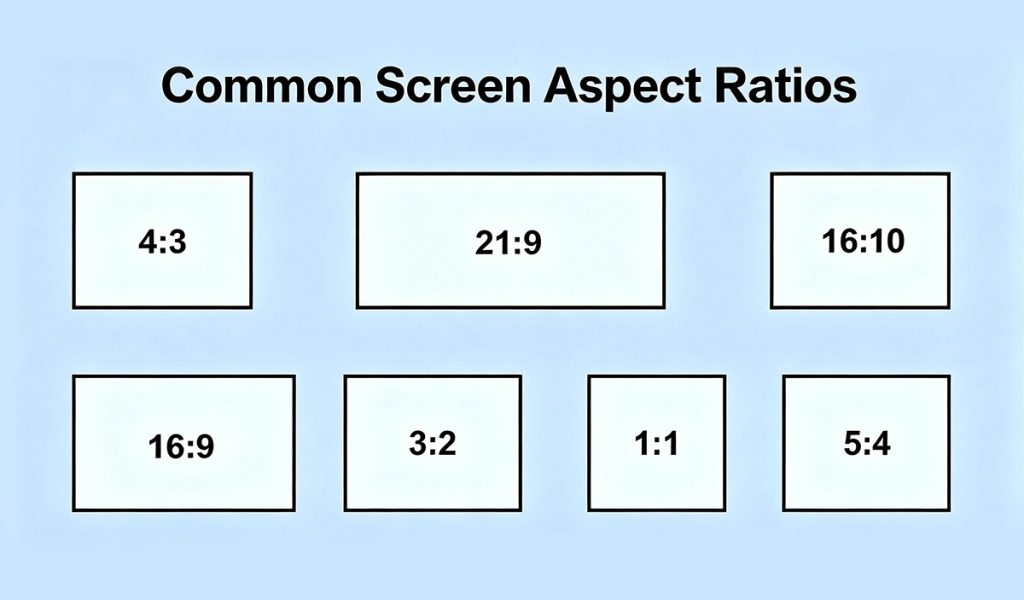
For example, an active LED face measuring 3,840 × 1,920 mm at P4 has 960 × 480 pixels and a 2:1 aspect ratio: 3,840 ÷ 4 = 960; 1,920 ÷ 4 = 480. This calculation assumes that the active dimensions and module layout match exactly. Supply the designer with the confirmed native canvas for each face, because side and rear screens may differ.
Calculate the native content canvas before approving creative. Divide the active screen width and height by the pixel pitch using consistent millimetre units. Then confirm that the media player and processor output that exact pixel matrix. The site’s LED screen resolution guide and screen aspect ratio guide provide related planning detail. Content scaled from the wrong aspect ratio can appear stretched, cropped, or surrounded by unused pixels.
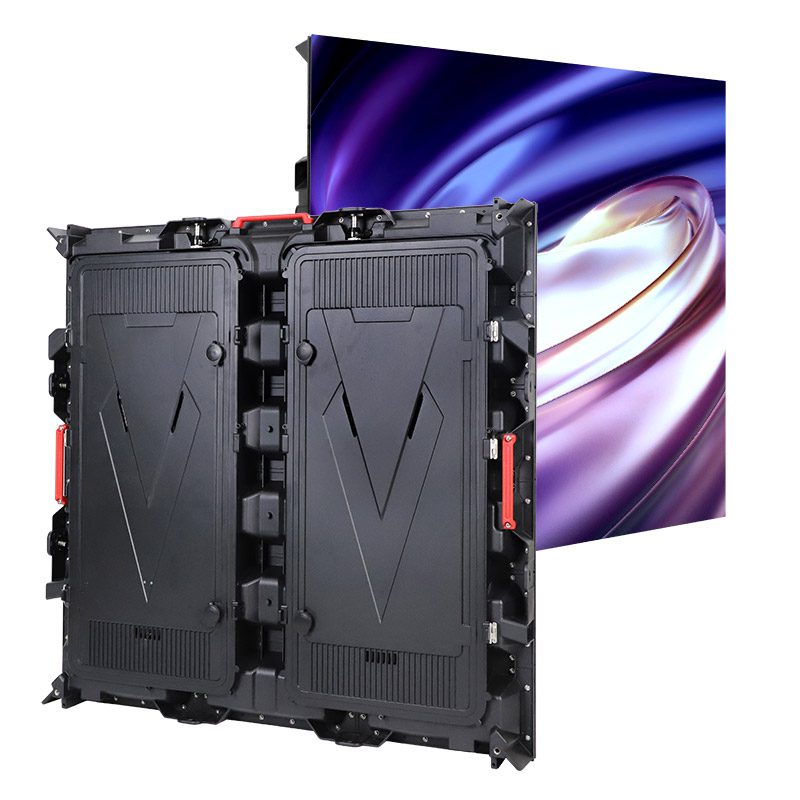
5. Vehicle Integration, Power, and Reliability
A cabinet that performs on a building can fail in truck billboard advertising if the vehicle integration ignores vibration, shock, airflow, water paths, cable movement, or weight distribution. The completed structure should be reviewed by qualified vehicle and structural professionals. Verify axle loads and gross vehicle limits after the screen, framing, generator or batteries, cooling equipment, cables, media hardware, and safety enclosures are installed.
01. Engineer Power and Thermal Management Together
Power design should start with documented loads, not generator marketing labels. The electrical engineer needs the display’s maximum and expected operating draw, startup characteristics, supply voltage, distribution topology, protective devices, grounding or bonding method, emergency isolation, generator derating conditions, battery inverter limits, and any auxiliary loads. Truck billboard advertising should also have a controlled shutdown procedure so operators do not repeatedly interrupt the screen in an unsafe state.
Heat management must account for sun exposure, ambient temperature, stopped traffic, blocked intakes, and power-system heat. Ask how temperature is monitored and whether a fault triggers reduced brightness or a safe shutdown.
Use screen area to check a power quotation. If the documented maximum draw is 600 W/m² and the combined active area is 12 m², the screens alone require up to 7.2 kW. This illustrative load excludes cooling, controllers, conversion losses, and other equipment. Generator capacity and battery runtime require the integrator’s complete load assessment; typical-content consumption cannot replace maximum-load planning.
02. Design Service Access and Spare-Parts Support
Specify service access before the frame is built. Technicians need room to replace modules, power supplies, receiving cards, fans, and cables safely. For dependable truck billboard advertising, the spares should match the delivered batch and include configuration backups, a cabinet map, wiring diagram, and recovery process.
6. Truck Billboard Advertising Cost and Quote Comparison
Truck billboard advertising cost depends on location, format, operating hours, route control, exclusivity, production, permits, and reporting. Separate the price to rent advertising time from the cost to buy an equipped vehicle. Online rates often describe different services; a delivery-truck panel sold by the month is not equivalent to a dedicated LED truck sold by the day.
01. Compare Truck Side Advertising Rates on Equal Terms
Ask each supplier for the same city, campaign dates, daily operating hours, display faces, and share of voice. Box truck advertising cost should identify whether the truck follows a delivery schedule or your chosen route. Confirm whether quoted hours include travel from the depot, breaks, setup, and return travel. These details determine how much audience-facing time you actually purchase.
| Quote line | Questions to ask | Common comparison error |
|---|---|---|
| Vehicle and operator | Minimum day, overtime, deadhead mileage, driver breaks, fuel, and tolls? | Comparing a four-hour activation with an eight-hour route |
| Media inventory | Sole advertiser or shared loop? How many faces and what share of voice? | Comparing exclusive use with rotating ads |
| Creative | Design, resizing, animation, revisions, testing, and upload included? | Ignoring production and versioning costs |
| Operations | Parking, permits, security, generator, charging, connectivity, and cleanup included? | Assuming the day rate is the total campaign cost |
| Evidence | GPS logs, uptime, photographs, playback proof, and audience method included? | Treating route mileage as verified impressions |
| Contingency | What happens after weather, breakdown, route closure, or screen failure? | Accepting a quote without make-good terms |
02. Calculate the Complete Campaign Budget
Illustrative budget: a hypothetical $150 hourly rate × eight billable hours × three days equals $3,600 in vehicle time. Adding $400 for creative and $200 for agreed extras produces a $4,200 budget before applicable tax. These are example inputs, not market averages or an EagerLED quotation. Replace every input with a written local offer.
For a rental campaign, normalize every proposal to the same number of operating hours, days, faces, share of voice, route area, creative service, and reporting level. For an owned unit, compare total cost of ownership: vehicle purchase or lease, LED system, integration, financing, registration, insurance, operators, storage, fuel or charging, maintenance, spares, connectivity, sales, and downtime.
Use cost per thousand only when the impression methodology is credible: CPM = total campaign cost ÷ impressions × 1,000. Also calculate cost per tracked visit, qualified lead, or sale where the data permits. Truck billboard advertising should not be selected on day rate alone if the cheaper route misses the intended audience.
7. Creative and Content Scheduling
Truck billboard advertising creative has only a short viewing window. Use one main idea, a compact headline, a recognizable visual, a clearly visible brand, and one action. Avoid paragraphs, fine-print disclaimers, thin type, low-contrast colors, rapid cuts, and scrolling text. Test the design at the expected size, angle, distance, movement, daylight level, and nighttime brightness.
At a parked activation, a three-frame sequence can identify a need, present an offer, and show the action. On a moving route, make frames independent because a viewer may see only one.
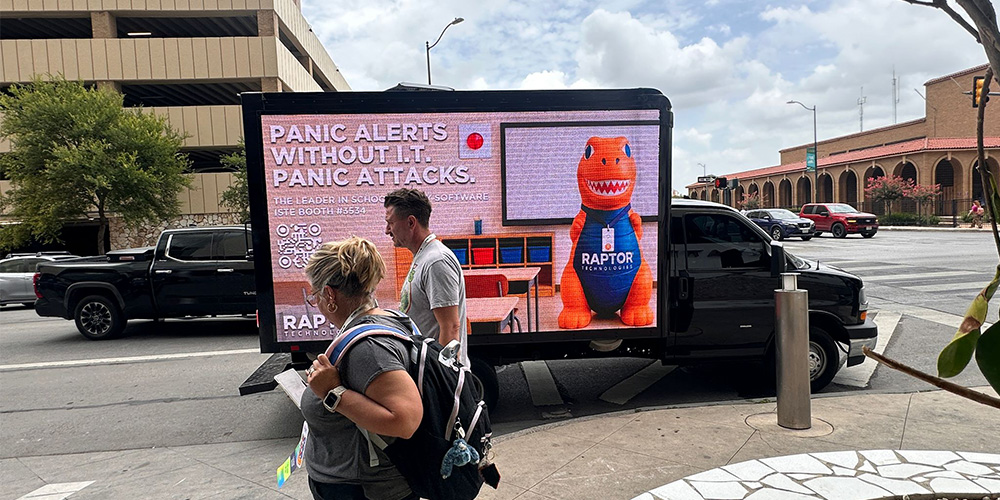
Use QR codes only where people can safely hold the screen in view, such as a parked truck near a pedestrian event. Drivers should never be encouraged to scan. Short, memorable URLs, campaign-specific landing pages, promo codes, branded-search monitoring, and location-matched offers are often better response mechanisms for moving truck billboard advertising.
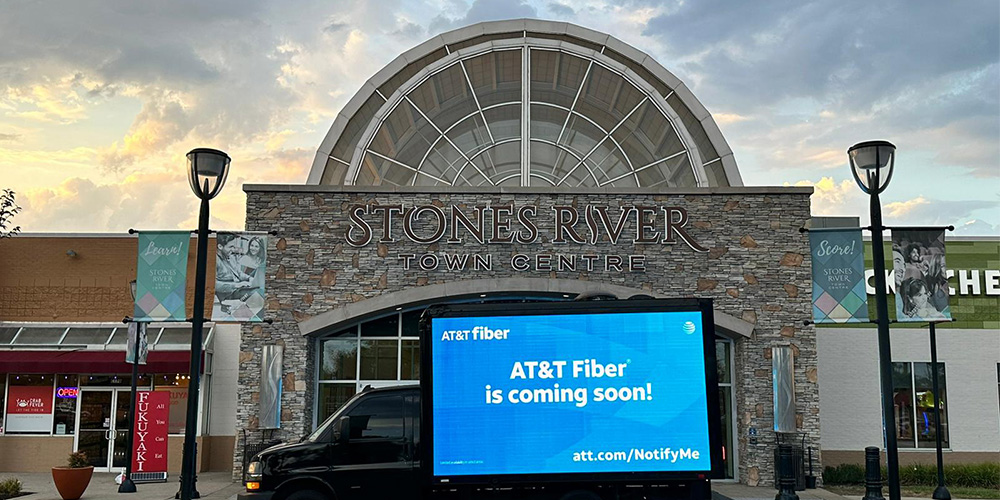
For shared-screen truck billboard advertising, a 10-second advertisement in a 60-second loop represents 16.7% of scheduled playback time. It does not establish a 16.7% share of audience attention. Ask for complete-loop duration, competing advertisers, scheduling rules, proof-of-play logs, and what happens if the audience’s viewing window is shorter than the loop.
8. Legal, Permit, and Safety Checks
Truck billboard advertising is not automatically legal in every city or at every location. Rules may address mobile signs, parking, illumination, flashing or changing content, sound, traffic distraction, political advertising, alcohol or other regulated products, event activity, and commercial vehicle operation. Requirements can change by street, venue, municipality, state, and country.
01. Verify Rules for Every Jurisdiction and Venue
Before dispatch, obtain written confirmation of who is responsible for permits and verify the approved route, dwell locations, operating hours, brightness limits, content restrictions, vehicle classification, driver licensing, registration, insurance, and property permission. A venue’s approval does not replace public-road or parking requirements. Local legal advice and the responsible authorities should resolve uncertain cases.
02. Separate Vehicle Classification From Advertising Permission
In the United States, vehicle classification is a separate check. 49 CFR 390.5T defines a commercial motor vehicle in interstate commerce in part by a gross vehicle weight rating, gross combination weight rating, gross vehicle weight, or gross combination weight of 10,001 pounds or more. Other parts of the definition and other federal, state, or local rules may also apply. The carrier, insurer, and relevant authorities should confirm the obligations for the specific truck billboard advertising operation.
Operational safety includes pre-trip inspection, secure panels and cables, emergency isolation, appropriate fire-safety equipment, safe refueling or charging, weather limits, parking procedures, and no servicing of an energized display from an exposed roadside position.
9. How to Measure Truck Billboard Advertising
GPS proves where and when a vehicle traveled; it does not prove how many people noticed the advertisement. Geopath’s OOH glossary states that circulation estimates opportunity to see and is no longer a credible audience measure by itself. It defines audience delivery through impressions, ratings, reach, and frequency. Ask any truck billboard advertising provider to disclose its audience source, visibility assumptions, geography, dates, and treatment of duplicate exposures.
| Measurement level | Useful metrics | What it can establish | What it cannot establish alone |
|---|---|---|---|
| Delivery | Operating hours, GPS route, dwell time, uptime, photos, playback logs | Whether the contracted activity occurred | Audience attention or business impact |
| Exposure | Modeled impressions, reach, frequency, audience composition | Estimated audience delivery under stated assumptions | Guaranteed viewing or response |
| Response | Short-URL visits, promo codes, calls, scans, branded search, footfall | Observable actions associated with the campaign | Incrementality without a baseline or control |
| Outcome | Qualified leads, visits, sales, gross profit, brand lift | Business value when attribution design is sound | Which exposure caused every individual action |
Build a measurement plan before truck billboard advertising launches. Use a campaign-specific landing page or code, record a pre-campaign baseline, align digital analytics to route dates and trade areas, and compare exposed periods or locations with a reasonable control where possible. Document disruptions instead of quietly removing them from the report.
Define success before spending: for example, qualified inquiries from a specified trade area during the campaign and a comparable baseline period. Record other promotions, seasonality, and events that could affect results. A rise in branded searches can support a campaign assessment, but it cannot identify which individual saw a truck or prove that the truck caused every additional sale.
10. Billboard Truck Rental vs Buying
Rent truck billboard advertising for a first test, a short flight, a new city, a one-off event, or uncertain demand. Rental transfers much of the vehicle, staffing, maintenance, storage, and compliance workload to the operator, although the advertiser still needs to check the contract, route, creative, proof of delivery, and make-good terms.
Consider buying an LED billboard truck only when conservative utilization can support the full operation. Ownership may suit an established media operator, production company, or agency with recurring bookings, qualified technicians, secure storage, trained drivers, maintenance capacity, and a sales pipeline. The purchase price is only the beginning.
| Decision factor | Rental usually fits | Ownership may fit |
|---|---|---|
| Demand | Occasional, seasonal, or unproven | Recurring bookings with conservative utilization |
| Geography | Testing several markets | Established operating territory |
| Technical team | No dedicated vehicle/LED support | Qualified operators and service capability |
| Capital and risk | Campaign expense preferred | Capital, storage, insurance, spares, and downtime budgeted |
| Control | Provider controls availability and configuration | Owner controls schedule, hardware, and service standard |
When evaluating an LED billboard truck for sale, request the vehicle identification and history, certified weight information, screen and processor model numbers, wiring diagrams, protection devices, service records, operating-hour records, spare inventory, software licenses, content-control access, and a live test under load. For new construction, require a written division of responsibility between the vehicle builder, structural engineer, electrical integrator, LED supplier, and operator.
11. LED Display Buyer Acceptance Checklist
01. Test the Complete System Under Load
Acceptance should test the complete truck billboard advertising system, not only a short indoor video: every display face, processor, media player, communications path, power source, sensor, cooling unit, safety interlock, and local-content fallback.
- Verify the bill of materials. Record LED module, receiving card, power supply, processor, media player, sensor, and cabinet versions.
- Confirm geometry. Measure active screen dimensions and confirm native resolution, aspect ratio, and content canvas.
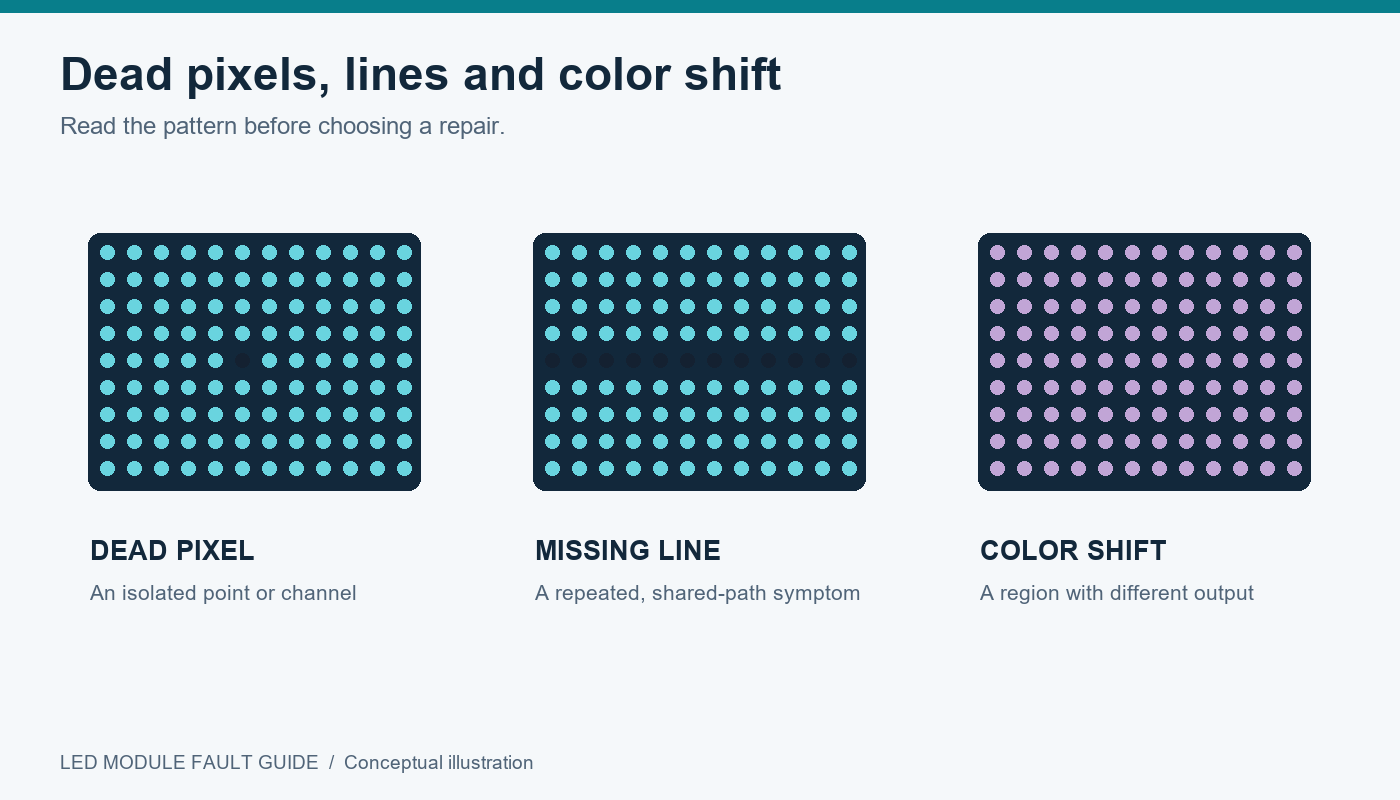
- Test image performance. Review uniformity, dead pixels, grayscale, color, refresh behavior, and dimming at several levels.
- Test full electrical load. Operate all faces with demanding content while monitoring voltage, current, temperature, and protective devices.
- Test failure behavior. Use the manufacturer’s approved test procedure to simulate network and cooling faults; confirm alarms, fallback content, and safe shutdown.
- Inspect weather paths. Review cabinet seals, connectors, drainage, cable entries, doors, and all penetrations created during vehicle integration.
- Confirm service access. Replace a module, power supply, and receiving card using the supplied tools and documentation.
- Back up configuration. Export processor files, receiving-card settings, cabinet maps, schedules, licenses, and administrator credentials.
- Count spares and documents. Match the shipment to the contract, packing list, drawings, certificates, manuals, and warranty terms.
- Run a road test. After qualified engineering approval, check vibration, noise, temperature, cable security, image stability, and structural movement on the intended vehicle.
02. Document Acceptance and Open Exceptions
Record results with dated evidence, serial numbers, and signed exceptions so unresolved truck billboard advertising faults have documented ownership before commercial operation.
12. Frequently Asked Questions
01. How much does truck billboard advertising cost per day?
Truck billboard advertising has no universal day rate. Compare local quotes for the same operating hours, route, format, exclusivity, creative, and reporting. A hypothetical $150 hourly quote with an eight-hour minimum equals $1,200 before extras; this is a calculation example, not a market price. Ask whether depot travel, printing or design, permits, fuel, and taxes are included.
02. How effective is truck advertising?
Truck billboard advertising can be effective for concentrated, time-sensitive audiences when the route, schedule, creative, and measurement plan are disciplined. Evaluate verified delivery, credible audience estimates, tracked response, and business outcomes. Do not treat miles driven or campaign photographs as proof of effectiveness.
03. What pixel pitch is best for an LED billboard truck?
The appropriate pixel pitch depends on the closest meaningful viewing distance, screen dimensions, native resolution, content detail, and budget. A finer pitch can improve close-range detail but increases pixel density and may increase cost, processing, and power requirements. Calculate the content resolution and compare model-specific datasheets rather than choosing by pitch alone.
04. How bright should a mobile LED billboard be?
Brightness must be sufficient for the actual daylight environment and adjustable for night operation. The correct value varies with ambient light, orientation, screen technology, local rules, and viewing conditions. Ask for the delivered model’s rated brightness, automatic light sensor, manual limits, and a nighttime dimming demonstration.
05. Are billboard trucks legal in every city?
No. Truck billboard advertising may be affected by sign, parking, illumination, sound, traffic, event, content, and commercial-vehicle rules. Confirm the planned route and dwell locations with the relevant authorities, property owner, operator, and insurer before launch.
06. Can an LED cabinet designed for a building be installed on a truck?
Not without a complete engineering review. A fixed-installation cabinet’s published LED performance does not establish suitability for vibration, shock, moving water exposure, vehicle power, axle loads, center of gravity, or roadside servicing. Qualified professionals must approve the integrated vehicle system.
07. Can GPS data be reported as impressions?
No. GPS records route and time. Impressions require an audience and visibility methodology with disclosed assumptions. Keep delivery evidence, modeled exposure, response metrics, and business outcomes separate in every truck billboard advertising report.
08. Should I rent or buy an LED billboard truck?
Rent for short campaigns, market tests, and uncertain utilization. Buy when recurring demand, margin, staffing, storage, insurance, maintenance, technical support, and downtime planning justify ownership. Model conservative utilization rather than assuming the truck will be booked every available day.
13. Conclusion
Truck billboard advertising works best as a coordinated mobile media system, not simply a bright screen attached to a vehicle. Define the audience and objective first, then align the route, creative, LED specification, structural design, power, cooling, compliance, and measurement method. For buyers, the most important discipline is to verify the delivered configuration and the complete vehicle integration instead of relying on one attractive specification.
A reliable truck billboard advertising program separates route proof from audience estimates, compares total cost rather than headline rates, and records acceptance and maintenance evidence. Advertisers can start with rental to test the market; operators considering ownership should model utilization and lifecycle costs conservatively. Buyers reviewing LED hardware can compare published product data from Shenzhen EagerLED Co., Ltd., then require qualified vehicle, structural, and electrical professionals to confirm suitability for the intended mobile installation.
 10 Best Cinema Screens in the World: IMAX & LED
 LED Screen Aspect Ratio: A Complete Guide to 16:9, 4:3 and More