
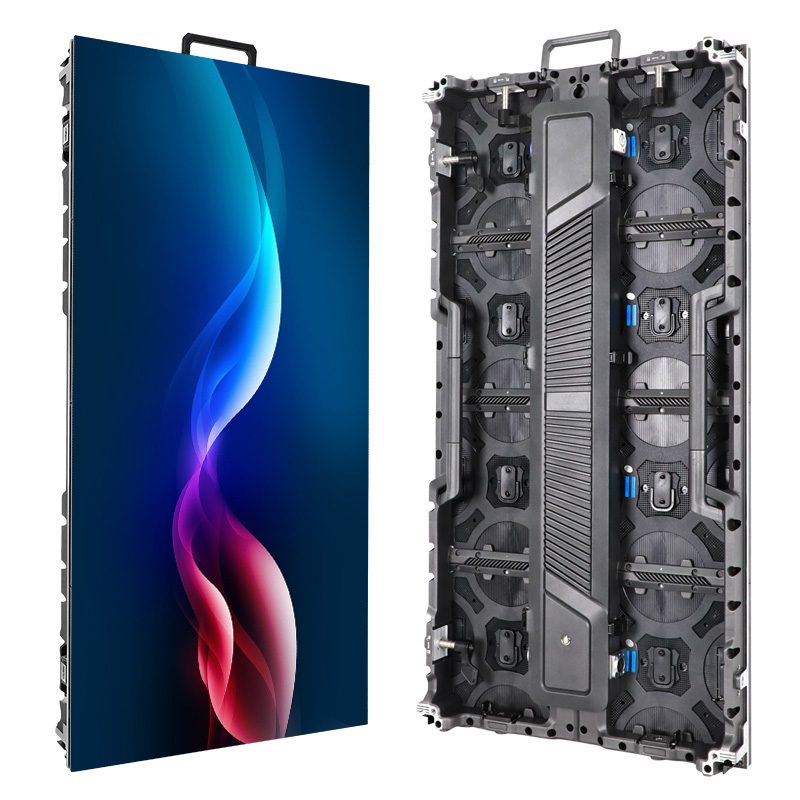
A 16:9 aspect ratio LED display has become the standard choice for conference rooms, retail stores, broadcast studios, and commercial LED video walls. It matches today’s most common video formats, making it easier to display Full HD, 4K, and 8K content without stretching, cropping, or black bars.
But choosing the right 16:9 LED display involves more than selecting a screen shape. Factors such as pixel pitch, cabinet size, resolution, brightness, and viewing distance all affect image quality and overall performance.
This guide explains everything you need to know about 16:9 aspect ratio LED displays, including how they work, why they have become the industry standard, how to choose the right specifications, and how they compare with other aspect ratios.
Table Of Contents
1.What Is a 16:9 Aspect Ratio LED Display?
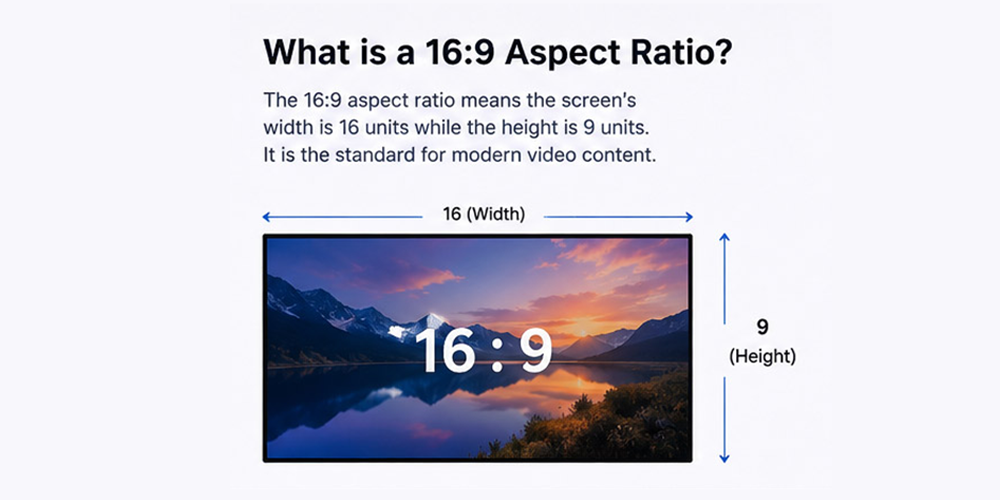
A 16:9 aspect ratio LED display is an LED screen designed with the same width-to-height ratio used by most televisions, computer monitors, laptops, and digital video content. Because nearly all modern content is produced in a 16:9 format, these displays can present images without stretching, cropping, or adding black borders.
Unlike traditional LED video walls that were commonly built using 4:3 cabinets, 16:9 cabinets are engineered specifically for today’s standard resolutions. Multiple cabinets can be combined to create Full HD, 2K, 4K, or even 8K video walls with much simpler calculations and installation.
This standardized design has made 16:9 LED displays the preferred solution for indoor fine-pitch applications where image quality and installation efficiency are equally important.
1.1 Why Is the 16:9 Aspect Ratio So Popular?
The popularity of 16:9 isn’t unique to LED displays. It has become the global standard across nearly every digital device and video platform.
Today, most content is created in a 16:9 format, including:
- YouTube videos
- Microsoft PowerPoint presentations
- Zoom and Microsoft Teams meetings
- Television broadcasts
- Corporate promotional videos
- Digital signage advertisements
- Live streaming
- Video conferencing
When an LED display shares the same aspect ratio as the content source, the processor can display images at their native resolution without unnecessary scaling. This results in sharper text, more accurate graphics, and a better viewing experience.
For system integrators, using standard 16:9 cabinets also reduces installation complexity and simplifies screen configuration.
1.2 16:9 LED Display vs Traditional 4:3 Cabinets
Years ago, most LED cabinets followed a 4:3 ratio because display resolutions were relatively low. As Full HD and 4K became the industry standard, those cabinets often required complicated layouts to achieve the desired resolution.
For example, building a true 4K LED wall with traditional cabinets may require:
- Extra cabinets
- Non-standard screen dimensions
- Additional image scaling
- More processor configuration
By comparison, 16:9 cabinets align naturally with modern video resolutions.
| Feature | 16:9 LED Display | 4:3 LED Display |
|---|---|---|
| Matches modern video content | ✔ | ✖ |
| Easier 4K/8K configuration | ✔ | ✖ |
| Less image scaling | ✔ | ✖ |
| Faster installation | ✔ | △ |
| Better for conference rooms | ✔ | △ |
| Better for broadcast | ✔ | △ |
For most new indoor projects, 16:9 is now considered the more practical and future-ready choice.
1.3 Standard Cabinet Sizes
Although different manufacturers offer different products, most 16:9 LED displays are based on standardized cabinet dimensions.
The most common sizes include:
| Cabinet Size | Typical Application |
|---|---|
| 600 × 337.5 mm | Conference rooms |
| 640 × 360 mm | Corporate meeting rooms |
| 800 × 450 mm | TV studios |
| 1200 × 675 mm | Large commercial displays |
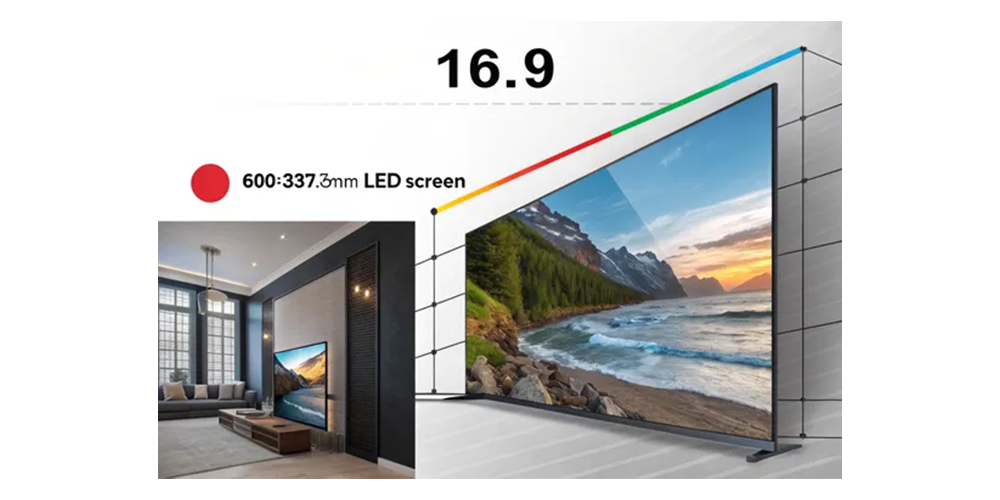
Among these, 600 × 337.5 mm has become the most widely adopted standard because it follows a true 16:9 ratio while supporting fine pixel pitches and easy scaling to Full HD, 2K, 4K, and 8K resolutions.
2.Why Choose a 16:9 Aspect Ratio LED Display?
Choosing a 16:9 LED display isn’t simply about matching the shape of a television. It can reduce project costs, improve visual quality, and make future upgrades much easier.
2.1 Perfect Match for Modern Video Content
Nearly every commercial video source today is produced in a 16:9 format. Whether you’re displaying PowerPoint slides, advertising videos, surveillance systems, or live broadcasts, a 16:9 LED display can present the content without distortion.
Because the source and display share the same proportions, images remain sharp and text stays readable without cropping or stretching.
This is especially important for:
- Boardrooms
- Control rooms
- Digital signage
- Broadcast studios
- Education
2.2 Easier Installation
One of the biggest advantages of 16:9 cabinets is simplified installation.
Instead of calculating irregular cabinet arrangements, installers can assemble standardized video walls using straightforward cabinet grids.
For example:
| Resolution | Typical Cabinet Layout |
|---|---|
| Full HD | 4 × 4 |
| 2K | 6 × 6 |
| 4K UHD | 8 × 8 |
| 8K UHD | 16 × 16 |
This reduces installation time, simplifies processor configuration, and minimizes the risk of mapping errors.
2.3 Better Image Quality
Because the LED wall closely matches the native resolution of the content, image processing becomes much simpler.
Benefits include:
- Sharper images
- Better text readability
- More accurate colors
- Smoother graphics
- Fewer scaling artifacts
For applications such as financial trading, medical imaging, and broadcast production, these improvements can make a noticeable difference.
3.Why Is the 16:9 Aspect Ratio So Popular?
The 16:9 aspect ratio has become the global standard for modern displays because it works seamlessly with today’s content, devices, and display technologies.
Here are the main reasons why it dominates the market:
3.1 It Matches Most Digital Content
Nearly all modern content is created in a 16:9 format, including:
- YouTube videos
- Netflix and other streaming services
- PowerPoint presentations
- Zoom and Microsoft Teams meetings
- TV broadcasts
- Digital signage
A 16:9 LED display can show this content at its native resolution without stretching or cropping.
3.2 Easier to Build Standard Resolutions
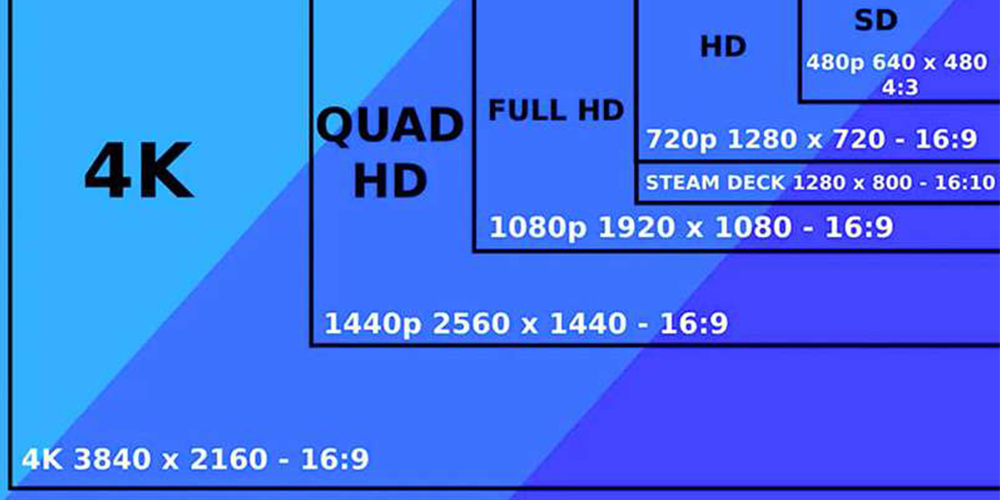
16:9 LED cabinets are designed to create common resolutions such as:
- Full HD (1920 × 1080)
- 2K (2560 × 1440)
- 4K UHD (3840 × 2160)
- 8K UHD (7680 × 4320)
This makes installation, screen mapping, and future expansion much simpler.
3.3 Lower Manufacturing Costs
Because 16:9 is the industry standard, manufacturers produce cabinets and components in much larger volumes. This reduces production costs and makes replacement parts easier to source.
3.4 Better Compatibility
Almost every modern device supports a 16:9 output, including:
- PCs and laptops
- Media players
- Cameras
- Video processors
- Streaming devices
That means fewer compatibility issues during installation.
3.5 Easier Installation and Maintenance
Standardized cabinet sizes simplify screen assembly and maintenance. Installers are familiar with 16:9 layouts, while replacement modules and accessories are widely available, reducing maintenance time and long-term operating costs.
4.Aspect Ratio vs Resolution: What’s the Difference?
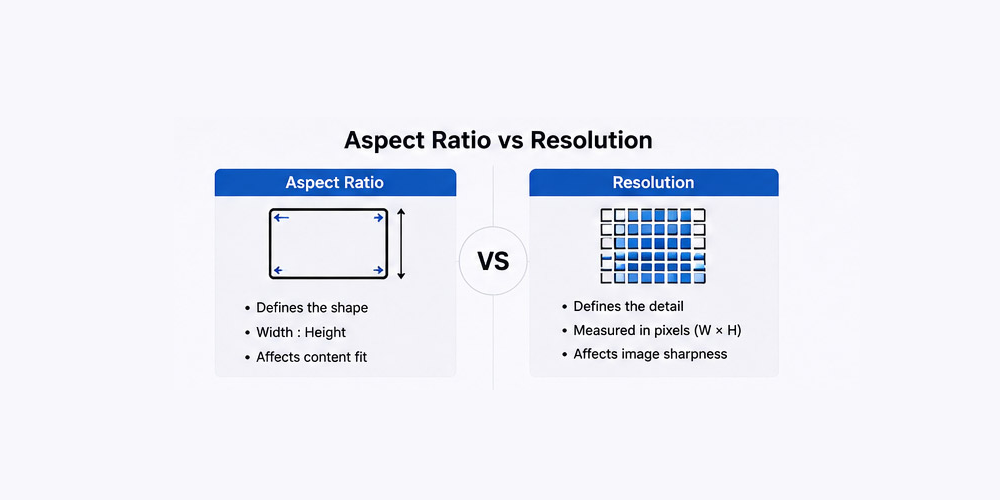
Aspect ratio and resolution are often confused, but they describe two different things.
Simply put:
- Aspect ratiodefines the shape of the display.
- Resolutiondefines the number of pixels used to create the image.
Understanding the difference helps you choose the right LED display without overpaying for unnecessary specifications.
4.1 What Is Aspect Ratio?
Aspect ratio is the proportional relationship between a screen’s width and height.
Common aspect ratios include:
| Aspect Ratio | Typical Applications |
|---|---|
| 16:9 | TVs, LED displays, laptops, video walls |
| 16:10 | Professional monitors |
| 21:9 | Ultra-wide monitors |
| 4:3 | Legacy displays and older LED cabinets |
For example, a 16:9 display is always wider than it is tall, regardless of its actual size.
4.2 What Is Resolution?
Resolution refers to the total number of pixels displayed on the screen. More pixels generally produce sharper images and finer details.
Common resolutions include:
| Resolution | Aspect Ratio |
|---|---|
| 1280 × 720 (HD) | 16:9 |
| 1920 × 1080 (Full HD) | 16:9 |
| 2560 × 1440 (QHD) | 16:9 |
| 3840 × 2160 (4K UHD) | 16:9 |
| 7680 × 4320 (8K UHD) | 16:9 |
Although these resolutions are different, they all share the same 16:9 aspect ratio.
4.3 Can the Same Aspect Ratio Have Different Resolutions?
Yes.
A 16:9 LED display can support many different resolutions depending on its pixel pitch and screen size.
For example:
| Aspect Ratio | Resolution |
|---|---|
| 16:9 | 1280 × 720 |
| 16:9 | 1920 × 1080 |
| 16:9 | 3840 × 2160 |
| 16:9 | 7680 × 4320 |
The screen shape stays the same, but image detail increases as the resolution becomes higher.
4.4 Can the Same Resolution Have Different Aspect Ratios?
Yes.
Displays with similar pixel counts can have different shapes.
For example:
| Resolution | Aspect Ratio |
|---|---|
| 1920 × 1080 | 16:9 |
| 1920 × 1200 | 16:10 |
Although both resolutions contain a similar number of pixels, the 16:10 display is taller, making it better suited for office applications, while 16:9 is optimized for video content.
4.5 Why Both Matter When Choosing an LED Display
Aspect ratio and resolution should always be considered together.
- Aspect ratiodetermines whether your content fits the screen correctly.
- Resolutiondetermines how sharp and detailed the image appears.
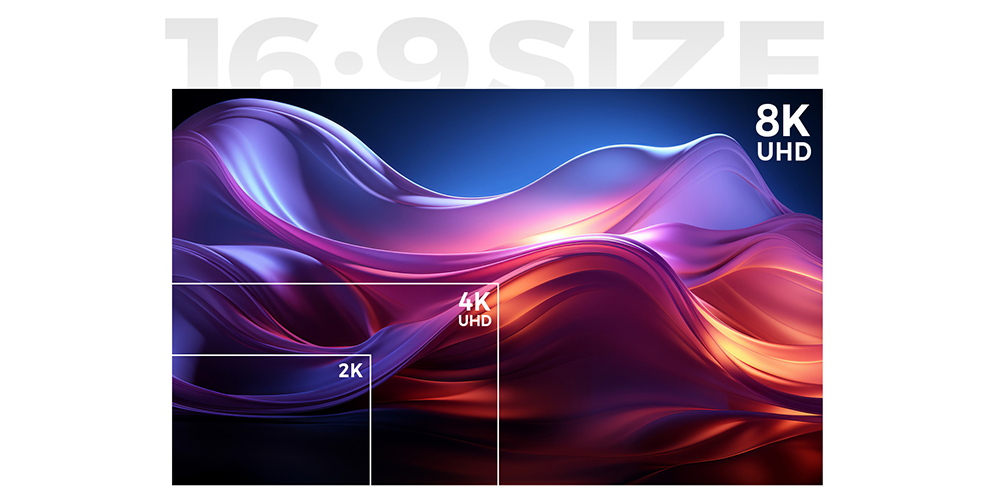
For example, a large LED display can maintain a 16:9 aspect ratio while offering either Full HD or 4K resolution. The overall screen shape remains the same, but the 4K display delivers significantly sharper images, especially when viewed from a short distance.
Likewise, even a high-resolution display cannot provide the best viewing experience if its aspect ratio does not match the content. Videos may be stretched, cropped, or displayed with black bars, reducing the effective display area.
Quick Comparison
| Feature | Aspect Ratio | Resolution |
|---|---|---|
| Defines | Screen shape | Image detail |
| Measured By | Width : Height | Pixels (W × H) |
| Affects | Content compatibility | Image sharpness |
| Example | 16:9 | 3840 × 2160 |
| Buying Priority | Match your content | Match your viewing distance |
Key Takeaway
Think of aspect ratio as the shape of the canvas and resolution as the amount of detail painted on it. For the best viewing experience, choose a 16:9 aspect ratio to match modern content and select a resolution that suits your viewing distance and application. This combination ensures sharp images, proper proportions, and efficient use of the entire display area.
5.Resolutions in the 16:9 Aspect Ratio
The 16:9 aspect ratio includes a standardized family of resolutions widely used in consumer displays, professional AV systems, and LED displays. Each resolution represents a different level of pixel density and is selected based on viewing distance, screen size, and application requirements.
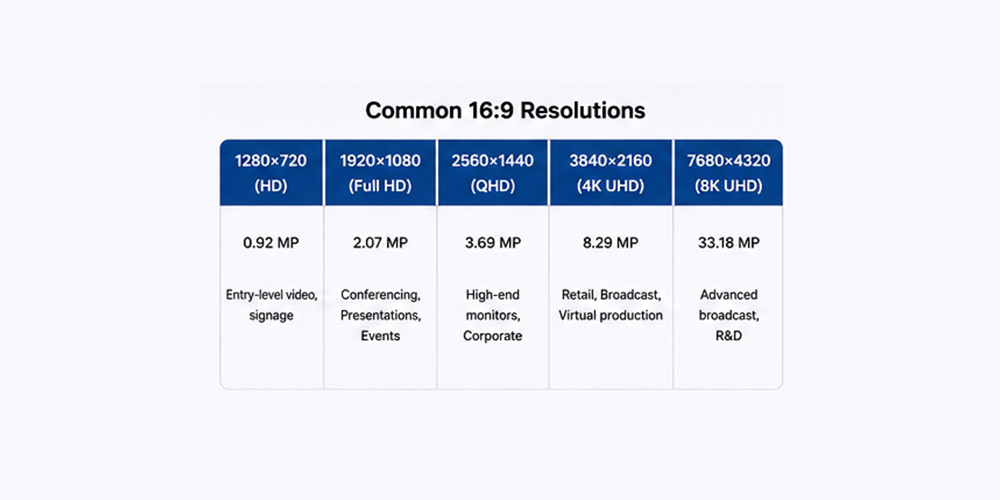
Common 16:9 Resolutions Overview:
| Resolution | Name | Megapixels | Typical Use Cases | LED Display Application Notes |
|---|---|---|---|---|
| 1280×720 | HD (720p) | 0.92 MP | Entry-level video, basic signage, long-distance viewing | Minimum usable HD level for large LED screens; common in outdoor signage with coarse pixel pitch |
| 1920×1080 | Full HD (1080p) | 2.07 MP | AV presentations, live events, conferencing, broadcast | Industry baseline for professional LED displays; ideal for indoor screens within ~5m viewing distance |
| 2560×1440 | QHD (1440p) | 3.69 MP | High-end monitors, corporate systems | Less common in LED due to cabinet mapping constraints; used in select premium installations |
| 3840×2160 | 4K UHD | 8.29 MP | Premium displays, retail, broadcast, virtual production | Requires high pixel density LED (fine pixel pitch); standard for high-end immersive environments |
| 7680×4320 | 8K UHD | 33.18 MP | Advanced broadcast, virtual production, R&D | Extremely demanding; requires sub-P1.0 pixel pitch and very high system cost |
6.History of the 16:9 Aspect Ratio
The 16:9 aspect ratio was not created by a single company or inventor. It was developed through international standardization efforts aimed at defining a unified format for high-definition television.
6.1 The Problem: Competing HDTV Formats (1980s)
In the late 1980s, HDTV development was happening in parallel across Japan, Europe, and North America. Each region proposed different technical standards, including resolution and aspect ratio.
- Japan’s NHK system proposed a 5:3 (1.67:1)format
- Europe explored wider cinematic-style formats
- Other proposals varied across research groups and broadcasters
Without a common standard, global video exchange would have been fragmented, expensive, and technically inconsistent.
6.2 The Solution: A Mathematical Approach
A key contribution came from engineer Kerns H. Powers at the David Sarnoff Research Center.
Instead of choosing an aspect ratio based on preference, Powers used a geometric method:
- He compared all major existing formats (4:3 TV, 16:10 computer formats, 2.35:1 cinema, etc.)
- He analyzed how each format could fit within a single shared frame
- He identified a “best compromise” rectangle that minimized wasted space when accommodating all formats
This calculation produced an aspect ratio of approximately 1.77:1, which became standardized as 16:9.
6.3 Standardization and Adoption
Once the technical proposal was established, international standards bodies formalized it:
| Organization | Standard | Contribution |
|---|---|---|
| ITU (International Telecommunication Union) | BT.709 (1990) | Defined 16:9 for HDTV broadcast systems |
| SMPTE | ST 2036-1 | Extended 16:9 into UHDTV standards |
| Consumer electronics industry | 1990s onward | Adopted 16:9 for widescreen TVs |
By the mid-1990s, 16:9 televisions began entering the market. The transition from the traditional 4:3 format to 16:9 took roughly 15 years, with 4:3 CRT production effectively ending in the early 2010s.
6.4 Why This Matters for LED Displays
For the LED display industry, 16:9 was not a design choice—it was an inherited standard.
When LED displays became widely used in commercial and broadcast environments, the video ecosystem had already fully standardized around 16:9. This means:
- Content is natively produced in 16:9
- Broadcast pipelines are built around 16:9
- Devices, cameras, and media servers default to 16:9
As a result, LED display manufacturers align cabinet design and screen configuration to match an existing global video standard rather than defining a new one.
7.Features of the 16:9 Aspect Ratio
7.1 Wide Viewing Area
The 16:9 format creates a naturally wide horizontal canvas that aligns well with human binocular vision.
- Human vision spans roughly 200° horizontallyand 135° vertically
- This creates an approximate visual emphasis that is wider than tall
- The 16:9 ratio reflects this tendency by prioritizing horizontal space
As a result, 16:9 is well-suited for content that benefits from lateral composition, including:
- Landscape photography and video
- Stage performances and live events
- Group scenes and interviews
- Data dashboards and multi-column layouts
It is not a direct match to human vision, but it is close enough to feel visually natural in most viewing contexts.
7.2 Versatility Across Content Types
One of the strongest advantages of 16:9 is its ability to support multiple content formats within a single display system.
| Content Type | Behavior in 16:9 | Result |
|---|---|---|
| Native 16:9 video | Full-screen display | No scaling or cropping |
| Presentations (modern PPT layouts) | Natural fit | Clean alignment and layout balance |
| Video conferencing | Standard format | No distortion or framing issues |
| 4:3 legacy content | Pillarboxed (vertical bars) | Preserved content without cropping |
Compared with older 4:3 systems, 16:9 reduces compatibility issues in mixed-use environments such as conference rooms, control centers, and digital signage systems.
7.3 Balanced Visual Proportion
The 16:9 ratio sits in the middle range of commonly used aspect ratios:
- 1:1 (square formats)
- 4:3 (traditional television)
- 16:9 (modern standard)
- 39:1 (cinematic widescreen)
Its position is not arbitrary. The ratio is derived from a mathematical compromise between multiple film and television formats, producing a shape that feels balanced to most viewers.
Visually, it avoids two extremes:
- Too narrow (which limits horizontal composition)
- Too wide (which reduces vertical usability)
7.4 Optimized for Multiple Media Environments
The long-term success of 16:9 comes from its ability to perform well across different media types without requiring redesign.
- Film & TV:Provides a cinematic frame suitable for storytelling and composition
- Business presentations:Supports structured layouts with titles, charts, and content blocks
- Video conferencing:Captures natural human framing without excessive cropping
- Gaming:Expands horizontal field of view for improved spatial awareness
This multi-purpose compatibility is one of the main reasons 16:9 became the default global standard across devices, software, and display technologies.
8.Common Aspect Ratios
Besides the 16:9 aspect ratio, several other formats are widely used across different devices and applications.
8.1 4:3 Aspect Ratio
An older TV standard that is still used in some legacy systems and specific applications requiring a near-square display. It can be found in older broadcast content, digital cameras, and retro display systems.
8.2 9:16 Aspect Ratio
The vertical version of 16:9, commonly used in smartphones and short-form video platforms. It allows users to view tall content naturally without rotating the device.
8.3 2.39:1 Aspect Ratio
Also known as cinemascope or anamorphic widescreen. It is used in cinemas to deliver a wide, panoramic viewing experience that enhances cinematic storytelling.
8.4 1:1 Aspect Ratio
A square format widely used in social media platforms. It keeps images centered and balanced, making content easy to view and well-suited for feed-based layouts.
9.Advantages of the 16:9 Aspect Ratio
The advantages of 16:9 are practical rather than theoretical. It has become the default standard across content production, hardware design, and professional display systems due to long-term industry alignment.
9.1 Wide Adoption
The strongest advantage of 16:9 is its global standardization.
- Content creators produce video in 16:9
- Software interfaces are designed for 16:9 screens
- Hardware manufacturers optimize devices around 16:9
- AV technicians and installers are trained on 16:9 systems
This creates a strong network effect: every new 16:9 display benefits from an existing ecosystem of compatible content and tools, while non-standard formats require additional adaptation effort.
9.2 Immersive Experience
16:9 fills a large portion of the human field of view without becoming impractically wide.
- Large enough to feel immersive at typical viewing distances
- Narrow enough to remain readable for text and UI content
- Works well for both video and information display
At proper scale, a 16:9 screen behaves like a “visual window,” balancing immersion and usability.
9.3 Versatility
A single 16:9 display can support multiple use cases in the same space:
- Presentations in the morning
- Video conferences during the day
- Live broadcasts or events in the evening
No aspect ratio switching is required, which reduces setup complexity and operational errors in multi-use environments.
9.4 Efficient Use of Space
16:9 aligns well with standard architectural layouts.
- Fits horizontal wall spaces naturally
- Avoids excessive height or wasted width
- Maintains balanced proportions in commercial environments
This makes it particularly efficient for offices, retail stores, and control rooms where wall space has direct cost value.
9.5 Supports Multiple Resolutions
The 16:9 format spans the entire resolution ladder:
- From 720p entry-level HD
- Up to 8K ultra-high definition
This allows system designers to scale performance without changing the physical or logical display format, ensuring long-term upgrade flexibility.
9.6 Cost Efficiency
Because 16:9 is the dominant global standard:
- Manufacturing volumes are extremely high
- Supply chains are highly optimized
- Component costs are reduced through scale
Custom aspect ratios typically increase design and production costs, while 16:9 benefits from global mass production efficiency.
9.7 Long-Term Stability
The 16:9 standard has been in use for over 30 years and continues to evolve rather than being replaced.
- Broadcast standards (e.g., HD and UHD) are built around 16:9
- New resolutions extend the format instead of replacing it
- Existing content remains fully compatible
A 16:9 LED display installed today is expected to remain compatible with future content for its entire lifecycle.
10.Where to Use the 16:9 Aspect Ratio
The 16:9 aspect ratio is the default in most modern video systems because it aligns with how content is produced and consumed across industries.
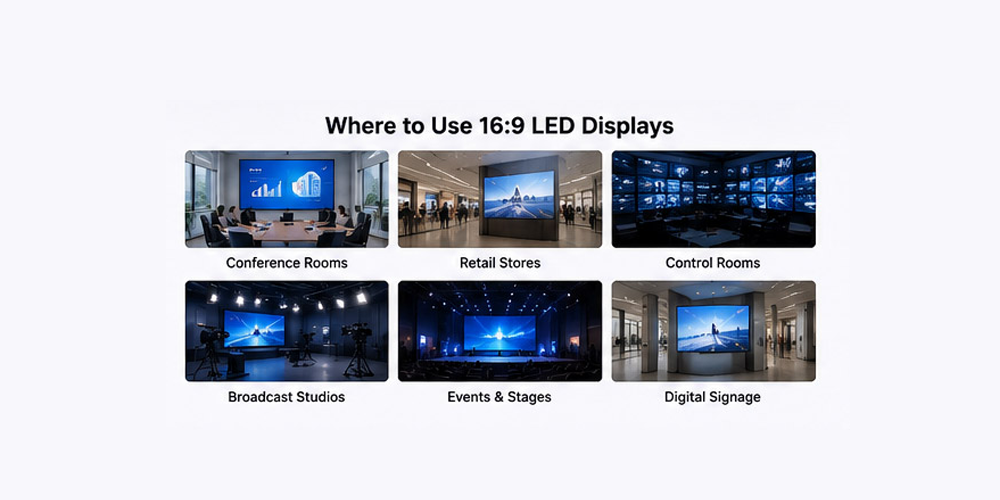
10.1 Television, Broadcast & Film
16:9 is the global standard for broadcast television (BT.709, ST 2036-1).
- Studio monitors and control rooms use 16:9
- Streaming and home video are delivered in 16:9 containers
- Film is adapted into 16:9 for TV and online platforms
Any display used for video content delivery should support 16:9.
10.2 Computer Monitors
16:9 is the dominant format for desktops and laptops.
- Operating systems and apps are designed for 16:9 screens
- Web and productivity tools assume widescreen layouts
- Widely used in offices, control rooms, and signage PCs
It provides the most predictable layout for general computing use.
10.3 Smartphones & Tablets
Although device shapes vary, video content remains 16:9.
- Phones record and play video in 16:9
- Tablets display 16:9 video with letterboxing
- Full-screen video playback is standardized around 16:9
The content ecosystem, not the device shape, defines the format.
10.4 Projectors
Modern projectors are primarily 16:9 native.
- Business and home theater projectors assume widescreen output
- Matching 16:9 avoids scaling and image distortion
- Ensures full-screen projection without quality loss
10.5 Cameras & Camcorders
Video capture is almost universally 16:9.
- DSLRs, mirrorless cameras, and PTZ systems record in 16:9
- Conference and broadcast cameras output 16:9 by default
- Content is created natively in this format
This makes 16:9 the natural downstream display choice.
10.6 Video Games & VR
Modern gaming ecosystems are built around 16:9.
- Most games are optimized for 16:9 rendering
- Esports displays and LED walls use 16:9 layouts
- VR content is viewed externally in 16:9 for spectators
It remains the standard for competitive and broadcast gaming environments.
11.FAQ
11.1 What is the 16:9 aspect ratio?
The 16:9 aspect ratio means a display is 16 units wide for every 9 units of height. It is the international standard for HDTV, 4K TVs, computer monitors, projectors, and most LED displays.
11.2 Why is 16:9 the most common aspect ratio?
Because it is the global standard for modern video. Most TVs, cameras, streaming platforms, computers, and LED displays are designed around 16:9, making content compatible across different devices without cropping or stretching.
11.3 Is 16:9 the same as Full HD or 4K?
No. 16:9 is an aspect ratio, while 1080p (Full HD) and 4K UHD are resolutions. Multiple resolutions—including 1280×720, 1920×1080, 3840×2160, and 7680×4320—can all use the same 16:9 aspect ratio.
11.4 Is 16:9 the best aspect ratio for LED displays?
For most applications, yes. A 16:9 LED display matches the format used by modern video sources, making it ideal for conference rooms, retail stores, control rooms, broadcast studios, and rental events.
11.5 What happens if I play 4:3 content on a 16:9 screen?
The video is usually displayed with black bars on the left and right, known as pillarboxing. This preserves the original image without stretching or distortion.
11.6 Can a 16:9 LED display show 9:16 vertical content?
Yes. A 16:9 display can play vertical content, but it typically leaves empty space on both sides. For content created specifically for TikTok or Instagram Reels, a 9:16 portrait display provides a better viewing experience.
11.7 How do I calculate a 16:9 screen size?
Multiply the height by 16 ÷ 9 to get the width, or multiply the width by 9 ÷ 16 to get the height. For example, a screen that is 3 meters wide should be 1.69 meters high to maintain a 16:9 aspect ratio.
12.Conclusion
The 16:9 aspect ratio has become the global standard because it offers the best balance between compatibility, usability, and viewing experience. From TVs and computer monitors to projectors and LED displays, it supports virtually every modern content source and resolution, from HD to 8K.
Whether you’re designing a video wall, choosing an LED display, or planning a digital signage project, 16:9 is the safest and most future-proof choice for most applications.
 Top 10 LED Screen Suppliers in Germany (2026)
 LED Poster vs LCD Poster: 10 Buying Differences