
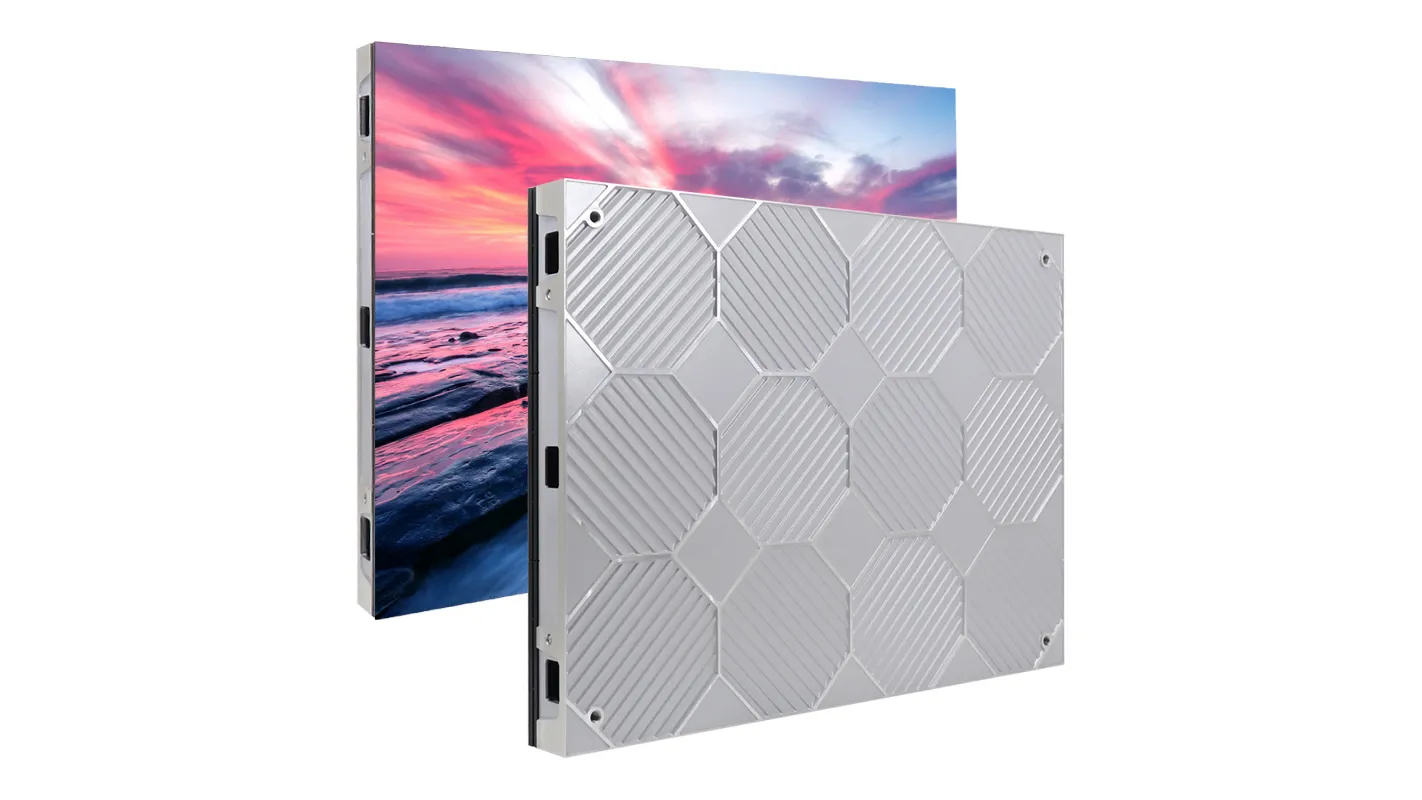
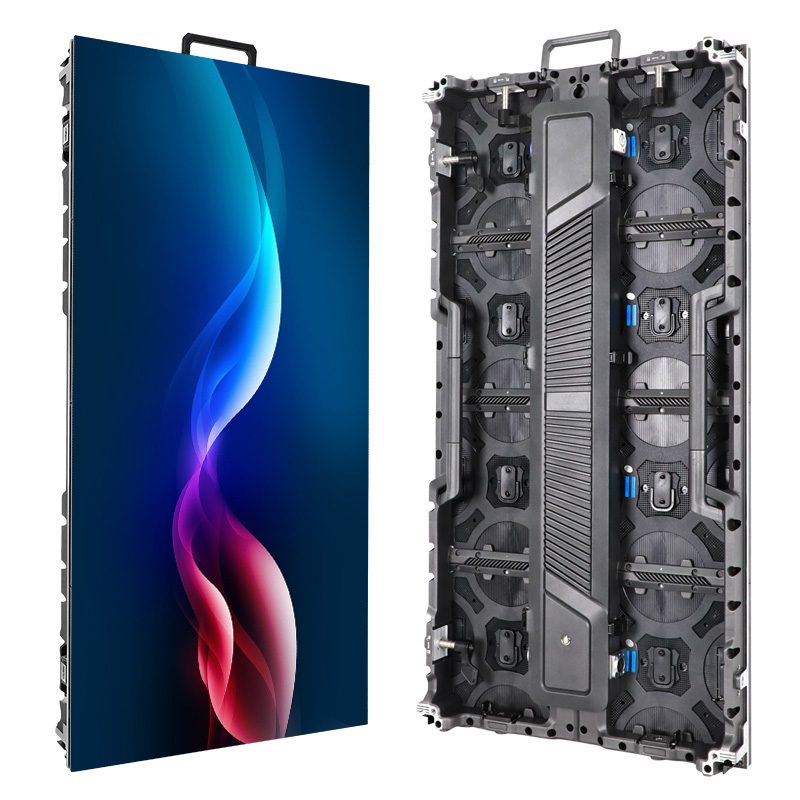
The biggest LED screen in the world is the Sphere in Las Vegas: a 157 m wide, 112 m tall sphere wrapped in about 54,000 m² (580,000 sq ft) of transparent LED, driven by roughly 1.2 million programmable LED pucks. It opened in September 2023 and no other single display surface has come close since.
But the biggest LED screen story is not only about Nevada. China’s Suzhou Sky Screen hangs 16,000 m² of LED across a shopping-street ceiling, Russia’s Hydroproject media wall turns a Moscow office block into a 3,816 m² video surface, and Seoul’s COEX facade made naked-eye 3D a globally exported format.
This guide ranks the largest LED displays by measured area, explains the engineering, shows what brands pay to appear on them, and sets out what to check before you specify a large-format LED display. For supplier comparisons, read it with our guides to massive LED screens, advertising LED boards and LED display screens.
Catalogue
1. What Is the Biggest LED Screen in the World in 2026?
The Sphere Las Vegas holds the record by a wide margin: 54,000 m² of seamless curved LED, roughly eight football pitches. The second-largest, Resorts World Las Vegas, is less than a third of that size. The twelve largest LED surfaces ever built are ranked below.
Table 1: The biggest LED screen installations in the world ranked by measured display area.
| Rank | Screen | Country | Year | Screen area | LED type |
|---|---|---|---|---|---|
| 1 | Sphere (Exosphere), Las Vegas | USA | 2023 | 54,000 m² | Transparent exterior, 157 × 112 m |
| 2 | Resorts World Las Vegas | USA | 2020 | 15,016 m² | 50 mm mesh, 145 × 104 m |
| 3 | Fremont Street Experience | USA | 2019 | 12,000 m² | 27 mm mesh canopy, 16.4 MP |
| 4 | Mall Taman Anggrek, Jakarta | Indonesia | 2012 | 8,675 m² | 42.5 mm mesh |
| 5 | The Place sky screen, Beijing | China | 2007 | 7,466 m² | 40 mm transparent mesh |
| 6 | M+ Facade, Hong Kong | Hong Kong | 2021 | 7,238 m² | Transparent, 110 × 65.8 m |
| 7 | SoFi Stadium Infinity Screen | USA | 2020 | 6,500 m² | 8 mm double-sided, 80 MP |
| 8 | Citigroup Tower, Shanghai | China | 2007 | 6,031 m² | Transparent mesh |
| 9 | Mexico City Arena | Mexico | 2012 | 5,991 m² | 125 mm LED sticks |
| 10 | Mercedes-Benz Stadium, Atlanta | USA | 2017 | 5,793 m² | 15HD, 24.7 MP |
| 11 | Tauron Arena Kraków | Poland | 2014 | 5,100 m² | 60 mm mesh |
| 12 | Hydroproject media wall, Moscow | Russia | 2017 | 3,816 m² | P31.25 mesh, 3.9 MP |
01 How “Biggest” Is Actually Measured
Three measurements decide which biggest LED screen you mean, and suppliers switch between them depending on what they want to claim:
- Total emissive area (m²) — the total light-emitting surface. The fairest comparison for digital-out-of-home buying, and the metric used above.
- Single seamless canvas — one continuous, gap-free display. The Sphere’s Exosphere is one canvas; a stadium bowl built from four separate boards is not.
- Physical footprint — what a passer-by perceives. Meydan’s Aurora Vision covers only 1,170 m², yet at 107.5 m wide it is still the widest LED screen ever installed at a sports venue.
02 What This Ranking Means for Buyers
Three traits run through almost every entry above, and all three matter for your own project:
- Mesh and transparent LED dominate. Ten of the twelve use them, because a facade that lets daylight and wind through needs far less structural steel.
- Above roughly 2,000 m², it is a building project. Expect structural sign-off, a dedicated power board, cooling, and designed maintenance access.
- Pixel pitch follows viewing distance. The Sphere uses a coarse pitch because nobody stands 5 m away; Outernet uses 3 mm because people stand metres away. Pitch, not area, decides sharpness.
2. The Biggest LED Screen in the United States – Sphere Las Vegas
The Sphere is the biggest LED screen in the United States and the world. It was developed by Madison Square Garden Entertainment, designed by Populous, and clad in a transparent LED skin from SACO Technologies. Ground broke in 2018; the venue opened on 29 September 2023 at a reported cost of about $2.3 billion.
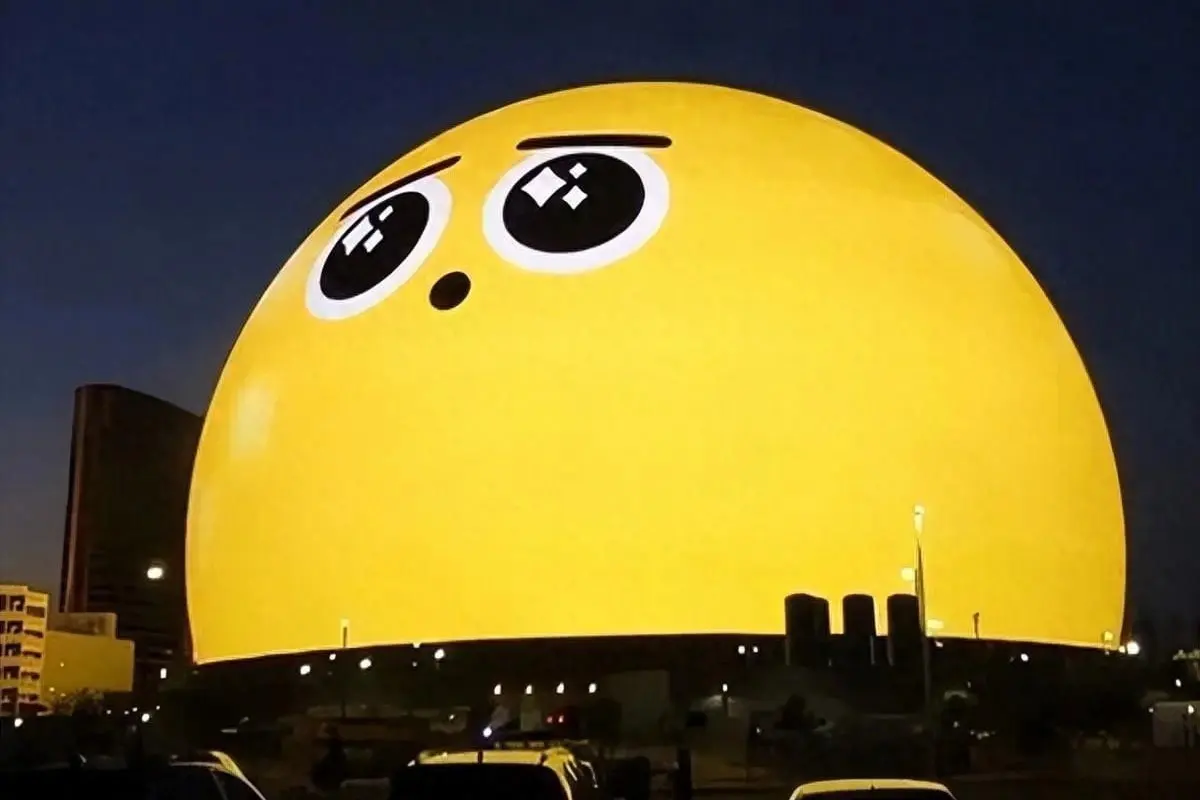
Its outer surface is formed from more than 1.2 million programmable LED pucks, arranged so panels run individually or in perfect synchronisation. At night it becomes the visual centre of the Strip, cycling from a hyper-real Earth to a giant eye to a cartoon orange cat — and every appearance propagates across TikTok and YouTube within hours.
01 Sphere Las Vegas: Verified Specifications
- Exterior LED area: 54,000 m² (580,000 sq ft) — the largest in the world
- Dimensions: 157 m wide × 112 m tall (about 30 storeys)
- LED supplier: SACO Technologies; roughly 1.2 million exterior pucks
- Interior display: a 16K screen of about 14,900 m², the largest indoor LED screen anywhere
- Opened: 29 September 2023; reported build cost about $2.3 billion
02 Advertising on the Biggest LED Screen: What It Costs
Industry reporting puts a single day of advertising on the Sphere at about $450,000. At peak demand — Super Bowl week, major launches — prices have been reported at $1 million to $2 million per day. The figure depends on slot length, static versus animated creative, bespoke 3D production, and time of day.
03 Commercial Value of the Sphere
Since opening, the Sphere has carried campaigns for Netflix, PlayStation, Microsoft, BMW, Lenovo and the NBA. Because the surface is spherical there is no single best viewing angle, so a campaign is visible from hotel windows, from the airport approach and from social feeds. Reported exposure runs to 4.7 million daily impressions and 300,000 on-site viewers.
3. The Biggest LED Screen in China – Suzhou Sky Screen
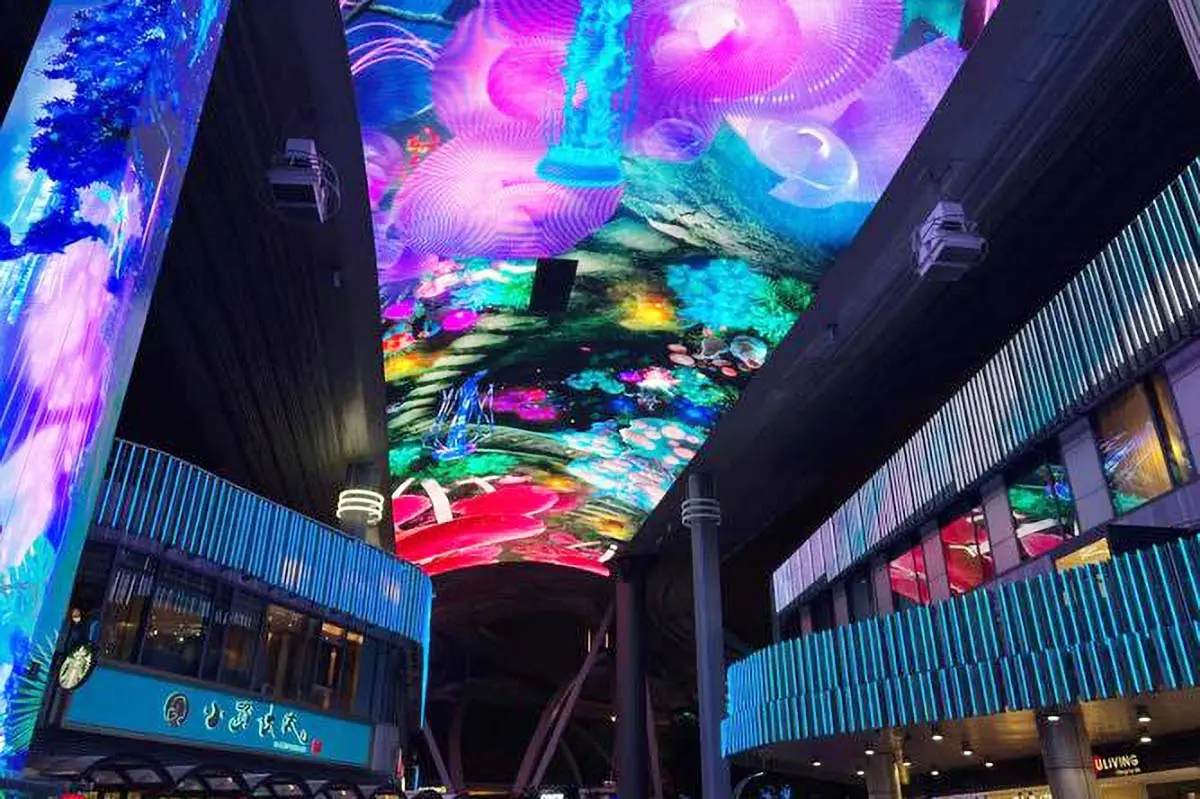
China’s biggest LED screen is not a wall — it is a ceiling. The Suzhou Sky Screen spans a commercial street in Suzhou, Jiangsu: 500 m long by 32 m wide, 16,000 m² of LED canopy, the equivalent of nearly 30 basketball courts.
01 Suzhou Sky Screen: Specs and Record History
Completed in 2008 from more than 20 million ultra-high-brightness LED lamps and paired with a 106-channel surround system, it opened as the world’s largest video screen and held that claim until the Sphere arrived in 2023. It is still the largest LED ceiling screen ever built.
The scale works because it is a sky screen rather than a solid wall: modules are lightweight, the canopy carries little load, and every panel is serviceable from above — the same logic that now drives LED ceiling screens for events.
02 Commercial Value of the Suzhou Sky Screen
As a landmark IP, the sky screen pulls a continuous stream of visitors into the surrounding district, and that footfall lifts spending in the restaurants, retailers and venues beneath it. Light shows, festival programming and cultural performances are scheduled across the year, each producing a fresh visitor spike. For the biggest LED screen in China, the return shows up in district retail performance rather than advertising rate cards.
4. The Biggest Indoor LED Screen in the UK – Outernet London
Ask about the biggest LED screen in the UK and many people picture the backdrop used on Adele’s 2024 residency. That was a rental LED screen — temporary, and no city landmark. The real record belongs to Outernet, in the heart of Soho.
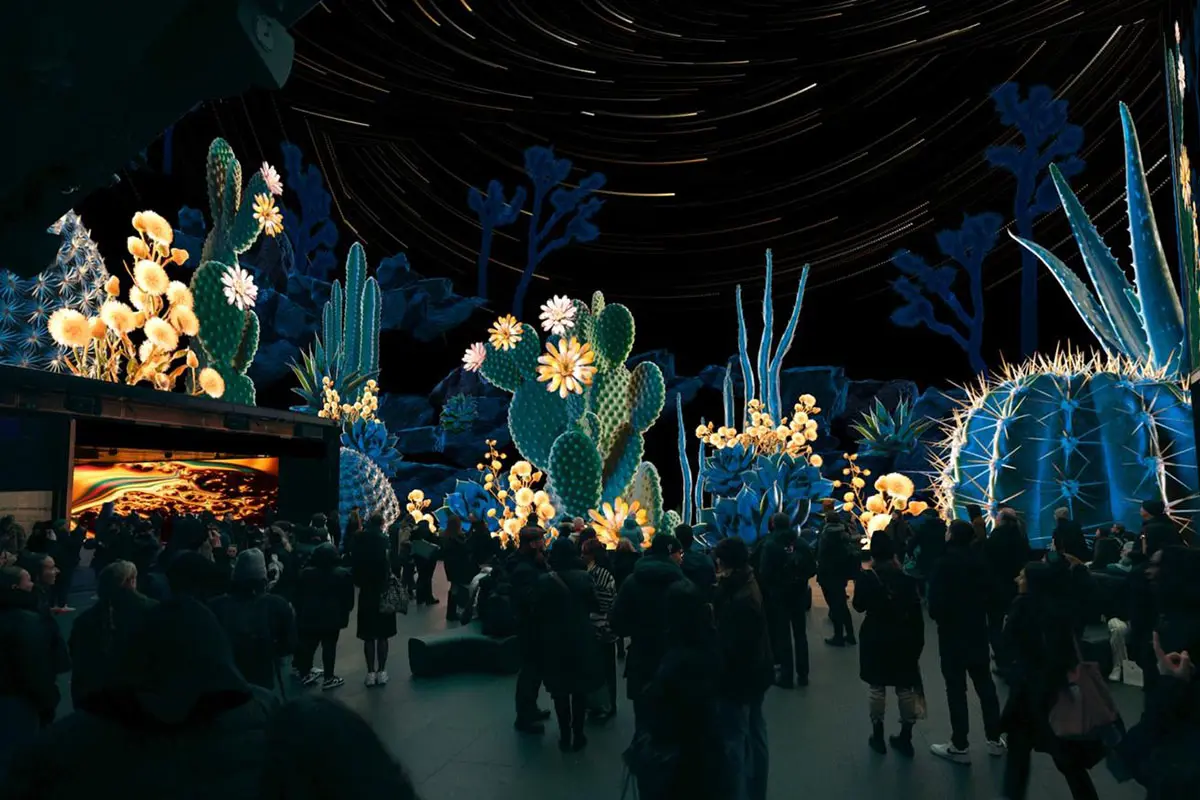
01 Outernet London: Specs
Outernet’s Now Building holds more than 2,000 m² of floor-to-ceiling and ceiling LED from AOTO, arranged as a wraparound canvas four storeys high (14.5 m) at 3 mm pixel pitch and 16K-class resolution, approaching 150 million pixels in total. It is the largest indoor immersive LED system in the world and the largest digital media space in the UK.
02 Why Outernet Is Called London’s Digital Public Living Room
Outernet is not ticketed. Visitors walk in from Tottenham Court Road, look up and watch, free of charge. Brands use the panoramic walls for anamorphic 3D campaigns, musicians stage digital concerts and technology companies run launches in the same space — which is exactly why this biggest LED screen in the UK generates so much organic social content.
03 Commercial Value of Outernet London
Its cultural value arguably exceeds its commercial value, and that is what makes it commercially strong: a multifunctional digital experience space in one of central London’s highest-footfall locations. Within a year of opening, industry press reported Outernet’s displays among London’s most-visited attractions — attention a conventional advertising LED board rarely earns.
5. The Biggest LED Screen in Russia – Hydroproject Media Wall
If the Sphere is the brightest ball on Earth, Russia’s Hydroproject media wall is a digital city wall. Mounted on the Hydroproject Institute building on Volokolamskoye Shosse in Moscow, it is the biggest LED screen in Russia.
01 Hydroproject Media Wall: Specs
The display covers about 3,816 m² across a vertical surface of roughly 48 m by 80 m, built from P31.25 transparent mesh at about 3.9 megapixels. Because it is mesh rather than solid, the building’s windows stay in service. It is legible from up to 2 km away, and the all-weather HD playback system holds brightness from early morning through the evening peak.
One correction worth making: this is the biggest LED screen in Russia, but not the largest LED facade in Europe by area — Poland’s Tauron Arena Kraków measures about 5,100 m².
02 Commercial Value of the Hydroproject Media Wall
Local reporting credits the wall with more than 525,000 daily impressions, because it overlooks the busiest sections of Moscow’s main traffic corridors. Programming concentrates on luxury automotive campaigns, technology products, and national event promotion around sport and public celebrations — the clearest example of a biggest LED screen used as a reach-and-frequency medium rather than a novelty.
6. The Biggest LED Screen in Japan – Dream Vision at Kawasaki
Japan’s biggest LED screen is not the 3D cat at Shibuya Station. The officially recognised largest screen in the country sits at Kawasaki Racecourse, purpose-built for horse racing.
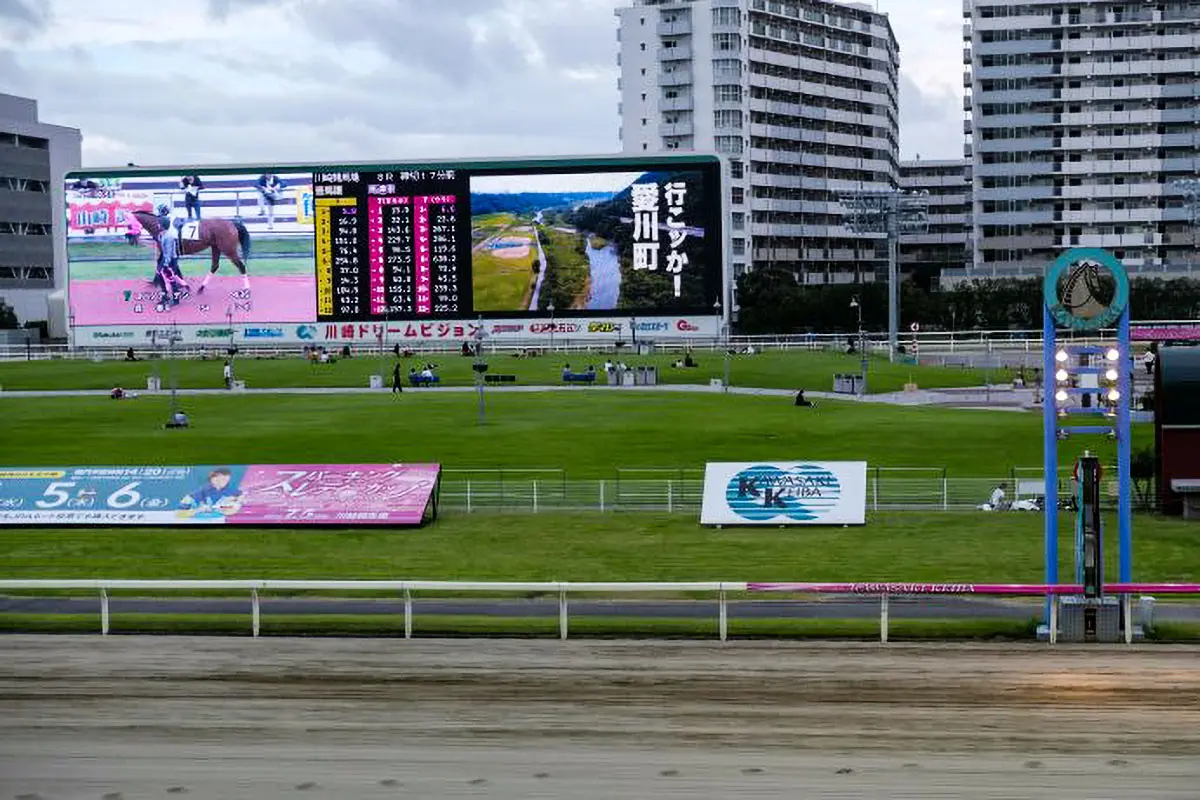
01 Dream Vision: Specs and Record History
Dream Vision measures 72 m wide by 16 m high — 1,152 m², roughly nine beach-volleyball courts. It was designed for live race broadcasting and spectator information, combining real-time video with odds, rider data, replays and race graphics.
Guinness World Records certified it in 2009 as the largest LED screen for horse racing. The record lasted under a year: Aurora Vision at Meydan surpassed it in 2010. Dream Vision is still the biggest LED screen in Japan.
02 Commercial Value of Dream Vision
Kawasaki Racecourse welcomes more than 2 million visitors a year. Standing directly in front of the grandstand, the screen holds the attention of the entire crowd for a full race meeting. The core audience skews male, aged 20 to 60, including high-spending leisure visitors — a defined enough demographic to target precisely. On non-race days the venue hosts concerts and esports events, extending the commercial life of the biggest LED screen in Japan.
7. The Biggest LED Screen in South Korea – COEX SM Town
Seoul’s COEX SM Town facade — the Samsung LED Wave, or COEX Media Facade — is the biggest LED screen in South Korea. It sits on the SM Town building in Gangnam and turned anamorphic 3D into the format the industry now imitates.
01 COEX SM Town: Specs
The display measures about 80.1 m by 20.1 m, roughly 1,620 m², delivered by Samsung Electronics in 2018 as the largest SMART LED Signage installation in Korea. It is regarded as one of Asia’s most creative outdoor anamorphic 3D displays, and the “Wave” sequence — a wall of water surging across the building — has been viewed tens of millions of times online.
02 Commercial Value of the COEX Media Facade
Sitting in Gangnam’s COEX business district, the screen sees over 200,000 visitors a day beside an international convention centre, luxury malls and five-star hotels. It is lit more than 14 hours daily, and its reach has been compared to the combined advertising value of twenty core Seoul subway stations.
As SM Entertainment’s exclusive platform it also runs music videos and behind-the-scenes footage for EXO, NCT and aespa, generating more than 5,000 social check-ins a day; the 2023 NCT “Golden Age” premiere drove a single-day peak above 35,000 visitors. CNN Travel ranked the facade among Seoul’s top three future landmarks.
8. More of the Biggest LED Screens Around the World
Several other countries have installed a biggest LED screen just as technically remarkable — whether as part of a landmark building or serving a large event venue.
01 UAE – Aurora Vision at Meydan Racecourse
Aurora Vision took the horse-racing record from Dream Vision in the 2010 Guinness World Records. It measures 107.52 m wide by 10.88 m high — about 1,170 m² at roughly 11.7 megapixels — and was built by Mitsubishi Electric Diamond Vision. It is the widest professional event LED broadcast screen in the world, and carries live racing, rider information, odds, replays and race graphics.
02 France – La Défense CNIT Facade
France’s biggest LED screen is mounted on the CNIT building in the La Défense business district of Paris, covering a curved surface of roughly 1,000 m². Because La Défense handles more than 200,000 people a day, the screen commands a premium from luxury and corporate advertisers, and its programming also covers public art and municipal information.
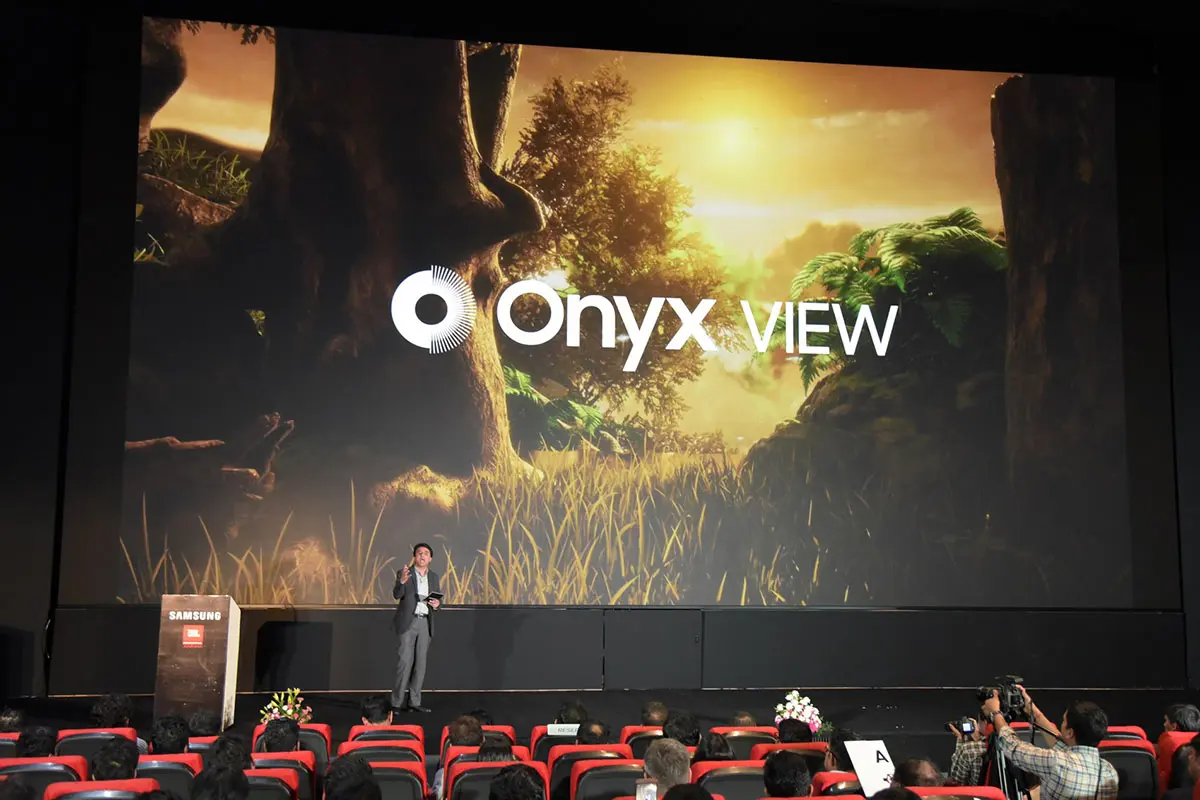
03 India – Samsung Onyx Cinema LED Screen
India’s biggest LED screen is a cinema screen. The Swagath Onyx Theatre in Bengaluru installed a 14 m-wide Samsung Onyx LED cinema display, replacing a projector screen with an emissive direct-view panel. That removes projection’s brightness ceiling entirely: blacks become true black and the image no longer washes out with ambient light. It is one of the largest cinema LED screens in the world.
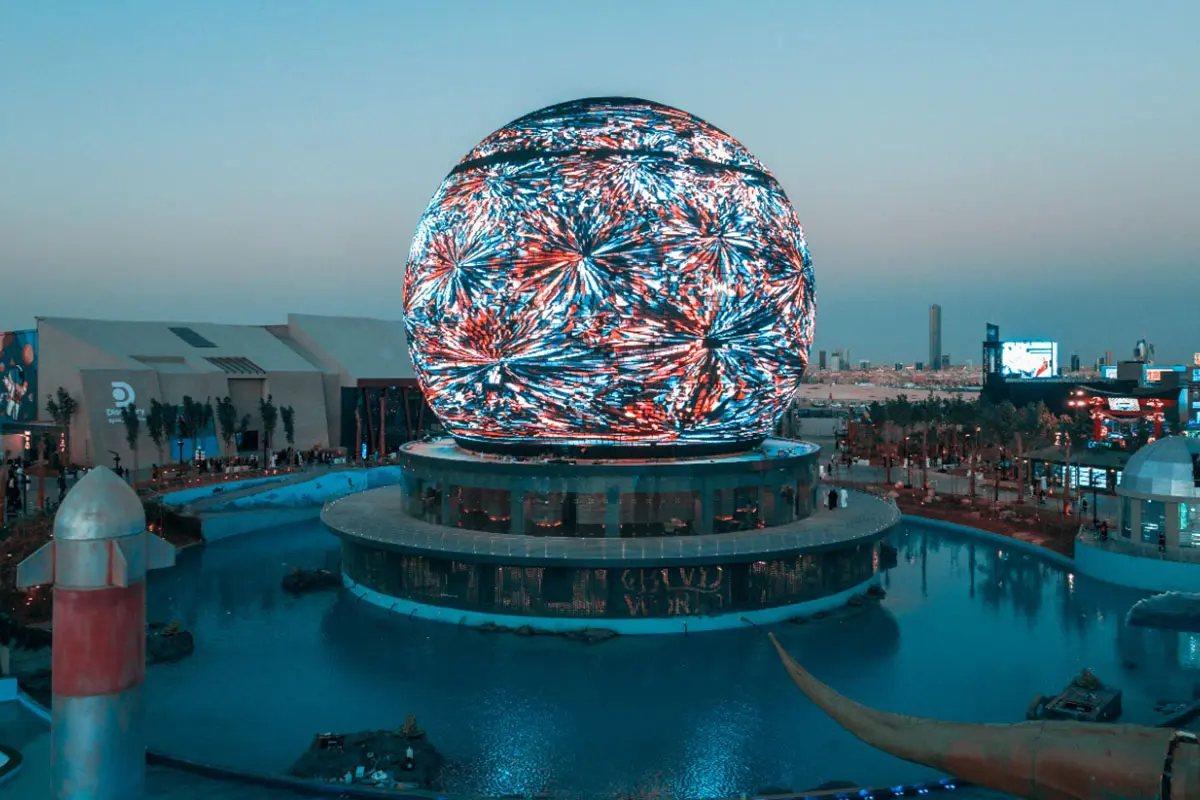
04 Saudi Arabia – The LED Sphere at Boulevard World
Saudi Arabia has a technological sibling to the Sphere in Las Vegas: the spherical LED screen at Boulevard World in Riyadh, built by Unilumin. At 35 m in diameter it is far smaller than the 157 m Las Vegas sphere, but large enough to take the Guinness World Record for the largest LED sphere, certified in 2022. It works as an ultra-large city billboard rather than a concert venue, turning the whole sphere into a nightly light show.
9. How Much Does It Cost to Advertise on the Biggest LED Screens?
Rate cards for large-format LED advertising are rarely published, but enough figures are public to give a realistic planning range. The most valuable biggest LED screen inventory sells in day-parts or full-day packages, and prices move sharply with the event calendar.
Table 2: Reported advertising cost and pricing drivers for the world’s biggest LED screens.
| Screen | Location | Reported cost | What drives the price |
|---|---|---|---|
| Sphere (Exosphere) | Las Vegas, USA | About $450,000 per day; $1–2 million at peak | Slot length, animated creative, bespoke 3D production |
| COEX SM Town facade | Seoul, South Korea | Not sold on the open market — reserved by SM Entertainment | Exclusivity; used mainly for artist promotion |
| Outernet London | London, UK | Package-priced by campaign footprint | Space exclusivity, event tie-ins, 3D production |
| Hydroproject media wall | Moscow, Russia | Sold on reach against a 525,000-impression day | Traffic-corridor placement, weatherproof playback |
| Suzhou Sky Screen | Suzhou, China | Value realised through district footfall | Festival programming, retail activation |
| Aurora Vision, Meydan | Dubai, UAE | Event-led pricing around the racing calendar | Race-day exclusivity, hospitality audience |
01 Costs Beyond the Media Buy
Slot fees are only part of the budget. Advertisers must also fund creative built to the screen’s exact aspect ratio and pixel map, 3D or anamorphic rendering where the surface is curved, and content approvals from the media owner. On curved and spherical surfaces those production costs can approach the media spend itself, because content cannot simply be cropped from a 16:9 asset.
10. LED vs LCD: Which Screen Is Actually Bigger?
“LED” and “LCD” are used loosely in consumer marketing. The short answer is that the biggest LED screen is far larger than any LCD, and the reason is structural: an LCD panel is a rigid glass sandwich made in a fixed sheet size, so a video wall is built by tiling panels and always shows seams. An LED display is assembled from small modular cabinets, which is why it scales to 54,000 m² without a visible join.
Table 3: Why direct-view LED reaches sizes an LCD video wall cannot.
| Property | LED display | LCD video wall |
|---|---|---|
| Maximum practical size | Effectively unlimited — 54,000 m² built today | Limited by panel size; 100–115 inch panels tiled |
| Seams | Seamless: cabinets butt edge to edge | Visible bezels between every panel |
| Brightness | 5,000–10,000 nits outdoors; readable in sun | Typically 500–700 nits; washes out in sunlight |
| Shape flexibility | Curved, spherical, cylindrical, overhead canopies | Flat rectangles only |
| Best use | Outdoor advertising, stadiums, facades, venues | Meeting rooms, control rooms, retail signage |
01 Why the Confusion Exists
Televisions sold as “LED TVs” are LCD panels with LED backlights — the LEDs are the light source, not the image. A true LED display, also called direct-view LED or DVLED, uses LEDs as the individual pixels. That is why a 98-inch “LED TV” and a 98 m² LED facade share a name and nothing else. If your requirement is genuinely large format, the comparison to run is direct-view LED against projection, not against an LCD panel.
11. How the Biggest LED Screens Create Commercial Value
From the Sphere to the COEX Wave, the reasons these installations hold attention are consistent — and they are not simply about being large.
01 3D and Anamorphic Content
The COEX “Wave” uses high-resolution LED modules on a curved structural surface to create an illusion of depth, blending the rendered image with the real building so convincingly that passers-by stop and film it. The Sphere’s 360° immersive space and Outernet’s wraparound wall work the same way: the screen stops being a rectangle and becomes a space.
02 Cultural Resonance and Repeat Visits
The most durable installations are also the most local. Suzhou’s sky screen tells the story of the Jiangnan water town in light. Outernet blends street art and music into a free public room. That cultural layer turns a one-way advertising channel into part of the city’s daily life, which is what keeps audiences returning.
03 Location, Dwell Time and the Media Multiplier
Three unglamorous factors set the value of every biggest LED screen: how many people pass it, how long they can dwell in front of it, and how much attention the surroundings allow. A screen in a traffic corridor delivers frequency; a screen in a pedestrian plaza delivers dwell time and photography. The best projects do both.
12. What to Check Before You Specify a Large LED Screen
Here is the short version of what the biggest LED screen projects have in common, expressed as a specification checklist for your own project.
Table 4: Specification checklist for a large-format LED display project.
| Parameter | Why it matters | Typical large-format value |
|---|---|---|
| Pixel pitch | Sets minimum viewing distance and sharpness | 3–6 mm indoor; 10–25 mm outdoor facades; 30 mm+ for mesh |
| Brightness | Readability against ambient light | 5,000–10,000 nits outdoor; 800–1,500 nits indoor |
| Refresh rate | Prevents banding and flicker on camera | 3,840 Hz or higher if the screen will be filmed |
| Transparency | Structural load and daylight penetration | 40–70% for facade and mesh installations |
| Cabinet and IP rating | Weather and corrosion resistance | IP65 front / IP54 rear for permanent outdoor use |
| Redundancy | Whether one failure darkens a section | Dual power supplies and dual signal paths |
| Service access | How a module is replaced at height | Front-serviceable modules plus catwalk access |
01 Structural, Power and Maintenance Planning
Most large-format LED projects fail on the invisible parts. Wind loading on a transparent facade must be signed off by a structural engineer. Power needs its own distribution board. Cooling must be designed in. And a maintenance route must physically exist, because a module that cannot be reached safely simply stays dark. Our team supports stadium, transparent facade and indoor projects end to end — send us your site and viewing-distance requirements here.
02 Do Not Oversize the Screen
The commonest mistake in large-format LED is buying more square metres than the content and viewing distance can justify. A 300 m² outdoor screen driven by upscaled 1080p footage looks worse than a well-fed 80 m² screen. Match pixel count to source material, match pitch to viewing distance, and spend the saving on content.
13. FAQs About the Biggest LED Screens
14. Conclusion: Why the Biggest LED Screen Still Wins
The biggest LED screen in the world belongs to the Sphere in Las Vegas, and nothing announced looks likely to take that record soon. But the more useful lesson from the projects above is that scale alone explains very little. Suzhou’s 16,000 m² sky screen earns its return through district footfall. Seoul’s 1,620 m² COEX facade out-earns screens many times its size because its content is engineered to be filmed. Outernet sells dwell time to pedestrians.
That is the real takeaway: the biggest LED screen is not the one with the largest surface, but the one whose area, pixel pitch, brightness and content are matched to the people who will stand in front of it. Tell our engineers your viewing distance and site conditions and we will size the screen around those numbers — start here.
 Top 10 LED Display Screen Manufacturers in 2026: Cost-Effective Buyer Guide
 Outdoor Advertising Screens: The Complete 2026 Buying Guide