
Creative billboards turn an advertising message into a visual experience through an unexpected idea, distinctive shape, responsive content, or carefully planned placement. LED technology adds programmable images and flexible display formats, but the strongest result still depends on whether people understand the message where they actually see it.
This guide compares eleven approaches to creative billboards, from naked-eye 3D displays to spheres, transparent screens, and interactive floors. Some are conventional outdoor advertising installations; others are retail or exhibition displays that apply billboard-style communication inside a venue. That distinction matters when choosing hardware, content, and a realistic budget.
Use the examples to develop a concept, then check viewing distance, screen geometry, environmental exposure, service access, and operating cost before ordering. You will also find comparison tables, a specification checklist, design advice, and answers to common buying questions. Creative billboards should be selected as a complete display-and-content system, rather than by shape alone.
1. Creative Billboards with 3D LED Displays
Naked-eye 3D creative billboards use perspective-based animation to suggest depth on a two-dimensional LED surface. The familiar effect of a product appearing to leave a screen comes from the relationship between the rendered scene, the physical display, and the viewer’s position. It does not require glasses, a holographic projector, or virtual-reality equipment.
Concept to try: show a large product emerging from a virtual display box, then finish with an unmistakable brand cue. An L-shaped corner can reinforce the apparent depth, although a suitable flat screen can also support forced perspective. Our 3D billboard solutions guide explains the installation options.
Planning limit: the illusion is strongest within a designed viewing zone. It will not look equally convincing from every direction. For these creative billboards, test the actual screen map and nearby pedestrian viewpoints before final rendering. Keep the brand readable outside the ideal viewing position so the advertisement remains useful even when the illusion weakens.

2. Can-Shaped Creative LED Displays
Can-shaped creative LED displays wrap moving imagery around a product-like cylinder. They suit beverage launches, retail entrances, exhibitions, and sampling areas because the physical silhouette can establish the product category before anyone reads a headline. The EA-DCan can-shaped display is one example of this format.
Concept to try: animate condensation, a flavor transition, or an opening-can sequence while keeping the package identity stable. These creative billboards work best when the animation strengthens the product story instead of making the label difficult to recognize.
Planning limit: use a supplied pixel map to position the label and hide the content seam. Ask whether the quoted version is intended for indoor installation or a specific outdoor exposure. A compact enclosure does not automatically provide weather protection. Check ventilation and service clearance around the base, and test whether people approaching from different sides can identify the brand without waiting for a full rotation.
3. Spherical LED Billboard Displays
A spherical LED display turns a globe-shaped surface into a moving visual object. Travel imagery, planets, sporting graphics, and abstract color sequences suit the geometry better than a slide filled with text. For atriums and exhibition halls, these creative billboards can provide a recognizable landmark that visitors can approach from several directions.
Concept to try: connect a world map with a small number of destination or product icons. The EAiBall indoor LED sphere display illustrates the type of system to discuss with a supplier.
Planning limit: 360-degree coverage describes the display surface, not the ability to see the entire image from one position. People see the side facing them. Plan repeated brand elements, avoid placing critical copy near distorted polar regions, and check content mapping. Hanging installations also need a defined supporting structure and a route for replacing modules. A sphere should remain serviceable after the surrounding interior is finished.

4. Cube LED Displays for Creative Billboards
Cube LED displays place digital content on several faces of a physical box. They can show independent messages by direction or coordinate an animation across adjacent surfaces. These creative billboards suit exhibition booths, retail features, and event spaces where a conventional flat panel would face only part of the audience.
Concept to try: let a product color or graphic move around the cube while repeating a short brand message on each visible face. See the creative cube LED display example for a practical format reference.
Planning limit: define the face-by-face resolution and orientation before artwork starts. A headline crossing a corner may disappear from either viewing side. Mechanical rotation is a separate engineered feature; a cube does not inherently move or respond to viewers. Request an edge-alignment demonstration and check whether power supplies and receiving cards can be accessed without dismantling the whole structure.

5. Curved LED Screens for Innovative Billboards
Curved screens follow an architectural arc, create a continuous backdrop, or wrap part of a viewing area. Creative billboards using this format can suit a concave experience zone or a convex retail facade. Cabinet-based curves and flexible-module systems have different limits, so the intended radius should be part of the initial brief.
Concept to try: use a broad product landscape with one prominent focal point, rather than stretching a standard presentation slide across the surface. The curved LED display demonstration shows how a curved assembly differs from a flat wall.
Planning limit: confirm achievable radius, seams, support tolerances, and viewing angles with the supplier. Curvature alone does not ensure immersion or eliminate visible joints. Test logos and straight lines on the proposed geometry. If the message must work for people at both ends of a corridor, repeat key information in zones that remain readable from those approaches.
6. LED Floor Screens for Walk-On Experiences
LED floor screens make the walking surface part of an experience. A brand can create a virtual path, a game area, or changing scenery beneath visitors. For creative billboards in exhibitions and retail activations, a floor can attract participation without occupying another wall.
Concept to try: create stepping-stone graphics that reveal a product benefit when a visitor enters a marked area. Responsive behavior requires compatible sensing and control software; it is not a feature of every LED floor.
Planning limit: specify the complete installed floor assembly, including support spacing, surface treatment, transitions, and access for repairs. Distributed load capacity and concentrated loads from equipment wheels are different requirements. Ask for relevant test documentation and suitable cleaning instructions. Creative billboards underfoot also need a stable visual fallback if interaction stops. Avoid a design that makes visitors unsure where to walk, and keep essential venue directions visible independently of the effect.
7. LED Sky Curtains and Ceiling Displays
LED sky curtains place imagery above visitors, often along a ceiling or canopy. Slow-moving skies, seasonal artwork, and coordinated brand sequences can connect a large commercial space. These creative billboards are emissive displays: the LEDs produce the picture directly, rather than projecting an image onto a ceiling.
Concept to try: develop a calm visual sequence that links several zones, with brief branding at intervals. People looking upward should not need to read a paragraph to understand the message.
Planning limit: overhead hardware needs a documented support design and a practical maintenance route. Resolve the relationship with lighting, ventilation, sprinklers, and other building services during coordination. Indoor and exposed outdoor canopies require different environmental specifications. Creative billboards at ceiling level are often harder to reach than wall screens, so access arrangements and replaceable components can matter more to operating cost than a small difference in the initial panel price.

8. Cylindrical LED Screens for Columns
Cylindrical LED screens wrap columns or purpose-built drums with digital content. Unlike can-shaped displays, they usually follow the architecture rather than represent a package. These creative billboards are useful where foot traffic circulates around a pillar in a shopping center, transport venue, or exhibition.
Concept to try: divide the circumference into repeated visual panels, each with the same short message, and use a continuous background animation to connect them. This makes the advertisement intelligible from several approach directions.
Planning limit: viewers cannot see the far side of a cylinder. A single sentence stretched around its circumference will be incomplete from most positions. Plan content around the visible arc, then check seams and horizontal distortion. Creative billboards around existing columns also need enough clearance for cables, ventilation, and service tools. Confirm whether access panels can open once furniture, counters, or neighboring displays are installed.
9. Interactive Creative Billboards
Interactive creative billboards respond to deliberate user input or a defined environmental trigger. Possible systems include a touch interface, motion sensing, a physical button, or a scheduled data feed. The screen displays the response; a separate sensor-and-software chain detects the event and determines what to play.
Concept to try: let visitors select a product color and immediately see it on a large display. Keep the invitation clear and make the first response obvious. A short interaction is easier to understand than a game requiring several instructions.
Planning limit: test response latency, simultaneous participants, lighting changes, and the position of the sensor. Provide an attractive automatic loop when nobody participates or connectivity fails. For creative billboards using live data, define freshness checks and a fallback message. If cameras or personal submissions are involved, plan data handling and moderation before launch. Participation counts can indicate use, but they do not by themselves establish additional sales.

10. Transparent LED Screens for Glass Facades
Transparent LED screens use spacing between emitting elements to preserve some visibility through a display. They can place graphics over a shop window, glazing, or a stage background while retaining part of the view behind it. Our transparent LED screen guide compares relevant applications.
Concept to try: display a bright product outline and a few large words against content areas where the LEDs are off. These creative billboards often benefit from generous empty space rather than a full-screen photograph.
Planning limit: transparency, pixel spacing, brightness, and background conditions interact. A transparent display is not invisible, and its black content does not create an opaque black surface. Inspect samples against the actual window and background during daytime and after dark. Creative billboards mounted behind glass may still face strong solar heat. Confirm the installation environment, supporting structure, cabling visibility, and suitability of the chosen product instead of assuming every transparent screen can operate outdoors.
11. Car Window and Mobile LED Displays
Vehicle-mounted displays carry advertising between locations, while window displays place messages within a vehicle’s glazed area. These are related formats, but their hardware and installation requirements differ. The site’s mobile LED screen overview provides broader background on mobile advertising systems.
Concept to try: for a permitted stationary activation, combine a simple brand message with event information that changes by location. Creative billboards on moving vehicles need especially brief content because both the screen and audience may be in motion.
Planning limit: transparency does not establish that a window installation preserves adequate driver visibility or is permitted locally. Confirm the proposed location and operating mode with the appropriate vehicle and advertising authorities before procurement. Specify vibration resistance, power compatibility, mounting security, thermal conditions, and connectivity. Creative billboards in mobile applications should retain an approved local playlist when the network is unavailable, with remote monitoring to identify playback failures.

12. How to Choose Creative Billboards: Format and Specifications
Start with the audience and location, then shortlist creative billboards that fit them. A close-viewing indoor activation and an exposed roadside installation are different engineering problems, even when they share the same campaign artwork.
01. Match the format to the viewing situation
| Project need | Suitable formats | Main trade-off |
|---|---|---|
| A product launch focal point | 3D, can-shaped, or cube | Custom content and geometry coordination |
| Visitors circulate around an object | Sphere or cylinder | Repeat information across visible zones |
| Preserve some view through glazing | Transparent LED | Background contrast and transparency balance |
| Invite hands-on participation | Interactive wall or floor | Sensors, software, and operational support |
| Connect an architectural space | Curved screen or sky curtain | Structural integration and service access |
| Take a campaign between locations | Mobile LED | Power, mounting, and local operating restrictions |
This comparison is a starting point, not a substitute for a site survey. Photograph the location from the audience’s approach routes, record the nearest useful viewing distance, and note obstructions. Creative billboards should deliver the essential message from ordinary viewing positions, not only from a staged camera angle.
02. Specify resolution, brightness, and weather protection
Pixel pitch is the distance between adjacent pixel centers, usually stated in millimeters. For a flat rectangular display, approximate pixel width equals physical width in millimeters divided by pitch. An illustrative 6,000 mm wide screen at 6 mm pitch has 1,000 pixels across; a 3,000 mm height gives 500 pixels vertically. The actual cabinet layout determines the final canvas.
| Item | What to request | What to verify |
|---|---|---|
| Pixel pitch and canvas | Cabinet map and total pixel dimensions | Legibility using final artwork at real viewing distances |
| Brightness and dimming | Operating profiles and sensor controls | Readable daytime content and suitable night output |
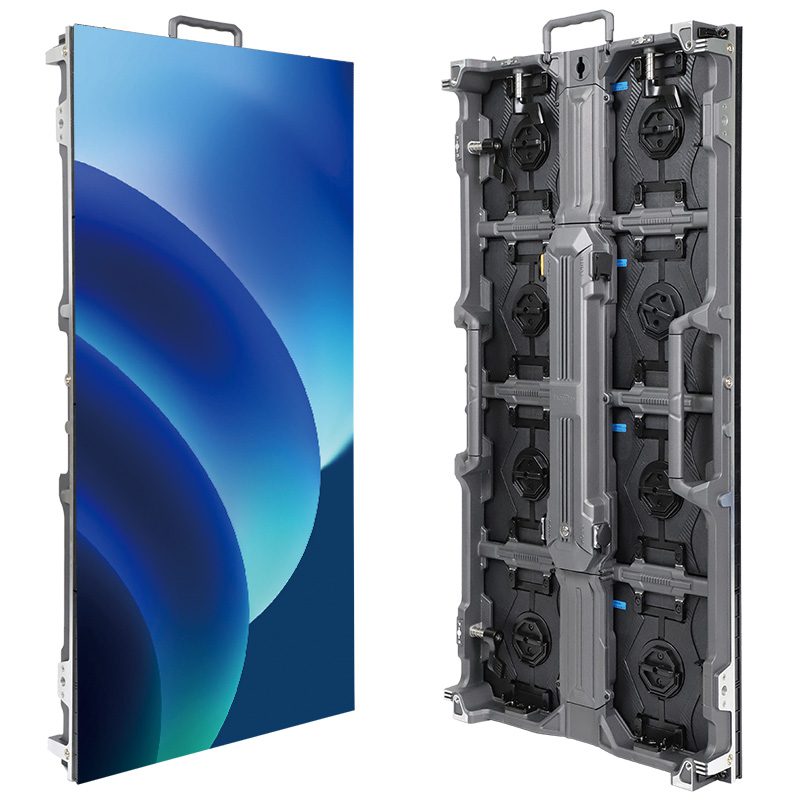
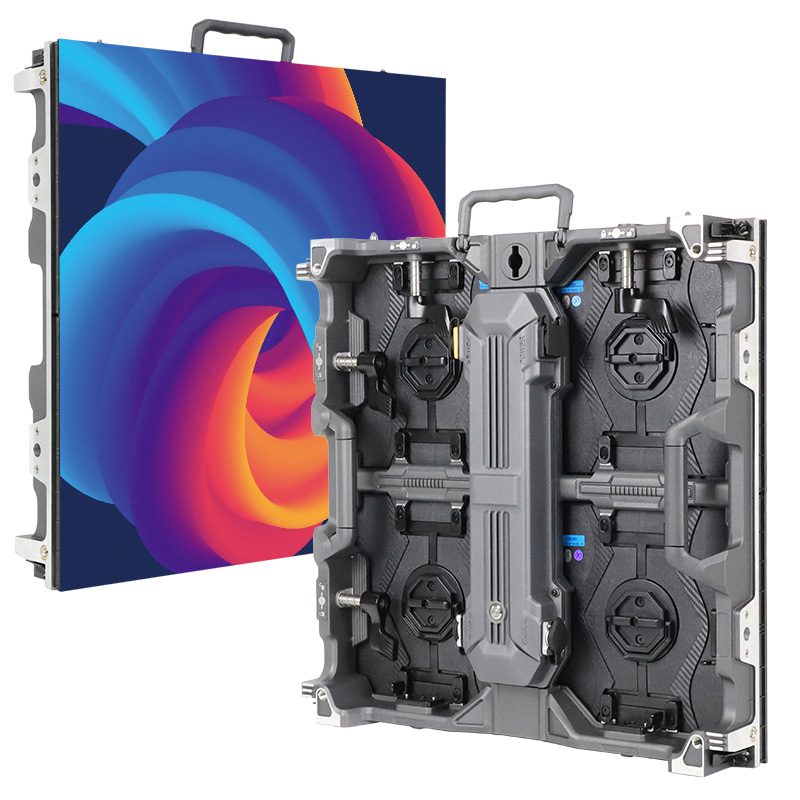
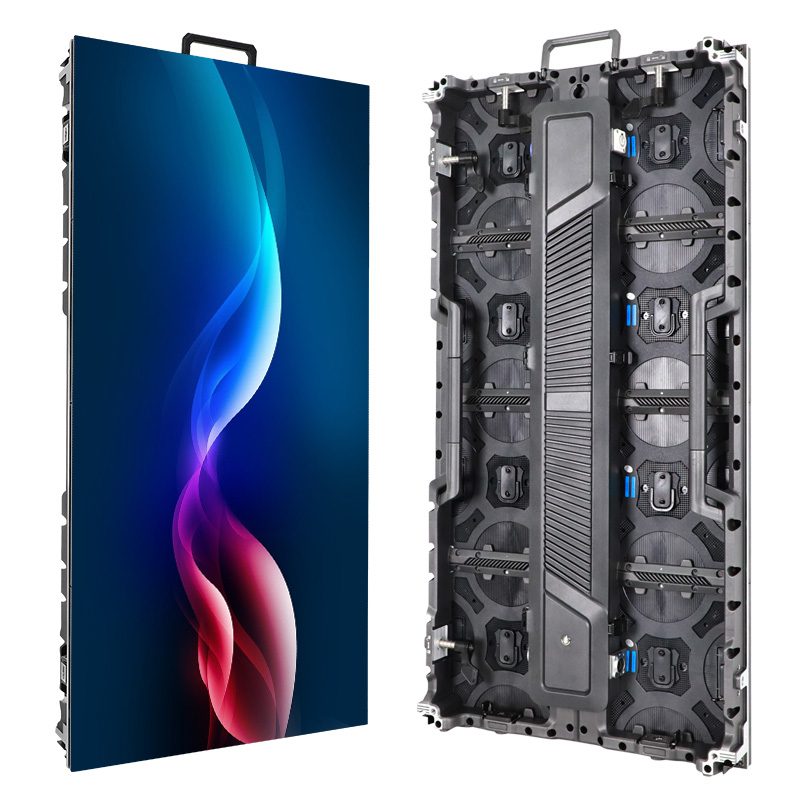
| Outdoor enclosure | Front/rear protection, seals, drainage, thermal design | Evidence matching the actual exposure and installation |
| Structural assembly | Screen weight, fixing details, support calculations | Site-specific design by the responsible engineer |
| Control and playback | Processor capacity, format support, fallback playlist | Restart, signal-loss, and network-loss behavior |
| Service and spares | Access method, replacement procedure, spare list | A realistic module swap and color-matching process |
For creative billboards in severe weather, do not choose cabinets solely by material or a headline IP rating. Ask how the complete installation handles wind-driven rain, condensation, solar heating, low temperatures, and corrosion at the actual site. Cable entries, rear exposure, drainage paths, and service-door seals deserve specific review. A module’s protection rating does not establish the performance of the whole assembled sign.
Brightness should match ambient conditions and the site’s operating requirements. Automatic dimming helps maintain appropriate output across day and night; Daktronics describes this approach for digital billboards. Do not interpret a maximum luminance figure as a recommended continuous setting. Likewise, LED refresh rate and video frame rate are different specifications: check motion and camera recording on the proposed system, not only a quoted number.
13. Creative Billboard Design: From Idea to Readable Content
Creative billboards need a clear idea before they need an unusual enclosure. The OAAA planning guide emphasizes simplicity in digital billboard design. Apply that principle to the actual attention available at the site.
01. Build the message around one visual idea
Choose one audience action and one reason to care. A new drink might lead with its flavor; a nearby venue might lead with the event and location. Use an obvious brand cue, large readable type, and strong contrast. Test the artwork at a reduced size and in a photograph of the proposed setting. If a person cannot explain the message after a brief look, remove competing elements.
Real campaigns offer transferable lessons. Bauer Media Outdoor’s examples include a Krispy Kreme installation using illuminated doughnuts and a participation button, and Simply Roasted using oversized packaging near stockists. These are special-build examples, not evidence that either used the LED systems described here. The useful lesson for creative billboards is to connect product identity, location, and the audience’s next action.
02. Design for the real LED canvas
Obtain the pixel map, safe text areas, file format, permitted duration, and playback rules before production. Build separate layouts for flat, curved, spherical, and transparent creative billboards. Keep a meaningful brand frame visible throughout a short loop so someone arriving halfway through is not left waiting for the explanation.
For 3D production, match the virtual camera to the intended viewing position and test from other approaches. INFiLED’s technical guide explains the relationship between viewpoint, screen geometry, and anamorphic content. Before launch, inspect gradients, seams, motion, and phone-camera capture under planned brightness settings. Prepare a simple fallback asset that remains informative if the advanced effect cannot run.
14. Creative Billboard Costs, Maintenance, and Measurement
The cost of creative billboards depends on whether you are buying display hardware, renting a screen, or purchasing advertising time on someone else’s installation. Those are different transactions. A media placement quote does not normally describe ownership of the screen, while a cabinet price does not represent a complete installed project.
| Budget line | Include in the request | Frequently missed detail |
|---|---|---|
| Display hardware | Cabinets, modules, processing, power distribution | Shape-specific components and spare inventory |
| Site and installation | Survey, structure, access equipment, cabling | Building modifications and installation working hours |
| Creative production | Storyboards, modeling, animation, mapping, testing | Revisions and future campaign adaptations |
| Operation | Energy, connectivity, software, monitoring | Cooling loads and ongoing content administration |
| Maintenance | Cleaning, inspections, replacement labor | Access equipment, travel, and color calibration |
| Media placement, if applicable | Location, dates, slot duration, share of loop | Playback reporting and make-good terms |
Compare quotations with the same dimensions, resolution, operating hours, environment, and service scope. Ask each supplier to identify exclusions. For a short event, rental may suit the duration; for a permanent installation, evaluate total ownership cost over the intended service period. Creative billboards with unusual shapes can add both fabrication and content costs.
Estimate screen energy with: area × average operating watts per square meter × hours ÷ 1,000. For illustration only, 20 m² at an assumed average 250 W/m² for 12 hours uses 60 kWh per day. This is not a product specification or quotation. Use measured or supplier-supported operating figures for your content and brightness profile, then include ancillary equipment separately.
Set success criteria before launching creative billboards. Proof-of-play records establish delivery, not human attention. Compare campaign-period inquiries, tracked landing-page visits, or store outcomes against a suitable baseline, allowing for other promotions and seasonality. For interactive installations, record starts and completed interactions separately. A shareable video and a busy pavement are useful observations, but neither proves incremental revenue.
15. Creative Billboards FAQ
01. What makes creative billboards effective?
Creative billboards work when an understandable idea, a recognizable brand, and the viewing context support one another. An unusual display shape can help attract attention, but clarity remains essential. Choose the format around the audience, then test whether the message survives a brief glance from the actual approach direction.
02. Do 3D billboards need special glasses?
No. Common naked-eye 3D billboards use perspective-based animation on an LED screen. The illusion is designed for a viewing zone and becomes less convincing outside it. They should not be described as true holograms or as delivering the same depth effect from every angle.
03. Which LED display is best for creative billboards?
There is no universal best format. A can-shaped screen may suit an indoor beverage activation; a transparent screen may suit a window; an outdoor corner may suit anamorphic content. Compare viewing distance, exposure, geometry, access, and content requirements before selecting a model.
04. How much do custom creative billboards cost?
A reliable price requires a project brief. Specify dimensions, location, viewing distance, indoor or outdoor exposure, duration, content scope, and installation responsibilities. Request separate hardware, installation, creative, and operating costs. For media bookings, also clarify slot length and the share of the advertising loop.
05. What cabinet design suits extreme weather billboard installations?
Choose a cabinet and complete installation engineered for the specific exposure. Request documented front and rear protection, drainage, sealing, thermal limits, corrosion provisions, and access arrangements. Structural design must also address the site conditions. No single cabinet material or protection number establishes suitability for every climate.
06. Can existing billboard content be reused on creative LED displays?
Sometimes, but adaptation is usually necessary. Flat artwork may need resizing and simplification; spheres and cylinders need surface mapping; transparent screens need background-aware contrast. For creative billboards with anamorphic effects, the content must match the display geometry and intended viewpoint. Obtain the final pixel map before producing assets.
16. Conclusion: Choose Creative Billboards Around the Audience
The best creative billboards bring the message, location, and display system into alignment. Start with the viewing situation, choose a format that supports the idea, and confirm the engineering and content workflow before committing to production.
Use the comparison and specification tables to prepare a focused brief. Include site photographs, dimensions, viewing distances, environmental conditions, operating hours, and a realistic launch date. To discuss suitable creative billboards with EagerLED, request a project-specific LED display recommendation. Ask for clearly defined performance, installation responsibilities, and maintenance provisions so the concept remains workable after launch.
 EagerLED Taught Bahrain Clients Outdoor LED Display Panel Installation & Use
 Congo (DRC) Clients Are Satisfied With EagerLED LED Panel Rental Solution