

An advertising LED board is a programmable video display for commercial campaigns in shops, public venues and outdoor locations. EagerLED offers indoor, outdoor and creative cabinet formats for display integrators and advertising businesses. Start with the site and maintenance route, then compare the relevant models below.
- Choose indoor, fixed outdoor or movable display equipment by site and maintenance route.
- Compare quotes on the same screen size, pixel pitch, control equipment and installation scope.
- Send site photos, viewing distance and destination for a matched equipment quotation.
On this page
Choose the Advertising LED Board Format First
| Project type | First decisions to confirm |
|---|---|
| Indoor retail or venue wall | Closest viewer, text detail, ambient light and front or rear service access. |
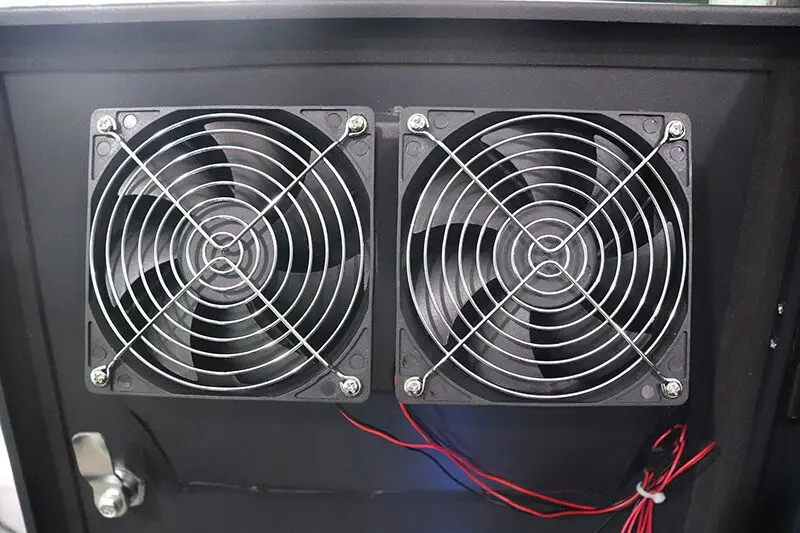
| Fixed roadside or facade display | Daylight orientation, cabinet protection, ventilation, structure and maintenance space. |
| Portable campaign display | Deployment footprint, content source, transport and multi-unit control; compare the poster range. |
How can an advertising buyer compare quotations fairly?
Use the same screen dimensions, pixel pitch, brightness requirements, controller scope and installation responsibilities. Ask which cabinets, processors, spares, cables and packing are included. The lowest panel price is not a complete project comparison when those items differ.
Send the screen position, site photos, viewing distance, content examples, service route, destination and target date through our advertising display quotation page. For freestanding movable signage, compare LED poster displays before selecting a fixed cabinet system.
Categories
2026 New LED Screen Price for You
An advertising LED board is a modular direct-view display built to deliver bright, changeable content in retail, roadside, transport and commercial environments. Choose the system by matching pixel pitch, viewing distance, ambient light, weather exposure, cabinet format and service access to the site. The guide below explains how to compare indoor and outdoor configurations, plan the full installation and request an itemized project quotation.
Table of Contents
1. What Is an Advertising LED Board?
An advertising LED board combines LED modules, cabinets, power supplies, receiving cards and a controller into one programmable display. Unlike a printed billboard, the screen can schedule videos, images, promotions and public information without replacing the physical face. Unlike a television, the modular cabinet layout can be scaled to fit a facade, freestanding structure, shop wall or custom corner.
The term is often used alongside digital billboard, LED advertising screen and digital out-of-home display. The OAAA glossary distinguishes digital out-of-home formats by location and media type. For a buyer, the practical distinction is simpler: indoor boards prioritize close viewing and fine detail, while outdoor boards prioritize daylight readability, environmental protection and thermal control.
01 How the Modular Display Works
Each module contains an LED pixel array. Modules attach to cabinets that align mechanically and carry the power and signal hardware. A video processor or sending controller maps the source content across the complete pixel canvas, while receiving cards distribute data to individual cabinets.
02 What the Buyer Is Actually Specifying
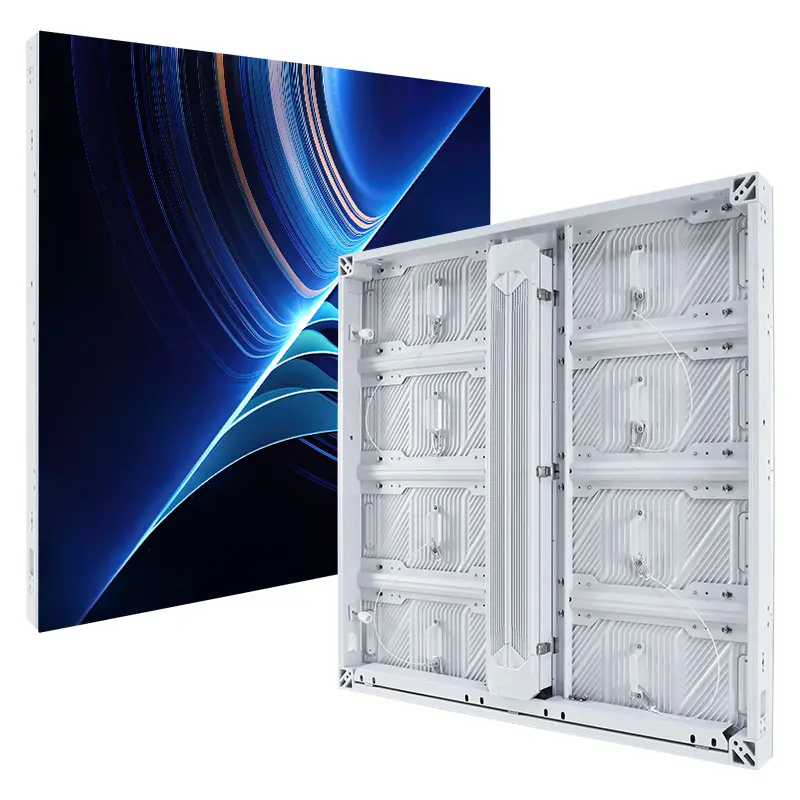
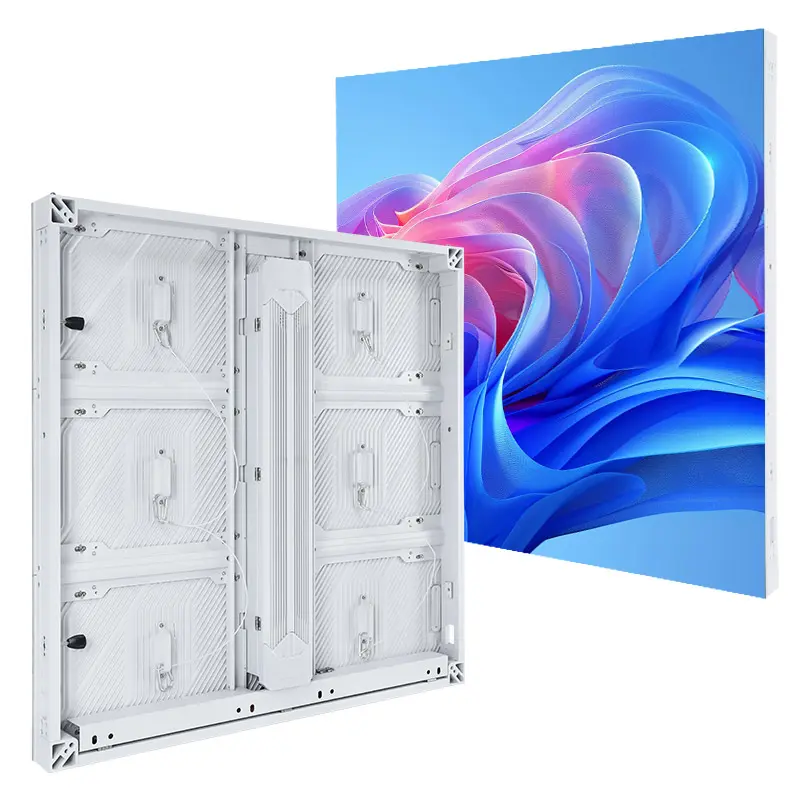
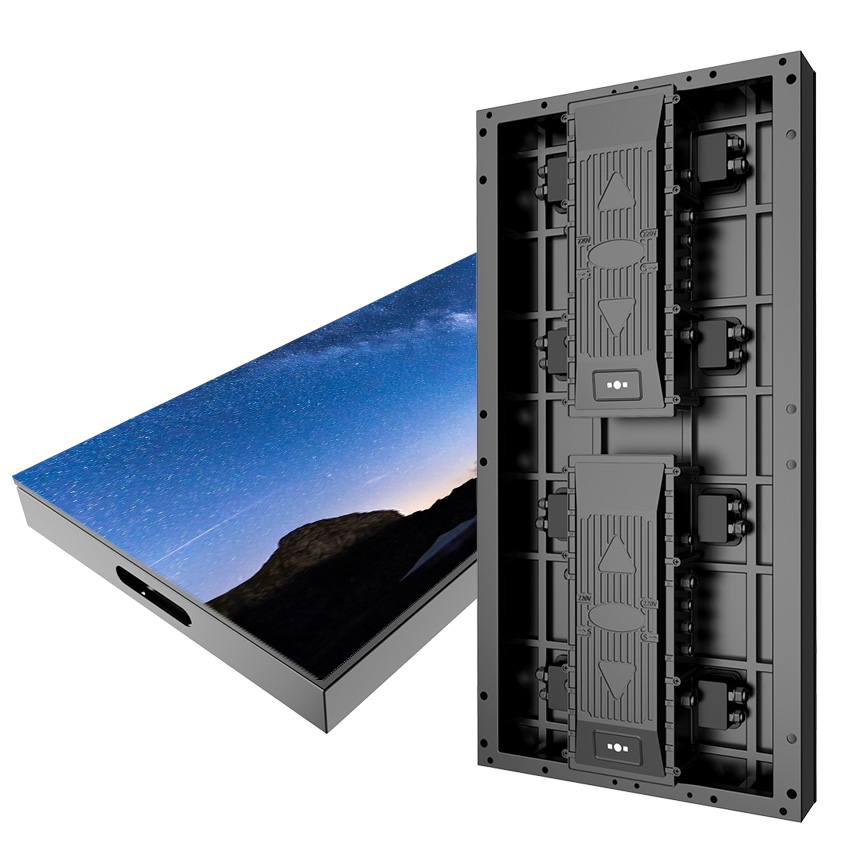
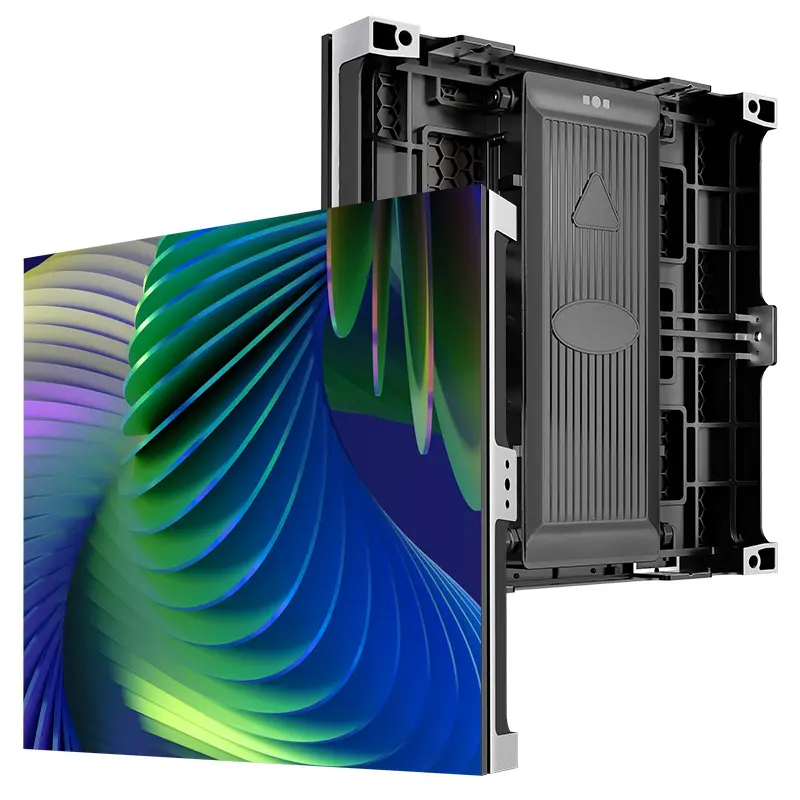
A complete order is more than screen area. It should define the finished width and height, native pixel resolution, brightness range, refresh rate, protection rating, cabinet material, front or rear service, control system, mounting structure, spare parts, power distribution and delivery scope. For example, the EA1000F2 outdoor LED advertising screen is offered with P2.97 to P10.42 pixel pitches, up to 6,500 cd/m2 brightness, a 3,840 Hz refresh rate and a 1,000 x 1,000 mm cabinet. Those are model-specific values, not universal specifications for every advertising display.
2. Benefits for Retail and Outdoor Advertising
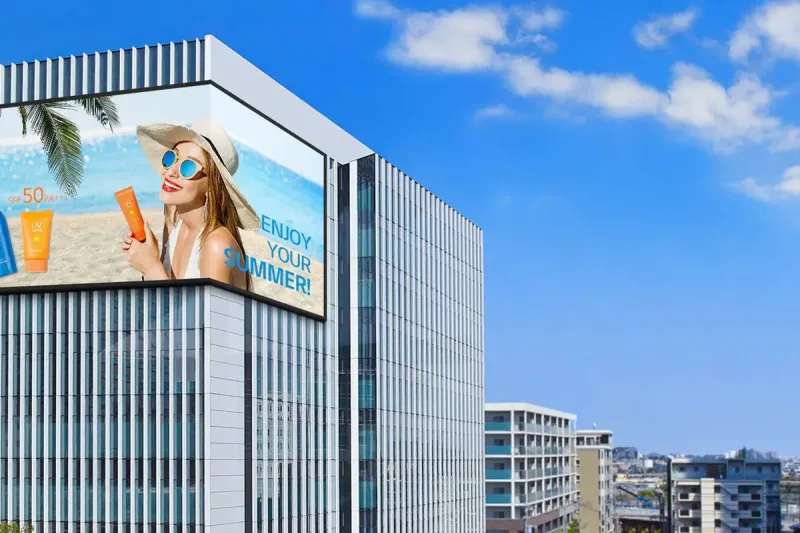
An LED board gives operators control over timing, creative rotation and location-specific messaging. A retailer can switch from brand content to a timed offer; a transport hub can combine paid campaigns with wayfinding; a roadside operator can schedule several campaigns in one physical location. The display still needs suitable creative, readable dwell time and responsible brightness management to deliver those benefits.
01 Evidence From Digital Out-of-Home Research
A 2024 OAAA study conducted online by The Harris Poll surveyed 1,023 U.S. adults ages 18-64. It reported that 73% viewed digital out-of-home ads favorably and 76% of recent viewers said they had taken an action after seeing one. Anna Bager, President and CEO of OAAA, said, “Digital out of home not only captures consumers’ attention but also drives meaningful actions.” John Gerzema, CEO of The Harris Poll, described the medium as “both striking and shareable.” Read the full OAAA and Harris Poll findings.
Evidence note: the survey ran from April 2-9, 2024 and measured reported response to digital out-of-home advertising in the United States. It does not prove that a particular screen, location or campaign will produce the same result. Site quality, audience, creative, measurement method and local rules still matter.
02 Operational Advantages
- Changeable content: update campaigns remotely instead of printing and installing a new face.
- Daypart scheduling: match messages to time, venue activity or campaign priority.
- Modular scale: build the canvas around the site rather than selecting a fixed television size.
- Motion and color: use video, animation and high-contrast layouts where local regulations allow them.
- Serviceable hardware: replace compatible modules and internal components instead of replacing the complete wall.

3. Advertising LED Board Types
The display type should follow the environment and audience. A single label such as “outdoor screen” does not define viewing distance, enclosure protection, service direction or structure. Compare the complete configuration.
| Display type | Typical use | Primary design priorities |
|---|---|---|
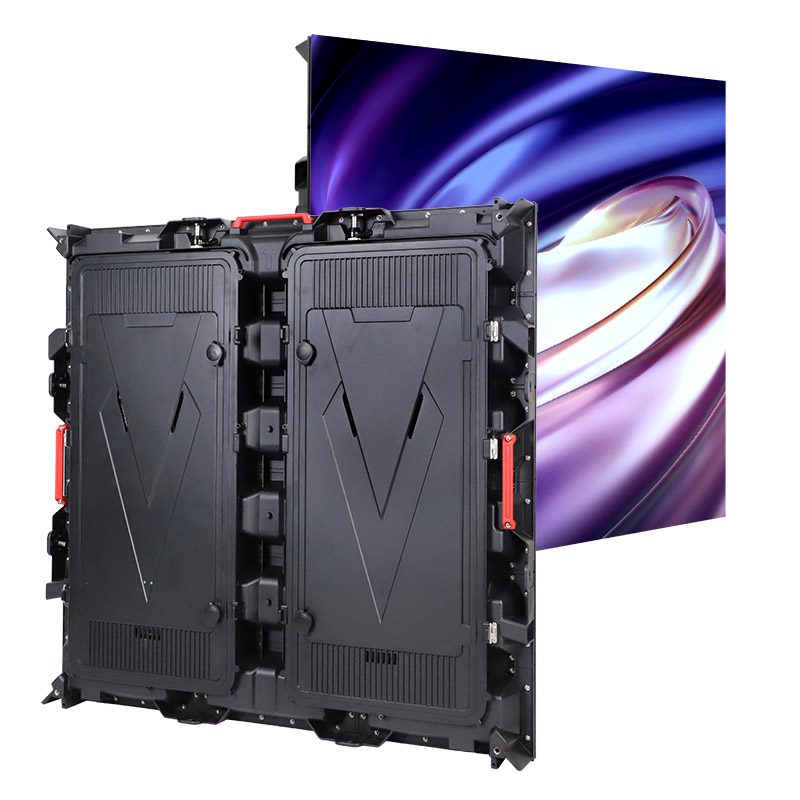
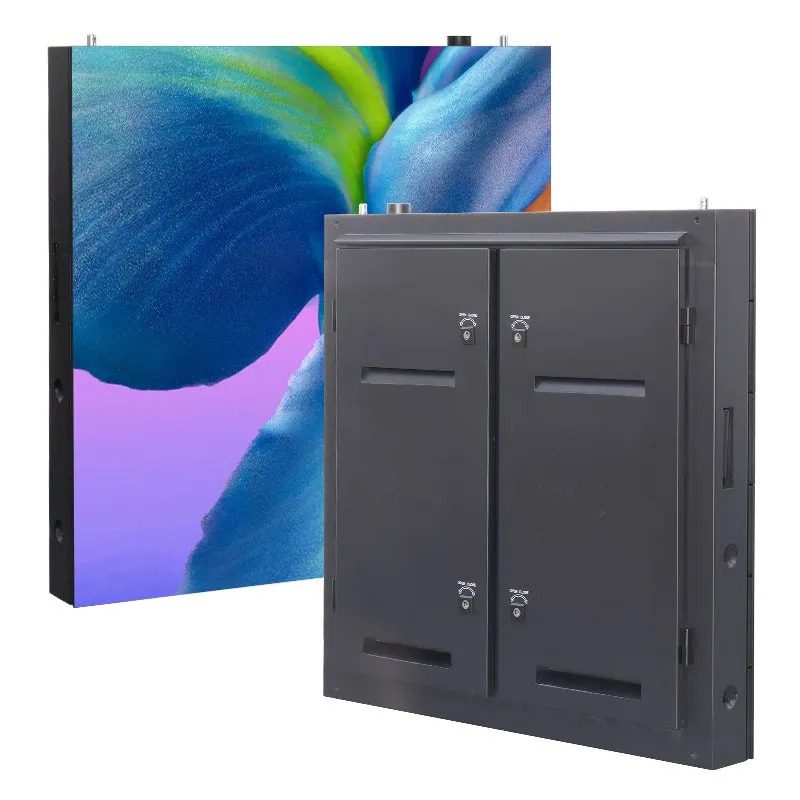
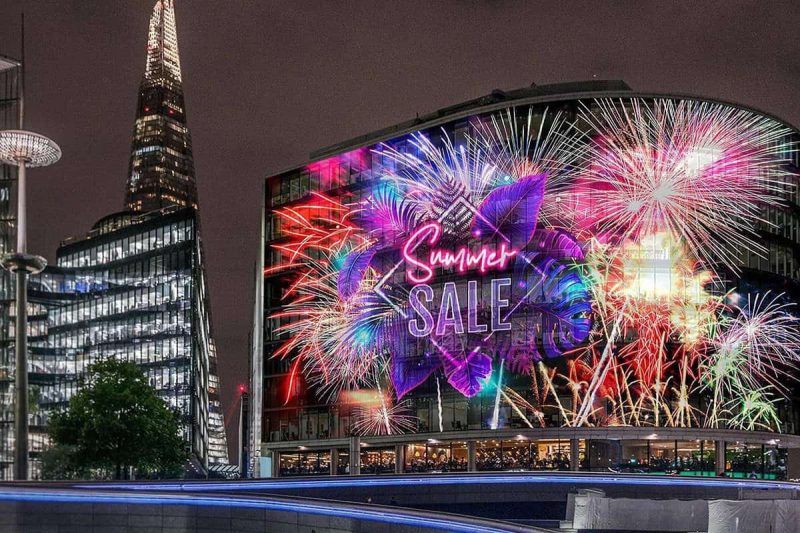
| Outdoor fixed LED board | Roadside billboards, building facades, commercial plazas | Daylight brightness, weather exposure, thermal management, engineered structure and safe service access |
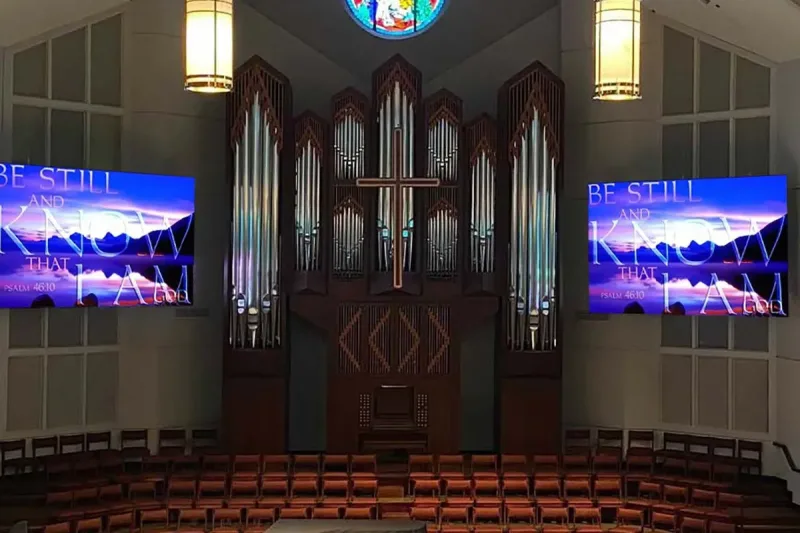
| Indoor retail LED board | Shop walls, malls, showrooms, airports | Fine pixel pitch, close-view comfort, slim depth, quiet operation and front service |
| Transparent LED display | Glass storefronts and media facades | Transparency, viewing distance, mounting points, cable routing and content designed for open pixels |
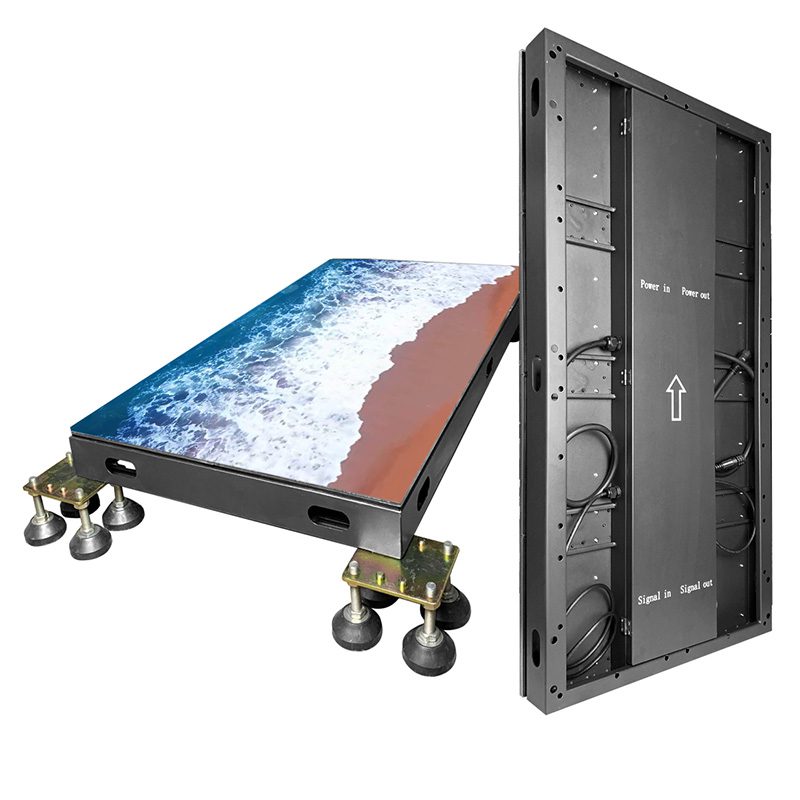
| Interactive LED floor | Exhibitions, retail activations and experience spaces | Load rating, non-slip surface, sensor response, impact protection and floor-level service |
| Corner or 3D display | Landmark corners and high-attention commercial sites | Cabinet geometry, exact viewing zone, calibrated content and structural alignment |
For controlled interiors, compare the indoor LED screen range and practical stadium LED screen systems. For glass architecture, review transparent LED screen options. Creative corner projects also need content planned specifically for the viewing position; this overview of 3D billboards explains the visual principle.
4. Specifications to Compare
A useful quotation connects every number to a site requirement. Maximum brightness alone does not prove readability, and the smallest pixel pitch is not automatically the best value. Ask the supplier to show how each specification supports the intended viewing distance, content, exposure and maintenance plan.
| Specification | Project question | Why it matters |
|---|---|---|
| Pixel pitch | What is the nearest regular viewing distance? | Controls native resolution, perceived detail, LED count and system cost. |
| Brightness range | What are the measured daytime and nighttime conditions? | The board needs enough daylight output and enough dimming range for responsible night operation. |
| Refresh rate | Will cameras record the display? | A suitable high refresh rate can reduce visible scan lines and flicker in recorded video. |
| IP rating | Which cabinet faces are exposed to dust and water? | The rating must match the tested enclosure and the installation exposure, not just a marketing label. |
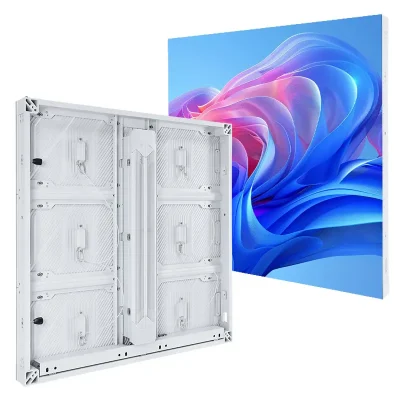
| Cabinet format | Which dimensions and corner geometry fit the structure? | Changes screen size, seams, weight, installation speed and spare-parts planning. |
| Service access | Can technicians reach the front, rear or both? | Determines clearance, wall depth, access platforms and repair workflow. |
| Power and heat | What is typical and maximum power draw at the site voltage? | Drives cable sizing, distribution, cooling and operating cost. |
| Control system | Which sources, schedules and remote functions are required? | Defines processors, sender and receiver hardware, networking and operator workflow. |
01 Pixel Pitch and Native Resolution
Start with the finished screen dimensions and nearest viewer. Calculate the native pixel width and height for at least two candidate pitches, then preview representative content at the actual distance. The pixel pitch selection guide provides a practical framework.
02 Brightness and Responsible Night Operation
Outdoor displays may need several thousand cd/m2 in full daylight, but night operation needs a much lower target. DarkSky International notes that electronic message centers have commonly operated above 5,000 cd/m2 during daytime and recommends nighttime limits from 0 to 160 cd/m2 by lighting zone, plus curfews in its guidance. Treat those values as DarkSky recommendations, not universal law; obtain the local permit and follow the applicable municipal, transport and environmental rules.
03 IP Rating and Exposure
The IP code is defined by IEC 60529, which classifies enclosure protection against access, solid objects and water. An IP65 label should apply to the tested enclosure face and configuration. Confirm the front and rear ratings, cable entries, ventilation, drainage and the conditions covered by the supplier’s test report.
5. How to Choose an Advertising LED Board
Begin with the site and campaign, then work toward the hardware. This sequence prevents a catalog specification from driving the project before the viewing and installation conditions are understood.
01 Document the Site
- Measure the available width, height and structural attachment area.
- Record the nearest and farthest viewing positions.
- Photograph the site in daytime and after dark.
- Identify rain, dust, salt, heat, direct sun and wind exposure.
- Confirm front, rear or dual-side maintenance access.
02 Define the Content and Operating Plan
List source resolution, aspect ratio, video frame rate, scheduling, remote updates, camera use and daily operating hours. Confirm whether the system will show advertising only or combine campaigns with pricing, wayfinding, live data or emergency messages.
03 Request an Itemized System
The quotation should identify cabinets, modules, processor, sender and receiver cards, power distribution, data cabling, mounting structure, spare modules, spare power supplies, packaging, freight, commissioning and training. Review the proposed LED control system alongside the screen hardware.
04 Compare Serviceability and Evidence
Ask for the exact model data sheet, cabinet drawing, wiring diagram, brightness and power assumptions, test reports, warranty scope and spare-parts plan. Compare like with like: the same finished size, pixel pitch, accessories, delivery term and installation scope.
6. Installation, Content and Maintenance
01 Structure and Electrical Planning
A qualified local engineer should design or approve outdoor steelwork, anchors and wind-load assumptions. The electrical plan should include the actual site voltage, circuit protection, grounding, surge protection, cable routes, isolation and safe maintenance access. Coordinate drainage and ventilation without defeating the enclosure design.
02 Content Setup and Calibration
Build content at the screen’s native aspect ratio and test the smallest text from the intended viewing position. Configure a brightness schedule or sensor-based control, then calibrate modules for uniform color and grayscale. Record the approved settings so maintenance teams can restore them after component replacement.
03 Preventive Maintenance
- Inspect cabinet seals, cable entries, locks and structure on a documented schedule.
- Clean ventilation paths and filters using the model-specific method.
- Monitor temperature, receiving-card status, power supplies and communication faults.
- Keep mapped spare modules, receiving cards and power supplies in suitable storage.
- Back up controller files, calibration data, schedules and content templates.
7. Why Choose EagerLED?
EagerLED supports indoor, outdoor fixed, transparent, floor and creative advertising display projects. The useful comparison is not a broad claim that one series is best; it is whether the proposed model, cabinet layout and service plan match the site.
01 Project-Specific Configuration
Provide the site dimensions, viewing distance, installation photos, ambient light, local voltage, service access, delivery country and schedule. EagerLED can then propose a model, pitch, cabinet layout, controller and bill of materials for review.
02 Production and Pre-Shipment Review
Before shipment, confirm the approved cabinet drawing, module batch, control configuration, spare-parts list, aging-test records, packing list and operating documents. For a corner, transparent or floor installation, include the relevant geometry and mounting details in the sign-off package.
03 Scope and Limitations
Product data is model-dependent, and final compliance depends on the installed system and local rules. Structural engineering, permits, electrical work and site safety should be handled by qualified local professionals. EagerLED product selection does not replace local design approval.
8. Advertising LED Board FAQs
01 What pixel pitch is best for an advertising LED board?
Choose pixel pitch from the nearest regular viewing distance, finished screen size and required content detail. A smaller pitch supports closer viewing and more native pixels but increases LED count and cost. Compare at least two pitches using the same screen dimensions and representative content.
02 How bright should an outdoor advertising LED board be?
Brightness should match measured daylight, screen orientation and local night limits. Some EagerLED outdoor models reach up to 6,500 cd/m2, but maximum output is not a permanent operating target. Specify automatic or scheduled dimming and approve daytime and nighttime settings on site.
03 What does IP65 mean for an LED advertising screen?
Under the IEC 60529 IP code, the digits classify enclosure protection against solids and water. For an LED screen, confirm which cabinet face and assembled configuration were tested, because front and rear exposure, cable entries and ventilation can differ.
04 Can one advertising LED board show several campaigns?
Yes. A compatible controller and content management workflow can schedule multiple videos, images or data feeds. Confirm storage, networking, user permissions, fallback content and whether the project needs synchronous live input or asynchronous scheduled playback.
05 How long does an advertising LED board last?
There is no single guaranteed lifespan for every installation. LED aging, operating brightness, heat, moisture, power quality, cleaning and maintenance all affect service life. Compare the exact model warranty, rated operating conditions, component replacement plan and spare-parts availability.
06 What information is needed for an accurate quotation?
Provide finished width and height, nearest viewing distance, site photos, indoor or outdoor exposure, installation method, service direction, local voltage, content sources, camera requirements, delivery location and schedule. This allows the supplier to calculate a practical cabinet layout and itemized system.
9. Conclusion
An advertising LED board should be selected as a complete site system, not by one headline specification. Match pitch to viewing distance, brightness to measured light, protection to exposure, cabinet format to the structure and service access to the maintenance plan. Then compare itemized quotations using the same finished size and scope. To review a project-specific layout and bill of materials, contact EagerLED with your site dimensions, photos, viewing distance, voltage and delivery schedule.
