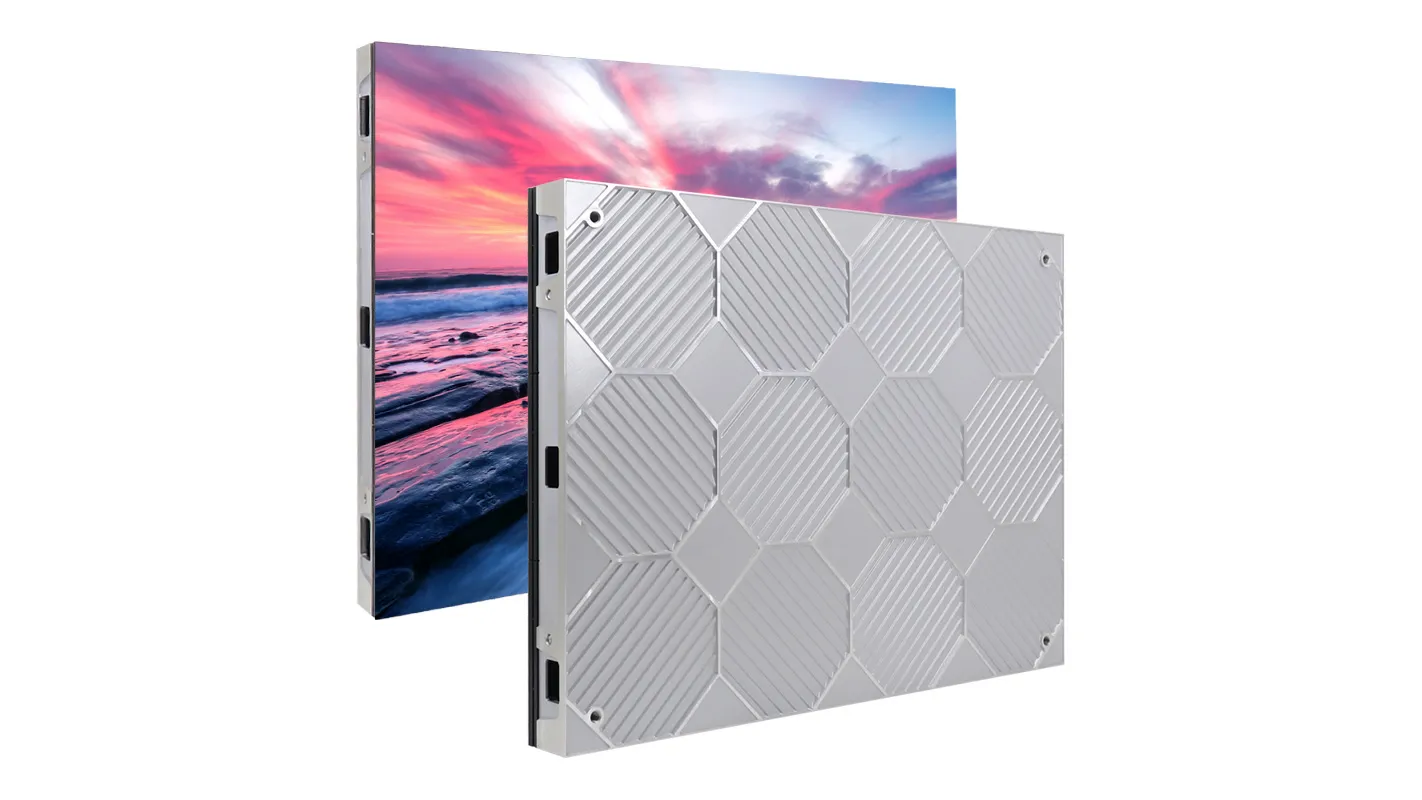
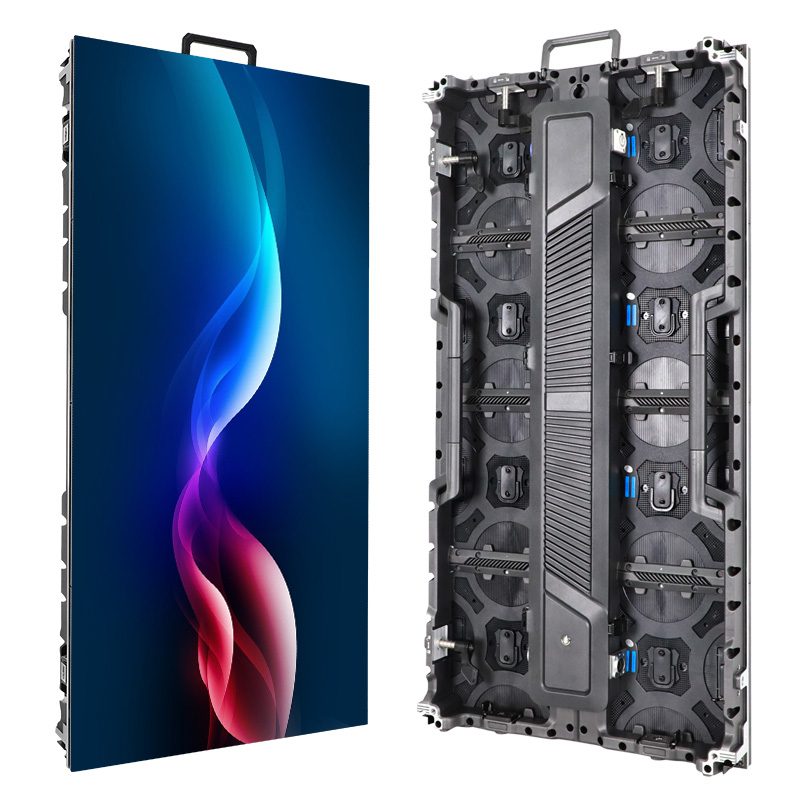
LED cabinet lifting points must be identified for the task being performed. A grip used to carry one cabinet does not, by its appearance alone, establish an approved attachment for a hoist or a suspended screen. Obtain the manufacturer’s instructions for the exact cabinet, accessories, and arrangement before treating any handle or fitting as part of the suspension system.
For a rental company purchasing cabinets, this is a question to resolve before the equipment reaches a venue. Ask which features are intended for handling, which connect cabinets, and which belong to the approved hanging arrangement. Clear identification helps purchasing, warehouse, and site teams work from the same information.
1. Identify Handles, Locks and Suspension Interfaces
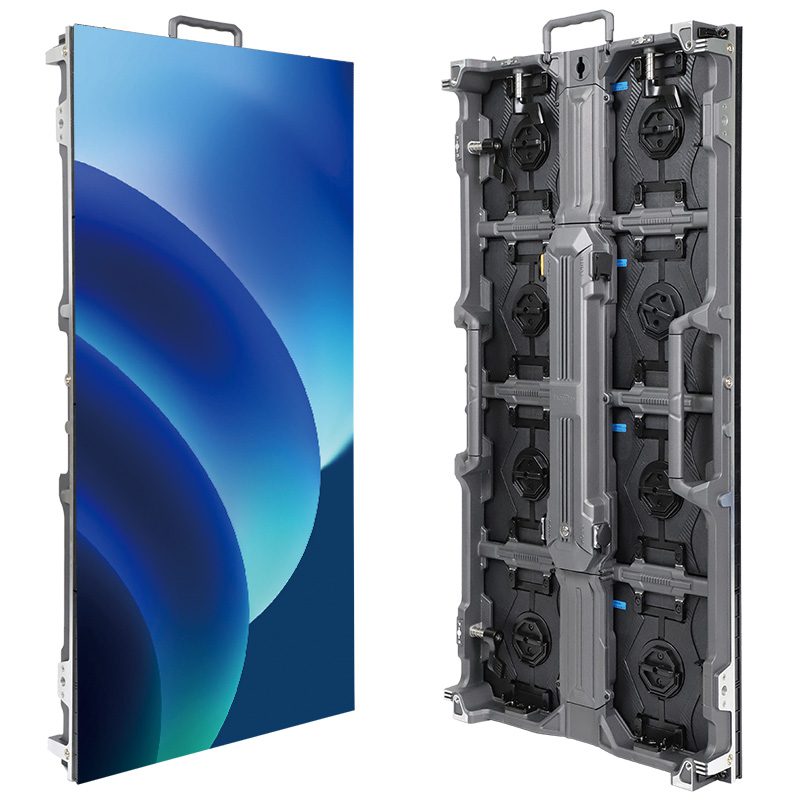
Start with a labeled cabinet drawing. Rear handles, module handles, positioning features, and quick locks can be close together, but they serve different purposes. A photograph helps identify the part under discussion. The operating instructions establish how that part may be used, including any restrictions.
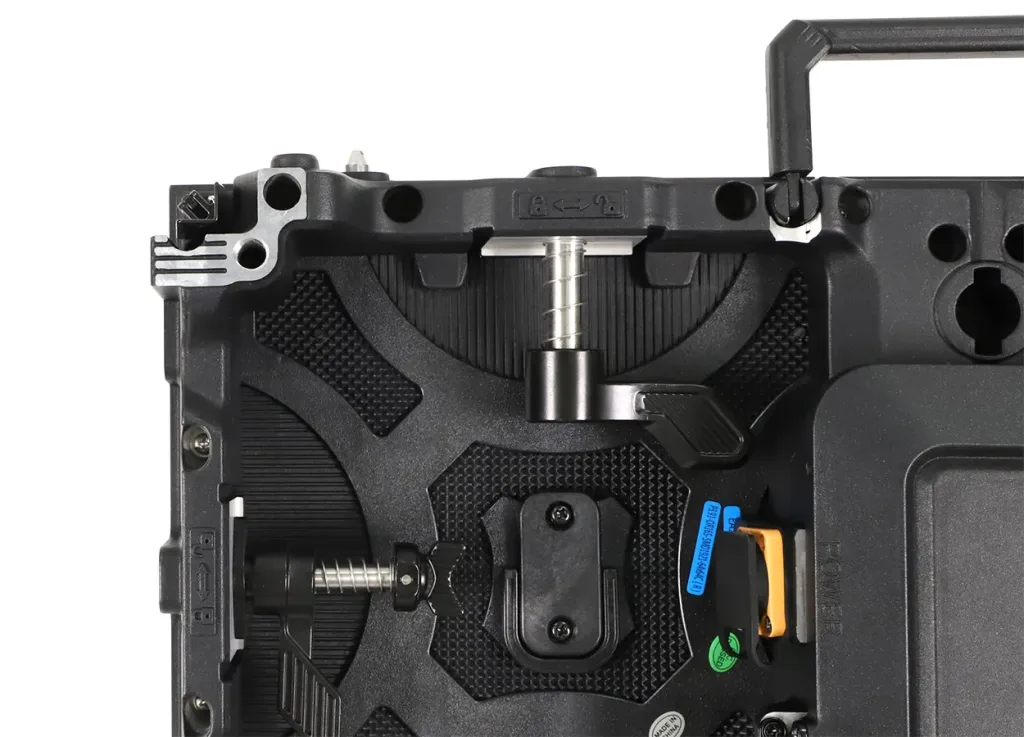
The EA1000C6 product page describes handles and connection hardware for handling and assembly. Its labeled rear view distinguishes the cabinet’s aluminum handles from module handles, quick locks, and the detachable back cover. Those labels are useful for a technical discussion; they do not provide a suspension rating.
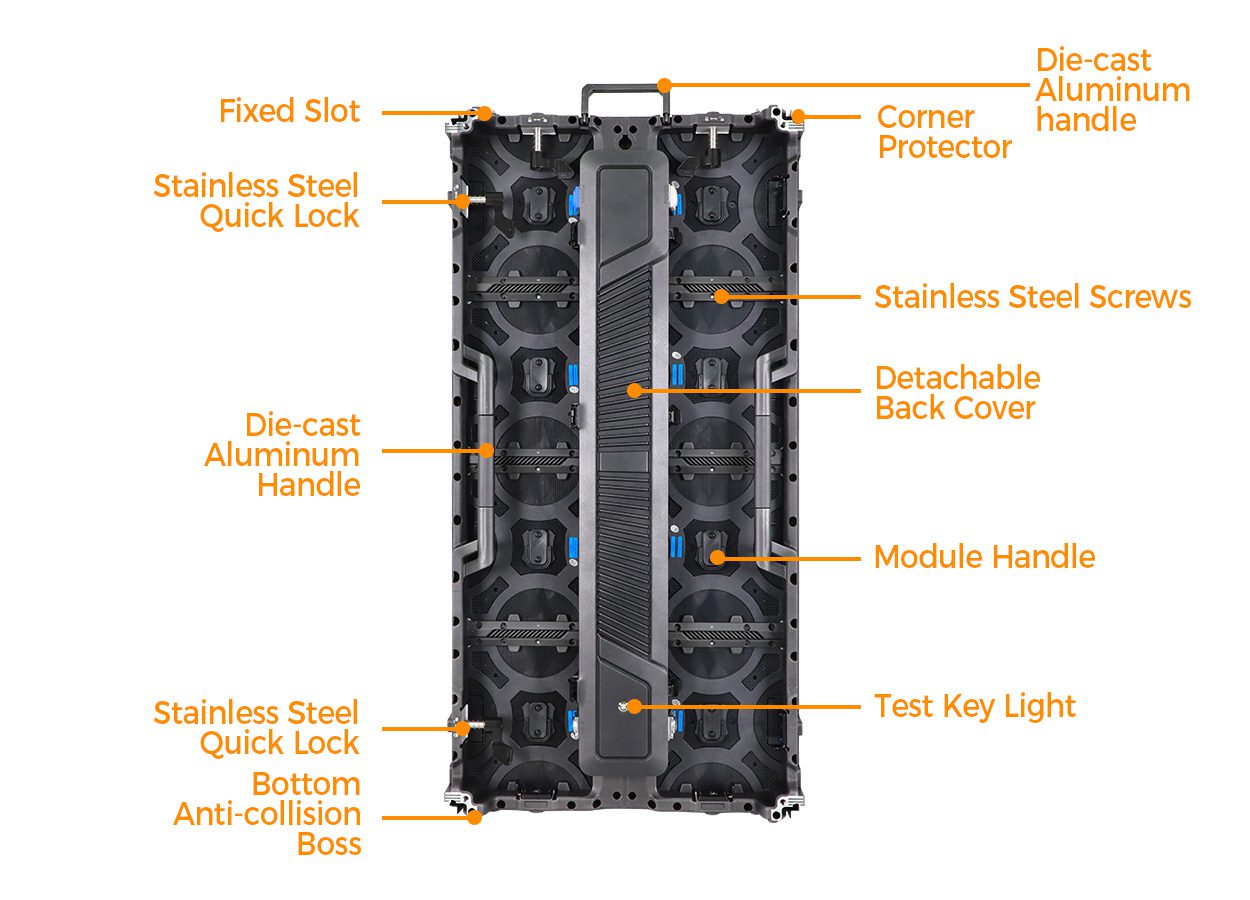
When a quotation refers to LED cabinet lifting points, ask what operation the wording covers. It might describe moving an individual cabinet during assembly, or it might refer to a specified attachment within a lifting arrangement. These meanings should not be left interchangeable in the purchase documents.
Also distinguish a module-removal grip from a cabinet-carrying handle. A service feature may belong to a removable assembly rather than the cabinet frame. Have the supplier identify it on the actual model. Do not test an uncertain feature by attaching lifting equipment or attempting to raise the cabinet.
Quick locks need their own explanation. They connect neighboring cabinets in the arrangements permitted by the manufacturer. The fact that a lock closes, or that two cabinets align neatly, does not establish the permitted suspended configuration. Keep the connection instructions with the cabinet drawing rather than relying on a verbal description.
2. Specify LED Cabinet Lifting Points with Evidence
Request instructions that identify the approved attachment locations, matching accessories, cabinet orientation, and configuration limits. Where a hanging bar or other support accessory is required, the quotation should identify the supplied part and the documentation that applies to it. Avoid accepting a generic photograph as the complete installation specification.
The UK’s Health and Safety Executive describes lifting equipment as needing to be suitable for the task, with appropriate strength and stability. Its overview also calls for lifting operations to be planned by a competent person and appropriately supervised. These are UK requirements; the project team must identify the applicable requirements for the actual destination and venue.
For procurement, turn that principle into a document request. The buyer needs enough information for the responsible technical team to evaluate the intended use. This article does not assign load ratings, select rigging, or establish a safe assembly procedure. Those decisions require the actual equipment information and project assessment.
| Purchase question | Evidence requested | Gap to resolve |
|---|---|---|
| Which features are carrying grips? | Model-specific labeled drawing and handling instructions | Unidentified or ambiguous handles |
| Where does the approved suspension connect? | Installation drawing and compatible accessory list | A suggested attachment unsupported by documentation |
| Which cabinet arrangement is covered? | Applicable configuration limits and project layout review | An example arrangement being treated as universal approval |
| How are components accepted and maintained? | Inspection instructions, identification records and service process | Untraceable parts or an undefined defect response |
Keep the answer about LED cabinet lifting points specific to the offered revision. A familiar product family name is not enough if the frame, locks, or supporting accessories have changed. Ask the supplier to resolve any mismatch between the quotation, drawing, and physical sample before the order is released.
3. Review the Complete Cabinet Arrangement
Review LED cabinet lifting points against the entire proposed display, not an isolated cabinet. The project drawing should identify the cabinet layout and the intended support arrangement. The responsible designer needs the complete supported load and the actual attachment conditions, including the accessories included in the installation.
Cabinet-only mass is only one input. Cables, support components, and other attached equipment belong in the relevant project assessment. A simple multiplication of a brochure cabinet weight cannot establish an allowable hanging configuration. Do not infer an acceptable screen height or number of rows from an unrelated installation photograph.
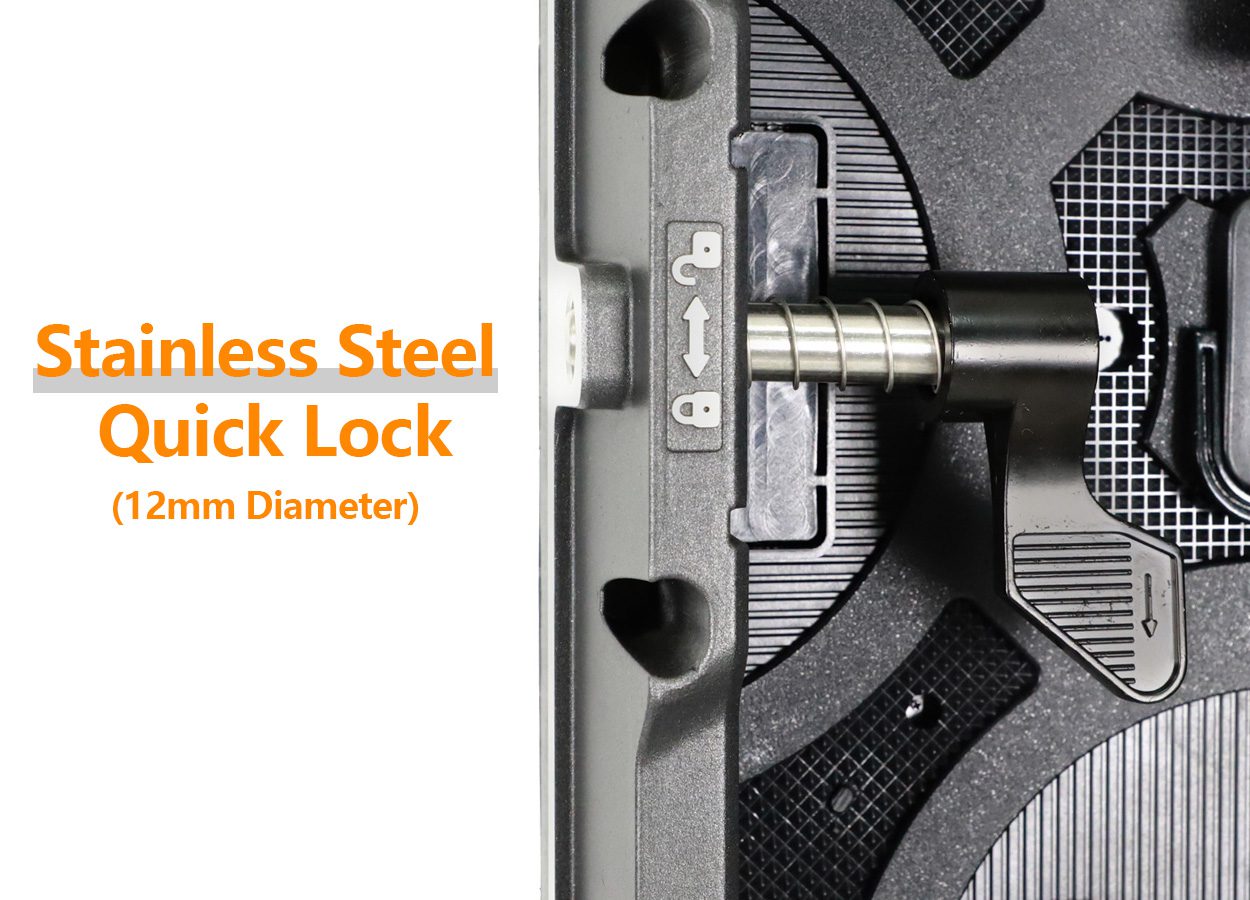
The EA1000C6 quick-lock detail below shows one connection feature. The image’s dimensional annotation describes the pictured component; it is not a load rating. Ask how the specified locks and frame interfaces form part of the approved assembly rather than assuming that a robust-looking pin proves suspension suitability.
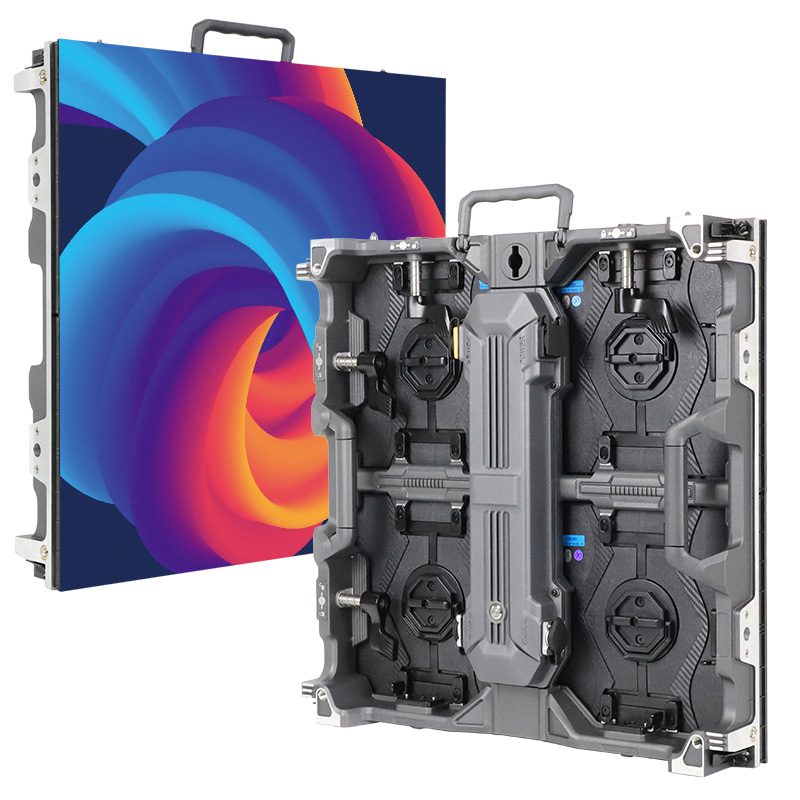
Changes in layout require review. A curved wall, staggered arrangement, or mixture of cabinet formats may introduce different connection conditions from a flat rectangular wall. Supply the actual layout to the manufacturer and project designer. Ask them to confirm which drawings and limits apply to that arrangement.
The product illustration below shows C6 cabinets in a mixed arrangement. It demonstrates a layout concept, not a complete suspended installation: the support system is not shown. For rental display planning, request the matching technical proposal rather than treating this image as an installation instruction.
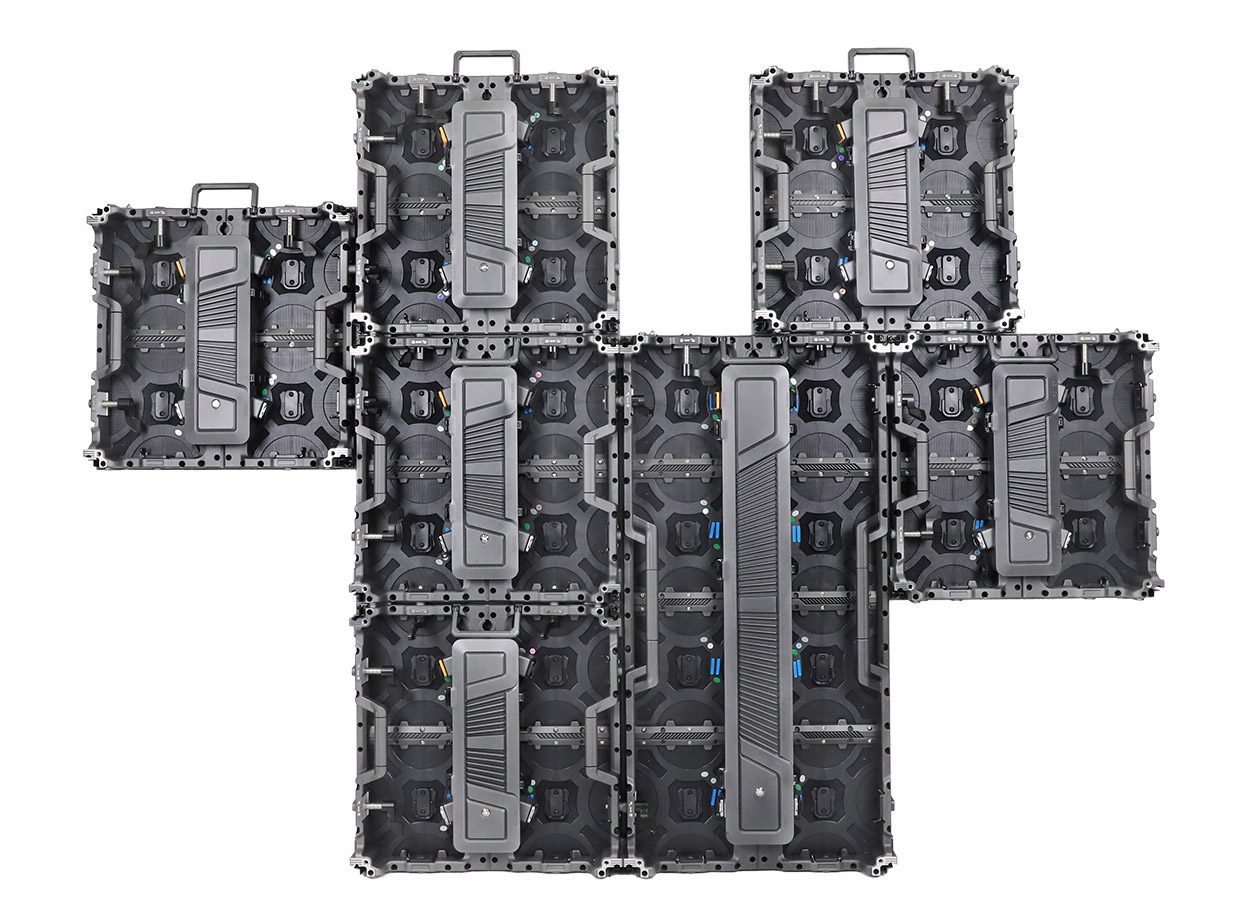
Ask what happens when the intended configuration changes after purchase. The response should identify who reviews the revision and how the accepted drawing reaches the site crew. LED cabinet lifting points should remain tied to a documented use, even when the rental inventory supports several visual layouts.
Consider a hypothetical purchase where the supplier demonstrates a small flat wall, but the rental company intends to build a taller display using the same cabinets. The sample proves that the parts can be assembled in the demonstrated arrangement. It does not establish permission for the larger build. Submit the intended layout and request a response that identifies the relevant equipment and configuration.
Compare quotations on the same basis. One offer may include cabinets and cases while another also includes a named hanging accessory package. Ask each supplier to list inclusions and exclusions against the proposed installation. A lower equipment total is difficult to interpret when the supporting hardware or required documentation remains outside the quoted scope.
4. Check the Supplied Hardware and Records
At receiving, match the cabinets and accessories to the approved order and drawings. Record model labels, revisions, quantities, and visible condition. If the supplied hardware differs from the accepted sample, keep that discrepancy open until the responsible technical contact provides a documented resolution.
For LED cabinet lifting points, identification should survive normal storage and deployment. Keep the relevant instructions accessible with the inventory record. A crew should be able to determine which document applies without searching through photographs of several similar cabinet generations.
Use the manufacturer’s inspection and maintenance instructions for the actual fittings. Visible deformation, missing parts, uncertain repairs, or unexplained changes need the specified defect process. Do not improvise a field repair, substitute an apparently similar fastener, or use a lifting demonstration to decide whether damaged equipment is acceptable.
Keep service work traceable. A repaired cabinet may need checks beyond confirming that the LEDs display an image. Record the affected structural or connection components, the authorized repair route, and the acceptance required before the equipment returns to the relevant service category.
Make handover practical for the next deployment. Store the accepted layout reference, compatible accessory list, current instructions, and unresolved restrictions together. Confirm who can approve a change and who receives a defect report. A purchasing file that never reaches the site team cannot resolve an attachment question during setup.
For an ambiguous component, send a focused request for information. Include a clear photograph, the cabinet label, the drawing reference, and the intended operation. Ask the supplier to identify the component and provide the applicable instruction. This is more useful than asking whether the entire cabinet is strong enough, because it connects the response to one identifiable part and use.
Retain that response with its date and revision. If it changes the accepted equipment scope, update the purchase record and the information issued to the installation team.
5. Frequently Asked Questions
01. Does a lighter cabinet make every handle suitable for a hoist?
No. Lower mass does not establish the intended use, attachment method, or rating of a fitting. Confirm the model-specific instructions instead of using perceived lightness as approval.
02. Can a supplier’s demonstration video replace the installation documents?
A video can help identify parts and demonstrate a documented process. It does not replace the applicable drawings, limits, and project assessment. Confirm that its equipment and arrangement match the proposed installation.
03. Should used cabinets include their supporting records?
Request identity, applicable instructions, accessory details, and available inspection and repair history. Missing records need resolution before the equipment is assigned to a use that depends on them.
04. Does a suspended installation approval cover ground stacking?
Do not assume so. Ground-supported arrangements have their own support, stability, and connection requirements. Ask for the documentation covering the actual installation method.
6. Resolve the Handling Scope Before Ordering
Confirm LED cabinet lifting points as part of a defined handling and installation scope. Keep carrying features, cabinet connections, and suspension attachments clearly identified. To prepare an equipment proposal, contact EagerLED with your rental project requirements, cabinet layout, intended installation method, venue conditions, and required accessory scope. Have the responsible project team review the supplied documentation before deployment.
 LED Screen Startup Image: What Appears Before Live Video?