
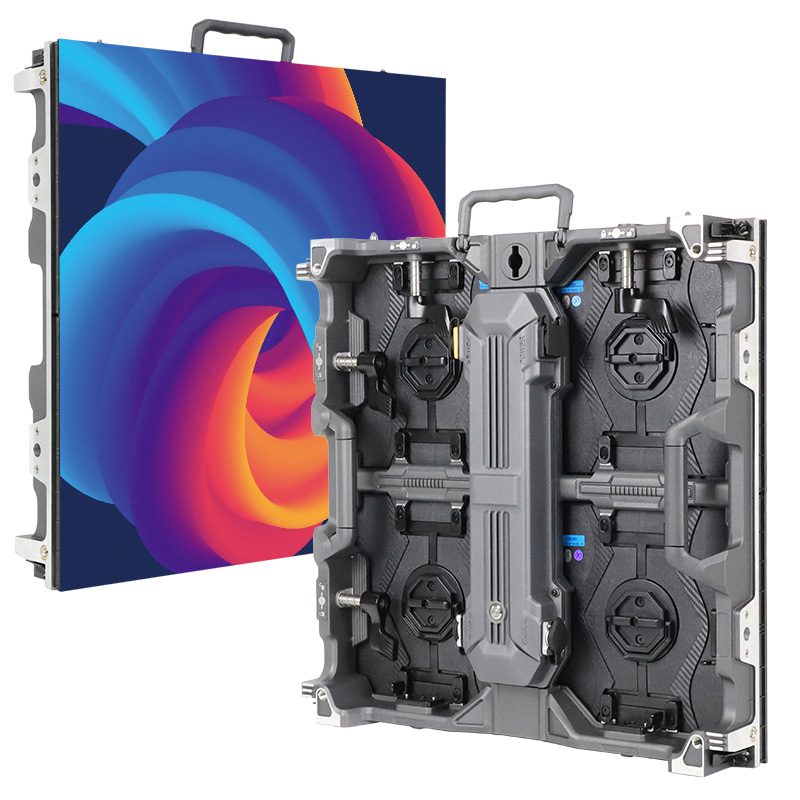
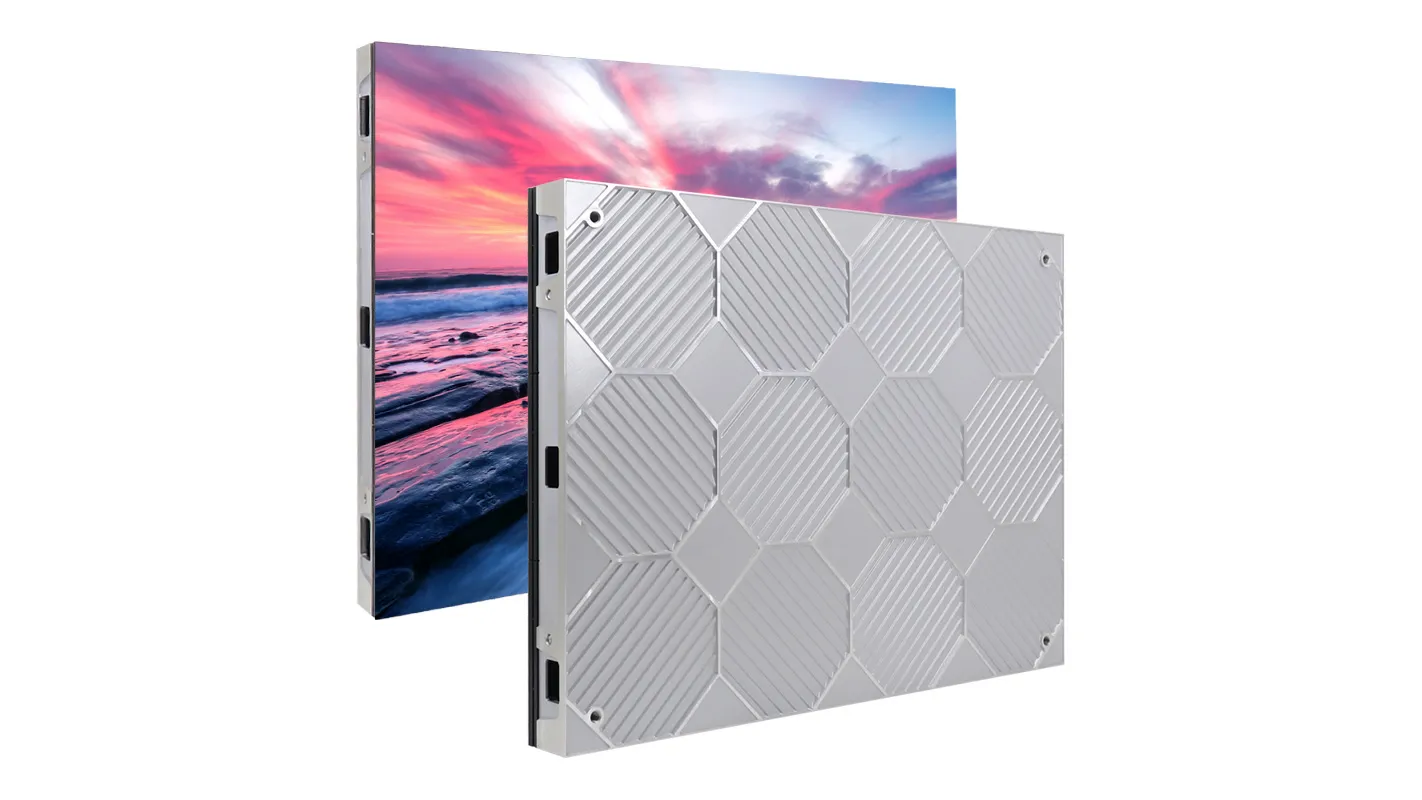
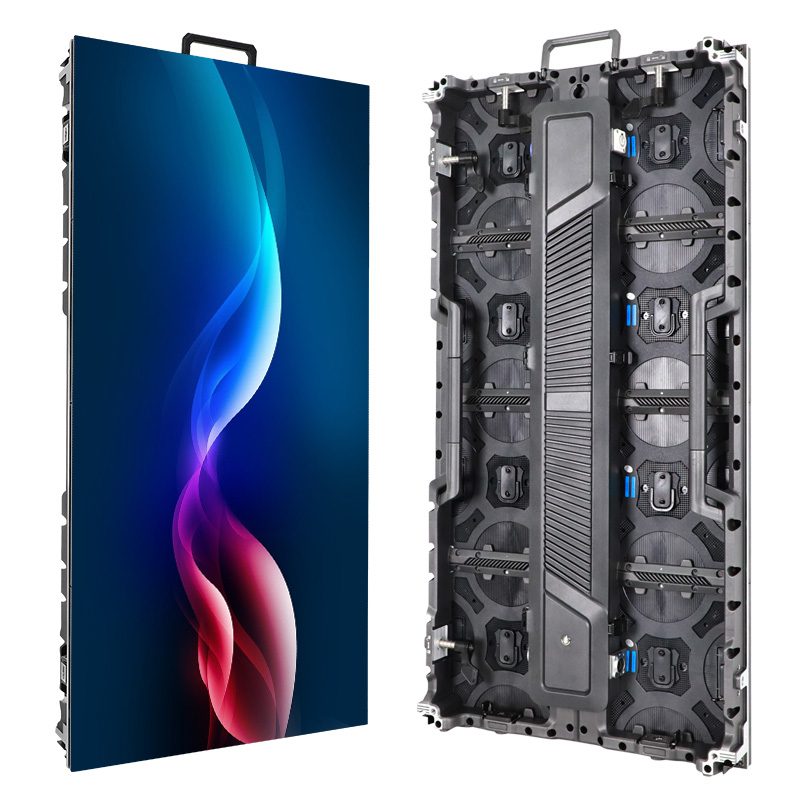
Rental LED cabinet corner protection should be checked in both its protective and folded positions before you approve a panel order. Ask the supplier to show which module edges it shields, how it moves clear for assembly, and how the cabinet fits its transport case. A visible guard is useful only when the delivered hardware and the crew’s handling procedure work together.
This guide is for rental-fleet buyers comparing panels for repeated event builds. It focuses on the small corner hardware that can be overlooked in a quotation, rather than screen resolution or the design of a 90-degree LED wall.
- The protector’s position during handling, assembly and packing.
- Clearance around the LED face, adjacent cabinet and case divider.
- A part identification and replacement route for damaged hardware.
- A short demonstration that your receiving crew can use again.
What does rental LED cabinet corner protection cover?
A foldable corner protector provides a physical guard around a vulnerable corner of the display module during the handling stages specified by the manufacturer. It must also move out of the way when panels join. These are two different requirements: protecting an exposed edge and leaving the assembled display unobstructed.
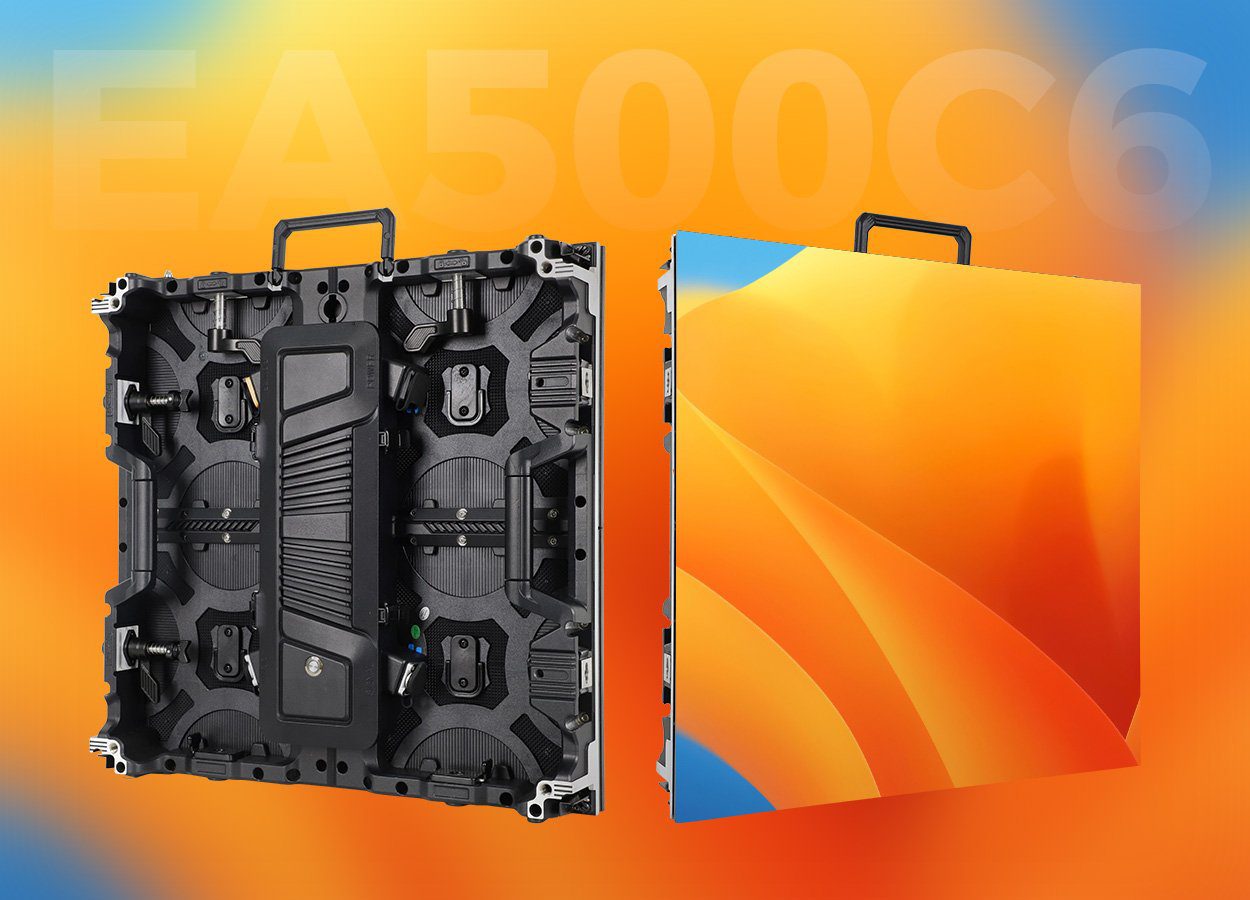
For example, the EagerLED EA500H7 rental panel product page describes four foldable corner protectors. Its published cabinet format is 500 × 500 mm (19.7 × 19.7 in). Treat this as a model-specific example; confirm the mechanism and supplied version on the actual sample being quoted.
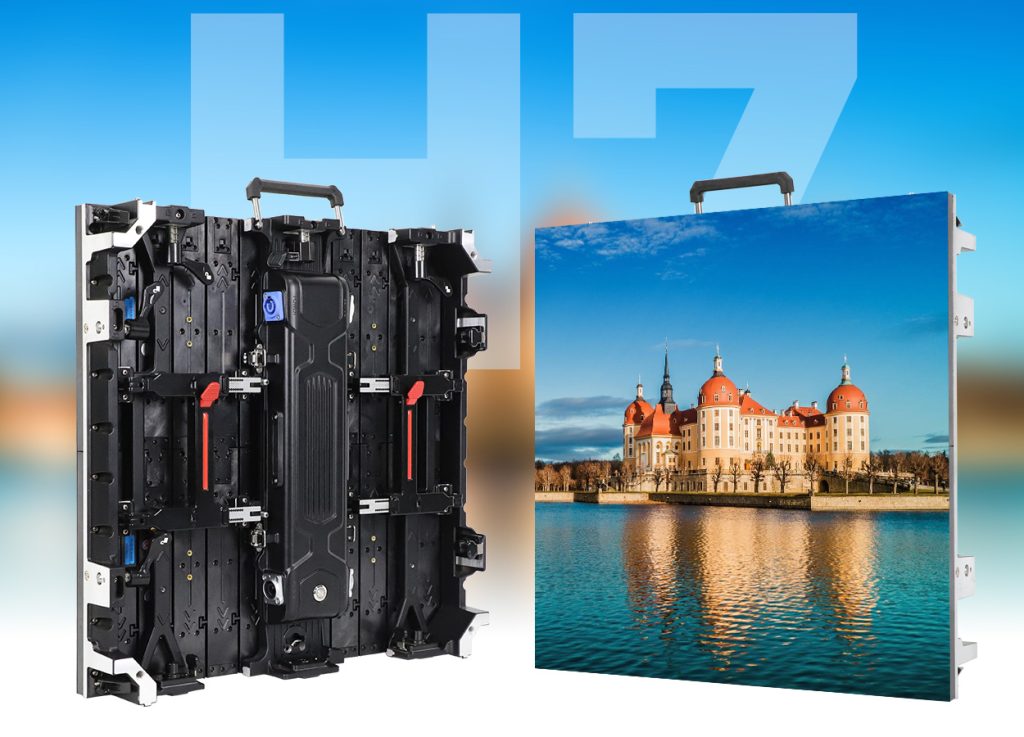
Do not infer a drop rating, a permitted impact load or a damage-free transport guarantee from the presence of a protector. Those claims require separate evidence for the delivered configuration. Similarly, a protector should not be treated as a lifting point, a cabinet lock or a structural support unless the manufacturer explicitly approves that use.
The purchasing decision is therefore broader than “does the panel have guards?” It is whether the guards are practical for the movements your crew repeats between case, staging area and wall. A feature that crews cannot identify or operate consistently needs further explanation before acceptance.
Check the deployed and folded positions
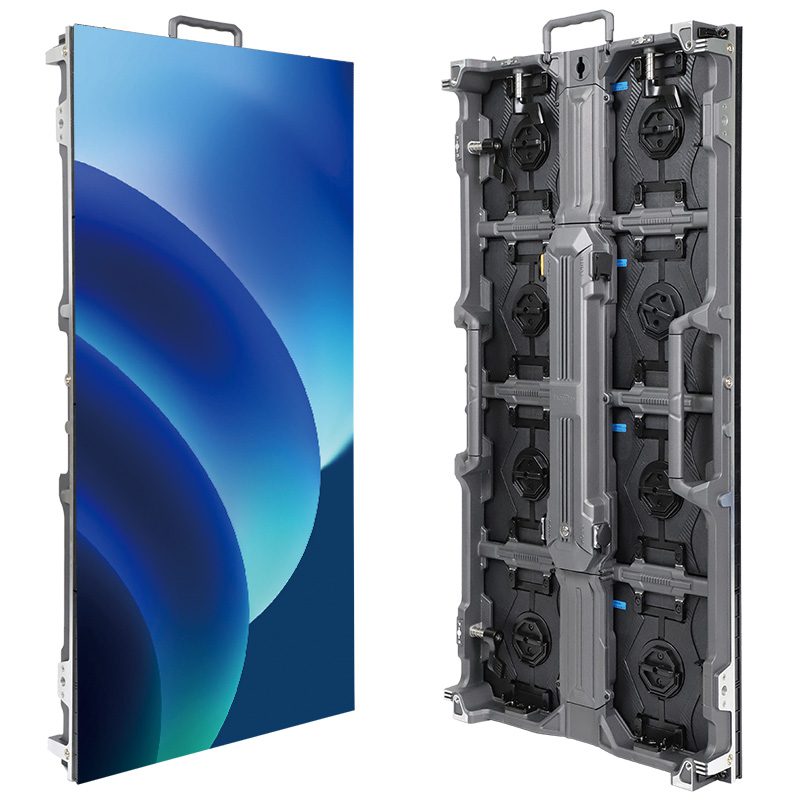
Review rental LED cabinet corner protection from the front, rear and side. A rear photograph alone may not show how far the guard projects beyond the LED surface. Ask for close-ups of the same corner in both positions, with the cabinet supported as directed by the supplier.
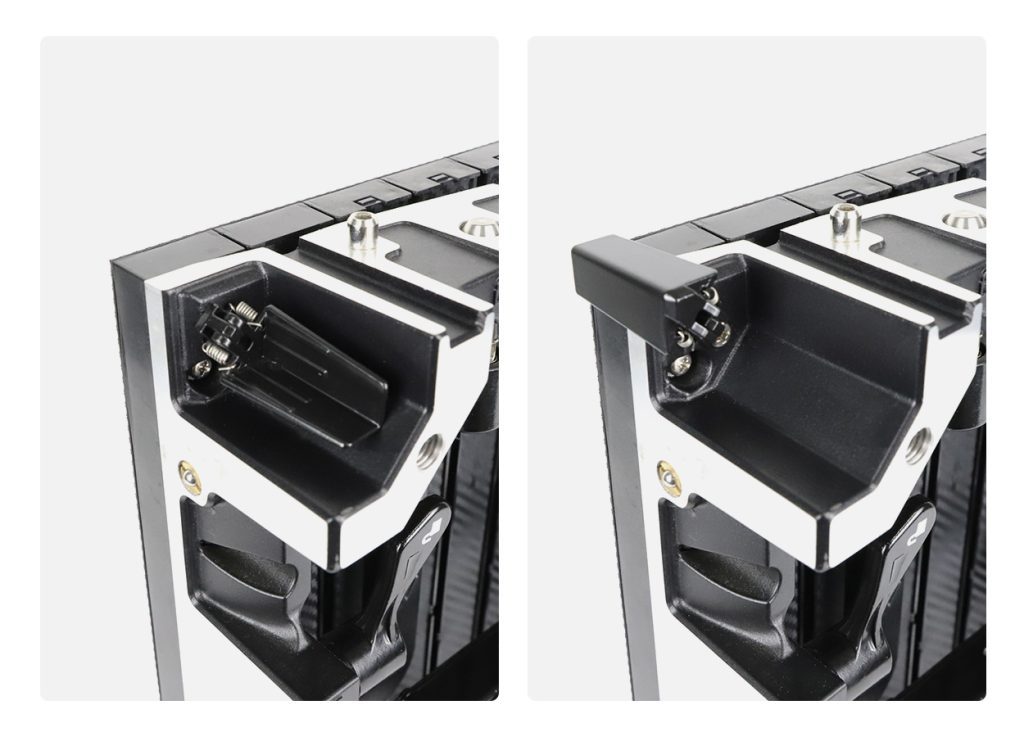
In the protective position, look at the area the guard actually covers and ask how it is retained. In the folded position, check that it clears the cabinet connection and does not press on the module face. Avoid judging fit from an empty frame when your order will arrive with modules installed.
Operate the mechanism through the supplier’s normal demonstration sequence. It should be possible to tell whether it has reached the required position without forcing it. If movement is unclear, ask the supplier to explain the latch, spring or stop used on that version; do not assume all mechanisms work alike.
Curved cabinets add another clearance question. Review the intended assembly geometry as well as a flat pair. The EA500H7 product information includes curved configurations, but the permitted geometry and hardware settings still need confirmation for your order.
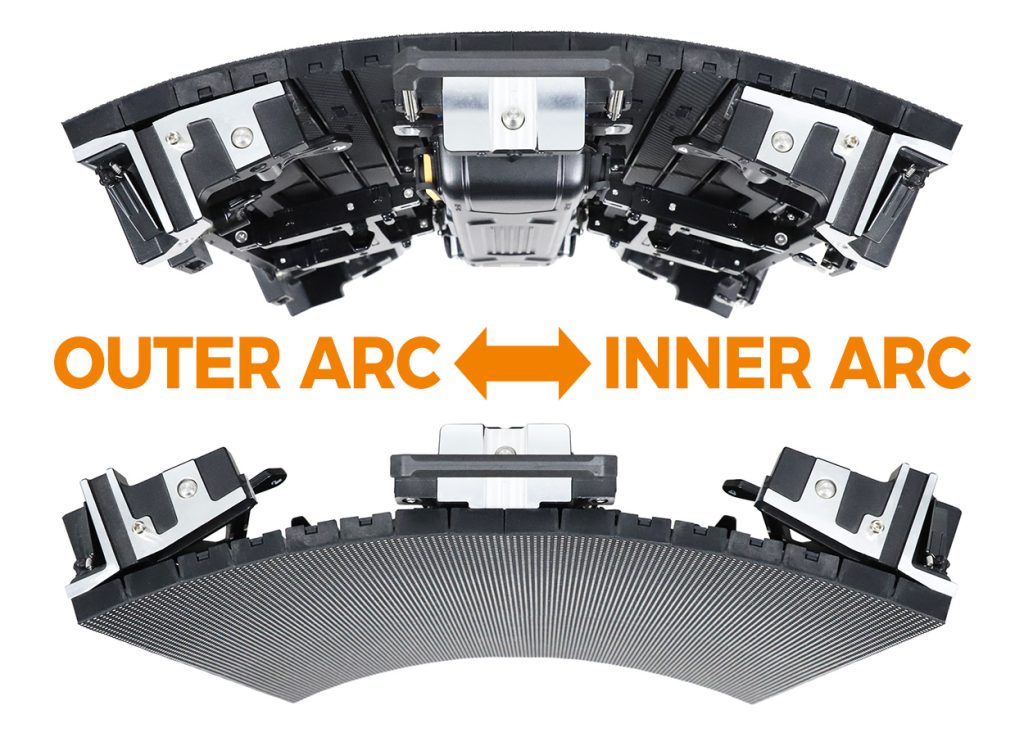
Official demonstration: place the detail in context
The official EagerLED video below introduces the EA500H7, shows its cabinet and curved display arrangements, and discusses the corner protection near the end. It is a product demonstration, not an impact test. Use it to identify the feature, then request a close-up demonstration of the exact panels in your quotation.
For a purchase review, a useful follow-up video shows one cabinet coming out of its case, the protector changing position, and the panel joining its neighbor. Ask for an uninterrupted view of those movements. That makes the handling instruction easier to understand than separate still photographs of a finished wall.
Use one sample review to resolve the open questions
Assess rental LED cabinet corner protection with the proposed cabinet, its neighboring panel and the intended case. Record observations against the actual configuration. The following checks are procurement observations, not a substitute for the manufacturer’s handling or structural instructions.
| Stage | What to observe | What to record |
|---|---|---|
| Remove from case | Access to approved handles; protector and module clearance from dividers | Required protector position and removal sequence |
| Prepare for assembly | Clear movement between positions without forcing the mechanism | How the crew recognizes the correct final position |
| Join panels | Guard clears the neighboring cabinet and display face in the intended geometry | Photographs of the approved joint and hardware positions |
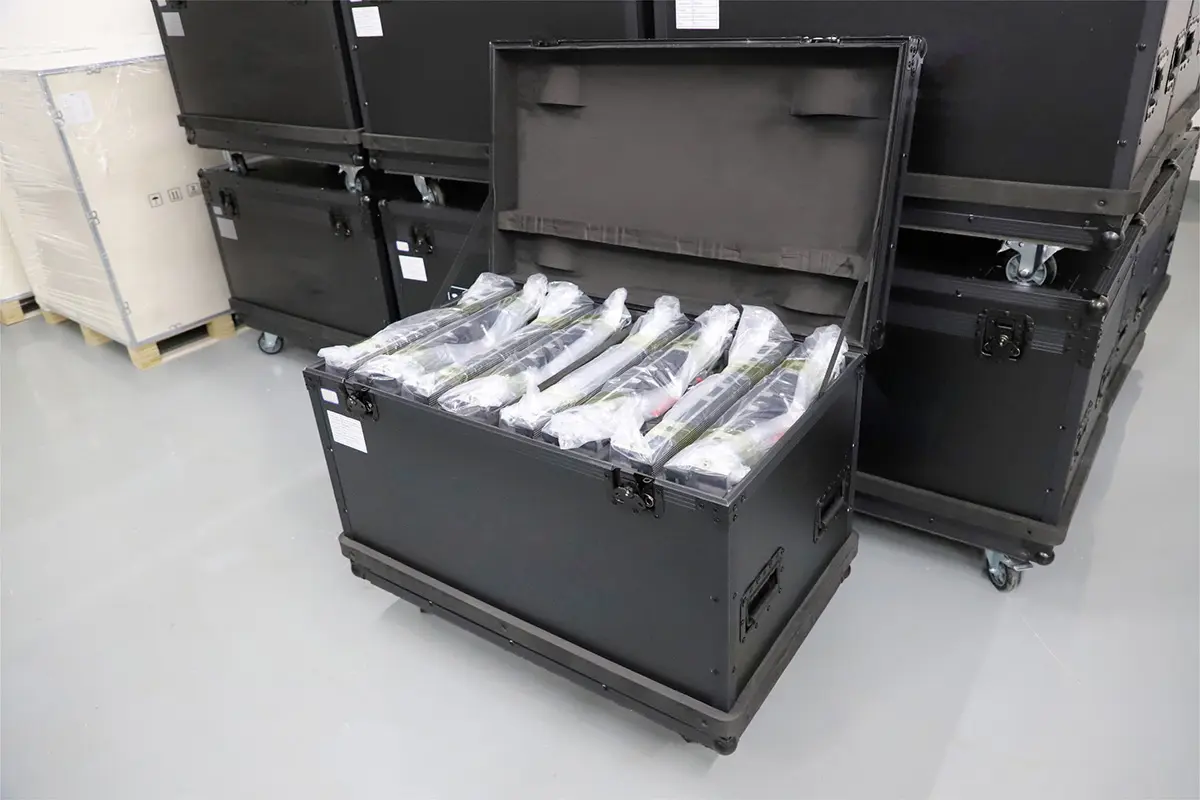
| Return to case | Cabinet seats normally; lid and dividers do not force the protector or module | Case model, insert layout and packing orientation |
| Inspect after handling | Compare corner hardware and module edges with the starting condition | Any loose part, visible contact or unresolved fit question |
Stop the review if a lid must be forced shut or a guard touches the display face unexpectedly. Ask the supplier to resolve the fit before repeating the sequence. Do not improvise a drop test or deliberately load the module edge to find a failure point.
A case dimension on its own cannot settle the packing question. The insert shape, divider spacing and cabinet orientation affect where contact occurs. For the wider transport specification, use the rental-fleet spare-parts checklist alongside the case and handling documents, keeping packing equipment separate from replacement electronics.
Save the accepted photographs with the cabinet model and hardware revision. When repeat orders arrive, compare their corner assemblies with that record. If a mechanism changes, ask whether the operating sequence, case fit or spare-part reference also changes.
Put replacement hardware in the quotation
Rental LED cabinet corner protection is also a serviceability question. Before buying a fleet, ask whether the protector is supplied separately, as a complete corner assembly, or only with a larger frame component. Availability and the approved replacement method must be confirmed; a similar-looking part is not enough.
Request the part identifier, supported cabinet revision, included fasteners and any left/right or position-specific differences. Ask who may perform the replacement and whether it requires module removal. If the supplier has not established a field replacement procedure, do not assume your crew can safely substitute generic hardware.
Keep repair scope separate from protection. After an incident, a new guard does not establish that the module, frame or connection hardware is undamaged. Have the affected panel assessed through the approved service process before returning it to use.
For price comparison, list the cabinet package, transport case and replacement corner assemblies as separate quotation items. This reveals what each offer actually includes without inventing a universal spare quantity or expected failure rate. Choose stock quantities with the supplier using fleet size, service access and the planned deployment schedule.
Buyer questions
Can I add generic corner protectors to cabinets I already own?
Only after the cabinet manufacturer confirms the attachment and clearance. Matching external dimensions does not establish screw length, mounting strength, module clearance or case fit. Send the cabinet identity and corner photographs before requesting a retrofit.
Does a guard make GOB or other module protection unnecessary?
No direct substitution should be assumed. A corner mechanism and a module surface treatment address different parts of the design. Confirm what the selected module construction provides and assess it separately from handling hardware.
Should rental LED cabinet corner protection stay extended inside every flight case?
There is no universal position for every cabinet and insert. Obtain the packing instruction for the supplied combination and check a loaded case. A protector that conflicts with an insert needs a resolved packing specification, not an improvised forced fit.
Prepare a cabinet enquiry your supplier can act on
To review rental LED cabinet corner protection for a new fleet, send your intended screen sizes, indoor or outdoor use, viewing distance, destination country and purchase timing. Include the proposed cabinet model, flat or curved layouts, existing case details and any corner photographs from equipment you want to match.
Ask EagerLED to confirm the delivered protector design, demonstrate its handling positions and identify the available replacement parts. These details make the quotation easier to compare and give the receiving crew a clear reference when the panels arrive.
Share the cabinet and transport requirements so the equipment package can be checked together.
 LED Module Mask Replacement: Match the Part Before Buying