
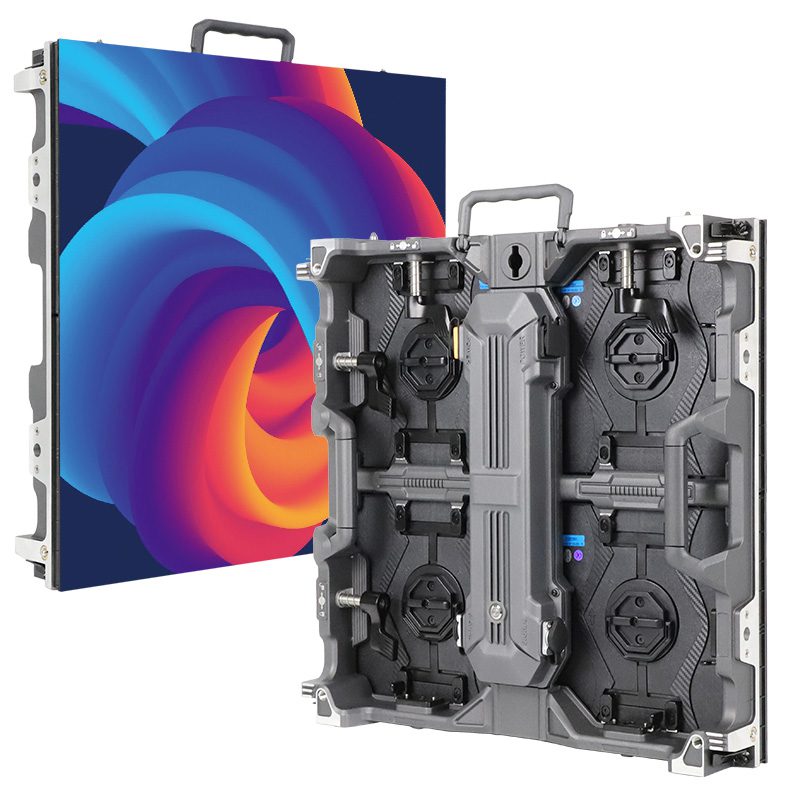
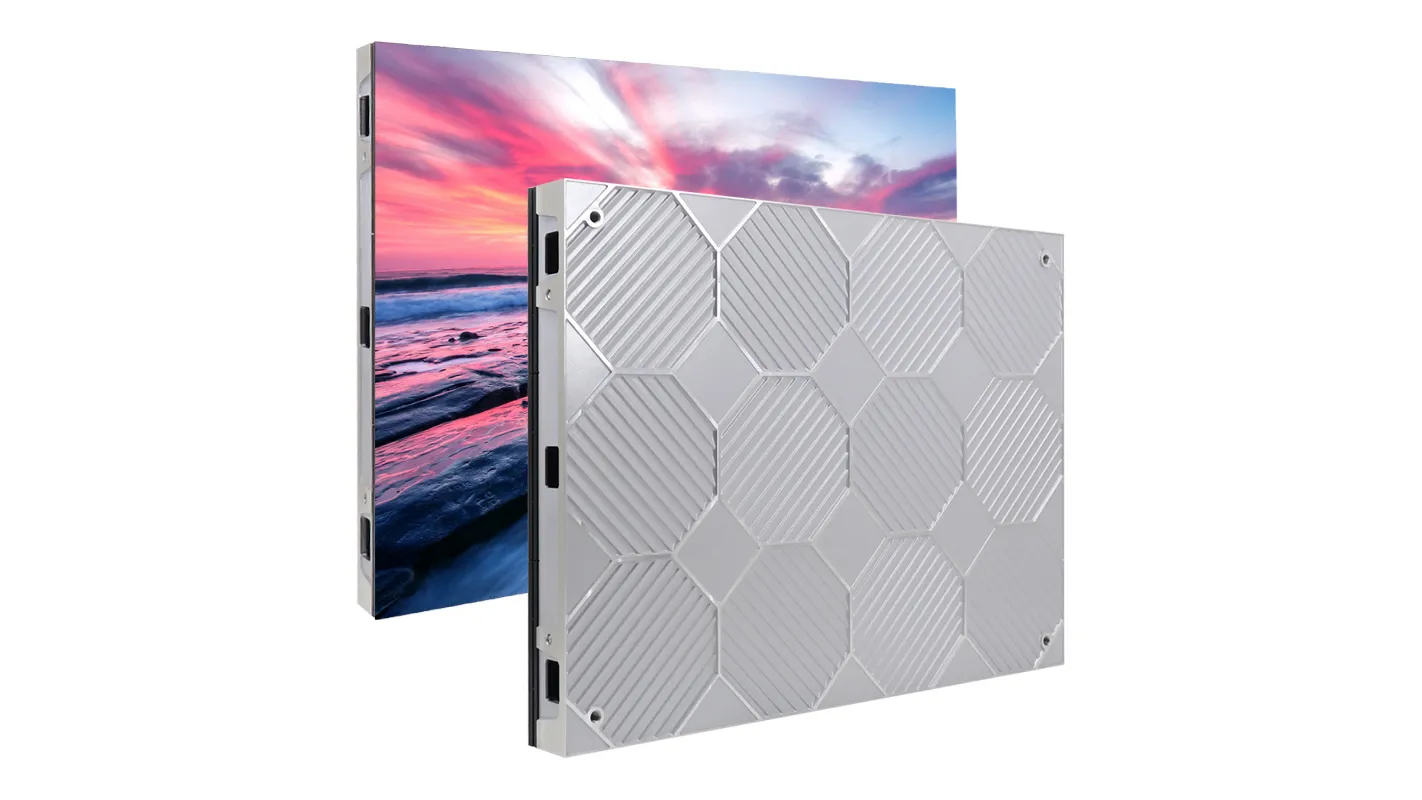
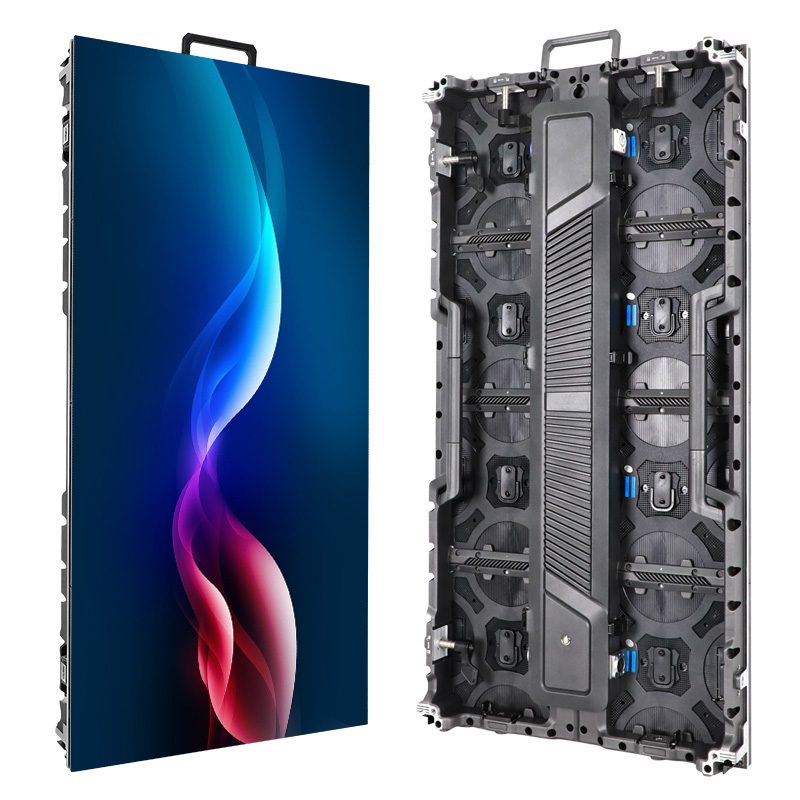
Choosing a dimension LED specification is not simply filling the available wall. The display must serve the farthest and nearest viewers, preserve the content ratio, and fit an exact module or cabinet grid. This guide turns those requirements into a practical specification.
1. Define Dimension LED Before Comparing Products
Dimension LED may mean the active screen, module, cabinet, or installed envelope. Record each separately because the frame, trim, cabling, and service space enlarge the final installation.
1.1 Separate Active Area From Installed Envelope
For the active image, record:
- Width × height, stated in millimeters or meters
- Area = width × height
- Aspect ratio = width ÷ height
The envelope also includes depth, structure, ventilation, and service clearance. Reliable drawings show front, side, and section views.
1.2 Distinguish Modules, Cabinets, and Pixels
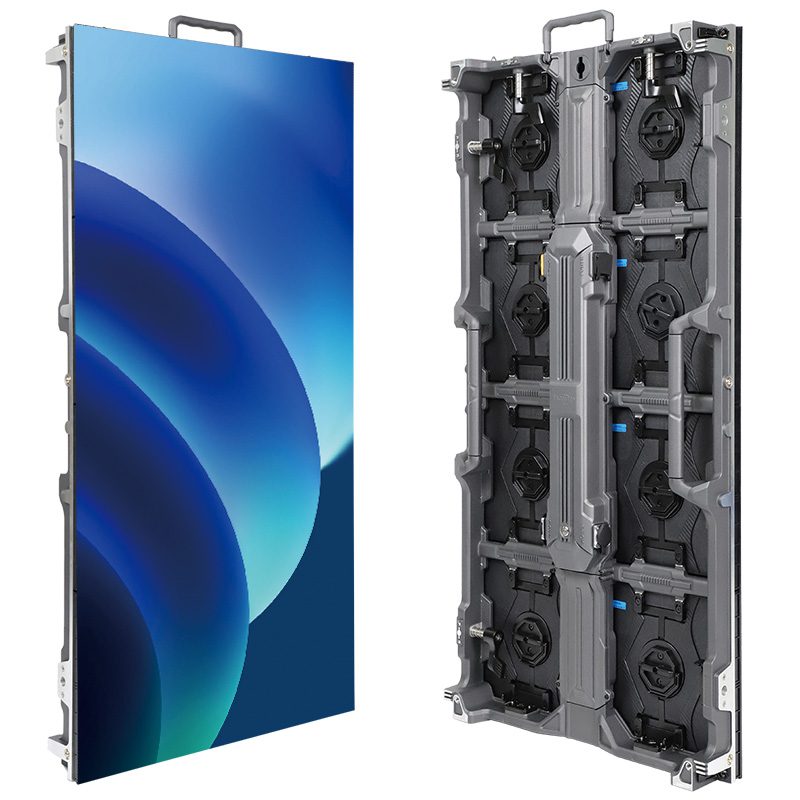
A module is the replaceable LED tile; modules mount in cabinets, and cabinets form the wall. Pixel pitch is the center-to-center pixel spacing in millimeters.
For a rectangular screen with one pitch in both directions:
Horizontal pixels = active width (mm) ÷ pixel pitch (mm)
Vertical pixels = active height (mm) ÷ pixel pitch (mm)
The results, module counts, and cabinet counts must be whole numbers. This integer grid converts a desired size into a buildable display.
2. Choose Dimension LED for Audience and Content
Choose dimension LED values from the audience and content before opening a product catalog.
2.1 Size the Image for the Farthest Viewer
Screen height matters more than diagonal when people must read text. As a planning check, keep the farthest viewer within about six screen heights for detailed presentations or eight to ten for large video and simple signage. These are heuristics; small fonts, weak contrast, and oblique viewing may require more height.
At an 18 m farthest seat, text may need about 3 m of active height: 18 ÷ 6 = 3. Then check sightlines and cabinets.
2.2 Use the Nearest Viewer to Narrow Pixel Pitch
A first-pass rule sets minimum viewing distance in meters near the numerical pitch in millimeters: evaluate P2.5 from about 2.5 m and P6 from about 6 m. Confirm the shortlist with representative content on a full-size sample.
| Pixel pitch | Practical starting distance | Typical setting | Dimension LED implication |
|---|---|---|---|
| P1.2-P1.5 | 1.2-3 m | Control rooms, meeting spaces | High pixel and processing load |
| P1.8-P2.5 | 2-6 m | Auditoriums, retail, indoor walls | Strong indoor detail-to-cost balance |
| P2.6-P3.9 | 3-10 m | Stages, worship, rental events | Common rental formats simplify sizing |
| P4.8-P6 | 5-18 m | Large venues, medium-range outdoor | Fewer pixels per square meter |
| P8-P10 | 8 m and beyond | Roadside and building advertising | Not intended for close text inspection |
2.3 Match the Aspect Ratio to Real Content
For 16:9 video, a 16:9 canvas limits scaling, cropping, and unused borders. Portrait media, menu boards, and ribbons need different ratios. Obtain the content resolution and safe zones first.
If width is fixed, height = width × 9 ÷ 16 for 16:9. Then round both dimensions to cabinet increments. A slightly smaller native canvas is better than a nominal dimension LED target requiring cropped cabinets.
3. Match Dimension LED Pixel Pitch and Resolution
Physical size controls visibility; resolution controls reproduced detail. Evaluate both together.
3.1 Calculate Native Resolution and Pixel Load
Suppose an active wall is 5,120 mm × 2,880 mm at P2.5:
- Horizontal resolution: 5,120 ÷ 2.5 = 2,048 pixels
- Vertical resolution: 2,880 ÷ 2.5 = 1,152 pixels
- Total pixel load: 2,048 × 1,152 = 2,359,296 pixels
This canvas is exactly 16:9 and can scale 1920 × 1080 content modestly. Also confirm processor capacity, maximum canvas dimensions, per-output loading, frame rate, color depth, and redundancy.
3.2 Avoid Paying for Invisible Resolution
A smaller pitch raises pixel count with the inverse square of pitch. At the same dimension LED size, P2.5 has about four times as many pixels as P5, increasing data hardware and cost.
Choose the coarsest acceptable pitch. When two remain viable, compare full-size samples with actual media.
3.3 Check Camera and Broadcast Requirements
For on-camera stages, refresh, scan method, shutter compatibility, grayscale, and moire may matter more than a minor size change. Test the production camera at intended settings. A broadcast dimension LED specification must state these requirements; pixel count alone cannot prevent artifacts.
4. Convert a Dimension LED Target Into Buildable Sizes
Round target width and height to complete modules or cabinets, then recheck ratio and resolution.
4.1 Calculate Cabinet Counts Before Ordering
Use these equations:
Cabinets across = target width ÷ cabinet width
Cabinets high = target height ÷ cabinet height
Exact active width = whole cabinets across × cabinet width
Exact active height = whole cabinets high × cabinet height
Use the exact cabinet drawing for this dimension LED calculation. If a result is fractional, compare the nearest whole-cabinet options. Some systems mix 500 × 500 mm and 500 × 1,000 mm frames, but never assume a cabinet can be cut or substituted without manufacturer documentation.
4.2 Select Module and Cabinet Formats for the Use Case
Choose a dimension LED building block that suits the installation and service model.
| Format | Common role | Sizing advantage | Point to verify |
|---|---|---|---|
| 320 × 160 mm module | Fixed systems | Regular 2:1 repair unit | Cabinet grid and mask orientation |
| 250 × 250 mm module/panel | Fine-pitch or creative walls | Symmetric grid | Pitch and edge treatment |
| 640 × 480 mm cabinet | Fixed indoor | 8 × 6 units form a 16:9 wall | Service depth and wall flatness |
| 500 × 500 mm cabinet | Rental and stages | Simple handling | Locks and corner protection |
| 500 × 1,000 mm cabinet | Large rental walls | Faster assembly | Rigging and weight distribution |
| 960 × 960 mm cabinet | Fixed outdoor advertising | Efficient large-area coverage | Wind load, access, and lifting |
Verify drawings, holes, weight, power/data entry, seam tolerance, and service direction for the exact batch; similar product names do not guarantee compatible mechanics.
4.3 Resolve Ratio Errors Intentionally
After rounding, recalculate the ratio. If it differs from the source, deliberately letterbox, crop, redesign the canvas, or change the cabinet count. Document the choice before commissioning.
For a curve, state whether width is arc, chord, or projected width, plus the radius and cabinet angle. These dimension LED values can differ substantially.
5. Check Dimension LED Installation Constraints
Validate the whole installation before approving the dimension LED drawing.
5.1 Survey the Site and Sightlines
Measure the opening at several points and record the smallest usable width and height, mounting elevation, sightlines, access routes, rigging points, and obstructions.
Do not invent a universal perimeter gap. It depends on the frame, finish, access, construction tolerance, ventilation, and fire design. Signed shop drawings must separate active area, frame, and opening.
5.2 Verify Structure, Power, Heat, and Service
Multiply cabinet weight and maximum power by the final count, then add structure, cabling, and controls. Update these dimension LED load totals whenever the cabinet count changes. Qualified professionals should approve support and electrical designs using maximum rated loads.
Confirm airflow and safe maintenance access. Rear-service screens may need a protected corridor; front service reduces depth but does not eliminate technician access. These needs can justify a smaller active wall.
5.3 Balance Size Against the Whole Budget
Compare total system cost, including structure, processing, power distribution, spares, freight, labor, calibration, content changes, and service access. Area-driven costs rise with square meters; pixel-driven costs can rise faster as pitch decreases.
Keep either dimension LED size or visual performance constant when comparing bids. Different pitch, brightness, cabinet format, redundancy, and access make same-size quotes unequal.
6. Work Through a Dimension LED Example
Consider an auditorium with a 5.4 m × 3.2 m opening, viewers from 3 to 17 m, and 16:9 presentation video. The candidate is P2.5 with 640 × 480 mm cabinets.
6.1 Build and Validate the 8 × 6 Cabinet Option
| Check | Calculation | Result |
|---|---|---|
| Cabinets across | 8 × 640 mm | 5,120 mm |
| Cabinets high | 6 × 480 mm | 2,880 mm |
| Aspect ratio | 5,120 ÷ 2,880 | 1.7778, or 16:9 |
| Horizontal pixels | 5,120 ÷ 2.5 | 2,048 px |
| Vertical pixels | 2,880 ÷ 2.5 | 1,152 px |
| Total area | 5.12 × 2.88 | 14.7456 m² |
| Farthest-view ratio | 17 ÷ 2.88 | 5.9 screen heights |
| Opening allowance | 5.4 – 5.12; 3.2 – 2.88 | 280 mm wide; 320 mm high |
The dimension LED result fits, matches 16:9, meets the six-height planning check, and places the nearest viewer beyond the rough P2.5 minimum. The leftover space is not automatically clearance; allocate it among structure, trim, tolerance, airflow, and access.
6.2 Compare Alternatives Before Freezing the Design
An 8 × 5 array creates a wide 5.12 m × 2.40 m canvas with less image height; 9 × 6 is 5.76 m wide and cannot fit. Viewing, content, and construction therefore support 8 × 6.
Before ordering, request cabinet drawings, pixel map, processor plan, load schedules, elevations, service method, and a content test. This makes the dimension LED choice auditable.
7. Use a Dimension LED Final Specification Checklist
Write the following items into the request for quotation and approval drawing:
- Active width, height, area, ratio, and resolution
- Installed width, height, depth, and weight
- Pitch plus module and cabinet dimensions
- Cabinet resolution, quantity, and grid
- Viewing range, content type, and aspect ratio
- Processor limits, inputs, redundancy, and camera needs
- Brightness, environment, and viewing angle
- Structure, power, cooling, cabling, and service access
- Spares and batch compatibility
- Approved drawings with the opening and clearances
This checklist makes dimension LED comparisons objective and exposes mismatched assumptions before fabrication.
8. Dimension LED Frequently Asked Questions
8.1 What Does Dimension LED Mean?
Dimension LED commonly means the width and height of a screen, module, or cabinet. State the component and whether the value is active image or overall envelope.
8.2 How Do I Calculate LED Screen Dimensions From Resolution?
Multiply each pixel count by pitch to obtain width or height in millimeters. Then confirm complete module and cabinet increments.
8.3 Should I Choose Pixel Pitch or Screen Size First?
Estimate height from the farthest viewer and content, then shortlist pitch from the nearest viewer. Refine both until the grid, resolution, opening, and budget align.
8.4 Is a 16:9 LED Wall Always the Best Choice?
No. In dimension LED planning, 16:9 suits standard video, but portrait media, scoreboards, ribbons, and scenic canvases may need other ratios. Agree on scaling or cropping in advance.
8.5 Can LED Cabinets Be Cut to Fit an Exact Wall Size?
Normally not. Choose a whole-unit arrangement or a system with documented half-size or custom units. Never assume a fractional cabinet is available.
8.6 How Much Space Should Be Left Around an LED Display?
There is no universal clearance. Structure, trim, ventilation, cables, service direction, and local requirements determine it. Use approved manufacturer and installer drawings.
8.7 Which Dimension LED Information Should a Supplier Confirm?
Ask for active and overall dimensions, grids, resolution, depth, weight, maximum power, processing load, service access, mounting, and tolerances on signed drawings before production.
9. Dimension LED Conclusion
The best dimension LED specification is not the largest screen or the smallest pitch. It is the whole-cabinet layout that meets viewing, content, resolution, structure, power, service, and budget requirements together. Approve it only after active and overall dimensions, the pixel map, load schedules, clearances, and acceptance tests are documented.
For a manufacturer-level feasibility review, EagerLED provides indoor, rental, and outdoor LED display systems and can check cabinet grids, processor loads, and installation drawings. This input should complement sample testing and approval by the project’s AV, structural, and electrical professionals.
 Black LED Display vs White LED Display: A Buyer’s Guide
 Top 10 Best Cinema Screens in the World