
Put a retail LED display in your store window and something changes. People slow down. They look. Walk through any mall and the shops that grab you aren’t the ones with the nicest posters. They’re the ones with a bright screen flickering above the entrance.
This guide covers the types, the costs, how to pick one without overpaying, and which mistakes trip up most first-time buyers.
Table Of Contents
1.What Is a Retail LED Display?
1.1 Definition of Retail LED Display
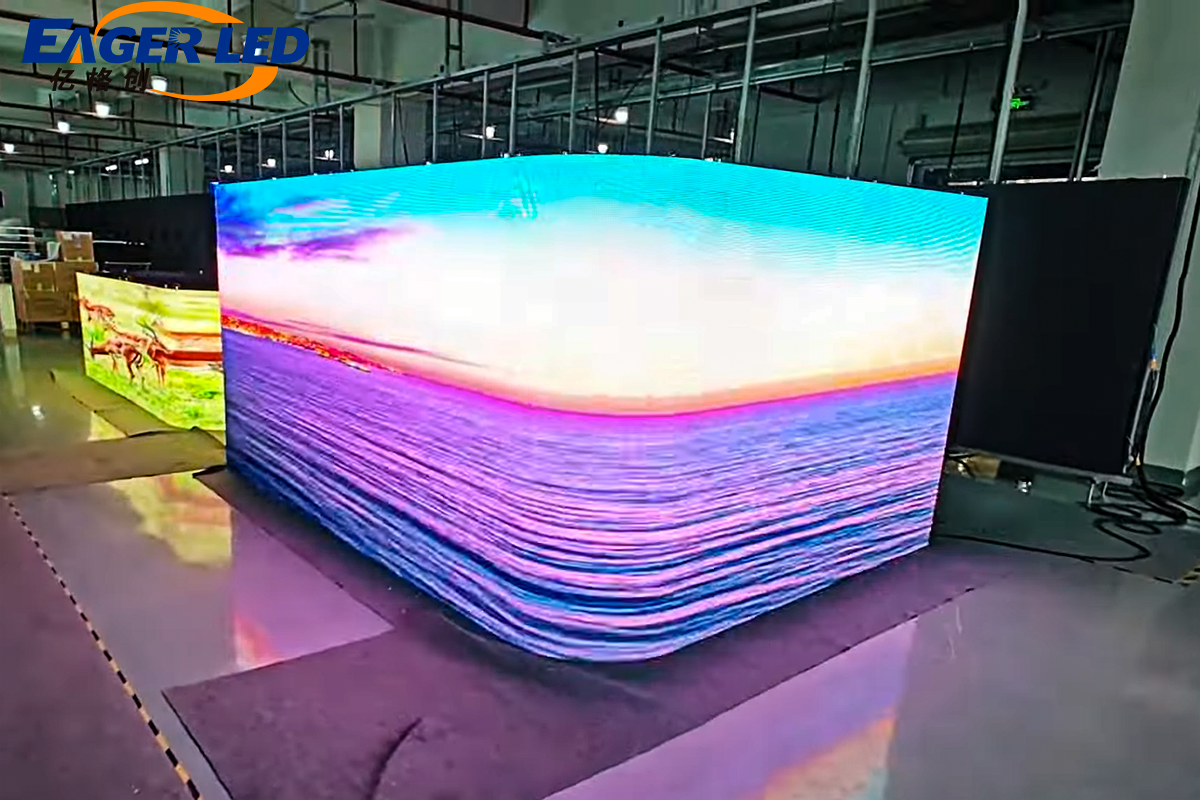
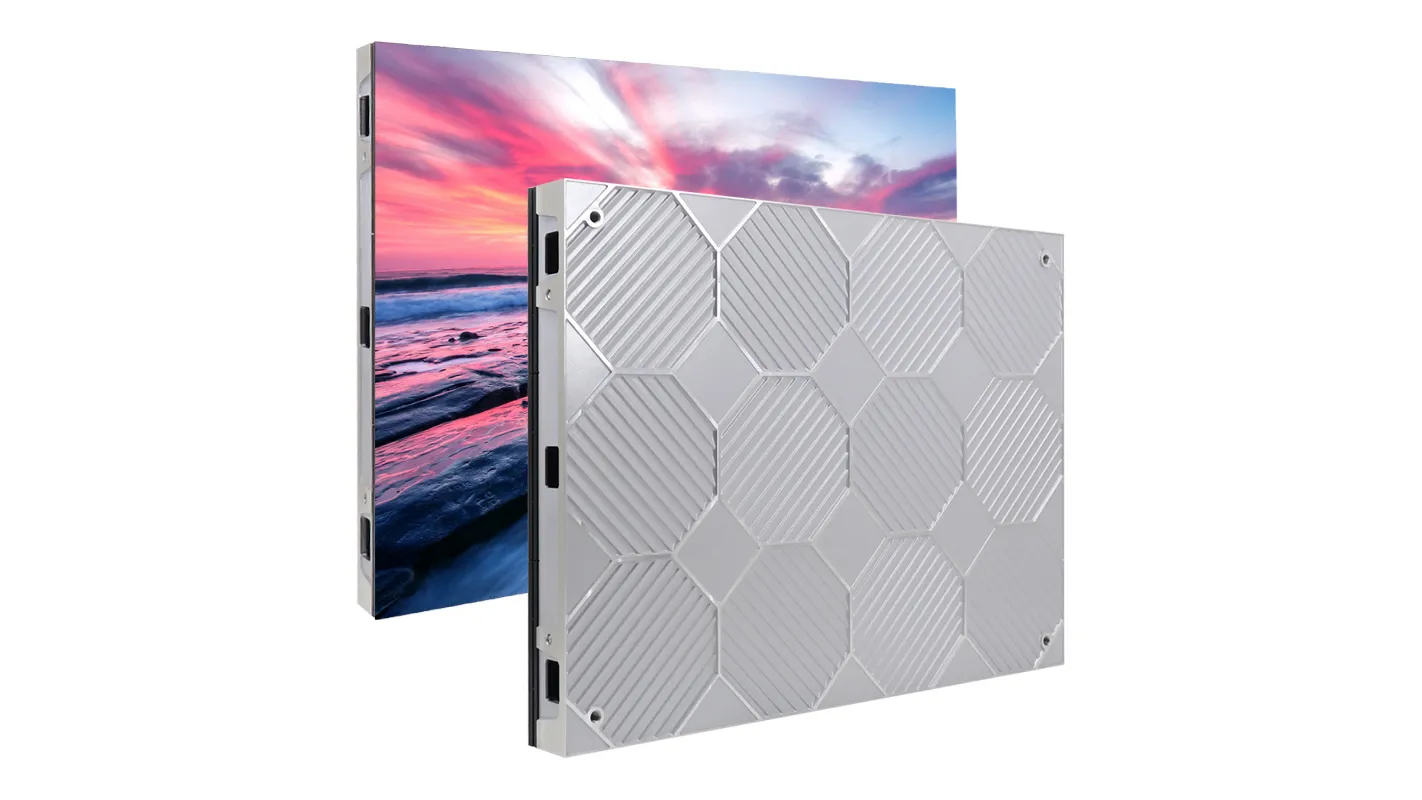
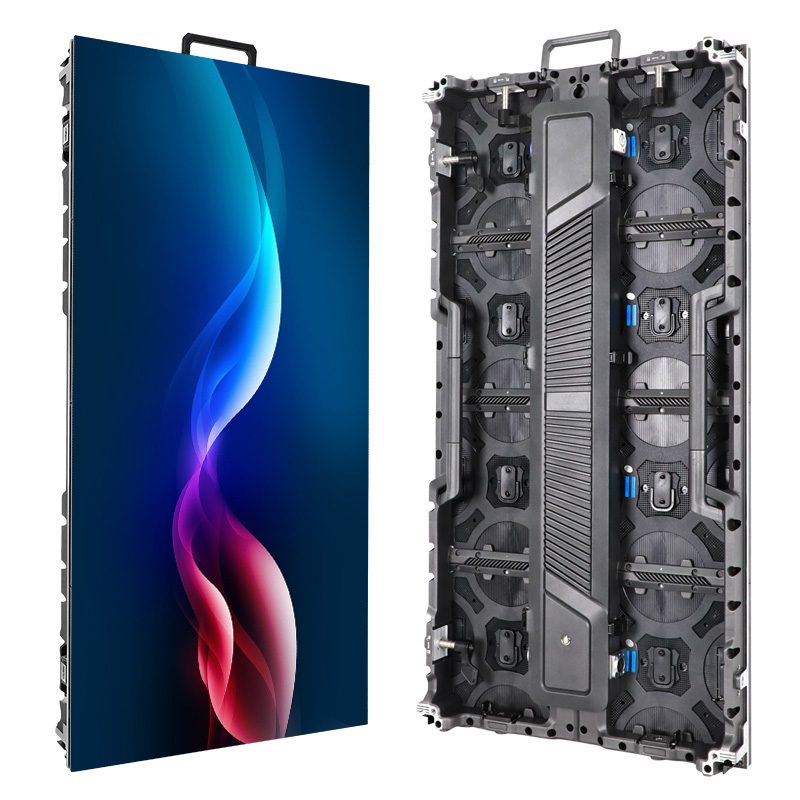
A retail LED display is a digital screen that uses light-emitting diodes (LEDs) to show video, images, or promotional content inside or outside a retail store. Unlike a TV screen, an LED display is built from individual LED modules tiled together. That means it can be any size, any shape, and any resolution the store needs.
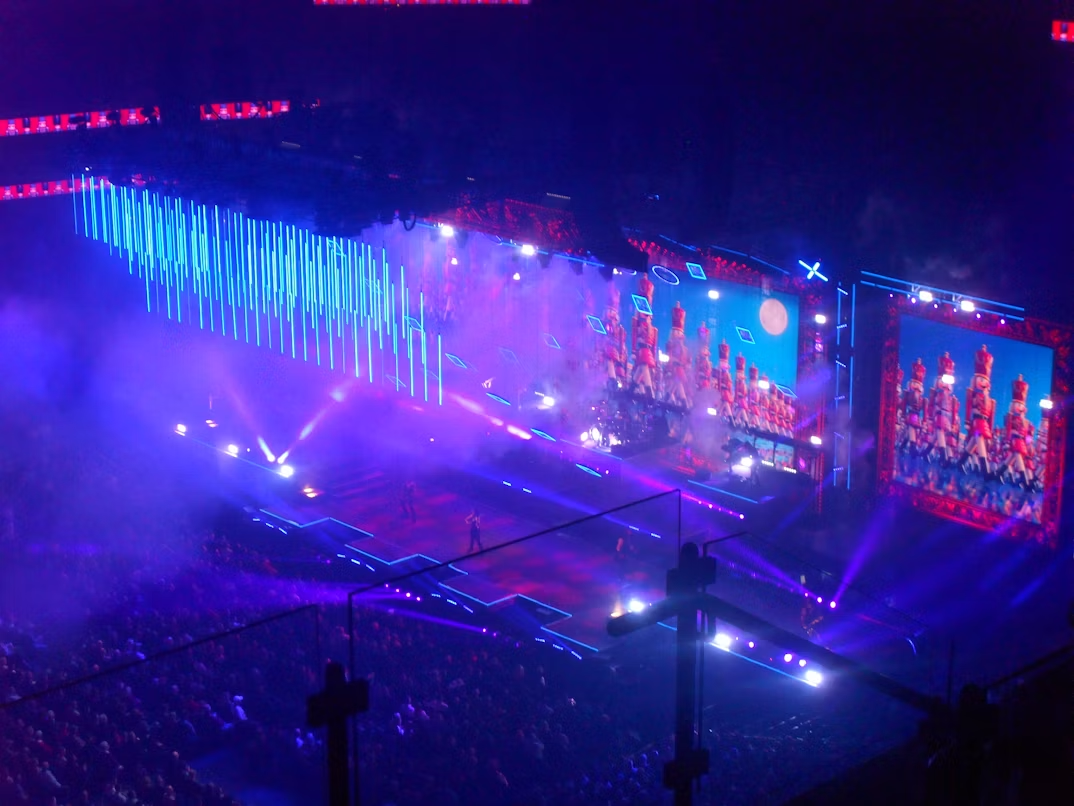
Retailers use these displays for storefront windows, in-store video walls, ceiling-hung screens, shelf-edge strips, and freestanding kiosks. The technology is the same one used in concert backdrops and stadium scoreboards, scaled down for commercial retail environments.
1.2 How Retail LED Display Works
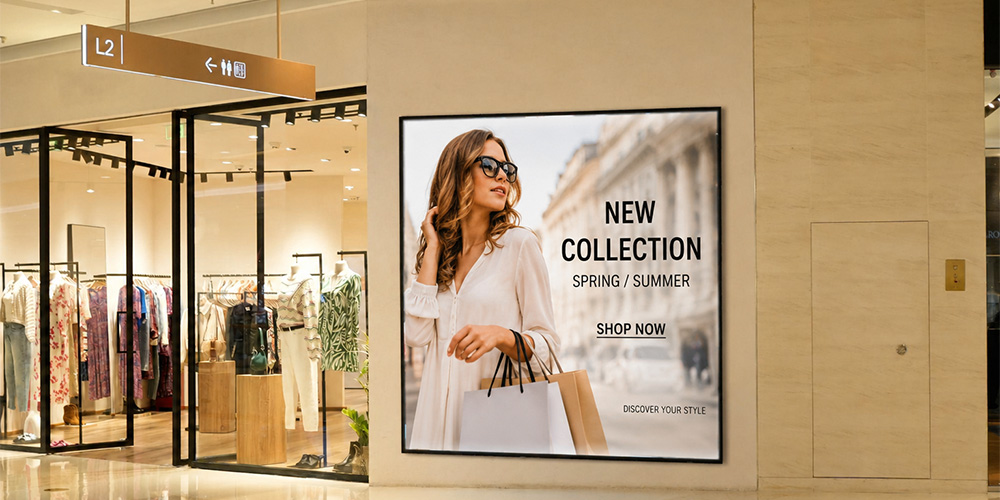
A retail LED display works by turning thousands or millions of tiny LED chips on and off at high speed. Each LED is a pixel or part of a pixel. A controller sends a video signal to the display, and the LEDs light up in the right color and brightness to form an image.
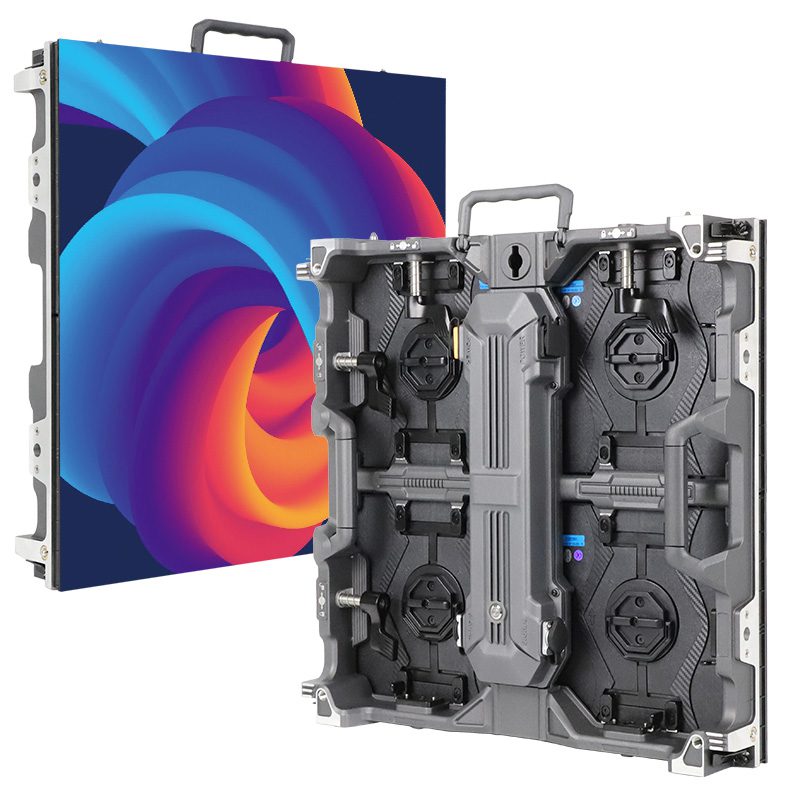
The key components of a retail LED display are the LED modules (the light-emitting panels), the receiving cards (which decode the signal), the sending box or controller (which feeds the content), and the power supply. For a store owner, the only part you interact with day to day is the software that controls what plays on the screen. Everything else runs in the background.
1.3 Retail LED Display vs LCD Display
The difference between a retail LED display and an LCD boils down to how they make light. An LCD screen uses a backlight shining through a liquid crystal layer. A retail LED display uses LEDs that emit light directly.
This gives a retail LED display three practical wins. First, brightness. An LED screen stays visible even in direct sunlight, while an LCD washes out. Second, there are no bezels. Multiple panels tile together into one seamless wall with no black lines. Third, you’re not locked to a 16:9 rectangle. You can build a retail LED display to any dimensions your store needs.
For a small countertop screen, an LCD works fine. For a storefront window, a video wall, or anywhere brightness and size matter, a retail LED display is the better tool.
2.Why Choose a Retail LED Display
2.1 Retail LED Display Attracts More Foot Traffic
A bright, moving screen grabs attention faster than any poster ever will. Anyone who’s walked past a store with a display running knows this instinctively.
When a retail LED display faces the street or sits in a mall corridor, it pulls pedestrians in at a rate that passive window dressing can’t touch.
This works best in high-traffic spots where people decide which store to enter in about two seconds. A well-placed retail LED display makes that decision for them.
2.2 Retail LED Display Enhances Shopping Experience
Inside the store, a retail LED display changes the atmosphere. Instead of printed price tags and cardboard standees, the store feels more modern and curated. It plays out differently depending on the store.
A clothing retailer might run runway footage behind the cash wrap. An electronics store could show product demos on a feature wall. A supermarket often displays daily specials above the produce section. Same technology, completely different feel.
But the real reason stores keep buying them is simpler than novelty. A retail LED display hands you control over the store’s entire visual mood, minute by minute. Change the message for the lunch crowd. Switch it up for evening shoppers. Push a flash sale when foot traffic dips. That’s not something printed signage can do.
2.3 Retail LED Display Increases Product Visibility
Product visibility isn’t just about light levels. It’s about directing attention. A retail LED display behind a product display or integrated into shelving creates a focal point that guides the customer’s eye toward specific merchandise. This is especially useful for new product launches, clearance items, and high-margin goods that benefit from visual promotion.
2.4 Retail LED Display Delivers Long-Term Value
The upfront cost of a retail LED display can run higher than an LCD or printed signage. But over a three-to-five-year period, the economics usually flip. LED modules last 50,000 to 100,000 hours. You don’t reprint anything.
You don’t replace the retail LED display when your promotion changes. One investment covers years of changing content, and the energy efficiency of modern LED chips means the power bill is lower than most store owners expect.
3.Retail LED Display Types
3.1 Indoor Retail LED Display
Indoor retail LED displays are built for controlled lighting environments. Typical brightness ranges from 800 to 2,000 nits, which is more than enough for a store interior. Pixel pitches for indoor retail range from P1.2 to P4, where smaller numbers mean sharper images at closer viewing distances.
Common indoor placements include feature walls behind the checkout counter, ceiling-hung screens above aisles, and standalone kiosk displays near entrances.
3.2 Outdoor Retail LED Display
Outdoor retail LED displays need to fight direct sunlight. Brightness starts at 5,000 nits and goes up to 10,000 nits for sun-facing installations. These displays are weatherproofed (typically IP65 or higher on the front) and built to handle rain, dust, and temperature swings.
A restaurant with a roadside LED menu board, a car dealership with a lot-facing price tower, or a retail store with a building-mounted promotional screen — these are all outdoor retail LED display applications.
3.3 Window Retail LED Display
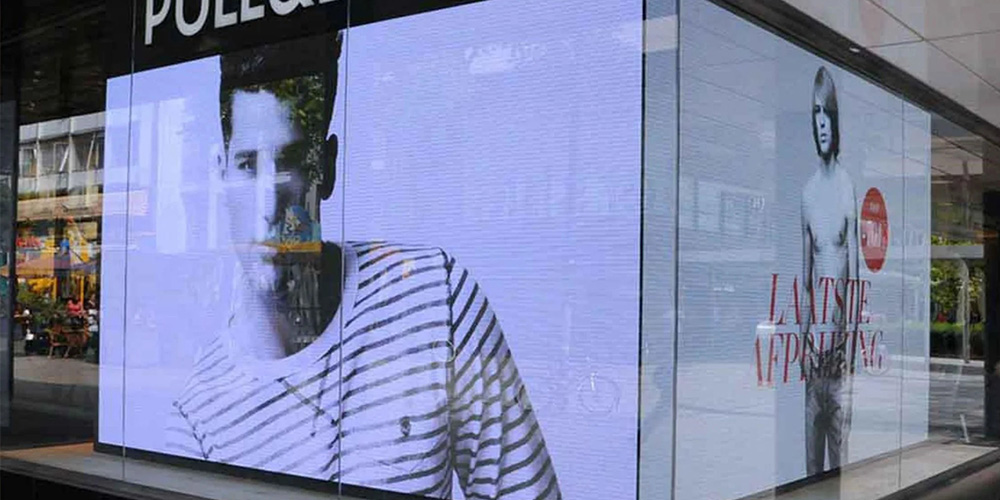
Window retail LED displays sit behind glass, facing outward. They need high brightness (3,000 to 5,000 nits) to overcome the reflection from the store window, but don’t need full outdoor weatherproofing.
These retail LED displays are often mounted flush against the glass or hung just behind it.
This is one of the most popular categories for retail because a retail LED display works 24/7, pulling attention even when the store is closed.
3.4 Transparent Retail LED Display
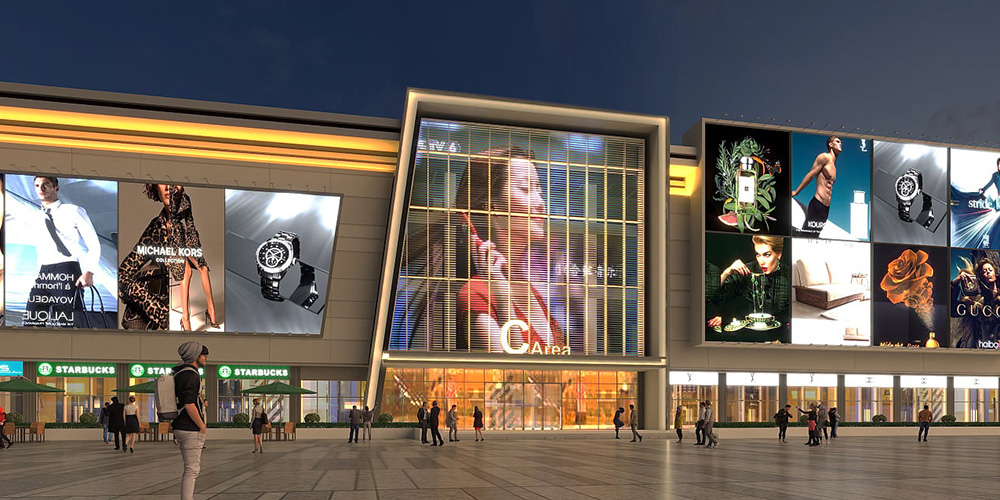
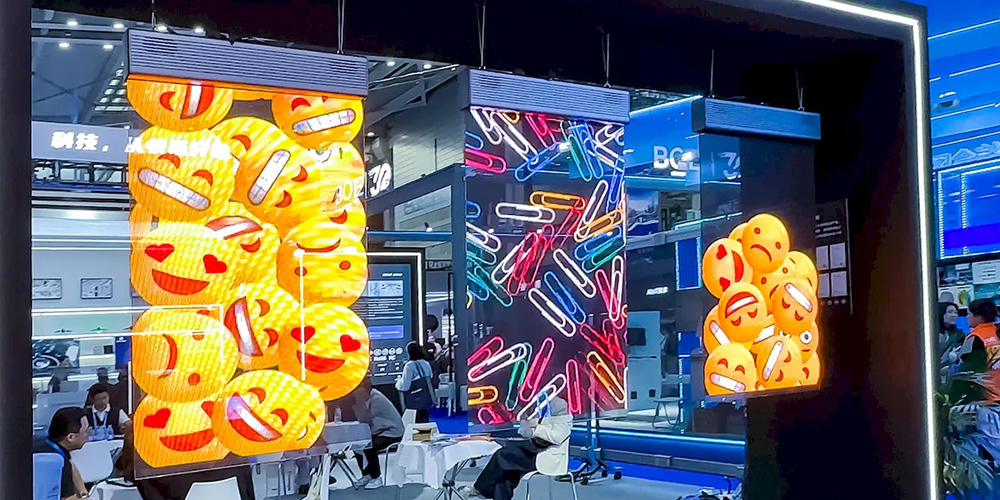
Transparent retail LED displays let light pass through the screen. The LED strips are mounted on a see-through grid, so when the display is off, people can still see into or through the store window. When it’s on, the content appears to float on the glass.
These retail LED displays are popular with flagship stores and luxury retail where the storefront aesthetic matters as much as the message. The downside is lower resolution and higher cost per square meter compared to standard LED panels.
3.5 Retail LED Poster Display
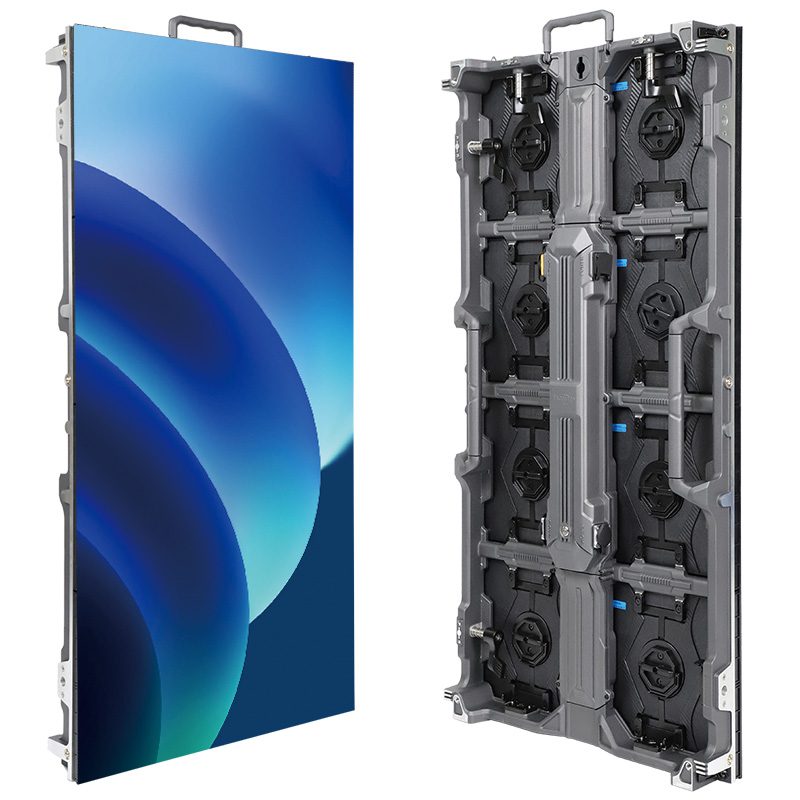
Retail LED poster displays are standalone, floor-standing units that look like tall digital posters. They’re typically 1.5 to 2.5 meters tall, slim, and movable. A clothing store might place one at the entrance. A phone shop might put one next to a new product display.
The advantage is portability. Unlike a wall-mounted or ceiling-hung retail LED display, a poster LED can be moved to wherever the traffic is that day.
3.6 Fine Pixel Pitch Retail LED Display
Fine pixel pitch (FPP) means P0.9 to P1.5. At that density, you can’t pick out individual LEDs even standing right in front of the screen. An FPP retail LED display looks like one giant seamless TV. These go into luxury retail, flagship video walls, and high-end brand experiences where the image has to be flawless.
The price per square meter is steep. But for a brand selling a premium image, anything less looks wrong.
4.Retail LED Display Applications
4.1 Shopping Malls
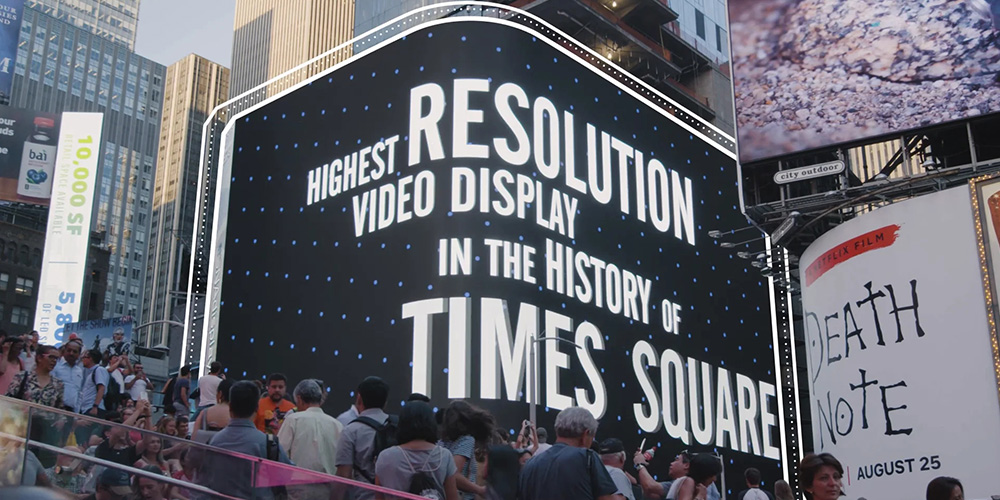
Malls were the first to adopt this at scale and they still account for the most square footage. Atrium screens, directory boards, and storefront displays all fight for the same eyeballs in a noisy visual environment. A mall-based retail LED display usually runs P2.5 to P4 indoors, brightness around 1,500 nits. Nothing exotic, just reliable and bright.
4.2 Clothing Stores
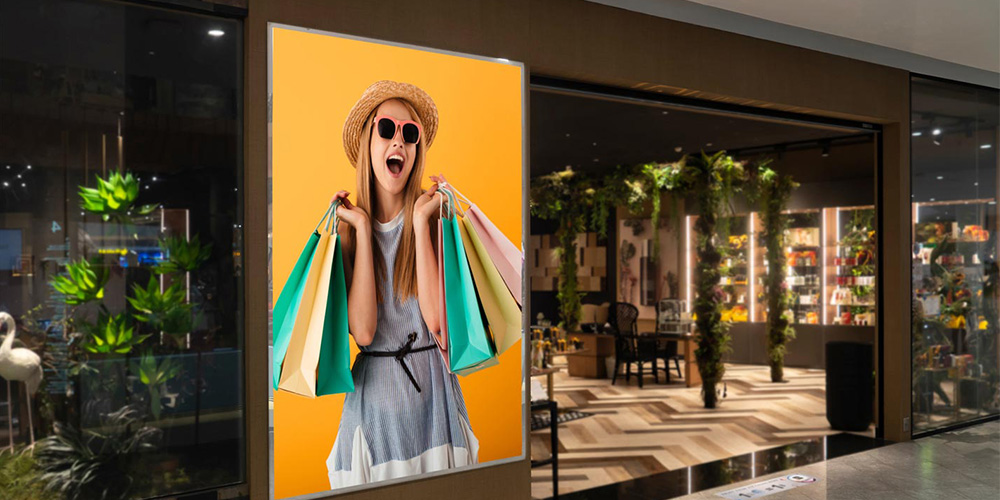
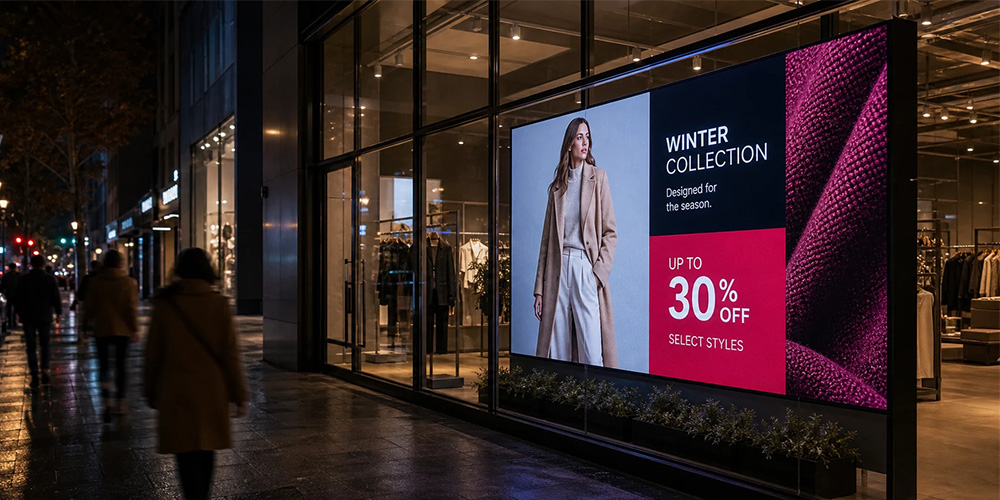
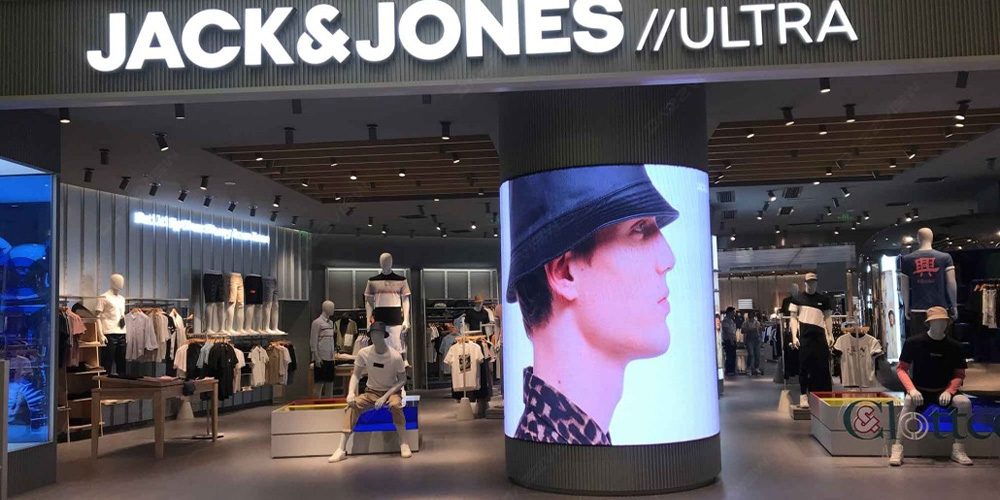
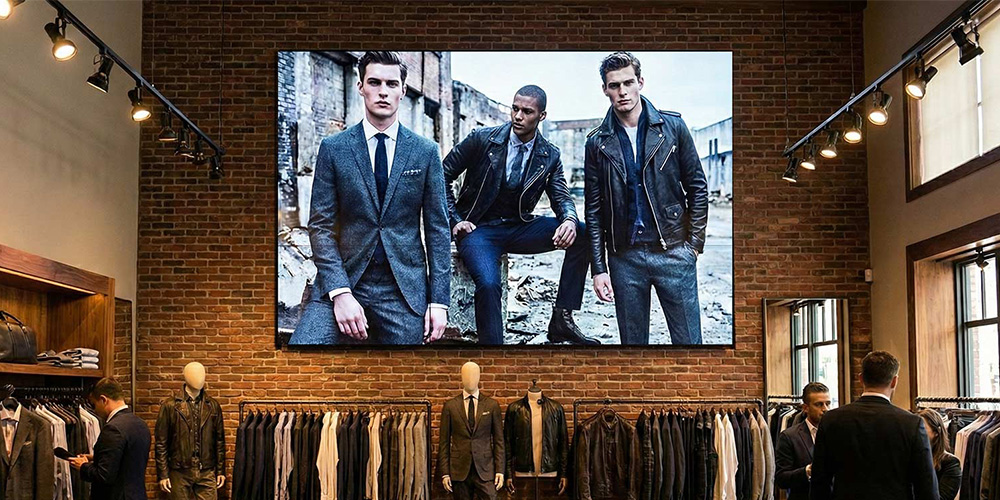
Clothing retailers use retail LED displays to run lookbook footage, catwalk clips, and brand films. The screen usually integrates into the store’s visual merchandising — behind mannequins, above fitting rooms, or as a backdrop to the cash desk. Pixel pitch is usually P2 to P3.
4.3 Supermarkets
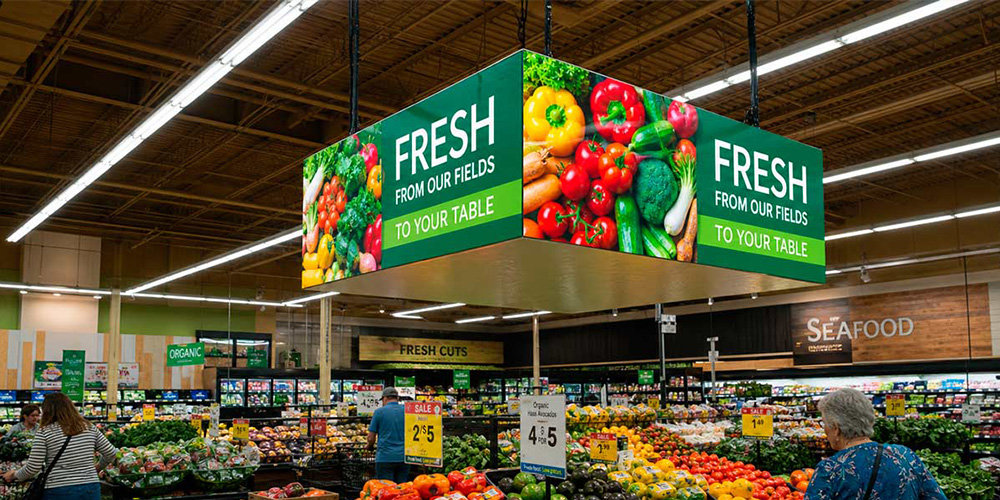
Supermarket retail LED displays tend to be functional rather than cinematic. They show daily prices, promotions, and aisle directories. Ceiling-hung strips above the produce and meat sections are common. So are end-cap displays at the end of aisles. Brightness and readability matter more than resolution here.
4.4 Luxury Retail
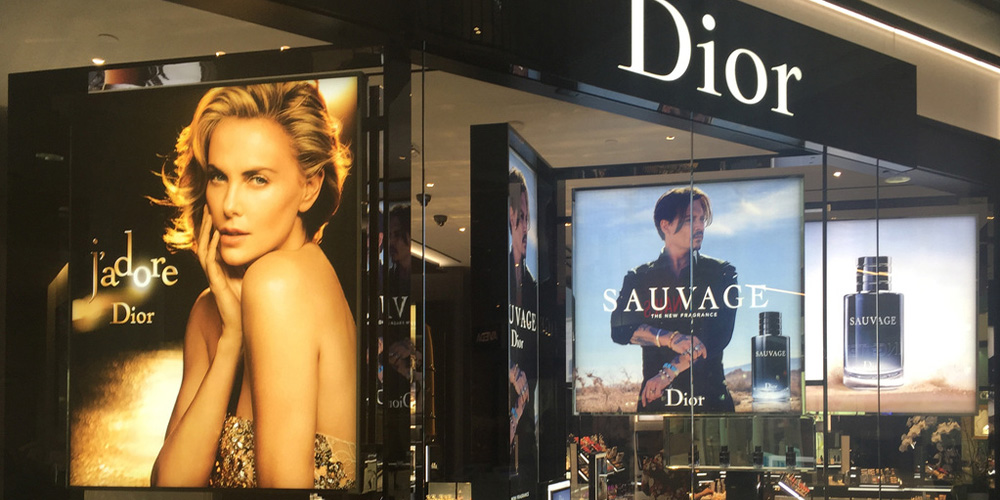
Luxury retail demands the best image quality. Fine pixel pitch retail LED displays (P0.9 to P1.5) are the standard for watch boutiques, jewelry stores, and high-end fashion flagships. A retail LED display at this tier must render textures, skin tones, and fine details perfectly. Transparent retail LED displays are also popular in luxury for storefront windows that maintain an open, airy feel.
4.5 Electronics Stores
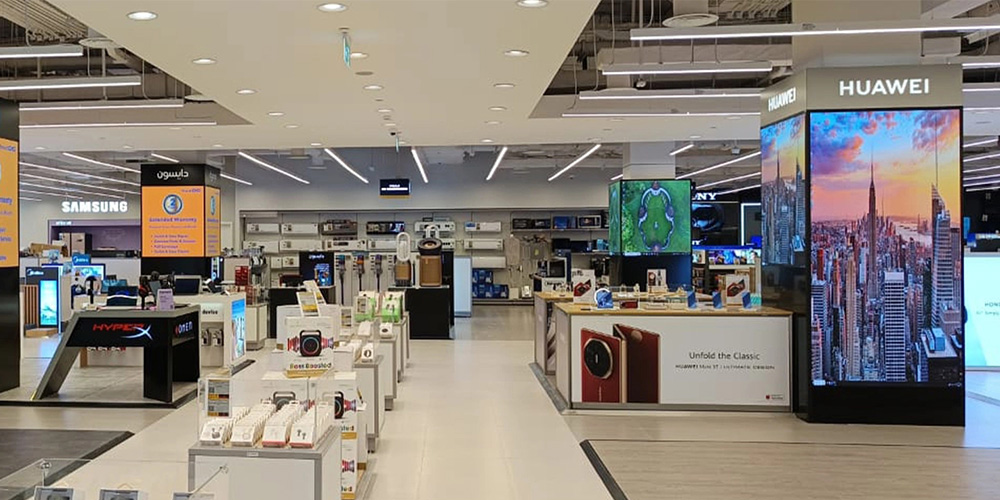
Electronics stores have an unusual advantage here. The retail LED display isn’t just showing products, it IS the product demo. A video wall in the gaming zone. A spec panel above the laptop aisle. A feature wall cycling through phone camera samples. If a customer is wowed by the screen itself, they’re already halfway to trusting the store’s other gear.
4.6 Chain Stores
For chain stores with dozens or hundreds of locations, consistency is key. A retail LED display network lets head office push the same content to every store simultaneously. The displays are usually configured identically across locations, so installation, maintenance, and content management follow a standardized playbook.
5.How to Choose a Retail LED Display
Before diving into specs, here’s the order that matters: first figure out where the display goes and how far away people will stand. That tells you pixel pitch and brightness. Then size, installation, and control come next. Let’s go through each one.
5.1 Pixel Pitch
Pixel pitch is the distance between the centers of two neighboring LED pixels, in millimeters. Here’s the rule of thumb for retail:
| Viewing Distance | Recommended Pixel Pitch |
|---|---|
| Under 2 meters | P0.9 – P1.5 |
| 2 – 4 meters | P1.5 – P2.5 |
| 4 – 8 meters | P2.5 – P4 |
| Over 8 meters | P4 – P10 |
Get the pitch wrong and one of two things happens. You either paid for resolution nobody can see from where people actually stand, or the image turns blocky up close. Neither is a good look for your store.
5.2 Brightness
Indoor retail LED displays typically need 800 to 2,000 nits. That’s enough for most store interiors, though a brightly lit space might need the higher end.
Things change fast when sunlight enters the picture. An outdoor retail LED display facing the sun needs at least 5,000 nits, and 6,000 to 8,000 is safer. For a window display behind glass, aim for 3,000 to 5,000 nits depending on which direction the window faces.
More brightness always means higher cost and more power draw, so match the spec to where the display actually lives.
5.3 Viewing Distance
Viewing distance determines pixel pitch and, indirectly, the budget. Measure from where your customers will stand to where the retail LED display will be mounted.
For a storefront window facing a sidewalk, the viewing distance might be 1 to 2 meters. For a mall atrium screen, it might be 10 meters. The further the distance, the coarser the pixel pitch you can get away with.
5.4 Screen Size
Retail LED displays are modular, so size is flexible. But two constraints matter: the physical space available on the wall or window, and the aspect ratio you want for your content. Most retail content is 16:9, but a creative installation might use an unconventional ratio. Work backward from the installation location to determine the maximum physical dimensions.
5.5 Installation Method
There are four common ways to install a retail LED display, and each comes with its own structural needs.
Wall-mounted is the most common. You’ll need a load-bearing wall or a steel support frame. Ceiling-hung displays need proper rigging points and an engineer’s sign-off. Floor-standing LED posters are the easiest — just plug in and position. Shelf-integrated displays work well for product-level promotion but need custom brackets.
Whatever method you pick, make sure your installer has done it before. Structural mistakes with a retail LED display are expensive to fix.
5.6 Control System
The control system is the software and hardware that sends content to the display. Most retail LED displays use either a dedicated media player, a cloud-based content management system (CMS), or both. Ask your supplier: can you update the content from your phone? Can you schedule content for different times of day? Can you manage multiple store locations from one dashboard?
5.7 Maintenance
Retail LED displays need maintenance. Modules can fail. Power supplies can degrade. For a window or ceiling-mounted retail LED display, ask whether front-access maintenance is available — meaning a technician can replace a module from the front without removing the entire screen. For outdoor displays, check the IP rating and whether the supplier offers a maintenance contract.
6.Retail LED Display Cost
6.1 Retail LED Display Cost Factors
Pixel pitch drives the cost more than anything else. Smaller pitch means more LEDs packed into each square meter, and that adds up fast.
Beyond pitch, three other factors move the price: brightness (outdoor panels cost more than indoor), order volume (larger orders often get a lower per-square-meter price), and brand (established manufacturers charge more but include better warranty and support).
6.2 Retail LED Display Price by Pixel Pitch
| Pixel Pitch | Approximate Price Range (per sqm) | Typical Use |
|---|---|---|
| P0.9 – P1.5 | $1,500 – $3,500 | Luxury retail, flagship stores |
| P1.5 – P2.5 | $800 – $1,800 | Clothing stores, electronics retail |
| P2.5 – P4 | $500 – $1,200 | Supermarkets, mall directories |
| P4 – P10 | $300 – $800 | Outdoor storefronts, roadside |
Prices are estimates based on 2026 market averages. Actual quotes vary by manufacturer, order volume, and installation complexity.
6.3 Installation Cost
Installation costs depend on site conditions. A simple wall mount for a small indoor retail LED display might run $200 to $500. A structural steel frame for a large outdoor retail LED display could cost $2,000 to $10,000 or more. Ceiling-hung installations need engineering assessment. Always get the installation quote as a separate line item from the display hardware.
6.4 Maintenance Cost
LED modules have a lifespan of 50,000 to 100,000 hours, but failures happen. Budget 2% to 5% of the total retail LED display cost per year for spare modules, power supplies, and technician visits. If the supplier offers an extended warranty or a maintenance package, compare it against the cost of ad-hoc repairs.
6.5 How to Reduce Retail LED Display Costs
Here are five practical ways to bring the price down without sacrificing what matters.
First, don’t over-spec the pixel pitch. A P1.5 display looks great at 3 meters, but a P2.5 display looks identical at 5 meters and costs about half as much per square meter.
Second, buy directly from a manufacturer rather than through a distributor. You cut out the middleman markup.
Third, order spare modules with your initial purchase to lock in volume pricing. You’ll need them eventually anyway.
Fourth, for multi-location chains, standardize on one display model across all stores. Spare parts become interchangeable and bulk discounts get bigger.
Fifth, negotiate installation as part of the hardware deal rather than sourcing it separately. Many suppliers will bundle it at a better rate.
7.Retail LED Display vs Other Displays
7.1 Retail LED Display vs LCD
Retail LED displays win on brightness, scalability, and the fact that they tile without bezels. LCDs win on price and simplicity. That’s the trade-off in one sentence.
For a single screen behind the counter, grab an LCD. It’s fine. For a storefront window, a video wall, or anything over 100 inches, a retail LED display pulls ahead on every metric that shoppers actually notice.
7.2 Retail LED Display vs OLED
OLED offers perfect blacks and outstanding color. But commercial-grade OLED panels are expensive above 65 inches, and they aren’t bright enough for window or outdoor use.
For a luxury store interior where image quality is the top priority and ambient light is controlled, OLED is worth considering. For most retail applications, a retail LED display is more practical and cost-effective at scale.
7.3 Retail LED Display vs Digital Signage
“Digital signage” is an umbrella term that covers LCD screens, LED displays, projection, and interactive kiosks. When people say “digital signage,” they usually mean a commercial-grade LCD screen in a retail environment.
A retail LED display is a type of digital signage — the difference is the technology and the use case. LED handles larger sizes, higher brightness, and seamless tiling. LCD handles smaller, simpler installations.
7.4 Retail LED Display: The Best Choice
For a countertop or shelf-edge screen, stick with LCD. It’s simpler and cheaper at small sizes. For a storefront window or video wall, a retail LED display is the clear winner on brightness and seamlessness. For a luxury flagship where every pixel counts, go with fine pixel pitch retail LED display — or OLED if the ambient light is fully controlled.
8.Retail LED Display Buying Tips
8.1 Define Your Retail Display Goals
Skip the spec sheet for a minute. What exactly do you want this screen to do? Pull people off the street? Make the store look more expensive? Move yesterday’s inventory? Show today’s deals? Nail that down first. The goal picks the tech, not the other way around.
8.2 Retail LED Display Pixel Pitch Tips
Here’s a dead-simple rule. Match the pitch to how close your customers get. Don’t buy resolution they’ll never notice. Don’t cheap out so hard the screen looks like a Minecraft build from six feet away.
8.3 Select a Reliable Supplier
You’re not buying a screen. You’re buying a relationship with whoever made it. A retail LED display sits in your store for years, usually running 12+ hours a day. When module number 47 goes dark on a Saturday, you need a person who picks up the phone, not a ticket system.
Three things to check before you sign. One, how long have they been around? Five years minimum, and ask for photos of installations they’ve done that look like what you want. Two, what does the warranty actually cover? LED modules are the obvious part, but power supplies and receiving cards fail too. Two years minimum on everything. Three, who handles problems in your area? A local tech beats an overseas support email every single time.
Get it all on paper.
8.4 Check Certifications and Warranty
Look for CE, FCC, and RoHS certifications as a minimum baseline. For outdoor retail LED displays, check the IP rating. Ask what the warranty covers: just the LED modules, or also the power supplies, receiving cards, and control system. Get the warranty terms in writing.
8.5 Consider Future Expansion
Retail LED displays are modular. You might start with a 2m × 1.5m screen today and want to expand to 3m × 2m next year. Ask your supplier whether the same retail LED display cabinet model and pixel pitch will be available for future purchases. Buy spare cabinets with the initial order if expansion is likely.
9.Retail LED Display FAQs
9.1 What is the best pixel pitch for a retail LED display?
For most indoor retail applications, P2 to P3 works well at typical viewing distances of 2 to 5 meters. For luxury retail or close-up viewing, go with P0.9 to P1.5. For outdoor storefronts, P4 to P6 is common.
9.2 How much does a retail LED display cost?
A basic indoor retail LED display starts around $500 to $800 per square meter. A high-end fine pixel pitch display for luxury retail can run $2,000 to $3,500 per square meter. Total cost depends on size, pixel pitch, brightness, and installation requirements.
9.3 Is a retail LED display better than an LCD screen?
For large sizes, high brightness, and seamless video walls, yes. For a small single screen behind a counter, an LCD is often the simpler and cheaper option.
9.4 Can a retail LED display be installed behind a shop window?
Yes. Window LED displays are specifically designed for this. They use higher brightness (3,000 to 5,000 nits) to overcome glass reflection and can be mounted flush against or just behind the window.
9.5 How long does a retail LED display last?
LED modules are rated for 50,000 to 100,000 hours of use. At 12 hours a day, that’s 11 to 22 years before the LEDs reach half their original brightness. Power supplies and receiving cards may need replacement sooner, typically after 3 to 5 years of continuous use.
9.6 Is a retail LED display worth the investment?
For stores in high-traffic areas where foot traffic directly drives revenue, the return is usually positive. The display pays for itself through increased customer draw and eliminated recurring printing costs. For low-traffic locations, the payback period is longer, and a smaller or simpler setup may be the better starting point.
10. Conclusion
A retail LED display isn’t the right choice for every store. But for many retailers, it is one of the best ways to attract customers and improve the shopping experience.Choose the right screen for your location. Measure the viewing distance. Then pick the right pixel pitch. Just as importantly, choose a supplier that offers reliable products and long-term support.
If you’re looking for a trusted solution, EagerLED offers a full range of Digital Retail Signage products for storefronts, shopping malls, supermarkets, and brand stores.A retail LED display is more than a screen. It works for your business every day, helping you attract attention, strengthen your brand, and increase sales.
 Top 10 LED Screen Suppliers in USA (2026 Guide)
 NovaStar VX600: The Complete User Guide for 2026