

Street LED Advertising Displays for Outdoor Projects
A street LED advertising display is an outdoor digital screen for scheduled campaigns and public information. For billboard operators, advertising companies and installers buying equipment, the key decisions are viewing distance, daylight and night-time operation, structure, service access and content control.
- Choose roadside, pole or facade format from the audience approach and available space.
- Confirm the active screen dimensions and native resolution using representative creative.
- Define brightness adjustment, outdoor protection and the required maintenance side.
- Separate display equipment, local structure and installation from advertising airtime.
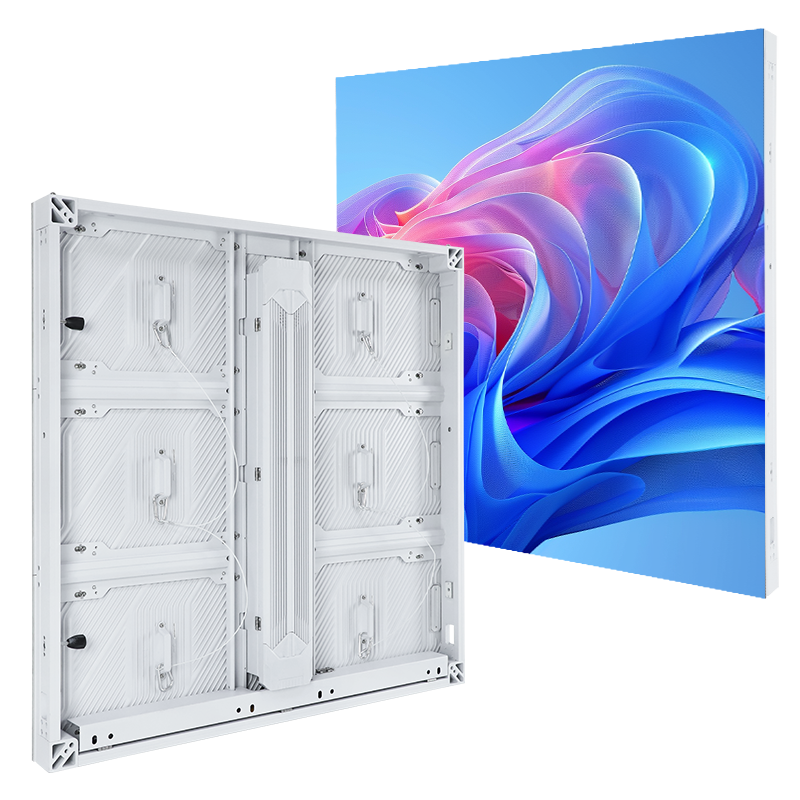
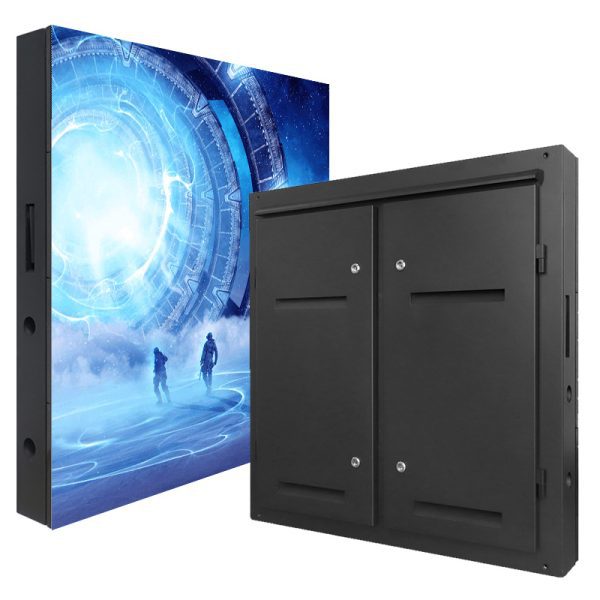
LED Street Billboard Manufacturer for Outdoor Advertising
EagerLED supplies modular outdoor LED display equipment for street advertising projects. Provide the site layout, screen dimensions, viewing positions and operating schedule to discuss cabinet options, control equipment, spares and delivery scope. Confirm the structure interface and local installation responsibilities before ordering.
Street LED Advertising Display Applications

1. Roadside Digital Billboard
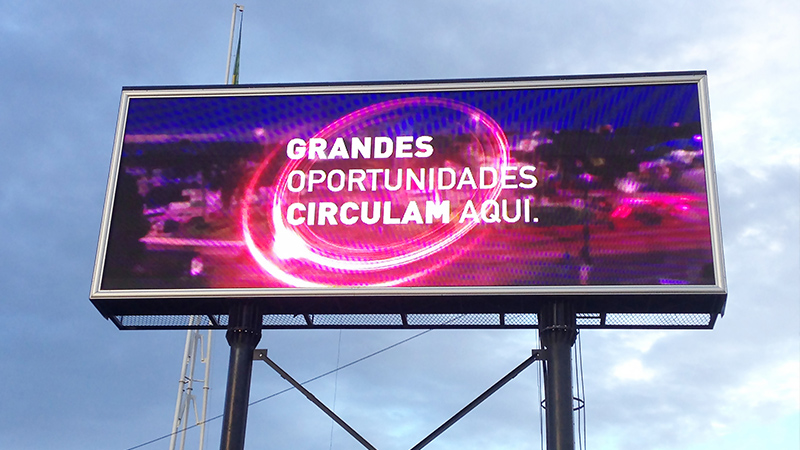
Roadside digital billboards deliver large-format advertising to drivers and pedestrians from a fixed, high-visibility location. The screen size, pixel pitch and brightness should be selected from the road speed, viewing distance, screen orientation and local permit conditions.
2. 3D Corner LED Billboard
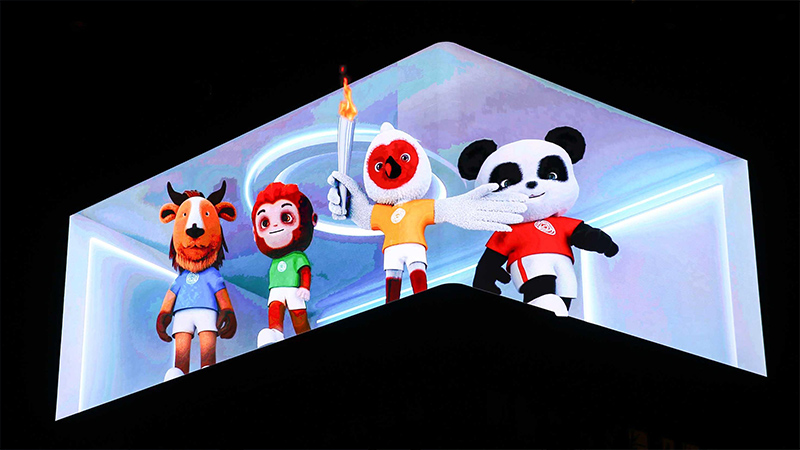
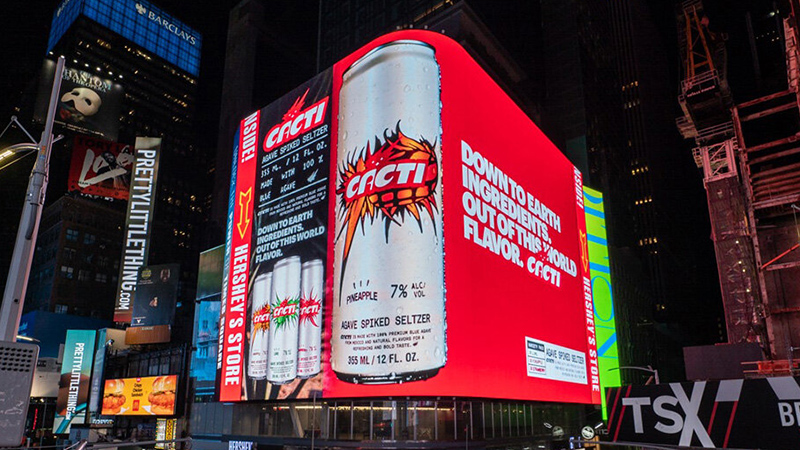
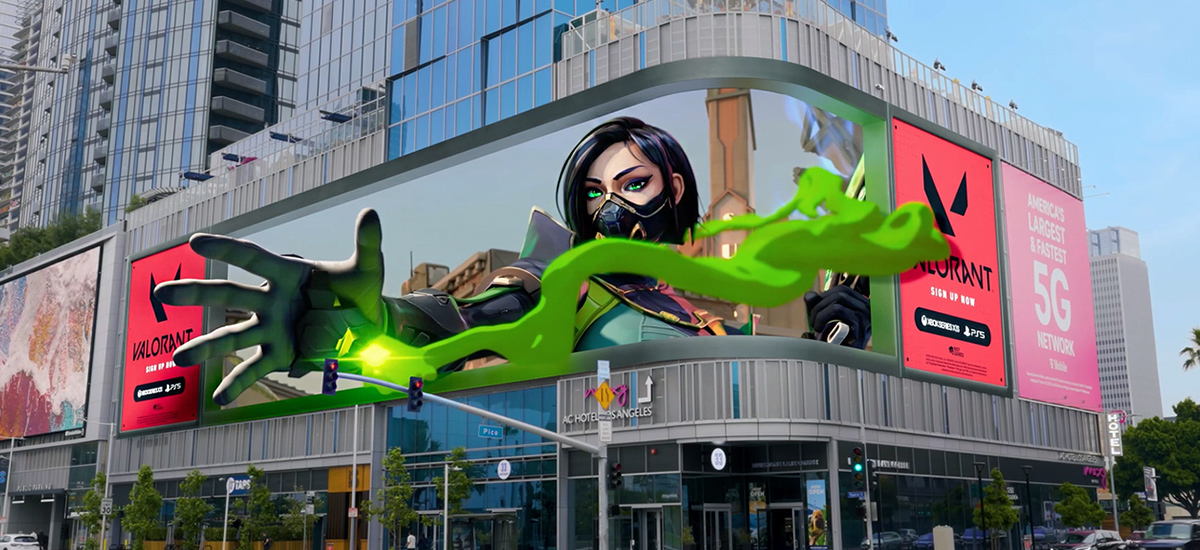
A 3D corner LED billboard uses two display faces and perspective-designed content to create a glasses-free depth effect. Precise cabinet alignment, consistent color calibration and content matched to the viewing point are essential for a convincing result.
3. Pole-Mounted Street Screen
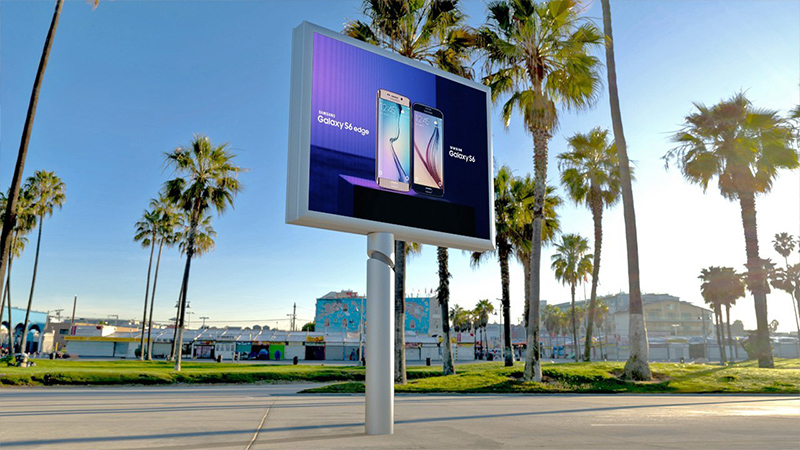
Pole-mounted street screens fit commercial avenues, parking entrances and transit approaches where a compact display is more practical than a large billboard. Confirm pole loading, maintenance access, cable routing and pedestrian clearance before production.
4. Building Facade LED Display
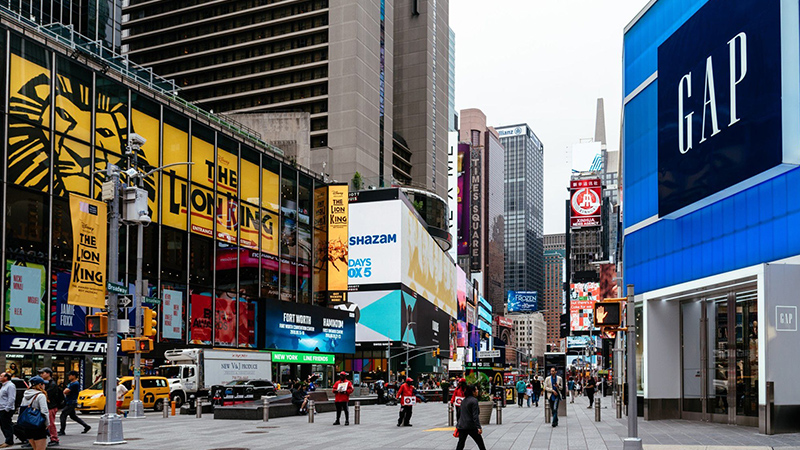
Building facade LED displays turn exterior walls into large advertising and information surfaces. Transparent, mesh or conventional cabinet systems may be appropriate depending on wind permeability, facade loading, daylight, viewing distance and service access.
5. Mobile LED Billboard
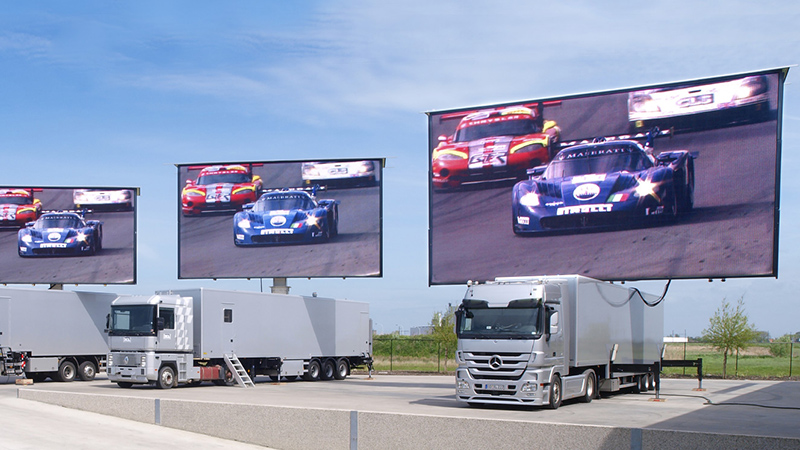
Mobile LED billboards installed on trucks or vehicle roofs can move campaigns between districts and events. The design must account for vibration, vehicle power, weight distribution, weather protection and the traffic rules that apply in each operating area.
6. Bus-Stop and Shopfront Display
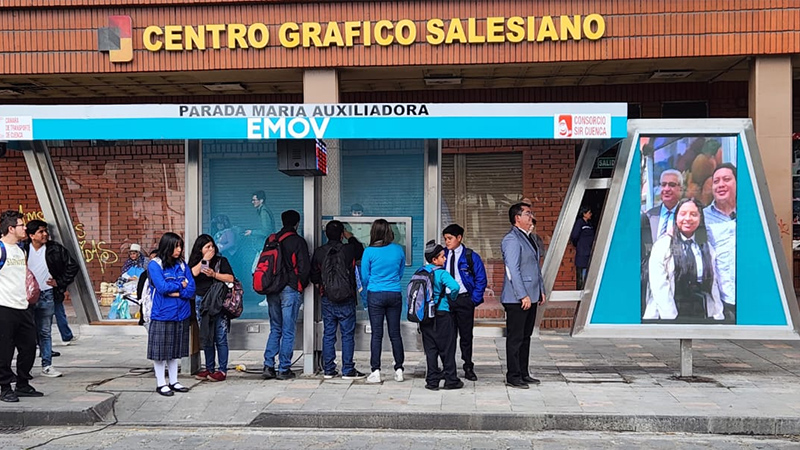
Bus-stop and shopfront LED displays address pedestrians at shorter viewing distances. A finer pixel pitch, controlled brightness and readable typography are usually more important here than the extreme luminance required by a large sun-facing roadside screen.
Why Choose EagerLED for LED Street Billboard Projects
- Outdoor product range: cabinet options for roadside, pole, building, 3D and mobile formats.
- Project-specific engineering: layouts are based on screen dimensions, viewing distance, brightness, maintenance route and controller capacity.
- Production quality control: material inspection, module testing, cabinet assembly and aging tests are included in the manufacturing workflow.
- Service planning: quotations can include controllers, spare modules, power supplies, receiving cards, packing and technical guidance.
- Export delivery support: project teams coordinate packing, shipping information and documentation for the destination market.
LED Street Billboard Project Examples
EagerLED has supplied outdoor LED advertising systems for pole, roadside and commercial-area projects. The most useful project reference is not a generic photo: compare the cabinet size, pixel pitch, brightness, service method, structure and control scope with your own site.
Outdoor LED Advertising Display Project
Roadside LED Billboard Project
LED Street Billboard Buyer’s Guide
An LED street billboard can be mounted beside a road, on a building, on a pole or at a pedestrian site. Start with the location and viewing task, then assess the selected cabinet model. A product family name does not establish the brightness, ingress rating, available pitch or service access of every configuration.
Use the LED screen specification library and the exact model documentation when confirming the proposal. Request a cabinet layout and itemized equipment list for the intended site.
Quick Navigation
On this page: street LED advertising buyer’s guide
1. What Is an LED Street Billboard?
An LED street billboard is a weather-resistant, modular video display built for outdoor advertising and information. Unlike a printed billboard, it can change campaigns by schedule, show motion content and report playback through the control platform.
Format should follow location and audience. Roadside screens prioritize long-distance readability; pole and bus-stop screens serve smaller viewing zones; facade screens coordinate with the building structure; mobile screens add transport constraints; and 3D corner displays depend on a defined viewing point.
| Display format | Best use | Priority features | Planning note |
|---|---|---|---|
| Roadside LED billboard | High-traffic roads and commercial districts | Brightness, weather protection, remote monitoring | Check permits, sightlines and night dimming |
| Building facade screen | Malls, towers and retail exteriors | Structure interface, weight, wind permeability | Coordinate loads and service routes |
| Pole or bus-stop display | Transit, parking and pedestrian areas | Fine pitch, compact cabinet, controlled brightness | Protect pedestrian clearance and cable access |
| Mobile LED billboard | Events and location-based campaigns | Vibration resistance, vehicle power, secure mounting | Follow local vehicle and advertising rules |
| 3D corner LED display | Landmark commercial sites | Precise corner geometry, calibration, matched content | Design for a primary viewing point |
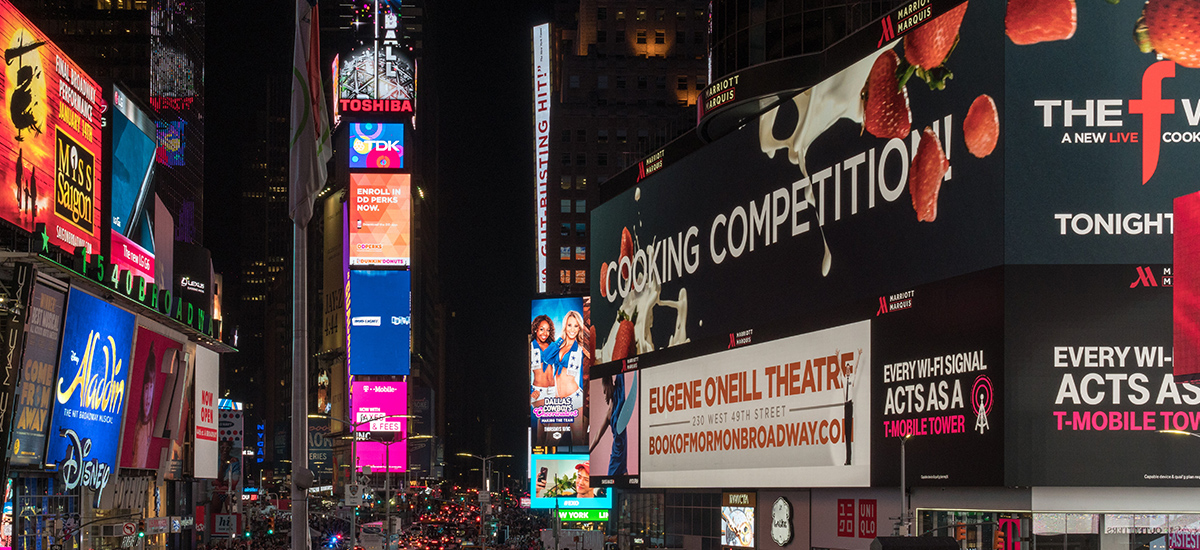
2. Benefits of Street LED Digital Advertising
2.1 Daylight Visibility and Long-Range Readability
Outdoor readability depends on ambient light, screen orientation, contrast and content design. A sun-facing roadside billboard may require higher luminance than a shaded shopfront screen, while excessive brightness at night wastes energy and can create visual discomfort.
The EA960F3 and EA250F product references list up to 6,500 cd/m². Treat this as a product capability, not a universal operating setting; commission day, dusk and night brightness presets for the actual site.
2.2 Fast Campaign and Message Updates
Digital street advertising can change creative without printing or replacing a physical poster. Operators can schedule campaigns by date, time and location, pause expired content and publish urgent notices from the control system.
- Prepare approved fallback content for network outages.
- Use campaign IDs and playback logs for proof-of-play.
- Restrict publishing access and retain validated screen configuration files.
2.3 Location-Based Audience Reach
A fixed street LED advertising screen serves a defined road, district or pedestrian zone. Site selection should consider approach direction, dwell time, road speed, obstructions and the distance at which the message must be understood.
Do not infer audience value from screen size alone. Match the location, viewing opportunity and campaign objective, then use measurement methods appropriate to digital out-of-home media.
2.4 Flexible Creative and Scheduling
One screen can rotate multiple campaigns, time slots and language versions. Use short messages, a clear visual focus and readable contrast for the available viewing time. Define playlist approval, expiry dates and fallback content before commissioning. If campaign reporting is required, confirm the media player and software support the requested proof-of-play records; do not treat playback records as measured audience reach.
2.5 Advertising, Wayfinding and Public Information
Street screens can support paid advertising, district information, wayfinding, event notices and emergency messages. Separate commercial playlists from priority public-information templates so an authorized operator can replace normal content quickly when needed.
For a broader overview of formats, compare EagerLED’s advertising LED board solutions.
3. LED Street Billboard Specifications and Installation
3.1 Brightness for Outdoor Viewing
Assess brightness from screen orientation, direct sun, shade and the content contrast needed at the viewing position. Request the selected model’s rated range and brightness-control method, then agree day, dusk and night operating settings with the project team. Check low-brightness image quality as well as maximum output. Refresh rate is a separate camera-performance parameter and does not establish daylight readability.
3.2 IP Rating and Weather Protection
Check the stated front and rear ingress ratings for the exact cabinet model and configuration. Outdoor performance also depends on seals, cable entries, drainage, ventilation and installation workmanship. Confirm the service-door arrangement and the protection of control and power equipment rather than relying on a single rating for the complete installation.
3.3 Pixel Pitch and Viewing Distance
Use the nearest important viewing position and the smallest required content detail to shortlist pixel pitch. Calculate the native pixel canvas from the chosen cabinet layout, then review sample messages from the actual approach direction. Screen dimensions, content size and sightlines matter alongside pitch.
Confirm available pitches and cabinet parameters in the LED screen specification library for the exact proposed model.
3.4 Structure, Wind Load and Road Safety
Qualified local professionals need to assess cabinet weight, mounting height, wind exposure, ground or facade conditions, and service loads. Confirm which drawings and structure interfaces the equipment supplier provides and which work belongs to the local contractor. Check the applicable site approvals and operating conditions with the relevant authorities before final fabrication.
3.5 Front and Rear Service Access
Confirm whether the project needs front service, rear service or both. Front access helps where there is little space behind a facade or pole cabinet; rear access can simplify inspection on a dedicated structure. Plan safe working clearance, access doors, cable labels and replacement routes before fabrication.
Review common components in the LED display parts guide.
3.6 Control, Monitoring and Redundancy
A managed billboard network needs reliable sending, receiving and processing hardware, remote status monitoring and controlled user permissions. Define what happens if the primary media player, network or content feed fails, and keep a tested local fallback playlist on the player.
4. Choosing a Street Advertising Screen Format
4.1 Roadside and Highway Billboards
Modular cabinets can form a single roadside screen, a long facade banner, a double-sided pole sign or a corner display. Standard cabinet dimensions simplify alignment, spare planning and later expansion, while custom shapes require additional engineering.
4.2 Building Facade LED Screens
Energy use depends on screen area, brightness schedule, content and power design. Request typical and maximum power data, then create separate day, dusk and night profiles. Accessible modules and stocked spares often reduce operating disruption more than a lower initial hardware price.
4.3 Pole and Bus-Stop Displays
Compact pole and bus-stop screens need close-viewing resolution, secure enclosures and brightness control. Confirm pedestrian clearance, door swing, ventilation, drainage and safe service access. Double-sided displays also require separate heat and power planning for both faces.
4.4 Mobile LED Billboards
Mobile street screens add vibration, vehicle power, transport height and weight distribution to the normal LED specification. Mounting must be designed for the vehicle, and the operator must comply with route, parking, distraction and advertising restrictions in each jurisdiction.
Compare dedicated mobile LED screen solutions before defining the vehicle structure and power system.
4.5 3D and Corner LED Displays
A glasses-free 3D effect uses perspective-designed content, often across a corner display, for a planned viewing zone. It is not created by a special video file on any screen in any location. Confirm cabinet corner geometry, pixel mapping, calibration and content-production scope together.
See the 3D billboard guide for dedicated content and installation considerations.
5. What Determines LED Street Billboard Price?
LED street billboard price is project-specific. A useful quotation separates display hardware from the controller, structure, power distribution, spares, packing, freight, installation and commissioning.
Send the supplier these inputs:
- Screen width, height, quantity and single- or double-sided layout
- Closest and typical viewing distance
- Site photos, orientation, mounting height and structure drawings
- Daylight, night-time and camera requirements
- Front or rear service access
- Destination country, deadline and installation scope
5.1 Pixel Pitch and Total Resolution
Finer pixel pitch increases LED, module and receiving-card density for the same physical area. Select pitch from viewing needs and content resolution. A long-distance roadside billboard may not benefit from the smallest available pitch.
5.2 Screen Area and Supporting Structure
Screen area drives cabinet count, structure, power and shipping volume. Double-sided signs, curved corners, tall poles and facade interfaces add engineering and fabrication. Provide site drawings early so these items are included before quotations are compared.
5.3 Brightness, Refresh Rate and Protection
Higher brightness, camera-oriented refresh and stronger ingress protection can increase component and power-system requirements. Compare suppliers using the same brightness, refresh, protection and testing criteria; otherwise a lower total may describe a different specification.
5.4 Cabinet Design and Control System
Cabinet material, weight, heat management, service access and controller redundancy affect price and long-term operation. Ask whether sending cards, video processors, fiber equipment, sensors and backup players are included.
For controller resources, use the NovaStar software download page.
5.5 Spares, Freight, Installation and Service
A complete budget includes recommended spare modules, power supplies, receiving cards, packing, transport, duties, installation labor, training and warranty support. Compare the total project scope, response process and acceptance test, not only a screen price per square meter.
6. How to Plan and Control Street LED Advertising
Street LED advertising usually uses an asynchronous media player for scheduled campaigns; large live-event or camera-fed screens may use synchronous processing. Build the workflow in four stages:
- Document the site, audience, content and approval requirements.
- Size the cabinets, power, player and controller for the final resolution.
- Configure remote monitoring, user permissions and fallback content.
- Commission brightness presets, playlists, proof-of-play and maintenance procedures.
6.1 Define the Site and Content Requirements
Record the screen dimensions, viewing distance, orientation, mounting height, ambient light, operating hours and permitted content rules. Confirm the local permit path before hardware production so brightness, size or placement changes do not force a redesign.
6.2 Select the Hardware and Controller
Calculate total pixel load from the final width, height and pitch, then select a controller with suitable capacity and outputs. Confirm compatibility between modules, receiving cards, sensors, media player and monitoring platform.
6.3 Build Reliable Power and Signal Paths
Separate power and data routes where practical, label every connection and protect cable entries from water. Long runs may use fiber between the control room and display. Provide tested surge protection, grounding and backup content appropriate to the site design.
6.4 Set Campaign and Maintenance Procedures
Create campaign templates, approval roles, scheduling rules and a maintenance log. Test day/night brightness, failed-network behavior, player restart, spare-module replacement and emergency content before handover. The LED display operation tutorials provide additional setup guidance.
7. LED Street Billboard FAQs
7.1 What Specifications Matter Most for a Street LED Billboard?
Prioritize pixel pitch, brightness range, refresh rate, viewing angle, IP rating, cabinet weight, service access, controller capacity, remote monitoring and the structure interface. Evaluate those values together with the site permit and operating schedule.
7.2 How Do I Choose Pixel Pitch and Screen Size?
Use viewing distance and content type to shortlist pixel pitch, then calculate total resolution at the planned screen size. Check the message from the actual approach direction; a technically high resolution does not help if the screen is too small for the road or hidden by obstructions.
7.3 What Brightness Does an Outdoor LED Billboard Need?
There is no single correct brightness for every street LED advertising display. Direct sun, shade, orientation, night-time limits and content contrast determine the operating range. Request the exact cabinet model’s rated output and dimming method, then verify readable daytime content and comfortable night-time operation at the site.
7.4 How long can an outdoor LED billboard operate?
Service life depends on operating hours, brightness, temperature, ventilation, power quality and maintenance. Treat product lifetime figures as design references; plan inspection, cleaning, calibration and spare replacement rather than assuming a guaranteed service period.
7.5 What approvals should the project team check?
Requirements depend on the location, site and installation. Confirm the applicable planning, structure, road-safety, electrical and operating conditions with the relevant local authorities and qualified project professionals before fabrication.
7.6 What information is needed for a quote?
Provide screen dimensions, site photos, nearest and farthest viewing positions, mounting height, orientation, operating hours, service access, content-control method, destination and required date. Include drawings and any documented site constraints.
7.7 Does an equipment quote include advertising airtime?
A display-equipment quotation covers only the agreed supply scope. Advertising slots, site rental, media sales, local structure and installation are separate items unless explicitly included. State whether you are buying a screen or seeking an advertising placement.
8. Plan Your Street LED Billboard Project
Send the site photos or drawings, active screen dimensions, viewing distances, orientation and service-access requirements. Include the content-control workflow, power and signal arrangements, destination and required date. Request separate lines for cabinets, processing or players, cables, spares, packing and any agreed support.
