
The best LED display suppliers are not interchangeable, and choosing the wrong one is expensive to undo. A weak partner shows up months later as late shipments, mismatched cabinets, uncalibrated colour, no spare modules and support tickets nobody answers. On a 200 m2 stadium perimeter or a fine-pitch control-room wall, that difference can cost more than the hardware itself.
This guide ranks 15 established LED display suppliers for 2026 using published company information, visible product families and practical B2B procurement criteria: manufacturing scale, engineering depth, compliance documentation, global service coverage and total cost of ownership. Use it as a shortlist, then verify the exact model, certificate, test report, warranty term and delivery commitment against your own specification.
Key Takeaways
- Start with the application, not the brand. Outdoor, indoor fine-pitch, rental, virtual production, retail and control-room projects reward different strengths.
- Compare evidence, not slogans. Request model datasheets, certificates, test reports, a spare-parts policy and a written warranty before comparing prices.
- Test before volume production. A sample cabinet exposes colour, serviceability and firmware issues while they are still cheap to fix.
- Price the whole ownership cost. Processing, structure, freight, commissioning, spares and downtime usually outweigh the cabinet price.
- Verify the legal entity. The company that quotes, signs and receives payment should be one organisation.
1. How We Evaluated the Best LED Display Suppliers in 2026
No single list can name the best LED display suppliers for every project. A touring company, an airport authority and a sports club need different things from the same catalogue, so this ranking scores capability rather than popularity. Every supplier listed has a verifiable manufacturing base and reference installations a buyer can inspect.
01. What the Ranking Measures
Seven criteria were weighted, and each can be tested with documents that a serious shortlist of LED display suppliers should already provide. The weighting favours manufacturing and engineering over marketing reach, because those decide whether a large order arrives on spec.
| Criterion | What was checked | Why it matters | Weight |
|---|---|---|---|
| Manufacturing scale and vertical integration | Own factories, SMT lines, module and cabinet production, annual capacity | Multi-site projects need repeatable output, not pilot batches | 20% |
| Engineering depth and product range | Pixel pitch coverage, COB, MIP and SMD options, rental, fixed and creative formats | The technology must match viewing distance and environment | 20% |
| Quality and compliance evidence | Model-level CE, RoHS and FCC documentation, test reports, ageing process | Customs, tenders, insurance and liability depend on it | 15% |
| Global service and spare parts | Regional offices and partners, spare stock, RMA process, response targets | Downtime usually costs more than the screens | 15% |
| Comparable reference projects | Installations in the same segment, country and scale | Proves performance under real conditions, not demo conditions | 15% |
| Commercial transparency | Quotation structure, MOQ, lead time, warranty and payment terms | Protects both budget and schedule | 10% |
| Technology roadmap | MicroLED, COB, transparent and virtual production readiness | Protects resale value and five-year relevance | 5% |
02. What Gets a Supplier Excluded
Several well-known LED display suppliers were left off the 2026 list, and the reason was usually documentation rather than hardware: no model-specific datasheets, a refused factory audit, a parts-only warranty with no response time, or a contract entity that differs from the bank beneficiary. Those failures cause most disputes in this industry, and none is visible in a catalogue photo.
03. How the 2026 Shortlist Was Built
The shortlist combines manufacturers that build their own panels with companies that integrate and distribute at scale across regions. Buyers searching for LED display suppliers usually need both: a factory for custom or volume work and a regional partner for service. Each profile below states what the company is genuinely good at, and where homework is still required.
2. Top 15 LED Display Suppliers in the World (2026 Ranking)
The 15 companies below are the LED display suppliers most consistently shortlisted for international projects. They are not ranked by revenue alone: each entry states the manufacturer heritage, the product families worth asking about, the segments where the company is strongest, and the commercial question that decides whether the partnership will work.
| LED display supplier | Headquarters | Best-known strengths | Good fit for | Due-diligence focus |
|---|---|---|---|---|
| Absen Inc. | Shenzhen, China | Global channel, rental, commercial display | Integrators needing international support | Warranty scope and regional spare stock |
| Leyard Optoelectronic | Beijing, China | Fine pitch, MicroLED, large-scale visualisation | Control rooms, broadcast, landmark projects | Model-level service plan for critical sites |
| Unilumin Group | Shenzhen, China | Broad portfolio, XR studios, outdoor and ministry work | Events, sports, DOOH, integrated projects | Confirm the exact product line and local partner |
| Lighthouse Technologies | Hong Kong, China | Sports venues, high-brightness outdoor | Stadiums, arenas, premium indoor | Control software integration and spares |
| Nanjing Daktronics | Nanjing, China | Scoreboards, sports systems, engineering | Stadiums, transport, institutional buyers | Response-time commitments and local crews |
| Shenzhen Lightlink | Shenzhen, China | Value engineering, standard cabinets | Retail, hospitality, first installations | Component tier and ageing test records |
| Barco NV | Kortrijk, Belgium | Mission-critical visualisation and control rooms | Utilities, broadcast, command centres | Total system design, not panels alone |
| Silicon Core Technology | California, USA | Common Cathode low-power LED technology | Energy-sensitive large installations | Power and thermal calculations per site |
| NEC Display Solutions | Tokyo, Japan | Long-life displays, enterprise service networks | Corporate, transport, public information | Lifecycle support and discontinued models |
| Samsung Electronics | Suwon, South Korea | MicroLED, premium commercial displays | Flagship retail, premium lobbies | Budget realism and content ecosystem |
| LG Electronics | Seoul, South Korea | Form-factor innovation, fine-pitch ranges | Corporate, retail, hospitality | Model lifecycle and firmware roadmap |
| Yaham Electronics | Shenzhen, China | Outdoor structures and traffic signage | Highways, facades, transit | Structural certification and wind load |
| AOTO Electronics | Shenzhen, China | Virtual production, broadcast, finance | Studios, sports, transport, premium indoor | Camera tests and processing configuration |
| Infinite Electronics (INFiLED) | Shenzhen, China | Creative, curved and architectural LED | Museums, XR stages, bespoke builds | Custom design freeze and delivery dates |
| QSTECH Co. Ltd. | Guangzhou, China | Cost-effective outdoor and transport signage | Billboards, metro and airport projects | After-sales coverage in the destination market |
01. Absen Inc. - A Global Powerhouse
Absen is among the most widely stocked LED display suppliers, with Acclaim for retail, control rooms and broadcast and Polaris for staging. Its walls appear at FIFA World Cup venues and NBA arenas. Ask which regional partner holds spare modules, because Absen sells through a channel.
02. Leyard Optoelectronic - Specialists in Visualisation
Leyard is a visualisation company first, and its DirectLight X fine-pitch video walls run in NASA facilities, government control centres and television studios. Mission-critical rooms judge LED display suppliers on colour consistency, 24/7 duty cycles and predictable servicing rather than price per cabinet.
03. Unilumin Group Co. Ltd. - Scale and Innovation
Unilumin runs one of the largest LED display factories in the industry, and its UpanelS fine-pitch range covers lobbies, exhibitions and XR stages. It supplied display systems for the Beijing Winter Olympics opening ceremony, evidence that it delivers against immovable deadlines.
04. Lighthouse Technologies - Performance and Durability
Lighthouse has a long record in sports venue displays and high-brightness outdoor systems, with installations at English Premier League grounds and the Hong Kong Jockey Club. Its Impact series covers indoor exhibition and auditorium work, and its control software gives operators a smoother live-event workflow.
05. Nanjing Daktronics - Engineering Excellence
Daktronics built its reputation on scoreboards and sports systems in North America, and its Chinese operation extends that engineering culture into LED displays for stadiums, transport hubs and institutional buyers. It is strongest where the display is part of a larger timing, scoring and control-room system.
06. Shenzhen Lightlink LED Technology - Value and Reliability
Lightlink competes on disciplined value engineering rather than flagship technology. Its standardised cabinets and mature supply chain suit retail, hospitality and first-time installations. As with any value-focused entry on a list of LED display suppliers, confirm driver ICs, power supply brand, ageing duration and pixel-defect policy in writing.
07. Barco NV - Mission-Critical Displays
Barco approaches LED from the control room outward. Its visualisation platforms combine displays, processing, switching and software, which is why utilities, broadcasters and command centres treat the company as a system partner rather than a panel vendor. Expect premium pricing and a design-led sales process.
08. Silicon Core Technology - A Pioneer in Low-Power LED
Silicon Core is known for Common Cathode driver architecture, which cuts power consumption and heat against conventional designs. On large outdoor or continuous-operation installations that changes the electrical infrastructure, the cooling load and the operating cost over a decade. Verify regional service and lead times.
09. NEC Display Solutions - A Legacy of Quality
NEC brings decades of enterprise display experience and a service network that corporate and public-sector buyers already know how to contract with. Its LED and large-format portfolios target transport, retail and public information environments where lifecycle predictability matters more than the lowest cabinet price.
10. Samsung Electronics - Leading MicroLED Development
Samsung sits at the premium end of the market and has pushed MicroLED from concept to commercial families for high-end residential, retail and corporate environments. The appeal is seamless large-format imagery, deep black levels and brand reassurance. The trade-off is cost and ecosystem lock-in.
11. LG Electronics - Innovation in Form Factor
LG emphasises form factor and installation flexibility, including fine-pitch ranges for corporate, retail and hospitality interiors where the wall cavity and cable routing are tight. Its advantage is integration with a wider display ecosystem and a global service organisation, though buyers should separate specification from brand premium.
12. Yaham Electronics - A Reputation for Strength
Yaham focuses on outdoor structures, traffic signage and facade installations where wind load, corrosion resistance and long service intervals decide the design. It builds complete structures rather than panels alone, which shortens the coordination chain on highway, transit and municipal projects.
13. AOTO Electronics - Manufacturing Scale and Efficiency
AOTO combines large-scale manufacturing with a strong presence in virtual production, broadcast and financial-sector installations. Its studio-grade panels are used where camera performance, refresh rate and colour accuracy under studio lighting are non-negotiable. Insist on a camera test with the actual processing chain.
14. Infinite Electronics - Creative Display Solutions
INFiLED, trading as Infinite Electronics, specialises in creative and architectural LED: curved, spherical, column and bespoke building displays. Its Deep Black range targets high-end retail and museum contrast, while the X series appears on XR stages and film sets. Custom geometry needs a frozen drawing set.
15. QSTECH Co. Ltd. - A Commitment to Value
QSTECH, part of the CVTE group, targets buyers who need dependable outdoor and transport signage at a controlled cost. Its QX series covers outdoor billboards and wayfinding installations, with references in Asian metro systems and European airports. Focus on after-sales coverage in the destination country.
3. Why the Right LED Display Suppliers Decide Project Success
An LED wall is not a product you buy once and forget. It is a system that must be specified, shipped, installed, calibrated and eventually repaired, and every stage belongs to whoever you choose. A shortlist of LED display suppliers is therefore a decision about who carries the risk when something goes wrong.
01. The Hidden Cost of the Wrong Partner
The cabinet price is the smallest number in the project. A partner that ships three weeks late pushes commissioning into a penalty window, and cabinets from a second production batch introduce colour shift that reads as visible seams on camera. Reliable LED display suppliers remove that risk before it appears, because their processes are built for repeatability rather than one-off sales.
02. What Strong LED Display Suppliers Deliver Beyond Panels
Beyond cabinets, capable LED display suppliers supply engineering: a pixel-pitch recommendation tied to real viewing distance, a power and structural plan a local installer can sign off, processing and content configuration that survives handover, documented spare parts, and a named contact with a contractual response time.
4. Key Considerations When Comparing LED Display Suppliers
Most comparisons fail because they start with price per square metre and reach technology last. Fix the application, viewing distance and environment first, then let only the LED display suppliers that meet those requirements compete on commercial terms.
01. Pixel Pitch, Viewing Distance and Environment
Pixel pitch follows the application, not the price list. A control room viewed from three metres needs a pitch below 1.5 mm to keep text legible, while a highway billboard seen from 150 metres performs better with a 10 mm pitch and a larger brightness budget. Ambient light matters just as much: lobbies, direct-sun facades and studio walls each demand different brightness and refresh settings. Ask every supplier to justify its recommended pitch with a viewing-distance calculation.
02. Cabinets, Power and Control Systems
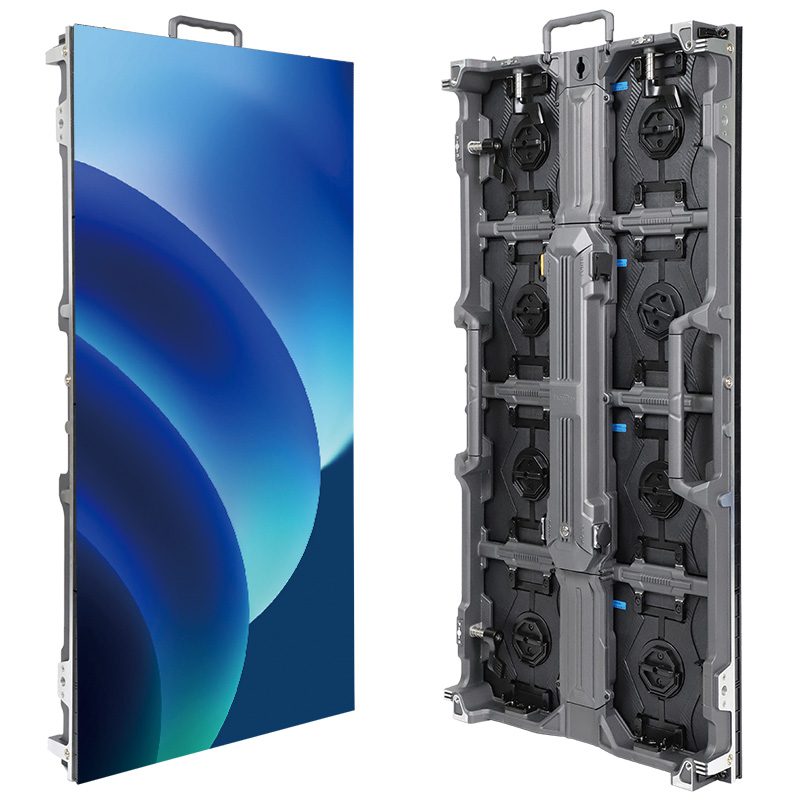
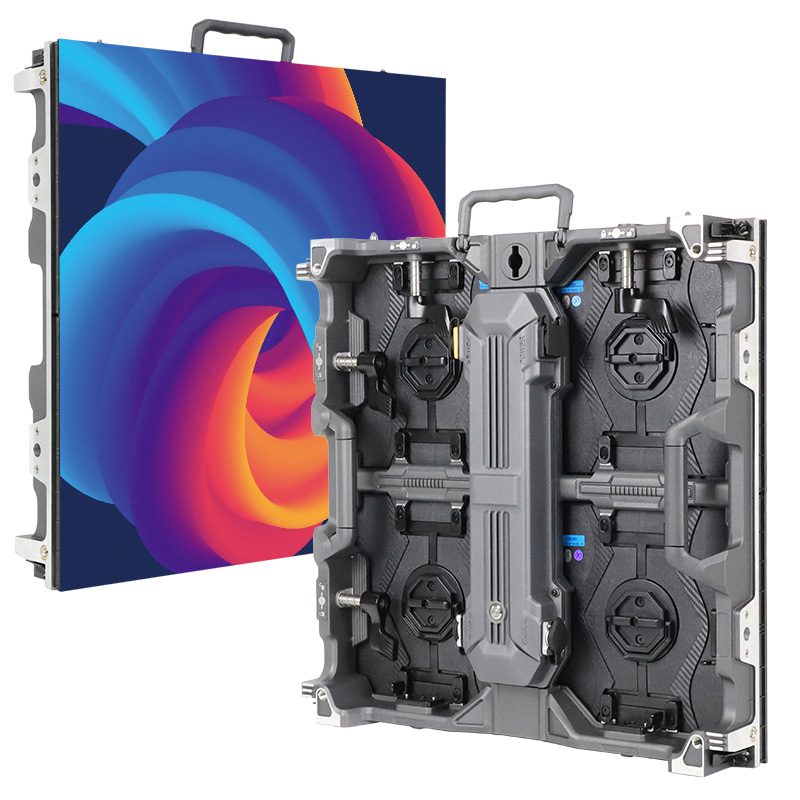
Two suppliers can quote the same pitch and deliver very different installations. Compare cabinet material and weight, module removal direction, receiving-card architecture, power redundancy and the processing platform that drives the wall. Redundant power supplies and dual signal paths matter on 24/7 sites and are frequently missing from the lowest bid.
03. Compliance, Certification and Documentation
Compliance is a procurement checkpoint, not a formality. Ask for model-level CE, RoHS and FCC documentation, EMC test reports, ageing records for the actual production batch, and material safety data where required. Tenders, customs clearance, insurance claims and building inspections depend on paperwork that matches the exact model shipped, and a certificate issued for a similar product family does not verify the model you are buying.
04. Typical Specification Ranges by Application
Use the matrix below to open the technical discussion, then confirm final figures against a model-level datasheet.
| Application | Typical pixel pitch | Brightness | Environment and IP rating | Service access |
|---|---|---|---|---|
| Control room or command centre | 0.9 - 1.5 mm | 600 - 800 nits | Indoor, climate controlled, IP20 | Front or full front access |
| Corporate lobby or boardroom | 1.2 - 2.5 mm | 600 - 1,000 nits | Indoor, IP20, low noise | Front service |
| Retail flagship or brand wall | 1.5 - 2.5 mm | 800 - 1,500 nits | Indoor, IP20, high contrast | Front service |
| Indoor rental or touring stage | 2.6 - 3.9 mm | 1,000 - 1,500 nits | Indoor, flight-cased, IP20 | Fast-lock front service |
| Virtual production or XR stage | 1.5 - 2.6 mm | 1,500 - 2,000 nits | Indoor, IP20, high refresh rate | Front service, camera tested |
| Stadium perimeter | 6 - 10 mm | 5,000 - 6,000 nits | Outdoor, IP65, slim profile | Front or rear service |
| Outdoor billboard or facade | 6 - 10 mm | 5,500 - 8,000 nits | Outdoor, IP65, wind-load rated | Rear walkway or front |
| Transport signage and wayfinding | 2.5 - 6 mm | 2,000 - 5,000 nits | Mixed, IP54 - IP65 | Front service |
| Digital street furniture | 2.5 - 4 mm | 3,000 - 5,000 nits | Outdoor, IP65, anti-vandal | Front service |
5. Support, Service and Warranty
Service is where LED display suppliers separate themselves long after the invoice is paid. A wall that is flawless at commissioning can still fail in year three, and what happens next depends on the terms negotiated before signing.
01. What a Real Warranty Covers
A meaningful warranty names the covered models, components, term, response time, remedy, and who pays for labour and freight. "Three-year warranty" alone is marketing. Ask whether modules, power supplies and control hardware are included, whether parts are new or refurbished, and whether cover survives third-party installation.
02. Spare Parts, Response Times and RMA
Downtime is measured in lost revenue, so the practical question is how fast a failed module can be replaced. Confirm where spare stock is held for your region, what percentage of the installation is recommended as spares, and how the RMA process is triggered. Ask for the escalation path and coverage hours in writing.
03. Commissioning, Training and Handover
Handover should include a commissioned wall, saved calibration profiles, source configuration, a content workflow your team can operate, and a documented maintenance routine. Insist on operator training and a written acceptance test recording brightness uniformity, dead pixels, colour consistency and redundancy.
6. Cost and Budgeting for LED Display Suppliers in 2026
Budgeting is easier when you separate the hardware from everything that makes it work. Cabinets are the visible cost, but structure, processing, installation and downtime cover decide the real number.
01. What Drives the Price per Square Metre
Four variables move the price: pixel pitch, brightness and IP rating, cabinet engineering, and order volume. Pitch is the strongest lever, because finer pitch means more LEDs, more driver channels and tighter tolerances per square metre. Outdoor cabinets cost more because of sealing, structural frames and higher-brightness components.
02. The Budget Lines Buyers Forget
Compare quotations against every line below, not just the cabinet price, and send each candidate the same specification document so that LED display suppliers are quoting the same product.
| Budget element | Typical share of project cost | How to control it | Where cutting costs backfires |
|---|---|---|---|
| Screens, cabinets and modules | 35 - 55% | Fix pitch, brightness and IP rating before requesting quotes | Downgrading pitch to fit budget damages legibility permanently |
| Processing, cabling and control | 8 - 15% | Standardise on one processing platform across the site | Cheap control hardware causes signal dropouts and rework |
| Steelwork, mounting and structure | 10 - 20% | Get structural drawings early so fabricators quote accurately | Under-engineered frames fail wind-load and inspection checks |
| Installation and commissioning | 10 - 18% | Appoint a local crew the supplier has worked with before | Unsupervised first-time installs create dead pixels and disputes |
| Freight, duties and insurance | 3 - 8% | Confirm Incoterms, packing standard and loading plan | Poor packing produces cracked modules that arrive as your loss |
| Spares, training and documentation | 2 - 5% | Contract a spare-parts percentage up front | No spares inventory turns one failure into a long outage |
| Content, software and integration | 3 - 10% | Test the content pipeline during commissioning | Unplanned software work is billed at premium rates later |
Quotations are only comparable when the specification is identical, so include pixel pitch, brightness, refresh rate, cabinet size and material, IP rating, processor model, spare-parts percentage, warranty term, delivery date, Incoterms and payment schedule in one document. A short digital advertising screen programme and a full street billboard build can be assessed on the same template.
7. How to Vet LED Display Suppliers: A Six-Step Process
Vetting is a sequence, not a checklist item. Done in order, it eliminates unsuitable LED display suppliers before you spend money on samples and site visits.
01. The Six-Step Vetting Process
- Define the requirement. Write down application, viewing distance, pitch range, brightness, environment, duty cycle, deadline and budget band before contacting anyone.
- Screen the company. Verify the legal entity, factory address, years in operation, export markets and product families, and compare the quoting company, contracting company and bank beneficiary.
- Request documentation. Collect model datasheets, CE and RoHS and FCC certificates, test reports, ageing records and warranty terms for the exact model you intend to buy.
- Test a sample. Order one cabinet, run it under your own ambient light, and check colour, viewing angle, refresh behaviour, module removal and firmware stability.
- Audit the factory. Visit in person or commission a third-party inspection covering production lines, quality control, ageing racks and warehouse stock.
- Contract with precision. Lock specification, acceptance criteria, spare-parts percentage, response times, penalties and payment milestones into the agreement before production starts.
02. Documents to Request Before You Sign
Ask for the business licence and export registration, the factory audit report, certificates matched to the quoted model, an ageing report for the production batch, a spare-parts list with prices, a warranty statement with response times, and references you may contact.
8. Common Mistakes Buyers Make with LED Display Suppliers
01. Commercial Mistakes
The most expensive mistake is buying on price per square metre without a frozen specification. Others follow quickly: accepting a verbal warranty, paying a deposit to an account that does not match the contract, ignoring lead time and shipping season, and under-investing in the local partner who will service the wall.
02. Technical Mistakes
The recurring technical failures are choosing a pitch too coarse for the viewing distance, ignoring ambient light when specifying brightness, skipping a camera test on virtual production stages, accepting a non-redundant power design on a 24/7 site, and assuming an off-the-shelf processor will handle an unusual geometry.
9. Future Trends Shaping LED Display Suppliers
01. Trends to Watch
COB and MIP packaging are moving fine pitch from premium to mainstream, bringing better moisture resistance and higher contrast at lower cost. Common-cathode drivers are cutting power draw while transparent LED screen formats expand into architecture and retail. MicroLED remains the long-term ceiling, so read our guide on whether a MicroLED monitor is worth buying before committing budget.
02. What Buyers Should Do Now
Write specifications that leave room for packaging improvements without invalidating the current design. Favour suppliers with a documented product roadmap, serviceable cabinets and open processing platforms, and add energy consumption and spare-parts availability to your evaluation criteria.
10. FAQs About LED Display Suppliers
01 How do I choose between the many LED display suppliers?
Start from the application, not the brand. Define pixel pitch, brightness, environment, duty cycle and deadline, then shortlist only the LED display suppliers whose documented products and reference projects match. Compare evidence rather than slogans: datasheets, certificates, test reports, spare-parts policy and a written warranty.
02 What should a supplier quotation include?
A comparable quotation states the exact model, pixel pitch, brightness, refresh rate, cabinet size and material, IP rating, processor model, spare-parts percentage, warranty term with response times, delivery date, Incoterms, packing standard and payment schedule.
03 How much do LED display suppliers charge per square metre?
Price is driven by pixel pitch, brightness, IP rating, cabinet engineering and order volume, so published figures quickly mislead. Finer pitch, outdoor ratings and custom cabinets raise the cost; repeat programmes and standard cabinets lower it. Compare total project cost, including structure, processing, installation, freight and spares.
04 How long does delivery take from LED display suppliers?
Standard indoor cabinets usually ship faster than custom outdoor structures, and lead time depends on order volume, production queue and shipping method. Ask for a written schedule with dated milestones, and build a buffer before any fixed public deadline.
05 Are the cheapest LED display suppliers a false economy?
Often yes, but not because low prices are inherently bad. The problem is what is removed to reach them: component tier, ageing time, redundancy, packing, documentation and after-sales capacity. Those reductions rarely appear on the quotation and always appear in operation.
06 Which certifications should LED display suppliers provide?
At minimum, model-specific CE, RoHS and FCC documentation, together with EMC test reports and batch ageing records. Certificates must reference the exact model shipped; a certificate for a similar product family will not satisfy customs or a tender.
07 How do I verify that a supplier is a real manufacturer?
Check the business licence and registered address, ask which production steps happen in house, and request a factory audit or third-party inspection covering SMT lines, module and cabinet assembly, ageing racks and stock. Confirm that the quoting company and the bank beneficiary match.
08 What warranty and support should I expect after purchase?
Expect a written warranty naming the covered models, components, term, response time, remedy and who pays labour and freight, plus a defined RMA process and a recommended spare-parts percentage. Also request commissioning data, calibration profiles and operator training.
How this guide was built. The ranking and guidance above are based on publicly available company information and published product families, combined with procurement criteria used in LED display tenders. Specification ranges are typical values for each application and should be confirmed against a model-level datasheet.
 2025 EagerLED Mid-Autumn Festival Holiday Notice
 Stadium LED Display: Boost Fan Engagement in Sports Venues