

Related Posts
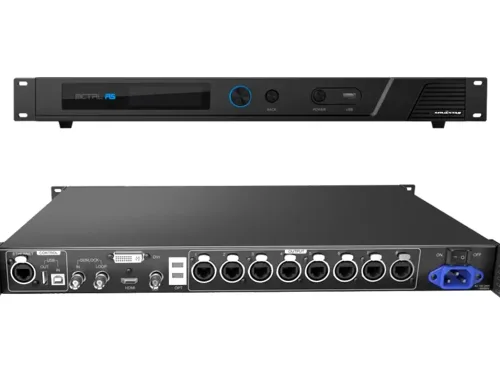
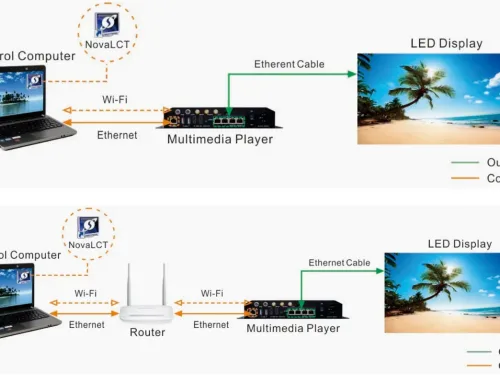
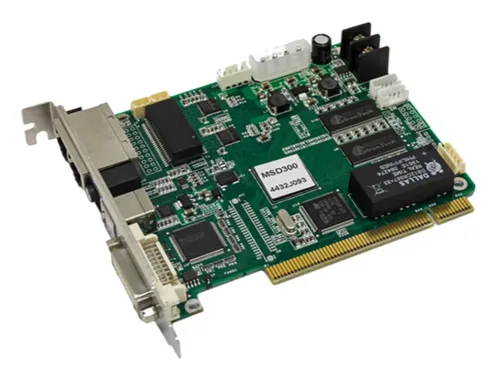
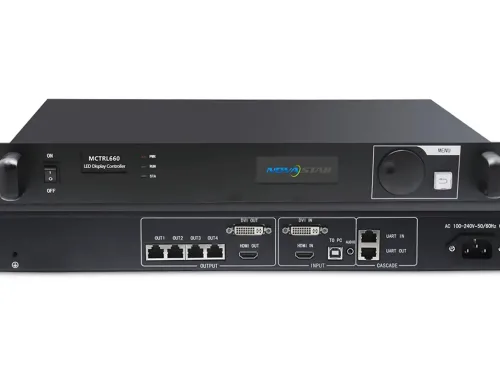

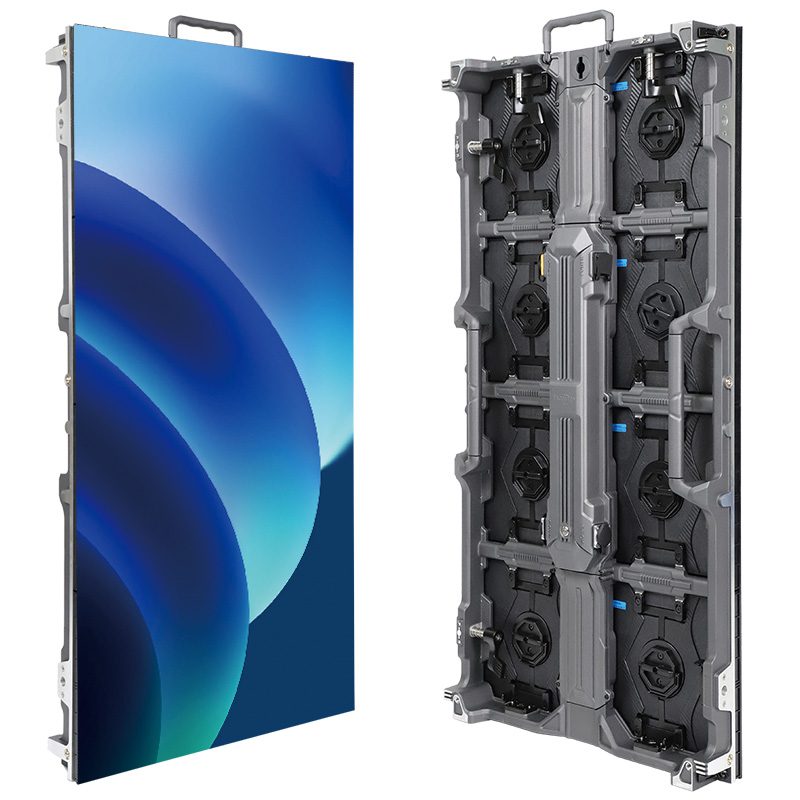
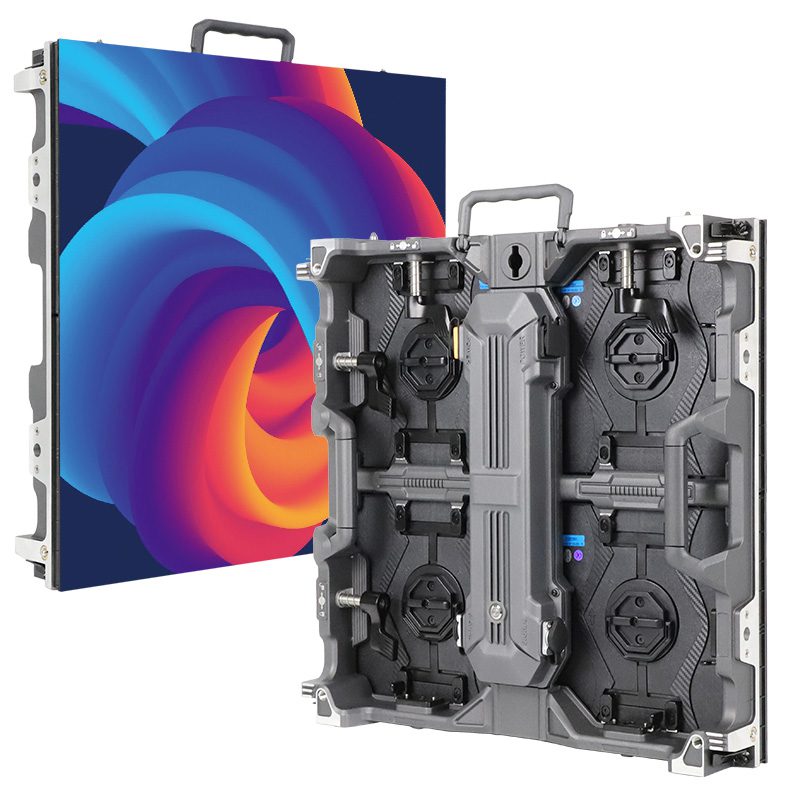
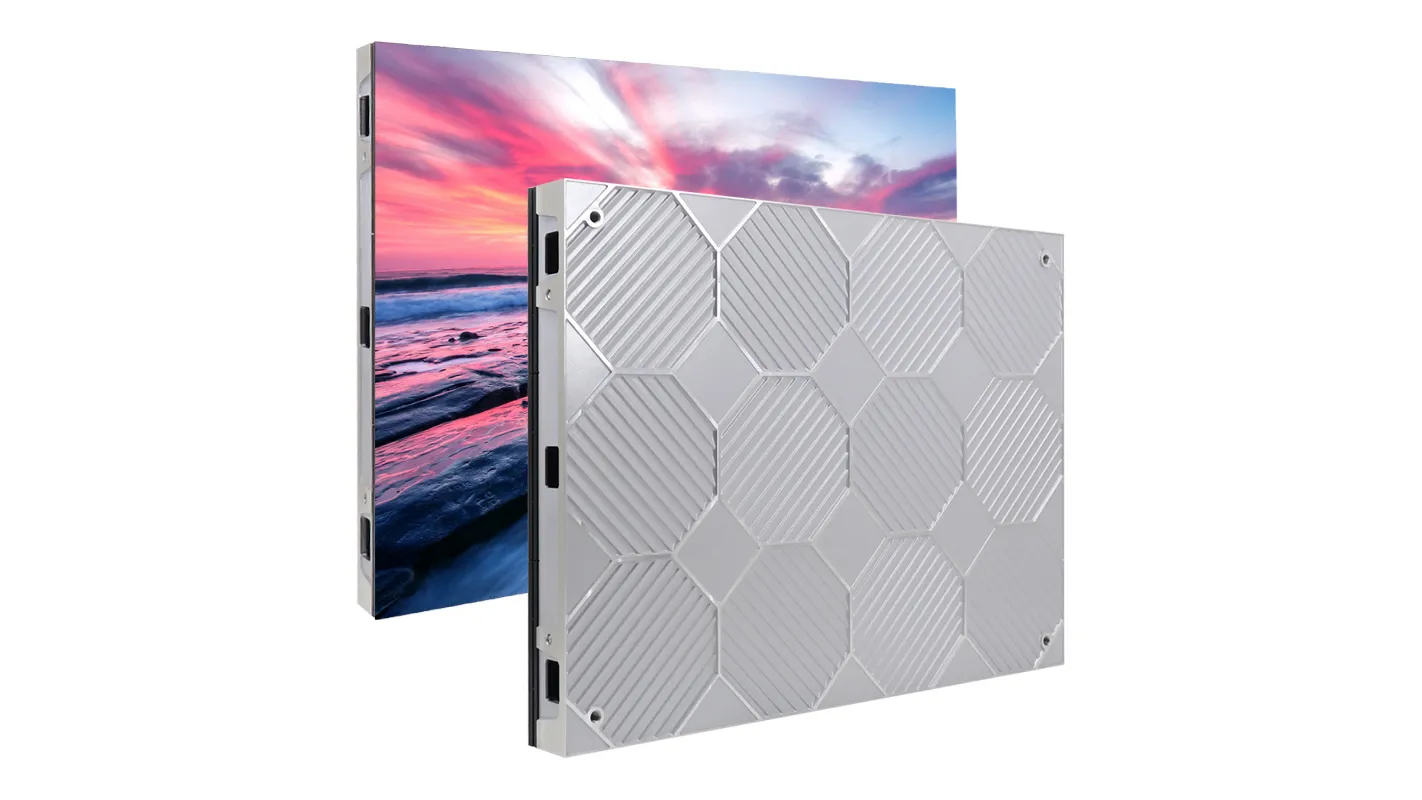
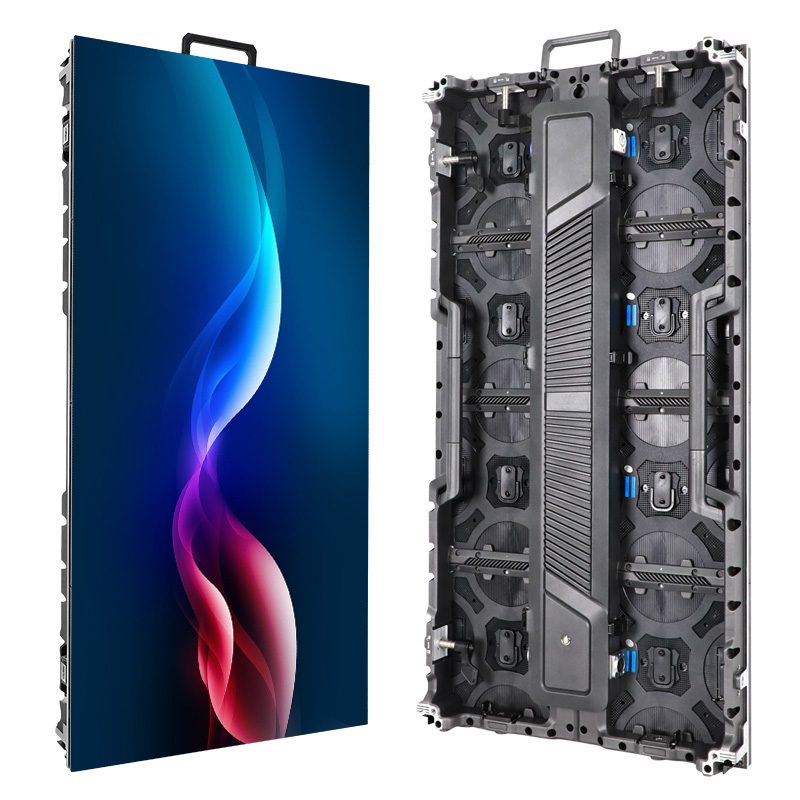
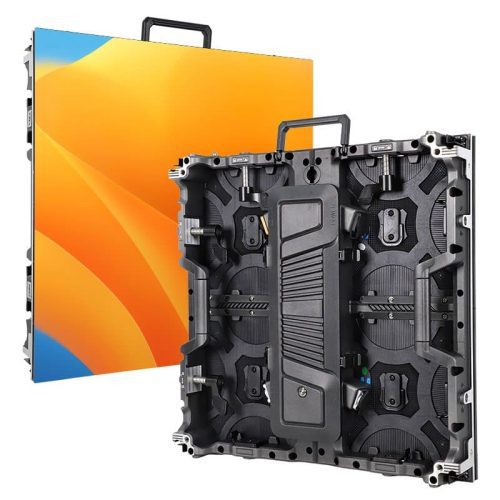
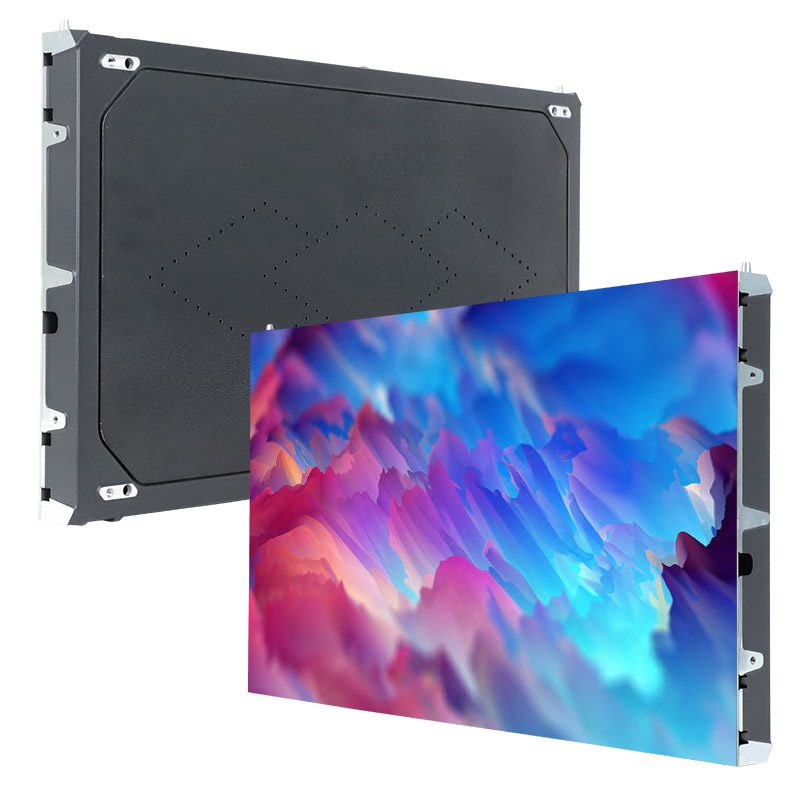
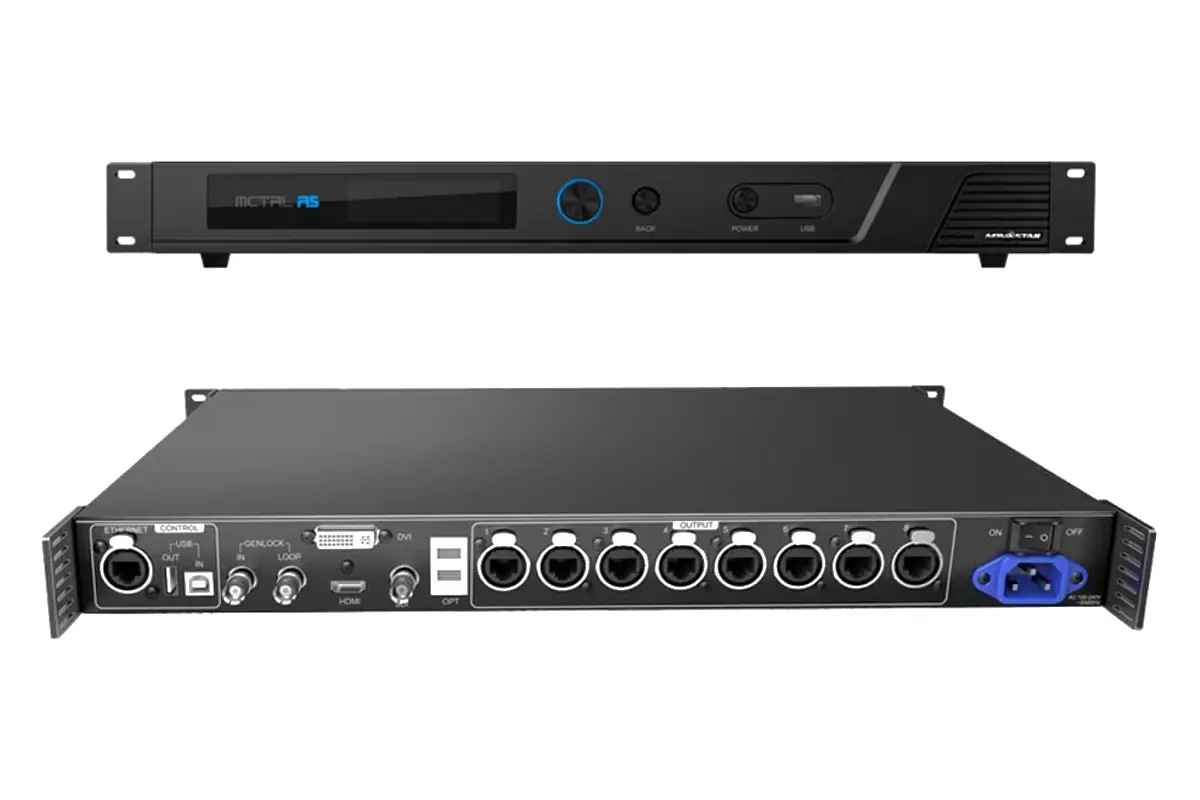
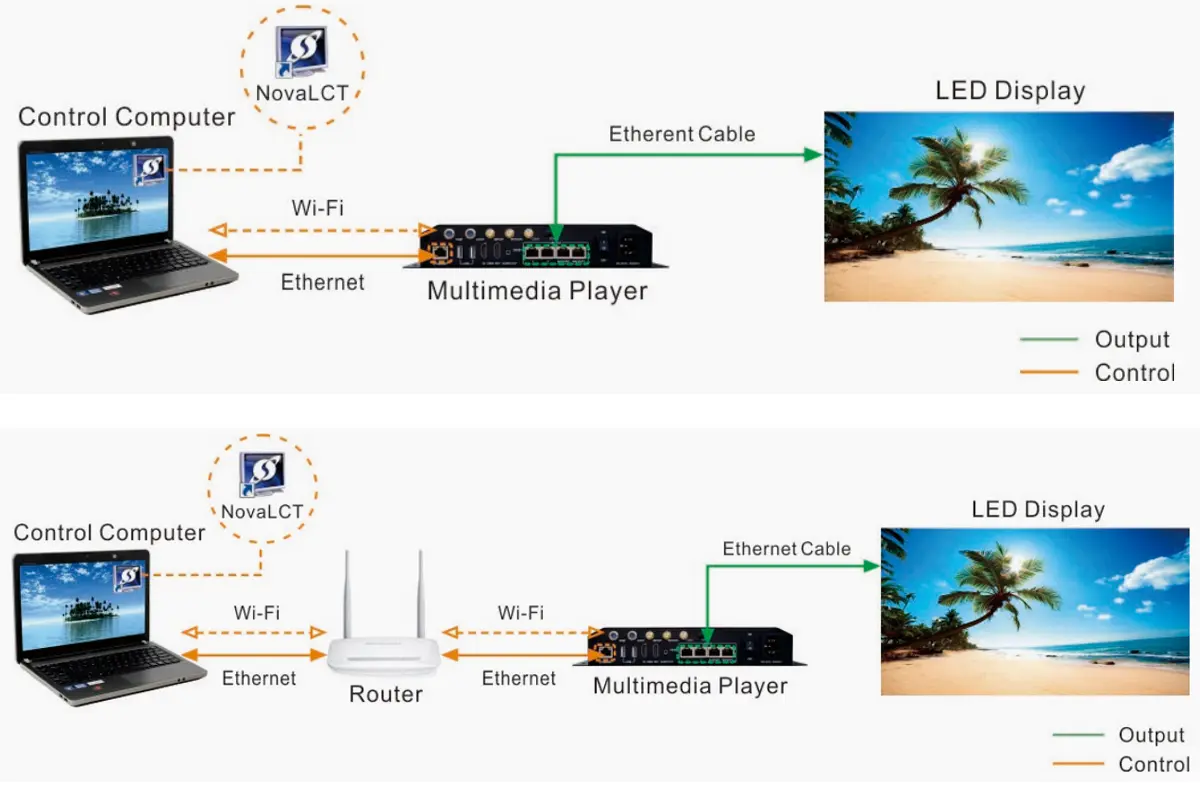
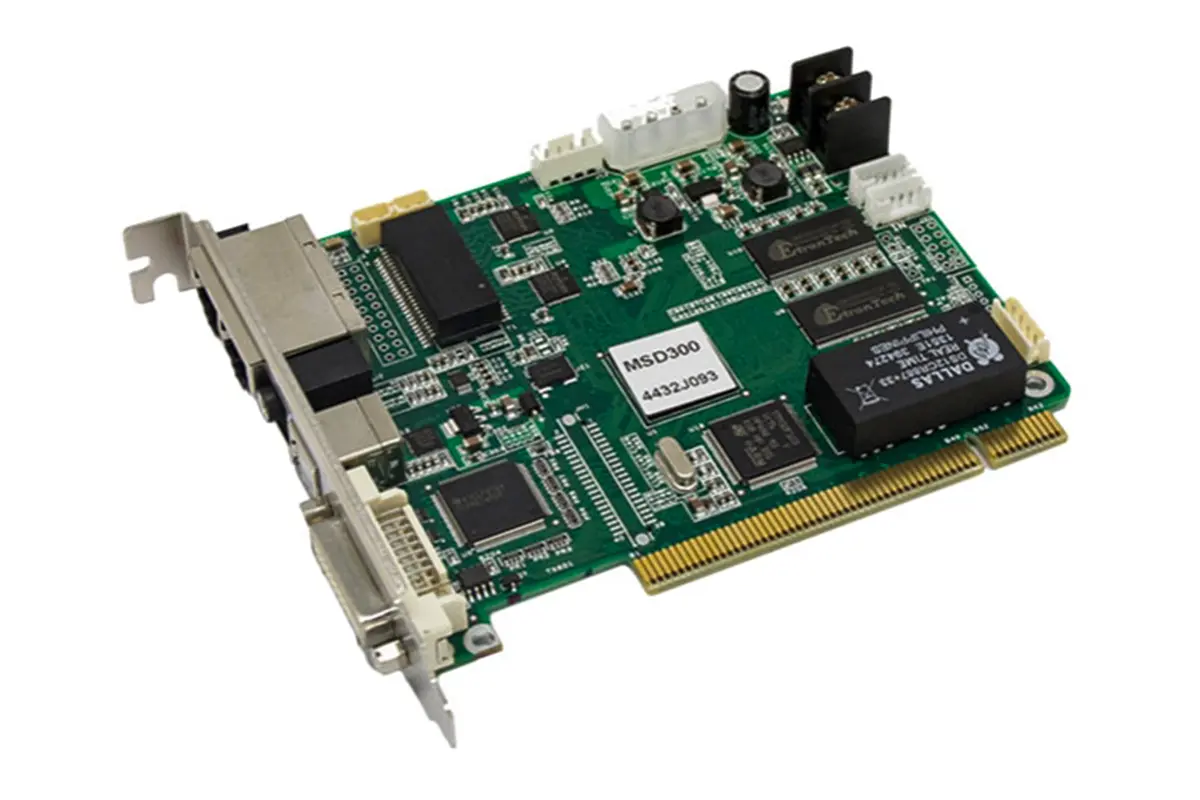
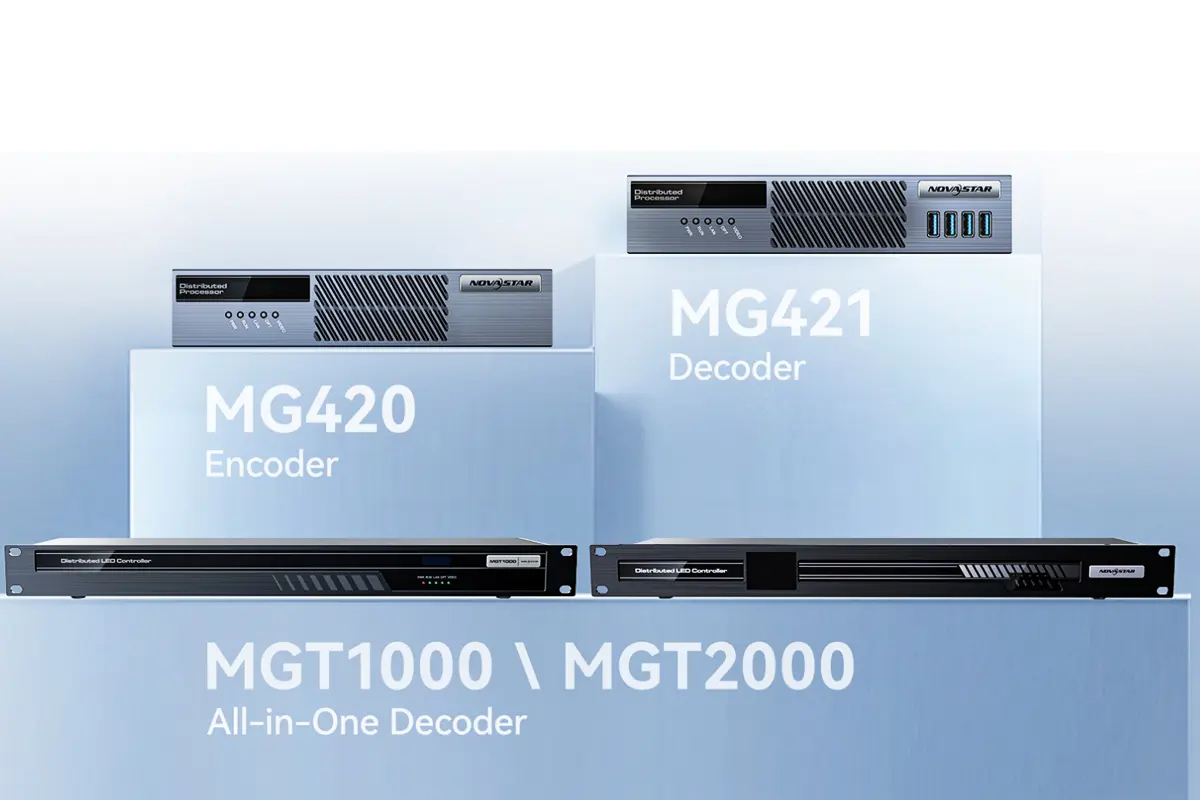
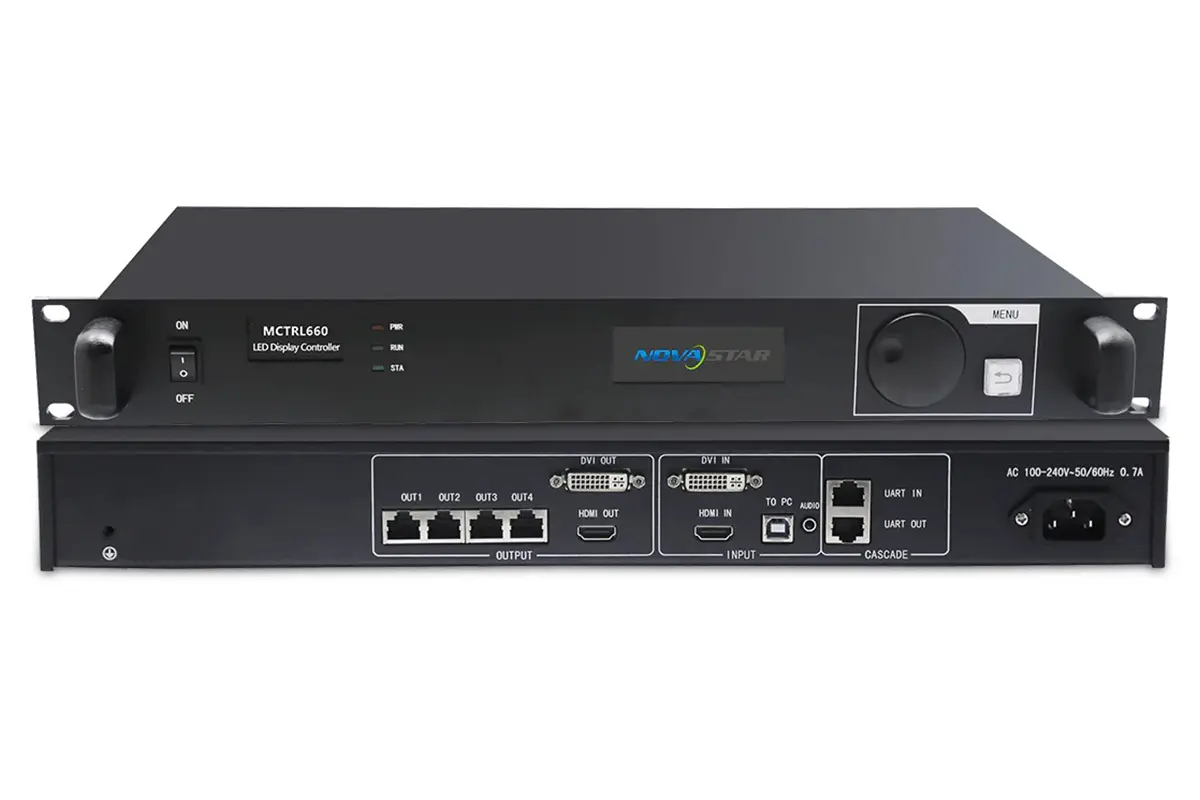
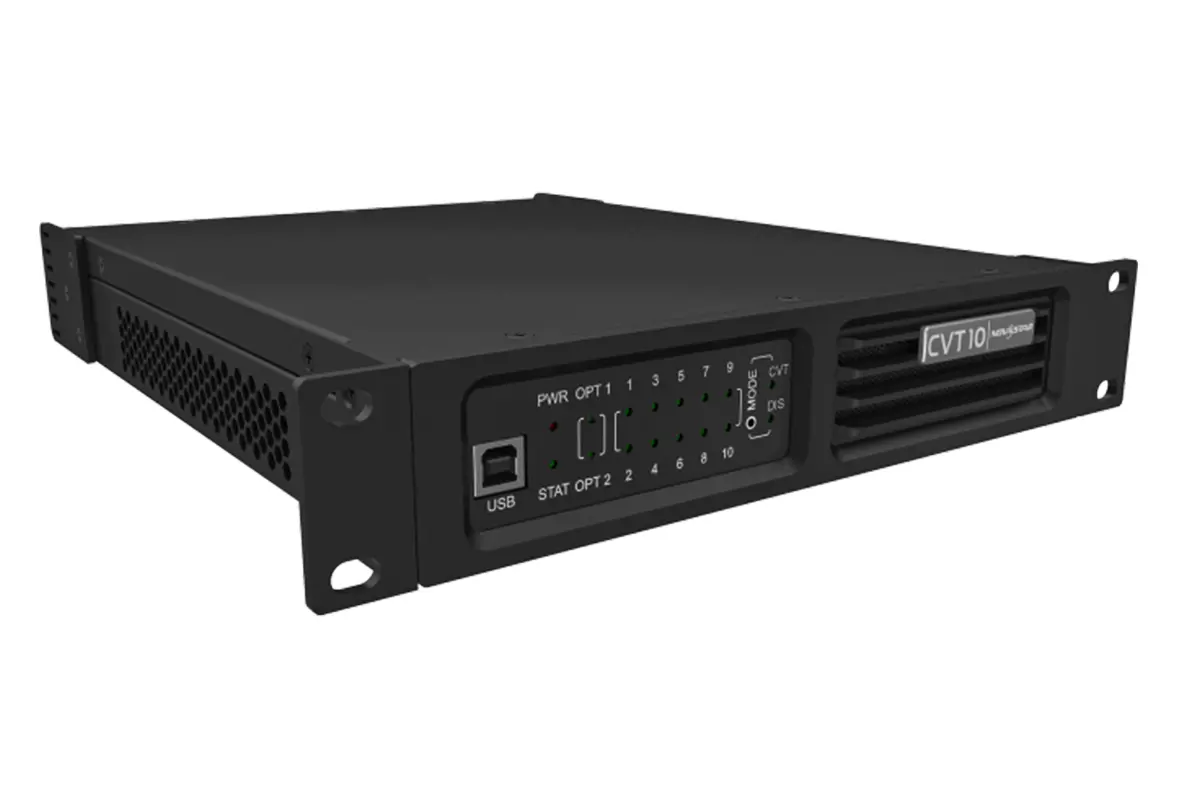
The Huidu HD-H8 and HD-H6 are commonly used as LED multimedia players in real LED display projects. This article looks at how these devices are actually used, including 4K video playback, signal input and output, and basic system connections. By the end of this guide, you should have a clear picture of where HD-H8 and HD-H6 fit in an LED display control system.
catalogue
1.What Is the Huidu HD-H8 & HD-H6 LED Multimedia Player Used For?
The Huidu HD-H8 and HD-H6 are smart, all-in-one LED multimedia players designed to replace traditional PCs in professional LED and LCD display control. Powered by Android 11, these devices combine program editing, playback, third-party app integration, and wireless screen sharing into a single compact unit—no external computer required.
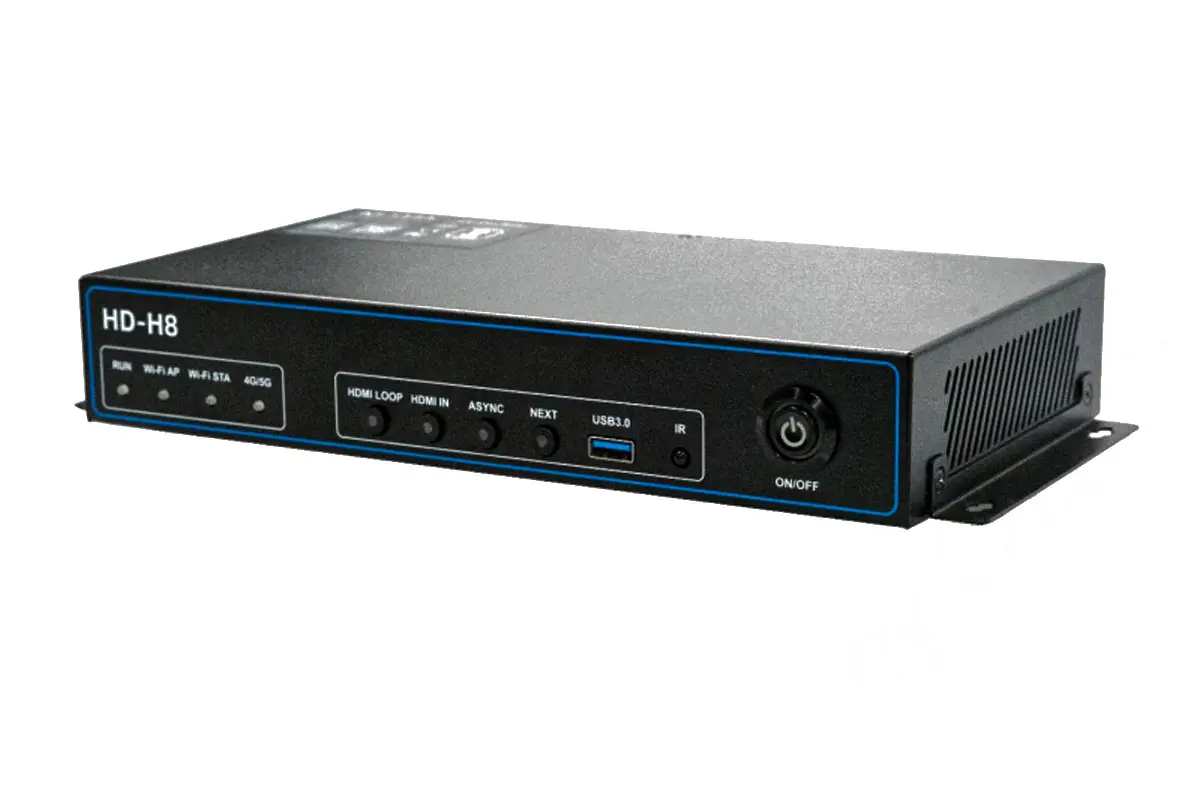
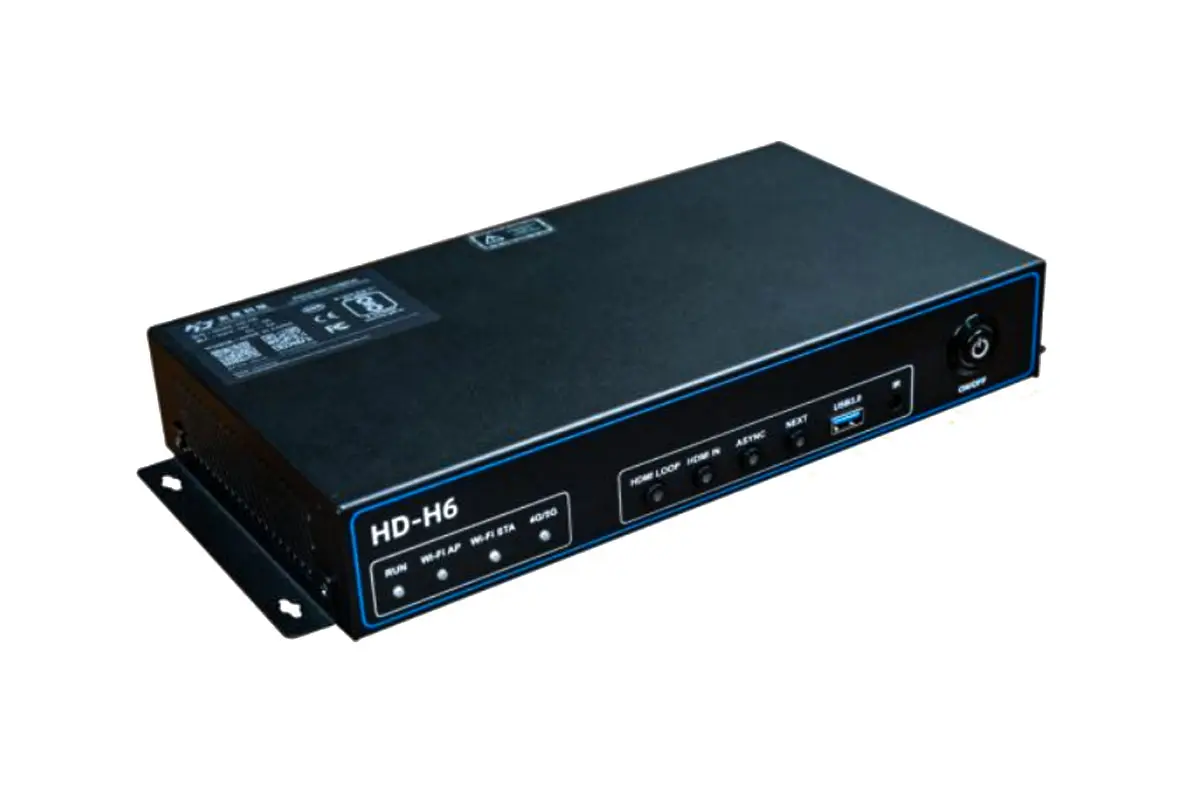
As advanced Huidu controllers, they deliver key features that make them ideal for dynamic visual environments:
- True 4K video playback: Supports dual-channel 4K@60Hz decoding (or up to six 1080p streams), enabling smooth, high-resolution content delivery—making them a powerful 4K video player for LED displays.
- Wireless screen mirroring: Cast content directly from Windows, iOS, or Android devices via dual-band Wi-Fi (2.4G/5G).
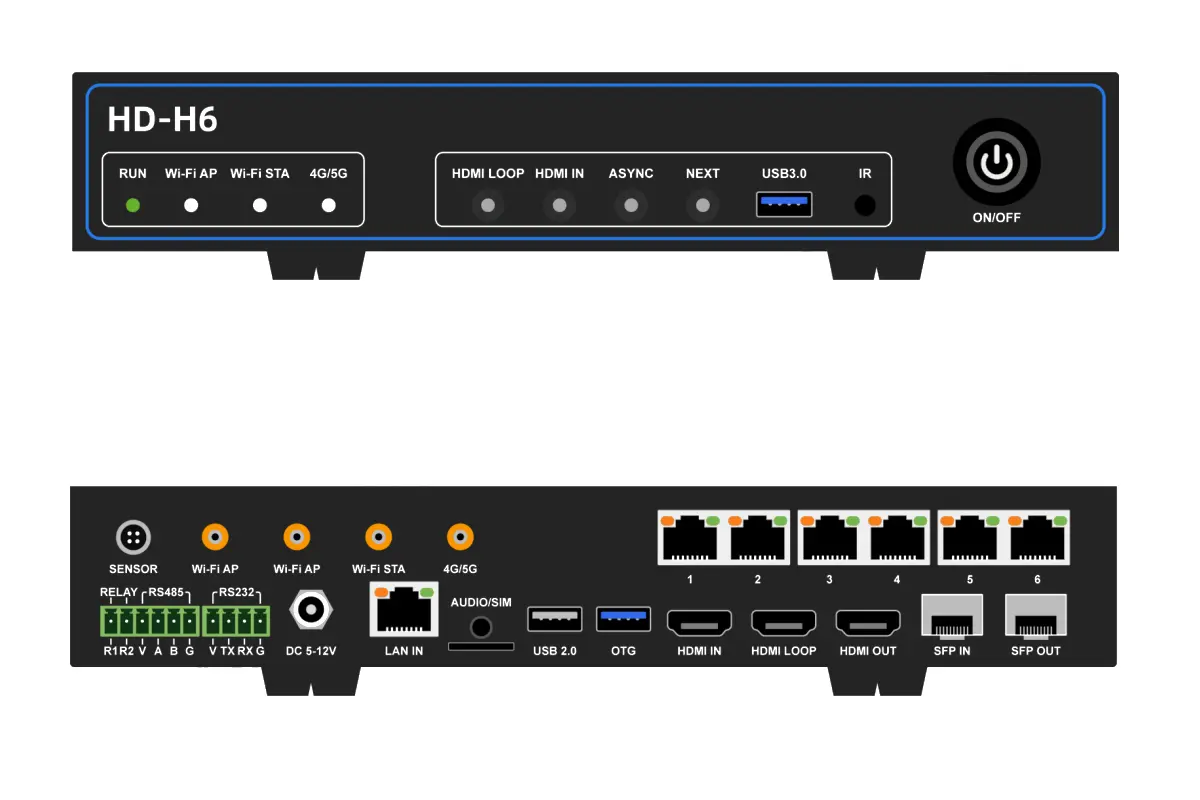
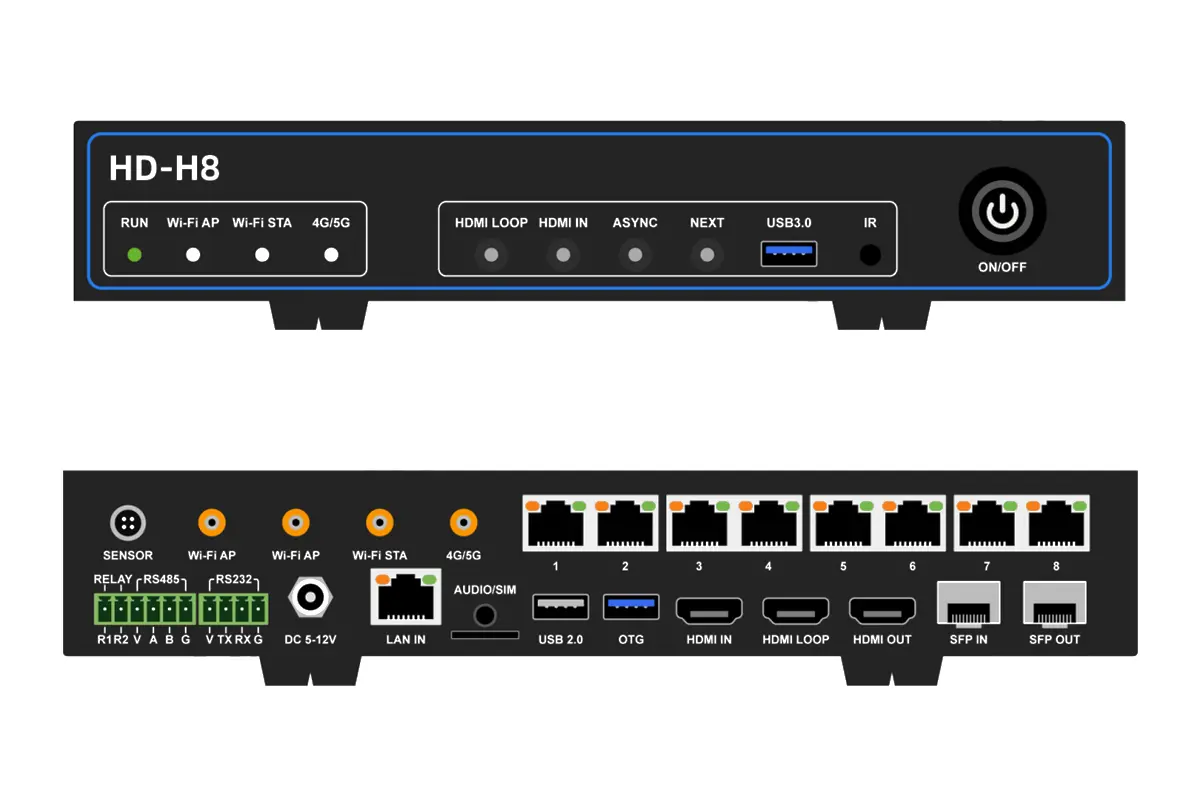
- Flexible signal input & output: Equipped with HDMI 1.4, USB, SFP optical ports, and multiple Gigabit Ethernet outputs (6 for HD-H6, 8 for HD-H8) for cascading large LED walls.
- Local content management: Edit, schedule, and play programs directly on the device, with support for third-party messaging apps and remote updates.
- Smart connectivity: Includes RS232/RS485 for central control, Bluetooth for voice remote, infrared remote, sensor input, and optional 4G/5G via SIM card.
2.Differences Between HD-H8 and HD-H6 multimedia players in LED Display Projects
While the HD-H8 and HD-H6 multimedia players share many similarities, there are key distinctions that make each model suitable for specific use cases. Below is a comparison table highlighting their core differences:
| Feature | HD-H8 | HD-H6 |
|---|---|---|
| Total Pixel Load | 5.24 million pixels | 3.93 million pixels |
| Ethernet Outputs | 8-way Gigabit Ethernet output | 6-way Gigabit Ethernet output |
| Cascade Modes | HDMI, optical port cascading | HDMI, optical port cascading |
| Weight | 1.34 KG | 1.30 KG |
| Optimized Use Cases | Larger displays, higher pixel density | Medium-sized displays, balanced performance |
Huidu HD-H8 vs. HD-H6 multimedia players : Which Model Is Right for You?
- Choose the HD-H8 if you’re managing large-scale LED display projects with higher pixel loads and complex layouts. Its 8-port Gigabit Ethernet and 5.24 million pixel capacity make it a powerful LED multimedia player for high-density video walls.
- Choose the HD-H6 for medium-sized installations where cost-effectiveness and reliable performance are priorities. With 3.93 million pixel support and 6 Ethernet outputs, it delivers excellent value as a versatile Huidu controller.
3.4K Video Playback Performance on LED Display Systems
One of the standout features of both the Huidu HD-H8 and HD-H6 is their exceptional 4K video playback capability. Designed as high-performance LED multimedia players, these devices deliver smooth, lag-free video output even for large-scale LED display systems.
They support a wide range of modern video codecs, including H.264, H.265, VP9, and MPEG-4, ensuring full compatibility with high-resolution content from various sources—ideal for digital signage, live streaming, and professional presentations.
Here’s a breakdown of their video playback performance:
| Resolution | Channels Supported | Frame Rate | Bitrate |
|---|---|---|---|
| 4K | 2 channels | Up to 60fps | Up to 100Mbps |
| 1080P | 6 channels | Up to 60fps | Up to 80Mbps |
| 720P | 10 channels | Up to 60fps | Up to 60Mbps |
| 360P | 20 channels | Up to 60fps | Up to 38.4Mbps |
This robust multi-channel decoding allows simultaneous playback of multiple video streams across different zones of an LED wall—perfect for dynamic content layouts, picture-in-picture (PiP), or split-screen displays.
Additionally, both models are equipped with dual Wi-Fi chips supporting 2.4G/5G frequency bands, enabling low-latency wireless screen mirroring from Windows, iOS, and Android devices. This ensures seamless, real-time streaming—even when handling high-bitrate 4K video content.
4. Supported Input, Output, and Cascade Connection Options
Both the Huidu HD-H8 and HD-H6 are powerful LED multimedia players with rich connectivity, but their I/O configurations reflect their distinct roles in LED display projects. Below is a detailed breakdown by model.
Huidu HD-H8 multimedia player: High-Capacity I/O for Large-Scale Installations
Designed as a high-end 4K video player for LED displays, the HD-H8 delivers maximum flexibility for complex, large-pixel-load applications such as stadiums, control rooms, or digital art walls.
Input Interfaces
- Gigabit Ethernet Port: For network-based control (TCP/UDP) and remote management.
- Dual HDMI 1.4 Inputs: Enable cascade splicing, picture-in-picture (PiP), and direct source ingestion from PCs or media servers.
- SFP Optical Input: Supports long-distance, noise-free signal reception via fiber optic cable.
- USB Ports: 1× USB 2.0 + 1× USB 3.0 for firmware updates, content loading, and peripheral connectivity.
- Sensor Interface (TTL Level): Connects external sensors (e.g., ambient light, motion) for smart display automation.
Output Interfaces
- 8-way Gigabit Ethernet Outputs: Drives up to 5.24 million pixels across multiple LED modules with pixel-perfect synchronization.
- HDMI OUT: Loop-out signal for cascading or real-time monitoring on external screens.
- SFP Optical Output: Transmits signals over fiber to downstream devices—ideal for runs exceeding 100 meters.
- Audio Output: TRS 3.5mm stereo jack for synchronized two-channel audio playback.
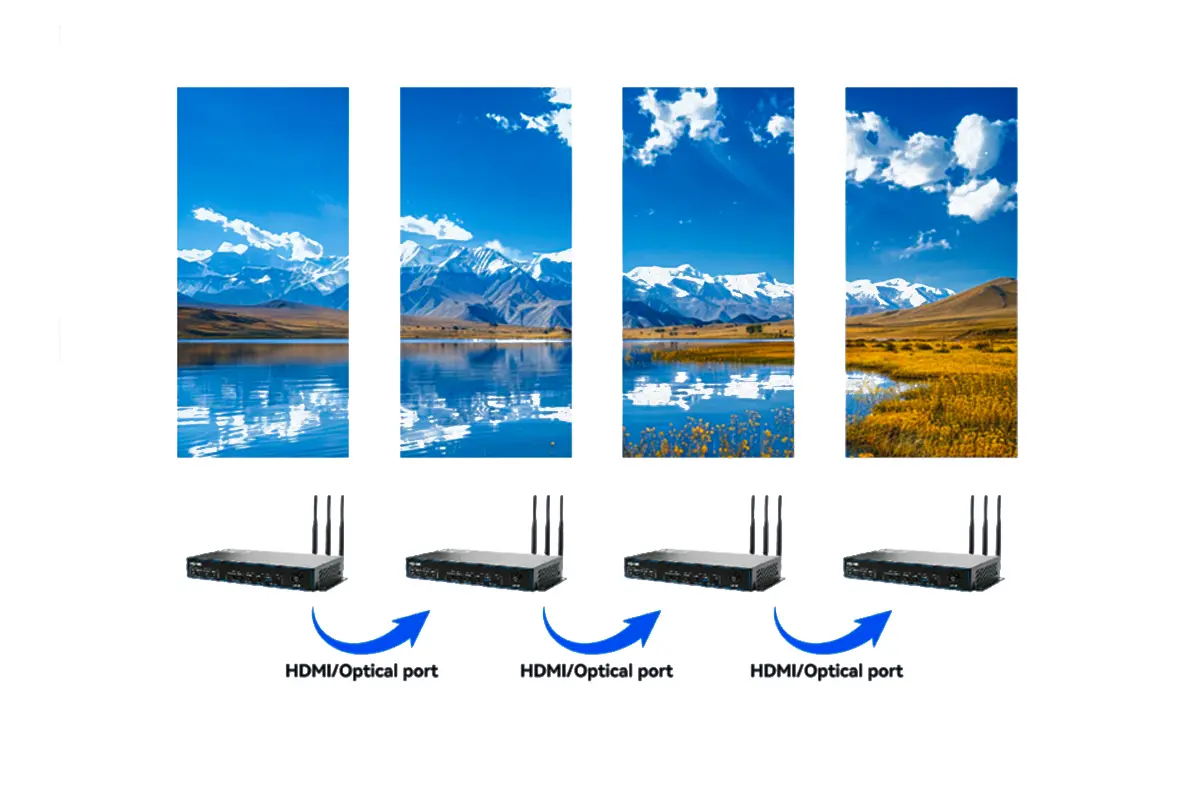
Cascade Support
- HDMI cascade (short-range daisy-chaining)
- Optical fiber cascade via dual SFP ports (long-range, high-reliability)
Huidu HD-H6 multimedia player: Balanced Performance for Mid-Sized Setups
The HD-H6 offers a streamlined yet robust feature set as a cost-effective Huidu controller, perfect for medium-scale deployments where reliability and ease of use matter most.
Input Interfaces
- Gigabit Ethernet Port: Enables network integration and remote configuration.
- Dual HDMI 1.4 Inputs: Supports PiP, multi-source switching, and cascade input from upstream devices.
- SFP Optical Input: Allows fiber-based signal reception for clean, interference-free transmission.
- USB Ports: 1× USB 2.0 + 1× USB 3.0 for local storage and system maintenance.
- Sensor Interface (TTL Level): Integrates with environmental or occupancy sensors for adaptive content display.
Output Interfaces
- 6-way Gigabit Ethernet Outputs: Supports up to 3.93 million pixels—sufficient for most indoor LED walls and signage.
- HDMI OUT: Provides loop-out for monitoring or extending the signal chain.
- SFP Optical Output: Enables fiber-optic cascading to next-stage controllers.
- Audio Output: Standard 3.5mm TRS stereo output for background music or voice announcements.
Cascade Support
HDMI cascade for simple multi-screen setups
Optical cascade via SFP for extended reach and professional-grade stability
5.How HD-H8 & HD-H6 Work as LED Multimedia Controllers
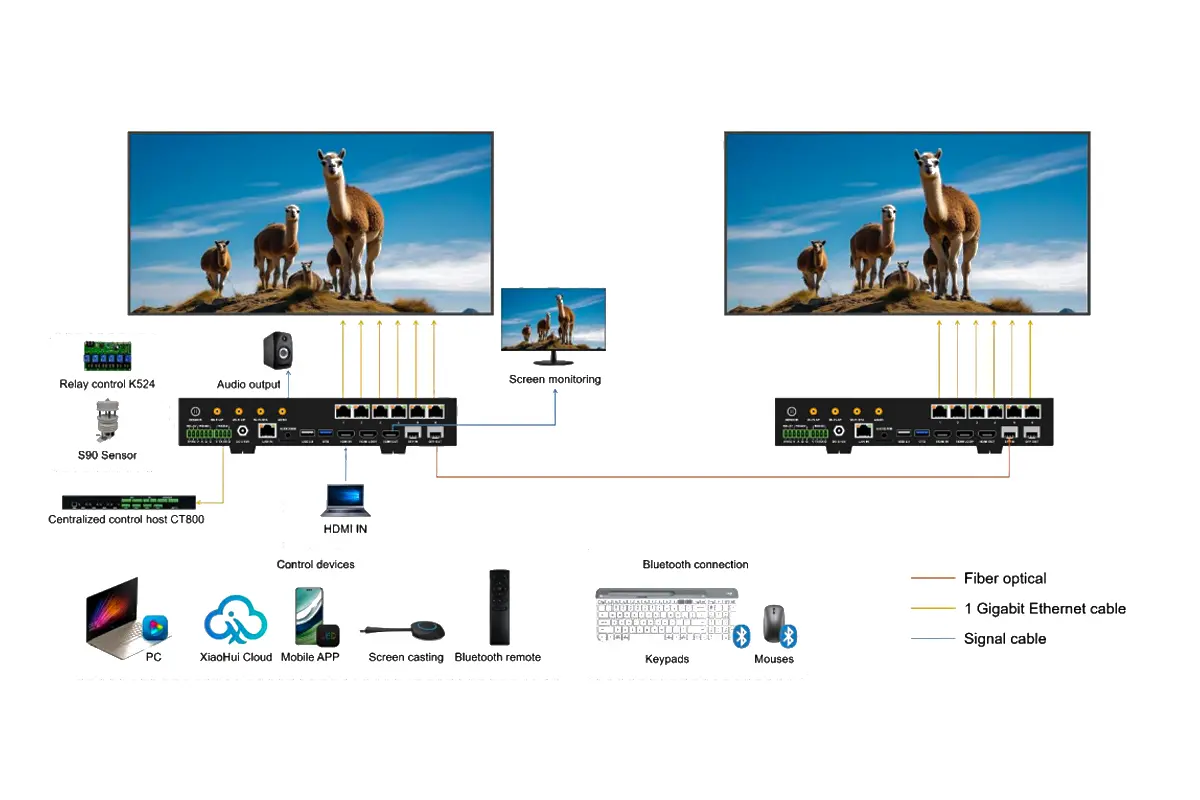
At the heart of both the Huidu HD-H8 and HD-H6 lies a powerful, PC-free control architecture built on Android 11.0. This transforms them from simple media players into intelligent LED multimedia controllers—capable of local content creation, real-time interaction, and seamless system integration, all without relying on an external computer.
Their embedded Android OS provides a familiar, intuitive interface for on-device program editing, scheduling, and playback. Combined with robust connectivity and smart features, they deliver end-to-end control for modern LED display systems.
Third-Party APP Messaging Integration
Both models support installation and operation of third-party Android applications (e.g., messaging, weather, or CMS tools), enabling real-time content updates—ideal for dynamic digital signage in retail, transportation, or corporate environments.
Remote Management via Wi-Fi or Ethernet
Administrators can monitor, configure, and update content across one or multiple units remotely through a web browser or dedicated software over dual-band Wi-Fi (2.4G/5G) or Gigabit Ethernet, ensuring centralized control even in distributed deployments.
Comprehensive Peripheral Support
The devices feature multiple interfaces to connect external hardware:
- Cameras (via USB) for live video input
- Speakers or amplifiers (via 3.5mm audio output)
- Environmental sensors (via TTL-level sensor port)
- Central control systems (via RS232/RS485 serial ports)
- This makes them adaptable to interactive kiosks, smart classrooms, or IoT-enabled signage.
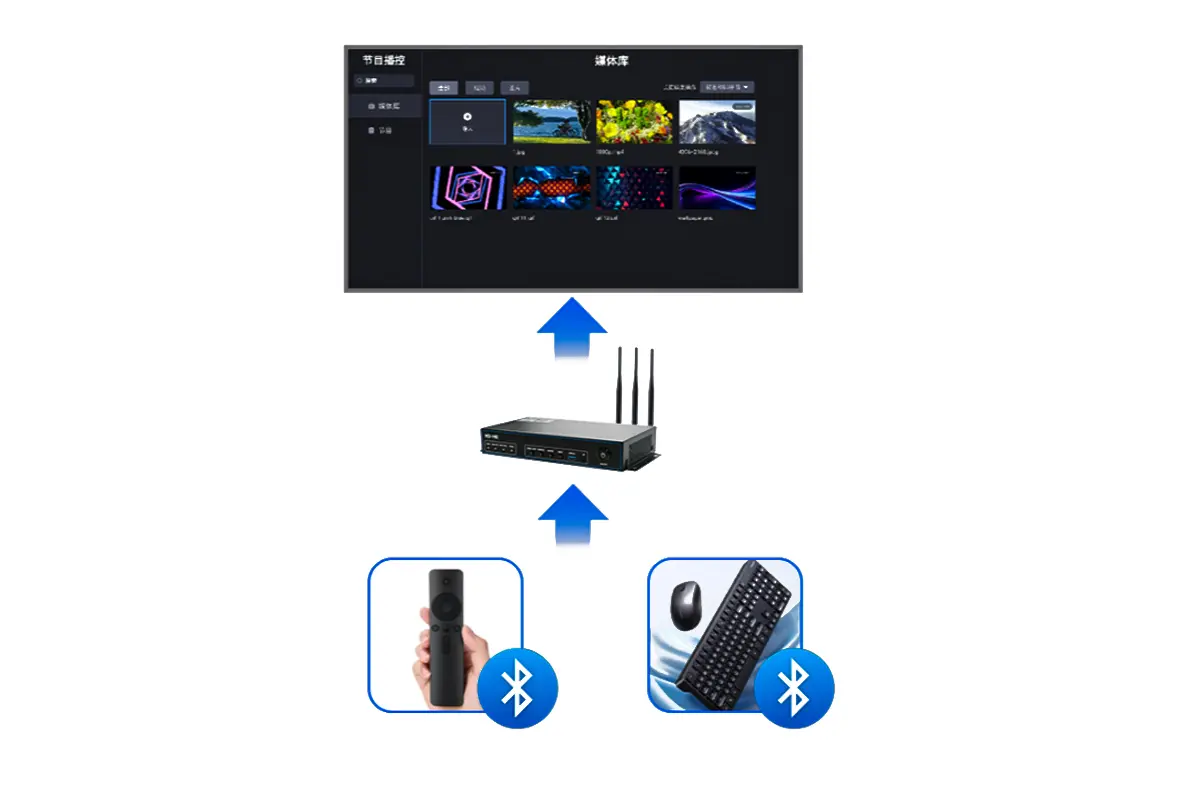
Bluetooth Voice Control & Infrared Remote
Users can operate the player hands-free using a Bluetooth voice remote (supporting basic voice commands) or a traditional IR remote—enhancing usability in meeting rooms or public spaces.
Low-Power Standby & Auto Wake-Up
With standby power consumption under 0.5W, both units support scheduled wake-up and sleep modes, reducing energy costs in 24/7 installations.
6.Wireless Screen Projection and Network Control Capabilities
Wireless screen projection is a game-changer for modern display systems, and both the HD-H8 and HD-H6 excel in this area. They support multi-platform wireless screen projection across Windows, iOS, and Android devices.
Key highlights include:
- Dual Wi-Fi Chips: Simultaneous operation on 2.4G/5G frequency bands for high-speed connectivity.
- Low Latency: Ensures smooth, real-time screen projection.
- Wi-Fi Hotspots: Create hotspots for easy device connections.
Additionally, the players’ network control capabilities allow users to manage content remotely, making them perfect for distributed display networks.
7.Typical Application Scenarios for HD-H8 & HD-H6 multimedia players
Thanks to their PC-free architecture, robust 4K video playback, and smart connectivity, the Huidu HD-H8 and HD-H6 serve as versatile LED multimedia players across diverse industries. Their ability to deliver high-quality visuals, support wireless interaction, and integrate with third-party systems makes them ideal for both dynamic and static display environments.
Corporate Environments
In boardrooms and executive briefing centers, seamless presentations and video conferencing are essential.
- HD-H6: Perfect for standard meeting rooms—supports wireless screen mirroring from laptops or phones, HDMI input for local sources, and scheduled content playback.
- HD-H8: Ideal for large corporate command centers or multi-screen war rooms requiring synchronized 4K content across several displays via its 8 Gigabit outputs.
Retail Spaces
- Digital signage in stores must capture attention while delivering timely promotions.
- Both models support scheduled playlists, third-party app messaging (e.g., real-time inventory or social feeds), and remote content updates over Wi-Fi or Ethernet.
- The HD-H6 is cost-effective for single-store or small-chain deployments.
- The HD-H8 scales effortlessly across flagship stores with video walls spanning multiple zones.
Event & Exhibition Venues
- From trade shows to live concerts, these venues demand reliable, high-resolution visuals and flexible setup.
- HD-H8 shines here: With support for up to 5.24 million pixels, dual HDMI inputs, and optical fiber cascade, it drives large LED backdrops, stage screens, or immersive art installations—even over long distances.
- Wireless projection allows speakers or performers to share content instantly from mobile devices.
Educational Institutions
- Modern classrooms and lecture halls benefit from interactive, media-rich learning.
- Teachers can wirelessly cast lessons from tablets, play locally edited videos, or display real-time data—all through the HD-H6, which offers the right balance of performance and affordability for schools.
- Centralized network control allows IT staff to manage dozens of units across a campus from one dashboard.
8.FAQs
 Complete Guide To The MCTRL R5 LED Display Controller – Features, Setup & Configuration