

Mobile LED Screens for Equipment Buyers
A mobile LED screen is a direct-view video display that travels between sites or moves within a venue. This page helps rental businesses, event equipment buyers, advertising operators and integrators compare display equipment for purchase. Choose between reusable rental cabinets, a display integrated with a trailer or vehicle, and a wheeled indoor poster according to how the system will travel and operate.
- Mobility: a complete road-going platform, cabinets in flight cases, or an indoor wheeled display.
- Audience: active screen dimensions, nearest viewing position and representative content.
- System: processor inputs, content scheduling, power, cables, packing and spares.
- Responsibility: separate display equipment from vehicle fabrication, local installation and event operation.
Recommended LED Screens for Mobile Applications
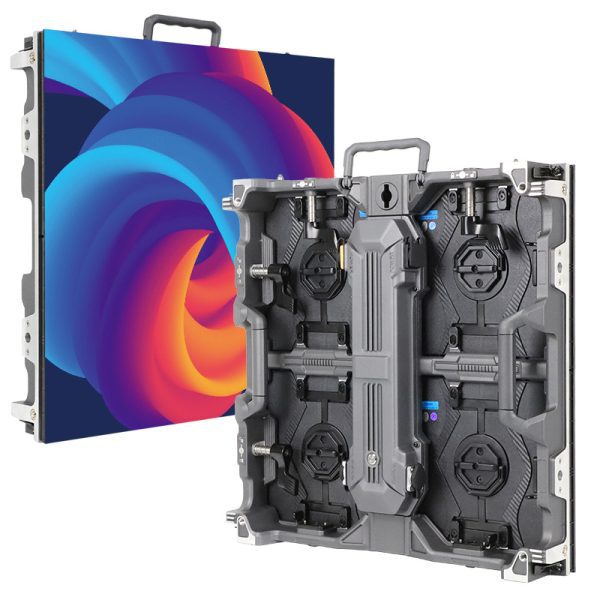
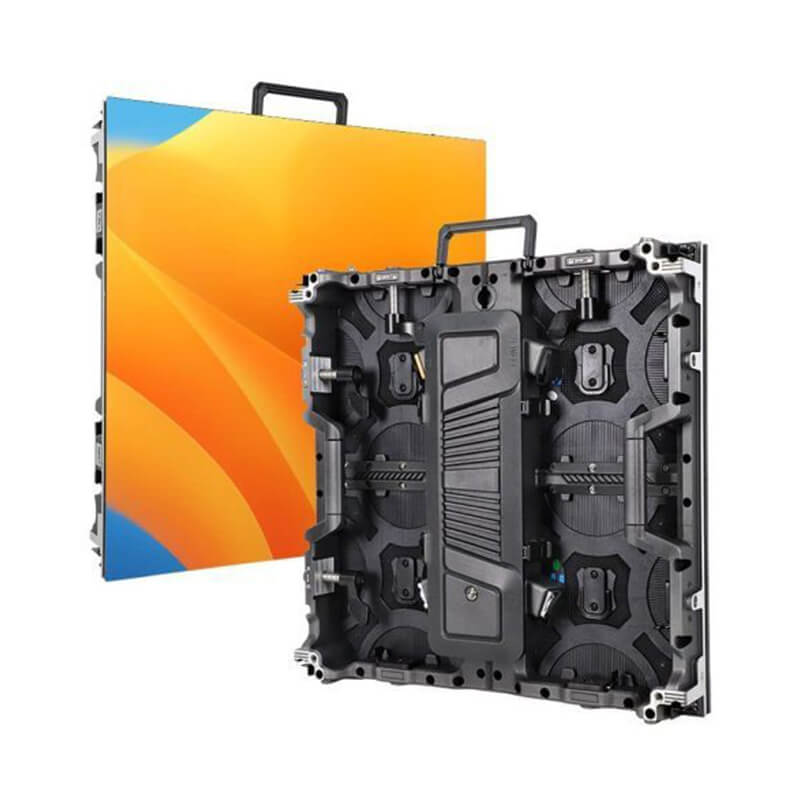
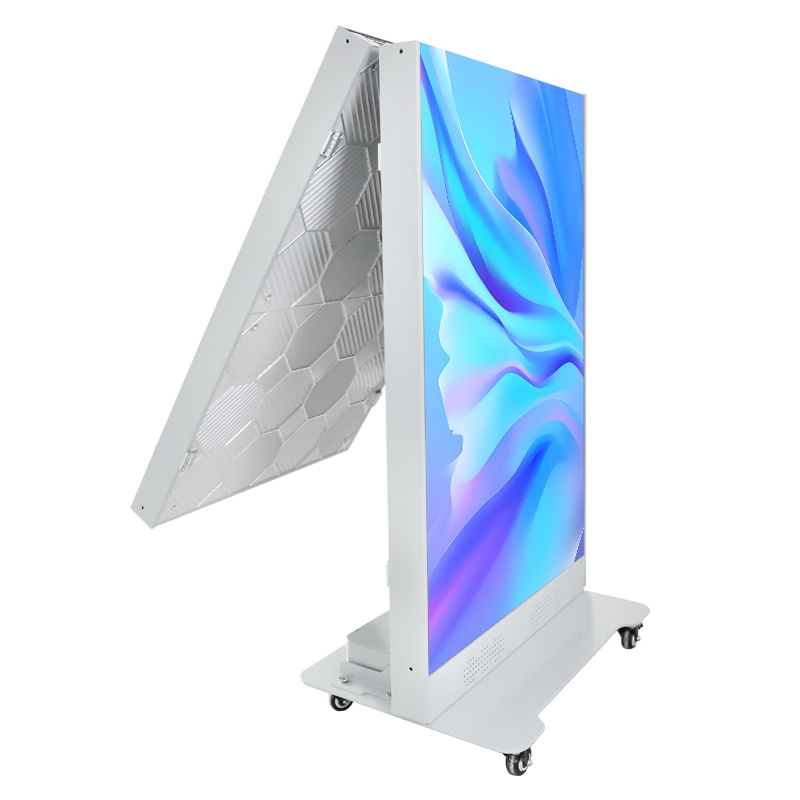
The products below are display options to assess for mobile projects. Rental cabinets can support repeated event assembly, while a wheeled poster serves indoor promotion. Confirm the exact model, operating environment, dimensions, transport protection and service access. These product recommendations do not by themselves specify a complete trailer, road-legal vehicle or local screen-hire service.
Benefits of a Mobile LED Screen Solution
1. Fast deployment across multiple locations
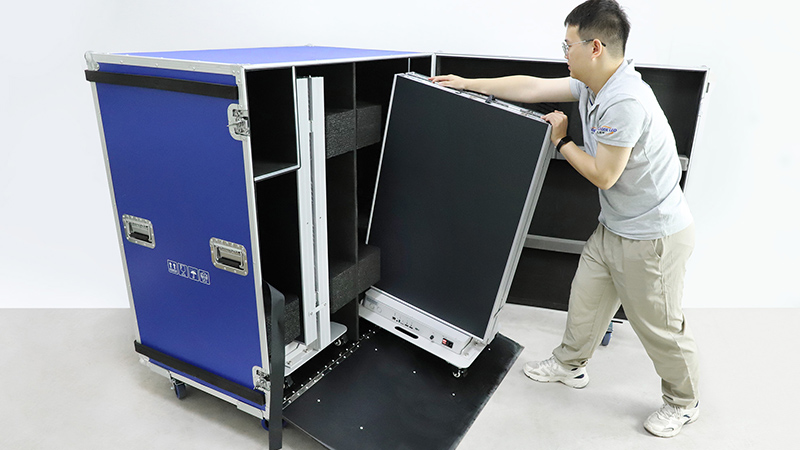
Deployment time depends on the complete system and site. Reusable cabinets need a documented assembly and cabling sequence; a trailer needs positioning, stabilization and platform checks; a wheeled poster needs a clear route, stable floor and suitable power. Confirm handling instructions, crew requirements and the setup window for the selected equipment rather than assuming a fixed time or one-person operation.
2. Strong visibility in changing environments
Pixel pitch, brightness and cabinet protection are selected for the real viewing distance and ambient light. This keeps live video, sponsor content, schedules and advertising readable without relying on a single specification for every indoor and outdoor location.
3. Formats for outdoor and indoor mobility
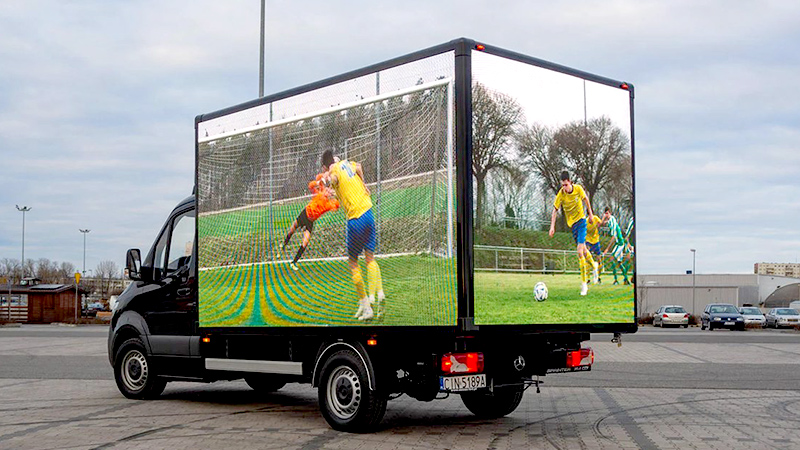
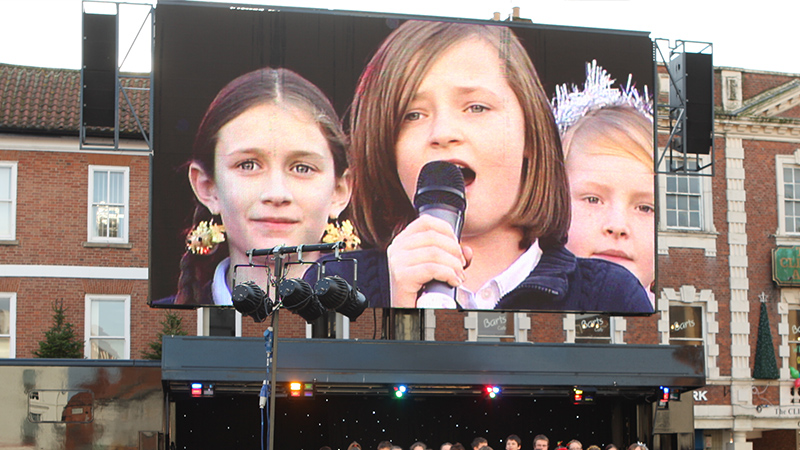
Mobile does not mean one hardware format. Trailer-mounted displays prioritize rapid outdoor deployment, vehicle-mounted screens support route-based campaigns, rental panels create adjustable event walls, and poster displays move easily inside a venue.
4. Support for live and scheduled content
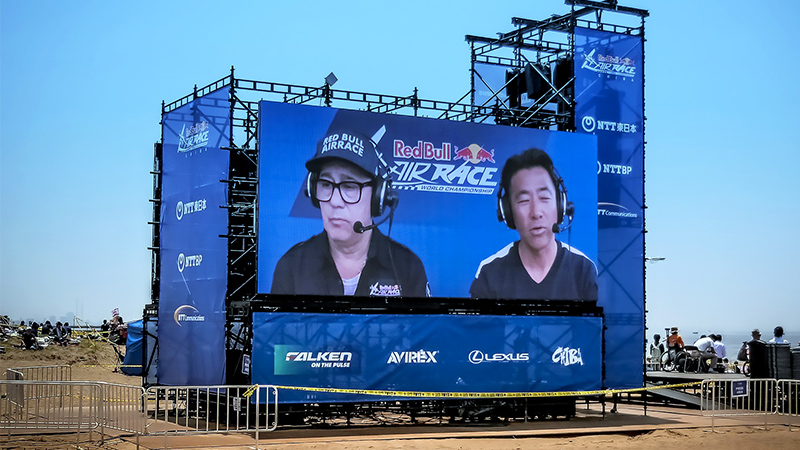
The display can accept feeds from cameras, switchers, laptops, media players and cloud or local scheduling systems. A defined signal workflow lets operators move between live coverage, prepared media, public information and advertising content.
5. Reusable platform for events and campaigns
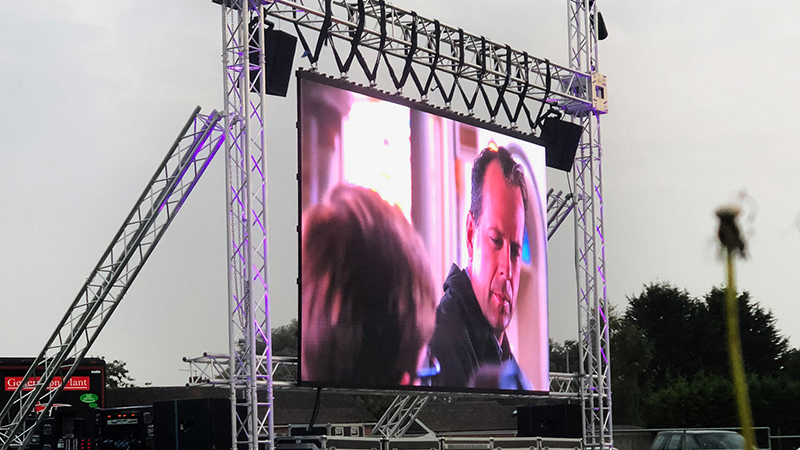
The same screen inventory can support festivals, sports events, concerts, exhibitions, retail promotions and roadshows. Standardized packing, processor files, spare parts and checklists protect the investment and make repeated deployment more predictable.
Why EagerLED for Mobile LED Screen Projects
Discuss the display package: provide the mobile format, viewing distances and operating conditions so cabinet and processor options can be reviewed.
Agree the integration boundary: specify which party provides the mobile frame, lifting system, ventilation, electrical distribution and local approvals. Ask which drawings and tests are included in the quotation.
Prepare for repeated use: confirm transport cases, spare modules, configuration files and the maintenance access required by your operating team.
Verify the proposed scope: request the selected model documentation and agreed support terms before ordering; do not assume every accessory or integration service is included.
Mobile LED Screen Solution: Planning, Products and Deployment
A successful mobile LED screen project coordinates the display, mobile structure, power, signal, content, transport and operating schedule as one system. Selecting panels before confirming the platform, site conditions or viewing distance often creates avoidable integration work and cost.
- Trailer, vehicle, rental-wall or wheeled-poster format
- Required screen width, height and aspect ratio
- Closest and typical audience viewing distance
- Indoor or outdoor use, brightness and weather exposure
- Camera, laptop, media player and scheduling requirements
- Event date, deployment window, destination and local crew scope
The sections below explain the main applications, cost factors, screen types, selection process and deployment workflow.
Mobile LED Screen Guide
On this page: mobile LED screen buying guide
1. What Is a Mobile LED Screen?
A mobile LED screen is a direct-view digital display designed to travel between locations or reposition within a venue. It may be installed on a trailer or advertising vehicle, assembled from rental cabinets carried in flight cases, or supplied as a wheeled poster display.
The complete system normally includes LED cabinets, video processing, power distribution, signal cabling, mounting or mobile hardware, transport protection, spare parts and an operating plan. The display specification must be coordinated with the structure, local electrical supply, service access and content workflow.
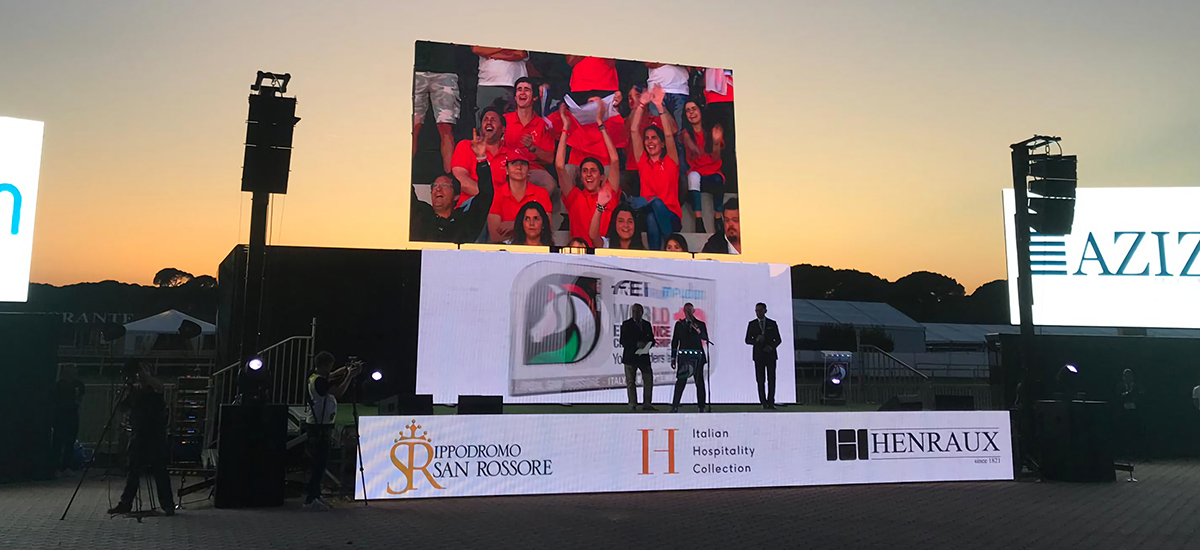
2. Where Does a Mobile LED Screen Add Value?
Mobile LED screens create value wherever a large, bright image must reach an audience without a permanent installation. The operating format should match the route, site access, deployment time, content source and local safety responsibilities.
2.1 Festivals, sports and public events
Trailer or rental-panel screens can show live action, scores, schedules, sponsor messages and public information to large outdoor audiences. Plan the display position around sightlines, sun direction, wind exposure, power access, emergency routes and camera locations.
2.2 Advertising trucks and brand roadshows
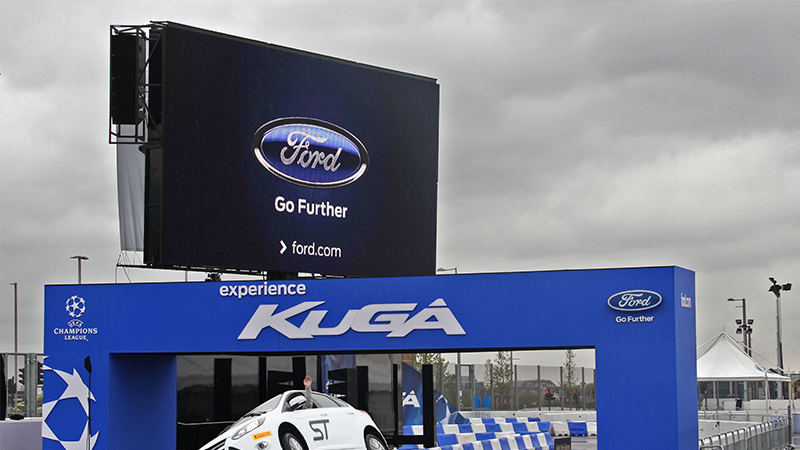
An LED advertising truck carries campaigns between streets, retail zones, launches and roadshow stops. The integration plan should define display dimensions, vehicle loads, ventilation, generator or shore power, content scheduling, local permissions and whether content changes while the vehicle is parked or moving.
2.3 Concerts and touring productions
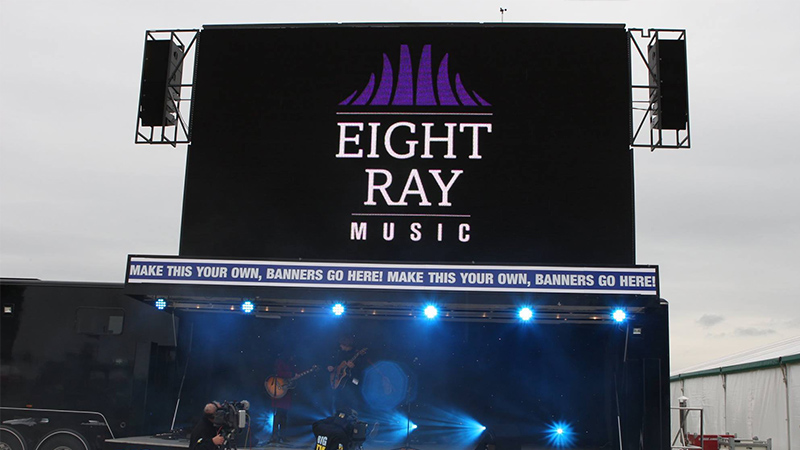
Touring screens support IMAG camera feeds, playback, stage graphics and sponsor content across repeated venues. Rental cabinets, flight cases and processor files should follow a standardized packing and setup plan so the production crew can reproduce the same result on each stop.
2.4 Retail, exhibitions and pop-up promotion
Wheeled posters and compact modular walls bring high-impact content to entrances, exhibition stands, shopping areas, gyms and temporary stores. They are most effective when staff can reposition the display, schedule content and access power without changing the permanent interior.
2.5 Indoor venues, information and wayfinding
Portable screens can provide agendas, queue information, wayfinding, promotions and emergency messaging in conference centers, hotels, campuses and transport spaces. Choose the format around doorway clearance, floor loading, pedestrian flow, operating noise and the distance from which text must remain readable.
3. What Determines Mobile LED Screen Cost?
3.1 Screen type, pixel pitch and total area
Mobile LED screen cost depends on the complete display and integration scope, not only the cabinet price. Compare quotations using the same screen dimensions, operating conditions and responsibility split.
| Cost factor | What changes the scope | Information to provide |
|---|---|---|
| Display hardware | Screen area, cabinet type, pixel pitch and spare quantity | Required width and height, viewing distance and content type |
| Mobile platform | Trailer, vehicle frame, lifting system, flight cases or wheeled base | Platform drawing, payload limits and deployment method |
| Environment | Brightness, weather protection, cooling and operating temperature | Indoor or outdoor use, sun exposure and local climate |
| Processing and power | Inputs, scaling, scheduling, redundancy and power distribution | Content sources, electrical supply and backup plan |
| Logistics and support | Destination, packing, commissioning, training and spares | Delivery address, schedule and local crew capability |
Total display area and pixel pitch determine cabinet quantity, receiving hardware, processor capacity and spare-parts scope. A fair comparison uses the same physical size and closest viewing distance rather than comparing unrelated price-per-square-meter figures.
3.2 Brightness, weather protection and viewing distance
Outdoor daytime operation normally requires more brightness and environmental protection than an indoor event. Pixel pitch should still be selected from the closest viewing distance and content detail, while brightness, cabinet rating, ventilation and drainage are matched to the actual site.
3.3 Trailer, vehicle and transport integration
A trailer or vehicle project adds structure, lifting, shock, ventilation, power and access requirements beyond the LED wall itself. Provide platform drawings and responsibility boundaries early so the display package can be coordinated with the local fabricator or vehicle integrator.
3.4 Installation, deployment and operating labor
Cost changes with site access, deployment frequency, required setup time and staffing. Include loading, transport, positioning, assembly, cable protection, testing, event operation and pack-down in the project scope instead of budgeting only for the installed screen.
3.5 Control, power and technical support
List the processor, media player, cables, distribution equipment and spares separately. Specify live-camera or laptop inputs, playlist scheduling, signal distance and the agreed backup method. Confirm which power equipment and commissioning services are supplied and what the local integrator must provide.
4. Mobile LED Screen Types and Applications
4.1 Trailer-mounted LED screens
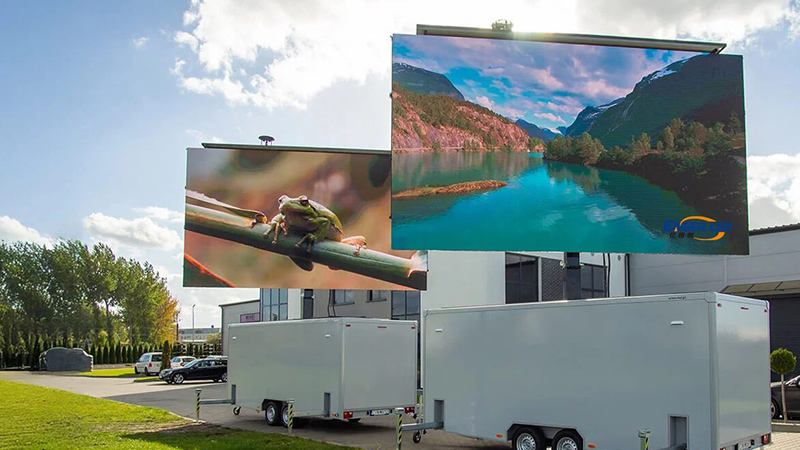
The best mobile format depends on how the screen travels, how quickly it must deploy and who operates it. The table below connects common formats with practical applications.
| Screen type | Typical application | Planning priority |
|---|---|---|
| Trailer-mounted screen | Festivals, sports, public events and outdoor viewing | Deployment method, wind plan, power and leveling |
| Vehicle-mounted display | Advertising routes, launches and roadshows | Structure, ventilation, vehicle loads and local rules |
| Rental LED wall | Concerts, conferences and touring productions | Flight cases, repeatable assembly and processor files |
| Wheeled LED poster | Retail, exhibitions, gyms and hotels | Doorway clearance, stability and content scheduling |
| Foldable or creative display | Pop-ups, branded spaces and compact transport | Hinges, protection, viewing angles and custom media |
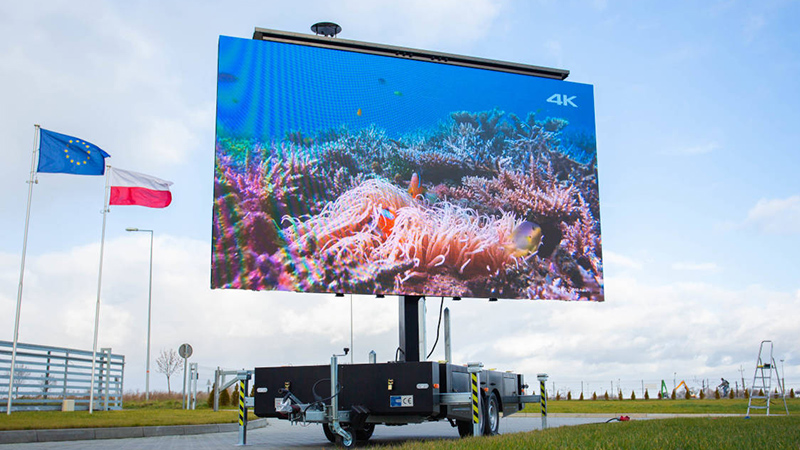
A trailer-mounted LED screen integrates the display with a deployable outdoor platform. It is suitable when setup speed and repeatable site positioning matter, but the design must also address leveling, access, wind procedures, power, signal and transport protection.
4.2 Vehicle-mounted LED displays
A vehicle-mounted LED display supports mobile advertising and multi-location campaigns. The cabinet layout should be coordinated with the vehicle frame, service access, cooling, vibration protection, power source and the rules that apply where the display will operate.
4.3 Rental LED video walls
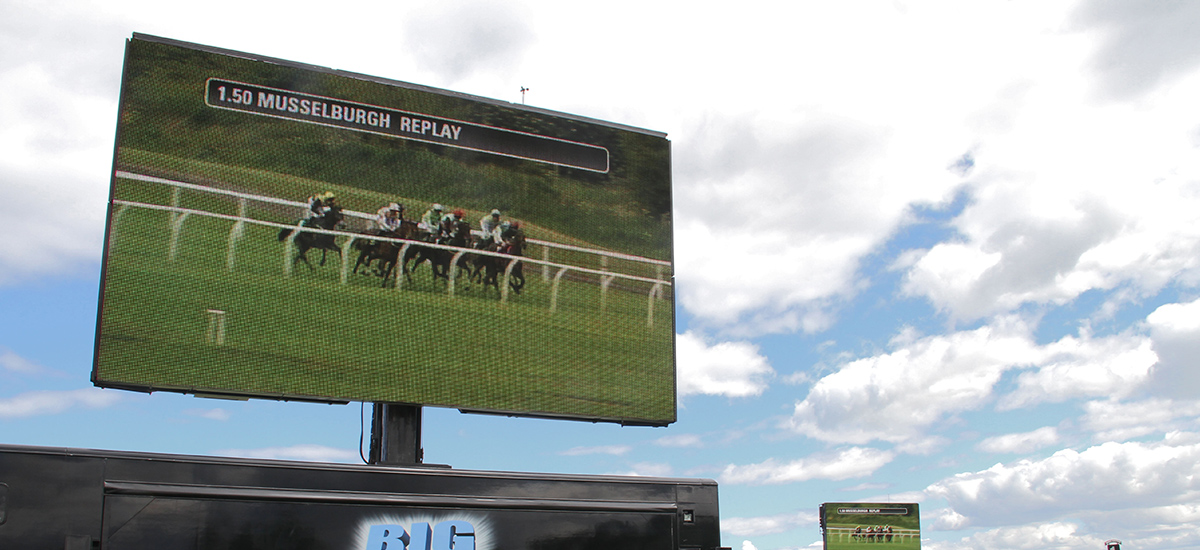
Rental cabinets travel in flight cases and assemble into different widths and heights. They suit event suppliers and production companies that need one inventory for stage walls, side screens, sponsor displays and temporary outdoor installations.
4.4 Wheeled LED poster displays
A wheeled poster display is a self-contained indoor format that can move between entrances, sales areas, exhibition zones and activity spaces. Confirm the base stability, doorway and elevator clearance, cable route, network method and who is authorized to move it.
4.5 Foldable and creative mobile displays
Foldable posters and creative mobile displays can reduce packing volume or create a distinctive branded feature. Review hinge protection, module alignment, transport locks, center of gravity, service access and the content template before choosing a non-standard format.
5. How to Choose the Right Mobile LED Screen
5.1 Define mobility and operating requirements
Start with the operating workflow, then select the hardware. A useful specification explains how the screen travels, where it deploys, what the audience sees, how content reaches it and who is responsible for structure, power, operation and local approvals.
Record the mobile format, route or venue type, access dimensions, setup window, operating hours, storage method and expected number of deployments. These details determine whether a trailer, vehicle installation, rental wall or wheeled poster is the practical starting point.
5.2 Match pixel pitch to viewing distance
Measure the closest and typical viewing positions, then describe the content: live camera, advertising, text, schedules or decorative video. The supplier can recommend a pixel pitch that balances detail, processor load and project cost without overspecifying distance-only applications.
5.3 Set brightness and protection for the environment
State whether the screen operates indoors, outdoors, in direct sun, after dark or across mixed conditions. Match brightness, cabinet protection, cooling and power equipment to those conditions, and define wind, rain and shutdown procedures with qualified local teams.
5.4 Compare the complete project scope
Compare quotations using the same screen dimensions, native pixel canvas, cabinet quantity and operating conditions. Request separate lines for processing, cables, transport protection and spare modules. For trailer or vehicle projects, identify the frame, lifting equipment, generator or shore-power interface, ventilation and installation work as distinct inclusions or exclusions.
A rental company can buy rental LED cabinets for its own mobile inventory. A one-date event organizer seeking a ready-to-operate screen and crew needs a local hire-service scope. State which of these you need when requesting a quotation.
5.5 Evaluate the supplier and support plan
Review product documentation, configuration drawings, test records, spare-parts plan, warranty terms and response process. Confirm how the supplier supports the local trailer builder, rental crew or operator during integration and how faults will be diagnosed after delivery.
6. How to Set Up a Mobile LED Screen
Deployment should follow an approved layout, a documented power and signal plan, and the safety procedures for the chosen mobile platform. Assign responsibility for positioning, leveling or structure, electrical distribution, display hardware, content playback and final operation before equipment arrives.
6.1 Confirm the site and deployment position
Confirm audience sightlines, vehicle or trailer access, ground conditions, pedestrian routes, overhead clearance, wind exposure, sun direction, camera positions and emergency access. The site owner and qualified local personnel should approve structural, electrical and traffic-control requirements.
6.2 Finalize screen dimensions and the mobile structure
Lock the physical dimensions, cabinet layout, total weight, mounting interfaces and pixel canvas before final fabrication or content production. Verify service doors, ventilation, lifting or folding clearance, transport locks and the relationship between the LED package and mobile structure.
6.3 Prepare and test every content source
Collect every camera feed, media player, laptop output, advertisement and scheduled playlist in advance. Test file formats, scaling, playback order, network access and switching on the actual processor or an equivalent setup, then retain approved offline backup copies.
6.4 Plan power, signal and backup paths
Separate signal and power routes where practical, label both ends of every connection and protect cables in public areas. Plan backup playback, spare signal paths, suitable power contingency and the spare LED modules or receiving hardware needed for the operating schedule.
6.5 Deploy, calibrate and complete safety checks
After positioning or assembly, verify leveling and locks, cabinet alignment, data mapping, brightness, color consistency, content scaling and camera performance. Complete the platform-specific safety inspection and a full operating test before the screen is handed to the show or campaign team.
7. Mobile LED Screen FAQ
Can I buy the LED screen without a trailer or truck?
A display-equipment quotation can be scoped separately from a mobile platform. Provide the intended mounting arrangement and platform drawings so dimensions, weight, service access, cooling and power requirements can be coordinated. Confirm the inclusions explicitly; cabinet supply alone does not establish the suitability or road compliance of a complete vehicle.
Where can a mobile LED screen be used?
A mobile LED screen can be used at festivals, sports events, concerts, roadshows, advertising campaigns, exhibitions, retail promotions, conferences, hotels, gyms and public-information points. The best format depends on whether the screen travels as a complete platform, assembles at each site or only repositions indoors.
How quickly can a mobile LED screen be deployed?
Deployment time depends on the format. A wheeled poster can be positioned and powered with minimal setup, while a trailer is engineered for rapid site deployment after positioning and safety checks. A rental video wall requires cabinet assembly, cabling, alignment and testing; confirm crew size and setup window in the project plan.
Can a mobile LED screen operate outdoors?
Yes, when the display, mobile structure, power equipment and operating procedure are designed for outdoor conditions. Specify daylight brightness, cabinet weather protection, temperature range, drainage, wind procedure, grounding and local electrical requirements. Outdoor suitability applies to the complete system, not only the LED cabinet.
What should be included in a mobile LED screen quotation?
A useful purchase quotation identifies the active screen size, pixel pitch, selected cabinet model and quantity, processor, signal inputs, cable set, transport protection and spare parts. It should state whether the mobile platform, power equipment, freight, commissioning and local operating crew are included or excluded. Request the delivery terms and agreed support scope in writing.
8. Request a Mobile LED Screen Solution
Send your target screen width and height, viewing distances, indoor or outdoor conditions, content sources, destination and required date. State whether you need reusable cabinets, an indoor wheeled display or equipment for integration with an existing trailer or vehicle, and attach available platform drawings. For a rental fleet, include typical layouts and transport requirements.
